
ABDOMINAL PARACENTESIS
Nursing - Skill
Ahmad Thanin
Definition
Abdominal paracentesis or peritoneal
tap is defined as the insertion of
needle or cannula with trocar into
the peritoneal space through the
abdominal wall to remove peritoneal
fluid.
To relieve pressure on the abdominal and
chest organs if a transudate collects as a
result of renal, cardiac, or liver diseases
To study chemical, bacteriological and
cellular composition of the peritoneal fluid
for the diagnosis of diseases
To drain an exudates in peritonitis
To remove fluid and instill air to create
artificial pneumoperitoneum as a treatment
for pulmonary tuberculosis affecting the
base of the lungs
To remove blood or pus
To use as a prelude to other procedures like
X-ray, peritoneal dialysis or surgery
INDICATIONS
Diagnostic:
•to diagnose the nature of fluid,
transudate or exudates, Koch’s ascites,
spontaneous bacterial peritonitis and
malignancy
Therapeutic:
•ascites with cardiopulmonary
embarrassment, ascites refractory to
medical line of treatment and ascites
causing abdominal discomfort
Diagnostic
paracentesis
Cirrhosis of
the liver:
•This is the
most common
cause of
ascites.
Portal
hypertension:
•This is high
blood pressure
in the main
vein in your
liver.
•It’s common in
people with
cirrhosis of
the liver.
Infection:
•The fluid can
become
infected and
cause
inflammation
(peritonitis).
Cancer:
•The most
common types
that cause
ascites are
ovarian
cancer,
uterine
cancer,
cervical
cancer, colon
cancer,
stomach
cancer,
pancreatic
cancer and
liver cancer.
Organ failure:
•Liver failure
and heart
failure can
cause ascites.
Therapeutic
paracentesis
Common symptoms include:
Abdominal
pain and
pressure.
Large or
growing
belly.
Shortness of
breath.
Constipation. Indigestion. Bloating.
Therapeutic paracentesis can relieve
symptoms of ascites.
Remember
Patient may need to stop
taking blood thinners,
like aspirin or warfarin
(Coumadin®), vitamins and
supplements.
Patient may need to
change his/her medicines
if take nonsteroidal
anti-inflammatory drugs
(NSAIDs) or certain
diabetes medications.
CONTRAINDICATION
S
•bleeding diathesis and severe
jaundice with impending
hepatic coma because tapping
may precipitate hepatic coma
Primary:
•multiple previous abdominal
operations but can be done
under ultrasound guidance and
presence of dilated bowel
Secondary:
GENERAL INSTRUCTIONS
Abdominal paracentesis should be done with strict aseptic technique
to prevent introduction of infection into the peritoneal cavity
Ask the patient to void 5 minutes before the procedure to prevent
injury to the bladder
Keep the patient warm and comfortable to prevent chills
Withdrawing fluid should be done slowly and small quantity at a time
Use a tapping needle or trocar of smaller gauge possible.
•This will reduce the puncture wound as small as possible and thereby reduce the
chance of fluid leaking from the peritoneal cavity after the procedure is over
GENERAL INSTRUCTIONS
The flow of fluid can be controlled by the application of clamps
on the tubing
The nurse should remain with the patient throughout the
procedure to observe the patient’s general condition
The puncture wound should be sealed immediately after the
procedure to prevent infection and leakage of peritoneal fluid
The specimens collected should be sent to the laboratory without
delay
ROUTINE
INVESTIGATION
S
Specific gravity, cell count, bacterial
count, protein concentrations, culture and
acid test strain
In most disorders, the fluid is clear and
straw colored.
•Turbidity suggests infection
Sanguineous fluid usually signals neoplasm
or tuberculosis
A protein concentration less than 3 g/100
ml suggests liver diseases or systemic
disorders
Higher protein content suggests an exudates
cause such as tumor or an infection
PRELIMINARY
ASSESSMENT
Check
• The doctors order
for any specific
precautions
• The general
condition and
diagnosis of the
patient
• Self-care ability
of the patient
• Condition of the
abdomen
• Articles
available in the
unit
PREPARATION
OF THE
PATIENT AND
ENVIRONMENT
Explain the procedure to the patient
and his relatives
Obtain a written consent from the
patient or relatives
Prepare the skin as for a surgical
procedure
Empty the bladder just before the
procedure
Maintain privacy with screens
Protect the bedding with a
mackintosh and towel
Arrange the article at the bedside
SITE AND POSITION
Premedication:
• inj. Atropine sulfate 0.65 mg, intramuscularly half an hour
procedure is given to the patient
Selecting a site:
• the primary object of selecting a site is to avoid injury to the
urinary bladder and other abdominal organs.
• In the flank at midpoint below anterior superior iliac spine and
umbilicus
Position:
• the patient is positioned in Fowler’s position supported by back
rest and pillow near the edge of the bed
How long does
paracentesis
take?
• Paracentesis takes
from 20 to 45 minutes.
• Timing depends on how
much fluid is removed.
How much fluid can paracentesis
remove?
• healthcare provider will remove enough fluid to perform
all the necessary tests.
• This is usually about 25 milliliters (ml).
For diagnostic paracentesis
• the amount of fluid depends on how much excess fluid
you have and whether you have a history of fluid
returning.
• Often, removing 5 liters is enough to relieve abdominal
pressure from ascites.
• Your provider may remove more fluid if your ascites
often return (recur).
For therapeutic paracentesis,
EQUIPMENT
An unsterile tray containing:
• Mackintosh and towel
• Sterile gloves and masks
• Tincture iodine, spirit and tincture benzoin
• Novocaine 1-2%/xylocaine 2%
• Adhesive tape and scissors
• Kidney basins, pint measure, bucket
• IV bottles, back rest and abdominal binder
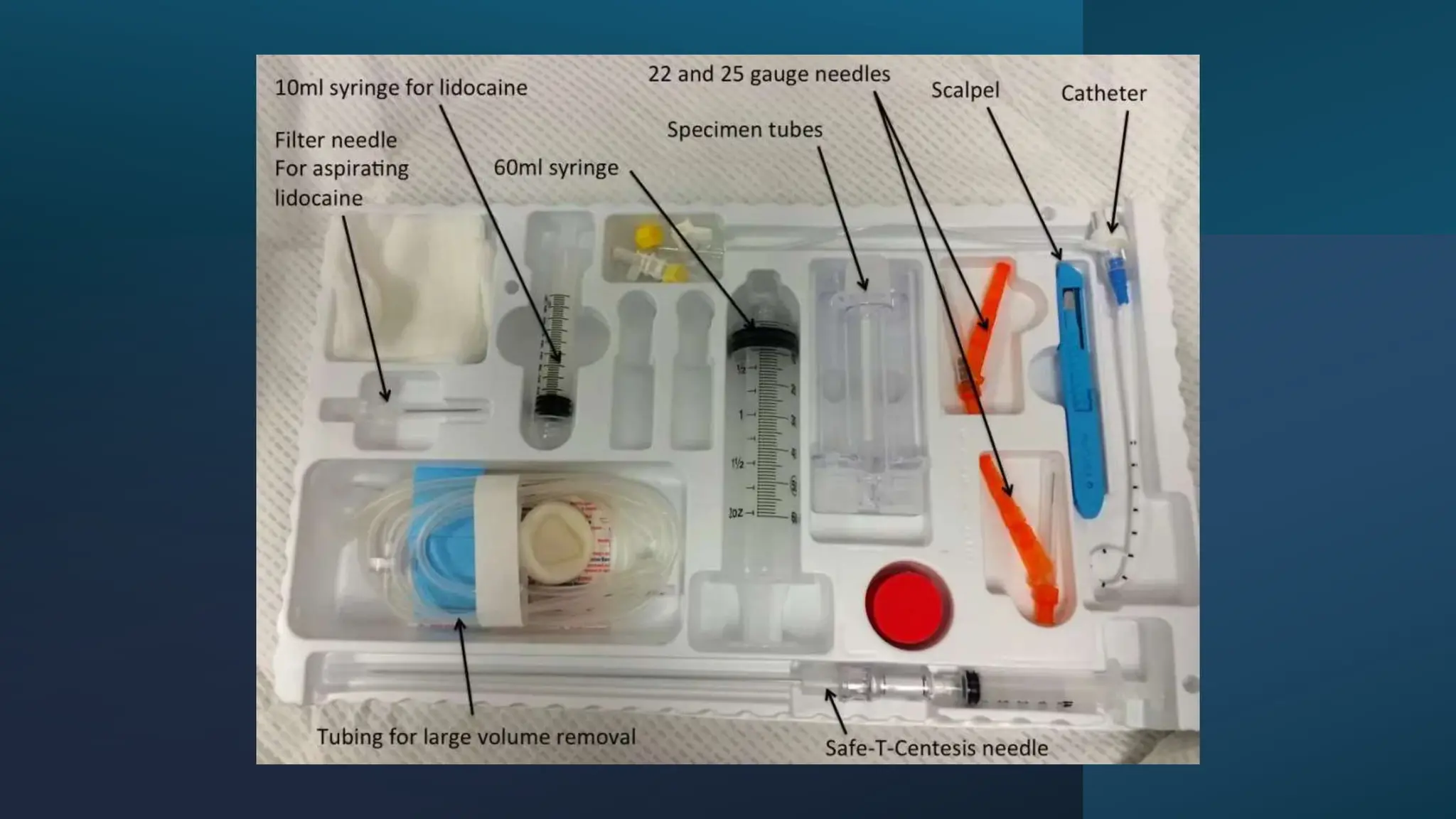
EQUIPMENT
A sterile tray containing:
•Sponge holding forceps
•Window towel, small bowels: 2, sponge
•Swabs, cotton and 2 ml syringe
•Subcutaneous needle
•Scalpel blade
•Trocar and cannula (Thompson’s ascites brocar and
cannula)
•Suture materials: suture and skin needles, suture
scissors, tissue forceps and artery forceps
PROCEDURE
• Wash hands thoroughly
• Position in Fowlers:
• this causes the fluid in the abdominal cavity to
accumulate in the lower abdomen through gravity pull
• Assist the doctor in cleaning the site and giving local
anesthesia
• Local anesthesia: 2% lignocaine is infiltrated into the
skin, subcutaneous tissue, muscles and peritoneum
• Assist the doctor by providing towels and other required
items
PROCEDURE
• Watch the vital signs and condition of the patient
• Wrap the binder tightly around the waist as fluid escapes.
• This prevents sudden change in pressure. Rapid change in
pressure causes distention of abdominal veins, reducing blood
in the heart.
• This may cause heart failure
• Collect the required amount in a pint measure or bucket
• Usually, a pint to one filter of fluid is removed.
• Avoid rapid removal of fluid. Sudden withdrawal of a large
quantity of fluid at one setting may change the intra-abdominal
pressure
• After finishing withdrawal of fluid, seal the puncture wound with
tincture benzoin and cover with a pad to prevent leakage of fluid
POST-PROCEDURE CARE
Apply abdominal binder tightly from top to bottom.
• It helps maintain intra-abdominal pressure
Monitor the patient’s general condition.
• Any change in the color, pulse, respiration and blood pressure should
be reported immediately
Examine the dressing at the puncture site frequently for
any leakage, reinforce the dressing if leakage is present
POST-PROCEDURE CARE
Record the procedure in the nurse’s record sheet
Wash hands thoroughly
Replace the articles after cleaning
The specimen collected should be sent in laboratory with labels and a requisition form
Provide analgesics, if there is pain
COMPLICATIONS
Precipitation of hepatic coma
Fainting, if large amount of fluid is removed too rapidly.
• This can be prevented by applying abdominal binder
Peritonitis
Perforation of viscous
Depletion of proteins
Ascitic fluid, 7 litres,
drained during paracentesis
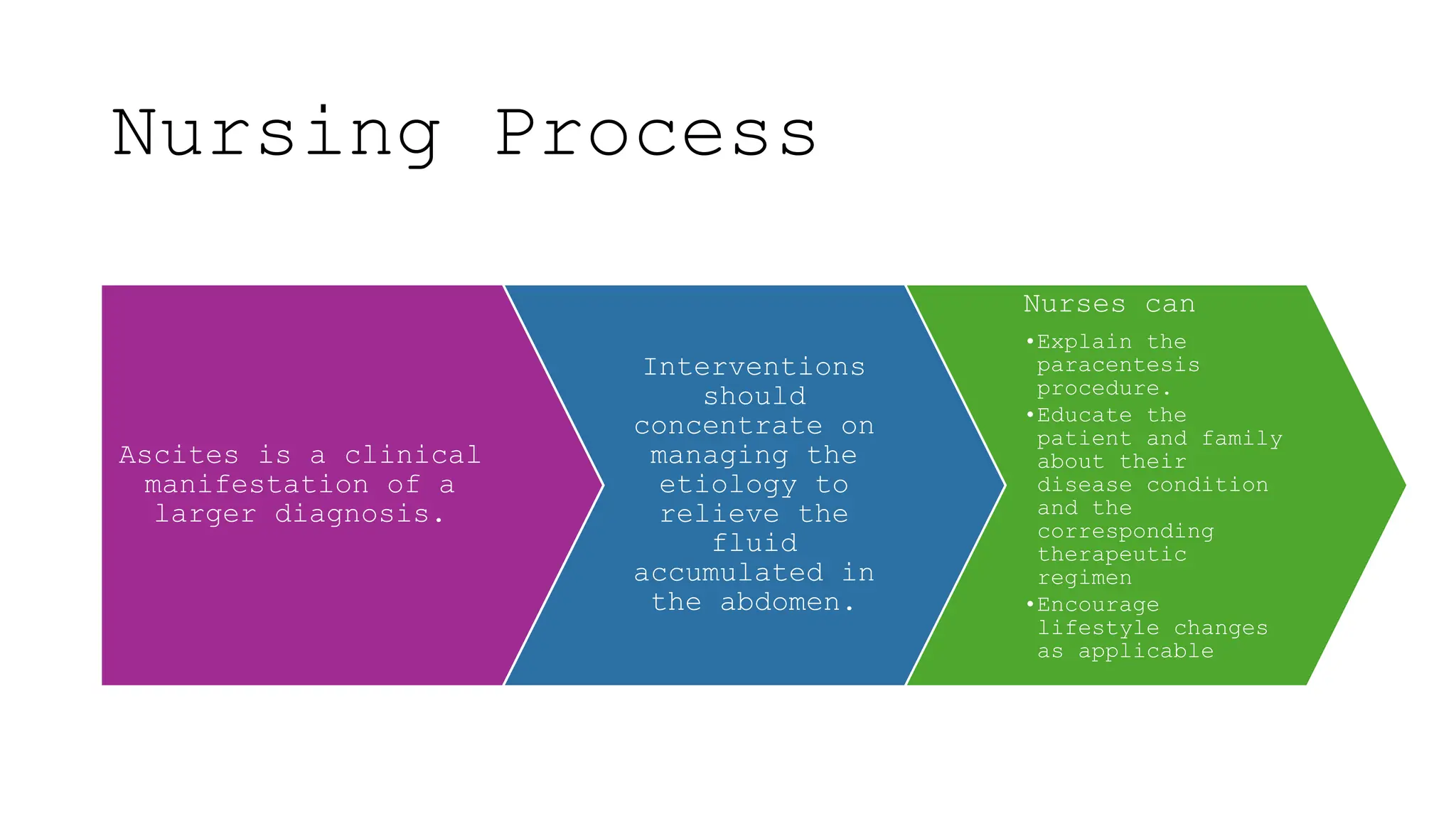
Nursing Process
Ascites is a clinical
manifestation of a
larger diagnosis.
Interventions
should
concentrate on
managing the
etiology to
relieve the
fluid
accumulated in
the abdomen.
Nurses can
•Explain the
paracentesis
procedure.
•Educate the
patient and family
about their
disease condition
and the
corresponding
therapeutic
regimen
•Encourage
lifestyle changes
as applicable
Nursing Assessment
Assess
Assess the
patient’s
general
symptoms.
Determine
Determine
the
causative
factor.
Identify
Identify the
risk
factors.
Perform
Perform
maneuvers to
check for
ascites.
Track
Track the
fluid intake
and output
Physical examination maneuvers for
ascites detection
Bulging flanks
• are a positive finding when the patient’s flanks
bulge outward when lying supine.
Flank dullness
• is positive when the percussion note is
tympanitic over the umbilicus and dull over the
lateral and flank areas.
Shifting
dullness
• is positive when the dullness shifts to the
dependent location.
• Tympany shifts upward.
Fluid wave
• maneuver taps along one flank.
• The fluid is forced from one side of the abdomen
to the other, causing the examiner to feel “a
shock wave” of fluid traveling across the
pressed fingertips down the opposite flank.
Nursing
Interventio
ns
Manage
Fluid
Retention
Manage
Risk
Factors
Manage Fluid Retention
Treat the underlying cause.
• The cause of fluid retention determines the best course of treatment
for ascites.
Minimize the ascitic fluid volume.
• The goal of therapy in ascites patients is to reduce peripheral edema
and ascites fluid volume without depleting intravascular volume.
Restrict sodium.
• Potassium-containing salt substitutes should be avoided.
• This is due to the risk of increasing potassium levels from some
medications (diuretics) for ascites.
• The recommended salt intake for persons with ascites is less than 2,000
mg per day.
Manage Fluid Retention
Drain the fluid.
• Paracentesis allows the removal of large volumes of extra fluid with a
needle into the abdomen.
• Patients with refractory ascites may receive paracentesis as a palliative
treatment.
• An indwelling peritoneal catheter may be placed to drain fluid easily.
Prepare for surgical intervention.
• For patients who are resistant to diuretics, a trans jugular intrahepatic
portosystemic shunt (TIPS) procedure places a stent from the jugular vein to
the hepatic vein to relieve the pressure of blood flowing through the liver
and the buildup of fluid.
Administer antibiotics.
• Antibiotics may be required if ascites is related to bacterial peritonitis.
Manage Risk Factors
• Monitor the patient’s daily weight.
• Note if there is a significant gain of more than 10
pounds or more than 2 pounds per day for three days.
• Advise the patient to contact the healthcare provider.
Monitor the weight.
• Alcohol increases the risk of cirrhosis, the most
common cause of ascites.
• Avoiding alcohol will reduce the ascites risk.
Avoid alcohol.
Manage Risk Factors
• The kidneys and liver are affected by nonsteroidal anti-
inflammatory drugs (NSAIDs) like aspirin and ibuprofen.
• NSAIDs can cause acute renal failure, hyponatremia, and lower the
effects of diuretics in patients with cirrhosis.
Refrain from NSAIDs.
• Reduce the risk of contracting hepatitis infection (one of the
causes of ascites) by engaging in safe sex.
Emphasize safe sex practices.
• To help prevent the recurrence of ascites, limit the daily fluid
intake to less than one liter (only if hyponatremia is present).
Restrict fluid intake.
Nursing
Care Plans
Once the nurse
identifies nursing
diagnoses for
ascites, nursing
care plans help
prioritize
assessments and
interventions for
both short and long-
term goals of care.
Nursing care plan examples for
ascites
Excess Fluid Volume
Imbalanced Nutrition: Less than Body Requirements Care Plan
Ineffective Breathing Pattern
Ineffective Tissue Perfusion
Risk for Infection
ThankYou

Abdominal Paracentesis - Nursing Role

  • 1.
  • 2.
    Definition Abdominal paracentesis orperitoneal tap is defined as the insertion of needle or cannula with trocar into the peritoneal space through the abdominal wall to remove peritoneal fluid.
  • 4.
    To relieve pressureon the abdominal and chest organs if a transudate collects as a result of renal, cardiac, or liver diseases To study chemical, bacteriological and cellular composition of the peritoneal fluid for the diagnosis of diseases To drain an exudates in peritonitis To remove fluid and instill air to create artificial pneumoperitoneum as a treatment for pulmonary tuberculosis affecting the base of the lungs To remove blood or pus To use as a prelude to other procedures like X-ray, peritoneal dialysis or surgery
  • 5.
    INDICATIONS Diagnostic: •to diagnose thenature of fluid, transudate or exudates, Koch’s ascites, spontaneous bacterial peritonitis and malignancy Therapeutic: •ascites with cardiopulmonary embarrassment, ascites refractory to medical line of treatment and ascites causing abdominal discomfort
  • 6.
    Diagnostic paracentesis Cirrhosis of the liver: •Thisis the most common cause of ascites. Portal hypertension: •This is high blood pressure in the main vein in your liver. •It’s common in people with cirrhosis of the liver. Infection: •The fluid can become infected and cause inflammation (peritonitis). Cancer: •The most common types that cause ascites are ovarian cancer, uterine cancer, cervical cancer, colon cancer, stomach cancer, pancreatic cancer and liver cancer. Organ failure: •Liver failure and heart failure can cause ascites.
  • 7.
    Therapeutic paracentesis Common symptoms include: Abdominal painand pressure. Large or growing belly. Shortness of breath. Constipation. Indigestion. Bloating. Therapeutic paracentesis can relieve symptoms of ascites.
  • 8.
    Remember Patient may needto stop taking blood thinners, like aspirin or warfarin (Coumadin®), vitamins and supplements. Patient may need to change his/her medicines if take nonsteroidal anti-inflammatory drugs (NSAIDs) or certain diabetes medications.
  • 9.
    CONTRAINDICATION S •bleeding diathesis andsevere jaundice with impending hepatic coma because tapping may precipitate hepatic coma Primary: •multiple previous abdominal operations but can be done under ultrasound guidance and presence of dilated bowel Secondary:
  • 10.
    GENERAL INSTRUCTIONS Abdominal paracentesisshould be done with strict aseptic technique to prevent introduction of infection into the peritoneal cavity Ask the patient to void 5 minutes before the procedure to prevent injury to the bladder Keep the patient warm and comfortable to prevent chills Withdrawing fluid should be done slowly and small quantity at a time Use a tapping needle or trocar of smaller gauge possible. •This will reduce the puncture wound as small as possible and thereby reduce the chance of fluid leaking from the peritoneal cavity after the procedure is over
  • 11.
    GENERAL INSTRUCTIONS The flowof fluid can be controlled by the application of clamps on the tubing The nurse should remain with the patient throughout the procedure to observe the patient’s general condition The puncture wound should be sealed immediately after the procedure to prevent infection and leakage of peritoneal fluid The specimens collected should be sent to the laboratory without delay
  • 12.
    ROUTINE INVESTIGATION S Specific gravity, cellcount, bacterial count, protein concentrations, culture and acid test strain In most disorders, the fluid is clear and straw colored. •Turbidity suggests infection Sanguineous fluid usually signals neoplasm or tuberculosis A protein concentration less than 3 g/100 ml suggests liver diseases or systemic disorders Higher protein content suggests an exudates cause such as tumor or an infection
  • 13.
    PRELIMINARY ASSESSMENT Check • The doctorsorder for any specific precautions • The general condition and diagnosis of the patient • Self-care ability of the patient • Condition of the abdomen • Articles available in the unit
  • 14.
    PREPARATION OF THE PATIENT AND ENVIRONMENT Explainthe procedure to the patient and his relatives Obtain a written consent from the patient or relatives Prepare the skin as for a surgical procedure Empty the bladder just before the procedure Maintain privacy with screens Protect the bedding with a mackintosh and towel Arrange the article at the bedside
  • 15.
    SITE AND POSITION Premedication: •inj. Atropine sulfate 0.65 mg, intramuscularly half an hour procedure is given to the patient Selecting a site: • the primary object of selecting a site is to avoid injury to the urinary bladder and other abdominal organs. • In the flank at midpoint below anterior superior iliac spine and umbilicus Position: • the patient is positioned in Fowler’s position supported by back rest and pillow near the edge of the bed
  • 16.
    How long does paracentesis take? •Paracentesis takes from 20 to 45 minutes. • Timing depends on how much fluid is removed.
  • 17.
    How much fluidcan paracentesis remove? • healthcare provider will remove enough fluid to perform all the necessary tests. • This is usually about 25 milliliters (ml). For diagnostic paracentesis • the amount of fluid depends on how much excess fluid you have and whether you have a history of fluid returning. • Often, removing 5 liters is enough to relieve abdominal pressure from ascites. • Your provider may remove more fluid if your ascites often return (recur). For therapeutic paracentesis,
  • 18.
    EQUIPMENT An unsterile traycontaining: • Mackintosh and towel • Sterile gloves and masks • Tincture iodine, spirit and tincture benzoin • Novocaine 1-2%/xylocaine 2% • Adhesive tape and scissors • Kidney basins, pint measure, bucket • IV bottles, back rest and abdominal binder
  • 19.
    EQUIPMENT A sterile traycontaining: •Sponge holding forceps •Window towel, small bowels: 2, sponge •Swabs, cotton and 2 ml syringe •Subcutaneous needle •Scalpel blade •Trocar and cannula (Thompson’s ascites brocar and cannula) •Suture materials: suture and skin needles, suture scissors, tissue forceps and artery forceps
  • 21.
    PROCEDURE • Wash handsthoroughly • Position in Fowlers: • this causes the fluid in the abdominal cavity to accumulate in the lower abdomen through gravity pull • Assist the doctor in cleaning the site and giving local anesthesia • Local anesthesia: 2% lignocaine is infiltrated into the skin, subcutaneous tissue, muscles and peritoneum • Assist the doctor by providing towels and other required items
  • 22.
    PROCEDURE • Watch thevital signs and condition of the patient • Wrap the binder tightly around the waist as fluid escapes. • This prevents sudden change in pressure. Rapid change in pressure causes distention of abdominal veins, reducing blood in the heart. • This may cause heart failure • Collect the required amount in a pint measure or bucket • Usually, a pint to one filter of fluid is removed. • Avoid rapid removal of fluid. Sudden withdrawal of a large quantity of fluid at one setting may change the intra-abdominal pressure • After finishing withdrawal of fluid, seal the puncture wound with tincture benzoin and cover with a pad to prevent leakage of fluid
  • 23.
    POST-PROCEDURE CARE Apply abdominalbinder tightly from top to bottom. • It helps maintain intra-abdominal pressure Monitor the patient’s general condition. • Any change in the color, pulse, respiration and blood pressure should be reported immediately Examine the dressing at the puncture site frequently for any leakage, reinforce the dressing if leakage is present
  • 24.
    POST-PROCEDURE CARE Record theprocedure in the nurse’s record sheet Wash hands thoroughly Replace the articles after cleaning The specimen collected should be sent in laboratory with labels and a requisition form Provide analgesics, if there is pain
  • 25.
    COMPLICATIONS Precipitation of hepaticcoma Fainting, if large amount of fluid is removed too rapidly. • This can be prevented by applying abdominal binder Peritonitis Perforation of viscous Depletion of proteins
  • 28.
    Ascitic fluid, 7litres, drained during paracentesis
  • 29.
    Nursing Process Ascites isa clinical manifestation of a larger diagnosis. Interventions should concentrate on managing the etiology to relieve the fluid accumulated in the abdomen. Nurses can •Explain the paracentesis procedure. •Educate the patient and family about their disease condition and the corresponding therapeutic regimen •Encourage lifestyle changes as applicable
  • 30.
    Nursing Assessment Assess Assess the patient’s general symptoms. Determine Determine the causative factor. Identify Identifythe risk factors. Perform Perform maneuvers to check for ascites. Track Track the fluid intake and output
  • 31.
    Physical examination maneuversfor ascites detection Bulging flanks • are a positive finding when the patient’s flanks bulge outward when lying supine. Flank dullness • is positive when the percussion note is tympanitic over the umbilicus and dull over the lateral and flank areas. Shifting dullness • is positive when the dullness shifts to the dependent location. • Tympany shifts upward. Fluid wave • maneuver taps along one flank. • The fluid is forced from one side of the abdomen to the other, causing the examiner to feel “a shock wave” of fluid traveling across the pressed fingertips down the opposite flank.
  • 32.
  • 33.
    Manage Fluid Retention Treatthe underlying cause. • The cause of fluid retention determines the best course of treatment for ascites. Minimize the ascitic fluid volume. • The goal of therapy in ascites patients is to reduce peripheral edema and ascites fluid volume without depleting intravascular volume. Restrict sodium. • Potassium-containing salt substitutes should be avoided. • This is due to the risk of increasing potassium levels from some medications (diuretics) for ascites. • The recommended salt intake for persons with ascites is less than 2,000 mg per day.
  • 34.
    Manage Fluid Retention Drainthe fluid. • Paracentesis allows the removal of large volumes of extra fluid with a needle into the abdomen. • Patients with refractory ascites may receive paracentesis as a palliative treatment. • An indwelling peritoneal catheter may be placed to drain fluid easily. Prepare for surgical intervention. • For patients who are resistant to diuretics, a trans jugular intrahepatic portosystemic shunt (TIPS) procedure places a stent from the jugular vein to the hepatic vein to relieve the pressure of blood flowing through the liver and the buildup of fluid. Administer antibiotics. • Antibiotics may be required if ascites is related to bacterial peritonitis.
  • 35.
    Manage Risk Factors •Monitor the patient’s daily weight. • Note if there is a significant gain of more than 10 pounds or more than 2 pounds per day for three days. • Advise the patient to contact the healthcare provider. Monitor the weight. • Alcohol increases the risk of cirrhosis, the most common cause of ascites. • Avoiding alcohol will reduce the ascites risk. Avoid alcohol.
  • 36.
    Manage Risk Factors •The kidneys and liver are affected by nonsteroidal anti- inflammatory drugs (NSAIDs) like aspirin and ibuprofen. • NSAIDs can cause acute renal failure, hyponatremia, and lower the effects of diuretics in patients with cirrhosis. Refrain from NSAIDs. • Reduce the risk of contracting hepatitis infection (one of the causes of ascites) by engaging in safe sex. Emphasize safe sex practices. • To help prevent the recurrence of ascites, limit the daily fluid intake to less than one liter (only if hyponatremia is present). Restrict fluid intake.
  • 37.
    Nursing Care Plans Once thenurse identifies nursing diagnoses for ascites, nursing care plans help prioritize assessments and interventions for both short and long- term goals of care.
  • 38.
    Nursing care planexamples for ascites Excess Fluid Volume Imbalanced Nutrition: Less than Body Requirements Care Plan Ineffective Breathing Pattern Ineffective Tissue Perfusion Risk for Infection
  • 39.