Paracentesis in the hospital setup with steps of how to perform the procedure
2.
Paracentesis isa procedure in which a
needle or catheter is inserted into the
peritoneal cavity to obtain ascitic fluid for
diagnostic or therapeutic purposes. Ascitic
fluid may be used to help determine the
etiology of ascites, as well as to evaluate
for infection or presence of cancer.
3.
Diagnostic tapis used for the following:
New-onset ascites - Fluid evaluation helps to
determine etiology, differentiate transudate
versus exudate, detect the presence of
cancerous cells, or address other
considerations
Suspected spontaneous or secondary bacterial
peritonitis
Refractory ascites
4.
Therapeutic tapis used for the following:
Respiratory compromise secondary to
ascites
Abdominal pain or pressure secondary to
ascites (including
abdominal compartment syndrome)
5.
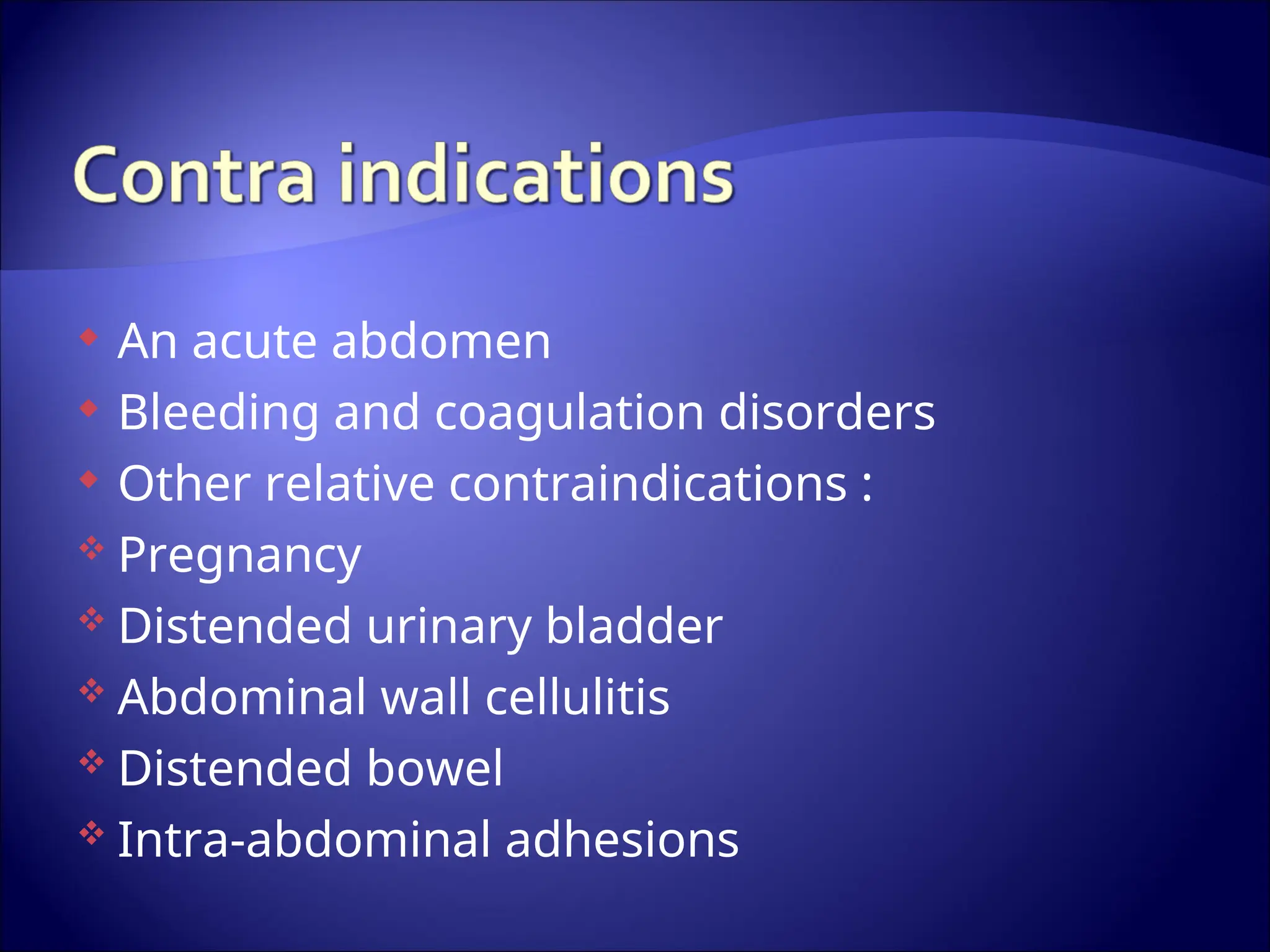
An acuteabdomen
Bleeding and coagulation disorders
Other relative contraindications :
Pregnancy
Distended urinary bladder
Abdominal wall cellulitis
Distended bowel
Intra-abdominal adhesions
6.
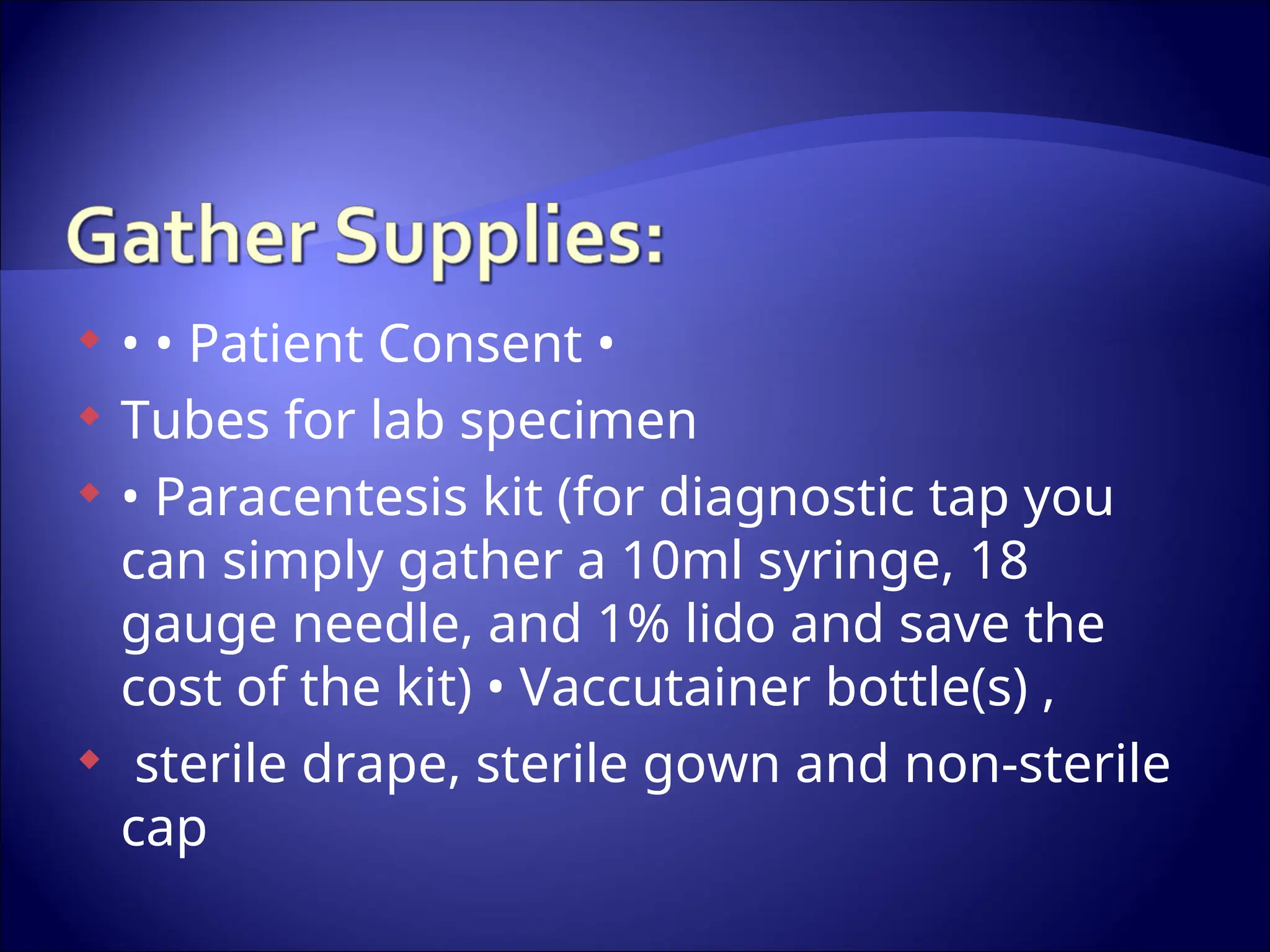
• •Patient Consent •
Tubes for lab specimen
• Paracentesis kit (for diagnostic tap you
can simply gather a 10ml syringe, 18
gauge needle, and 1% lido and save the
cost of the kit) • Vaccutainer bottle(s) ,
sterile drape, sterile gown and non-sterile
cap
7.
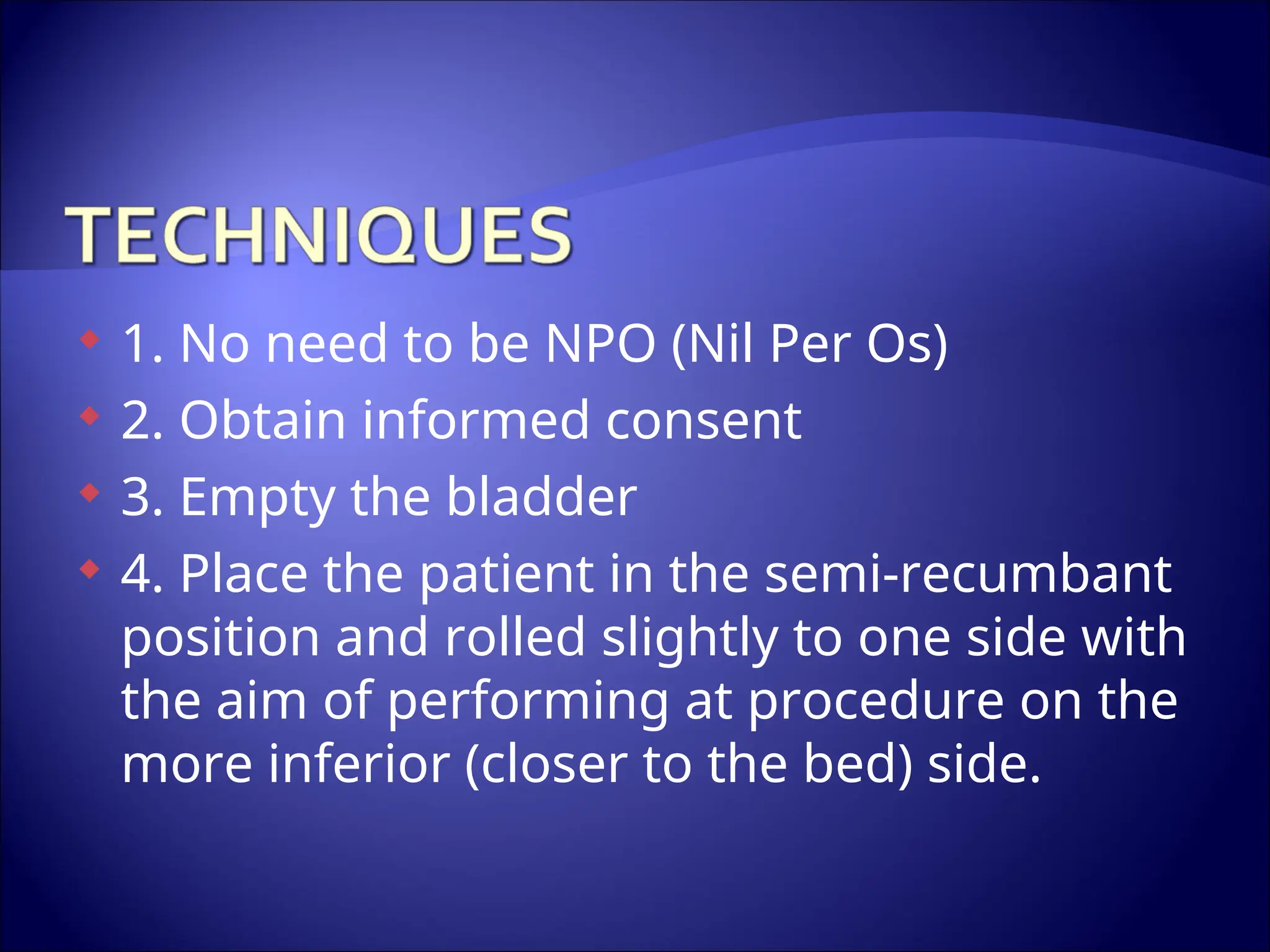
1. Noneed to be NPO (Nil Per Os)
2. Obtain informed consent
3. Empty the bladder
4. Place the patient in the semi-recumbant
position and rolled slightly to one side with
the aim of performing at procedure on the
more inferior (closer to the bed) side.
8.
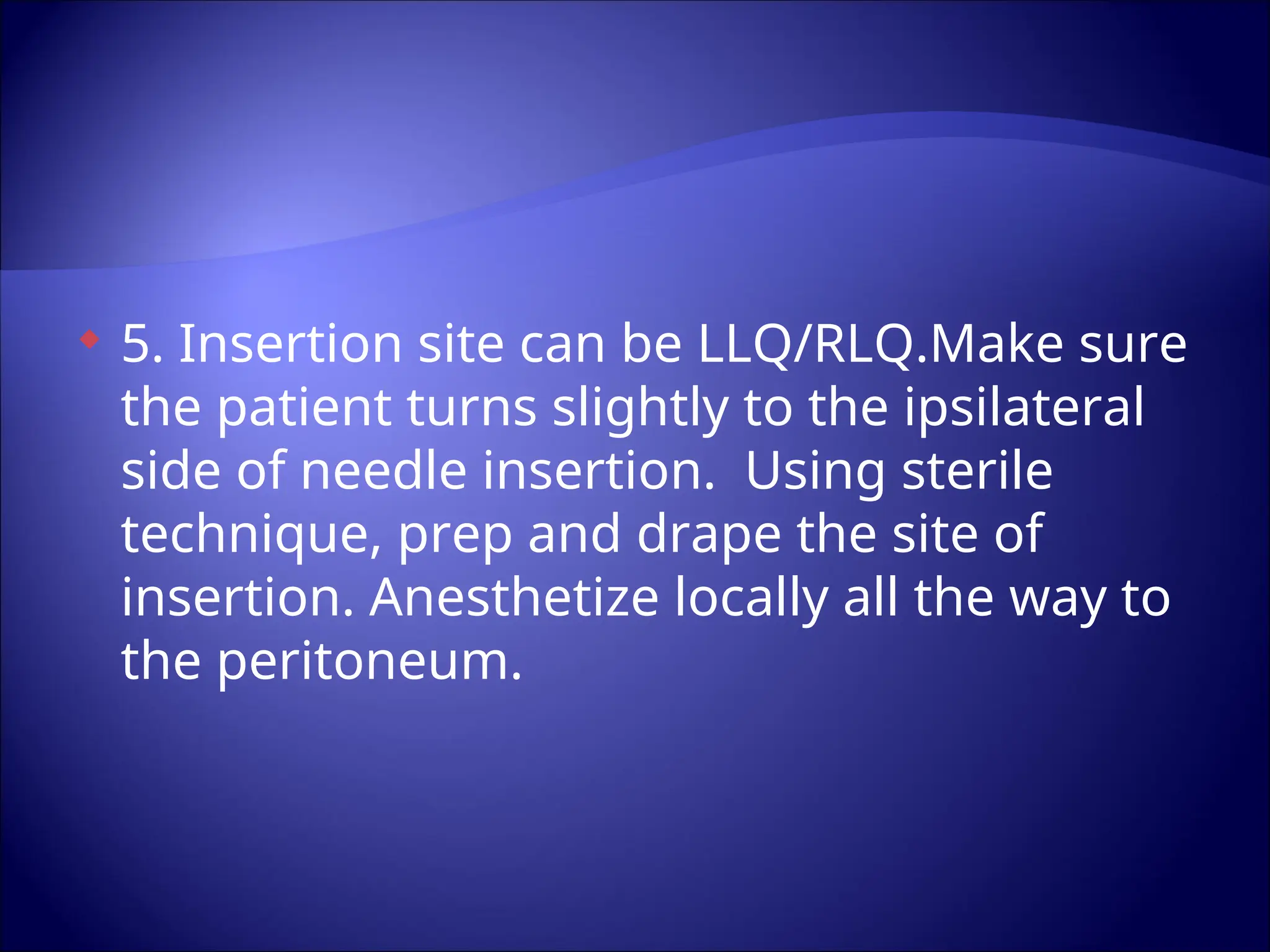
5. Insertionsite can be LLQ/RLQ.Make sure
the patient turns slightly to the ipsilateral
side of needle insertion. Using sterile
technique, prep and drape the site of
insertion. Anesthetize locally all the way to
the peritoneum.
9.
6.Once fluid isaspirated, remove the needle
from the metal/plastic catheter and attach
pressurized, non-collapsible tubing. The
tubing will have a needle attached to it and
this is inserted into a vacutainer bottle.
10.
Colloid replacement:If 5L give 8gm per liter
of ascites removed which should be 50-
75gm. After the procedure, ask the patient
to lie in his bed for at least 1 hours and the
nurse to check vital signs q1hr for 4hrs to
avoid hypotension. ordered
11.
Write aprocedure note which documents
the following: • Patient consent •
Indications for the procedure • Relevant
labs, e.g INR/PTT, platelet count •
Procedure technique, sterile prep,
anesthetic, amount of fluid obtained,
character of fluid, estimated blood loss •
Any complications • Tests
Diagnostic studies:• Document color and
turbidity of fluid • Send fluid for cell count,
differential (lavender top); albumin, total protein
(tiger or gold top); gram stain (black top test
tube); culture (culture bottles) [10cc of ascitic
fluid is needed per culture bottle] • A needle that
has passed through the skin should not be used
to inoculate the blood culture bottles. • Other
studies (amylase, cytology, AFB stains etc) only if
clinically indicated • Ensure you have a recent
serum albumin to calculate SAAG
![ Diagnostic studies: • Document color and
turbidity of fluid • Send fluid for cell count,
differential (lavender top); albumin, total protein
(tiger or gold top); gram stain (black top test
tube); culture (culture bottles) [10cc of ascitic
fluid is needed per culture bottle] • A needle that
has passed through the skin should not be used
to inoculate the blood culture bottles. • Other
studies (amylase, cytology, AFB stains etc) only if
clinically indicated • Ensure you have a recent
serum albumin to calculate SAAG](https://image.slidesharecdn.com/2-250314094251-32a4d824/75/Paracentesis-in-the-hospital-setup-with-steps-of-how-to-perform-the-procedure-13-2048.jpg)


