Technology Adoption
A methodology for choosing between good, better
and best
Innovations
COHERE 2013
A methodology for choosing between good, better and best
Richard Rush
Introduction
Innovation Adoption
What do we care about adoption?
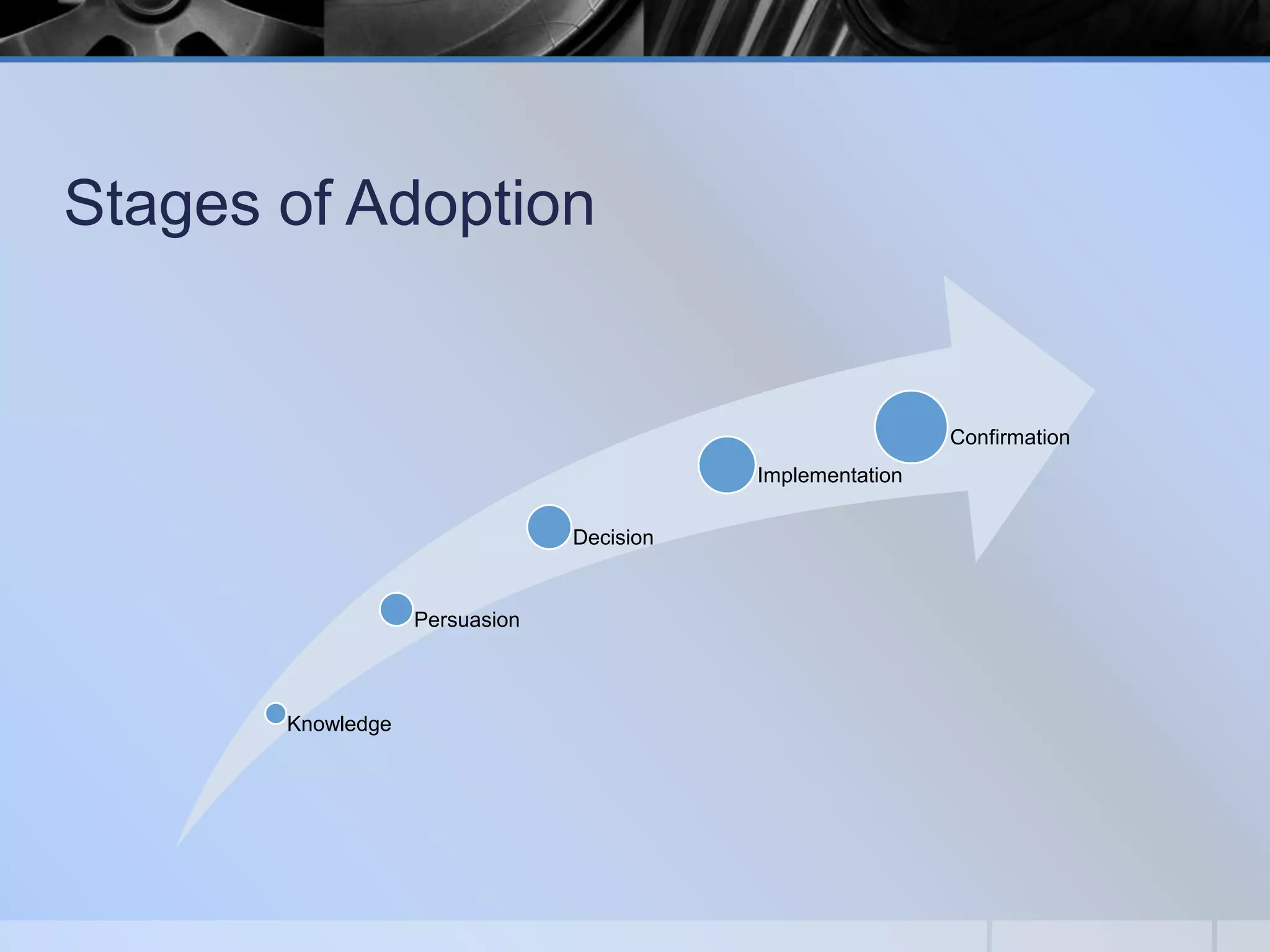
Stages of Adoption

Confirmation
Implementation
Decision

Persuasion

Knowledge
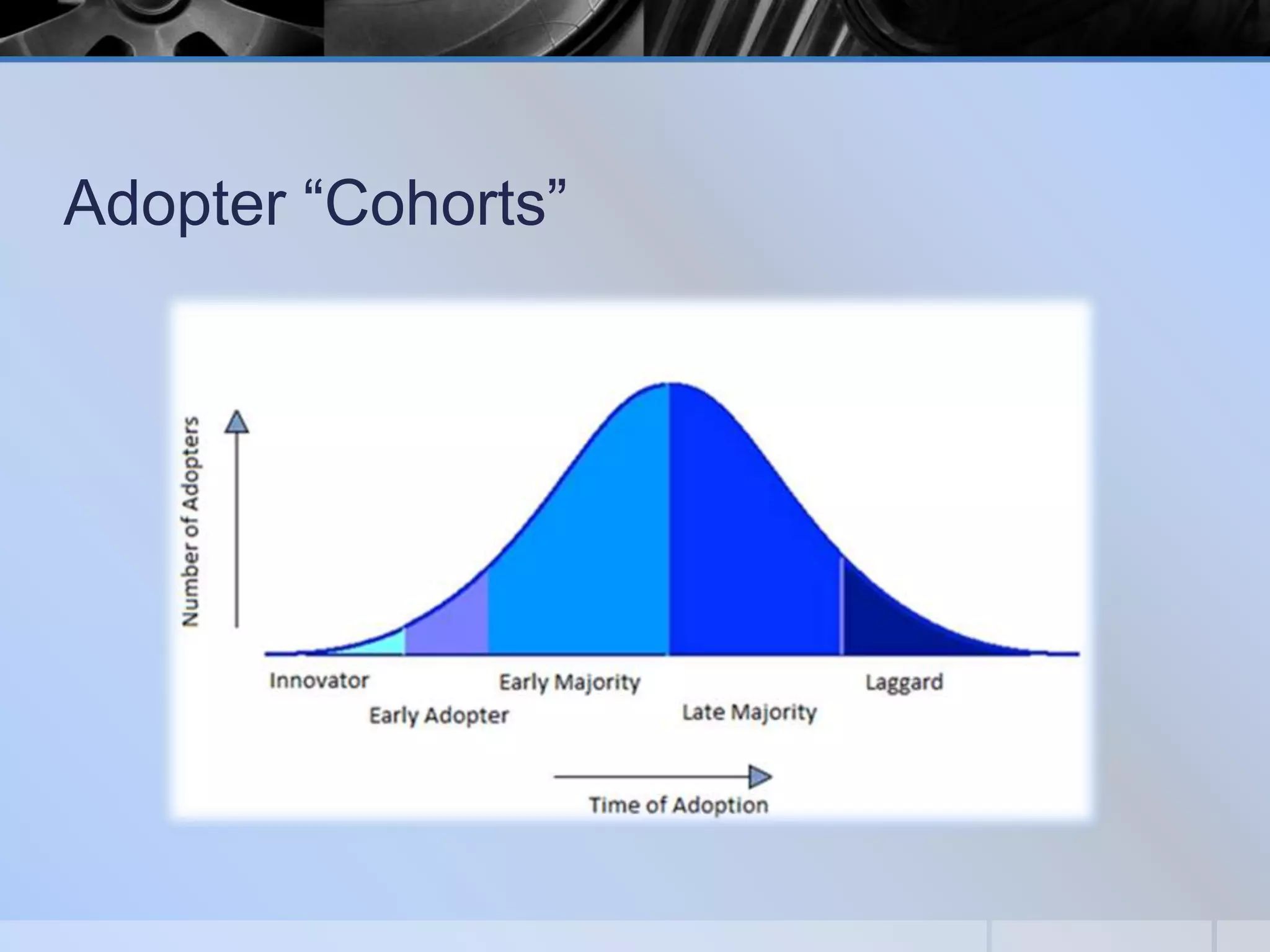
Adopter “Cohorts”
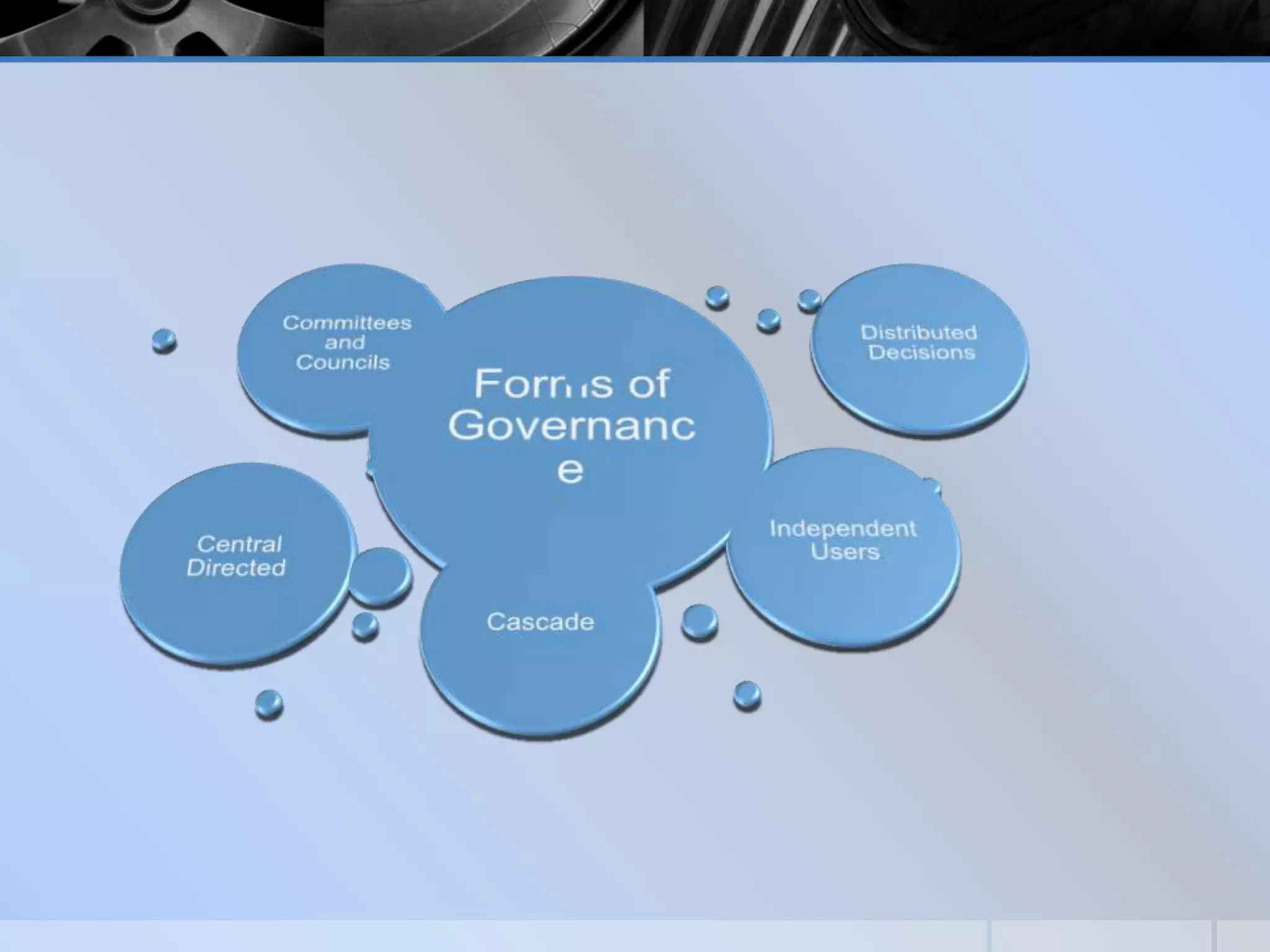
Governance for Ed Tech
Why Governance?
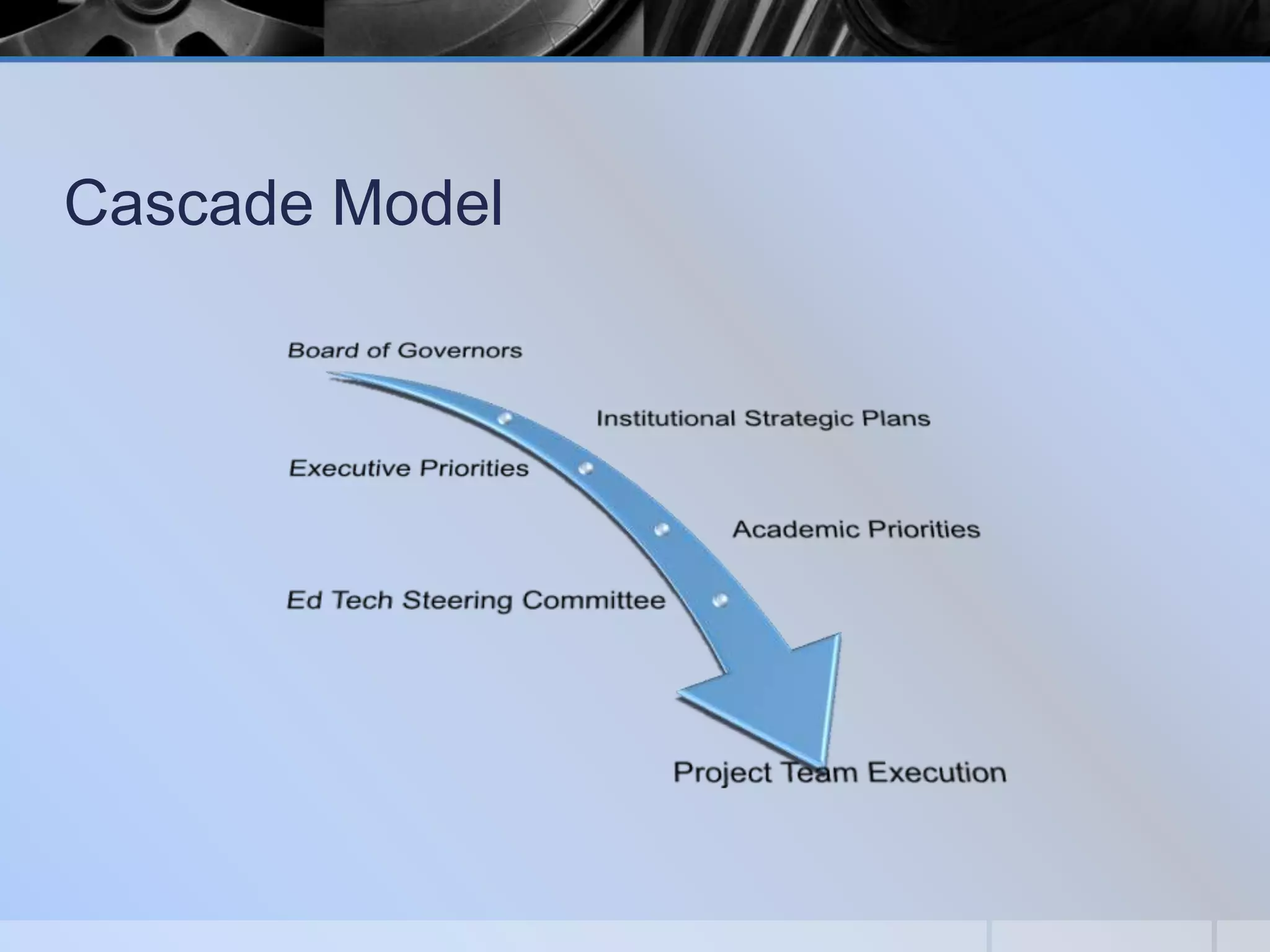
Cascade Model
Knowledge Stage

Models of Identification
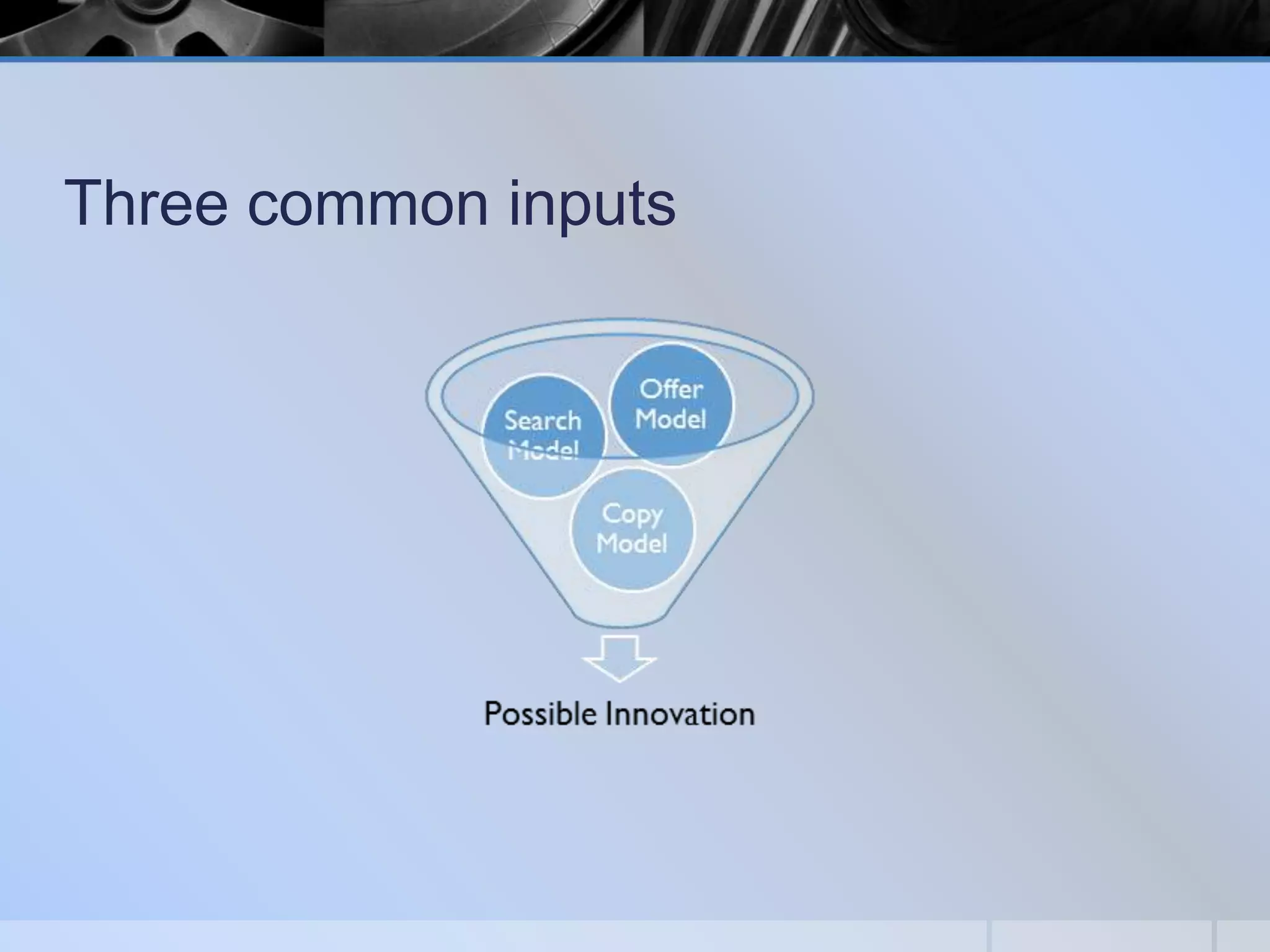
Three common inputs
Problem looking for a solution
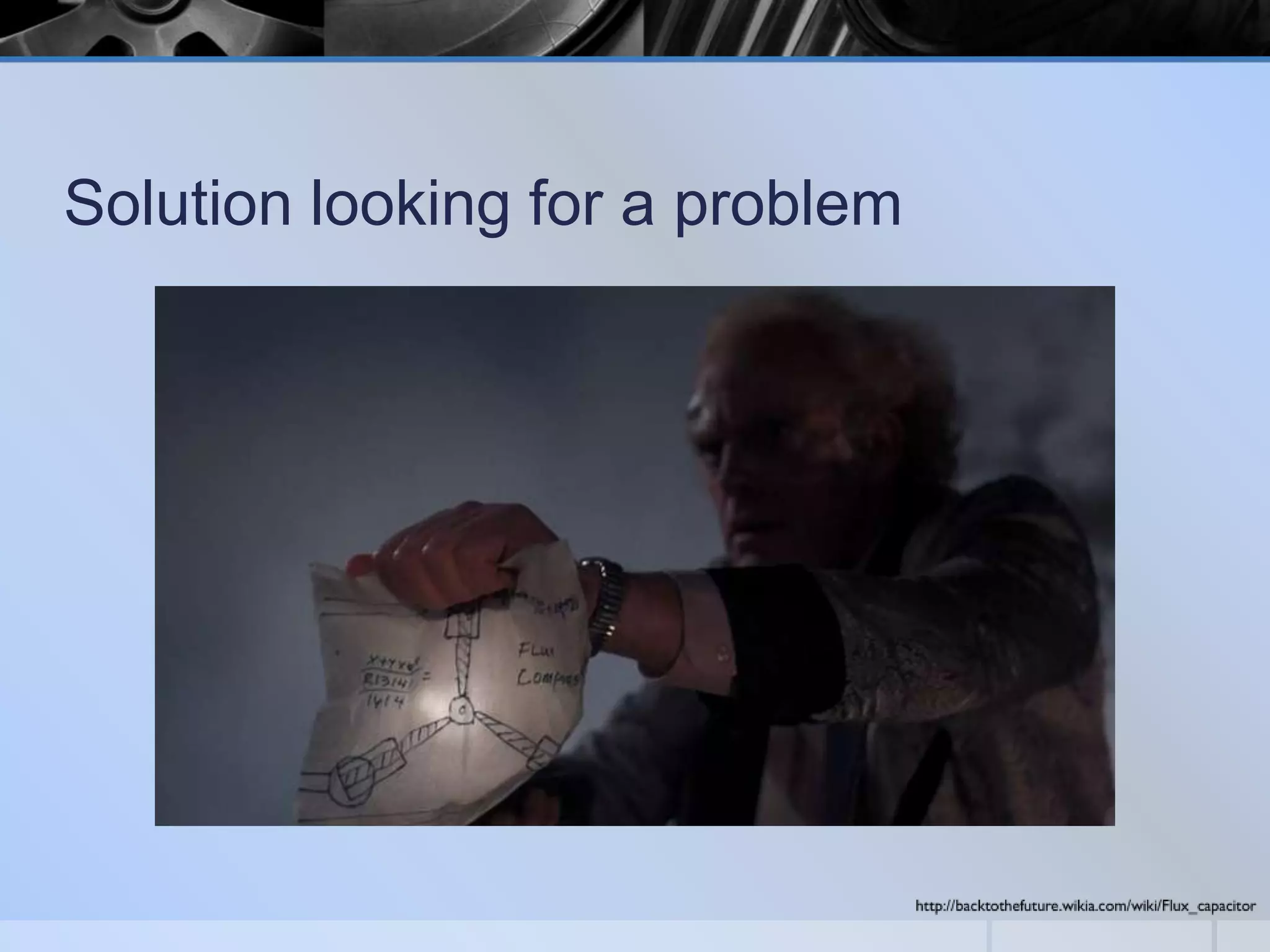
Solution looking for a problem
Isomorphism
Persuasion Stage

Models of Evaluation
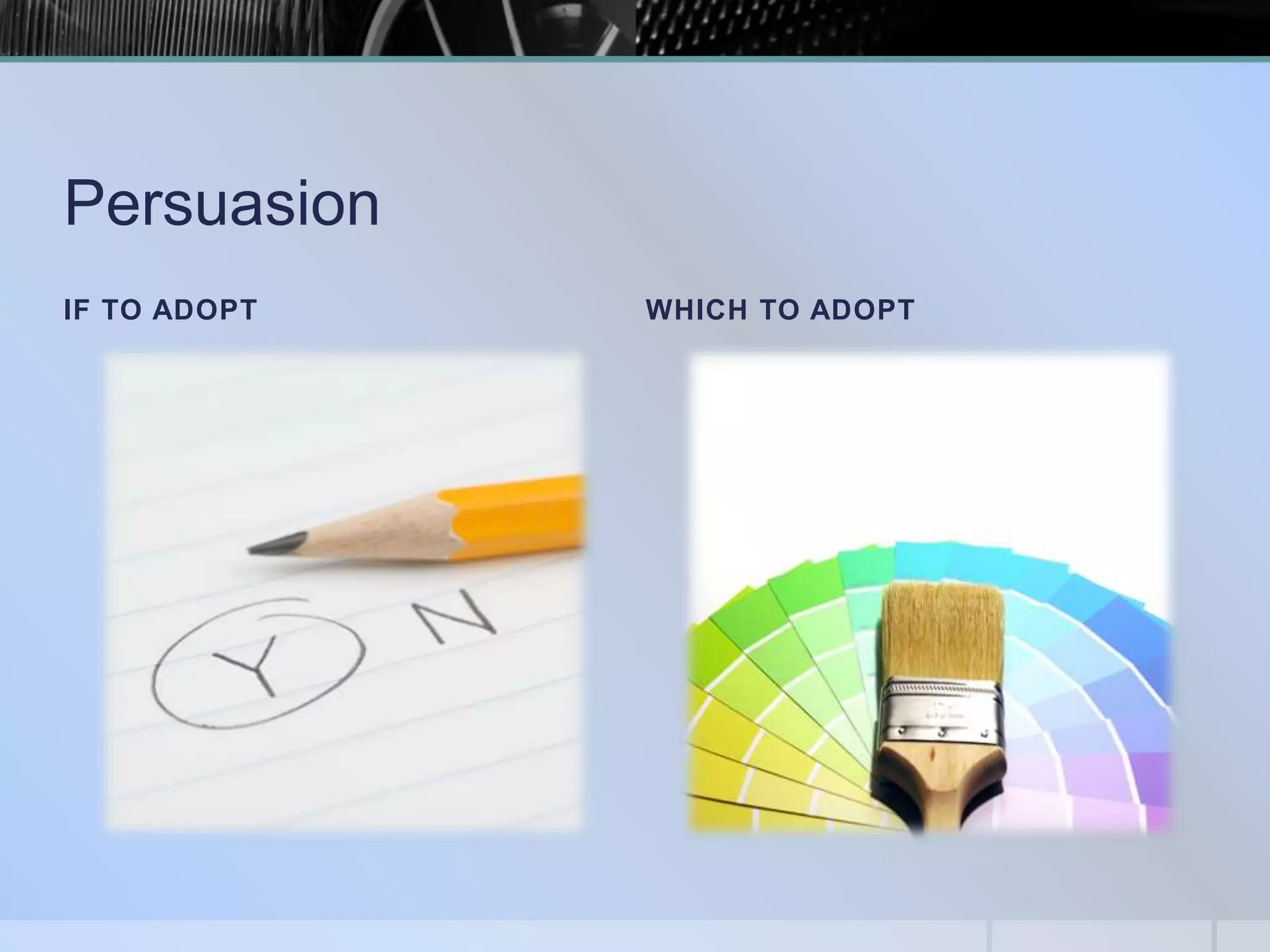
Persuasion
IF TO ADOPT

WHICH TO ADOPT
Trial and Error
Specifications Match
Isomorphism – Part 2
Decision Stage

Models of Selection
Mandated Model
Request for Proposal
Isomorphism – Part 3
Implementation Stage

Considerations for
Implementation
Project Management
Orientation
Training
Cultural
Confirmation Stage

Lesson’s Learned
References


Barak, M. (2010). Motivating self-regulated learning in technology education. International Journal of Technology & Design Education, 20(4), 381-401.



Beath, C. M. (1991). Supporting the information technology champion. MIS Quarterly, 15(3), 355-372.



Benamati, J., & Lederer, A. L. (2001). Rapid information technology change, coping mechanisms, and the emerging technologies group. Journal of Management Information
Systems, 17(4), 183-202.



Cheney, P. H., Mann, R. I., & Amoroso, D. L. (1986). Organizational factors affecting the success of end-user computing. Journal of Management Information Systems, 3(1),
65-80.



Devaraj, S., & Kohli, R. (2003). Performance impacts of information technology: Is actual usage the missing link? Management Science, 49(3), 273-289.



Hartwick, J., & Barki, H. (1994). Explaining the role of user participation in information system use. Management Science, 40(4), 440.



Jasperson, J. (Sean), Carter, P. E., & Zmud, R. W. (2005). a comprehensive conceptualization of post-adoptive behaviors associated with information technology enabled
work systems1. MIS Quarterly, 29(3), 525-557.



Karahanna, E., Straub, D. W., & Chervany, N. L. (1999). Information technology adoption across time: A cross-sectional comparison of pre-adoption and post-adoption beliefs.
MIS Quarterly, 23(2), 183-213.



Karuppan, Corinne M. & Karuppan, Muthu. (2008). Resilience of super users' mental models of enterprise-wide systems. European Journal of Information Systems, 17(1), 2946.



Lee, G., & Xia, W. (2005). The ability of information systems development project teams to respond to business and technology changes: A study of flexibility measures.
European Journal of Information Systems, 14(1), 75.



Leonard-Barton, D. (1988). Implementation as mutual adaptation of technology and organization. Research Policy, 17(5), 251.



Moore, G. (2001). Crossing the Chasm (ePub. ed.), HarperCollins e-books.



Odhabi, H. (2007). Investigating the impact of laptops on students’ learning using bloom's learning taxonomy. British Journal of Educational Technology, 38(6), 1126-1131.



Palvia, S. C. (2000). Effectiveness of asynchronous and synchronous modes for learning computer software for end users: An experimental investigation. The Journal of
Computer Information Systems, 41(2), 99.



Rogers, Everett M. (2003). Diffusion of Innovations (5th ed.), New York, NY: Free Press.



Tyre, M. J., & Orlikowski, W. J. (1993). Exploiting opportunities for technological improvement in organizations. Sloan Management Review, 35(1), 13.
Questions and Comments

A Methodology for Choosing

Editor's Notes

  • #5 Joke, context, housekeeping Practitioner and Theory
  • #7 Illustrative Example (IE) – Sources of content off the web
  • #8 Rogers 1962 - 2003
  • #9 Rogers 1962, Moore 2001
  • #11 Jasperson, Carter and Zmud, 2005; Tyre and Orlikowski, 1994; Lee and Xia, 2005
  • #12 IE – Plumbers and Youtube (SAIT)IE – Departments and 3D printers (SAIT)IE – PSE Timetabling (Council)IE – Work from Home (Central)
  • #13 IE - SAIT
  • #16 IE – RVVS Synchronous Tools
  • #17 IE – 1:1 Computer LAUSD
  • #18 IE – LOTR “Pint”
  • #20 IE – MOOC’s (if to adopt)IE – SAIT LMS (which to adopt)
  • #21 IE – LinkedInIE – Web CT 1.3
  • #22 IE – SAIT LMS process
  • #23 IE – Integration into a system
  • #25 IE – Insurance in Alberta in 1994IE – Process changeIE – RVVS ISP situation
  • #27 SAIT – laptop / iPad use
  • #29 Barak (2010) – project based learning
  • #30 Beath (1991);Karrupan and Karrupan (2008) tech champions
  • #31 IE – PSE TimetablingCheney et al (1986); Karrupan and Karrupan (2008); Palvia (2000) prevent mis-utilization, enterprise need, interest
  • #32 IE – SMART – CCADeveraj and Kohli (2003); Hartwick & Barki (1994); Karahanha et al (1999); Leonard-Barton (1988) – autonomy and uses
  • #33 Odhabi (2007) 1:1 Laptops and Student performance