Engagement, Satisfaction, and Time 
Managements Skills of Online Instructors 
J. X Seaton; R. A. Schwier; & G. McCalla 
University of Saskatchewan
Research Story 
• Completed Master’s of Arts Online 
• Less than satisfactory experience 
• Experience not congruent with the research 
• WHY??
Case Study 
• 12 online instructors at the University of 
Saskatchewan followed over a year 
• A lot of variation between instructors 
• In demographics 
• In style of online teaching 
• Generally the online course was thrust upon 
them
What did I learn? 
• My experiences mirrored those of my 
participants. 
• When online education goes well it is 
awesome 
• When it doesn’t go well everyone dreads it 
• Seemed to be related to research 
• And linked to time management
Questions 
• Are we expecting too much from online 
instructors? 
• If student engagement predicts the student 
satisfaction in the course, can instructor 
engagement predict instructor satisfaction? 
• Follow up: Will student presence increase instructor 
engagement? 
• Can time management techniques help 
instructors manage the stress of online 
courses?
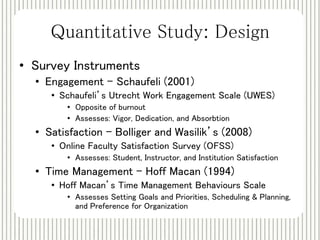
Quantitative Study: Design 
• Survey Instruments 
• Engagement – Schaufeli (2001) 
• Schaufeli’s Utrecht Work Engagement Scale (UWES) 
• Opposite of burnout 
• Assesses: Vigor, Dedication, and Absorbtion 
• Satisfaction - Bolliger and Wasilik’s (2008) 
• Online Faculty Satisfaction Survey (OFSS) 
• Assesses: Student, Instructor, and Institution Satisfaction 
• Time Management - Hoff Macan (1994) 
• Hoff Macan’s Time Management Behaviours Scale 
• Assesses Setting Goals and Priorities, Scheduling & Planning, 
and Preference for Organization
Preliminary Results 
• Collected results from 28 University of 
Regina Online Instructors from a variety of 
departments 
• Good to understand local trends at the 
university 
• Purpose of the data to show what you can 
learn from a similar study 
• More data from other institutions can allow 
meta-analysis
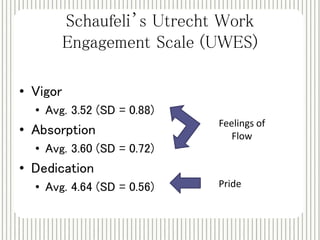
Schaufeli’s Utrecht Work 
Engagement Scale (UWES) 
• Vigor 
• Avg. 3.52 (SD = 0.88) 
• Absorption 
• Avg. 3.60 (SD = 0.72) 
• Dedication 
• Avg. 4.64 (SD = 0.56) 
Feelings of 
Flow 
Pride
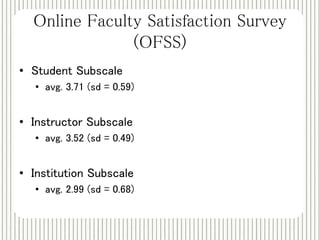
Online Faculty Satisfaction Survey 
(OFSS) 
• Student Subscale 
• avg. 3.71 (sd = 0.59) 
• Instructor Subscale 
• avg. 3.52 (sd = 0.49) 
• Institution Subscale 
• avg. 2.99 (sd = 0.68)
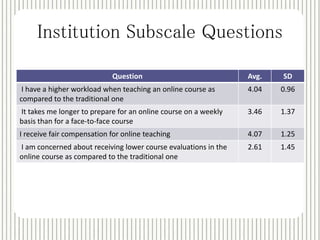
Institution Subscale Questions 
Question Avg. SD 
I have a higher workload when teaching an online course as 
compared to the traditional one 
4.04 0.96 
It takes me longer to prepare for an online course on a weekly 
basis than for a face-to-face course 
3.46 1.37 
I receive fair compensation for online teaching 4.07 1.25 
I am concerned about receiving lower course evaluations in the 
2.61 1.45 
online course as compared to the traditional one
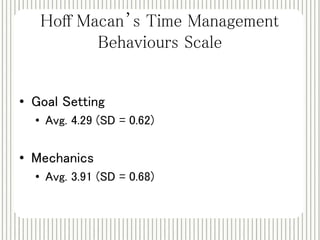
Hoff Macan’s Time Management 
Behaviours Scale 
• Goal Setting 
• Avg. 4.29 (SD = 0.62) 
• Mechanics 
• Avg. 3.91 (SD = 0.68)
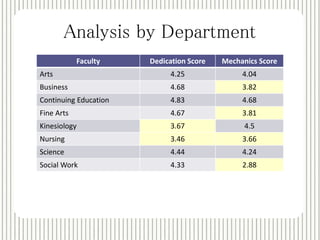
Analysis by Department 
Faculty Dedication Score Mechanics Score 
Arts 4.25 4.04 
Business 4.68 3.82 
Continuing Education 4.83 4.68 
Fine Arts 4.67 3.81 
Kinesiology 3.67 4.5 
Nursing 3.46 3.66 
Science 4.44 4.24 
Social Work 4.33 2.88
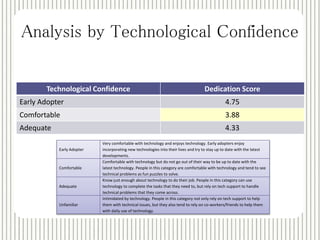
Analysis by Technological Confidence 
Technological Confidence Dedication Score 
Early Adopter 4.75 
Comfortable 3.88 
Adequate 4.33 
Early Adopter 
Very comfortable with technology and enjoys technology. Early adopters enjoy 
incorporating new technologies into their lives and try to stay up to date with the latest 
developments. 
Comfortable 
Comfortable with technology but do not go out of their way to be up to date with the 
latest technology. People in this category are comfortable with technology and tend to see 
technical problems as fun puzzles to solve. 
Adequate 
Know just enough about technology to do their job. People in this category can use 
technology to complete the tasks that they need to, but rely on tech support to handle 
technical problems that they come across. 
Unfamiliar 
Intimidated by technology. People in this category not only rely on tech support to help 
them with technical issues, but they also tend to rely on co-workers/friends to help them 
with daily use of technology.
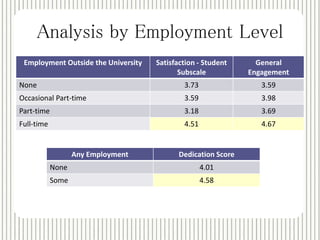
Analysis by Employment Level 
Employment Outside the University Satisfaction - Student 
Subscale 
General 
Engagement 
None 3.73 3.59 
Occasional Part-time 3.59 3.98 
Part-time 3.18 3.69 
Full-time 4.51 4.67 
Any Employment Dedication Score 
None 4.01 
Some 4.58
Question that Surface 
• Does the University Support best practices 
for online education?
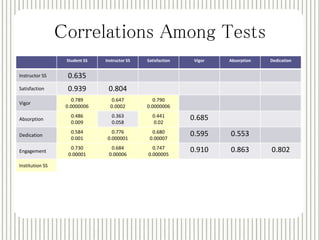
Correlations Among Tests 
Student SS Instructor SS Satisfaction Vigor Absorption Dedication 
Instructor SS 0.635 
Satisfaction 0.939 0.804 
Vigor 
0.789 
0.0000006 
0.647 
0.0002 
0.790 
0.0000006 
Absorption 
0.486 
0.009 
0.363 
0.058 
0.441 
0.02 
0.685 
Dedication 
0.584 
0.001 
0.776 
0.000001 
0.680 
0.00007 
0.595 0.553 
Engagement 
0.730 
0.00001 
0.684 
0.00006 
0.747 
0.000005 
0.910 0.863 0.802 
Institution SS
Concluding Thoughts 
• There is a lot of research that suggests that 
instructor presences is important for student 
engagement. 
• But what if instructor engagement is dependent 
upon student presence? 
• More information is needed. Similar studies are 
useful for the institutions 
• Meta-analysis would give us information about how 
these factors relate to university characteristics
Thank you 
Questions? 
University of Regina talk available 
upon request.

Engagement, Satisfaction and Time Management Skill of Online Instructors (Jennifer Seaton, Gordon McCalla, Richard Schwier)

  • 1.
    Engagement, Satisfaction, andTime Managements Skills of Online Instructors J. X Seaton; R. A. Schwier; & G. McCalla University of Saskatchewan
  • 2.
    Research Story •Completed Master’s of Arts Online • Less than satisfactory experience • Experience not congruent with the research • WHY??
  • 3.
    Case Study •12 online instructors at the University of Saskatchewan followed over a year • A lot of variation between instructors • In demographics • In style of online teaching • Generally the online course was thrust upon them
  • 4.
    What did Ilearn? • My experiences mirrored those of my participants. • When online education goes well it is awesome • When it doesn’t go well everyone dreads it • Seemed to be related to research • And linked to time management
  • 5.
    Questions • Arewe expecting too much from online instructors? • If student engagement predicts the student satisfaction in the course, can instructor engagement predict instructor satisfaction? • Follow up: Will student presence increase instructor engagement? • Can time management techniques help instructors manage the stress of online courses?
  • 6.
    Quantitative Study: Design • Survey Instruments • Engagement – Schaufeli (2001) • Schaufeli’s Utrecht Work Engagement Scale (UWES) • Opposite of burnout • Assesses: Vigor, Dedication, and Absorbtion • Satisfaction - Bolliger and Wasilik’s (2008) • Online Faculty Satisfaction Survey (OFSS) • Assesses: Student, Instructor, and Institution Satisfaction • Time Management - Hoff Macan (1994) • Hoff Macan’s Time Management Behaviours Scale • Assesses Setting Goals and Priorities, Scheduling & Planning, and Preference for Organization
  • 7.
    Preliminary Results •Collected results from 28 University of Regina Online Instructors from a variety of departments • Good to understand local trends at the university • Purpose of the data to show what you can learn from a similar study • More data from other institutions can allow meta-analysis
  • 8.
    Schaufeli’s Utrecht Work Engagement Scale (UWES) • Vigor • Avg. 3.52 (SD = 0.88) • Absorption • Avg. 3.60 (SD = 0.72) • Dedication • Avg. 4.64 (SD = 0.56) Feelings of Flow Pride
  • 9.
    Online Faculty SatisfactionSurvey (OFSS) • Student Subscale • avg. 3.71 (sd = 0.59) • Instructor Subscale • avg. 3.52 (sd = 0.49) • Institution Subscale • avg. 2.99 (sd = 0.68)
  • 10.
    Institution Subscale Questions Question Avg. SD I have a higher workload when teaching an online course as compared to the traditional one 4.04 0.96 It takes me longer to prepare for an online course on a weekly basis than for a face-to-face course 3.46 1.37 I receive fair compensation for online teaching 4.07 1.25 I am concerned about receiving lower course evaluations in the 2.61 1.45 online course as compared to the traditional one
  • 11.
    Hoff Macan’s TimeManagement Behaviours Scale • Goal Setting • Avg. 4.29 (SD = 0.62) • Mechanics • Avg. 3.91 (SD = 0.68)
  • 12.
    Analysis by Department Faculty Dedication Score Mechanics Score Arts 4.25 4.04 Business 4.68 3.82 Continuing Education 4.83 4.68 Fine Arts 4.67 3.81 Kinesiology 3.67 4.5 Nursing 3.46 3.66 Science 4.44 4.24 Social Work 4.33 2.88
  • 13.
    Analysis by TechnologicalConfidence Technological Confidence Dedication Score Early Adopter 4.75 Comfortable 3.88 Adequate 4.33 Early Adopter Very comfortable with technology and enjoys technology. Early adopters enjoy incorporating new technologies into their lives and try to stay up to date with the latest developments. Comfortable Comfortable with technology but do not go out of their way to be up to date with the latest technology. People in this category are comfortable with technology and tend to see technical problems as fun puzzles to solve. Adequate Know just enough about technology to do their job. People in this category can use technology to complete the tasks that they need to, but rely on tech support to handle technical problems that they come across. Unfamiliar Intimidated by technology. People in this category not only rely on tech support to help them with technical issues, but they also tend to rely on co-workers/friends to help them with daily use of technology.
  • 14.
    Analysis by EmploymentLevel Employment Outside the University Satisfaction - Student Subscale General Engagement None 3.73 3.59 Occasional Part-time 3.59 3.98 Part-time 3.18 3.69 Full-time 4.51 4.67 Any Employment Dedication Score None 4.01 Some 4.58
  • 15.
    Question that Surface • Does the University Support best practices for online education?
  • 16.
    Correlations Among Tests Student SS Instructor SS Satisfaction Vigor Absorption Dedication Instructor SS 0.635 Satisfaction 0.939 0.804 Vigor 0.789 0.0000006 0.647 0.0002 0.790 0.0000006 Absorption 0.486 0.009 0.363 0.058 0.441 0.02 0.685 Dedication 0.584 0.001 0.776 0.000001 0.680 0.00007 0.595 0.553 Engagement 0.730 0.00001 0.684 0.00006 0.747 0.000005 0.910 0.863 0.802 Institution SS
  • 17.
    Concluding Thoughts •There is a lot of research that suggests that instructor presences is important for student engagement. • But what if instructor engagement is dependent upon student presence? • More information is needed. Similar studies are useful for the institutions • Meta-analysis would give us information about how these factors relate to university characteristics
  • 18.
    Thank you Questions? University of Regina talk available upon request.