Performance, Character,
and Depth
*
David Sable, PhD
Department of Religious Studies
Saint Mary’s University
david.sable@smu.ca
*
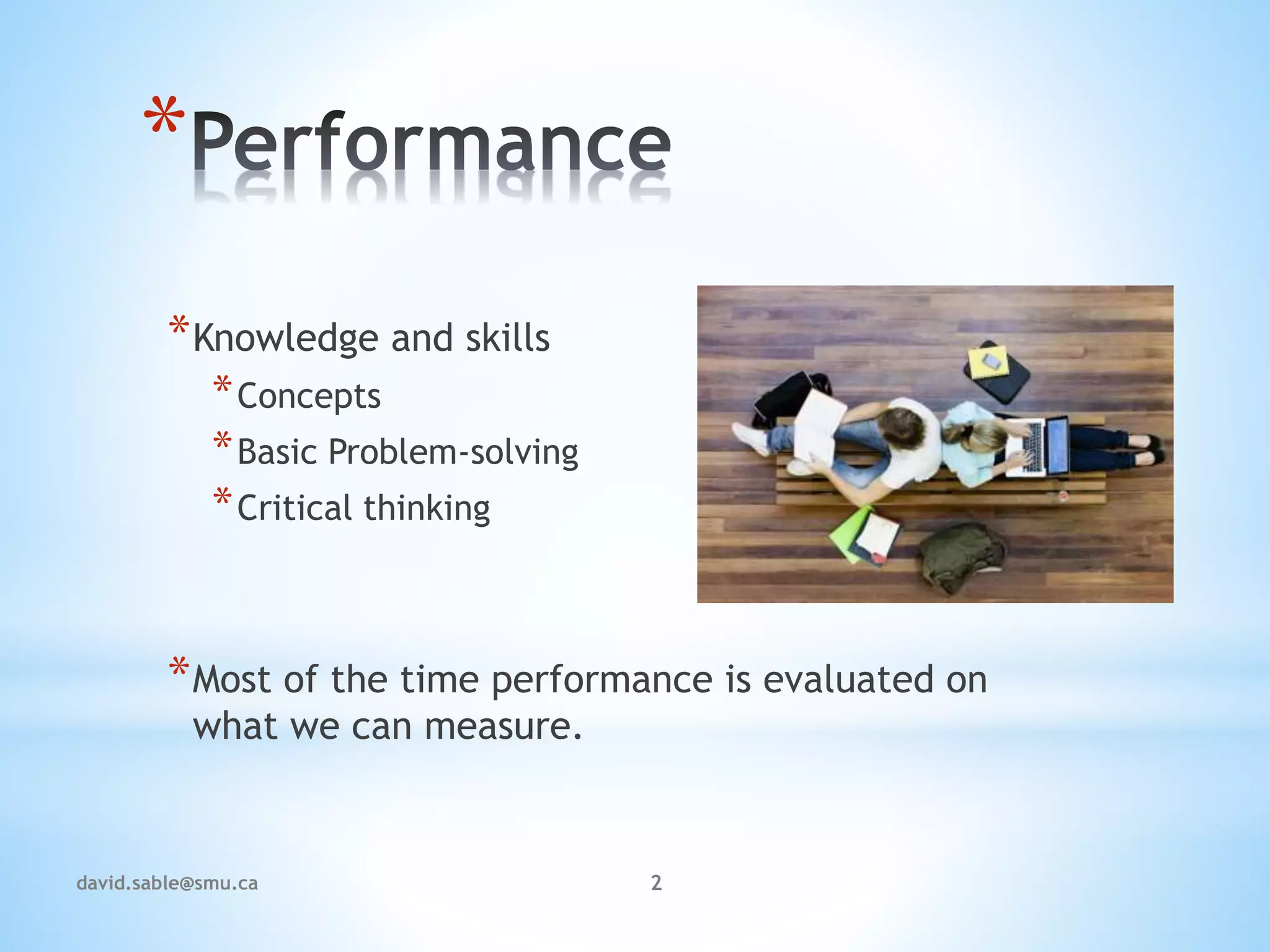
*Knowledge and skills
*Concepts
*Basic Problem-solving
*Critical thinking
*Most of the time performance is evaluated on
what we can measure.
2david.sable@smu.ca
*
*Social and emotional management, civility, and
compassion are increasingly part of the
responsibility of the whole education system,
classroom based and online (Hart, 2004)
3david.sable@smu.ca
*
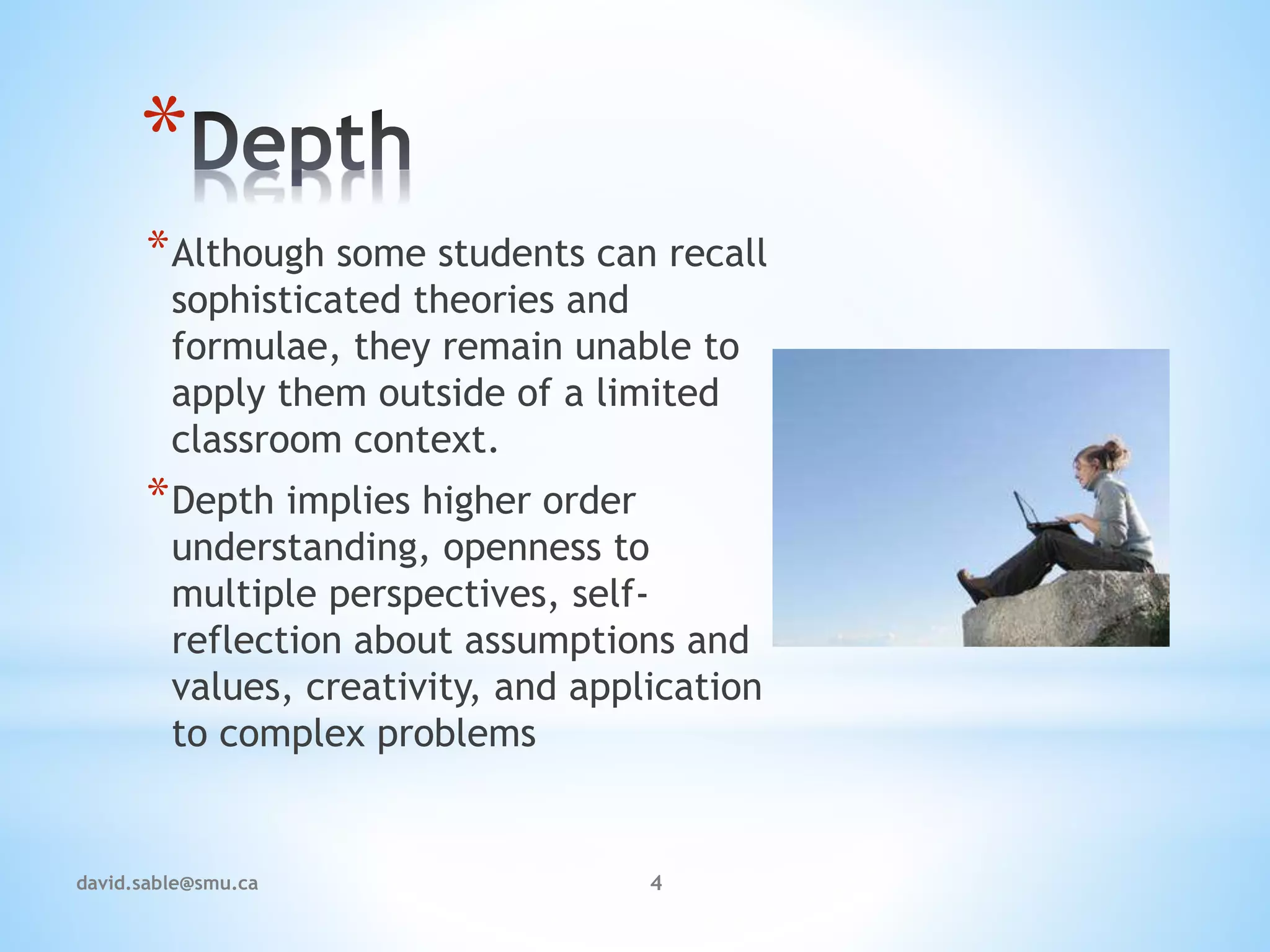
*Although some students can recall
sophisticated theories and
formulae, they remain unable to
apply them outside of a limited
classroom context.
*Depth implies higher order
understanding, openness to
multiple perspectives, self-
reflection about assumptions and
values, creativity, and application
to complex problems
4david.sable@smu.ca
*
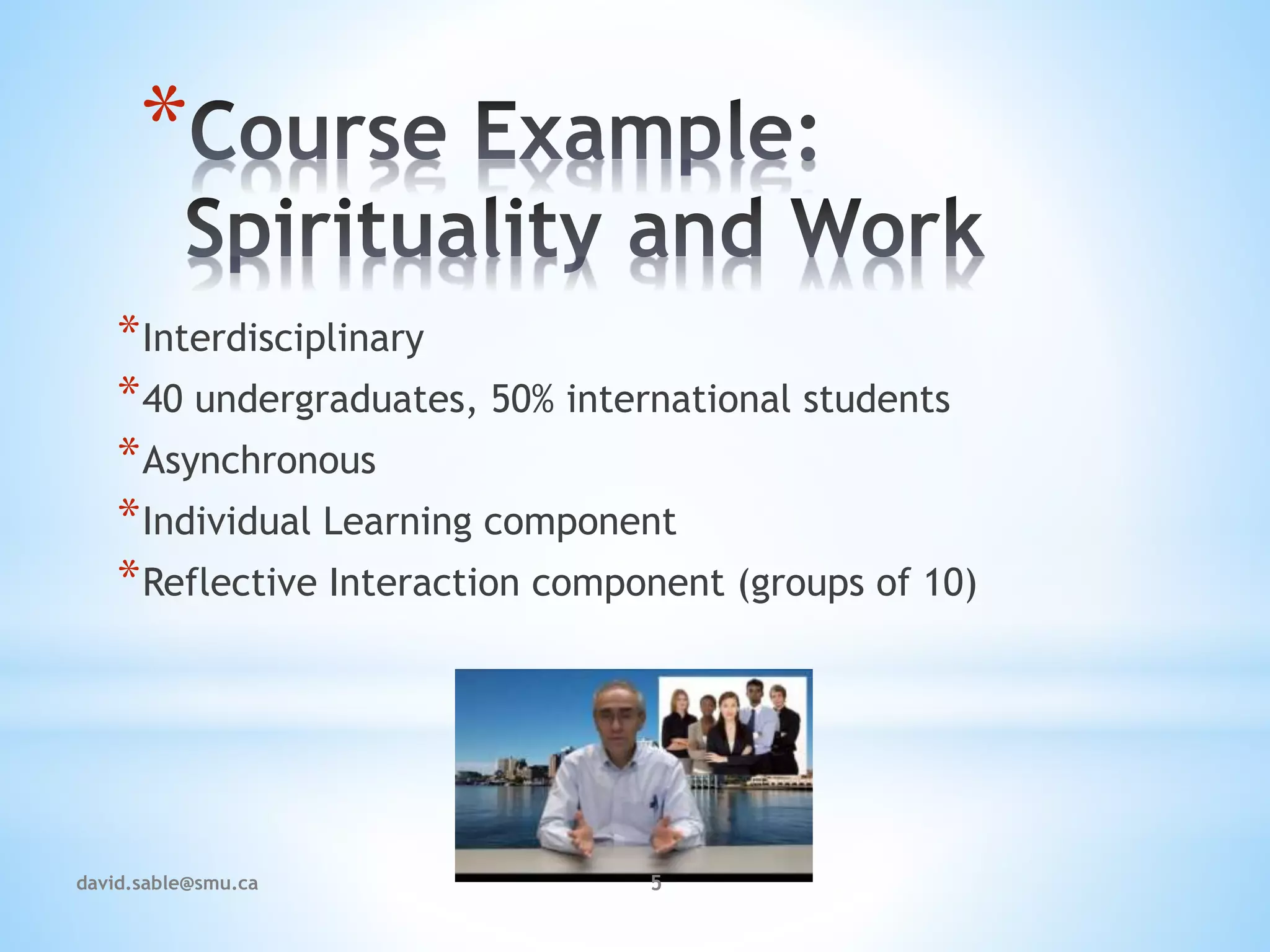
*Interdisciplinary
*40 undergraduates, 50% international students
*Asynchronous
*Individual Learning component
*Reflective Interaction component (groups of 10)
5david.sable@smu.ca
*
*Clear instructions tied to
measurable outcomes
*Frequent, relevant feedback
*Interaction (peer learning)
*But how do we design for
character and depth?
*Peer learning exercise
6david.sable@smu.ca
*
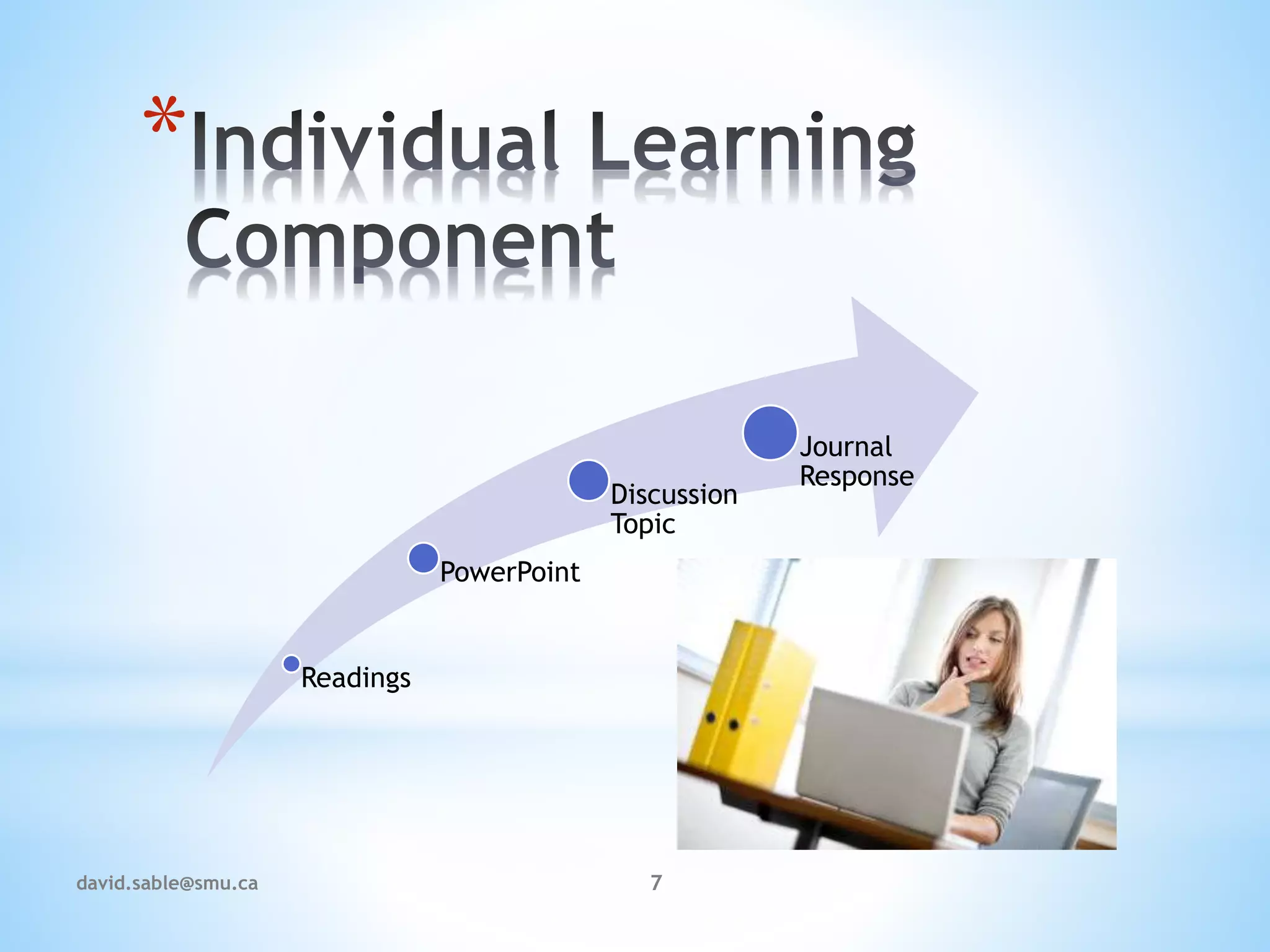
Readings
PowerPoint
Discussion
Topic
Journal
Response
7david.sable@smu.ca
*
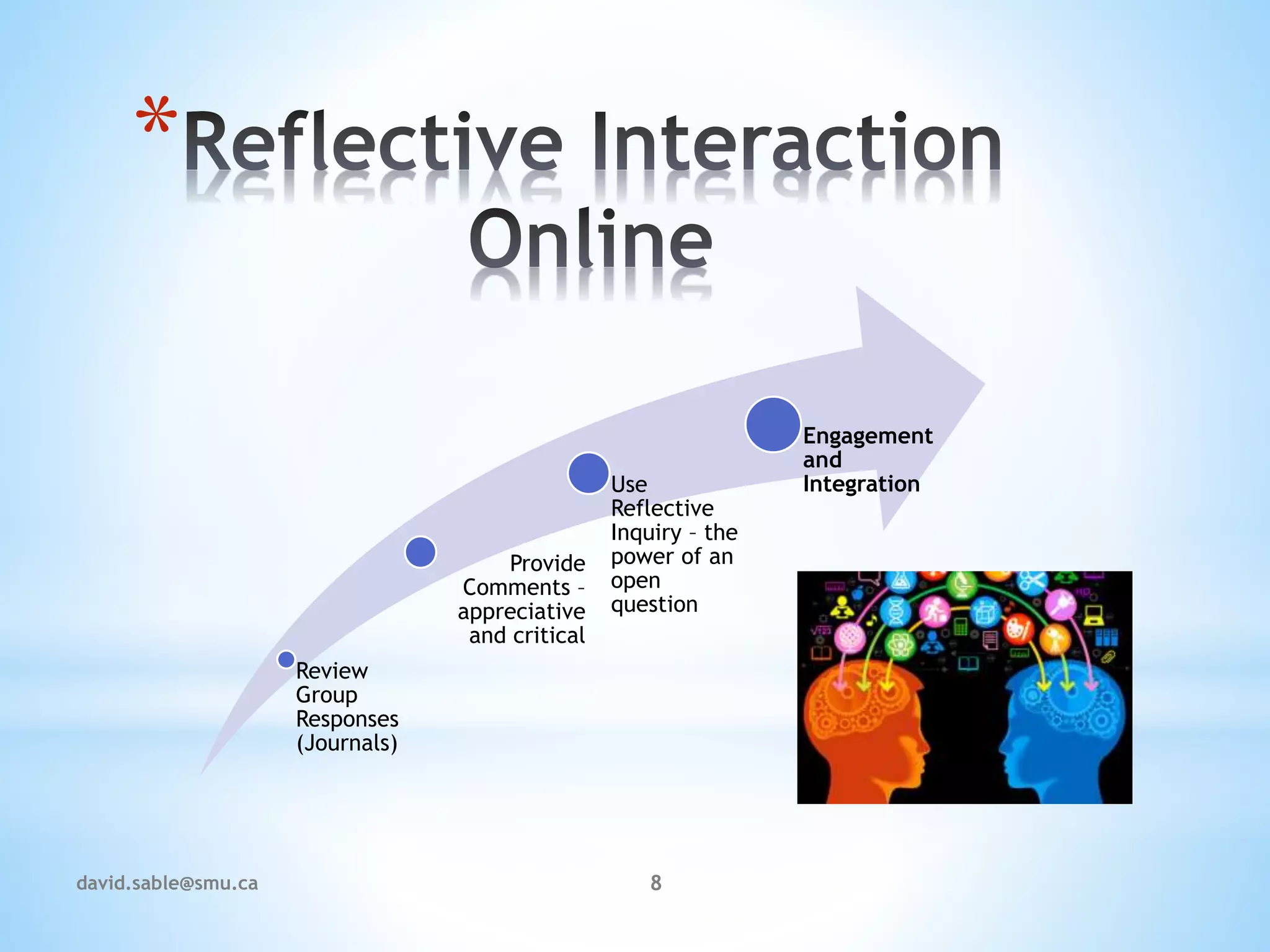
Review
Group
Responses
(Journals)
Provide
Comments –
appreciative
and critical
Use
Reflective
Inquiry – the
power of an
open
question
Engagement
and
Integration
8david.sable@smu.ca
*
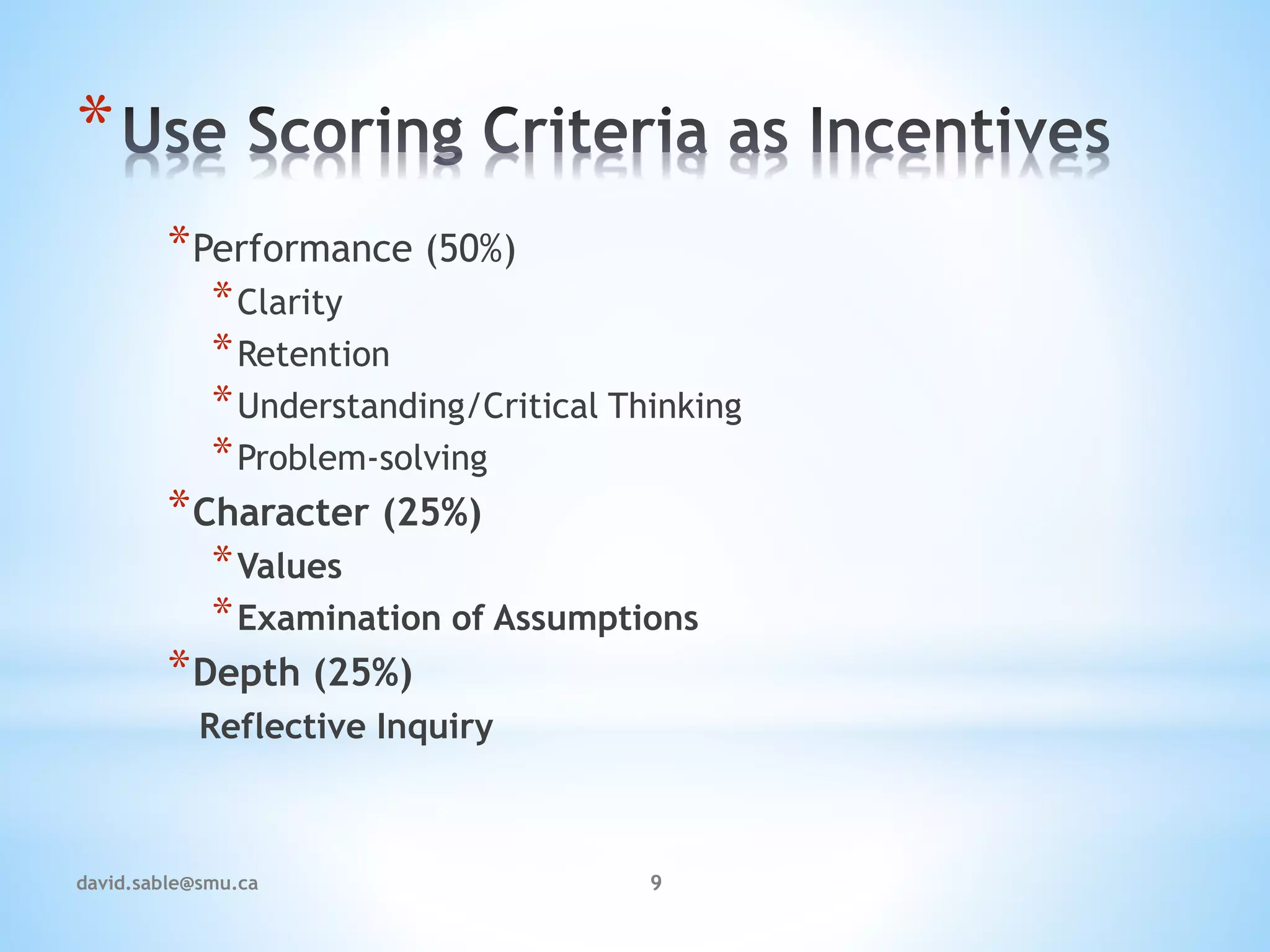
*Performance (50%)
*Clarity
*Retention
*Understanding/Critical Thinking
*Problem-solving
*Character (25%)
*Values
*Examination of Assumptions
*Depth (25%)
Reflective Inquiry
9david.sable@smu.ca

Reflective Interaction Online

Editor's Notes

  • #4 But character has always been a challenge to teach and evaluate, in the classroom or online. What can we do online that could address this challenge?
  • #7 Feedback and interaction are important not only with the instructor, but with peers.
  • #10 Examination of assumptions includes gently exposing and deconstructing positions of role, belief, culture, and so forth, to see more deeply or from multiple perspectives. This allows students the conceptual flexibility to see beyond the information given and beyond their own presuppositions.