Download to read offline

![Proposed
Diagnos,c
Assesment
Methodology
Item Response Theory (ITR) [Thurstone, 1925], [Lord, 1952, 1968]
ITR allows invariant measured variables that are independent with respect to the examinees
and the used test instruments.
CTT ITR
Lack of invariance in the properties of the
Different tests can be comparable, as
tests with respect to the test subjects. The
the skill level trend to be the same
characteristics of the items depend on the
between different item sets
group of persons.
Asumes the same error level for all subjects, Similar level of assessment accuracy
or the test liability is the same for all the for all different participants.
participants (as a property of the test)
IEEE EDUCON 2013 (Berlin)](https://image.slidesharecdn.com/presentacionpapereducon-emadrid-uned-2013v2-0-130314032535-phpapp02/75/A-cluster-based-analysis-to-diagnose-students-learning-achievements-7-2048.jpg)
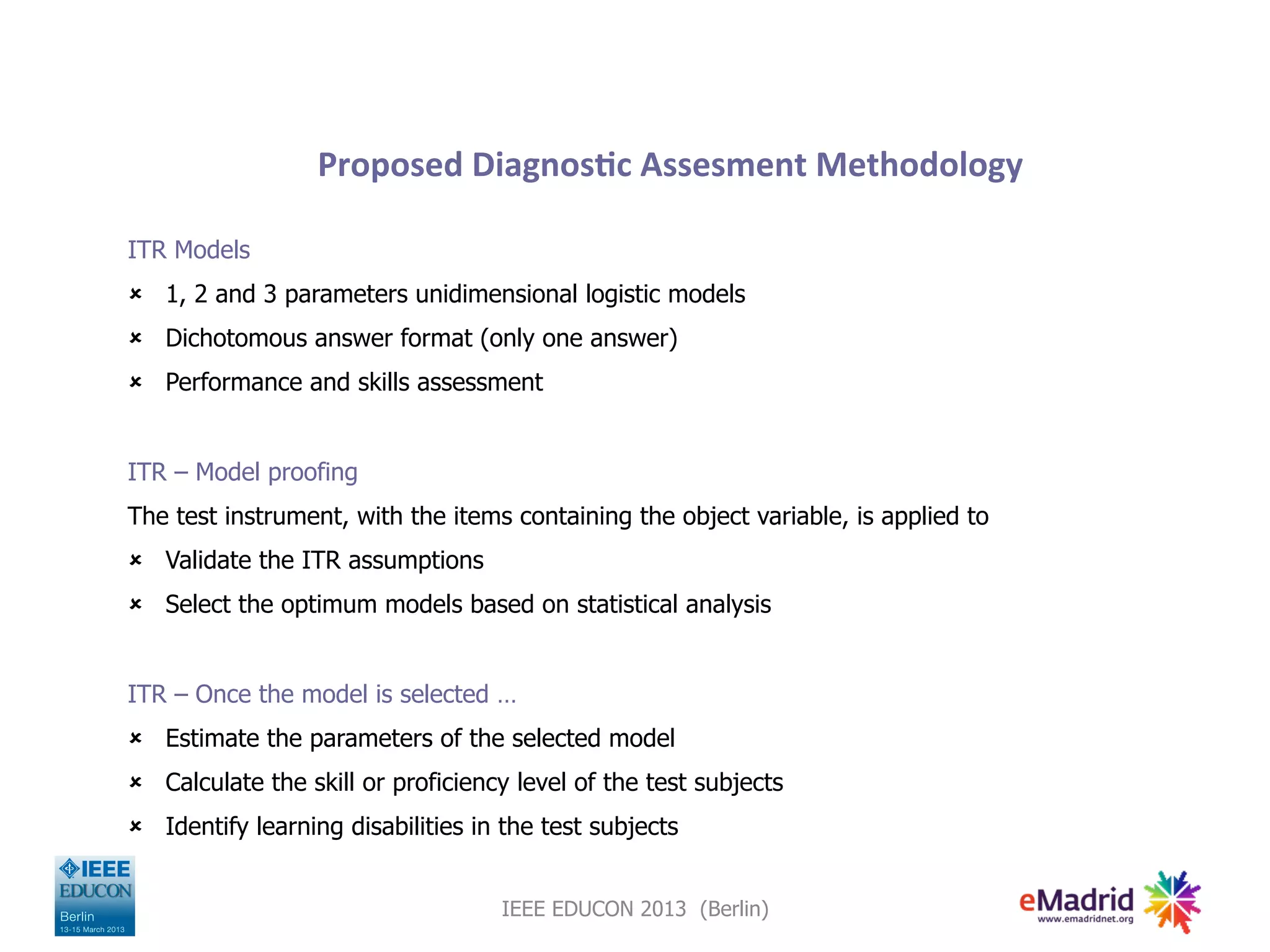
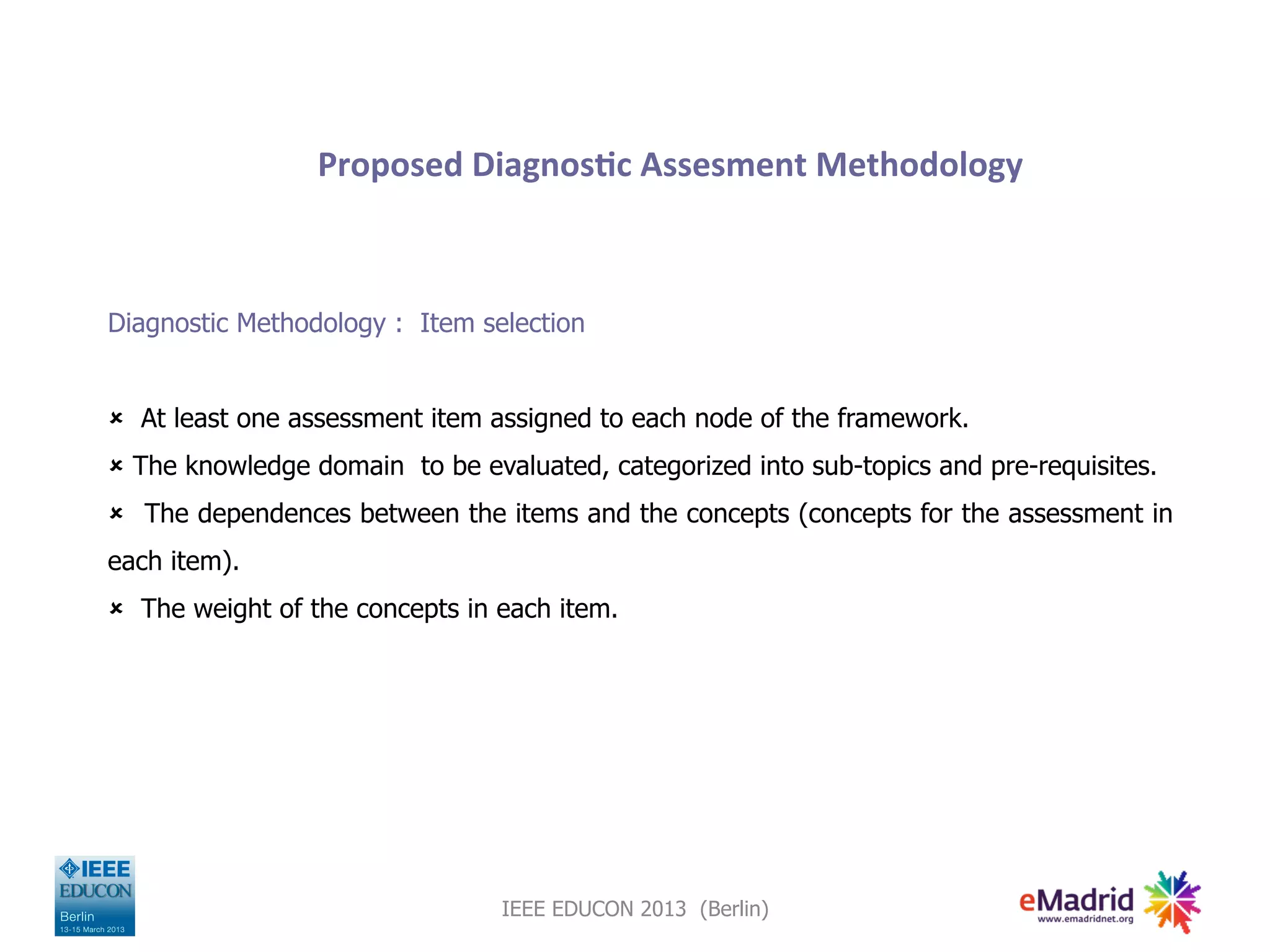
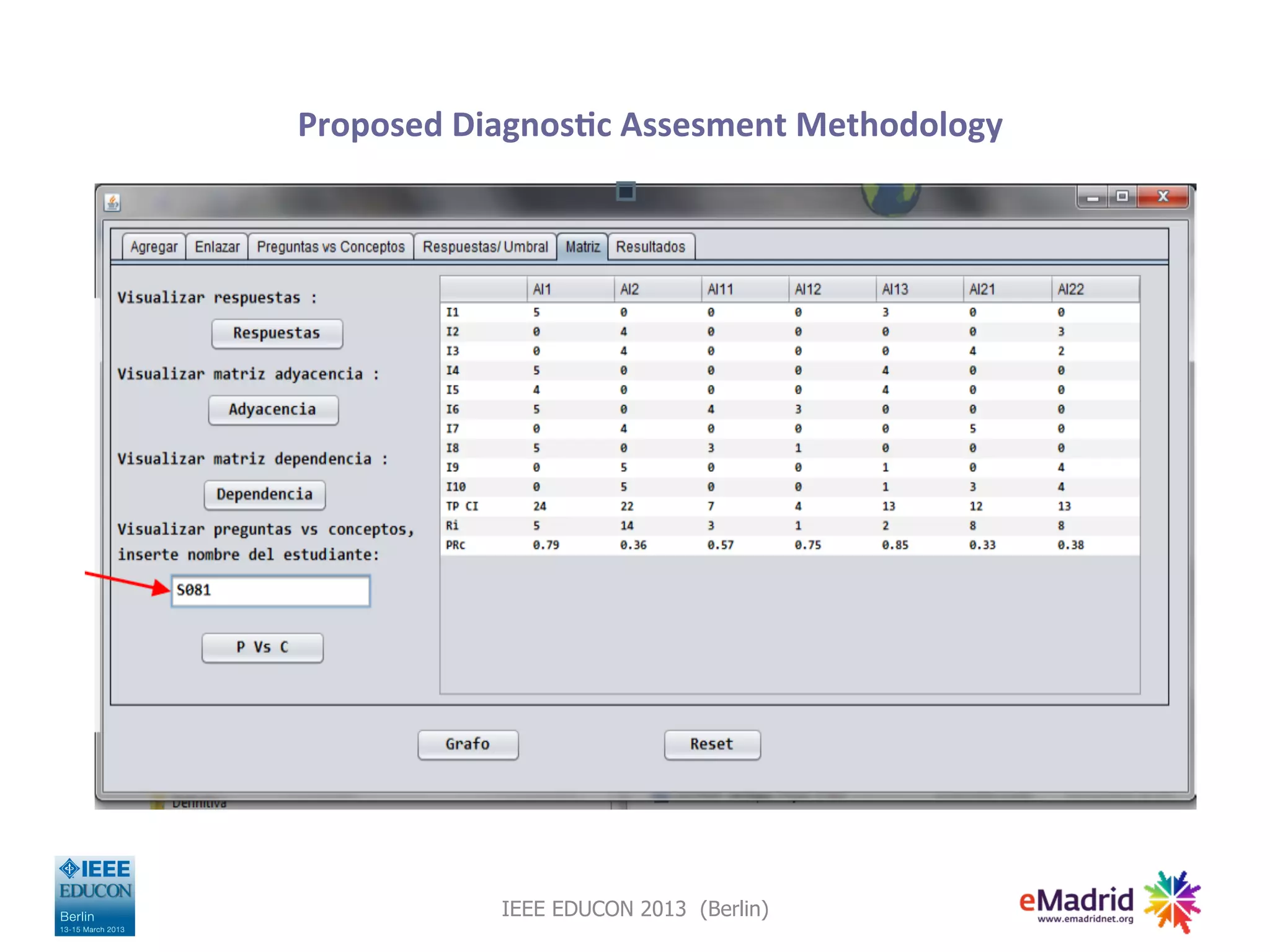
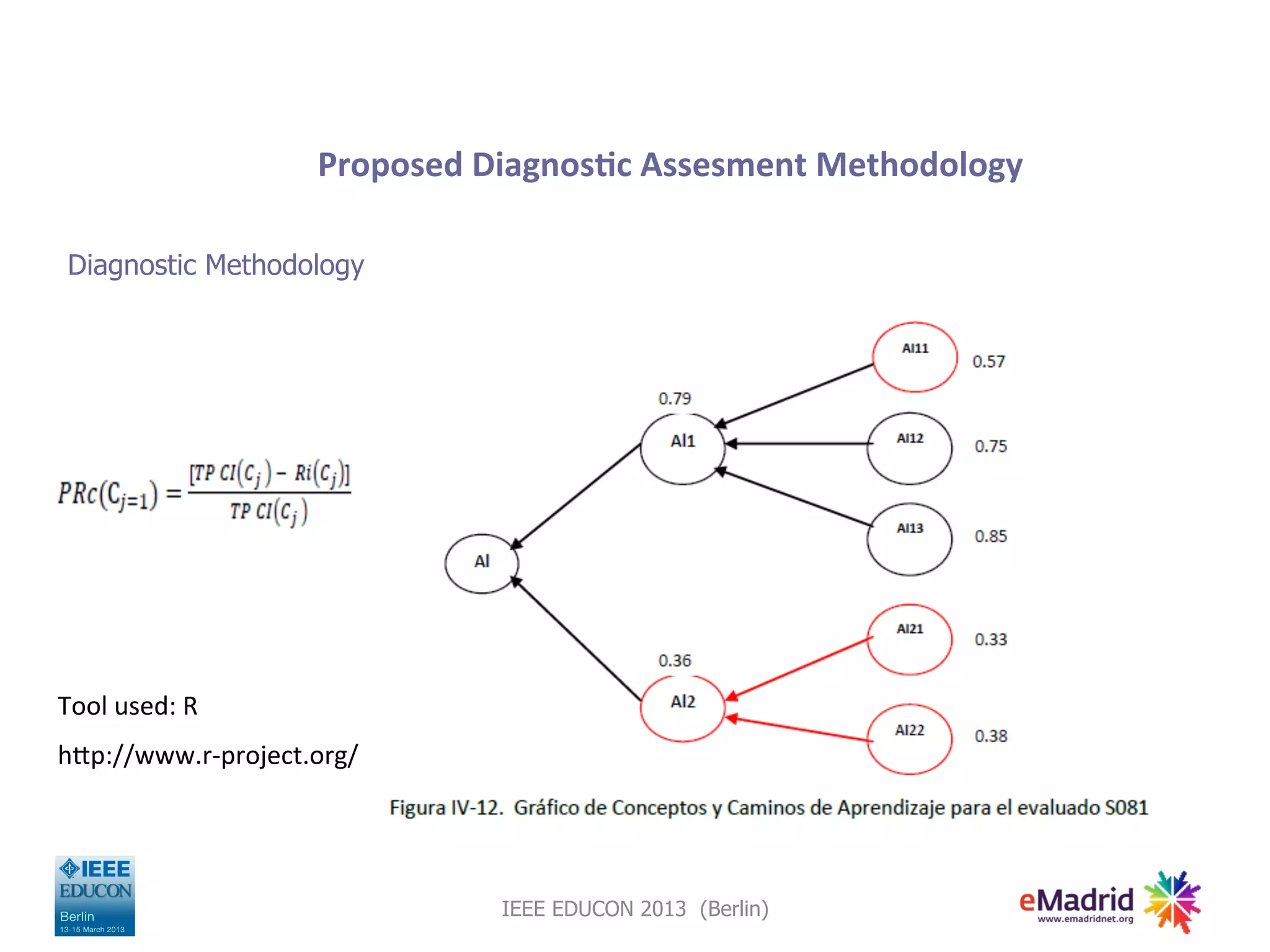
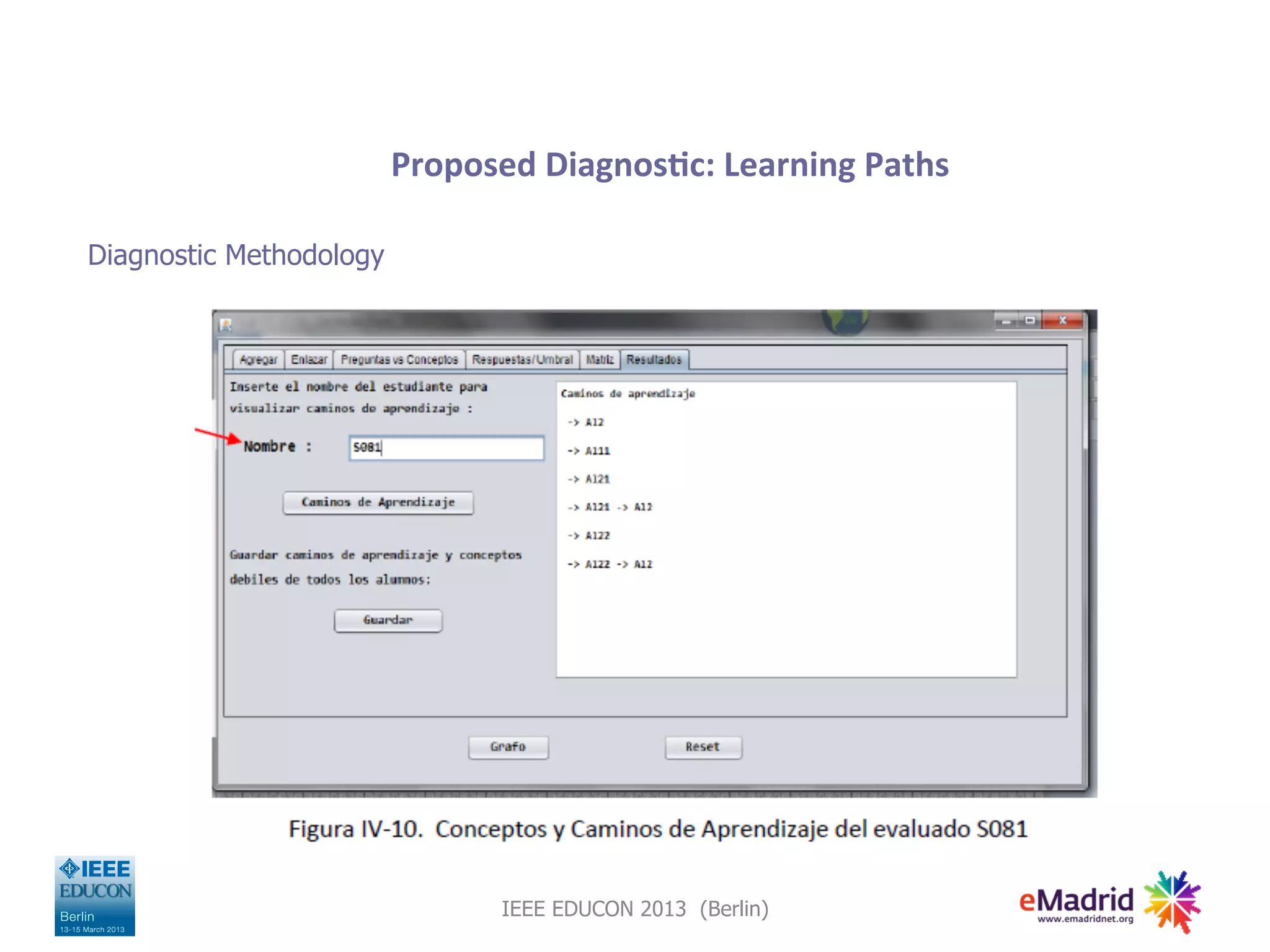
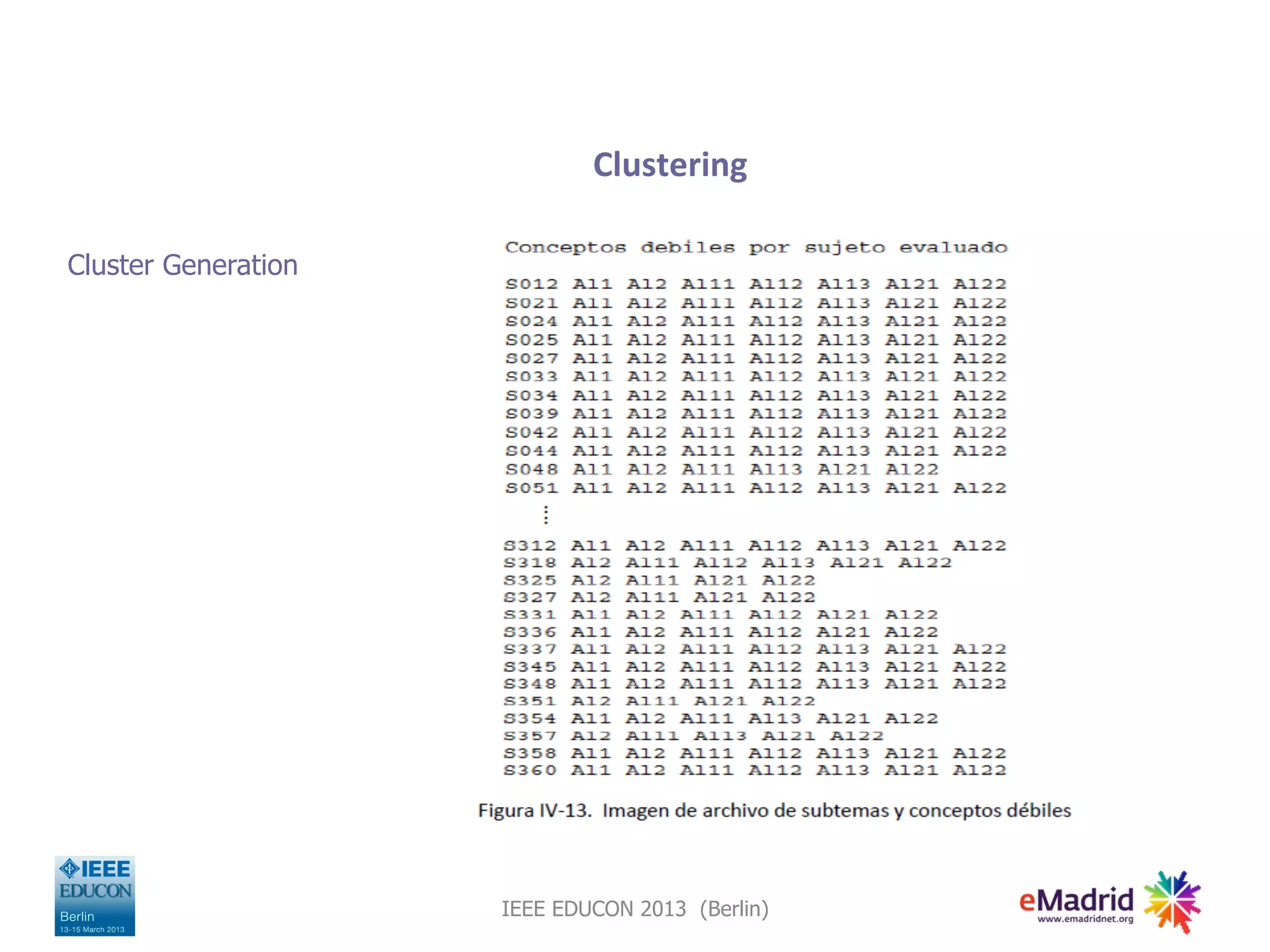

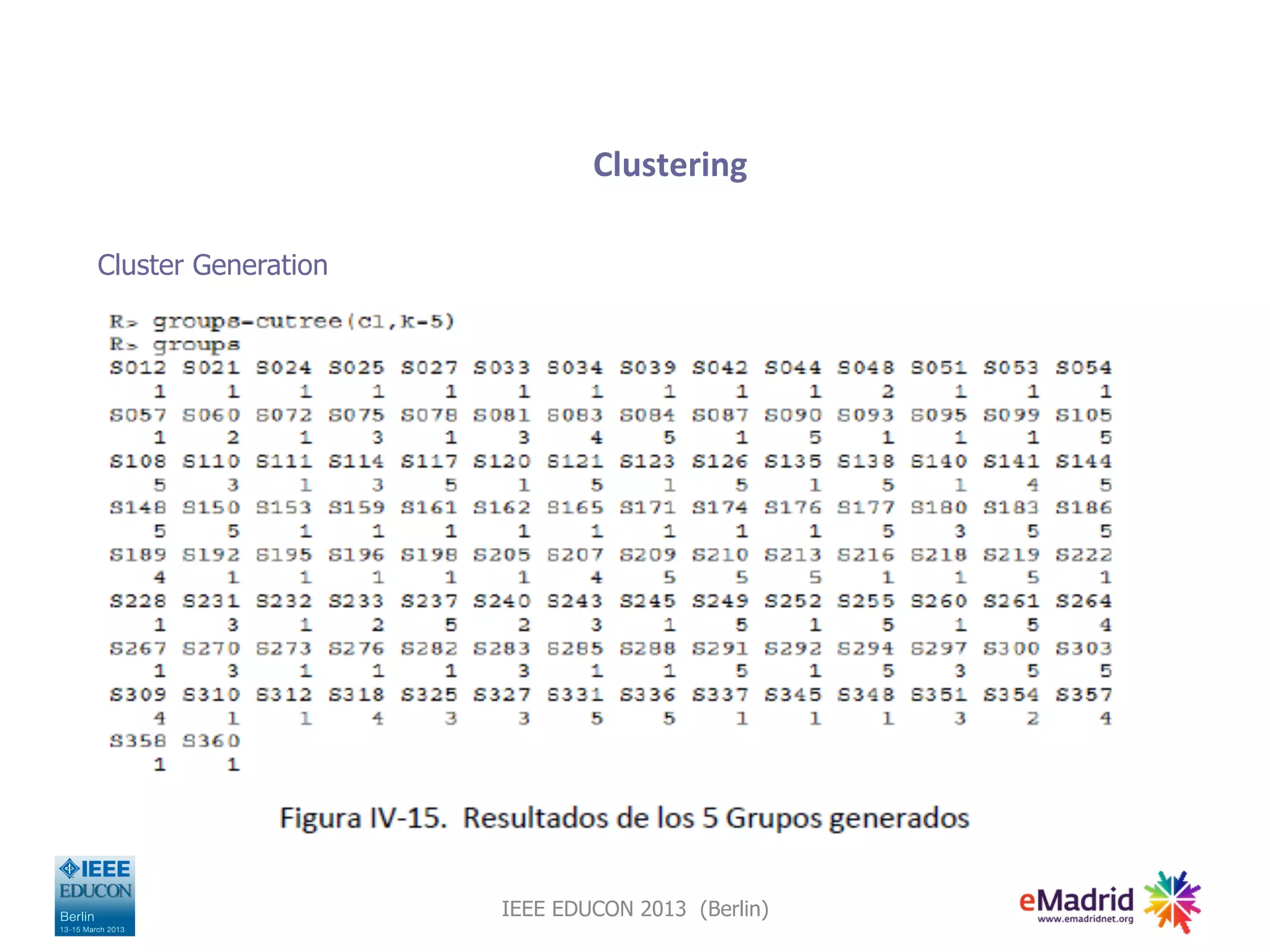
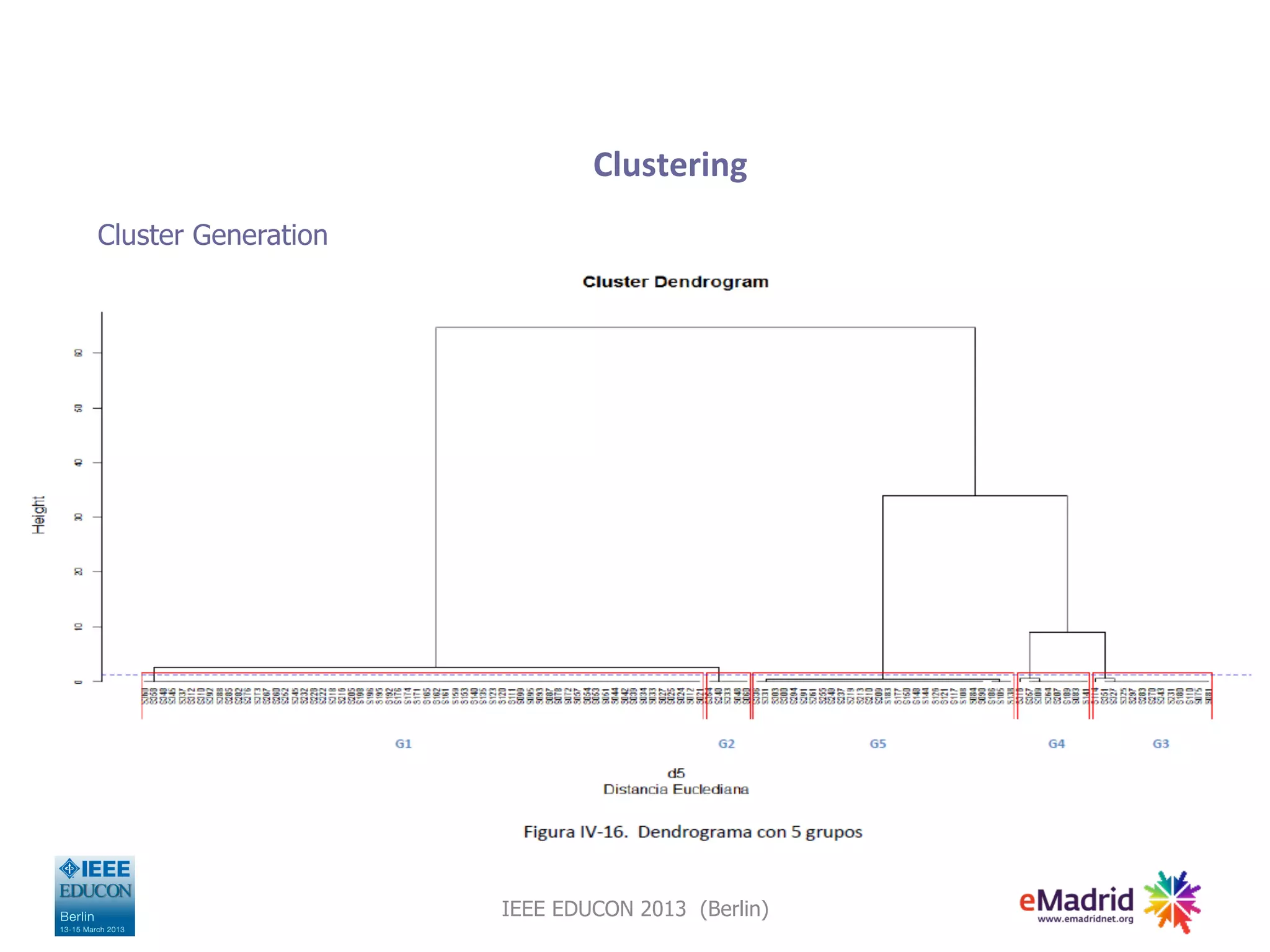
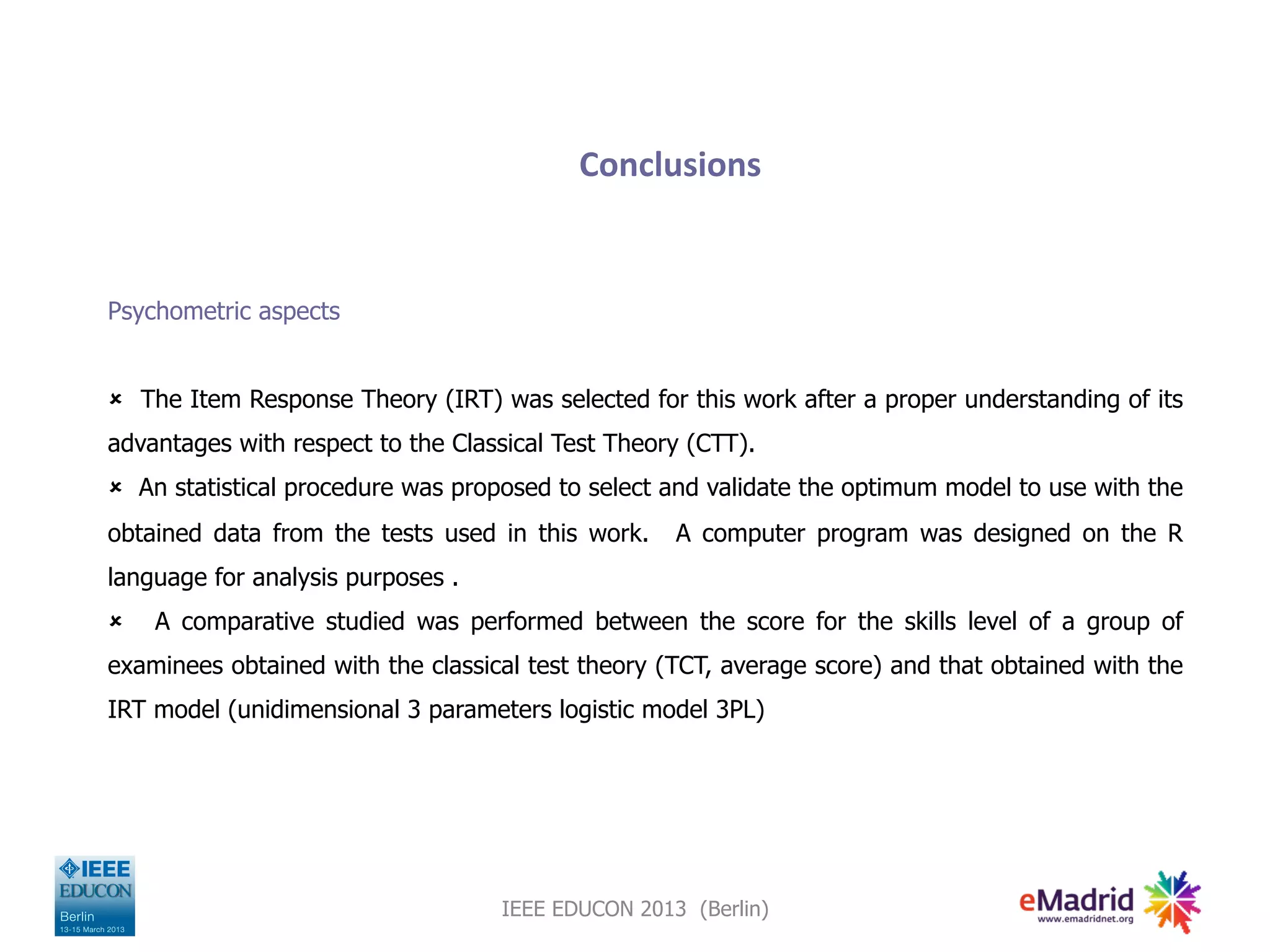
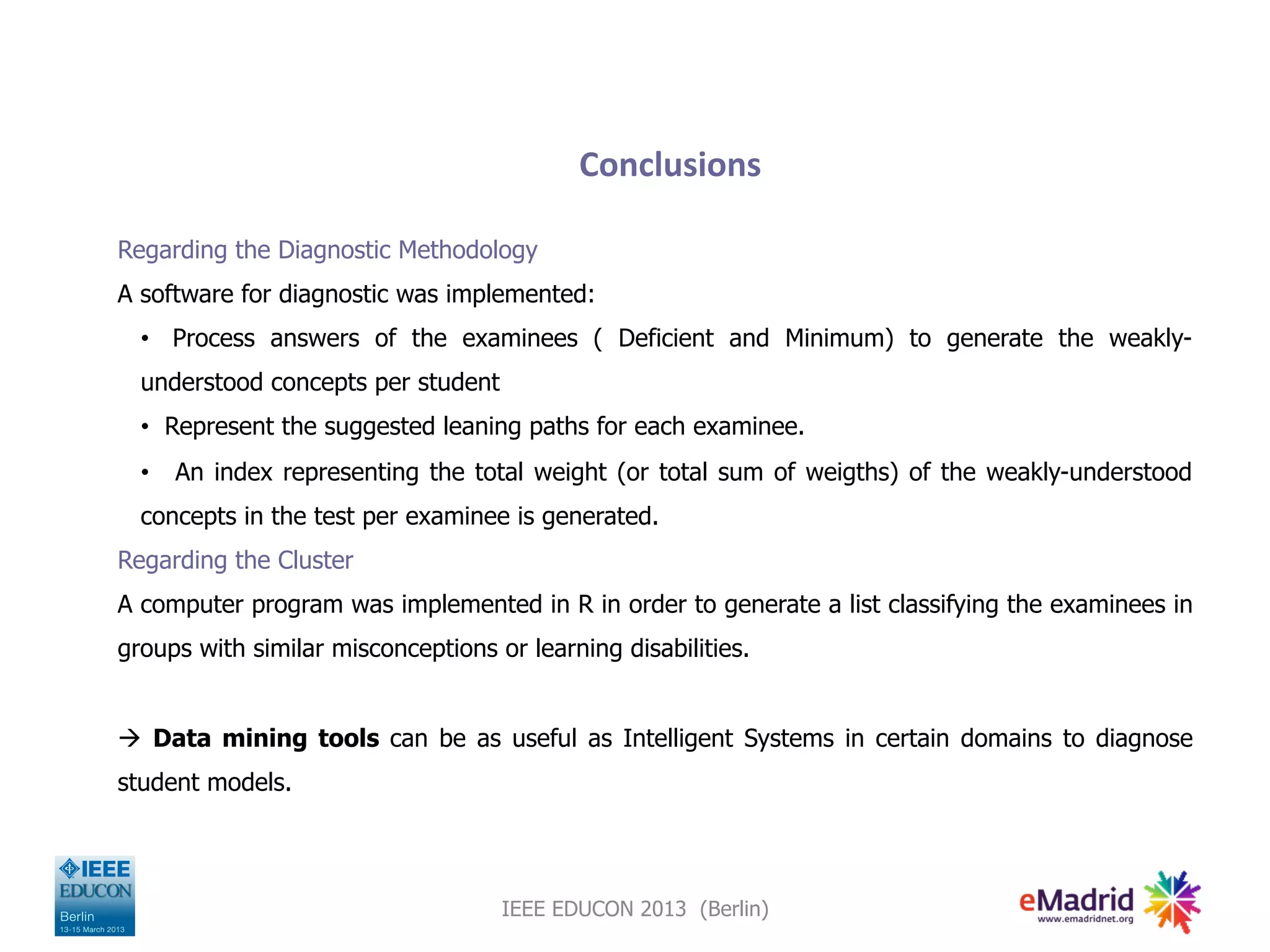


The document describes a proposed methodology for diagnosing students' learning achievements using cluster-based analysis. The methodology involves using item response theory to assess students' skill levels on concepts, identifying weaknesses and misconceptions, and clustering students based on similar disabilities. The methodology aims to provide adaptive feedback to help students improve and inform teaching strategies. A software tool was developed to implement the diagnostic assessment and clustering.


