CASE STUDY ON PEPTIC
ULCER
By,
MARTIN SHAJI,
Pharm-D
PATIENT DETAILS:-
• Patient Name: Mrs.X
Age/Gender: 60Y/F
• Admission No (OP/IP): 24518
• Department: Female general medicine
Ward/Unit: FMW-III
• Date of Admission: 20/9/17
Date of Discharge: 24/9/17.
• Chief Complaints: epigastria pain, burning sensation in the
abdomen with fever since 4 days
• History of present illness: nil significant
• Past medical History: (Diseases, Disorders, Surgeries,
Medicines used)
• Not a known HTN/DM/TB
• Allergies (food/drug/other):
• Not a known allergic
ON EXAMINATION
• General Examination: patient was conscious and co-operative
• Physical examination:
• Temperature (oF): 102
• Pulse rate (b/min):72
• Respiratory Rate (cycle/min): 22
• Blood Pressure (mm of Hg): 100/70
• 2. Systems Examination:
• CVS: S1S2+
• RS: clear
• CNS:NAD
•RADIOGRAPHIC DATE:
• Endoscopy revealed positive
for peptic ulcer
•CONFORMATORY DIAGNOSIS:
•PEPTIC ULCER
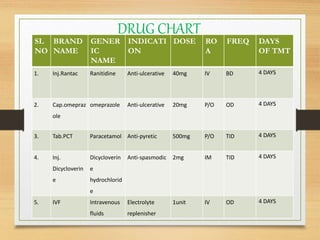
DRUG CHART
SL
NO
BRAND
NAME
GENER
IC
NAME
INDICATI
ON
DOSE RO
A
FREQ DAYS
OF TMT
1. Inj.Rantac Ranitidine Anti-ulcerative 40mg IV BD 4 DAYS
2. Cap.omepraz
ole
omeprazole Anti-ulcerative 20mg P/O OD 4 DAYS
3. Tab.PCT Paracetamol Anti-pyretic 500mg P/O TID 4 DAYS
4. Inj.
Dicycloverin
e
Dicycloverin
e
hydrochlorid
e
Anti-spasmodic 2mg IM TID 4 DAYS
5. IVF Intravenous
fluids
Electrolyte
replenisher
1unit IV OD 4 DAYS
• Discharge medication:
• Rx
• T.Rantac 150mg Bd
• Cap.Omeprazole 20mg OD
• Tab.Paracetamol 500mg TID
• Tab.Dicycloverine HCl BD
•
Review after one week...
•I. Soap Notes:
• 1. SUBJECTIVE EVALUATION:
• A female patient of age 60 years was admitted in female general
medicine o unit-III with complaining of epigastria pain, burning
sensation in abdomen.
• 2. OBJECTIVE EVALUATION:
• On general examination patient was conscious and cooperative. The
patient’s body shows rise in temperature of 1020F.
• 3. ASSESMENT:
• Based on subjective and objective evidences the patient was
diagnosed as PEPTIC ULCER. Anti-ulceratives can be assessed
to the patient.
• 4. PLANNING:
• The patient was diagnosed as peptic ulcer. On day of admission
• Inj. Rantac 2cc IV BD was given to the patient and it is an anti-
ulcerative and is an H2 receptor antagonist and is used for reducing
the stress ulceration of upper GT tract.
• T. PCT was given with a dose of 500mg thrice in a day. It acts as
antipyretic and analgesic and it is used to reduce fever and body
pains.
• Cap.Omeprazole with a dose of 20 mg was given once in a day
which acts as anti-ulverative and relieves burning sensation.
• Inj. Dicycloverine HCl was given intramuscularly thrice in a day and
it acts as antispasmodic. Same treatment was continued for four
days
• II.PHARMACEUTICAL CARE ISSUES
(ADR, DDI, Rationality, Patient
intervention etc.):
• No ADR &DDI were found so given
prescription was appropriate.
• III.PATIENT COUNSELLING:
• 1. Regarding disease & medication: Abdominal
pain, heartburn belching bloating, abdominal fullness, cramping are the
symptoms. Lack of uniformity of mucous membrane due to destruction
of cells because of excessive production/secretion of acid by the gastric
cells.
• T.RANTAC (Ranitidine): It is an anti ulcer drug. It has to be taken 30
mins after taking food. It prevent gastric ulcerations due to the other
drugs and should be taken one in the morning and another in the night.
• T.PARA (Paracetamol): It is used to relieve pain, take once in the
morning and once at night after food. It can cause rashes and GI upsets.
One tablet should be taken in the morning and one in the night after food.
• Cap.Omeprazole: it acts as anti-ulcerative and it should be taken once in
the morning and has to be taken 30 mins before taking food.
• Tab. Dicycloverine HCL: it is anti-spasmodic drug and should be taken
once in a day.
• 2. Regarding Life-style & modification:
• Advice to avoid junk food, spicy food & fatty food
• Avoid smoking & alcohol intake
• Avoid intake of large meals, chocolates and tight clothing, belts
• Advice not to take drugs which may cause lower esophageal
sphincter pressure like diazepam, nifedipine, theophylline etc
• Take food in correct time
• Avoid stress.
• Maximum use of NSAIDS should be avoid, if necessary take any
alternative therapy
• Do not use belts in case of surgery
DISCUSSION:
• Peptic ulcer disease refers to a group of ulcerative disorders of the
upper gastrointestinal (GI) tract that require acid and pepsin for their
formation. Ulcers differ from gastritis and erosions in that they extend
deeper into the musularis mucosa. The three common forms of peptic
ulcers include Helicobacter pylori (HP)-associated ulcers, nonsteroidal
anti-inflammatory drug (NSAID)-induced ulcers, and stress-related
mucosal damage (also called stress ulcers).
• Symptoms:
• Abdominal pain
• Heartburn
• Belching
• Bloating vagus discomfort abdominal fullness
• Cramping
 a case study on peptic ulcer
 a case study on peptic ulcer
 a case study on peptic ulcer

a case study on peptic ulcer

  • 1.
    CASE STUDY ONPEPTIC ULCER By, MARTIN SHAJI, Pharm-D
  • 2.
    PATIENT DETAILS:- • PatientName: Mrs.X Age/Gender: 60Y/F • Admission No (OP/IP): 24518 • Department: Female general medicine Ward/Unit: FMW-III • Date of Admission: 20/9/17 Date of Discharge: 24/9/17.
  • 3.
    • Chief Complaints:epigastria pain, burning sensation in the abdomen with fever since 4 days • History of present illness: nil significant • Past medical History: (Diseases, Disorders, Surgeries, Medicines used) • Not a known HTN/DM/TB • Allergies (food/drug/other): • Not a known allergic
  • 4.
    ON EXAMINATION • GeneralExamination: patient was conscious and co-operative • Physical examination: • Temperature (oF): 102 • Pulse rate (b/min):72 • Respiratory Rate (cycle/min): 22 • Blood Pressure (mm of Hg): 100/70 • 2. Systems Examination: • CVS: S1S2+ • RS: clear • CNS:NAD
  • 5.
    •RADIOGRAPHIC DATE: • Endoscopyrevealed positive for peptic ulcer •CONFORMATORY DIAGNOSIS: •PEPTIC ULCER
  • 6.
    DRUG CHART SL NO BRAND NAME GENER IC NAME INDICATI ON DOSE RO A FREQDAYS OF TMT 1. Inj.Rantac Ranitidine Anti-ulcerative 40mg IV BD 4 DAYS 2. Cap.omepraz ole omeprazole Anti-ulcerative 20mg P/O OD 4 DAYS 3. Tab.PCT Paracetamol Anti-pyretic 500mg P/O TID 4 DAYS 4. Inj. Dicycloverin e Dicycloverin e hydrochlorid e Anti-spasmodic 2mg IM TID 4 DAYS 5. IVF Intravenous fluids Electrolyte replenisher 1unit IV OD 4 DAYS
  • 7.
    • Discharge medication: •Rx • T.Rantac 150mg Bd • Cap.Omeprazole 20mg OD • Tab.Paracetamol 500mg TID • Tab.Dicycloverine HCl BD • Review after one week...
  • 8.
    •I. Soap Notes: •1. SUBJECTIVE EVALUATION: • A female patient of age 60 years was admitted in female general medicine o unit-III with complaining of epigastria pain, burning sensation in abdomen. • 2. OBJECTIVE EVALUATION: • On general examination patient was conscious and cooperative. The patient’s body shows rise in temperature of 1020F. • 3. ASSESMENT: • Based on subjective and objective evidences the patient was diagnosed as PEPTIC ULCER. Anti-ulceratives can be assessed to the patient.
  • 9.
    • 4. PLANNING: •The patient was diagnosed as peptic ulcer. On day of admission • Inj. Rantac 2cc IV BD was given to the patient and it is an anti- ulcerative and is an H2 receptor antagonist and is used for reducing the stress ulceration of upper GT tract. • T. PCT was given with a dose of 500mg thrice in a day. It acts as antipyretic and analgesic and it is used to reduce fever and body pains. • Cap.Omeprazole with a dose of 20 mg was given once in a day which acts as anti-ulverative and relieves burning sensation. • Inj. Dicycloverine HCl was given intramuscularly thrice in a day and it acts as antispasmodic. Same treatment was continued for four days
  • 10.
    • II.PHARMACEUTICAL CAREISSUES (ADR, DDI, Rationality, Patient intervention etc.): • No ADR &DDI were found so given prescription was appropriate.
  • 11.
    • III.PATIENT COUNSELLING: •1. Regarding disease & medication: Abdominal pain, heartburn belching bloating, abdominal fullness, cramping are the symptoms. Lack of uniformity of mucous membrane due to destruction of cells because of excessive production/secretion of acid by the gastric cells. • T.RANTAC (Ranitidine): It is an anti ulcer drug. It has to be taken 30 mins after taking food. It prevent gastric ulcerations due to the other drugs and should be taken one in the morning and another in the night. • T.PARA (Paracetamol): It is used to relieve pain, take once in the morning and once at night after food. It can cause rashes and GI upsets. One tablet should be taken in the morning and one in the night after food. • Cap.Omeprazole: it acts as anti-ulcerative and it should be taken once in the morning and has to be taken 30 mins before taking food. • Tab. Dicycloverine HCL: it is anti-spasmodic drug and should be taken once in a day.
  • 12.
    • 2. RegardingLife-style & modification: • Advice to avoid junk food, spicy food & fatty food • Avoid smoking & alcohol intake • Avoid intake of large meals, chocolates and tight clothing, belts • Advice not to take drugs which may cause lower esophageal sphincter pressure like diazepam, nifedipine, theophylline etc • Take food in correct time • Avoid stress. • Maximum use of NSAIDS should be avoid, if necessary take any alternative therapy • Do not use belts in case of surgery
  • 13.
    DISCUSSION: • Peptic ulcerdisease refers to a group of ulcerative disorders of the upper gastrointestinal (GI) tract that require acid and pepsin for their formation. Ulcers differ from gastritis and erosions in that they extend deeper into the musularis mucosa. The three common forms of peptic ulcers include Helicobacter pylori (HP)-associated ulcers, nonsteroidal anti-inflammatory drug (NSAID)-induced ulcers, and stress-related mucosal damage (also called stress ulcers). • Symptoms: • Abdominal pain • Heartburn • Belching • Bloating vagus discomfort abdominal fullness • Cramping