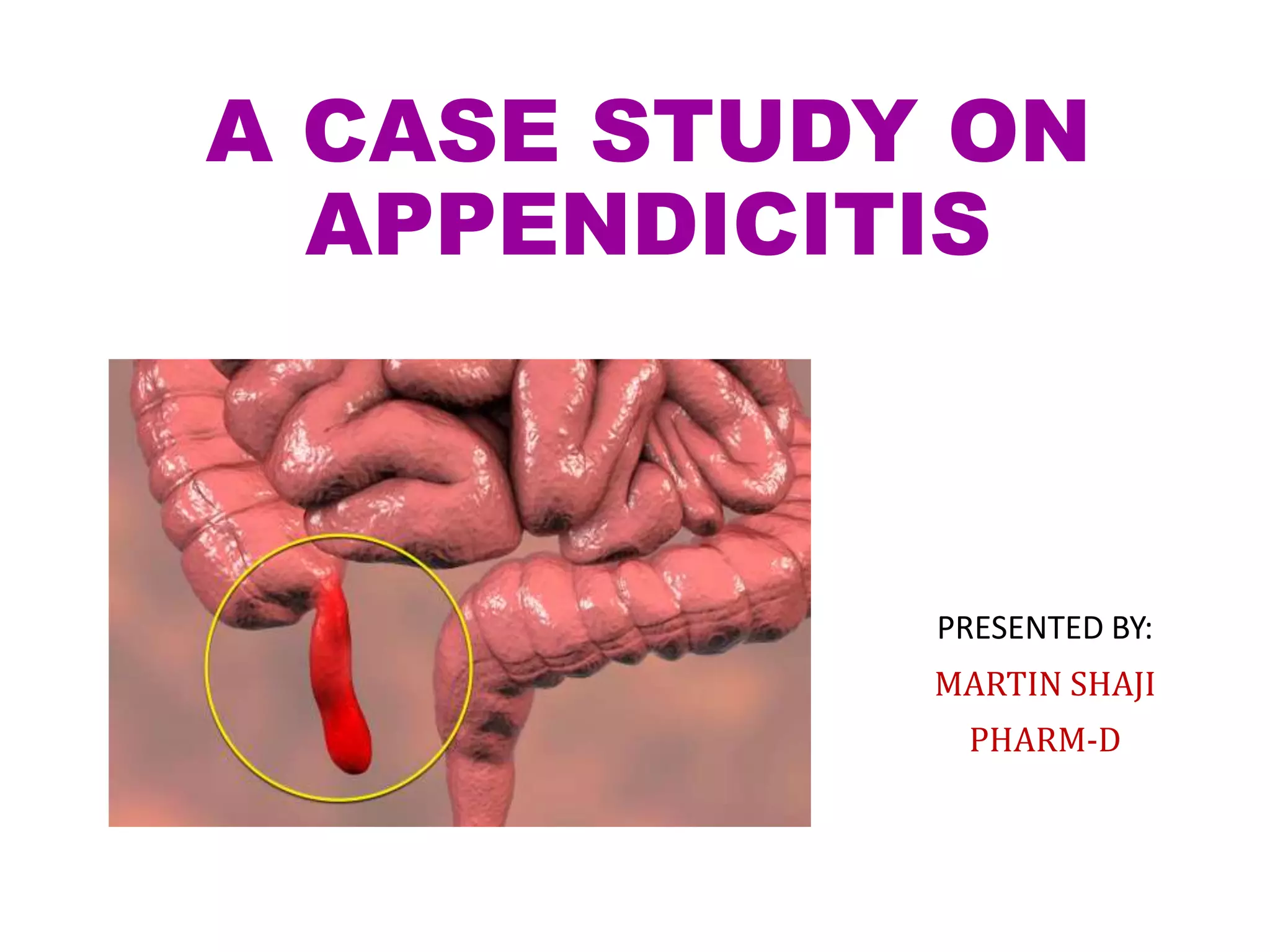

A CASE STUDY ON
APPENDICITIS
PRESENTED BY:
MARTIN SHAJI
PHARM-D
PATIENT DEMOGRAPHIC DETAILS:
• Name: xxxx
• Age : 68yrs
• Gender : Male
• Department: Surgical gastroenterology
• DOA : 9/12/18.
• IP No. : 44212
PAST MEDICAL HISTORY:
Chronic constipation.
Hypertension since 5yrs.
PAST MEDICATION HISTORY:
TELMIPRIME 20MG.
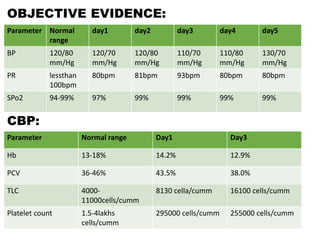
OBJECTIVE EVIDENCE:
CBP:
Parameter Normal
range
day1 day2 day3 day4 day5
BP 120/80
mm/Hg
120/70
mm/Hg
120/80
mm/Hg
110/70
mm/Hg
110/80
mm/Hg
130/70
mm/Hg
PR lessthan
100bpm
80bpm 81bpm 93bpm 80bpm 80bpm
SPo2 94-99% 97% 99% 99% 99% 99%
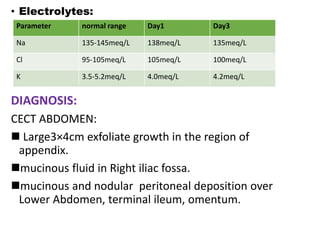
Parameter Normal range Day1 Day3
Hb 13-18% 14.2% 12.9%
PCV 36-46% 43.5% 38.0%
TLC 4000-
11000cells/cumm
8130 cella/cumm 16100 cells/cumm
Platelet count 1.5-4lakhs
cells/cumm
295000 cells/cumm 255000 cells/cumm
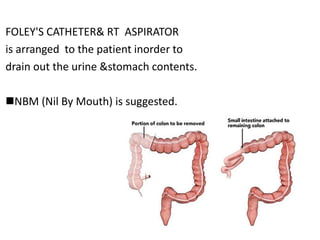
• Electrolytes:
DIAGNOSIS:
CECT ABDOMEN:
 Large3×4cm exfoliate growth in the region of
appendix.
mucinous fluid in Right iliac fossa.
mucinous and nodular peritoneal deposition over
Lower Abdomen, terminal ileum, omentum.
Parameter normal range Day1 Day3
Na 135-145meq/L 138meq/L 135meq/L
Cl 95-105meq/L 105meq/L 100meq/L
K 3.5-5.2meq/L 4.0meq/L 4.2meq/L
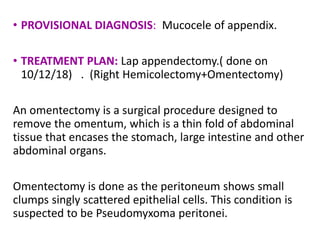
FOLEY'S CATHETER& RT ASPIRATOR
is arranged to the patient inorder to
drain out the urine &stomach contents.
NBM (Nil By Mouth) is suggested.
• PROVISIONAL DIAGNOSIS: Mucocele of appendix.
• TREATMENT PLAN: Lap appendectomy.( done on
10/12/18) . (Right Hemicolectomy+Omentectomy)
An omentectomy is a surgical procedure designed to
remove the omentum, which is a thin fold of abdominal
tissue that encases the stomach, large intestine and other
abdominal organs.
Omentectomy is done as the peritoneum shows small
clumps singly scattered epithelial cells. This condition is
suspected to be Pseudomyxoma peritonei.
SOAP NOTES:
• SUBJECTIVE EVALUVATION-
• Patient came with the chief complaints of abdominal pain.
• OBJECTIVE EVALUVATION-
• On Examination, the patient was conscious & coherent
• ASSESSMENT:
• Based on subjective & objective evaluation and
also after abdominal ultrasound scan confirmed it as
APPENDICITIS
CONFIRMATORY DIAGNOSIS
• APPENDICITIS
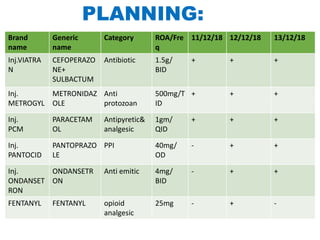
PLANNING:
Brand
name
Generic
name
Category ROA/Fre
q
11/12/18 12/12/18 13/12/18
Inj.VIATRA
N
CEFOPERAZO
NE+
SULBACTUM
Antibiotic 1.5g/
BID
+ + +
Inj.
METROGYL
METRONIDAZ
OLE
Anti
protozoan
500mg/T
ID
+ + +
Inj.
PCM
PARACETAM
OL
Antipyretic&
analgesic
1gm/
QID
+ + +
Inj.
PANTOCID
PANTOPRAZO
LE
PPI 40mg/
OD
- + +
Inj.
ONDANSET
RON
ONDANSETR
ON
Anti emitic 4mg/
BID
- + +
FENTANYL FENTANYL opioid
analgesic
25mg - + -
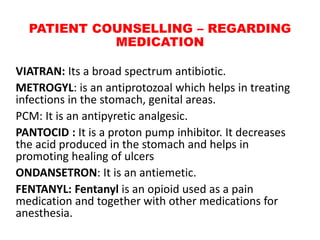
PATIENT COUNSELLING – REGARDING
MEDICATION
VIATRAN: Its a broad spectrum antibiotic.
METROGYL: is an antiprotozoal which helps in treating
infections in the stomach, genital areas.
PCM: It is an antipyretic analgesic.
PANTOCID : It is a proton pump inhibitor. It decreases
the acid produced in the stomach and helps in
promoting healing of ulcers
ONDANSETRON: It is an antiemetic.
FENTANYL: Fentanyl is an opioid used as a pain
medication and together with other medications for
anesthesia.
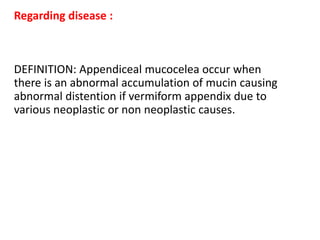
Regarding disease :
DEFINITION: Appendiceal mucocelea occur when
there is an abnormal accumulation of mucin causing
abnormal distention if vermiform appendix due to
various neoplastic or non neoplastic causes.
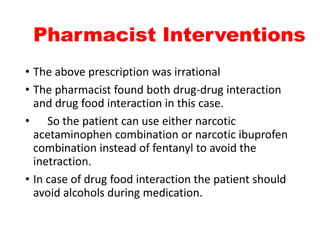
Pharmacist Interventions
• The above prescription was irrational
• The pharmacist found both drug-drug interaction
and drug food interaction in this case.
• So the patient can use either narcotic
acetaminophen combination or narcotic ibuprofen
combination instead of fentanyl to avoid the
inetraction.
• In case of drug food interaction the patient should
avoid alcohols during medication.
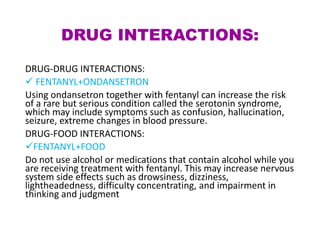
DRUG INTERACTIONS:
DRUG-DRUG INTERACTIONS:
 FENTANYL+ONDANSETRON
Using ondansetron together with fentanyl can increase the risk
of a rare but serious condition called the serotonin syndrome,
which may include symptoms such as confusion, hallucination,
seizure, extreme changes in blood pressure.
DRUG-FOOD INTERACTIONS:
FENTANYL+FOOD
Do not use alcohol or medications that contain alcohol while you
are receiving treatment with fentanyl. This may increase nervous
system side effects such as drowsiness, dizziness,
lightheadedness, difficulty concentrating, and impairment in
thinking and judgment
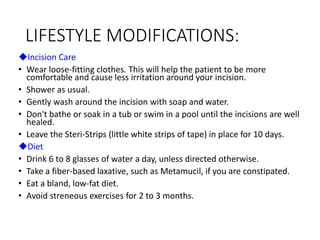
LIFESTYLE MODIFICATIONS:
Incision Care
• Wear loose-fitting clothes. This will help the patient to be more
comfortable and cause less irritation around your incision.
• Shower as usual.
• Gently wash around the incision with soap and water.
• Don't bathe or soak in a tub or swim in a pool until the incisions are well
healed.
• Leave the Steri-Strips (little white strips of tape) in place for 10 days.
Diet
• Drink 6 to 8 glasses of water a day, unless directed otherwise.
• Take a fiber-based laxative, such as Metamucil, if you are constipated.
• Eat a bland, low-fat diet.
• Avoid streneous exercises for 2 to 3 months.
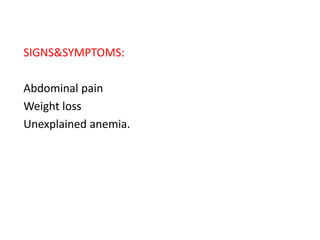
SIGNS&SYMPTOMS:
Abdominal pain
Weight loss
Unexplained anemia.
A  case study on appendicitis / a case presentation on appendicitis

A case study on appendicitis / a case presentation on appendicitis

  • 1.
    A CASE STUDYON APPENDICITIS PRESENTED BY: MARTIN SHAJI PHARM-D
  • 2.
    PATIENT DEMOGRAPHIC DETAILS: •Name: xxxx • Age : 68yrs • Gender : Male • Department: Surgical gastroenterology • DOA : 9/12/18. • IP No. : 44212
  • 3.
    PAST MEDICAL HISTORY: Chronicconstipation. Hypertension since 5yrs. PAST MEDICATION HISTORY: TELMIPRIME 20MG.
  • 4.
    OBJECTIVE EVIDENCE: CBP: Parameter Normal range day1day2 day3 day4 day5 BP 120/80 mm/Hg 120/70 mm/Hg 120/80 mm/Hg 110/70 mm/Hg 110/80 mm/Hg 130/70 mm/Hg PR lessthan 100bpm 80bpm 81bpm 93bpm 80bpm 80bpm SPo2 94-99% 97% 99% 99% 99% 99% Parameter Normal range Day1 Day3 Hb 13-18% 14.2% 12.9% PCV 36-46% 43.5% 38.0% TLC 4000- 11000cells/cumm 8130 cella/cumm 16100 cells/cumm Platelet count 1.5-4lakhs cells/cumm 295000 cells/cumm 255000 cells/cumm
  • 5.
    • Electrolytes: DIAGNOSIS: CECT ABDOMEN: Large3×4cm exfoliate growth in the region of appendix. mucinous fluid in Right iliac fossa. mucinous and nodular peritoneal deposition over Lower Abdomen, terminal ileum, omentum. Parameter normal range Day1 Day3 Na 135-145meq/L 138meq/L 135meq/L Cl 95-105meq/L 105meq/L 100meq/L K 3.5-5.2meq/L 4.0meq/L 4.2meq/L
  • 6.
    FOLEY'S CATHETER& RTASPIRATOR is arranged to the patient inorder to drain out the urine &stomach contents. NBM (Nil By Mouth) is suggested.
  • 7.
    • PROVISIONAL DIAGNOSIS:Mucocele of appendix. • TREATMENT PLAN: Lap appendectomy.( done on 10/12/18) . (Right Hemicolectomy+Omentectomy) An omentectomy is a surgical procedure designed to remove the omentum, which is a thin fold of abdominal tissue that encases the stomach, large intestine and other abdominal organs. Omentectomy is done as the peritoneum shows small clumps singly scattered epithelial cells. This condition is suspected to be Pseudomyxoma peritonei.
  • 8.
    SOAP NOTES: • SUBJECTIVEEVALUVATION- • Patient came with the chief complaints of abdominal pain. • OBJECTIVE EVALUVATION- • On Examination, the patient was conscious & coherent • ASSESSMENT: • Based on subjective & objective evaluation and also after abdominal ultrasound scan confirmed it as APPENDICITIS
  • 9.
  • 10.
    PLANNING: Brand name Generic name Category ROA/Fre q 11/12/18 12/12/1813/12/18 Inj.VIATRA N CEFOPERAZO NE+ SULBACTUM Antibiotic 1.5g/ BID + + + Inj. METROGYL METRONIDAZ OLE Anti protozoan 500mg/T ID + + + Inj. PCM PARACETAM OL Antipyretic& analgesic 1gm/ QID + + + Inj. PANTOCID PANTOPRAZO LE PPI 40mg/ OD - + + Inj. ONDANSET RON ONDANSETR ON Anti emitic 4mg/ BID - + + FENTANYL FENTANYL opioid analgesic 25mg - + -
  • 11.
    PATIENT COUNSELLING –REGARDING MEDICATION VIATRAN: Its a broad spectrum antibiotic. METROGYL: is an antiprotozoal which helps in treating infections in the stomach, genital areas. PCM: It is an antipyretic analgesic. PANTOCID : It is a proton pump inhibitor. It decreases the acid produced in the stomach and helps in promoting healing of ulcers ONDANSETRON: It is an antiemetic. FENTANYL: Fentanyl is an opioid used as a pain medication and together with other medications for anesthesia.
  • 12.
    Regarding disease : DEFINITION:Appendiceal mucocelea occur when there is an abnormal accumulation of mucin causing abnormal distention if vermiform appendix due to various neoplastic or non neoplastic causes.
  • 13.
    Pharmacist Interventions • Theabove prescription was irrational • The pharmacist found both drug-drug interaction and drug food interaction in this case. • So the patient can use either narcotic acetaminophen combination or narcotic ibuprofen combination instead of fentanyl to avoid the inetraction. • In case of drug food interaction the patient should avoid alcohols during medication.
  • 14.
    DRUG INTERACTIONS: DRUG-DRUG INTERACTIONS: FENTANYL+ONDANSETRON Using ondansetron together with fentanyl can increase the risk of a rare but serious condition called the serotonin syndrome, which may include symptoms such as confusion, hallucination, seizure, extreme changes in blood pressure. DRUG-FOOD INTERACTIONS: FENTANYL+FOOD Do not use alcohol or medications that contain alcohol while you are receiving treatment with fentanyl. This may increase nervous system side effects such as drowsiness, dizziness, lightheadedness, difficulty concentrating, and impairment in thinking and judgment
  • 15.
    LIFESTYLE MODIFICATIONS: Incision Care •Wear loose-fitting clothes. This will help the patient to be more comfortable and cause less irritation around your incision. • Shower as usual. • Gently wash around the incision with soap and water. • Don't bathe or soak in a tub or swim in a pool until the incisions are well healed. • Leave the Steri-Strips (little white strips of tape) in place for 10 days. Diet • Drink 6 to 8 glasses of water a day, unless directed otherwise. • Take a fiber-based laxative, such as Metamucil, if you are constipated. • Eat a bland, low-fat diet. • Avoid streneous exercises for 2 to 3 months.
  • 16.