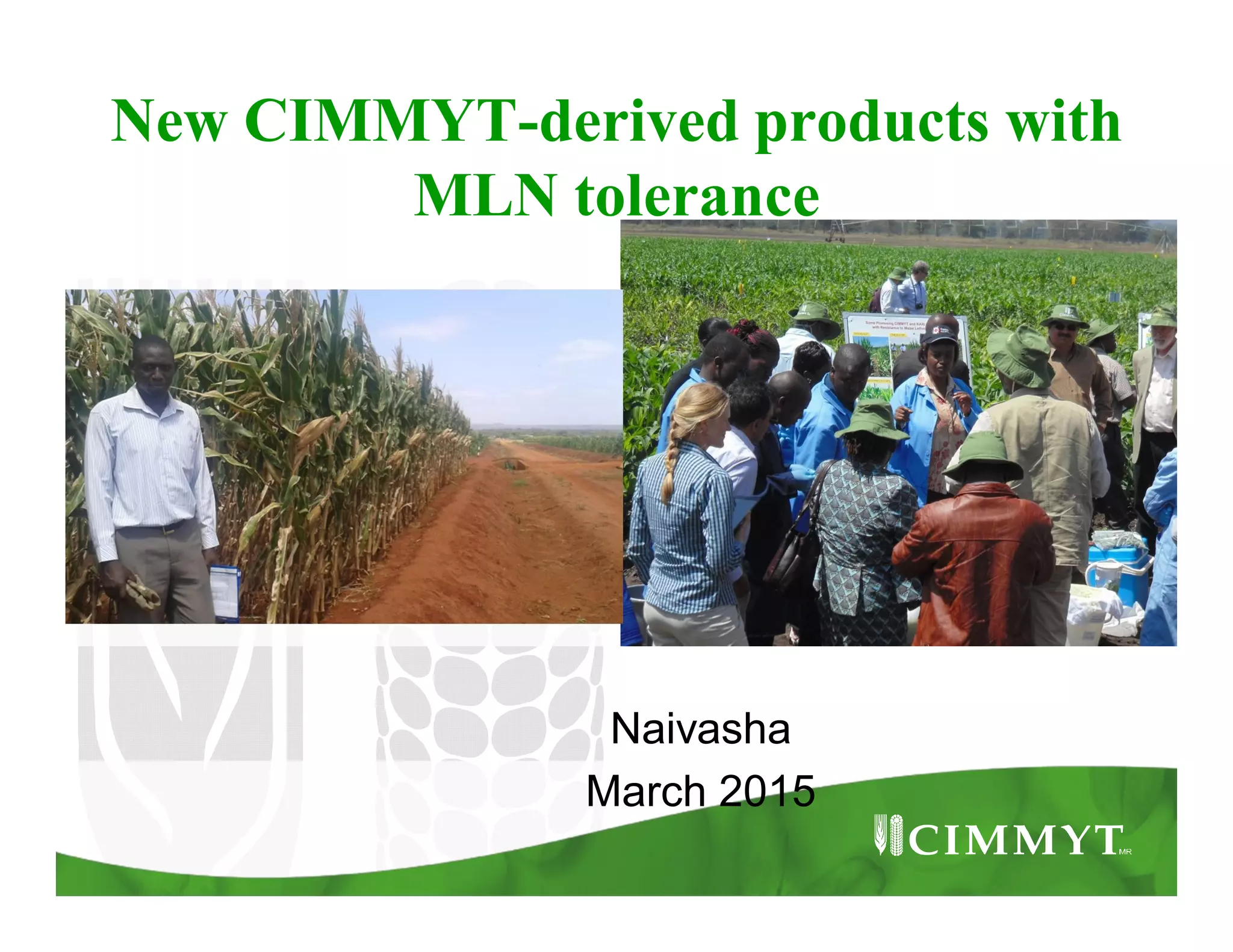
New CIMMYT-derived products with
MLN tolerance
Naivasha
March 2015
Outline
● CIMMYT MLN tolerant products
● MLN tolerant germplasm seed request, dispatch and source
● MLN tolerant NPT hybrids
● MLN tolerant hybrid releases
● Other related activities
● Challenges
CIMMYT MLN tolerant products
● UPDATE: Promising CIMMYT maize inbreds and pre-commercial hybrids-June 2013
● Update: CIMMYT maize inbred lines and pre- commercial hybrids with potential
resistance to maize lethal necrosis (MLN)-May 2014
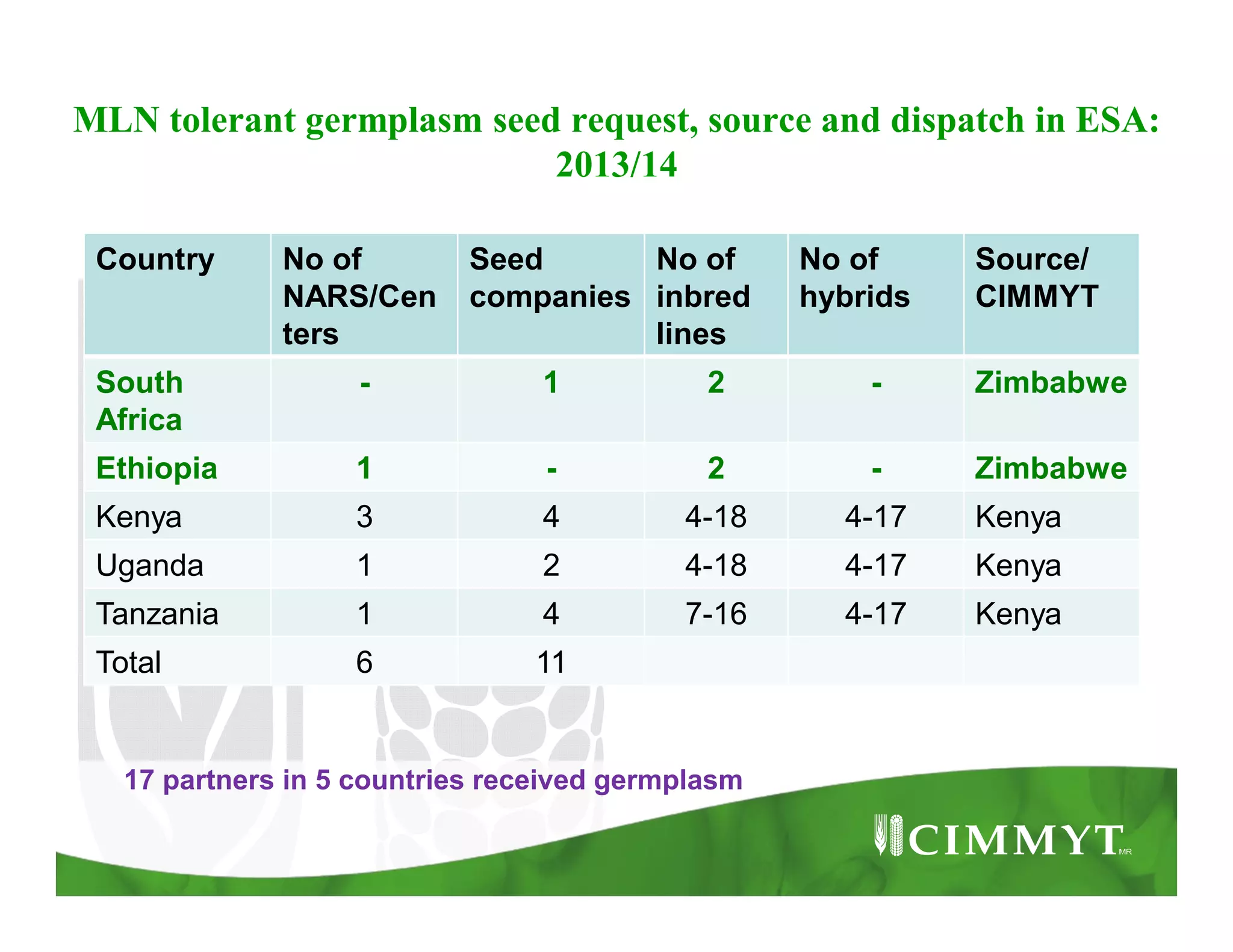
MLN tolerant germplasm seed request, source and dispatch in ESA:
2013/14
Country No of
NARS/Cen
ters
Seed
companies
No of
inbred
lines
No of
hybrids
Source/
CIMMYT
South
Africa
- 1 2 - Zimbabwe
Ethiopia 1 - 2 - Zimbabwe
Kenya 3 4 4-18 4-17 Kenya
Uganda 1 2 4-18 4-17 Kenya
Tanzania 1 4 7-16 4-17 Kenya
Total 6 11
17 partners in 5 countries received germplasm
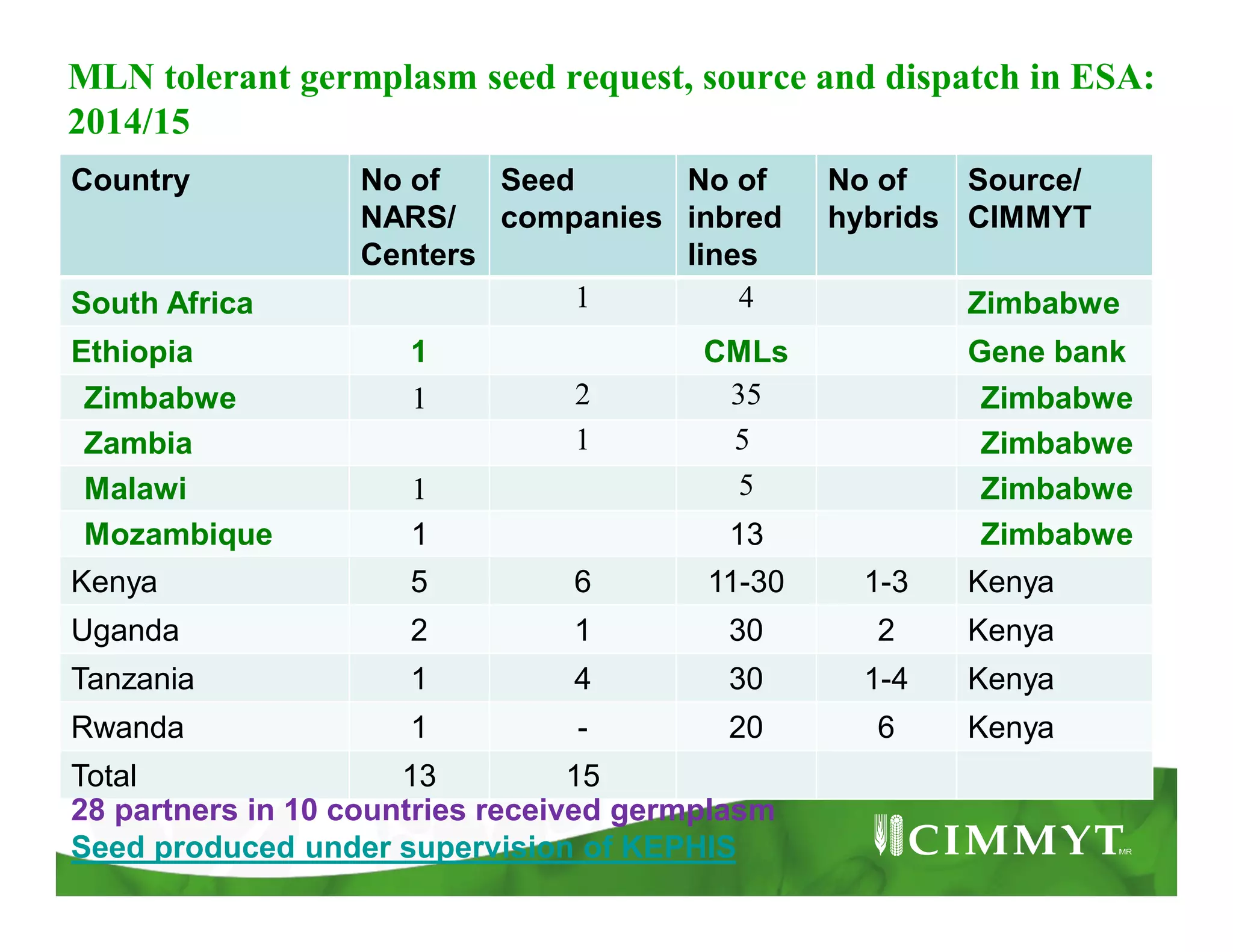
MLN tolerant germplasm seed request, source and dispatch in ESA:
2014/15
Country No of
NARS/
Centers
Seed
companies
No of
inbred
lines
No of
hybrids
Source/
CIMMYT
South Africa 1 4 Zimbabwe
Ethiopia 1 CMLs Gene bank
Zimbabwe 1 2 35 Zimbabwe
Zambia 1 5 Zimbabwe
Malawi 1 5 Zimbabwe
Mozambique 1 13 Zimbabwe
Kenya 5 6 11-30 1-3 Kenya
Uganda 2 1 30 2 Kenya
Tanzania 1 4 30 1-4 Kenya
Rwanda 1 - 20 6 Kenya
Total 13 15
28 partners in 10 countries received germplasm
Seed produced under supervision of KEPHIS
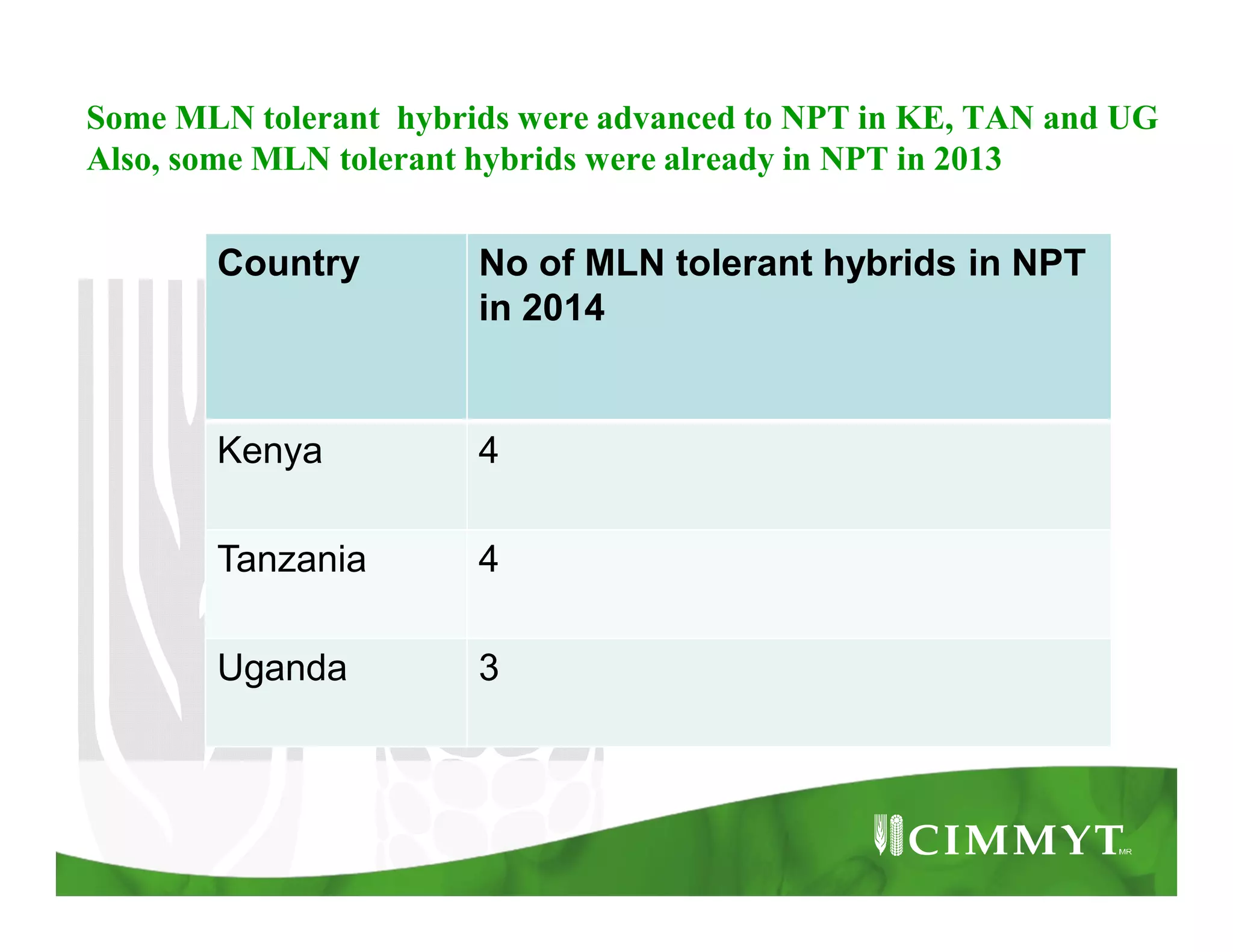
Some MLN tolerant hybrids were advanced to NPT in KE, TAN and UG
Also, some MLN tolerant hybrids were already in NPT in 2013
Country No of MLN tolerant hybrids in NPT
in 2014
Kenya 4
Tanzania 4
Uganda 3
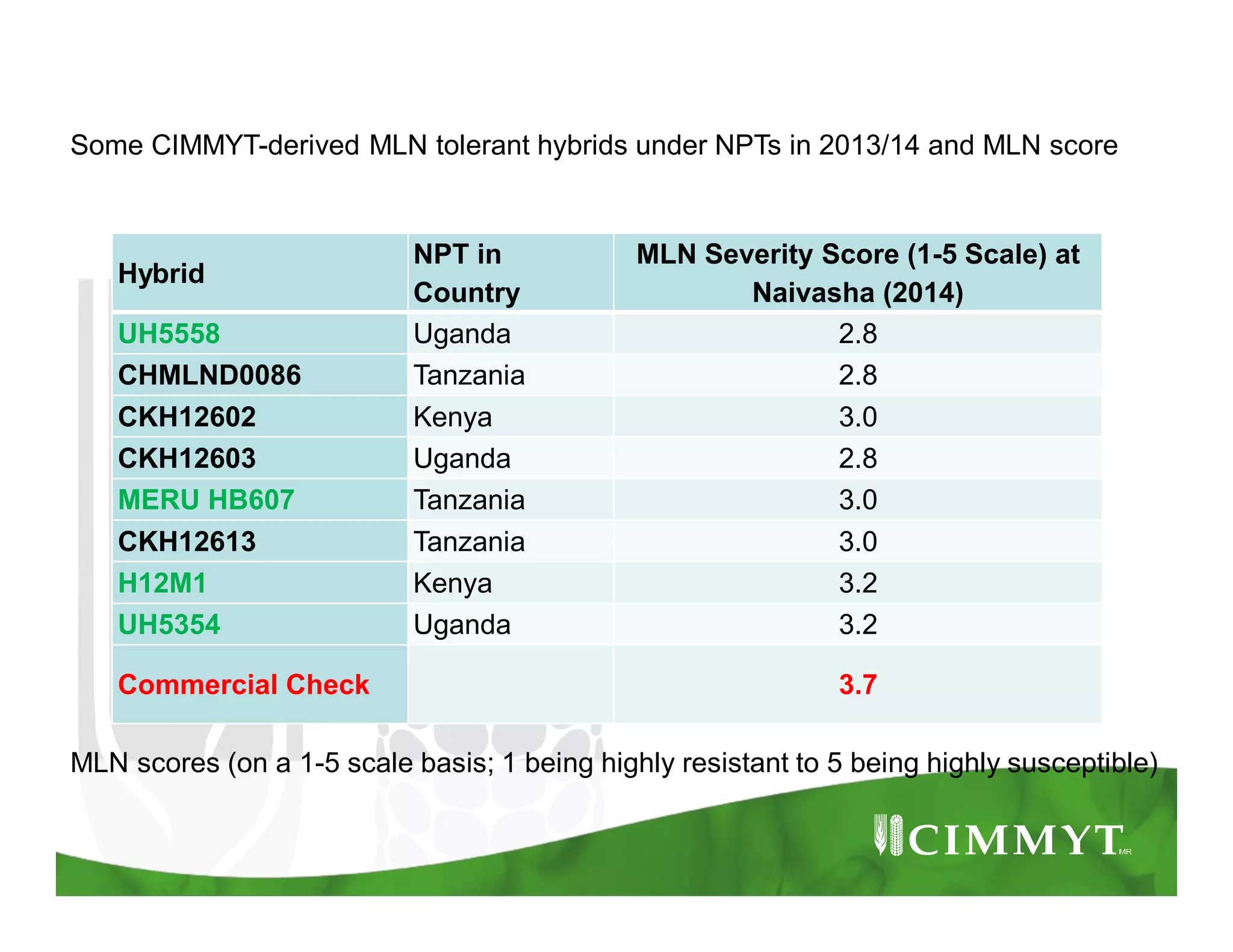
Hybrid
NPT in
Country
MLN Severity Score (1-5 Scale) at
Naivasha (2014)
UH5558 Uganda 2.8
CHMLND0086 Tanzania 2.8
CKH12602 Kenya 3.0
CKH12603 Uganda 2.8
MERU HB607 Tanzania 3.0
CKH12613 Tanzania 3.0
H12M1 Kenya 3.2
UH5354 Uganda 3.2
Commercial Check 3.7
MLN scores (on a 1-5 scale basis; 1 being highly resistant to 5 being highly susceptible)
Some CIMMYT-derived MLN tolerant hybrids under NPTs in 2013/14 and MLN score
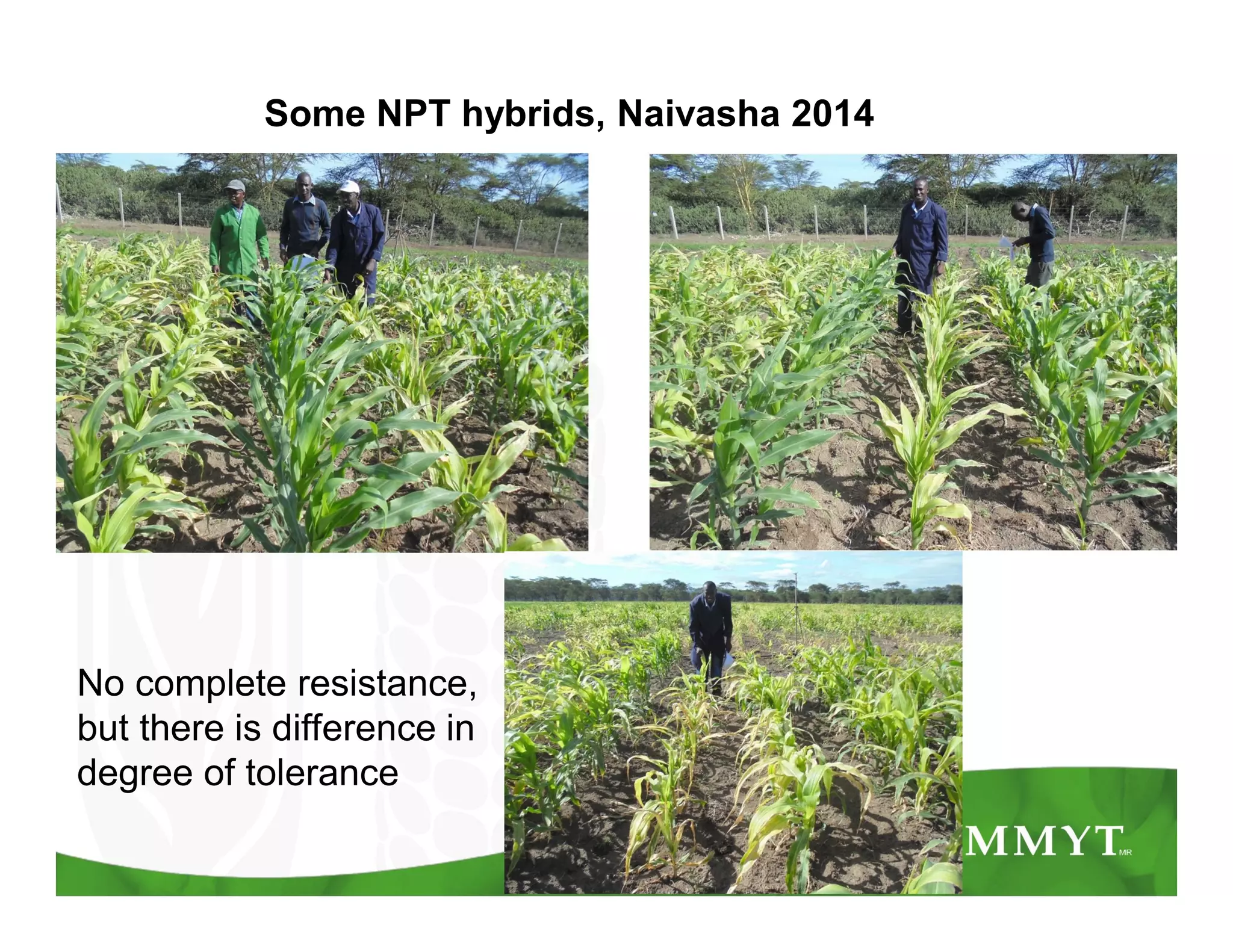
Some NPT hybrids, Naivasha 2014
No complete resistance,
but there is difference in
degree of tolerance
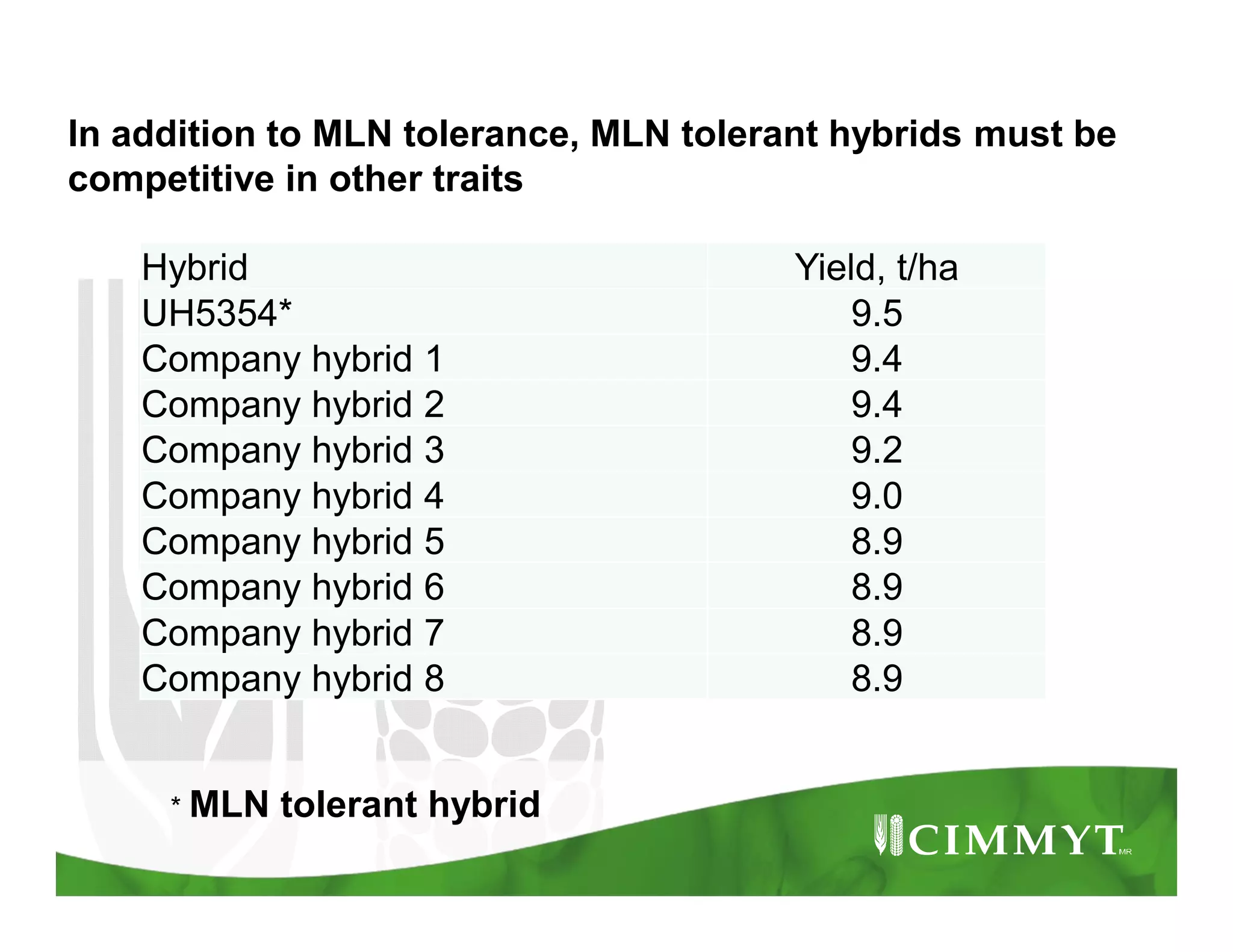
Hybrid Yield, t/ha
UH5354* 9.5
Company hybrid 1 9.4
Company hybrid 2 9.4
Company hybrid 3 9.2
Company hybrid 4 9.0
Company hybrid 5 8.9
Company hybrid 6 8.9
Company hybrid 7 8.9
Company hybrid 8 8.9
* MLN tolerant hybrid
In addition to MLN tolerance, MLN tolerant hybrids must be
competitive in other traits
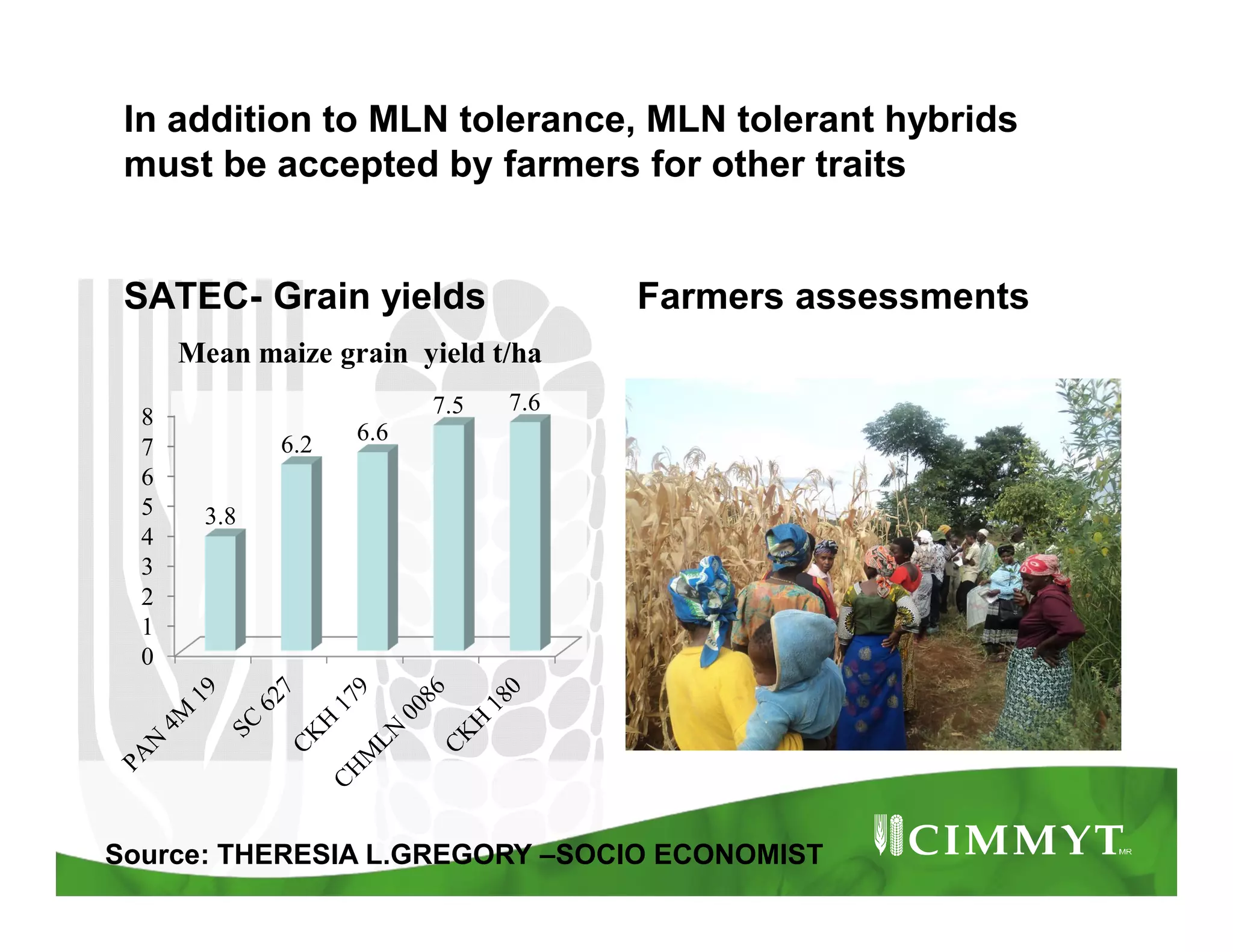
In addition to MLN tolerance, MLN tolerant hybrids
must be accepted by farmers for other traits
SATEC- Grain yields Farmers assessments
0
1
2
3
4
5
6
7
8
3.8
6.2 6.6
7.5 7.6
Mean maize grain yield t/ha
Source: THERESIA L.GREGORY –SOCIO ECONOMIST
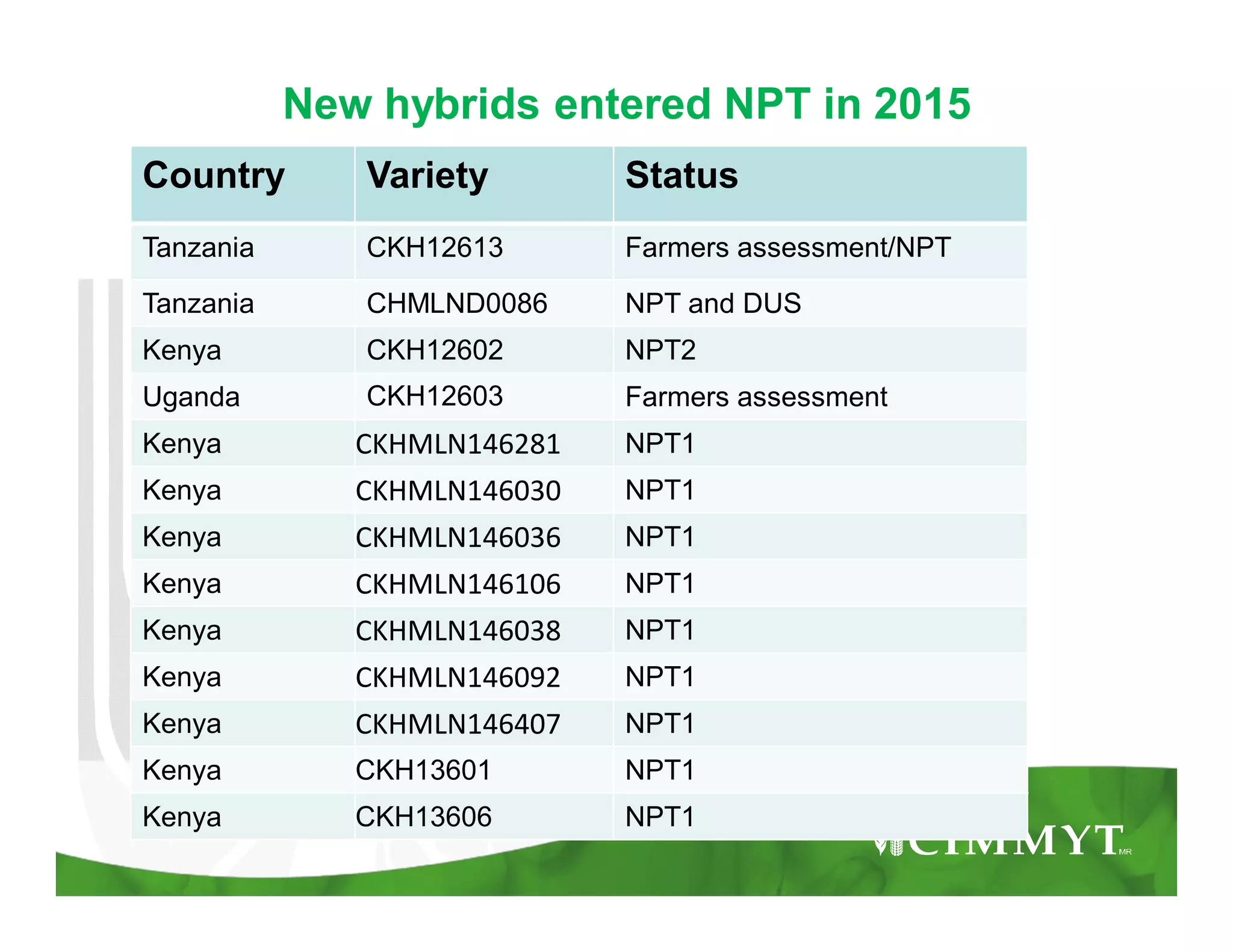
Country Variety Status
Tanzania CKH12613 Farmers assessment/NPT
Tanzania CHMLND0086 NPT and DUS
Kenya CKH12602 NPT2
Uganda CKH12603 Farmers assessment
Kenya CKHMLN146281 NPT1
Kenya CKHMLN146030 NPT1
Kenya CKHMLN146036 NPT1
Kenya CKHMLN146106 NPT1
Kenya CKHMLN146038 NPT1
Kenya CKHMLN146092 NPT1
Kenya CKHMLN146407 NPT1
Kenya CKH13601 NPT1
Kenya CKH13606 NPT1
New hybrids entered NPT in 2015
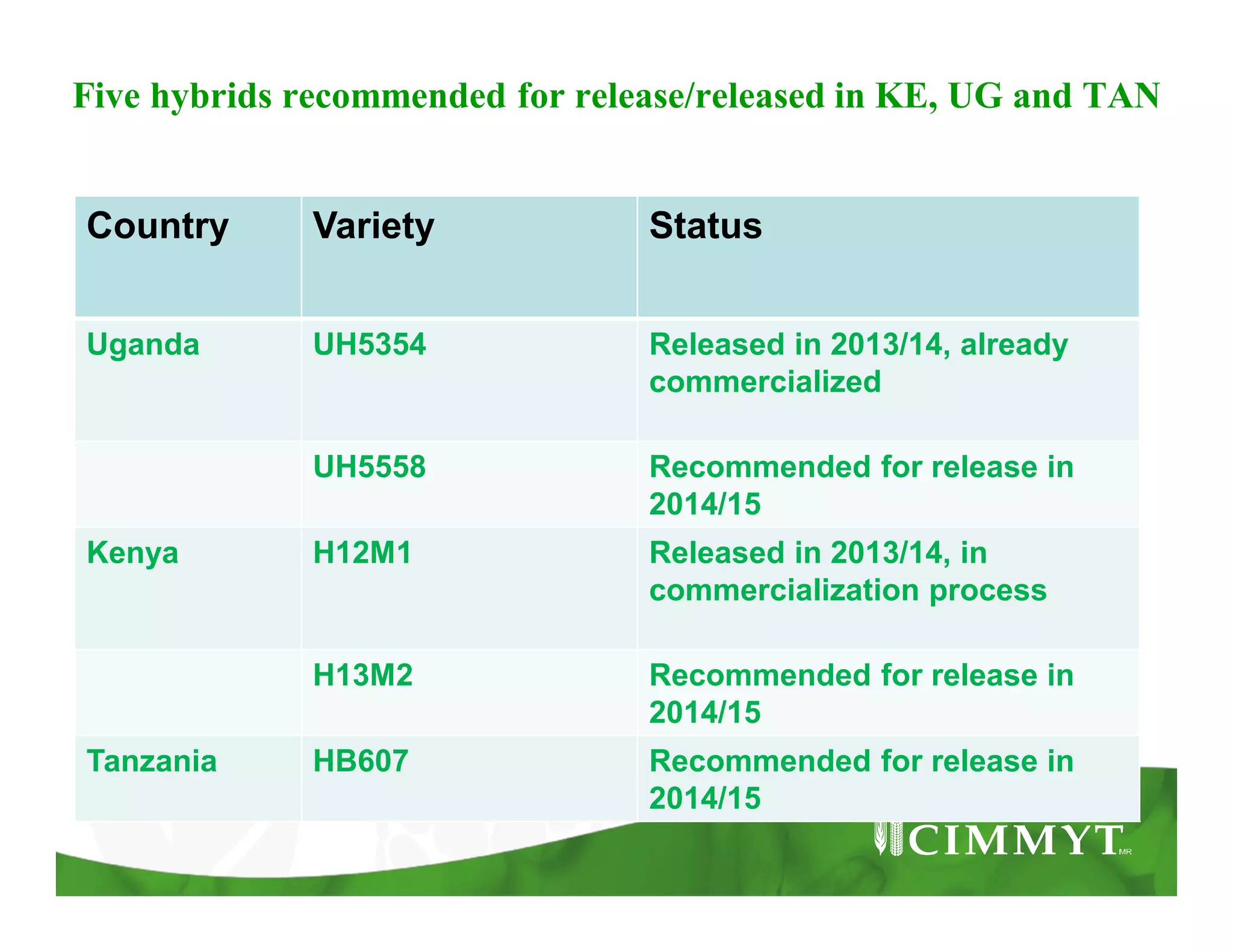
Five hybrids recommended for release/released in KE, UG and TAN
Country Variety Status
Uganda UH5354 Released in 2013/14, already
commercialized
UH5558 Recommended for release in
2014/15
Kenya H12M1 Released in 2013/14, in
commercialization process
H13M2 Recommended for release in
2014/15
Tanzania HB607 Recommended for release in
2014/15
CIMMYT supported the release
●Descriptors for NPT hybrids and their
parents
●Parental trials (SC and inbred parents) to
generate information for seed production
●Increase NPT, DUS, breeder/initial and
demo seeds and supply to partners
●Financial support through small grant
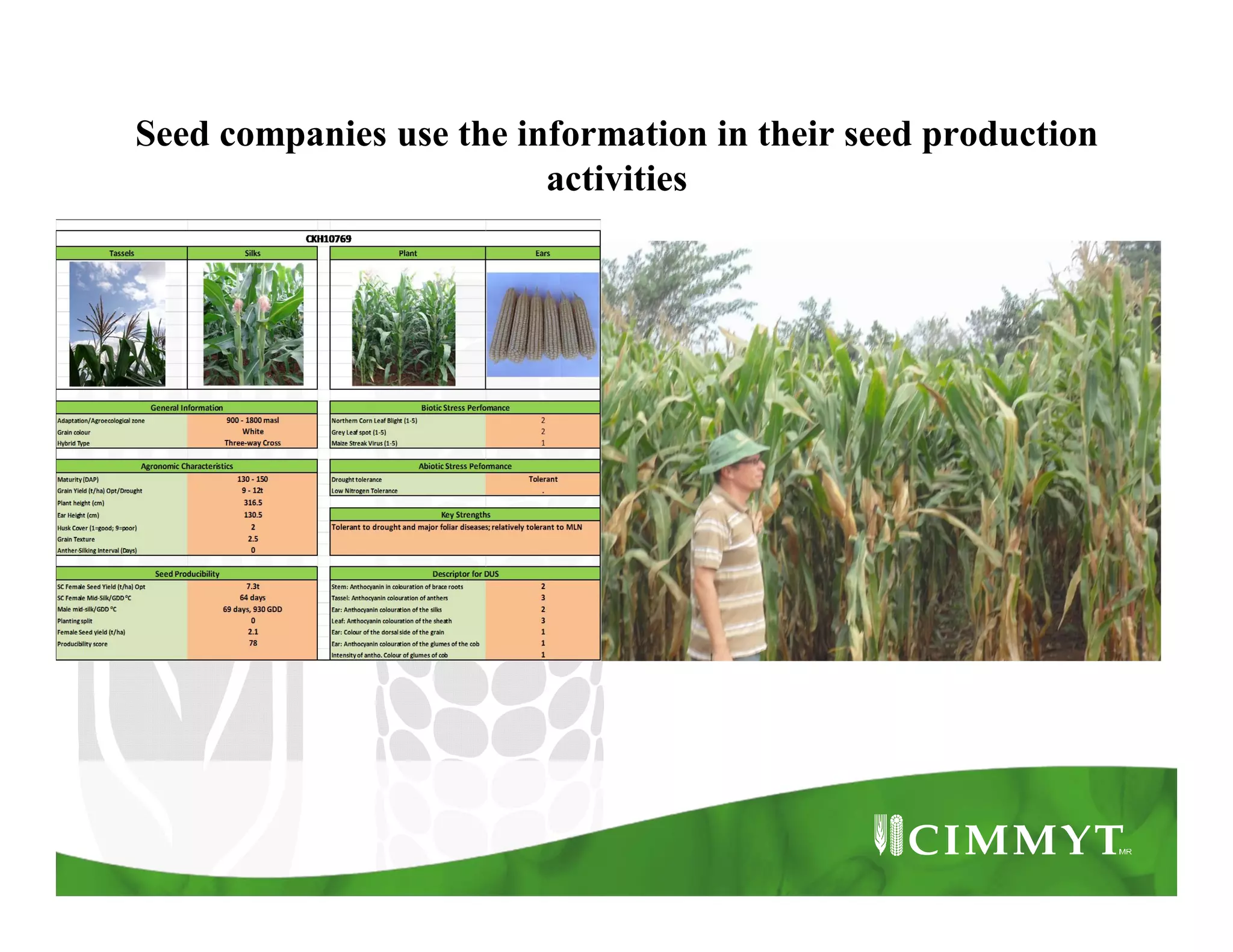
Seed companies use the information in their seed production
activities
Challenges
● Not all the parents of MLN tolerant hybrids are
tolerant/resistant; need MLN free area for seed production
● Need long term breeding to come-up with all parents
resistant to MLN; already on-going
Good to combine tolerant variety + agronomy
Thanks!!

MLN Workshop: New CIMMYT-derived products with tolerance to maize lethal necrosis -- M Regasa

  • 1.
    New CIMMYT-derived productswith MLN tolerance Naivasha March 2015
  • 2.
    Outline ● CIMMYT MLNtolerant products ● MLN tolerant germplasm seed request, dispatch and source ● MLN tolerant NPT hybrids ● MLN tolerant hybrid releases ● Other related activities ● Challenges
  • 3.
    CIMMYT MLN tolerantproducts ● UPDATE: Promising CIMMYT maize inbreds and pre-commercial hybrids-June 2013 ● Update: CIMMYT maize inbred lines and pre- commercial hybrids with potential resistance to maize lethal necrosis (MLN)-May 2014
  • 4.
    MLN tolerant germplasmseed request, source and dispatch in ESA: 2013/14 Country No of NARS/Cen ters Seed companies No of inbred lines No of hybrids Source/ CIMMYT South Africa - 1 2 - Zimbabwe Ethiopia 1 - 2 - Zimbabwe Kenya 3 4 4-18 4-17 Kenya Uganda 1 2 4-18 4-17 Kenya Tanzania 1 4 7-16 4-17 Kenya Total 6 11 17 partners in 5 countries received germplasm
  • 5.
    MLN tolerant germplasmseed request, source and dispatch in ESA: 2014/15 Country No of NARS/ Centers Seed companies No of inbred lines No of hybrids Source/ CIMMYT South Africa 1 4 Zimbabwe Ethiopia 1 CMLs Gene bank Zimbabwe 1 2 35 Zimbabwe Zambia 1 5 Zimbabwe Malawi 1 5 Zimbabwe Mozambique 1 13 Zimbabwe Kenya 5 6 11-30 1-3 Kenya Uganda 2 1 30 2 Kenya Tanzania 1 4 30 1-4 Kenya Rwanda 1 - 20 6 Kenya Total 13 15 28 partners in 10 countries received germplasm Seed produced under supervision of KEPHIS
  • 6.
    Some MLN toleranthybrids were advanced to NPT in KE, TAN and UG Also, some MLN tolerant hybrids were already in NPT in 2013 Country No of MLN tolerant hybrids in NPT in 2014 Kenya 4 Tanzania 4 Uganda 3
  • 7.
    Hybrid NPT in Country MLN SeverityScore (1-5 Scale) at Naivasha (2014) UH5558 Uganda 2.8 CHMLND0086 Tanzania 2.8 CKH12602 Kenya 3.0 CKH12603 Uganda 2.8 MERU HB607 Tanzania 3.0 CKH12613 Tanzania 3.0 H12M1 Kenya 3.2 UH5354 Uganda 3.2 Commercial Check 3.7 MLN scores (on a 1-5 scale basis; 1 being highly resistant to 5 being highly susceptible) Some CIMMYT-derived MLN tolerant hybrids under NPTs in 2013/14 and MLN score
  • 8.
    Some NPT hybrids,Naivasha 2014 No complete resistance, but there is difference in degree of tolerance
  • 9.
    Hybrid Yield, t/ha UH5354*9.5 Company hybrid 1 9.4 Company hybrid 2 9.4 Company hybrid 3 9.2 Company hybrid 4 9.0 Company hybrid 5 8.9 Company hybrid 6 8.9 Company hybrid 7 8.9 Company hybrid 8 8.9 * MLN tolerant hybrid In addition to MLN tolerance, MLN tolerant hybrids must be competitive in other traits
  • 10.
    In addition toMLN tolerance, MLN tolerant hybrids must be accepted by farmers for other traits SATEC- Grain yields Farmers assessments 0 1 2 3 4 5 6 7 8 3.8 6.2 6.6 7.5 7.6 Mean maize grain yield t/ha Source: THERESIA L.GREGORY –SOCIO ECONOMIST
  • 11.
    Country Variety Status TanzaniaCKH12613 Farmers assessment/NPT Tanzania CHMLND0086 NPT and DUS Kenya CKH12602 NPT2 Uganda CKH12603 Farmers assessment Kenya CKHMLN146281 NPT1 Kenya CKHMLN146030 NPT1 Kenya CKHMLN146036 NPT1 Kenya CKHMLN146106 NPT1 Kenya CKHMLN146038 NPT1 Kenya CKHMLN146092 NPT1 Kenya CKHMLN146407 NPT1 Kenya CKH13601 NPT1 Kenya CKH13606 NPT1 New hybrids entered NPT in 2015
  • 12.
    Five hybrids recommendedfor release/released in KE, UG and TAN Country Variety Status Uganda UH5354 Released in 2013/14, already commercialized UH5558 Recommended for release in 2014/15 Kenya H12M1 Released in 2013/14, in commercialization process H13M2 Recommended for release in 2014/15 Tanzania HB607 Recommended for release in 2014/15
  • 13.
    CIMMYT supported therelease ●Descriptors for NPT hybrids and their parents ●Parental trials (SC and inbred parents) to generate information for seed production ●Increase NPT, DUS, breeder/initial and demo seeds and supply to partners ●Financial support through small grant
  • 14.
    Seed companies usethe information in their seed production activities
  • 15.
    Challenges ● Not allthe parents of MLN tolerant hybrids are tolerant/resistant; need MLN free area for seed production ● Need long term breeding to come-up with all parents resistant to MLN; already on-going Good to combine tolerant variety + agronomy
  • 16.