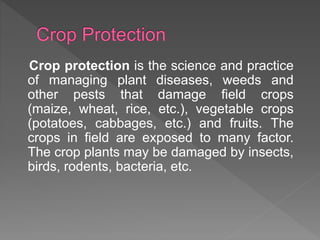
Crop protection is the science and practice
of managing plant diseases, weeds and
other pests that damage field crops
(maize, wheat, rice, etc.), vegetable crops
(potatoes, cabbages, etc.) and fruits. The
crops in field are exposed to many factor.
The crop plants may be damaged by insects,
birds, rodents, bacteria, etc.
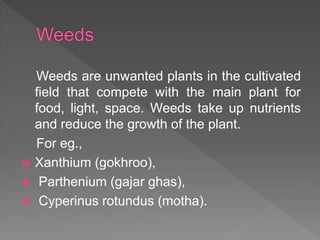
Weeds are unwanted plants in the cultivated
field that compete with the main plant for
food, light, space. Weeds take up nutrients
and reduce the growth of the plant.
For eg.,
 Xanthium (gokhroo),
 Parthenium (gajar ghas),
 Cyperinus rotundus (motha).
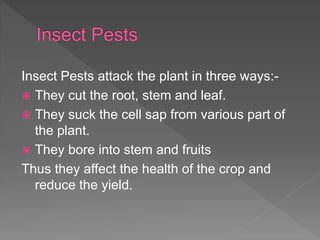
Insect Pests attack the plant in three ways:-
 They cut the root, stem and leaf.
 They suck the cell sap from various part of
the plant.
 They bore into stem and fruits
Thus they affect the health of the crop and
reduce the yield.
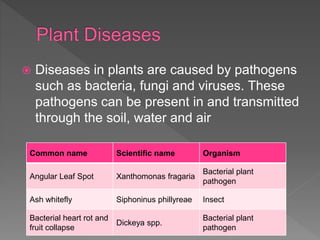
 Diseases in plants are caused by pathogens
such as bacteria, fungi and viruses. These
pathogens can be present in and transmitted
through the soil, water and air
Common name Scientific name Organism
Angular Leaf Spot Xanthomonas fragaria
Bacterial plant
pathogen
Ash whitefly Siphoninus phillyreae Insect
Bacterial heart rot and
fruit collapse
Dickeya spp.
Bacterial plant
pathogen
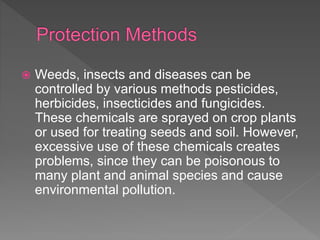
 Weeds, insects and diseases can be
controlled by various methods pesticides,
herbicides, insecticides and fungicides.
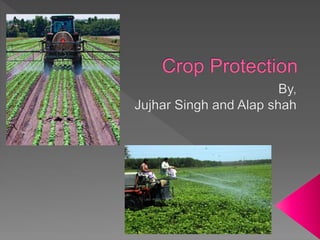
These chemicals are sprayed on crop plants
or used for treating seeds and soil. However,
excessive use of these chemicals creates
problems, since they can be poisonous to
many plant and animal species and cause
environmental pollution.
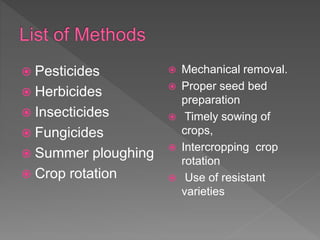
 Pesticides
 Herbicides
 Insecticides
 Fungicides
 Summer ploughing
 Crop rotation
 Mechanical removal.
 Proper seed bed
preparation
 Timely sowing of
crops,
 Intercropping crop
rotation
 Use of resistant
varieties
Crop protection
Crop protection

Crop protection

  • 2.
    Crop protection isthe science and practice of managing plant diseases, weeds and other pests that damage field crops (maize, wheat, rice, etc.), vegetable crops (potatoes, cabbages, etc.) and fruits. The crops in field are exposed to many factor. The crop plants may be damaged by insects, birds, rodents, bacteria, etc.
  • 3.
    Weeds are unwantedplants in the cultivated field that compete with the main plant for food, light, space. Weeds take up nutrients and reduce the growth of the plant. For eg.,  Xanthium (gokhroo),  Parthenium (gajar ghas),  Cyperinus rotundus (motha).
  • 4.
    Insect Pests attackthe plant in three ways:-  They cut the root, stem and leaf.  They suck the cell sap from various part of the plant.  They bore into stem and fruits Thus they affect the health of the crop and reduce the yield.
  • 5.
     Diseases inplants are caused by pathogens such as bacteria, fungi and viruses. These pathogens can be present in and transmitted through the soil, water and air Common name Scientific name Organism Angular Leaf Spot Xanthomonas fragaria Bacterial plant pathogen Ash whitefly Siphoninus phillyreae Insect Bacterial heart rot and fruit collapse Dickeya spp. Bacterial plant pathogen
  • 6.
     Weeds, insectsand diseases can be controlled by various methods pesticides, herbicides, insecticides and fungicides. These chemicals are sprayed on crop plants or used for treating seeds and soil. However, excessive use of these chemicals creates problems, since they can be poisonous to many plant and animal species and cause environmental pollution.
  • 7.
     Pesticides  Herbicides Insecticides  Fungicides  Summer ploughing  Crop rotation  Mechanical removal.  Proper seed bed preparation  Timely sowing of crops,  Intercropping crop rotation  Use of resistant varieties