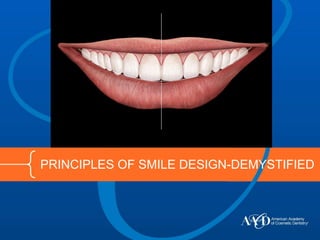
PRINCIPLES OF SMILE DESIGN-DEMYSTIFIED
PRINCIPLES OF
SMILE DESIGN-DEMYSTIFIED
by Saiesha Mistry, BDS, MSc
Illustrations by Zach Turner
Adapted from the full article, which originally appeared in
AACD’s Journal of Cosmetic Dentistry, Summer 2012 issue.
For more information, visit www.AACD.com.
©2012-2014 American Academy of Cosmetic Dentistry, All Rights Reserved
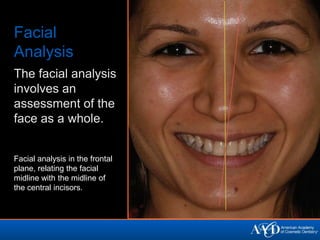
Facial
Analysis
The facial analysis
involves an
assessment of the
face as a whole.
Facial analysis in the frontal
plane, relating the facial
midline with the midline of
the central incisors.
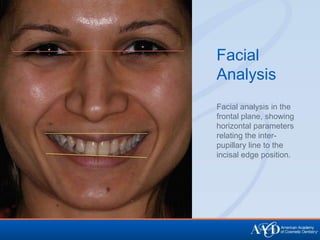
Facial
Analysis
Facial analysis in the
frontal plane, showing
horizontal parameters
relating the inter-
pupillary line to the
incisal edge position.
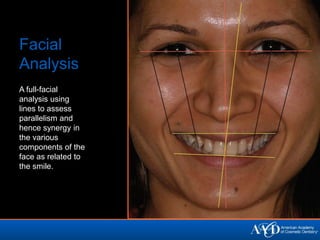
Facial
Analysis
A full-facial
analysis using
lines to assess
parallelism and
hence synergy in
the various
components of the
face as related to
the smile.
Facial
Analysis
Facial analysis in the
sagittal plane: The Ricketts
E-plane connects the tip of
the nose to the chin
prominence. Average
distance from the upper lip
is 4 mm; and from the
lower lip, 2 mm.
Facial analysis in the sagittal plane: The
nasio-labial angle is determined by the base
of the nose and the upper lip. The average
angle for males is 90 to 95 degrees; for
females, 100 to 105 degrees.
Smile and
Dental Analysis
The full face—the starting
point of the smile design.
The smile analysis
comprises details of the
lips and the gums as a
unit. The dental analysis
provides insight into
characterization and
individuality of the teeth.
Smile Design Sequence
Dentofacial view. The focus is now on the smile itself.
Smile Design Sequence
Define the lips,
which form the
framework of the
smile to be
designed. The
components are
filled in per the
smile analysis.
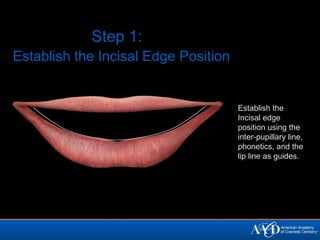
Step 1:
Establish the Incisal Edge Position
Establish the
Incisal edge
position using the
inter-pupillary line,
phonetics, and the
lip line as guides.
The use of phonetics and the “M” sound help to
determine the position of the lips at rest. The
amount of tooth visible in this position is important
as a baseline for designing the smile. The more
tooth visible, the younger the look.
Step 1:
Establish the
Incisal Edge
Position
Step 1:
Establish the Incisal Edge Position
Use of phonetics
to evaluate the
location of the
incisal edge
position. The
incisal edges of
the maxillary
anterior teeth
should fall on the
vermilion or
wet/dry border of
the lower lip.
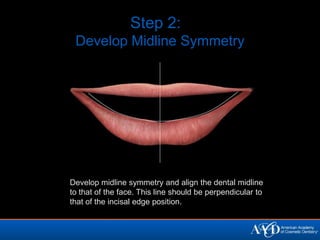
Step 2:
Develop Midline Symmetry
Develop midline symmetry and align the dental midline
to that of the face. This line should be perpendicular to
that of the incisal edge position.
Step 3:
Establish the Gingival Margin
Based on the space available, calculate the length
of the teeth using the width:length ratio of 78%.
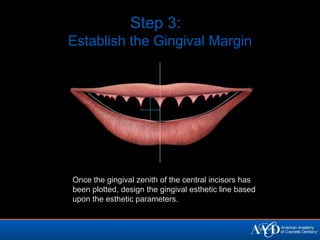
Step 3:
Establish the Gingival Margin
Once the gingival zenith of the central incisors has
been plotted, design the gingival esthetic line based
upon the esthetic parameters.
Step 4:
Create Silhouette Form of the Central Incisors
The position of the central incisors is determined using the
facial midline as a guide. The size depends on the space
analyses and the tooth proportions of 78%.
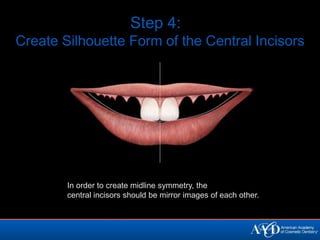
Step 4:
Create Silhouette Form of the Central Incisors
In order to create midline symmetry, the
central incisors should be mirror images of each other.
Step 5:
Develop Relative
Proportions of
Lateral Incisors
and Canines
The size of the lateral incisors and
canines are determined so as to
maintain relative proportions to
each other and the centrals. We
can use principles of tooth
proportions, the “golden
proportion,” and the various other
proportion tools defined for the
anterior segment. The aim is to
create radiating lateral harmony.
Step 6:
Extend the Smile Into the Corners
Buccal corridor encroached upon by the teeth, leaving no contrast in
color between the teeth, tissues, and space.
Step 6:
Extend the Smile Into the Corners
Prominent anterior segment with depressed posteriors
gives the impression of an empty, “hollow” smile.
Step 6:
Extend the Smile Into the Corners
Axial inclinations of the teeth should be medially
directed for a more esthetic and pleasing appearance.
Step 6:
Extend the Smile Into the Corners
Eliminate the dark corridors of the smile, paying
attention to the vertical parallelism and medial axial inclinations.
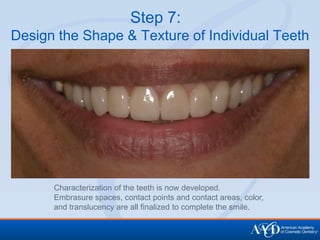
Step 7:
Design the Shape & Texture of Individual Teeth
Characterization of the teeth is now developed.
Embrasure spaces, contact points and contact areas, color,
and translucency are all finalized to complete the smile.
Summary
All the features of the
smile coming together
to complement the
patient’s face.
Using this systematic
approach, designing
the smile becomes
predictable and easy.
The details are in the
collection of data, use
that data exactly
where it is required.
This will achieve a
beautiful smile.
To receive the quarterly, peer-reviewed
Journal of Cosmetic Dentistry,
become an AACD member at
www.AACD.com/join

PRINCIPLES OF SMILE DESIGN-DEMYSTIFIED

  • 1.
    PRINCIPLES OF SMILEDESIGN-DEMYSTIFIED
  • 2.
    PRINCIPLES OF SMILE DESIGN-DEMYSTIFIED bySaiesha Mistry, BDS, MSc Illustrations by Zach Turner Adapted from the full article, which originally appeared in AACD’s Journal of Cosmetic Dentistry, Summer 2012 issue. For more information, visit www.AACD.com. ©2012-2014 American Academy of Cosmetic Dentistry, All Rights Reserved
  • 3.
    Facial Analysis The facial analysis involvesan assessment of the face as a whole. Facial analysis in the frontal plane, relating the facial midline with the midline of the central incisors.
  • 4.
    Facial Analysis Facial analysis inthe frontal plane, showing horizontal parameters relating the inter- pupillary line to the incisal edge position.
  • 5.
    Facial Analysis A full-facial analysis using linesto assess parallelism and hence synergy in the various components of the face as related to the smile.
  • 6.
    Facial Analysis Facial analysis inthe sagittal plane: The Ricketts E-plane connects the tip of the nose to the chin prominence. Average distance from the upper lip is 4 mm; and from the lower lip, 2 mm. Facial analysis in the sagittal plane: The nasio-labial angle is determined by the base of the nose and the upper lip. The average angle for males is 90 to 95 degrees; for females, 100 to 105 degrees.
  • 7.
    Smile and Dental Analysis Thefull face—the starting point of the smile design. The smile analysis comprises details of the lips and the gums as a unit. The dental analysis provides insight into characterization and individuality of the teeth.
  • 8.
    Smile Design Sequence Dentofacialview. The focus is now on the smile itself.
  • 9.
    Smile Design Sequence Definethe lips, which form the framework of the smile to be designed. The components are filled in per the smile analysis.
  • 10.
    Step 1: Establish theIncisal Edge Position Establish the Incisal edge position using the inter-pupillary line, phonetics, and the lip line as guides.
  • 11.
    The use ofphonetics and the “M” sound help to determine the position of the lips at rest. The amount of tooth visible in this position is important as a baseline for designing the smile. The more tooth visible, the younger the look. Step 1: Establish the Incisal Edge Position
  • 12.
    Step 1: Establish theIncisal Edge Position Use of phonetics to evaluate the location of the incisal edge position. The incisal edges of the maxillary anterior teeth should fall on the vermilion or wet/dry border of the lower lip.
  • 13.
    Step 2: Develop MidlineSymmetry Develop midline symmetry and align the dental midline to that of the face. This line should be perpendicular to that of the incisal edge position.
  • 14.
    Step 3: Establish theGingival Margin Based on the space available, calculate the length of the teeth using the width:length ratio of 78%.
  • 15.
    Step 3: Establish theGingival Margin Once the gingival zenith of the central incisors has been plotted, design the gingival esthetic line based upon the esthetic parameters.
  • 16.
    Step 4: Create SilhouetteForm of the Central Incisors The position of the central incisors is determined using the facial midline as a guide. The size depends on the space analyses and the tooth proportions of 78%.
  • 17.
    Step 4: Create SilhouetteForm of the Central Incisors In order to create midline symmetry, the central incisors should be mirror images of each other.
  • 18.
    Step 5: Develop Relative Proportionsof Lateral Incisors and Canines The size of the lateral incisors and canines are determined so as to maintain relative proportions to each other and the centrals. We can use principles of tooth proportions, the “golden proportion,” and the various other proportion tools defined for the anterior segment. The aim is to create radiating lateral harmony.
  • 19.
    Step 6: Extend theSmile Into the Corners Buccal corridor encroached upon by the teeth, leaving no contrast in color between the teeth, tissues, and space.
  • 20.
    Step 6: Extend theSmile Into the Corners Prominent anterior segment with depressed posteriors gives the impression of an empty, “hollow” smile.
  • 21.
    Step 6: Extend theSmile Into the Corners Axial inclinations of the teeth should be medially directed for a more esthetic and pleasing appearance.
  • 22.
    Step 6: Extend theSmile Into the Corners Eliminate the dark corridors of the smile, paying attention to the vertical parallelism and medial axial inclinations.
  • 23.
    Step 7: Design theShape & Texture of Individual Teeth Characterization of the teeth is now developed. Embrasure spaces, contact points and contact areas, color, and translucency are all finalized to complete the smile.
  • 24.
    Summary All the featuresof the smile coming together to complement the patient’s face. Using this systematic approach, designing the smile becomes predictable and easy. The details are in the collection of data, use that data exactly where it is required. This will achieve a beautiful smile.
  • 25.
    To receive thequarterly, peer-reviewed Journal of Cosmetic Dentistry, become an AACD member at www.AACD.com/join