Environmental Factors
Environmental Factors 
· Edaphic: These refer to the soil. 
· Climatic: These are the average weather conditions 
that affect the community in an ecosystem. 
· Biotic: These are living factors. 
· Fire: It is chemical chain reaction which takes place 
with the evolution of heat and light.
Edaphic factors include 
• Soil type: 
ü Sandy soil 
ü Clay soil 
ü Loamy soil 
• Soil pH: 
• Available (soil) water: 
ü (Adhesion water, Cohesion water, Gravitational water) 
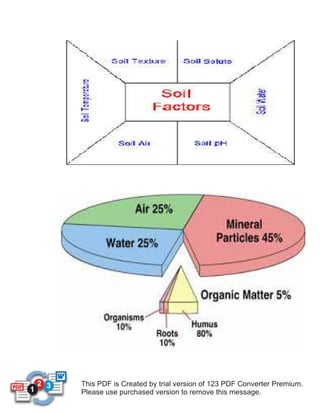
ü Water makes up 25% of a soil 
• Air and Mineral content: 
ü Air is found in spaces (pores) between soil particles. 
ü Air supplies oxygen and nitrogen that help plants to grow. 
ü Air makes up 25% of a soil. 
• Humus 
ü The remains of dead plants and animals. 
ü Dead plants are broken down into humus by micro-organisms (earthworms, fungi). 
ü Humus darkens the soil and increases fertility and is found near the surface. 
ü Organic matter makes up about 5% of a soil usually. 
• Soil texture and Structure 
ü Roughness 
ü Gaps 
ü Amount of air 
ü Water passing through
Climatic Factors (Long-term weather) 
• Temperature: 
ü Is an important factor in the distribution of organisms because of its effects on 
biological processes? 
ü Global Warming: increase in Earth's average surface temperature only. 
• Rainfall: 
ü Rainfall is the most important climatic factor in determining areas at risk of land 
degradation and potential desertification. 
ü Rainfall plays a vital role in the development and distribution of plant life, but the 
variability and extremes of rainfall can lead to soil erosion and land degradation. 
• Day length: 
ü Day length changes over time. 
• Light intensity: 
ü Can affect photosynthesis in ecosystems 
ü Is also important to the development and behavior of organisms sensitive to the 
photoperiod. 
ü Plays a major part in determining the Earth’s climate patterns. 
• Wind: 
ü In the arid and semi-arid zones of the world, 24% of the cultivated land and 41% 
of the pasture land affected by moderate to severe land degradation from wind 
erosion. 
ü Sand and dust storms are hazardous weather and cause major agricultural and 
environmental problems in many parts of the world. 
ü Sand and dust storms strong winds to bury crops. 
ü Can change the morphology of plants.
Humidity: 
This chart shows how relative humidity changes with temperature 
Relative humidity is affected by temperature
Total annual production of dust world-wide by deflation of soils and 
sediments was estimated to be 61 to 366 million tons.
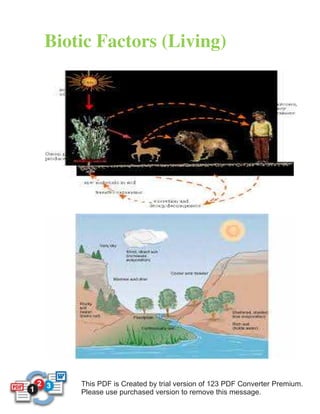
Biotic Factors (Living) 
• Food: 
ü Many animals are directly dependent on plants for food. 
• Competition: 
ü Plants struggle for light will influence root development and the 
competition for water. 
• Predation: 
ü The dominant plants will grow tallest and modify the light conditions 
for the rest of the community. 
• Parasitism: 
ü Man modifies of ecosystems by fire, hunting and agriculture… 
• Pollination: 
ü Man is by far the most important biotic factor 
• Seed Dispersal: 
ü Many plants rely on animals for pollination and seed dispersal. 
• Human activity: 
ü Industrialization and the intensification of agriculture, man has 
obliterated large areas of natural systems and caused pollution of both 
terrestrial and aquatic habitats.
Biotic Factors (Living) 
iotic
Fire 
Impact of fire on the natural environment 
• Impact on Plant 
ü Regeneration 
ü Bane 
• Impact on Soils: 
ü Can sterilise living tissue in soils. 
ü Ash-bed effect can increase fertility of soil. 
ü Chemical structure of the soil can be changed. 
ü Changes in soil’s permeability (its ability to absorb water). 
ü Removal of vegetation. 
ü Often results in erosion. 
• Impact on Water : 
ü Fires can affect the quality and amounts of water in creeks, rivers and heavy rain 
soon after the fire. 
• Impact on Animals: 
ü Many animals are killed during fires. 
ü Find new sources of food. 
• Impact on Air: 
ü Noxious gases: These include carbon dioxide (CO2), sulphur dioxide (SO2) and 
nitrogen oxides (NOx). 
ü Particulates: These are tiny particles suspended in air (e.g. smoke) and which are 
usually produced by the combustion of fossil fuels.
Impact of fire on Plant 
Impact of fire on Animals
TTTThhhhaaaannnnkkkkssss 
ffffoooorrrr 
wwwwaaaattttcccchhhhiiiinnnngggg

Environmental factors

  • 1.
  • 2.
    Environmental Factors ·Edaphic: These refer to the soil. · Climatic: These are the average weather conditions that affect the community in an ecosystem. · Biotic: These are living factors. · Fire: It is chemical chain reaction which takes place with the evolution of heat and light.
  • 3.
    Edaphic factors include • Soil type: ü Sandy soil ü Clay soil ü Loamy soil • Soil pH: • Available (soil) water: ü (Adhesion water, Cohesion water, Gravitational water) ü Water makes up 25% of a soil • Air and Mineral content: ü Air is found in spaces (pores) between soil particles. ü Air supplies oxygen and nitrogen that help plants to grow. ü Air makes up 25% of a soil. • Humus ü The remains of dead plants and animals. ü Dead plants are broken down into humus by micro-organisms (earthworms, fungi). ü Humus darkens the soil and increases fertility and is found near the surface. ü Organic matter makes up about 5% of a soil usually. • Soil texture and Structure ü Roughness ü Gaps ü Amount of air ü Water passing through
  • 6.
    Climatic Factors (Long-termweather) • Temperature: ü Is an important factor in the distribution of organisms because of its effects on biological processes? ü Global Warming: increase in Earth's average surface temperature only. • Rainfall: ü Rainfall is the most important climatic factor in determining areas at risk of land degradation and potential desertification. ü Rainfall plays a vital role in the development and distribution of plant life, but the variability and extremes of rainfall can lead to soil erosion and land degradation. • Day length: ü Day length changes over time. • Light intensity: ü Can affect photosynthesis in ecosystems ü Is also important to the development and behavior of organisms sensitive to the photoperiod. ü Plays a major part in determining the Earth’s climate patterns. • Wind: ü In the arid and semi-arid zones of the world, 24% of the cultivated land and 41% of the pasture land affected by moderate to severe land degradation from wind erosion. ü Sand and dust storms are hazardous weather and cause major agricultural and environmental problems in many parts of the world. ü Sand and dust storms strong winds to bury crops. ü Can change the morphology of plants.
  • 7.
    Humidity: This chartshows how relative humidity changes with temperature Relative humidity is affected by temperature
  • 8.
    Total annual productionof dust world-wide by deflation of soils and sediments was estimated to be 61 to 366 million tons.
  • 9.
    Biotic Factors (Living) • Food: ü Many animals are directly dependent on plants for food. • Competition: ü Plants struggle for light will influence root development and the competition for water. • Predation: ü The dominant plants will grow tallest and modify the light conditions for the rest of the community. • Parasitism: ü Man modifies of ecosystems by fire, hunting and agriculture… • Pollination: ü Man is by far the most important biotic factor • Seed Dispersal: ü Many plants rely on animals for pollination and seed dispersal. • Human activity: ü Industrialization and the intensification of agriculture, man has obliterated large areas of natural systems and caused pollution of both terrestrial and aquatic habitats.
  • 10.
  • 11.
    Fire Impact offire on the natural environment • Impact on Plant ü Regeneration ü Bane • Impact on Soils: ü Can sterilise living tissue in soils. ü Ash-bed effect can increase fertility of soil. ü Chemical structure of the soil can be changed. ü Changes in soil’s permeability (its ability to absorb water). ü Removal of vegetation. ü Often results in erosion. • Impact on Water : ü Fires can affect the quality and amounts of water in creeks, rivers and heavy rain soon after the fire. • Impact on Animals: ü Many animals are killed during fires. ü Find new sources of food. • Impact on Air: ü Noxious gases: These include carbon dioxide (CO2), sulphur dioxide (SO2) and nitrogen oxides (NOx). ü Particulates: These are tiny particles suspended in air (e.g. smoke) and which are usually produced by the combustion of fossil fuels.
  • 12.
    Impact of fireon Plant Impact of fire on Animals
  • 13.