
SEMINOR TOPIC

ECOLOGICAL EQUILIBRIUM


                Presented by,
                 Ancy Treesa
                 Jincy Joseph
INTRODUCTION TO ECOLOGY
     LEVELS OF ORGANIZATION
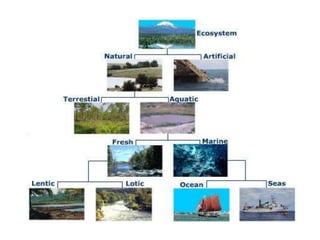
ECOSYSTEM
• An ECOSYSTEM can be described simply as the collection of
  all living and non-living components in a particular area.

• The living components of the environment are known as
  BIOTIC factors. Biotic factors include plants, animals, and
  micro-organisms.

• The non-living components of the environment are known
  as ABIOTIC factors. Abiotic factors include things such as
  rocks and water.
Some Terms :
• Habitat : the place where the population of
  organism lives.

• Niche : Relational position of a species or
  population in an ecosystem.

• Habits : something that one is used to doing;
  part of a routine; behavior pattern .
ECOLOGY

• Derived From Greek work – oikos(home) and
  logos(study).

• Branch of Science that deals with the
  interrelationship between biotic and abiotic
  components of nature ,as well as with the
  relationship among the individuals, population
  and community of the biotic components.
ECOLOGY DEFINED IN NUMBER OF WAYS :


• According to E.P. Odum "Ecology is the study of
  structure and functions of nature and ecosystems“.

• According to Colinvauk, "Ecology is the study of
  animals and plants in situations to their habits and
  habitats".
OBJECTIVES OF ECOLOGY
• Presence of man in the ecosystem.

• To understand the dynamics of our surroundings and to
  take proper measures to conserve it if and when
  required.

• 1. The local and geographic distribution and abundance
  of organisms (habitat, niche, community, biogeography).

• 2. Temporal changes in the occurrence, abundance, and
  activities of organisms (seasonal, annual, successional,
  geological).
• 3.The inter-relationship among organisms in population
  and communities.

• 4.The structural adaptations and functional adjustments
  of organisms to their physical environment.

• 5.The behaviour of organisms under natural conditions

• 6.The biological productivity of nature and its
  relationship with mankind.
DIVISION OF ECOLOGY
Main Divisions

• Physiological Ecology (Eco-physiology) and Behavioural
  Ecology
• Population Ecology or Autoecology
• Community Ecology or Synecology
• Ecosystem Ecology
• Landscape Ecology

Also subdivided as Animal ecology,plant ecology,insect
  ecology,space ecology etc
Sustainable Development
• Development that meets the needs of the present
  without jeopardizing the needs of the future
  generations.

The three pillars of sustainability
• Economic Development
    -utilization of natural resources
• Social Development
    -basic needs like food,clothes,water,air,soil etc
• Environmental Development
    -safe environment to present as well as future
  generation.
Methods to Enforce the Concept of
     Sustainable Development
• judiciously use the resources that are available in
  plenty and maintain them without depletion or
  pollution.

• restrict the use of the already endangered resources
  and protect them from unsustainable development.

• to increase awareness about the concept of sustainable
  development and ensure that the people understand
  its full meaning.
“Ecological balance," or “Balance of nature," or
               “Ecosystem stability“

• Balance between the production and consumption of
  each component in the ecosystem.

To Explain the Stability of Ecosystem

• Theory of Diversity or Stability

• Homeostatic Mechanism

• Models
Issues Affecting Ecological Equilibrium

• Climatic Factors

    Light
    Heat
    Water
    Rainfall
    Wind
    Humidity
    Atmospheric gases
    pH
• Topograhic Factors

 Altitude
 Slope and direction of mountain chain and valleys


• Edaphic Factors
• Biotic Factors

 Symbiosis
 Commensalism
 Parasitisim
 Epiphytism
 Competition


• Limiting Factors
LIMITING FACTORS

• Limiting factors denote the amount of substance
  that is either least abundant or over abundant in
  the relation to the need of the living organism.

• Density Dependent
• Density Independent
LAWS OF LIMITING FACTORS

• LIEBIG’s law of minimum

• BLACKMAN’s law of limiting factor

• SHELFORD’s law of tolerance

      Limit or Zone of tolerance
Every Environmental factors has 2 zones :
1. Zone of tolerance
2. Zone of intolerance
Ecological equilibrium seminor

Ecological equilibrium seminor

  • 1.
    SEMINOR TOPIC ECOLOGICAL EQUILIBRIUM Presented by, Ancy Treesa Jincy Joseph
  • 2.
    INTRODUCTION TO ECOLOGY LEVELS OF ORGANIZATION
  • 3.
    ECOSYSTEM • An ECOSYSTEMcan be described simply as the collection of all living and non-living components in a particular area. • The living components of the environment are known as BIOTIC factors. Biotic factors include plants, animals, and micro-organisms. • The non-living components of the environment are known as ABIOTIC factors. Abiotic factors include things such as rocks and water.
  • 5.
    Some Terms : •Habitat : the place where the population of organism lives. • Niche : Relational position of a species or population in an ecosystem. • Habits : something that one is used to doing; part of a routine; behavior pattern .
  • 6.
    ECOLOGY • Derived FromGreek work – oikos(home) and logos(study). • Branch of Science that deals with the interrelationship between biotic and abiotic components of nature ,as well as with the relationship among the individuals, population and community of the biotic components.
  • 7.
    ECOLOGY DEFINED INNUMBER OF WAYS : • According to E.P. Odum "Ecology is the study of structure and functions of nature and ecosystems“. • According to Colinvauk, "Ecology is the study of animals and plants in situations to their habits and habitats".
  • 8.
    OBJECTIVES OF ECOLOGY •Presence of man in the ecosystem. • To understand the dynamics of our surroundings and to take proper measures to conserve it if and when required. • 1. The local and geographic distribution and abundance of organisms (habitat, niche, community, biogeography). • 2. Temporal changes in the occurrence, abundance, and activities of organisms (seasonal, annual, successional, geological).
  • 9.
    • 3.The inter-relationshipamong organisms in population and communities. • 4.The structural adaptations and functional adjustments of organisms to their physical environment. • 5.The behaviour of organisms under natural conditions • 6.The biological productivity of nature and its relationship with mankind.
  • 10.
    DIVISION OF ECOLOGY MainDivisions • Physiological Ecology (Eco-physiology) and Behavioural Ecology • Population Ecology or Autoecology • Community Ecology or Synecology • Ecosystem Ecology • Landscape Ecology Also subdivided as Animal ecology,plant ecology,insect ecology,space ecology etc
  • 11.
    Sustainable Development • Developmentthat meets the needs of the present without jeopardizing the needs of the future generations. The three pillars of sustainability • Economic Development -utilization of natural resources • Social Development -basic needs like food,clothes,water,air,soil etc • Environmental Development -safe environment to present as well as future generation.
  • 12.
    Methods to Enforcethe Concept of Sustainable Development • judiciously use the resources that are available in plenty and maintain them without depletion or pollution. • restrict the use of the already endangered resources and protect them from unsustainable development. • to increase awareness about the concept of sustainable development and ensure that the people understand its full meaning.
  • 13.
    “Ecological balance," or“Balance of nature," or “Ecosystem stability“ • Balance between the production and consumption of each component in the ecosystem. To Explain the Stability of Ecosystem • Theory of Diversity or Stability • Homeostatic Mechanism • Models
  • 14.
    Issues Affecting EcologicalEquilibrium • Climatic Factors  Light  Heat  Water  Rainfall  Wind  Humidity  Atmospheric gases  pH
  • 15.
    • Topograhic Factors Altitude  Slope and direction of mountain chain and valleys • Edaphic Factors
  • 16.
    • Biotic Factors Symbiosis  Commensalism  Parasitisim  Epiphytism  Competition • Limiting Factors
  • 17.
    LIMITING FACTORS • Limitingfactors denote the amount of substance that is either least abundant or over abundant in the relation to the need of the living organism. • Density Dependent • Density Independent
  • 18.
    LAWS OF LIMITINGFACTORS • LIEBIG’s law of minimum • BLACKMAN’s law of limiting factor • SHELFORD’s law of tolerance Limit or Zone of tolerance
  • 19.
    Every Environmental factorshas 2 zones : 1. Zone of tolerance 2. Zone of intolerance