11.5.20
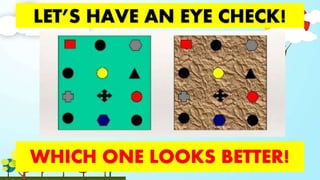
LET’S HAVE AN EYE CHECK!
WHICH ONE LOOKS BETTER!
LET’S HAVE AN EYE CHECK!
WHICH ONE LOOKS BETTER!
LET’S HAVE AN EYE CHECK!
WHICH ONE LOOKS BETTER!
LET’S HAVE AN EYE CHECK!
WHICH ONE LOOKS BETTER!
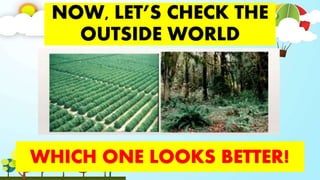
NOW, LET’S CHECK THE
OUTSIDE WORLD
WHICH ONE LOOKS BETTER!
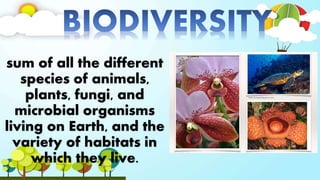
sum of all the different
species of animals,
plants, fungi, and
microbial organisms
living on Earth, and the
variety of habitats in
which they live.
• SPECIES DIVERSITY
• GENETIC DIVERSITY
• ECOSYSTEM DIVERSITY
SPECIES DIVERSITY
• Pertains to the total number of
species that exist within a
region.
• Different kinds of organisms,
relationships among species.
GENETIC DIVERSITY
• Pertains to the variation of
genes between distinct species.
• Different genes and
combinations of genes within
populations.
ECOSYSTEM DIVERSITY
• Pertains to the variations of
ecosystems.
• Different habitats and species
interactions.
• EXTINCTION OF SPECIES
• LOSS OF SPECIFIC HABITATS
• LOSS OF GENETIC VARIATIONS
WITHIN A SPECIES
EXTINCTION OF SPECIES
• Species extinction is
the number one cause
of biodiversity loss.
EXTINCTION
• The entire species PERMANENTLY
DISAPPEARS from the biosphere.
LOSS OF SPECIFIC HABITATS
• The process by which a
natural habitat becomes
incapable of supporting its
native species.
• It is the PLACE where
organisms live.
HABITATS
MIGRATION
• It refers to the
survival of a new
species into an
already occupied
area.
ECESIS
• It refers to how
well the new
species adjusts to
the area’s
ecosystem.
AGGREGATION
• It involves the
reproduction of
the species after
it has
familiarized itself
with its new
place of
residence.
LOSS OF GENETIC
VARIATIONS WITHIN A
SPECIES
• The process by which a
species cannot cope up with
the changing environment.
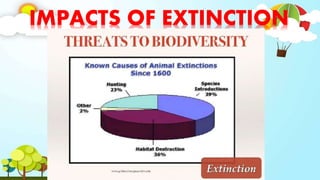
• HABITAT DESTRUCTION
• COMMERCIAL HUNTING/HARVESTING
and HUNTING FOR SPORTS
• INTRODUCTION OF ALIEN, EXOTIC, OR
NONNATIVE SPECIES
• POLLUTION CAUSE BY HUMAN ACITIVIES
• OTHER CAUSES LIKE SUPERSTITION
HABITAT DESTRUCTION
• This pertains to the conversion,
fragmentation, and
simplification of any potential
natural habitats.
COMMERCIAL HUNTING/HARVESTING
and HUNTING FOR SPORTS
• This happens due to various
socio-economic factors and
man’s insatiable greed for
profit and material things.
INTRODUCTION OF ALIEN, EXOTIC OR
NONNATIVE SPECIES
• This happens when new species
have no predators in their new
habitats, so they crowd out the
vulnerable native species and
monopolize available resources
in the area.
POLLUTION
• This is cause by the industrial,
agricultural, and waste-based
pollutants.
OTHER CAUSES LIKE
SUPERSTITION
• This is cause by being ignorant
and misconceived ideas that
the organisms are very
dangerous and can bring bad
luck.
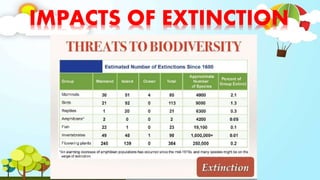
IMPACTS OF EXTINCTION
DOMINO EFFECT or
RIFFLE EFFECT
• It is the loss of plant species
triggers the extinction of
animals.
KEYSTONE SPECIES
• This refers to one whose
presence and activities
strongly affect other species
in the community.
ADAPTATION IS THE KEY FACTORS FOR
SPECIES SURVIVAL
• This means adapting to be able to survive
the climatic conditions of the ecosystems,
predators and other species that compete
for the same food and space.
ADAPTATION
• Pertains to the ability of the organisms
to respond to changes in the
environment.
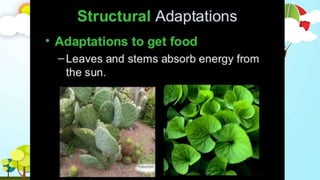
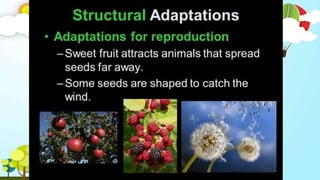
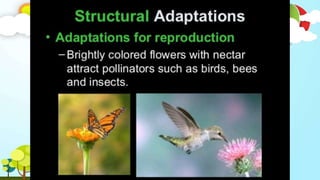
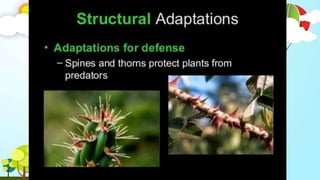
STRUCTURAL
ADAPTATION
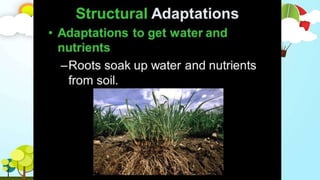
• It involves changes in the
morphology of the
organisms.
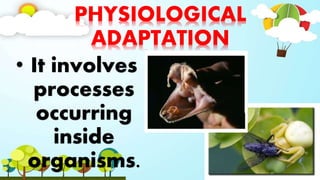
PHYSIOLOGICAL
ADAPTATION
• It involves
processes
occurring
inside
organisms.
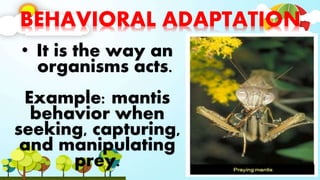
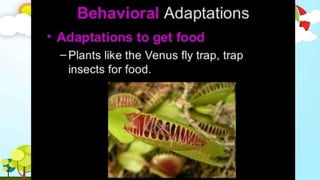
BEHAVIORAL ADAPTATION
• It is the way an
organisms acts.
Example: mantis
behavior when
seeking, capturing,
and manipulating
prey.
SOURCES OF ADAPTIVE
TRAITS
• Adaptive traits can be
acquired during sexual
reproduction.
• Traits are carried by the genes.
IMPORTANCE OF
BIODIVERSITY
• ECOSYSTEM SERVICES
• BIOLOGICAL RESOURCES
• SOCIAL BENEFITS
QUIZ!
1. This caused by the
industrial, agricultural
and waste-based
pollutants.
QUIZ!
2. This pertains to the
conversion, fragmentation,
and simplification of any
potential natural habitats.
QUIZ!
3. This refers to how well
the new species adjusts to
the area’s ecosystem.
QUIZ!
4. This refers to the survival
of the new species into an
already occupied area.
QUIZ!
5. This involves the
reproduction of the species
after it has familiarized
itself with its new place of
residence.
QUIZ!
6. It is the place where the
organisms live.
QUIZ!
7. It means that the entire
species is permanently
disappears from the
biosphere.
QUIZ!
8. It refers to the variation
of genes between distinct
species.
QUIZ!
9. It pertains to the total
number of species that
exist within the region.
QUIZ!
10. It pertains to the
variations of ecosystems.
QUIZ!
11. This refers to one whose
presence and activities
strongly affect other
species in the community.
QUIZ!
12. This refers to loss of
plant species triggers the
extinction of animals.
QUIZ!
13. This involves in the
changes morphology of the
organisms.
QUIZ!
14. This involves processes
occurring inside organisms.
QUIZ!
15. This is the way an
organisms acts.
QUIZ!
16. Adaptive traits can be
acquired during ________.
QUIZ!
17-20. Give at least 3 impacts
of extinction.
QUIZ!
21-30. Why is it
biodiversity important?
ANSWER KEY!
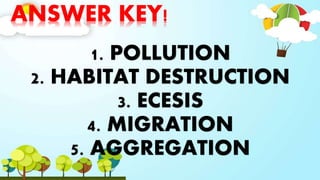
1. POLLUTION
2. HABITAT DESTRUCTION
3. ECESIS
4. MIGRATION
5. AGGREGATION
ANSWER KEY!
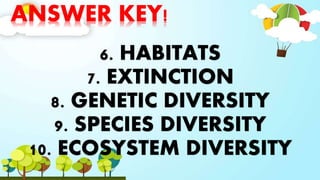
6. HABITATS
7. EXTINCTION
8. GENETIC DIVERSITY
9. SPECIES DIVERSITY
10. ECOSYSTEM DIVERSITY
ANSWER KEY!
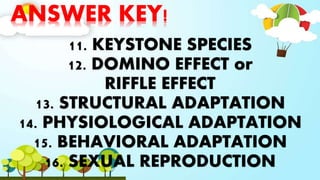
11. KEYSTONE SPECIES
12. DOMINO EFFECT or
RIFFLE EFFECT
13. STRUCTURAL ADAPTATION
14. PHYSIOLOGICAL ADAPTATION
15. BEHAVIORAL ADAPTATION
16. SEXUAL REPRODUCTION
ANSWER KEY!
IMPACTS OF EXTINCTION
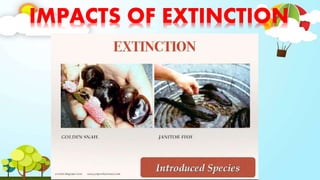
• Introduced species
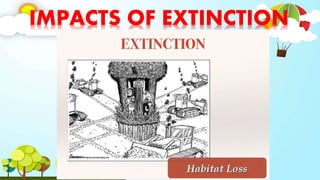
• Habitat Loss
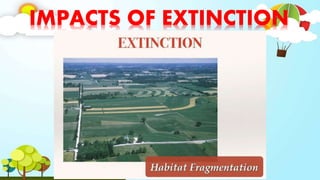
• Habitat Fragmentation
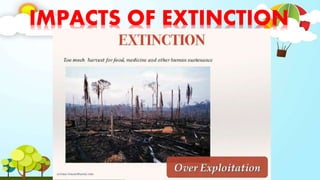
• Over Exploitation
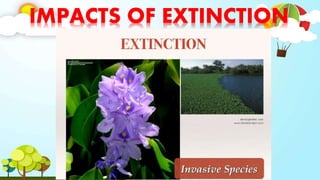
• Invasive Species
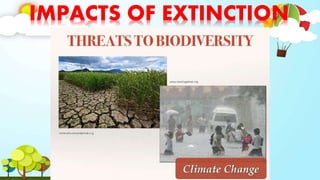
• Climate change
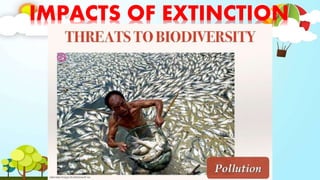
• Pollution
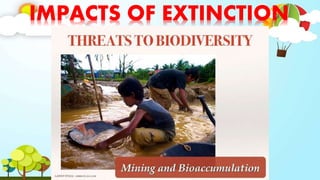
• Mining and Bioaccumulation
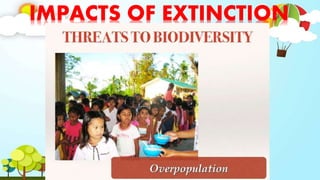
• Overpopulation
11.5.20
It is a branch of life science that
describes the gradual change of
organisms from one state to
another.
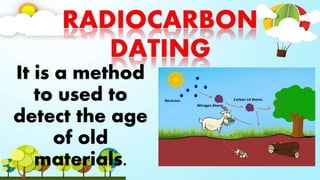
It is a method
to used to
detect the age
of old
materials.
A. The Formation of
Fossils
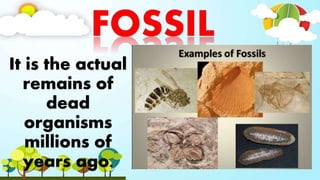
It is the actual
remains of
dead
organisms
millions of
years ago.
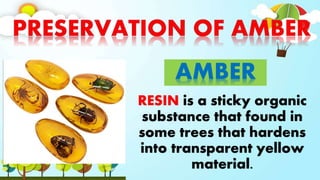
RESIN is a sticky organic
substance that found in
some trees that hardens
into transparent yellow
material.
AMBER
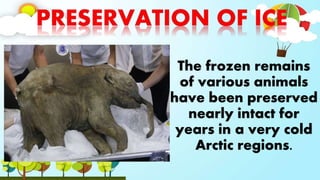
The frozen remains
of various animals
have been preserved
nearly intact for
years in a very cold
Arctic regions.
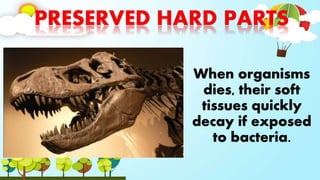
When organisms
dies, their soft
tissues quickly
decay if exposed
to bacteria.
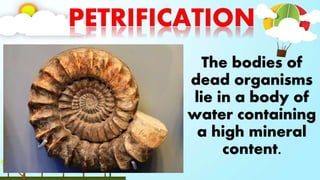
The bodies of
dead organisms
lie in a body of
water containing
a high mineral
content.
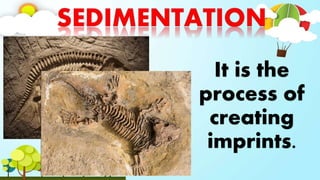
It is the
process of
creating
imprints.
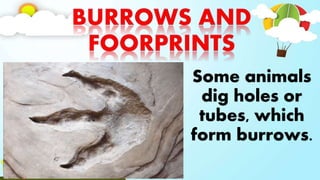
Some animals
dig holes or
tubes, which
form burrows.
B. Other Evidence of
Evolution
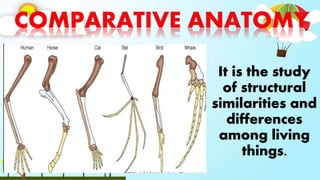
It is the study
of structural
similarities and
differences
among living
things.
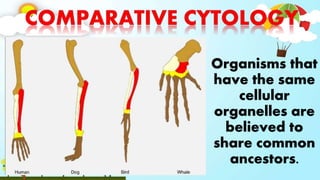
Organisms that
have the same
cellular
organelles are
believed to
share common
ancestors.
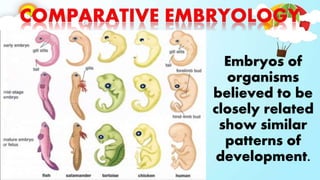
Embryos of
organisms
believed to be
closely related
show similar
patterns of
development.
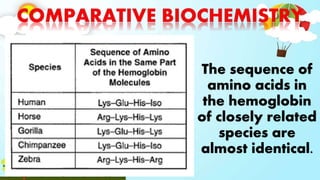
The sequence of
amino acids in
the hemoglobin
of closely related
species are
almost identical.
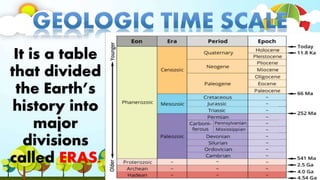
It is a table
that divided
the Earth’s
history into
major
divisions
called ERAS.
• THE AGES OF ROCKS DETERMINE THE
AGE OF EARTH.
• FOSSILS IDENTIFY THE PRESENCE AND
CHARACTERISTICS OF ANCESTRAL
ORGANISM.
• THE GEOLOGIC TIME SCALE CONTAINS
THE HISTORY OF LIFE ON EARTH.

Biodiversity 9