Chapter 11 - 
Political Crime and Terrorism 
Michelle Palaro 
Criminology 81-220-1 
Fall 2014
Defining Political Crime 
• The Goals of Political Criminals 
– Intimidation 
– Revolution 
– Profit 
– Conviction 
– Pseudo-conviction
Defining Political Crime 
• Becoming a Political Criminal 
– Stage 1: “It’s not right” 
– Stage 2: “It’s not fair” 
– Stage 3: “It’s your fault” 
– Stage 4: “You’re evil”
Political Crimes 
• Political crimes can be linked into 
three categories: 
– Organizational 
– Occupational 
– Independent
Political Crimes 
• Election Tampering and Fraud 
– Election fraud includes a variety of 
behaviors designed to give a candidate 
or party an unfair advantage 
• Intimidation 
• Disruption 
• Misinformation 
• Registration fraud 
• Vote buying
Political Crimes 
• Treason 
• Espionage 
– Industrial espionage 
• State Political Crime 
• Using Torture
Terrorism 
• Defining Terrorism 
– The illegal use of force against innocent 
people to achieve a political objective 
– Terror cells 
– Guerillas
Terrorism 
• Terrorist and Insurgent 
• Terrorist and Revolutionary
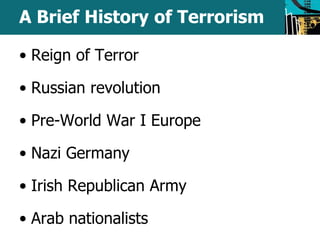
A Brief History of Terrorism 
• Reign of Terror 
• Russian revolution 
• Pre-World War I Europe 
• Nazi Germany 
• Irish Republican Army 
• Arab nationalists
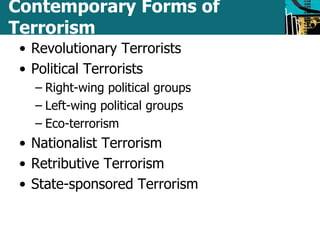
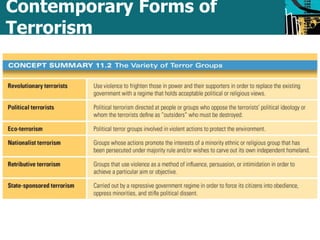
Contemporary Forms of 
Terrorism 
• Revolutionary Terrorists 
• Political Terrorists 
– Right-wing political groups 
– Left-wing political groups 
– Eco-terrorism 
• Nationalist Terrorism 
• Retributive Terrorism 
• State-sponsored Terrorism
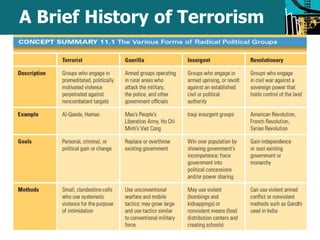
A Brief History of Terrorism
Contemporary Forms of 
Terrorism 
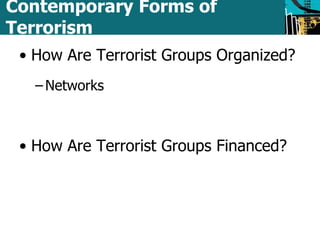
• How Are Terrorist Groups Organized? 
– Networks 
• How Are Terrorist Groups Financed?
Contemporary Forms of 
Terrorism
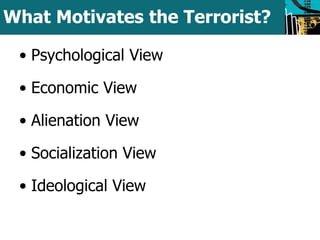
What Motivates the Terrorist? 
• Psychological View 
• Economic View 
• Alienation View 
• Socialization View 
• Ideological View
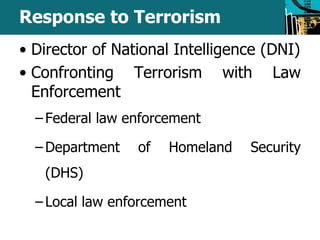
Response to Terrorism 
• Director of National Intelligence (DNI) 
• Confronting Terrorism with Law 
Enforcement 
– Federal law enforcement 
– Department of Homeland Security 
(DHS) 
– Local law enforcement
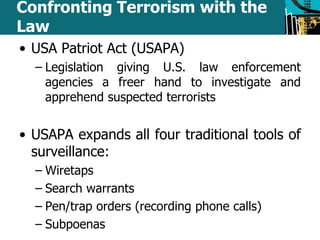
Confronting Terrorism with the 
Law 
• USA Patriot Act (USAPA) 
– Legislation giving U.S. law enforcement 
agencies a freer hand to investigate and 
apprehend suspected terrorists 
• USAPA expands all four traditional tools of 
surveillance: 
– Wiretaps 
– Search warrants 
– Pen/trap orders (recording phone calls) 
– Subpoenas
Confronting Terrorism with the 
Law 
• Civil Rights and the USA Patriot Act 
– Civil libertarians believe the act erodes 
civil rights 
– They argue the First Amendment is 
violated because reasonable political 
dissent can become criminal 
– Subsequent acts and amendments have 
strengthened the act rather than 
dismantled

81-220-1 Chapter 11

  • 1.
    Chapter 11 - Political Crime and Terrorism Michelle Palaro Criminology 81-220-1 Fall 2014
  • 2.
    Defining Political Crime • The Goals of Political Criminals – Intimidation – Revolution – Profit – Conviction – Pseudo-conviction
  • 3.
    Defining Political Crime • Becoming a Political Criminal – Stage 1: “It’s not right” – Stage 2: “It’s not fair” – Stage 3: “It’s your fault” – Stage 4: “You’re evil”
  • 4.
    Political Crimes •Political crimes can be linked into three categories: – Organizational – Occupational – Independent
  • 5.
    Political Crimes •Election Tampering and Fraud – Election fraud includes a variety of behaviors designed to give a candidate or party an unfair advantage • Intimidation • Disruption • Misinformation • Registration fraud • Vote buying
  • 6.
    Political Crimes •Treason • Espionage – Industrial espionage • State Political Crime • Using Torture
  • 7.
    Terrorism • DefiningTerrorism – The illegal use of force against innocent people to achieve a political objective – Terror cells – Guerillas
  • 8.
    Terrorism • Terroristand Insurgent • Terrorist and Revolutionary
  • 9.
    A Brief Historyof Terrorism • Reign of Terror • Russian revolution • Pre-World War I Europe • Nazi Germany • Irish Republican Army • Arab nationalists
  • 10.
    Contemporary Forms of Terrorism • Revolutionary Terrorists • Political Terrorists – Right-wing political groups – Left-wing political groups – Eco-terrorism • Nationalist Terrorism • Retributive Terrorism • State-sponsored Terrorism
  • 11.
    A Brief Historyof Terrorism
  • 12.
    Contemporary Forms of Terrorism • How Are Terrorist Groups Organized? – Networks • How Are Terrorist Groups Financed?
  • 13.
  • 14.
    What Motivates theTerrorist? • Psychological View • Economic View • Alienation View • Socialization View • Ideological View
  • 15.
    Response to Terrorism • Director of National Intelligence (DNI) • Confronting Terrorism with Law Enforcement – Federal law enforcement – Department of Homeland Security (DHS) – Local law enforcement
  • 16.
    Confronting Terrorism withthe Law • USA Patriot Act (USAPA) – Legislation giving U.S. law enforcement agencies a freer hand to investigate and apprehend suspected terrorists • USAPA expands all four traditional tools of surveillance: – Wiretaps – Search warrants – Pen/trap orders (recording phone calls) – Subpoenas
  • 17.
    Confronting Terrorism withthe Law • Civil Rights and the USA Patriot Act – Civil libertarians believe the act erodes civil rights – They argue the First Amendment is violated because reasonable political dissent can become criminal – Subsequent acts and amendments have strengthened the act rather than dismantled