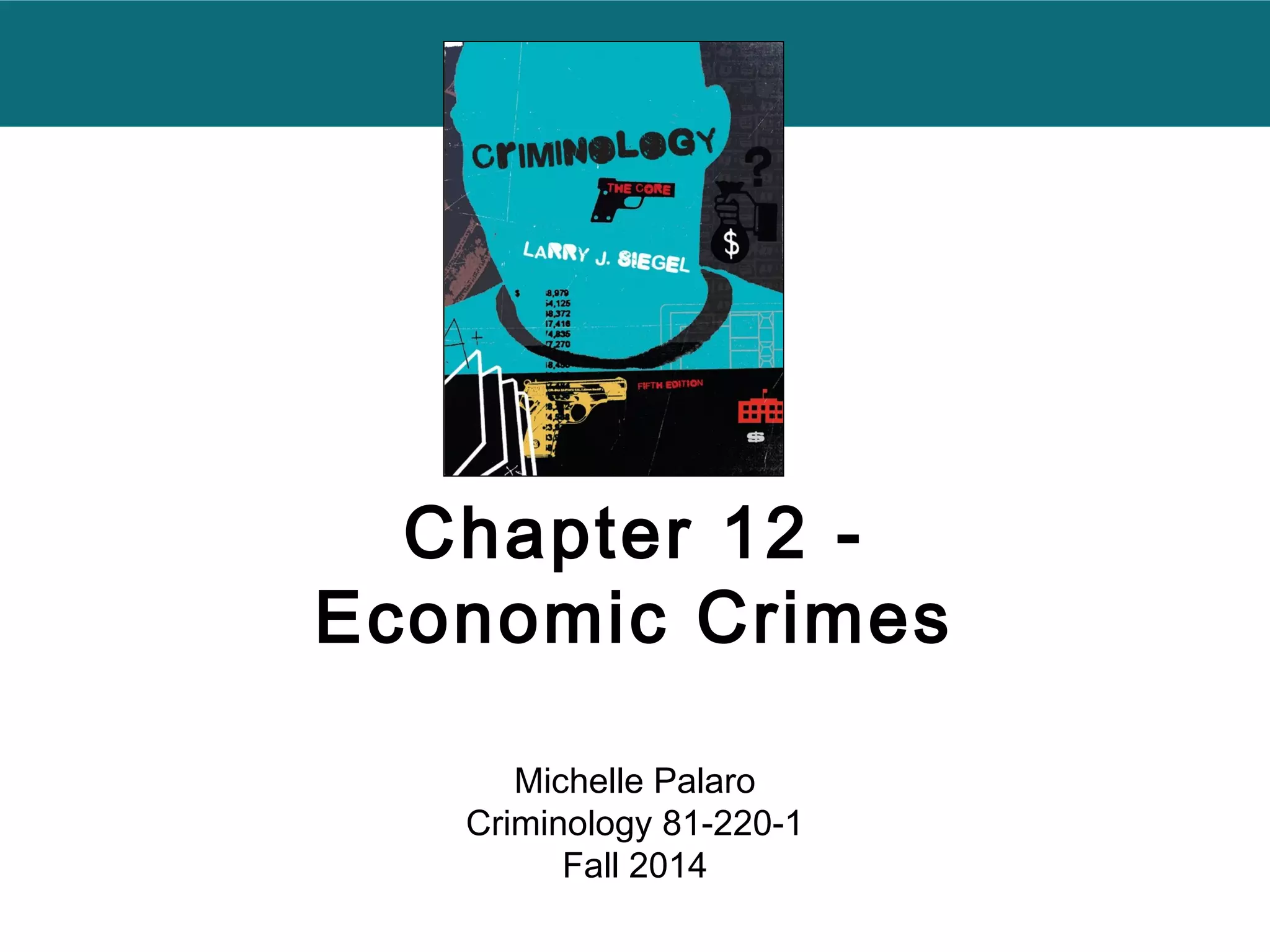
Chapter 12 - 
Economic Crimes 
Michelle Palaro 
Criminology 81-220-1 
Fall 2014
Economic Crimes 
• Blue-collar Crimes 
• White-collar Crimes 
• Green-collar Crimes
History of Economic Crimes 
• Development of White-Collar and Green- 
Collar Crime 
– Became more prominent during Industrial Era 
– Edwin Sutherland first defined white-collar 
criminals 
• Blue-Collar Crime 
– Occasional criminals 
• Situational inducement 
– Professional criminals
Larceny 
• Petty larceny 
• Grand larceny 
• Shoplifting 
– Controlling shoplifting 
• Credit card theft 
• Auto theft 
– Professional car thieves 
• Bad checks 
– Naïve check forgers 
– Systematic forgers 
• Receiving and fencing stolen property
Burglary 
• Nature and Extent of Burglary 
– According to the UCR more than 2.1 
million burglaries occur each year 
– Burglary rates have increased 2% since 
2002 
• Careers in Burglary 
– The “good burglar”
Arson 
• Willful, malicious burning of a home, 
public building, vehicle, or 
commercial building 
– 50,000 arsons reported annually 
– Some arsonists are emotionally 
disturbed 
– Some arsonists are professionals who 
set fires to gain profit
White-Collar Crimes 
• Business frauds and swindles 
– Ponzi schemes 
• Chiseling 
– Professional chiseling 
– Financial chiseling 
• Exploitation
White-Collar Crimes 
• Influence peddling 
– Influence peddling in government 
– Influence peddling in criminal justice 
– Influence peddling in business 
• Embezzlement 
• Client fraud 
– Health care fraud 
– Tax evasion
White-Collar Crimes 
• Corporate crime 
– Illegal restraint of trade 
• Sherman Antitrust Act 
– Price fixing 
– Deceptive pricing 
– False claims advertising
Green-Collar Crimes 
• Defining Green-Collar Crime 
– Legalist 
– Environmental justice 
– Biocentric
Types of Green Crime 
• Worker Safety/Environmental Crimes 
– Illegal Logging 
– Illegal Wildlife Exports 
– Illegal Fishing 
– Illegal Dumping and Polluting 
• Criminal environmental polluting
Theories of White-Collar and 
Green-Collar Crimes 
• Rational Choice: Greed 
– Lure 
• Rational Choice: Need
Theories of White-Collar and 
Green-Collar Crimes 
• Rationalization/Neutralization View 
• Cultural View 
• Self-Control View
Class Discussion/Activity 
Discuss which of the criminological theories 
fits best for green-collar criminals: 
•Rational Choice 
– Greed 
– Need 
•Cultural 
•Self-Control 
•Others?
Controlling White-Collar and 
Green-Collar Crime 
• Environmental Laws 
– Clean Water Act (1972) 
– Emergency Panning and Community 
Right-to-Know Act (1986) 
– Endangered Species Act (1973) 
– Oil Pollution Act (1990) 
• Environmental Protection Agency 
(EPA)
Controlling White-Collar and 
Green-Collar Crime 
• Deterrence versus Compliance 
– Compliance strategies: Methods of 
controlling white-collar crime that rely on 
the threat of economic sanctions or civil 
penalties to control potential violators 
– Deterrence strategies: Methods of 
controlling white-collar crime that rely on 
punishment to deter would-be violators

81-220-1 Chapter 12

  • 1.
    Chapter 12 - Economic Crimes Michelle Palaro Criminology 81-220-1 Fall 2014
  • 2.
    Economic Crimes •Blue-collar Crimes • White-collar Crimes • Green-collar Crimes
  • 3.
    History of EconomicCrimes • Development of White-Collar and Green- Collar Crime – Became more prominent during Industrial Era – Edwin Sutherland first defined white-collar criminals • Blue-Collar Crime – Occasional criminals • Situational inducement – Professional criminals
  • 4.
    Larceny • Pettylarceny • Grand larceny • Shoplifting – Controlling shoplifting • Credit card theft • Auto theft – Professional car thieves • Bad checks – Naïve check forgers – Systematic forgers • Receiving and fencing stolen property
  • 5.
    Burglary • Natureand Extent of Burglary – According to the UCR more than 2.1 million burglaries occur each year – Burglary rates have increased 2% since 2002 • Careers in Burglary – The “good burglar”
  • 6.
    Arson • Willful,malicious burning of a home, public building, vehicle, or commercial building – 50,000 arsons reported annually – Some arsonists are emotionally disturbed – Some arsonists are professionals who set fires to gain profit
  • 7.
    White-Collar Crimes •Business frauds and swindles – Ponzi schemes • Chiseling – Professional chiseling – Financial chiseling • Exploitation
  • 8.
    White-Collar Crimes •Influence peddling – Influence peddling in government – Influence peddling in criminal justice – Influence peddling in business • Embezzlement • Client fraud – Health care fraud – Tax evasion
  • 9.
    White-Collar Crimes •Corporate crime – Illegal restraint of trade • Sherman Antitrust Act – Price fixing – Deceptive pricing – False claims advertising
  • 10.
    Green-Collar Crimes •Defining Green-Collar Crime – Legalist – Environmental justice – Biocentric
  • 11.
    Types of GreenCrime • Worker Safety/Environmental Crimes – Illegal Logging – Illegal Wildlife Exports – Illegal Fishing – Illegal Dumping and Polluting • Criminal environmental polluting
  • 12.
    Theories of White-Collarand Green-Collar Crimes • Rational Choice: Greed – Lure • Rational Choice: Need
  • 13.
    Theories of White-Collarand Green-Collar Crimes • Rationalization/Neutralization View • Cultural View • Self-Control View
  • 14.
    Class Discussion/Activity Discusswhich of the criminological theories fits best for green-collar criminals: •Rational Choice – Greed – Need •Cultural •Self-Control •Others?
  • 15.
    Controlling White-Collar and Green-Collar Crime • Environmental Laws – Clean Water Act (1972) – Emergency Panning and Community Right-to-Know Act (1986) – Endangered Species Act (1973) – Oil Pollution Act (1990) • Environmental Protection Agency (EPA)
  • 16.
    Controlling White-Collar and Green-Collar Crime • Deterrence versus Compliance – Compliance strategies: Methods of controlling white-collar crime that rely on the threat of economic sanctions or civil penalties to control potential violators – Deterrence strategies: Methods of controlling white-collar crime that rely on punishment to deter would-be violators

Editor's Notes

  • #3 LO5: Be familiar with the various forms of white-collar crimes.
  • #4 LO1: Be familiar with the history of theft offenses.
  • #5 LO3: Understand the various forms of shoplifting.
  • #6 LO5: Be familiar with the various forms of white-collar crimes.
  • #7 LO5: Be familiar with the various forms of white-collar crimes.
  • #8 LO4: Know what is meant by the term Ponzi scheme.
  • #9 LO5: Be familiar with the various forms of white-collar crimes.
  • #10 LO5: Be familiar with the various forms of white-collar crimes.
  • #11 LO5: Be familiar with the various forms of white-collar crimes.
  • #12 LO5: Be familiar with the various forms of white-collar crimes.
  • #13 LO2: Recognize the differences between professional and amateur thieves.
  • #14 LO5: Be familiar with the various forms of white-collar crimes.
  • #16 LO6: Discuss efforts to control white-collar and green-collar crime.
  • #17 LO6: Discuss efforts to control white-collar and green-collar crime.