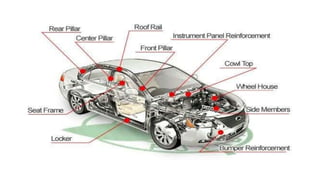
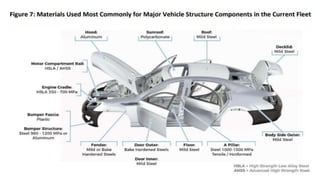
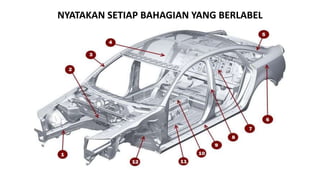
STRUKTUR KENDERAAN
,
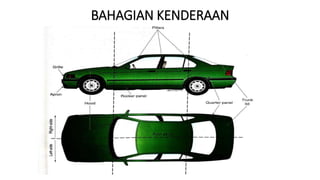
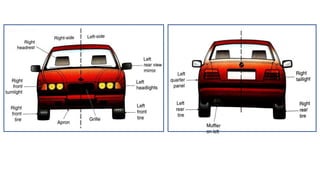
BAHAGIAN KENDERAAN
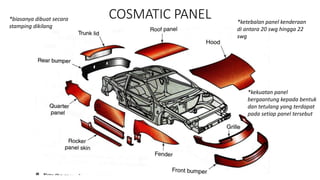
COSMATIC PANEL *ketebalan panel kenderaan
di antara 20 swg hingga 22
swg
*kekuatan panel
bergaantung kepada bentuk
dan tetulang yang terdapat
pada setiap panel tersebut
*biasanya dibuat secara
stamping dikilang
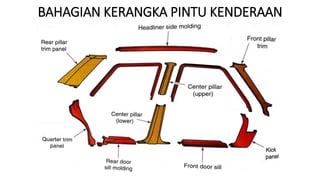
BAHAGIAN KERANGKA PINTU KENDERAAN
NAMA STRUKTUR KENDERAAN
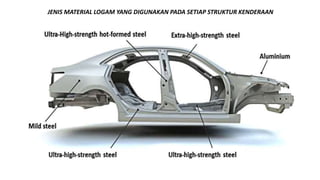
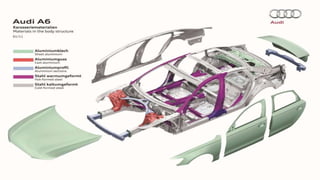
JENIS MATERIAL LOGAM YANG DIGUNAKAN PADA SETIAP STRUKTUR KENDERAAN
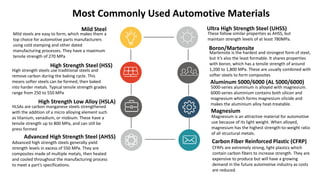
These follow similar properties as AHSS, but
maintain strength levels of at least 780MPa.
Ultra High Strength Steel (UHSS)
Boron/Martensite
Aluminum 5000/6000 (AL 5000/6000)
Magnesium
Mild Steel
High Strength Steel (HSS)
High Strength Low Alloy (HSLA)
Advanced High Strength Steel (AHSS)
Martensite is the hardest and strongest form of steel,
but it’s also the least formable. It shares properties
with boron, which has a tensile strength of around
1,200 to 1,800 MPa. These are usually combined with
softer steels to form composites
5000-series aluminium is alloyed with magnesium.
6000-series aluminium contains both silicon and
magnesium which forms magnesium silicide and
makes the aluminium alloy heat-treatable.
Magnesium is an attractive material for automotive
use because of its light weight. When alloyed,
magnesium has the highest strength-to-weight ratio
of all structural metals.
Mild steels are easy to form, which makes them a
top choice for automotive parts manufacturers
using cold stamping and other dated
manufacturing processes. They have a maximum
tensile strength of 270 MPa
High strength steels use traditional steels and
remove carbon during the baking cycle. This
means softer steels can be formed, then baked
into harder metals. Typical tensile strength grades
range from 250 to 550 MPa
HLSAs are carbon manganese steels strengthened
with the addition of a micro alloying element such
as titanium, vanadium, or niobium. These have a
tensile strength up to 800 MPa, and can still be
press formed
Advanced high strength steels generally yield
strength levels in excess of 550 MPa. They are
composites made of multiple metals, then heated
and cooled throughout the manufacturing process
to meet a part’s specifications.
Most Commonly Used Automotive Materials
Carbon Fiber Reinforced Plastic (CFRP)
CFRPs are extremely strong, light plastics which
contain carbon fibers to increase strength. They are
expensive to produce but will have a growing
demand in the future automotive industry as costs
are reduced.
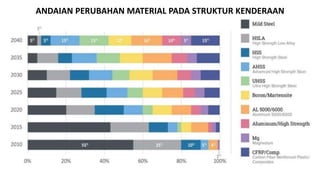
ANDAIAN PERUBAHAN MATERIAL PADA STRUKTUR KENDERAAN
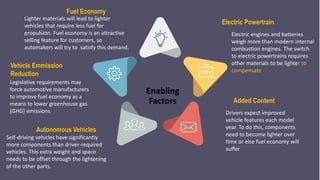
Lighter materials will lead to lighter
vehicles that require less fuel for
propulsion. Fuel economy is an attractive
selling feature for customers, so
automakers will try to satisfy this demand.
Fuel Economy
Vehicle Emmission
Reduction
Electric Powertrain
Added Content
Autonomous Vehicles
Enabling
Factors
Legislative requirements may
force automotive manufacturers
to improve fuel economy as a
means to lower greenhouse gas
(GHG) emissions.
Self-driving vehicles have significantly
more components than driver-required
vehicles. This extra weight and space
needs to be offset through the lightening
of the other parts.
Electric engines and batteries
weigh more than modern internal
combustion engines. The switch
to electric powertrains requires
other materials to be lighter to
compensate
Drivers expect improved
vehicle features each model
year. To do this, components
need to become lighter over
time or else fuel economy will
suffer
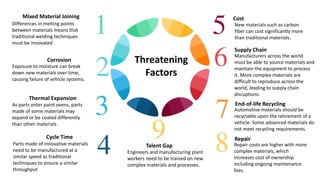
Differences in melting points
between materials means that
traditional welding techniques
must be innovated
Cycle Time Repair
End-of-life Recycling
Thermal Expansion
Supply Chain
Corrosion
CostMixed Material Joining
4
5
6
3 7
2
8
1
Exposure to moisture can break
down new materials over time,
causing failure of vehicle systems.
As parts enter paint ovens, parts
made of some materials may
expand or be coated differently
than other materials
Parts made of innovative materials
need to be manufactured at a
similar speed as traditional
techniques to ensure a similar
throughput
New materials such as carbon
fiber can cost significantly more
than traditional materials.
Manufacturers across the world
must be able to source materials and
maintain the equipment to process
it. More complex materials are
difficult to reproduce across the
world, leading to supply chain
disruptions.
Automotive materials should be
recyclable upon the retirement of a
vehicle. Some advanced materials do
not meet recycling requirements.
Repair costs are higher with more
complex materials, which
increases cost of ownership
including ongoing maintenance
fees.
Threatening
Factors
9Talent Gap
Engineers and manufacturing plant
workers need to be trained on new
complex materials and processes.
NYATAKAN SETIAP BAHAGIAN YANG BERLABEL

8. Struktur kenderaan

  • 1.
  • 2.
  • 4.
    COSMATIC PANEL *ketebalanpanel kenderaan di antara 20 swg hingga 22 swg *kekuatan panel bergaantung kepada bentuk dan tetulang yang terdapat pada setiap panel tersebut *biasanya dibuat secara stamping dikilang
  • 5.
  • 7.
  • 9.
    JENIS MATERIAL LOGAMYANG DIGUNAKAN PADA SETIAP STRUKTUR KENDERAAN
  • 11.
    These follow similarproperties as AHSS, but maintain strength levels of at least 780MPa. Ultra High Strength Steel (UHSS) Boron/Martensite Aluminum 5000/6000 (AL 5000/6000) Magnesium Mild Steel High Strength Steel (HSS) High Strength Low Alloy (HSLA) Advanced High Strength Steel (AHSS) Martensite is the hardest and strongest form of steel, but it’s also the least formable. It shares properties with boron, which has a tensile strength of around 1,200 to 1,800 MPa. These are usually combined with softer steels to form composites 5000-series aluminium is alloyed with magnesium. 6000-series aluminium contains both silicon and magnesium which forms magnesium silicide and makes the aluminium alloy heat-treatable. Magnesium is an attractive material for automotive use because of its light weight. When alloyed, magnesium has the highest strength-to-weight ratio of all structural metals. Mild steels are easy to form, which makes them a top choice for automotive parts manufacturers using cold stamping and other dated manufacturing processes. They have a maximum tensile strength of 270 MPa High strength steels use traditional steels and remove carbon during the baking cycle. This means softer steels can be formed, then baked into harder metals. Typical tensile strength grades range from 250 to 550 MPa HLSAs are carbon manganese steels strengthened with the addition of a micro alloying element such as titanium, vanadium, or niobium. These have a tensile strength up to 800 MPa, and can still be press formed Advanced high strength steels generally yield strength levels in excess of 550 MPa. They are composites made of multiple metals, then heated and cooled throughout the manufacturing process to meet a part’s specifications. Most Commonly Used Automotive Materials Carbon Fiber Reinforced Plastic (CFRP) CFRPs are extremely strong, light plastics which contain carbon fibers to increase strength. They are expensive to produce but will have a growing demand in the future automotive industry as costs are reduced.
  • 12.
    ANDAIAN PERUBAHAN MATERIALPADA STRUKTUR KENDERAAN
  • 13.
    Lighter materials willlead to lighter vehicles that require less fuel for propulsion. Fuel economy is an attractive selling feature for customers, so automakers will try to satisfy this demand. Fuel Economy Vehicle Emmission Reduction Electric Powertrain Added Content Autonomous Vehicles Enabling Factors Legislative requirements may force automotive manufacturers to improve fuel economy as a means to lower greenhouse gas (GHG) emissions. Self-driving vehicles have significantly more components than driver-required vehicles. This extra weight and space needs to be offset through the lightening of the other parts. Electric engines and batteries weigh more than modern internal combustion engines. The switch to electric powertrains requires other materials to be lighter to compensate Drivers expect improved vehicle features each model year. To do this, components need to become lighter over time or else fuel economy will suffer
  • 14.
    Differences in meltingpoints between materials means that traditional welding techniques must be innovated Cycle Time Repair End-of-life Recycling Thermal Expansion Supply Chain Corrosion CostMixed Material Joining 4 5 6 3 7 2 8 1 Exposure to moisture can break down new materials over time, causing failure of vehicle systems. As parts enter paint ovens, parts made of some materials may expand or be coated differently than other materials Parts made of innovative materials need to be manufactured at a similar speed as traditional techniques to ensure a similar throughput New materials such as carbon fiber can cost significantly more than traditional materials. Manufacturers across the world must be able to source materials and maintain the equipment to process it. More complex materials are difficult to reproduce across the world, leading to supply chain disruptions. Automotive materials should be recyclable upon the retirement of a vehicle. Some advanced materials do not meet recycling requirements. Repair costs are higher with more complex materials, which increases cost of ownership including ongoing maintenance fees. Threatening Factors 9Talent Gap Engineers and manufacturing plant workers need to be trained on new complex materials and processes.
  • 15.