8 Essential Business Analysis
Steps
I am Abhinav
Sabharwal
You can find me at
skyabhinav@gmail.com
2HELLO!
Business Analysis Process Overview
3
1.
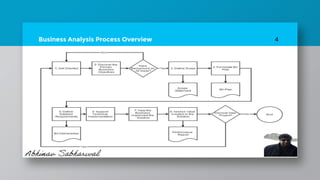
Business Analysis Process Overview 4
Get Oriented
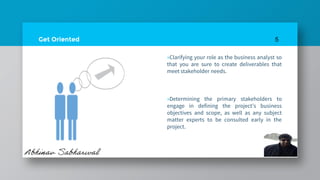
»Clarifying your role as the business analyst so
that you are sure to create deliverables that
meet stakeholder needs.
»Determining the primary stakeholders to
engage in defining the project’s business
objectives and scope, as well as any subject
matter experts to be consulted early in the
project.
5
Get Oriented
.Understanding the project history so that you
don’t inadvertently repeat work that’s already been
done or rehash previously made decisions.
»Understanding the existing systems and business
processes so you have a reasonably clear picture of
the current state that needs to change.
6
Discover the Primary Business Objectives
». Discovering expectations from your primary
stakeholders – essentially discovering the “why”
behind the project.
»Reconciling conflicting expectations so that the
business community begins the project with a
shared understanding of the business objectives
and are not unique to one person’s perspective.
»Ensuring the business objectives are clear and
actionable while defining scope and, later on, the
detailed requirements.
7
Define Scope
». Defining a solution approach to determine the
nature and extent of technology and business
process changes to be made as part of
implementing the solution
»Draft a scope statement and reviewing it with your
key business and technology stakeholders until
they are prepared to sign-off or buy-in to the
document.
»Confirming the business case to ensure that it still
makes sense for your organization to invest in the
project.
8
Formulate Your Business Analysis Plan
». Choose the most appropriate types of business
analysis deliverables, given the project scope,
project methodology, and other key aspects of the
project context.
»Defining the specific list of business analysis
deliverables that will completely cover the scope of
the project and identifying the stakeholders who
will be part of the creation and validation of each
deliverable.
»Identifying the timelines for completing the
business analysis deliverables.
9
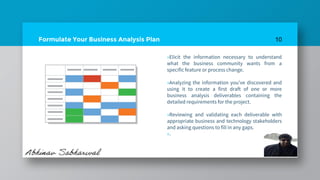
Formulate Your Business Analysis Plan
»Elicit the information necessary to understand
what the business community wants from a
specific feature or process change.
»Analyzing the information you’ve discovered and
using it to create a first draft of one or more
business analysis deliverables containing the
detailed requirements for the project.
»Reviewing and validating each deliverable with
appropriate business and technology stakeholders
and asking questions to fill in any gaps.
».
10
Support the Technical Implementation
»Review the solution design to ensure it fulfills all of
the requirements and looking for opportunities to
meet additional business needs without increasing
the technical scope of the project.
»Updating and/or repackaging requirements
documentation to make it useful for the technology
design and implementation process.
11
Help the Business Implement the Solution
»Analyze and developing interim and future state
business process documentation that articulates
exactly what changes need to be made to the
business process.
»Train end users to ensure they understand all
process and procedural changes or collaborating
with training staff so they can create appropriate
training materials and deliver the training.
»Collaborating with business users to update other
organizational assets impacted by the business
process and technology changes.
12
Assess Value Created by the Solution
»Evaluate the actual progress made against the
business objectives for the project to show the
extent to which the original objectives have been
fulfilled.
»Communicate the results to the project sponsor,
and if appropriate, to the project team and all
members of the organization.
»Suggest follow-up projects and initiatives to fully
realize the intended business objectives of the
project or to solve new problems that are
discovered while evaluating the impact of this
project.
13
Any questions?
14THANKS!
Abhinav Sabharwal

8 essential business analysis steps

  • 1.
    8 Essential BusinessAnalysis Steps
  • 2.
    I am Abhinav Sabharwal Youcan find me at skyabhinav@gmail.com 2HELLO!
  • 3.
  • 4.
  • 5.
    Get Oriented »Clarifying yourrole as the business analyst so that you are sure to create deliverables that meet stakeholder needs. »Determining the primary stakeholders to engage in defining the project’s business objectives and scope, as well as any subject matter experts to be consulted early in the project. 5
  • 6.
    Get Oriented .Understanding theproject history so that you don’t inadvertently repeat work that’s already been done or rehash previously made decisions. »Understanding the existing systems and business processes so you have a reasonably clear picture of the current state that needs to change. 6
  • 7.
    Discover the PrimaryBusiness Objectives ». Discovering expectations from your primary stakeholders – essentially discovering the “why” behind the project. »Reconciling conflicting expectations so that the business community begins the project with a shared understanding of the business objectives and are not unique to one person’s perspective. »Ensuring the business objectives are clear and actionable while defining scope and, later on, the detailed requirements. 7
  • 8.
    Define Scope ». Defininga solution approach to determine the nature and extent of technology and business process changes to be made as part of implementing the solution »Draft a scope statement and reviewing it with your key business and technology stakeholders until they are prepared to sign-off or buy-in to the document. »Confirming the business case to ensure that it still makes sense for your organization to invest in the project. 8
  • 9.
    Formulate Your BusinessAnalysis Plan ». Choose the most appropriate types of business analysis deliverables, given the project scope, project methodology, and other key aspects of the project context. »Defining the specific list of business analysis deliverables that will completely cover the scope of the project and identifying the stakeholders who will be part of the creation and validation of each deliverable. »Identifying the timelines for completing the business analysis deliverables. 9
  • 10.
    Formulate Your BusinessAnalysis Plan »Elicit the information necessary to understand what the business community wants from a specific feature or process change. »Analyzing the information you’ve discovered and using it to create a first draft of one or more business analysis deliverables containing the detailed requirements for the project. »Reviewing and validating each deliverable with appropriate business and technology stakeholders and asking questions to fill in any gaps. ». 10
  • 11.
    Support the TechnicalImplementation »Review the solution design to ensure it fulfills all of the requirements and looking for opportunities to meet additional business needs without increasing the technical scope of the project. »Updating and/or repackaging requirements documentation to make it useful for the technology design and implementation process. 11
  • 12.
    Help the BusinessImplement the Solution »Analyze and developing interim and future state business process documentation that articulates exactly what changes need to be made to the business process. »Train end users to ensure they understand all process and procedural changes or collaborating with training staff so they can create appropriate training materials and deliver the training. »Collaborating with business users to update other organizational assets impacted by the business process and technology changes. 12
  • 13.
    Assess Value Createdby the Solution »Evaluate the actual progress made against the business objectives for the project to show the extent to which the original objectives have been fulfilled. »Communicate the results to the project sponsor, and if appropriate, to the project team and all members of the organization. »Suggest follow-up projects and initiatives to fully realize the intended business objectives of the project or to solve new problems that are discovered while evaluating the impact of this project. 13
  • 14.