8 COMPONENTS OF ITS
PRESENTED BY :
M ABRAR ARIF
M ASAD KHAN
M SHERAZ HAIDER
M KAZAM
Smart Traffic Signal
Control System
Introduction
 System where centrally-controlled
traffic signals and sensors regulate
the flow of traffic through the city in
response to demand.
Importance
 Reduce everyday congestion
 Give priority to buses approaching junctions
 Enable a much more effective response to traffic
incidents
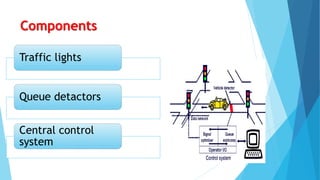
Components
Traffic lights
Queue detactors
Central control
system
Free Way Management
System
 Freeway-management systems consist of
strategies/system components and technologies
combined to monitor, control, and manage
freeway traffic more effectively.
Importance of Freeway
Management system
 Flow of traffic
 Information to motorists about crashes and
construction
 Help agencies for better response to incidents
Technologies In Freeway System
 Ramp Meters
 Cameras
 Dynamic Message Signs
Ramp Meters
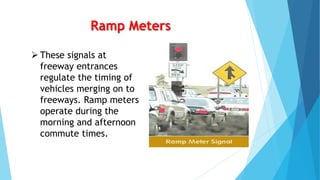
 These signals at
freeway entrances
regulate the timing of
vehicles merging on to
freeways. Ramp meters
operate during the
morning and afternoon
commute times.
Cameras
 Video images from cameras provide a real-time
view of traffic on freeways.
 Agencies monitors these cameras from the Traffic
Operations Center to see how traffic is moving on
freeways and identify trouble spots.
Dynamic Message Signs
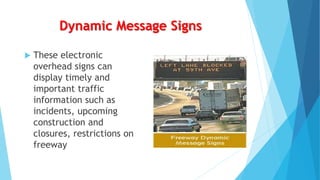
 These electronic
overhead signs can
display timely and
important traffic
information such as
incidents, upcoming
construction and
closures, restrictions on
freeway
“Transit management
system”
I.T.S
 Intelligent Transport Systems (ITS) is at the heart
of what keeps us safe in our city’s roads and
tunnel systems.
It includes;
 Cameras, display screens, traffic signals, j-eyes, e
traffic scan, sensors etc.
Components:
1) ITS center:
 Operations Control Centre (OCC) which runs 24/7.
 ITSC monitors traffic.
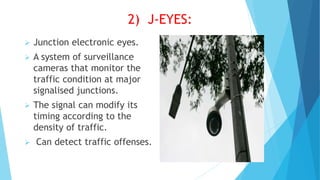
2) J-EYES:
 Junction electronic eyes.
 A system of surveillance
cameras that monitor the
traffic condition at major
signalised junctions.
 The signal can modify its
timing according to the
density of traffic.
 Can detect traffic offenses.
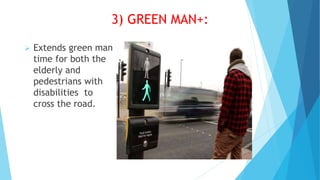
3) GREEN MAN+:
 Extends green man
time for both the
elderly and
pedestrians with
disabilities to
cross the road.
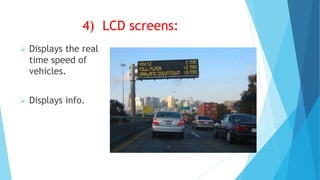
4) LCD screens:
 Displays the real
time speed of
vehicles.
 Displays info.
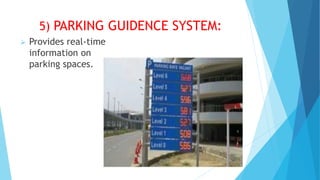
5) PARKING GUIDENCE SYSTEM:
 Provides real-time
information on
parking spaces.
“INCIDENT MANAGEMENT
SYSTEM”
1) BACKGROUND:
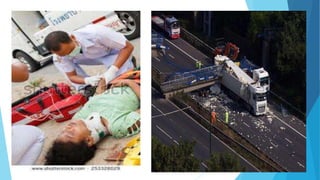
 Highway incidents disrupt the normal operation of the
transportation system.
 Incidents can occur due to;
a. Vehicle disablement
b. Crash
c. Hazardous material spill
d. Bridge collapse
INCIDENT CONTROL SYSTEM:
 IT is a systematic tool used for the command, control, and coordination
of an emergency response
 It works by the co-ordination of various agencies.
various stake holders and their duties:
1. Law enforcement;
• Secures incident scene
• Assists responders in accessing
the incident scene
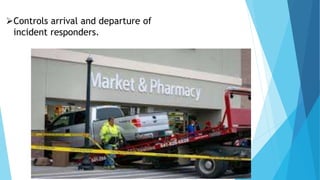
Controls arrival and departure of
incident responders.
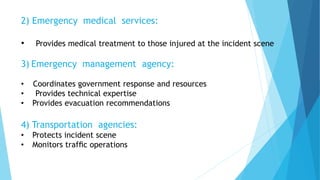
2) Emergency medical services:
• Provides medical treatment to those injured at the incident scene
3) Emergency management agency:
• Coordinates government response and resources
• Provides technical expertise
• Provides evacuation recommendations
4) Transportation agencies:
• Protects incident scene
• Monitors traffic operations
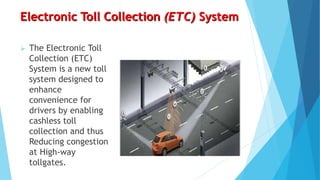
Electronic Toll Collection (ETC) System
 The Electronic Toll
Collection (ETC)
System is a new toll
system designed to
enhance
convenience for
drivers by enabling
cashless toll
collection and thus
Reducing congestion
at High-way
tollgates.
Objectives of ETCS
 Avoid the fuel loss.
 Saving of time in collecting toll.
 Avoid financial loss.
 Reduce longer waiting time in a toll queue.
 Provide traveler ease of toll payment.
 Reduce illegal toll gate entry.
RFID
(Radio Frequency Identification)
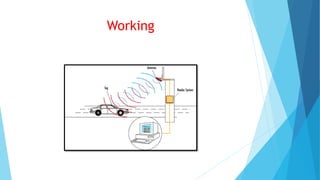
 RFID is a technology to identify and
authenticate tags that are attached on
vehicles.
 Each user holds a unique id for his vehicle,
when user scans his ID, some amount is charged
from his account depending upon his vehicle
category.
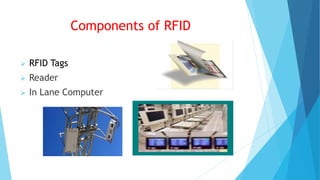
Components of RFID
 RFID Tags
 Reader
 In Lane Computer
Working
Emergency allow vehicles to control
traffic lights
 System that allows the normal operation of traffic
lights to be preempted. The most common use of
these systems is to handle traffic signals in the
path of an emergency vehicle and allowing the
emergency vehicle right-of-way, to help
reduce response times and enhance traffic safety.
Implementation
 They can be installed on road vehicles
 Integrated with train transportation network
management systems
 Operated by remote control from a fixed location,
such as a fire station or by an emergency call
center.
NOTE:
Traffic lights must be equipped to receive an
activation signal to be controlled by any system
intended for use in that area. A traffic signal not
equipped to receive a traffic preemption signal will
not recognize an activation, and will continue to
operate in its normal cycle.
Vehicular device types used
 Acoustic
Systems of this type override the traffic signal
when a specific pattern of tweets from the
siren of an emergency vehicle is detected.
 Line-of-sight
A vehicle that uses a line-of-sight traffic signal
preemption system is equipped with an emitter
which typically sends a narrowly directed signal
forward, towards traffic lights in front of the
vehicle, to attempt to obtain right-of-way through
controllable intersections before arriving at the
intersection.
Vehicular device types
Global Positioning System
 These systems require software and a
communications platform to determine where
the activating vehicle is located, in which
direction it is headed, which traffic lights
should be preempted
 The ability for the central application to
activate the desired traffic lights promptly.

8 components of ITS

  • 1.
    8 COMPONENTS OFITS PRESENTED BY : M ABRAR ARIF M ASAD KHAN M SHERAZ HAIDER M KAZAM
  • 2.
  • 3.
    Introduction  System wherecentrally-controlled traffic signals and sensors regulate the flow of traffic through the city in response to demand.
  • 4.
    Importance  Reduce everydaycongestion  Give priority to buses approaching junctions  Enable a much more effective response to traffic incidents
  • 5.
  • 6.
    Free Way Management System Freeway-management systems consist of strategies/system components and technologies combined to monitor, control, and manage freeway traffic more effectively.
  • 7.
    Importance of Freeway Managementsystem  Flow of traffic  Information to motorists about crashes and construction  Help agencies for better response to incidents
  • 8.
    Technologies In FreewaySystem  Ramp Meters  Cameras  Dynamic Message Signs
  • 9.
    Ramp Meters  Thesesignals at freeway entrances regulate the timing of vehicles merging on to freeways. Ramp meters operate during the morning and afternoon commute times.
  • 10.
    Cameras  Video imagesfrom cameras provide a real-time view of traffic on freeways.  Agencies monitors these cameras from the Traffic Operations Center to see how traffic is moving on freeways and identify trouble spots.
  • 11.
    Dynamic Message Signs These electronic overhead signs can display timely and important traffic information such as incidents, upcoming construction and closures, restrictions on freeway
  • 12.
  • 13.
    I.T.S  Intelligent TransportSystems (ITS) is at the heart of what keeps us safe in our city’s roads and tunnel systems. It includes;  Cameras, display screens, traffic signals, j-eyes, e traffic scan, sensors etc.
  • 14.
    Components: 1) ITS center: Operations Control Centre (OCC) which runs 24/7.  ITSC monitors traffic.
  • 15.
    2) J-EYES:  Junctionelectronic eyes.  A system of surveillance cameras that monitor the traffic condition at major signalised junctions.  The signal can modify its timing according to the density of traffic.  Can detect traffic offenses.
  • 16.
    3) GREEN MAN+: Extends green man time for both the elderly and pedestrians with disabilities to cross the road.
  • 17.
    4) LCD screens: Displays the real time speed of vehicles.  Displays info.
  • 18.
    5) PARKING GUIDENCESYSTEM:  Provides real-time information on parking spaces.
  • 19.
    “INCIDENT MANAGEMENT SYSTEM” 1) BACKGROUND: Highway incidents disrupt the normal operation of the transportation system.  Incidents can occur due to; a. Vehicle disablement b. Crash c. Hazardous material spill d. Bridge collapse
  • 20.
    INCIDENT CONTROL SYSTEM: IT is a systematic tool used for the command, control, and coordination of an emergency response  It works by the co-ordination of various agencies. various stake holders and their duties: 1. Law enforcement; • Secures incident scene • Assists responders in accessing the incident scene
  • 21.
    Controls arrival anddeparture of incident responders.
  • 22.
    2) Emergency medicalservices: • Provides medical treatment to those injured at the incident scene 3) Emergency management agency: • Coordinates government response and resources • Provides technical expertise • Provides evacuation recommendations 4) Transportation agencies: • Protects incident scene • Monitors traffic operations
  • 24.
    Electronic Toll Collection(ETC) System  The Electronic Toll Collection (ETC) System is a new toll system designed to enhance convenience for drivers by enabling cashless toll collection and thus Reducing congestion at High-way tollgates.
  • 25.
    Objectives of ETCS Avoid the fuel loss.  Saving of time in collecting toll.  Avoid financial loss.  Reduce longer waiting time in a toll queue.  Provide traveler ease of toll payment.  Reduce illegal toll gate entry.
  • 26.
    RFID (Radio Frequency Identification) RFID is a technology to identify and authenticate tags that are attached on vehicles.  Each user holds a unique id for his vehicle, when user scans his ID, some amount is charged from his account depending upon his vehicle category.
  • 27.
    Components of RFID RFID Tags  Reader  In Lane Computer
  • 28.
  • 29.
    Emergency allow vehiclesto control traffic lights  System that allows the normal operation of traffic lights to be preempted. The most common use of these systems is to handle traffic signals in the path of an emergency vehicle and allowing the emergency vehicle right-of-way, to help reduce response times and enhance traffic safety.
  • 30.
    Implementation  They canbe installed on road vehicles  Integrated with train transportation network management systems  Operated by remote control from a fixed location, such as a fire station or by an emergency call center. NOTE: Traffic lights must be equipped to receive an activation signal to be controlled by any system intended for use in that area. A traffic signal not equipped to receive a traffic preemption signal will not recognize an activation, and will continue to operate in its normal cycle.
  • 31.
    Vehicular device typesused  Acoustic Systems of this type override the traffic signal when a specific pattern of tweets from the siren of an emergency vehicle is detected.  Line-of-sight A vehicle that uses a line-of-sight traffic signal preemption system is equipped with an emitter which typically sends a narrowly directed signal forward, towards traffic lights in front of the vehicle, to attempt to obtain right-of-way through controllable intersections before arriving at the intersection.
  • 32.
    Vehicular device types GlobalPositioning System  These systems require software and a communications platform to determine where the activating vehicle is located, in which direction it is headed, which traffic lights should be preempted  The ability for the central application to activate the desired traffic lights promptly.