 Understanding
 Industry Overview
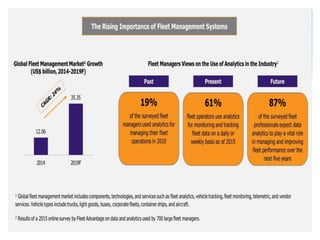
 Importance of Fleet Management
 GPS Vehicle tracking
 Applications of FMS
 Safety Tracking
 Route Planning
 Scope/Reporting
 Advantages
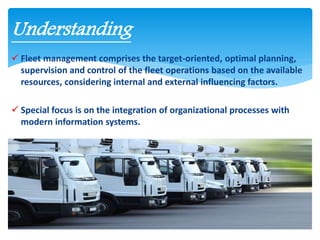
 Fleet management comprises the target-oriented, optimal planning,
supervision and control of the fleet operations based on the available
resources, considering internal and external influencing factors.
 Special focus is on the integration of organizational processes with
modern information systems.
Understanding
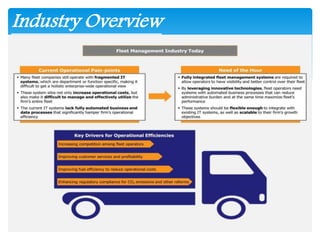
Industry Overview
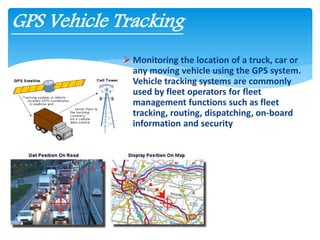
 Monitoring the location of a truck, car or
any moving vehicle using the GPS system.
Vehicle tracking systems are commonly
used by fleet operators for fleet
management functions such as fleet
tracking, routing, dispatching, on-board
information and security
GPS Vehicle Tracking
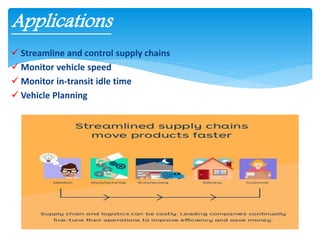
 Streamline and control supply chains
 Monitor vehicle speed
 Monitor in-transit idle time
 Vehicle Planning
Applications
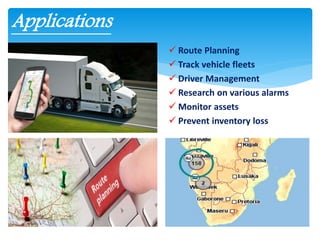
 Route Planning
 Track vehicle fleets
 Driver Management
 Research on various alarms
 Monitor assets
 Prevent inventory loss
Applications
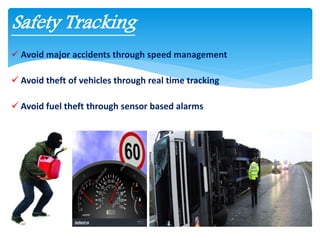
 Avoid major accidents through speed management
 Avoid theft of vehicles through real time tracking
 Avoid fuel theft through sensor based alarms
Safety Tracking
Route Planning
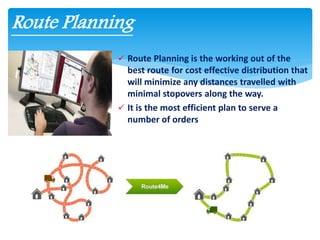
 Route Planning is the working out of the
best route for cost effective distribution that
will minimize any distances travelled with
minimal stopovers along the way.
 It is the most efficient plan to serve a
number of orders
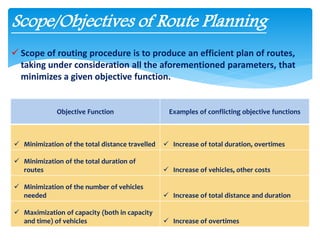
 Scope of routing procedure is to produce an efficient plan of routes,
taking under consideration all the aforementioned parameters, that
minimizes a given objective function.
Scope/Objectives of Route Planning
Objective Function Examples of conflicting objective functions
 Minimization of the total distance travelled  Increase of total duration, overtimes
 Minimization of the total duration of
routes  Increase of vehicles, other costs
 Minimization of the number of vehicles
needed  Increase of total distance and duration
 Maximization of capacity (both in capacity
and time) of vehicles  Increase of overtimes
 Schedule Control Report
 Asset Control Report
 Location Control Report
 Alarm Control Report
 Driver’s Performance Report
Scope / Reporting
 Improves productivity and maximize driver satisfaction
 Reduce operating costs and Increase profitability
 Speed up logistics activities and deliveries
 Better communication between local ops team
 Enhance safety and breakdown recovery
 Transparency of all the transport events
 Cut accidents and fuel usage, two of the largest fleet spend categories
Advantages
Fleet Management

Fleet Management

  • 2.
     Understanding  IndustryOverview  Importance of Fleet Management  GPS Vehicle tracking  Applications of FMS  Safety Tracking  Route Planning  Scope/Reporting  Advantages
  • 3.
     Fleet managementcomprises the target-oriented, optimal planning, supervision and control of the fleet operations based on the available resources, considering internal and external influencing factors.  Special focus is on the integration of organizational processes with modern information systems. Understanding
  • 4.
  • 6.
     Monitoring thelocation of a truck, car or any moving vehicle using the GPS system. Vehicle tracking systems are commonly used by fleet operators for fleet management functions such as fleet tracking, routing, dispatching, on-board information and security GPS Vehicle Tracking
  • 7.
     Streamline andcontrol supply chains  Monitor vehicle speed  Monitor in-transit idle time  Vehicle Planning Applications
  • 8.
     Route Planning Track vehicle fleets  Driver Management  Research on various alarms  Monitor assets  Prevent inventory loss Applications
  • 9.
     Avoid majoraccidents through speed management  Avoid theft of vehicles through real time tracking  Avoid fuel theft through sensor based alarms Safety Tracking
  • 10.
    Route Planning  RoutePlanning is the working out of the best route for cost effective distribution that will minimize any distances travelled with minimal stopovers along the way.  It is the most efficient plan to serve a number of orders
  • 11.
     Scope ofrouting procedure is to produce an efficient plan of routes, taking under consideration all the aforementioned parameters, that minimizes a given objective function. Scope/Objectives of Route Planning Objective Function Examples of conflicting objective functions  Minimization of the total distance travelled  Increase of total duration, overtimes  Minimization of the total duration of routes  Increase of vehicles, other costs  Minimization of the number of vehicles needed  Increase of total distance and duration  Maximization of capacity (both in capacity and time) of vehicles  Increase of overtimes
  • 12.
     Schedule ControlReport  Asset Control Report  Location Control Report  Alarm Control Report  Driver’s Performance Report Scope / Reporting
  • 13.
     Improves productivityand maximize driver satisfaction  Reduce operating costs and Increase profitability  Speed up logistics activities and deliveries  Better communication between local ops team  Enhance safety and breakdown recovery  Transparency of all the transport events  Cut accidents and fuel usage, two of the largest fleet spend categories Advantages