UNIT 1: THE 
NATURE OF LIFE 
CHAPTER 1: THE 
SCIENCE OF 
BIOLOGY 
Ms. Petrucci 
Biology
Chapter 1: The Science of Biology 
Vocabulary 
Section 1-2: How Scientists Work 
• Spontaneous generation 
• Controlled experiment 
•Manipulated (Independent) Variable 
• Responding (Dependant) Variable 
• Theory
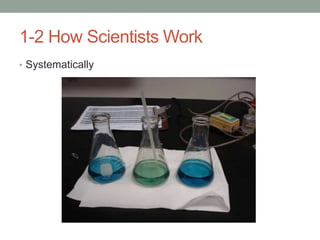
1-2 How Scientists Work 
• Systematically
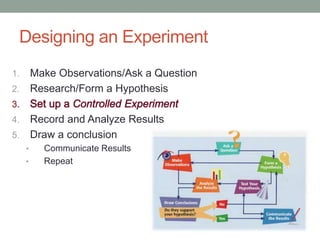
Designing an Experiment 
1. Make Observations/Ask a Question 
2. Research/Form a Hypothesis 
4. Record and Analyze Results 
5. Draw a conclusion 
• Communicate Results 
• Repeat
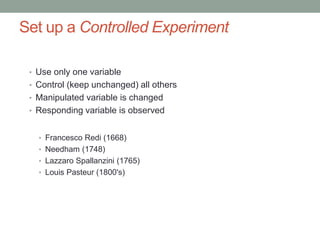
Set up a Controlled Experiment 
• Use only one variable 
• Control (keep unchanged) all others 
• Manipulated variable is changed 
• Responding variable is observed 
• Francesco Redi (1668) 
• Needham (1748) 
• Lazzaro Spallanzini (1765) 
• Louis Pasteur (1800's)
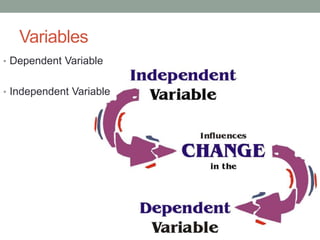
Variables 
• Dependent Variable 
• Independent Variable
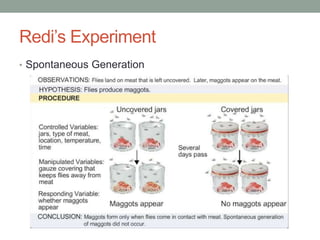
Redi’s Experiment 
• Spontaneous Generation
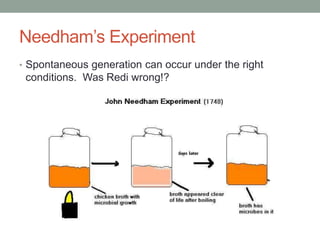
Needham’s Experiment 
• Spontaneous generation can occur under the right 
conditions. Was Redi wrong!?
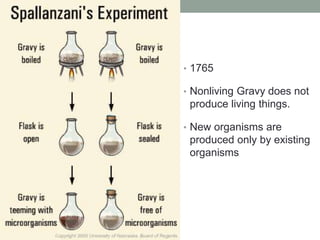
• 1765 
• Nonliving Gravy does not 
produce living things. 
• New organisms are 
produced only by existing 
organisms
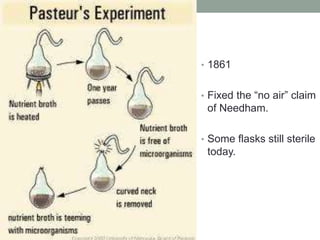
• 1861 
• Fixed the “no air” claim 
of Needham. 
• Some flasks still sterile 
today.
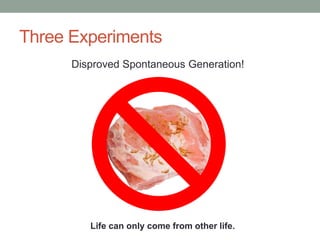
Three Experiments 
Disproved Spontaneous Generation! 
Life can only come from other life.
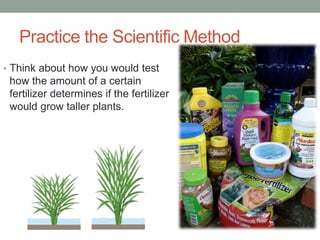
Practice the Scientific Method 
• Think about how you would test 
how the amount of a certain 
fertilizer determines if the fertilizer 
would grow taller plants.
Brainstorm 
• Decide how you would go about conducting an 
experiment or investigation to study this. 
• Identify the Dependant Variable and the Independent 
Variable 
• I will provide you results
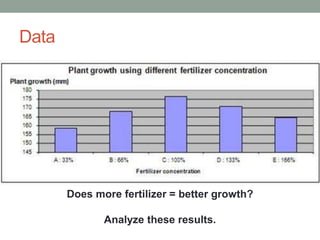
Data 
Does more fertilizer = better growth? 
Analyze these results.
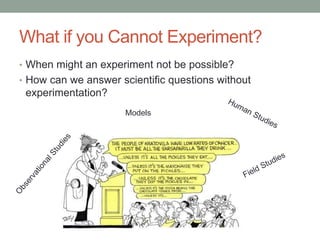
What if you Cannot Experiment? 
• When might an experiment not be possible? 
• How can we answer scientific questions without 
experimentation? 
Models
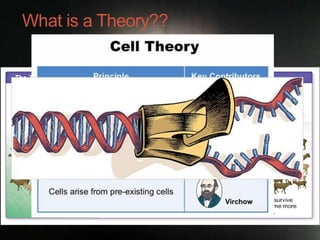
What is a Theory??

1-2 How Scientists Work

  • 1.
    UNIT 1: THE NATURE OF LIFE CHAPTER 1: THE SCIENCE OF BIOLOGY Ms. Petrucci Biology
  • 2.
    Chapter 1: TheScience of Biology Vocabulary Section 1-2: How Scientists Work • Spontaneous generation • Controlled experiment •Manipulated (Independent) Variable • Responding (Dependant) Variable • Theory
  • 3.
    1-2 How ScientistsWork • Systematically
  • 4.
    Designing an Experiment 1. Make Observations/Ask a Question 2. Research/Form a Hypothesis 4. Record and Analyze Results 5. Draw a conclusion • Communicate Results • Repeat
  • 5.
    Set up aControlled Experiment • Use only one variable • Control (keep unchanged) all others • Manipulated variable is changed • Responding variable is observed • Francesco Redi (1668) • Needham (1748) • Lazzaro Spallanzini (1765) • Louis Pasteur (1800's)
  • 6.
    Variables • DependentVariable • Independent Variable
  • 7.
    Redi’s Experiment •Spontaneous Generation
  • 8.
    Needham’s Experiment •Spontaneous generation can occur under the right conditions. Was Redi wrong!?
  • 9.
    • 1765 •Nonliving Gravy does not produce living things. • New organisms are produced only by existing organisms
  • 10.
    • 1861 •Fixed the “no air” claim of Needham. • Some flasks still sterile today.
  • 11.
    Three Experiments DisprovedSpontaneous Generation! Life can only come from other life.
  • 12.
    Practice the ScientificMethod • Think about how you would test how the amount of a certain fertilizer determines if the fertilizer would grow taller plants.
  • 13.
    Brainstorm • Decidehow you would go about conducting an experiment or investigation to study this. • Identify the Dependant Variable and the Independent Variable • I will provide you results
  • 14.
    Data Does morefertilizer = better growth? Analyze these results.
  • 15.
    What if youCannot Experiment? • When might an experiment not be possible? • How can we answer scientific questions without experimentation? Models
  • 17.
    What is aTheory??

Editor's Notes

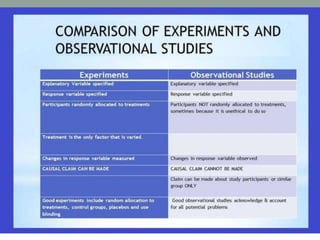
  • #16 Human studies (how a drug effects human – ethical) Field studies can be used for wild creatures – observing nature in its natural state) Try to identify and control as many variables as possible Models – using computers to make representations of processes, ideas, or structures. Observational studies – No manipulation
  • #18 A theory develops when a hypothesis becomes well-supported (Ex: Theory of Biogenesis) Theory - a well-tested explanation that unifies a broad range of observations. NOT ABSOLUTE A scientific theory is a well-substantiated explanation of some aspect of the natural world that is acquired through the scientific method, and repeatedly confirmed through observation and experimentation. Theories can be revised or replaced if new evidence is discovered Evolution by natural selection Cell theory is a scientific theory which describes the properties of cells The Gene Theory is one of the basic principles of biology. The main concept of this theory is that traits are passed from parents to offspring through gene transmission.