Picture Guide to Chapter 8 Photosynthesis
8-1 Energy and Life
Objectives Explain where plants get the energy they need to produce food Describe the role of ATP in cellular activities
Q: Where does energy come from? A: Our food, but originally the energy in food comes from the sun
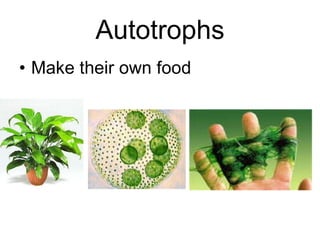
Autotrophs Make their own food
Heterotrophs Cannot make their own food
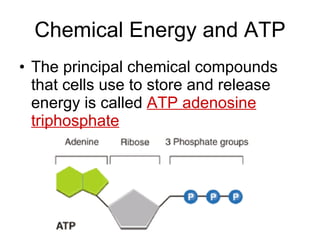
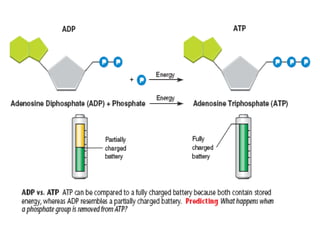
Chemical Energy and ATP The principal chemical compounds that cells use to store and release energy is called  ATP adenosine triphosphate
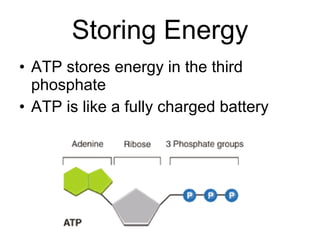
Storing Energy ATP stores energy in the third phosphate ATP is like a fully charged battery
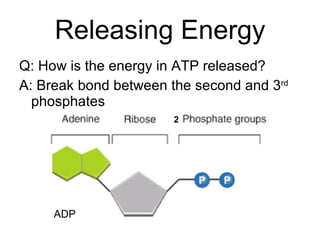
Releasing Energy Q: How is the energy in ATP released? A: Break bond between the second and 3 rd  phosphates ADP 2
 
 
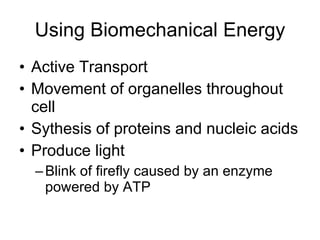
Using Biomechanical Energy Active Transport Movement of organelles throughout cell Sythesis of proteins and nucleic acids Produce light Blink of firefly caused by an enzyme powered by ATP
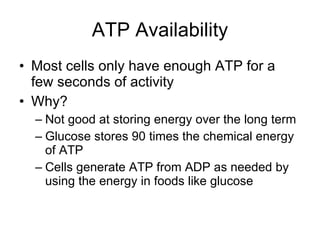
ATP Availability Most cells only have enough ATP for a few seconds of activity Why? Not good at storing energy over the long term Glucose stores 90 times the chemical energy of ATP Cells generate ATP from ADP as needed by using the energy in foods like glucose
8-2 Photosynthesis:   An Overview
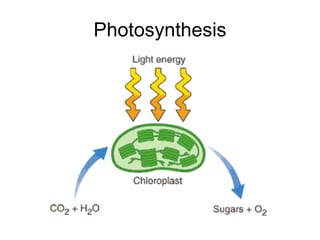
Photosynthesis The process in which plants use the energy of sunlight to convert water and carbon dioxide into high energy carbohydrates – sugars and starches – and oxygen as a waste product
Photosynthesis
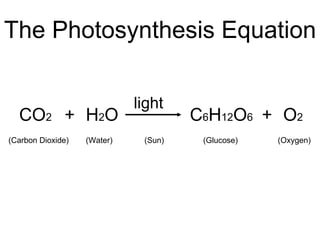
The Photosynthesis Equation CO 2 + H 2 O + C 6 H 12 O 6 O 2 light (Carbon Dioxide) (Water) (Sun) (Glucose) (Oxygen)
 
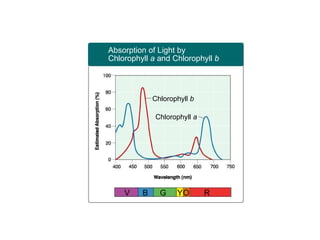
Chlorophyll The plants principal pigment, absorbs light energy in the blue-violet and red spectrum of visible light
Absorption of Light by Chlorophyll  a  and Chlorophyll  b Absorption of Light by Chlorophyll  a  and Chlorophyll  b V B G Y O R Chlorophyll  b Chlorophyll  a
Because light is a form of energy… Anything that absorbs light also absorbs the energy from that light When chlorophyll absorbs light, much of the energy is transferred to electrons in the chlorophyll molecule, raising the energy level of these electrons These high-energy electrons make photosynthesis work
8-3 The Reactions of Photosynthesis
 
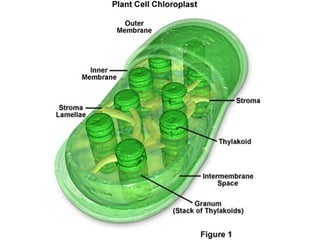
Thylakoids Sac-like photosynthetic membranes arranged in stacks
Grana Stacks of thylakoids
Stroma The region outside the thylakoid
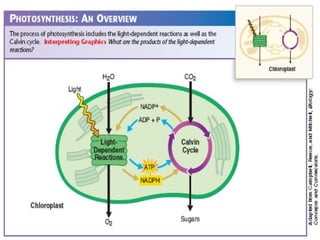
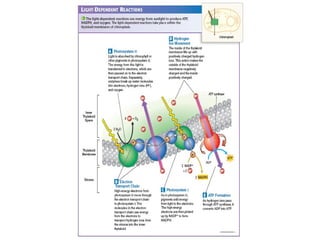
Scientists describe the reactions of photosynthesis in two parts Light – dependent reactions (takes place in the thylakoid membranes) Light – independent reactions (takes place in stroma)
 
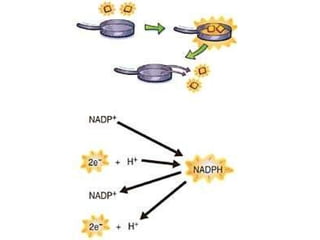
Carrier Molecule Compound that can accept a pair of high energy electrons and transfer them along with most of their energy to another molecule Ex.) NADP+
 
Q: What does this do? NADP+  NADPH  A: this traps sunlight in chemical  form
Light Dependent Reactions Uses energy from light to produce Oxygen gas ATP NADPH


The Calvin Cycle The ATP and NADPH formed by the light-dependent reactions contain an abundance of chemical energy, but they are not stable enough to store that energy for more than a few minutes.  The Calvin cycle uses ATP and NADPH from light – dependent reactions to produce high energy sugars
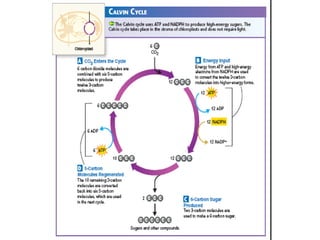
The Calvin Cycle These reactions don’t require light, therefore these reactions are called Light – independent reactions
 
 
Factors Affecting Photosynthesis Not enough water Temperature  Light intensity
THE END

Biology - Chp 8 - Photosynthesis - PowerPoint

  • 1.
    Picture Guide toChapter 8 Photosynthesis
  • 2.
  • 3.
    Objectives Explain whereplants get the energy they need to produce food Describe the role of ATP in cellular activities
  • 4.
    Q: Where doesenergy come from? A: Our food, but originally the energy in food comes from the sun
  • 5.
  • 6.
  • 7.
    Chemical Energy andATP The principal chemical compounds that cells use to store and release energy is called ATP adenosine triphosphate
  • 8.
    Storing Energy ATPstores energy in the third phosphate ATP is like a fully charged battery
  • 9.
    Releasing Energy Q:How is the energy in ATP released? A: Break bond between the second and 3 rd phosphates ADP 2
  • 10.
  • 11.
  • 12.
    Using Biomechanical EnergyActive Transport Movement of organelles throughout cell Sythesis of proteins and nucleic acids Produce light Blink of firefly caused by an enzyme powered by ATP
  • 13.
    ATP Availability Mostcells only have enough ATP for a few seconds of activity Why? Not good at storing energy over the long term Glucose stores 90 times the chemical energy of ATP Cells generate ATP from ADP as needed by using the energy in foods like glucose
  • 14.
  • 15.
    Photosynthesis The processin which plants use the energy of sunlight to convert water and carbon dioxide into high energy carbohydrates – sugars and starches – and oxygen as a waste product
  • 16.
  • 17.
    The Photosynthesis EquationCO 2 + H 2 O + C 6 H 12 O 6 O 2 light (Carbon Dioxide) (Water) (Sun) (Glucose) (Oxygen)
  • 18.
  • 19.
    Chlorophyll The plantsprincipal pigment, absorbs light energy in the blue-violet and red spectrum of visible light
  • 20.
    Absorption of Lightby Chlorophyll a and Chlorophyll b Absorption of Light by Chlorophyll a and Chlorophyll b V B G Y O R Chlorophyll b Chlorophyll a
  • 21.
    Because light isa form of energy… Anything that absorbs light also absorbs the energy from that light When chlorophyll absorbs light, much of the energy is transferred to electrons in the chlorophyll molecule, raising the energy level of these electrons These high-energy electrons make photosynthesis work
  • 22.
    8-3 The Reactionsof Photosynthesis
  • 23.
  • 24.
    Thylakoids Sac-like photosyntheticmembranes arranged in stacks
  • 25.
    Grana Stacks ofthylakoids
  • 26.
    Stroma The regionoutside the thylakoid
  • 27.
    Scientists describe thereactions of photosynthesis in two parts Light – dependent reactions (takes place in the thylakoid membranes) Light – independent reactions (takes place in stroma)
  • 28.
  • 29.
    Carrier Molecule Compoundthat can accept a pair of high energy electrons and transfer them along with most of their energy to another molecule Ex.) NADP+
  • 30.
  • 31.
    Q: What doesthis do? NADP+ NADPH A: this traps sunlight in chemical form
  • 32.
    Light Dependent ReactionsUses energy from light to produce Oxygen gas ATP NADPH
  • 33.
  • 34.
  • 35.
  • 36.
    The Calvin CycleThe ATP and NADPH formed by the light-dependent reactions contain an abundance of chemical energy, but they are not stable enough to store that energy for more than a few minutes. The Calvin cycle uses ATP and NADPH from light – dependent reactions to produce high energy sugars
  • 37.
    The Calvin CycleThese reactions don’t require light, therefore these reactions are called Light – independent reactions
  • 38.
  • 39.
  • 40.
    Factors Affecting PhotosynthesisNot enough water Temperature Light intensity
  • 41.