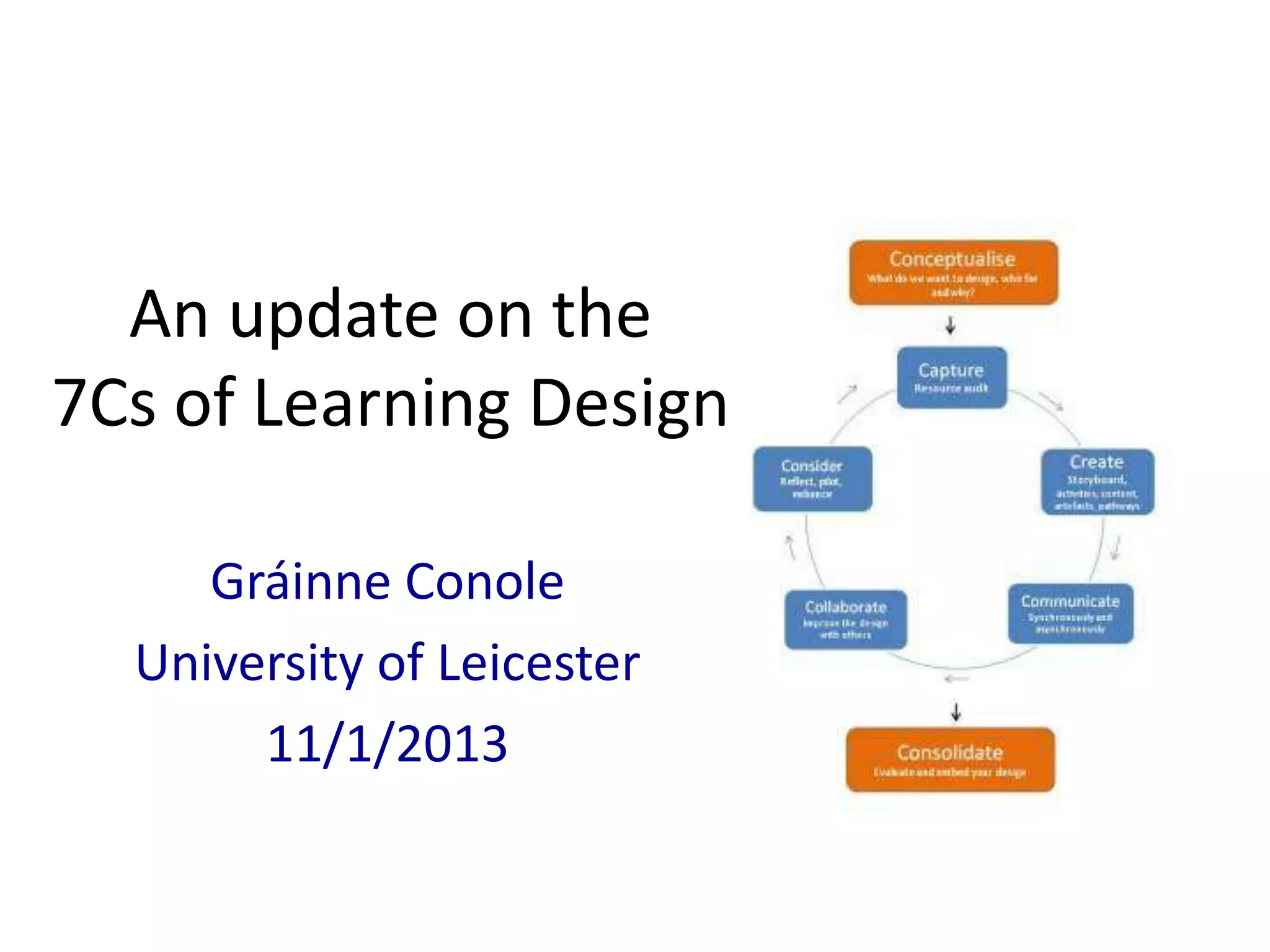
An update on the
7Cs of Learning Design

     Gráinne Conole
  University of Leicester
       11/1/2013
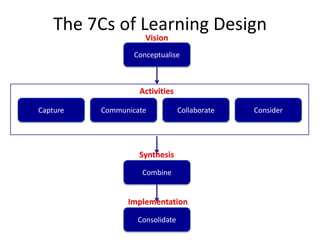
The 7Cs of Learning Design
                     Vision
                  Conceptualise


                   Activities

Capture   Communicate            Collaborate   Consider


                   Synthesis
                    Combine


                Implementation
                   Consolidate
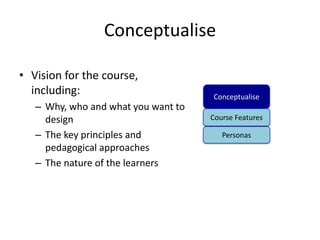
Conceptualise

• Vision for the course,
  including:                         Conceptualise
   – Why, who and what you want to
     design                          Course Features

   – The key principles and             Personas
     pedagogical approaches
   – The nature of the learners
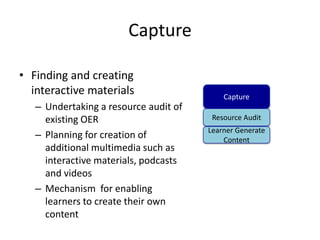
Capture

• Finding and creating
  interactive materials                    Capture
   – Undertaking a resource audit of
     existing OER                       Resource Audit
                                       Learner Generate
   – Planning for creation of              Content
     additional multimedia such as
     interactive materials, podcasts
     and videos
   – Mechanism for enabling
     learners to create their own
     content
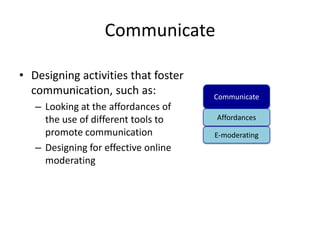
Communicate

• Designing activities that foster
  communication, such as:             Communicate
   – Looking at the affordances of
     the use of different tools to    Affordances
     promote communication            E-moderating
   – Designing for effective online
     moderating
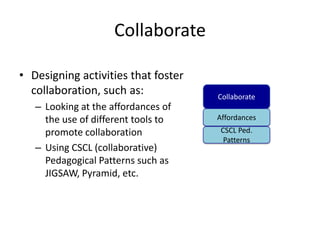
Collaborate

• Designing activities that foster
  collaboration, such as:            Collaborate
   – Looking at the affordances of
     the use of different tools to   Affordances
     promote collaboration            CSCL Ped.
                                       Patterns
   – Using CSCL (collaborative)
     Pedagogical Patterns such as
     JIGSAW, Pyramid, etc.
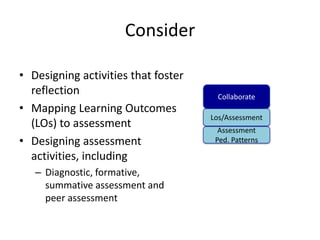
Consider

• Designing activities that foster
  reflection                          Collaborate
• Mapping Learning Outcomes
                                     Los/Assessment
  (LOs) to assessment                  Assessment
• Designing assessment                Ped. Patterns

  activities, including
   – Diagnostic, formative,
     summative assessment and
     peer assessment
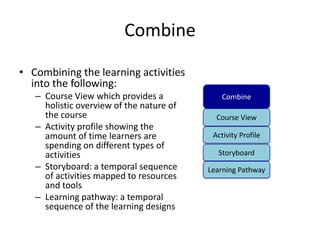
Combine

• Combining the learning activities
  into the following:
   – Course View which provides a             Combine
     holistic overview of the nature of
     the course                             Course View
   – Activity profile showing the
     amount of time learners are           Activity Profile
     spending on different types of
     activities                             Storyboard
   – Storyboard: a temporal sequence      Learning Pathway
     of activities mapped to resources
     and tools
   – Learning pathway: a temporal
     sequence of the learning designs
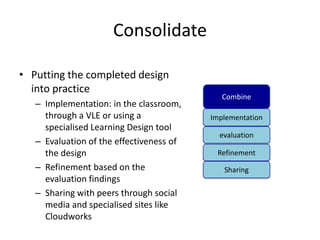
Consolidate

• Putting the completed design
  into practice
                                             Combine
   – Implementation: in the classroom,
     through a VLE or using a             Implementation
     specialised Learning Design tool
                                            evaluation
   – Evaluation of the effectiveness of
     the design                            Refinement
   – Refinement based on the                 Sharing
     evaluation findings
   – Sharing with peers through social
     media and specialised sites like
     Cloudworks

7 cs update

  • 1.
    An update onthe 7Cs of Learning Design Gráinne Conole University of Leicester 11/1/2013
  • 2.
    The 7Cs ofLearning Design Vision Conceptualise Activities Capture Communicate Collaborate Consider Synthesis Combine Implementation Consolidate
  • 3.
    Conceptualise • Vision forthe course, including: Conceptualise – Why, who and what you want to design Course Features – The key principles and Personas pedagogical approaches – The nature of the learners
  • 4.
    Capture • Finding andcreating interactive materials Capture – Undertaking a resource audit of existing OER Resource Audit Learner Generate – Planning for creation of Content additional multimedia such as interactive materials, podcasts and videos – Mechanism for enabling learners to create their own content
  • 5.
    Communicate • Designing activitiesthat foster communication, such as: Communicate – Looking at the affordances of the use of different tools to Affordances promote communication E-moderating – Designing for effective online moderating
  • 6.
    Collaborate • Designing activitiesthat foster collaboration, such as: Collaborate – Looking at the affordances of the use of different tools to Affordances promote collaboration CSCL Ped. Patterns – Using CSCL (collaborative) Pedagogical Patterns such as JIGSAW, Pyramid, etc.
  • 7.
    Consider • Designing activitiesthat foster reflection Collaborate • Mapping Learning Outcomes Los/Assessment (LOs) to assessment Assessment • Designing assessment Ped. Patterns activities, including – Diagnostic, formative, summative assessment and peer assessment
  • 8.
    Combine • Combining thelearning activities into the following: – Course View which provides a Combine holistic overview of the nature of the course Course View – Activity profile showing the amount of time learners are Activity Profile spending on different types of activities Storyboard – Storyboard: a temporal sequence Learning Pathway of activities mapped to resources and tools – Learning pathway: a temporal sequence of the learning designs
  • 9.
    Consolidate • Putting thecompleted design into practice Combine – Implementation: in the classroom, through a VLE or using a Implementation specialised Learning Design tool evaluation – Evaluation of the effectiveness of the design Refinement – Refinement based on the Sharing evaluation findings – Sharing with peers through social media and specialised sites like Cloudworks