7 Cs of Communication 
Group Members: 
1.Muhammad Sajid 
2.Adnan Hassan 
3.Haseeb Ahsan
The seven C’s 
.When We talk about “ Effective 
Communication” one thing that 
comes in mind, what are the basic 
principles of “effective 
communication” . 
.These principles tells us how your 
message can becomes effective for 
your target group, 
.These principles also tell about 
style and importance of the 
message. 
.These principles commonly known 
as 7 C’s of effective communication.
• COMPLETENESS 
• CONCISENESS 
• CONSIDERATION 
• CLARITY 
• CONCRETENESS 
• COURTESY 
• CORRECTNESS 
3 
7 Cs 0F Communication
1.COMPLETENESS 
Business message is complete 
when it contains all facts the 
reader or listener needs for the 
reaction you desire. 
For completeness, keep the 
following things in mind; 
Provide all necessary 
information 
Answer all questions asked 
Give something extra when 
desirable
COMPLETENESS 
•Answer all questions that are asked 
•Give something extra when 
desirable 
•Check for five Ws & one H 
–Who 
–What 
–When 
–Where 
–Why and 
–H
Provide All Necessary Information 
Answering the five W’s helps make messages clear: 
Who, What, When, Where, and Why. 
Answer All Questions Asked 
Look for questions: some may even appear buried 
within a paragraph. Locate them and then answer 
precisely. 
Give Something Extra, When Desirable 
Use your good judgment in offering additional material 
if the sender’s message was incomplete. 
6
2.CONCISENESS 
1. Eliminate wordy expressions 
2. Include only relevant statements 
be focused 
Shorten & avoid long explanations 
3. Avoid unnecessary repetitions 
use short forms the second time 
use pronouns
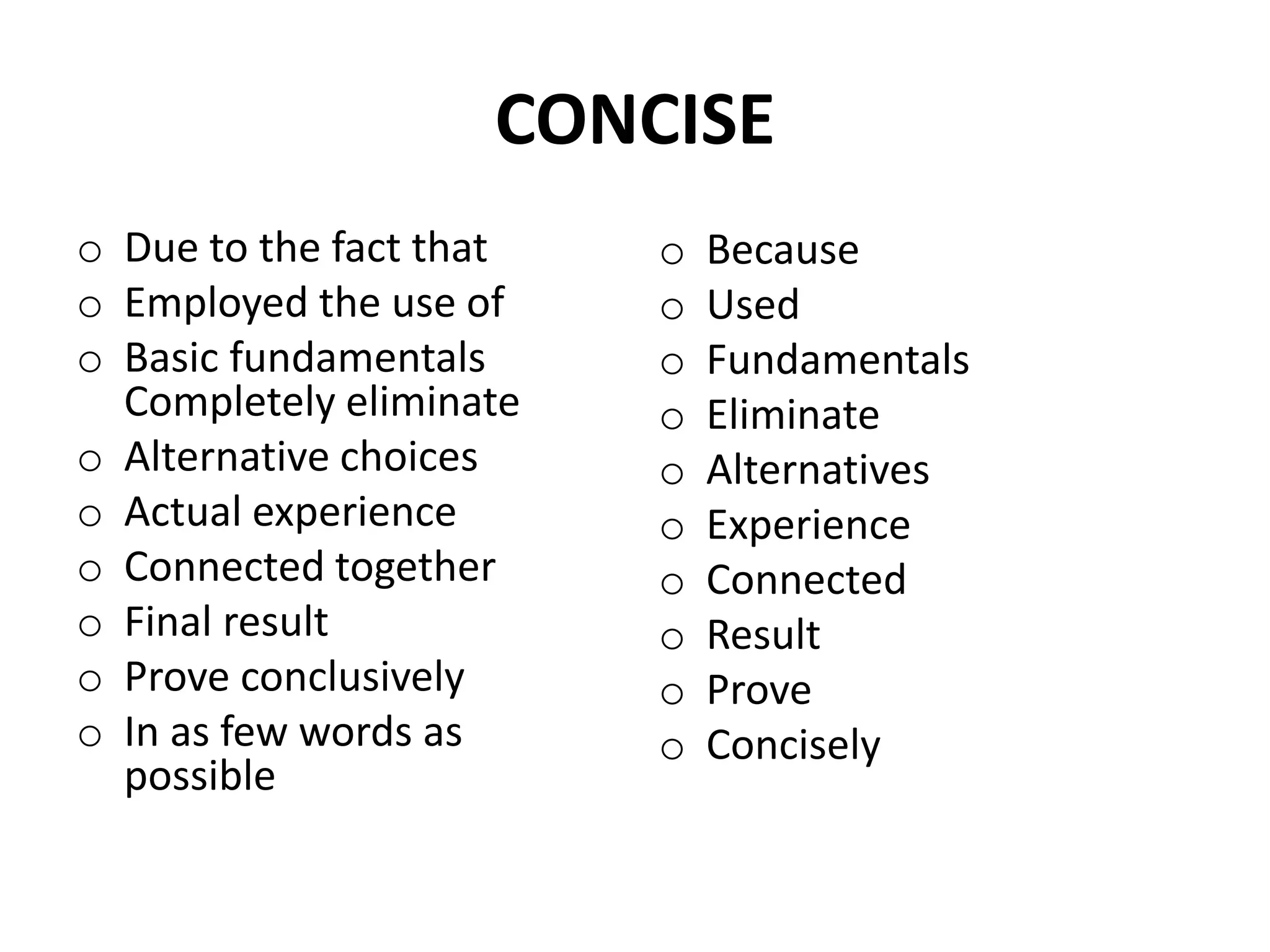
CONCISE 
o Due to the fact that 
o Employed the use of 
o Basic fundamentals 
Completely eliminate 
o Alternative choices 
o Actual experience 
o Connected together 
o Final result 
o Prove conclusively 
o In as few words as 
possible 
o Because 
o Used 
o Fundamentals 
o Eliminate 
o Alternatives 
o Experience 
o Connected 
o Result 
o Prove 
o Concisely
3.CONSIDERATION 
Consideration means – To consider the 
receiver’s Interest/Intention 
Consideration means preparing every 
message with the message receivers in 
mind; try to put yourself in their place. 
• You are considerate 
• you do not lose your temper 
•the thoughtful consideration is also 
called “you-attitude”.
CONSIDERATION 
.Focus on YOU instead of I & WE 
.Show reader benefit & interest 
.Emphasize on positive & 
pleasant 
.Apply integrity & ethics
You attitude 
“You will be able to shop in the 
evening with the extended 
hours.” 
Readers may react positively 
when benefit are shown to 
them. 
Always try to address his/her 
need and want.
4.CONCRETENESS 
.It means that message should be 
specific instead of general. 
.Misunderstanding of words 
creates problems for both parties 
(sender and receiver). 
.when you talk to your client 
always use facts and figures 
instead of generic or irrelevant 
information.
CONCRETENESS 
.use specific facts and figures 
.Put action into words 
.Choose vivid image building words by 
comparison & figurative language 
.Use more adjectives and adverbs 
General 
He is very intelligent student of class and 
stood first in the class. 
Concrete 
Ali’s GPA in B.Sc Electrical Engineering 2k3-f 
session was 3.95/4.0, he stood first in his 
class
Put Action in Your Verbs 
Verbs can activate other words and 
help make your sentences alive, 
more vigorous. 
 Use active rather than passive 
verbs. 
 Put action in your verbs rather 
than nouns
5.CLARITY 
In effective business 
communication the message 
should be very much clear. So that 
reader can understand it easily. 
You should always Choose precise 
words. 
Always choose familiar and easy 
words. 
Construct effective sentences and 
paragraphs
Construct Effective Sentences and 
Paragraphs 
In business communication always 
use precise words rather longer 
statements. 
If you have a choice between long 
words and shorter one, always use 
shorter one. 
You should try your level best to use 
familiar/easy to understand words so 
that your reader will quickly under 
stand it 
.Length 
.Unity 
.Coherence 
.Emphasis
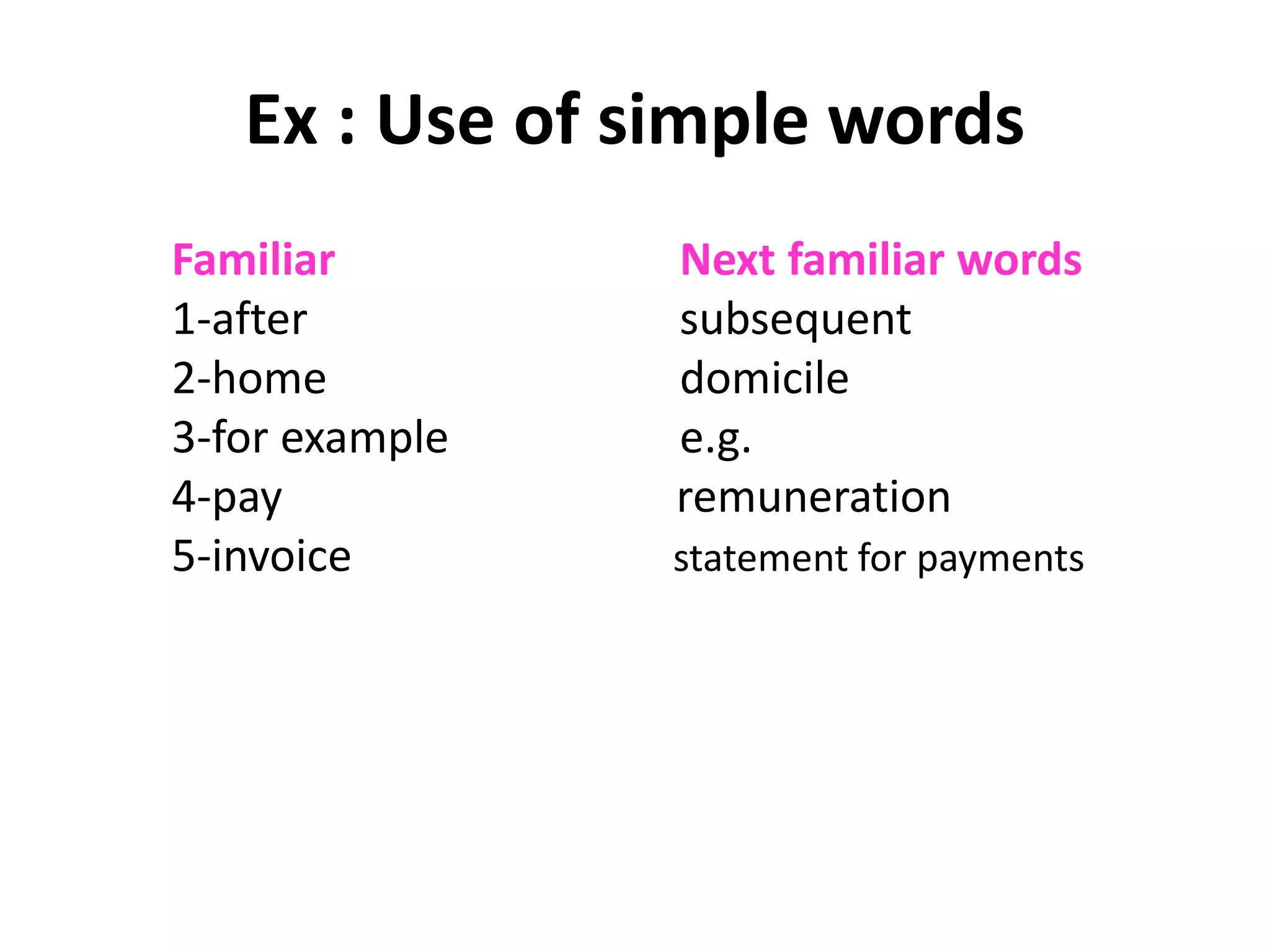
Ex : Use of simple words 
Familiar Next familiar words 
1-after subsequent 
2-home domicile 
3-for example e.g. 
4-pay remuneration 
5-invoice statement for payments
6.COURTESY 
. True courtesy involves being aware not only of the 
perspective of others, but also their feelings. 
Courtesy stems from a sincere you-attitude. 
.The following are suggestions for generating a 
courteous tone: 
Be sincerely tactful, thoughtful and appreciative. 
Use expressions that show respect for the others 
Choose nondiscriminatory expressions 
Be sincerely Tactful, Thoughtful and Appreciative 
Though few people are intentionally abrupt or blunt, 
these negative traits are common cause of 
discourtesy. 
avoid expression like those in the left hand column 
below; rephrase them as shown in the right-hand 
column
COURTESY 
The following are suggestions for 
generating a courteous tone; 
•Be sincere , tactful, thoughtful 
and appreciative 
•Omit expressions that hurt , 
irritate, or insult 
•Grant apologies graciously
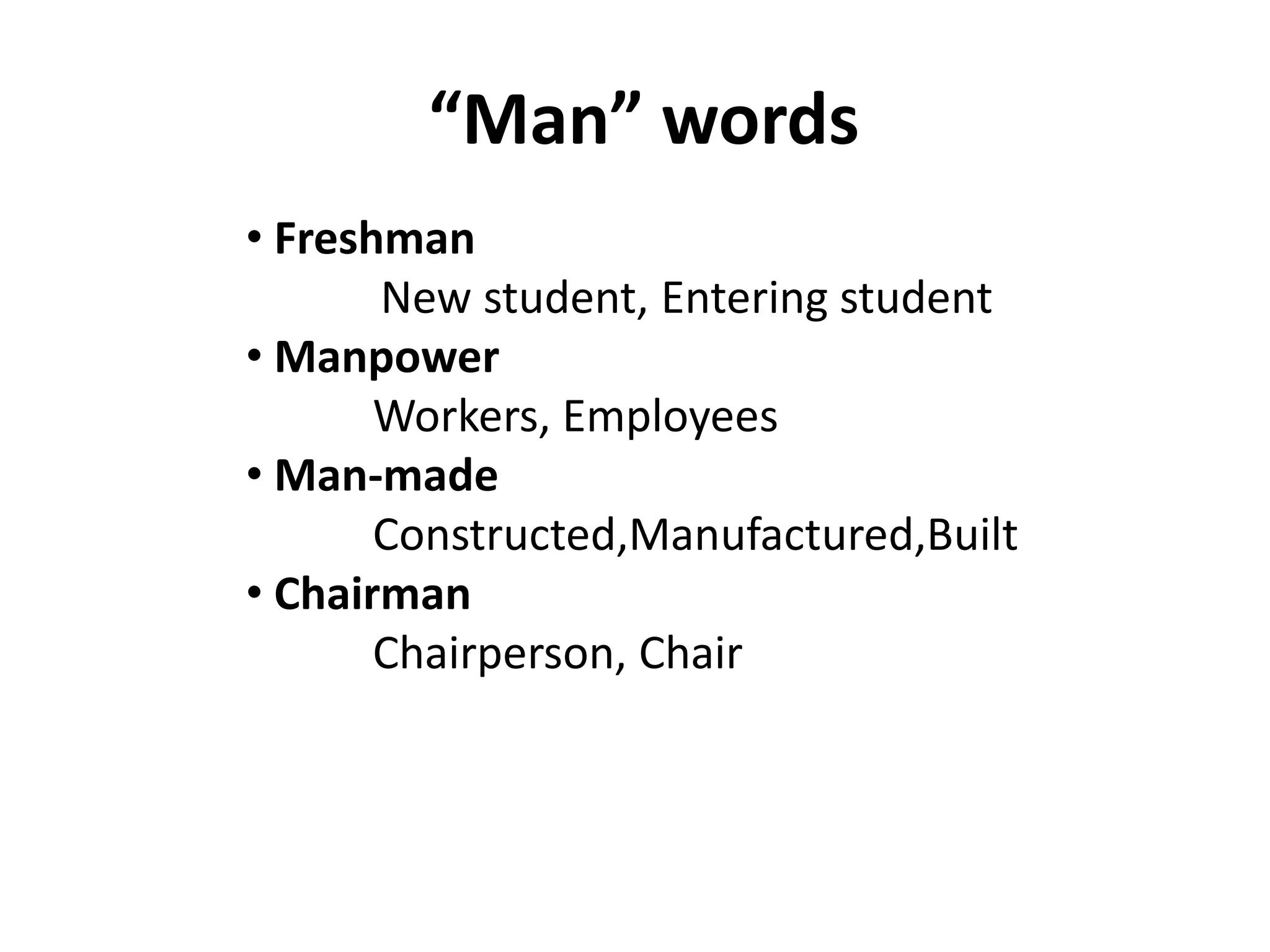
“Man” words 
• Freshman 
New student, Entering student 
• Manpower 
Workers, Employees 
• Man-made 
Constructed,Manufactured,Built 
• Chairman 
Chairperson, Chair
Names 
Treat each gender with respect. 
Examples: 
Ted Aprill and Ruth 
Ted and Ruth Aprill 
Mrs Aprill and Ted 
Ms. Aprill and Mr. Aprill
Titles 
Mr. 
Miss 
Mrs. 
Ms
7.CORRECTNESS 
. At the core of correctness is proper 
grammar, punctuation, and spelling. 
.Use the right level of language 
.Check accuracy of facts, figures and 
words 
.Maintain acceptable writing 
mechanics 
.Choose non discriminatory language 
.Use parallel language
Mo The right level of language, 
accuracy, and acceptable mechanics 
re Formal 
•Select the right level of language for your 
communication either formal or informal. 
•Realize that formal language is most often 
used in business communication. 
•Check for correct figures, facts, and words. 
•Apply the principles of accepted mechanics 
to your writing.
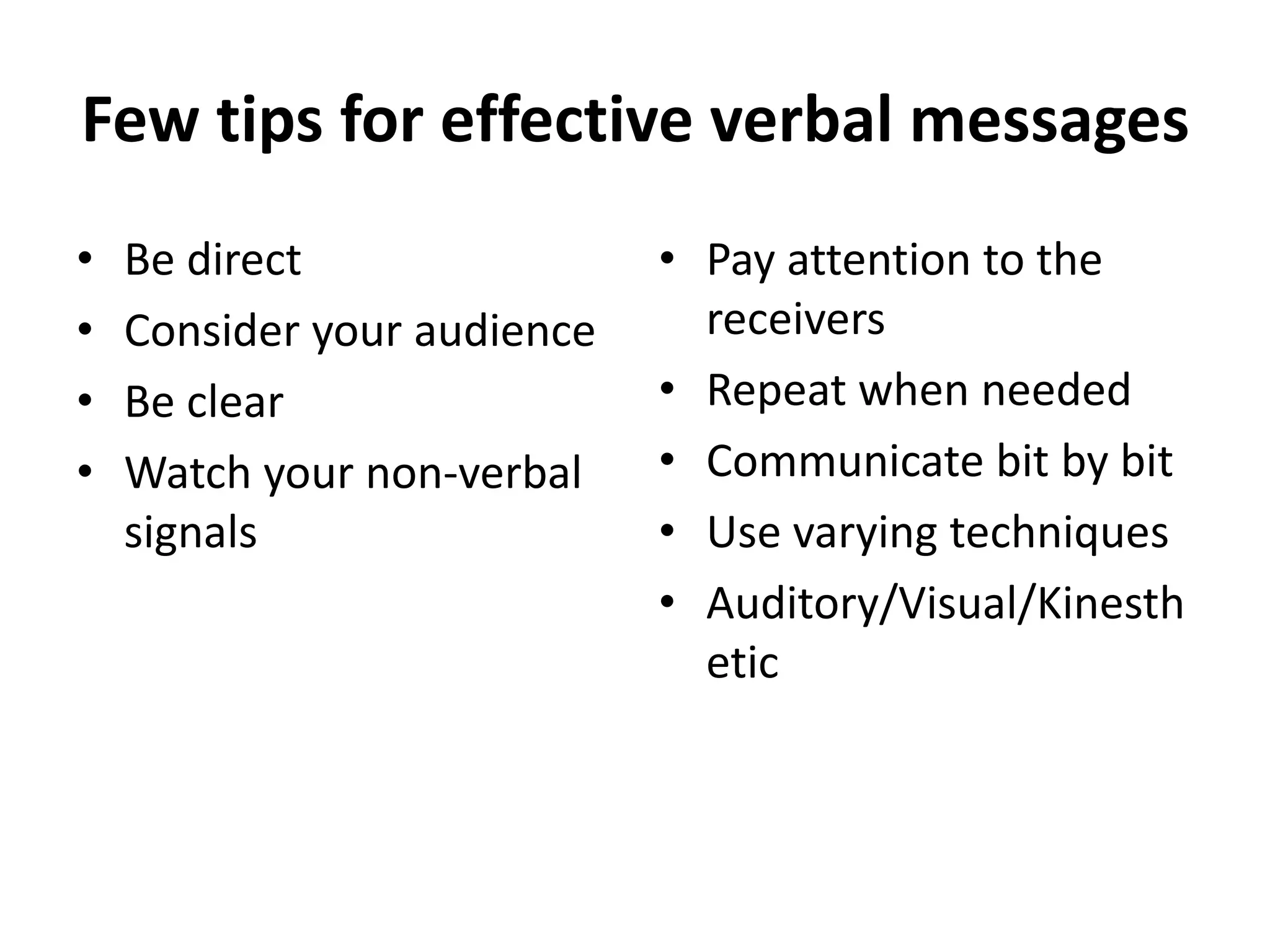
Few tips for effective verbal messages 
• Be direct 
• Consider your audience 
• Be clear 
• Watch your non-verbal 
signals 
• Pay attention to the 
receivers 
• Repeat when needed 
• Communicate bit by bit 
• Use varying techniques 
• Auditory/Visual/Kinesth 
etic
END

7 cs presntation (1)

  • 1.
    7 Cs ofCommunication Group Members: 1.Muhammad Sajid 2.Adnan Hassan 3.Haseeb Ahsan
  • 2.
    The seven C’s .When We talk about “ Effective Communication” one thing that comes in mind, what are the basic principles of “effective communication” . .These principles tells us how your message can becomes effective for your target group, .These principles also tell about style and importance of the message. .These principles commonly known as 7 C’s of effective communication.
  • 3.
    • COMPLETENESS •CONCISENESS • CONSIDERATION • CLARITY • CONCRETENESS • COURTESY • CORRECTNESS 3 7 Cs 0F Communication
  • 4.
    1.COMPLETENESS Business messageis complete when it contains all facts the reader or listener needs for the reaction you desire. For completeness, keep the following things in mind; Provide all necessary information Answer all questions asked Give something extra when desirable
  • 5.
    COMPLETENESS •Answer allquestions that are asked •Give something extra when desirable •Check for five Ws & one H –Who –What –When –Where –Why and –H
  • 6.
    Provide All NecessaryInformation Answering the five W’s helps make messages clear: Who, What, When, Where, and Why. Answer All Questions Asked Look for questions: some may even appear buried within a paragraph. Locate them and then answer precisely. Give Something Extra, When Desirable Use your good judgment in offering additional material if the sender’s message was incomplete. 6
  • 7.
    2.CONCISENESS 1. Eliminatewordy expressions 2. Include only relevant statements be focused Shorten & avoid long explanations 3. Avoid unnecessary repetitions use short forms the second time use pronouns
  • 8.
    CONCISE o Dueto the fact that o Employed the use of o Basic fundamentals Completely eliminate o Alternative choices o Actual experience o Connected together o Final result o Prove conclusively o In as few words as possible o Because o Used o Fundamentals o Eliminate o Alternatives o Experience o Connected o Result o Prove o Concisely
  • 9.
    3.CONSIDERATION Consideration means– To consider the receiver’s Interest/Intention Consideration means preparing every message with the message receivers in mind; try to put yourself in their place. • You are considerate • you do not lose your temper •the thoughtful consideration is also called “you-attitude”.
  • 10.
    CONSIDERATION .Focus onYOU instead of I & WE .Show reader benefit & interest .Emphasize on positive & pleasant .Apply integrity & ethics
  • 11.
    You attitude “Youwill be able to shop in the evening with the extended hours.” Readers may react positively when benefit are shown to them. Always try to address his/her need and want.
  • 12.
    4.CONCRETENESS .It meansthat message should be specific instead of general. .Misunderstanding of words creates problems for both parties (sender and receiver). .when you talk to your client always use facts and figures instead of generic or irrelevant information.
  • 13.
    CONCRETENESS .use specificfacts and figures .Put action into words .Choose vivid image building words by comparison & figurative language .Use more adjectives and adverbs General He is very intelligent student of class and stood first in the class. Concrete Ali’s GPA in B.Sc Electrical Engineering 2k3-f session was 3.95/4.0, he stood first in his class
  • 14.
    Put Action inYour Verbs Verbs can activate other words and help make your sentences alive, more vigorous.  Use active rather than passive verbs.  Put action in your verbs rather than nouns
  • 15.
    5.CLARITY In effectivebusiness communication the message should be very much clear. So that reader can understand it easily. You should always Choose precise words. Always choose familiar and easy words. Construct effective sentences and paragraphs
  • 16.
    Construct Effective Sentencesand Paragraphs In business communication always use precise words rather longer statements. If you have a choice between long words and shorter one, always use shorter one. You should try your level best to use familiar/easy to understand words so that your reader will quickly under stand it .Length .Unity .Coherence .Emphasis
  • 17.
    Ex : Useof simple words Familiar Next familiar words 1-after subsequent 2-home domicile 3-for example e.g. 4-pay remuneration 5-invoice statement for payments
  • 18.
    6.COURTESY . Truecourtesy involves being aware not only of the perspective of others, but also their feelings. Courtesy stems from a sincere you-attitude. .The following are suggestions for generating a courteous tone: Be sincerely tactful, thoughtful and appreciative. Use expressions that show respect for the others Choose nondiscriminatory expressions Be sincerely Tactful, Thoughtful and Appreciative Though few people are intentionally abrupt or blunt, these negative traits are common cause of discourtesy. avoid expression like those in the left hand column below; rephrase them as shown in the right-hand column
  • 19.
    COURTESY The followingare suggestions for generating a courteous tone; •Be sincere , tactful, thoughtful and appreciative •Omit expressions that hurt , irritate, or insult •Grant apologies graciously
  • 20.
    “Man” words •Freshman New student, Entering student • Manpower Workers, Employees • Man-made Constructed,Manufactured,Built • Chairman Chairperson, Chair
  • 21.
    Names Treat eachgender with respect. Examples: Ted Aprill and Ruth Ted and Ruth Aprill Mrs Aprill and Ted Ms. Aprill and Mr. Aprill
  • 22.
  • 23.
    7.CORRECTNESS . Atthe core of correctness is proper grammar, punctuation, and spelling. .Use the right level of language .Check accuracy of facts, figures and words .Maintain acceptable writing mechanics .Choose non discriminatory language .Use parallel language
  • 24.
    Mo The rightlevel of language, accuracy, and acceptable mechanics re Formal •Select the right level of language for your communication either formal or informal. •Realize that formal language is most often used in business communication. •Check for correct figures, facts, and words. •Apply the principles of accepted mechanics to your writing.
  • 25.
    Few tips foreffective verbal messages • Be direct • Consider your audience • Be clear • Watch your non-verbal signals • Pay attention to the receivers • Repeat when needed • Communicate bit by bit • Use varying techniques • Auditory/Visual/Kinesth etic
  • 26.