Table of Contents
• How is work, power and energy related?
• What is energy?
– 2 types
• Kinetic
• Potential
– 2 types
» Gravitational
» Elastic
Table of Contents
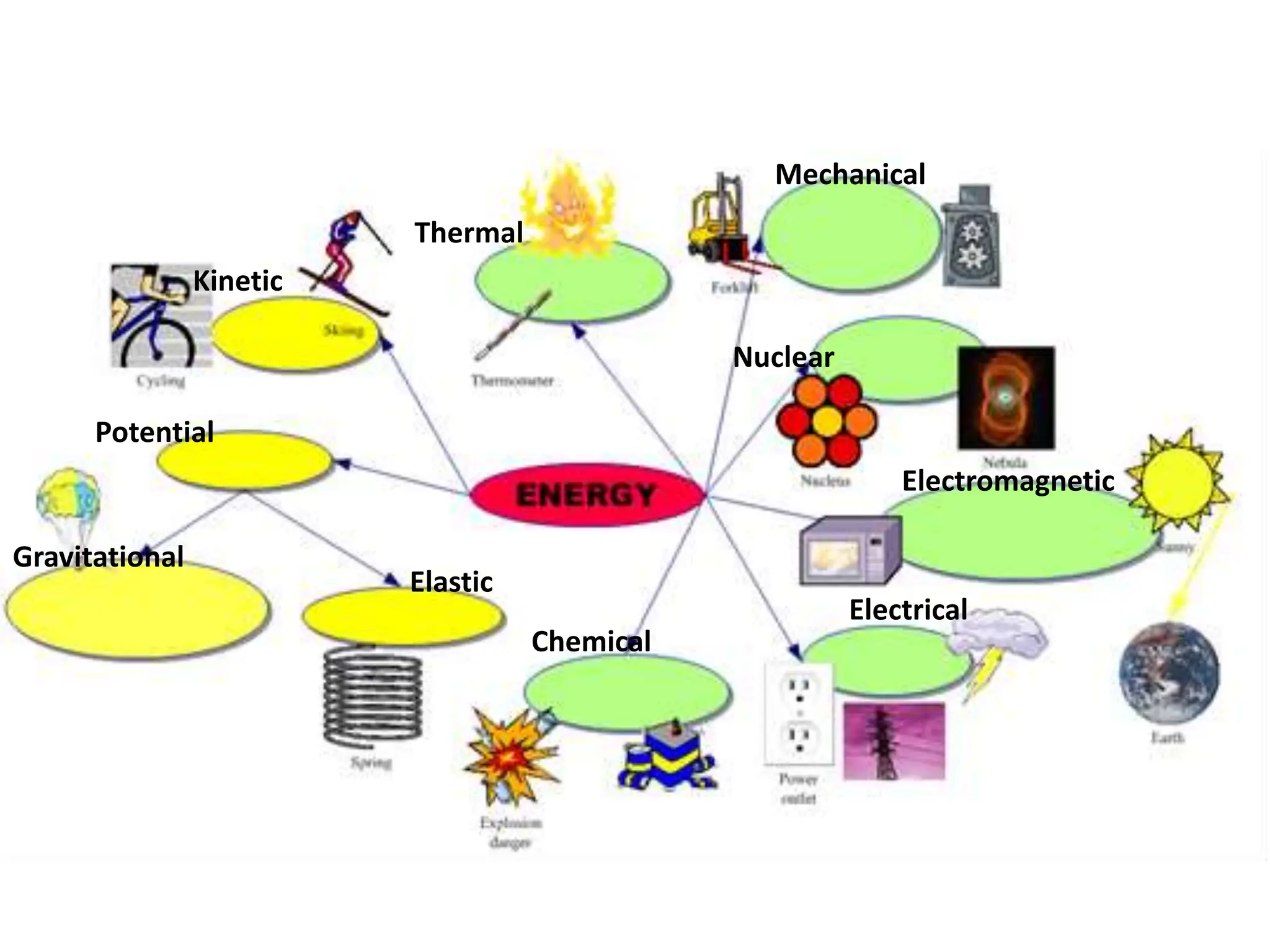
• What are other forms of energy?
1. Mechanical
2. Thermal
3. Electrical
4. Chemical
5. Nuclear
6. Electromagnetic
Work, Power and Energy
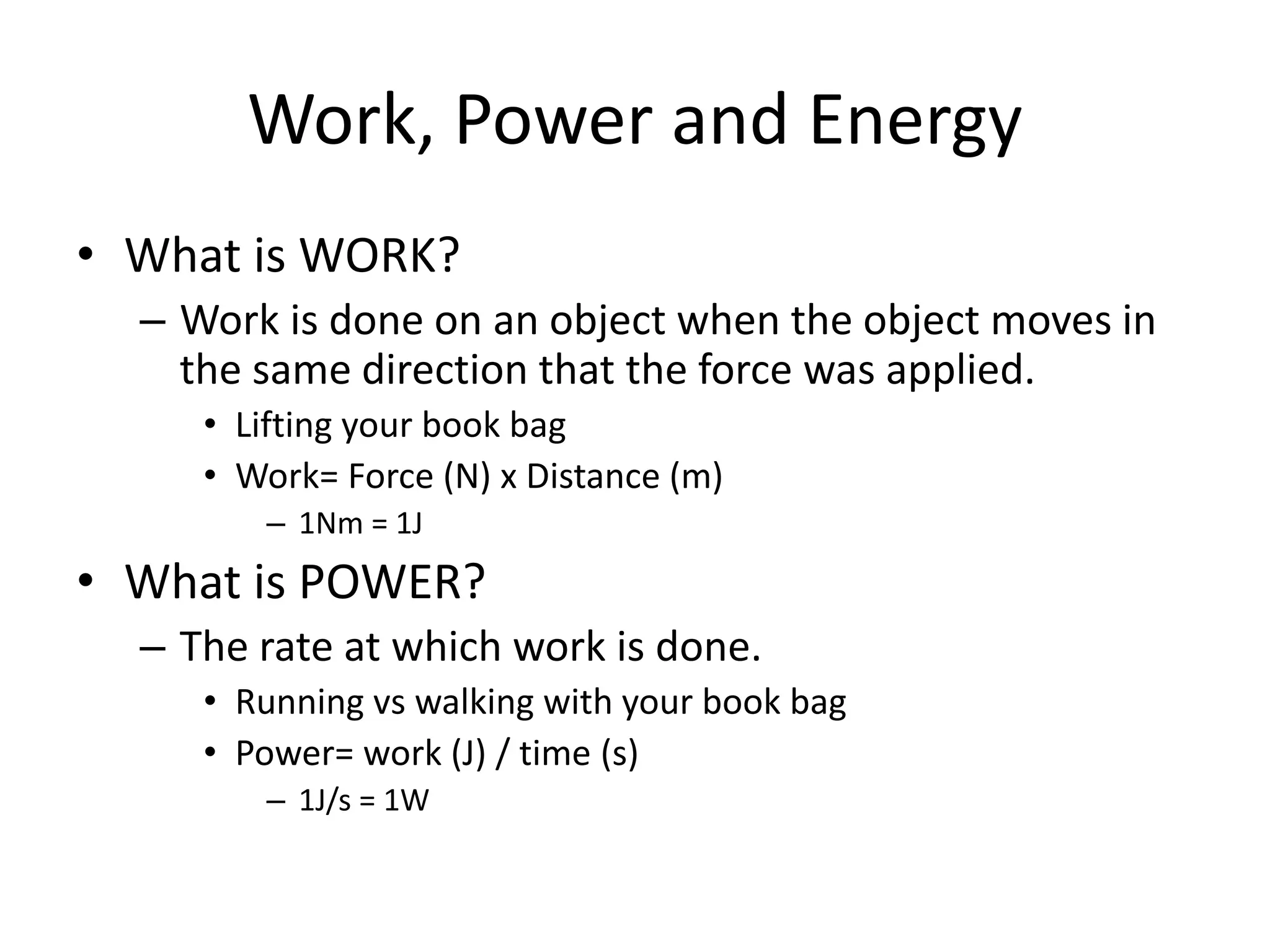
• What is WORK?
– Work is done on an object when the object moves in
the same direction that the force was applied.
• Lifting your book bag
• Work= Force (N) x Distance (m)
– 1Nm = 1J
• What is POWER?
– The rate at which work is done.
• Running vs walking with your book bag
• Power= work (J) / time (s)
– 1J/s = 1W
Work, Power, Energy
• Energy: The ability to do work or cause a
change.
– Whenever work is done energy is transferred to
that object.
– Power is the rate at which the energy is
transferred.
• What do YOU think the unit for energy is?
JOULES YAY!
Two Types of Energy
1. Kinetic Energy
2. Potential Energy
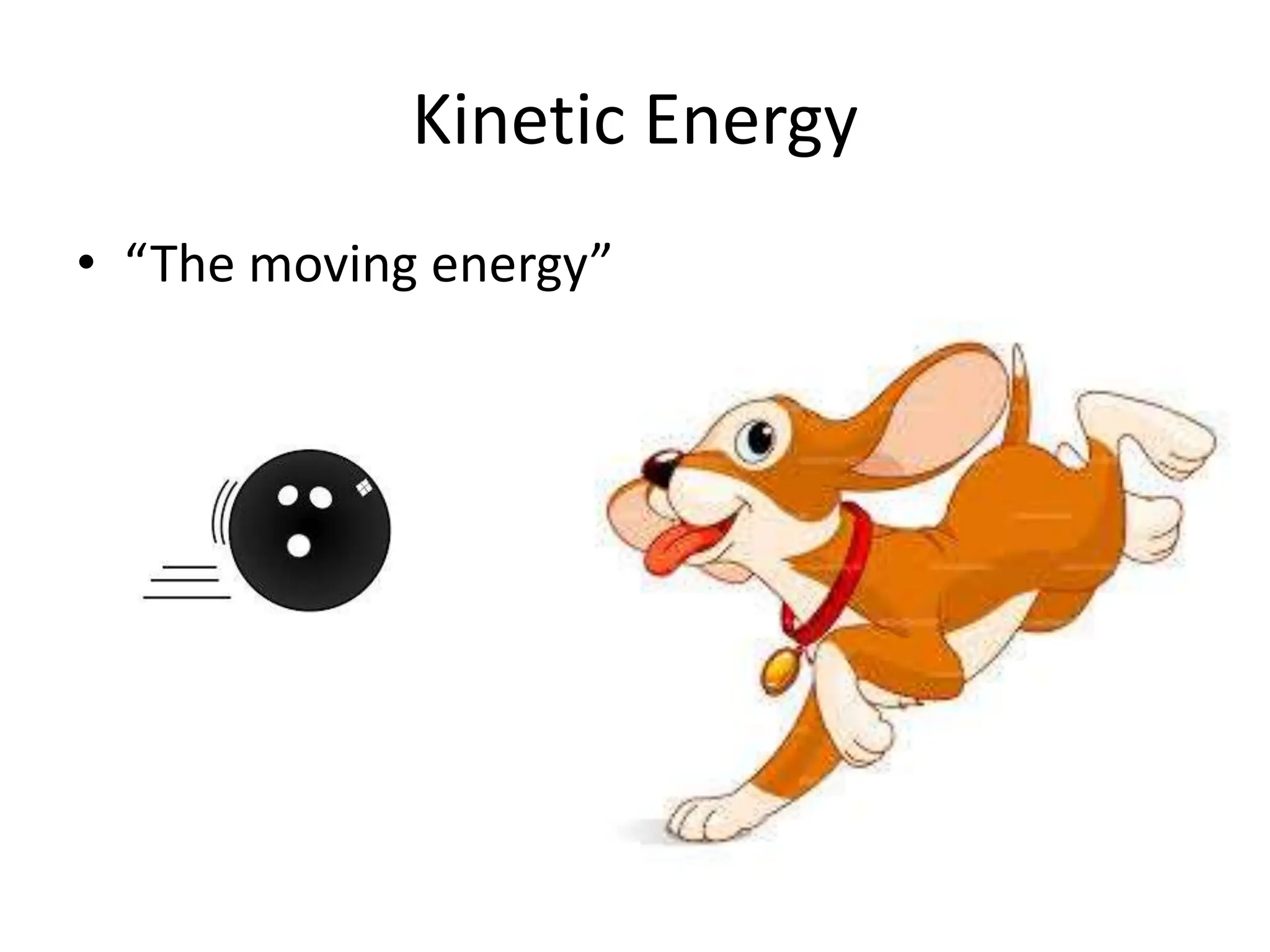
Kinetic Energy
• “The moving energy”
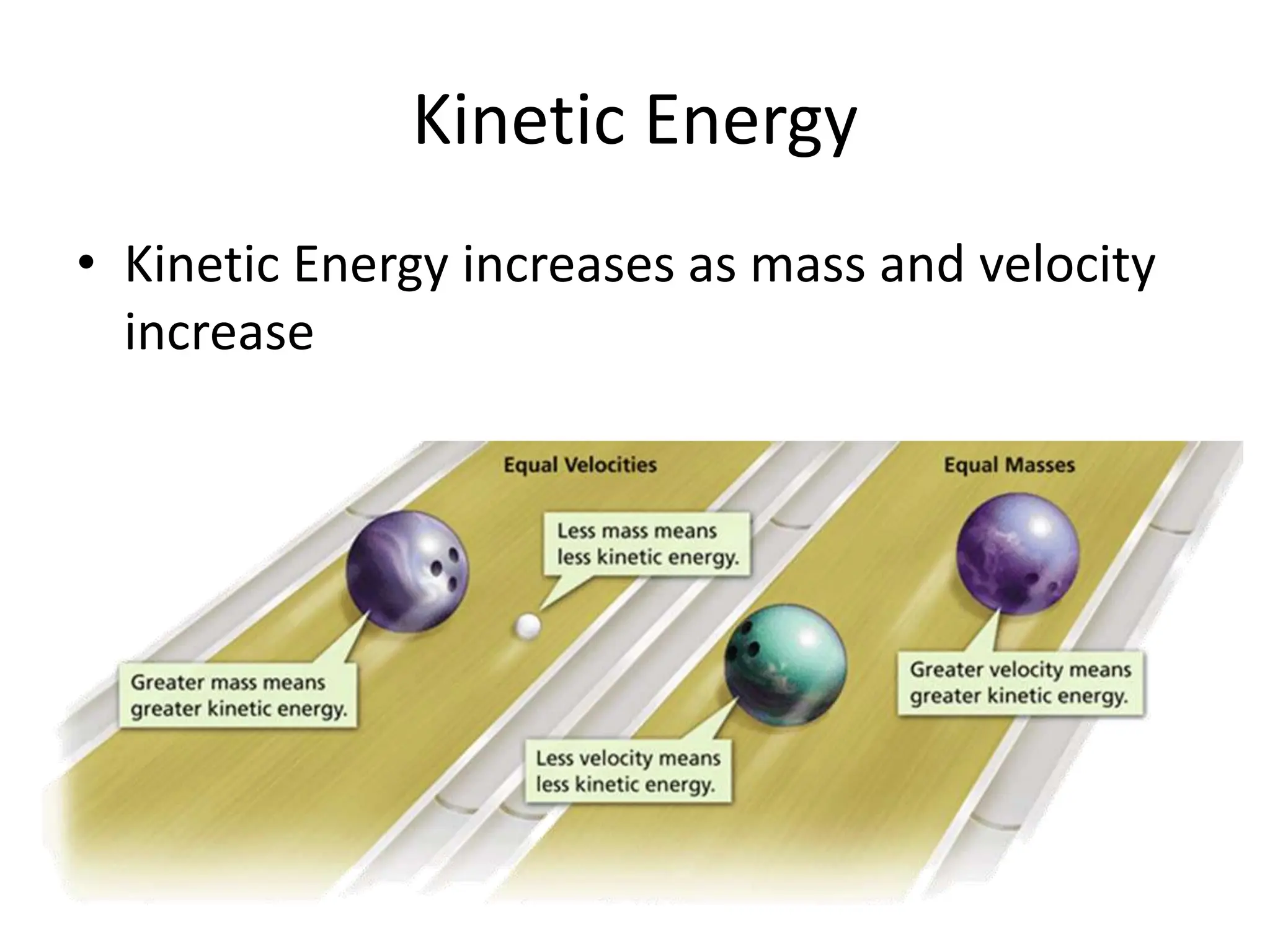
Kinetic Energy
• Kinetic Energy increases as mass and velocity
increase
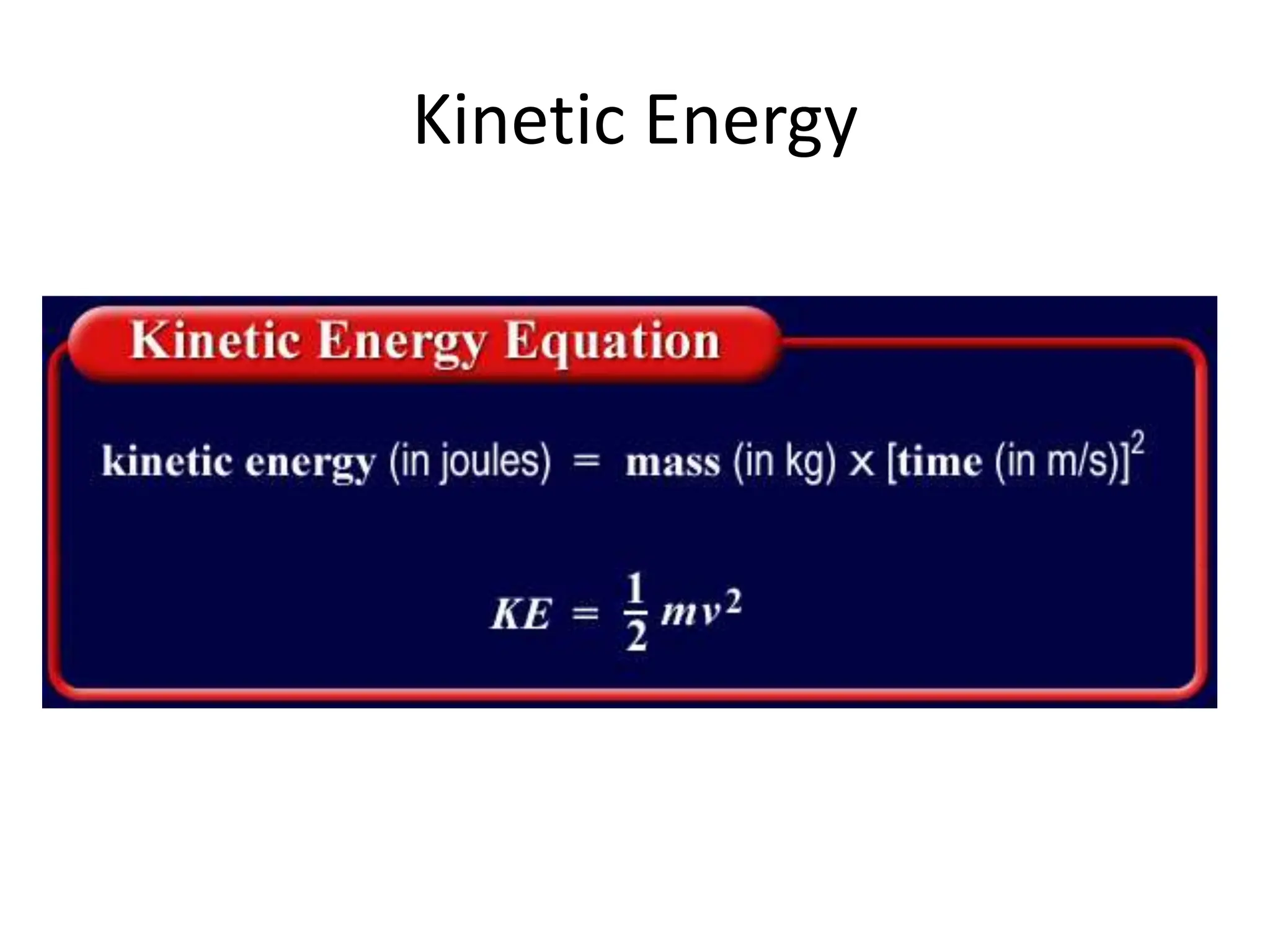
Kinetic Energy
Kinetic Energy
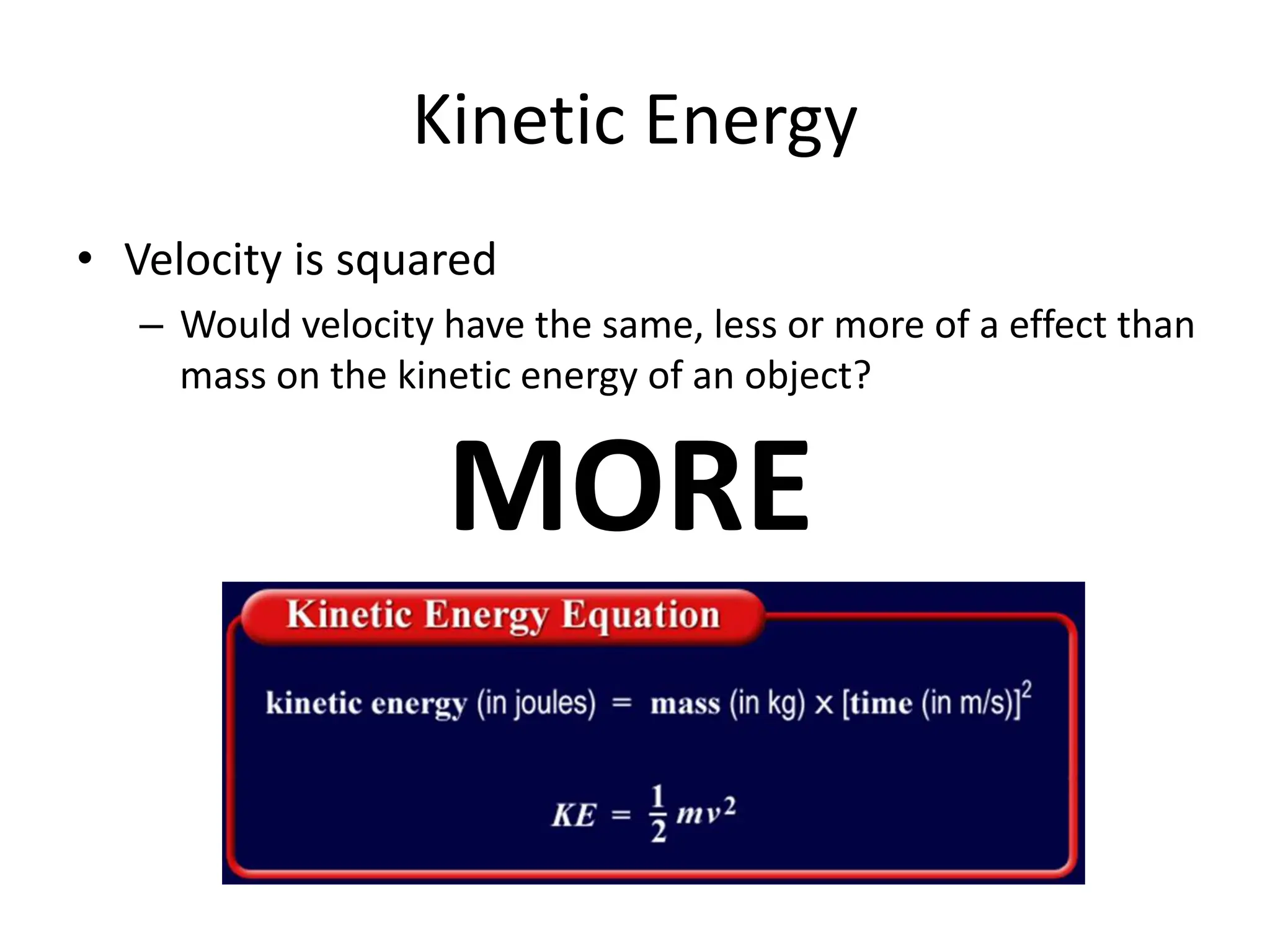
• Velocity is squared
– Would velocity have the same, less or more of a effect than
mass on the kinetic energy of an object?
MORE
Kinetic Energy Example
• 1. Determine the kinetic energy of a 625-kg roller coaster car
that is moving with a speed of 18.3 m/s.
• 2. If the roller coaster car in the above problem were moving
with twice the speed, then what would be its new kinetic
energy?
• An object can have energy even when its not
moving!
– Stored energy based off of the objects shape or
position
Potential Energy
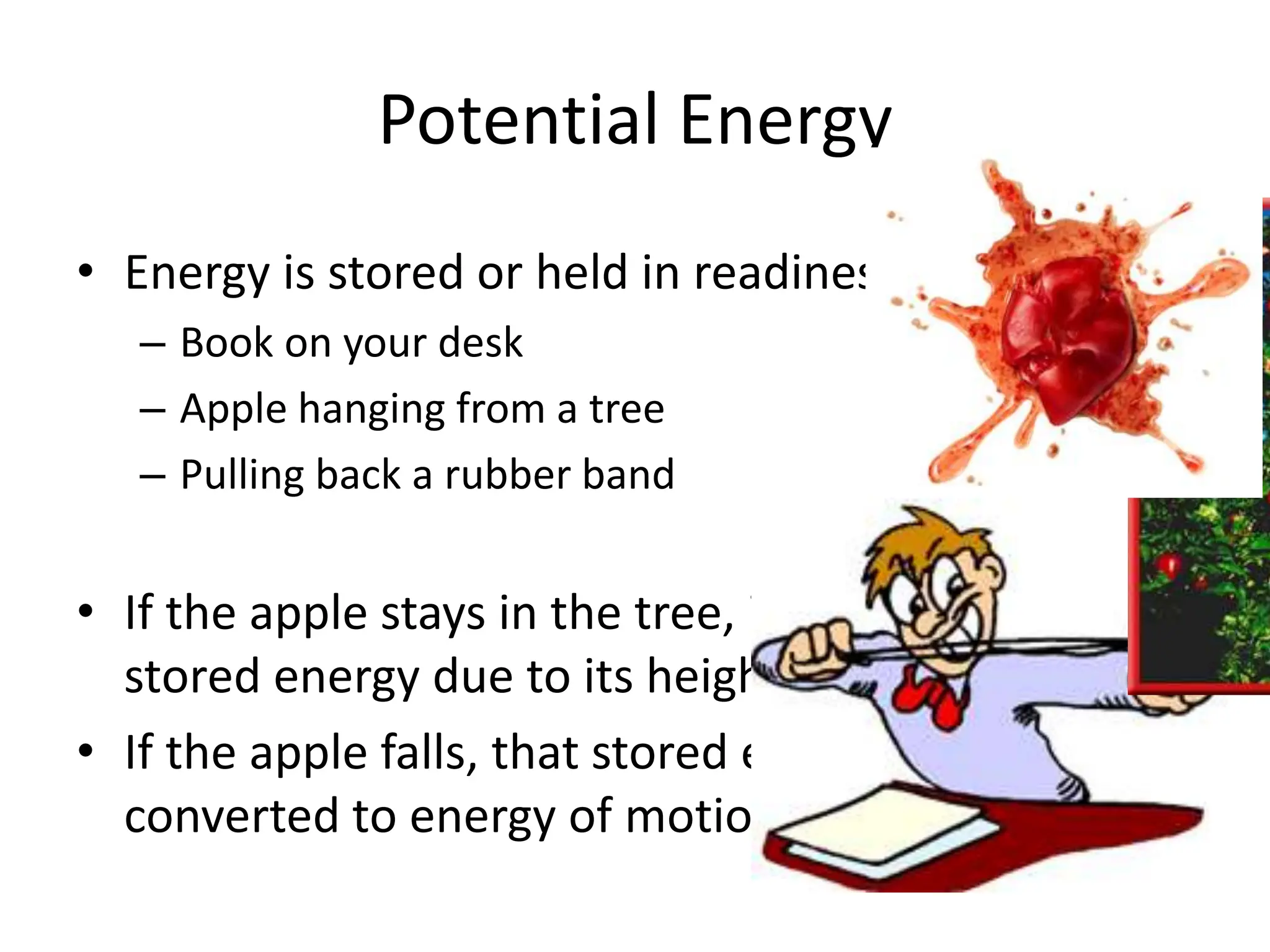
• Energy is stored or held in readiness
– Book on your desk
– Apple hanging from a tree
– Pulling back a rubber band
• If the apple stays in the tree, it will keep the
stored energy due to its height above the ground.
• If the apple falls, that stored energy of position is
converted to energy of motion.
Types of Potential Energy
1. Gravitational Potential Energy (GPE)
2. Elastic Potential Energy
Gravitational Potential Energy (GPE)
• GPE: The potential energy related to an
objects position above earths surface.
– Lifting your book on top of your desk = the work
you did to lift it
• Distance the book was moved: height
• Force you used to lift it: weight
Gravitational Potential Energy (GPE)
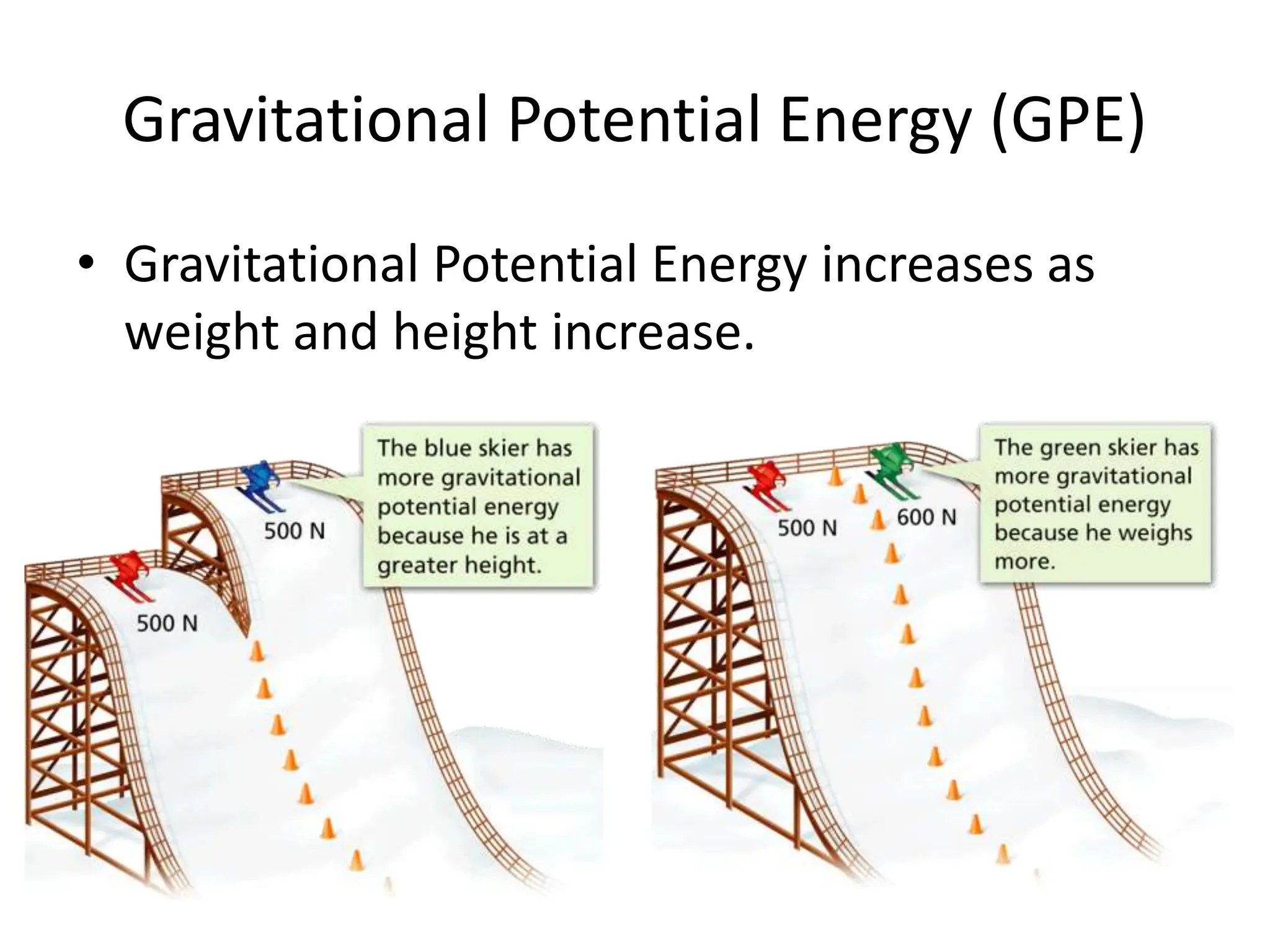
• Gravitational Potential Energy increases as
weight and height increase.
Gravitational Potential Energy (GPE)
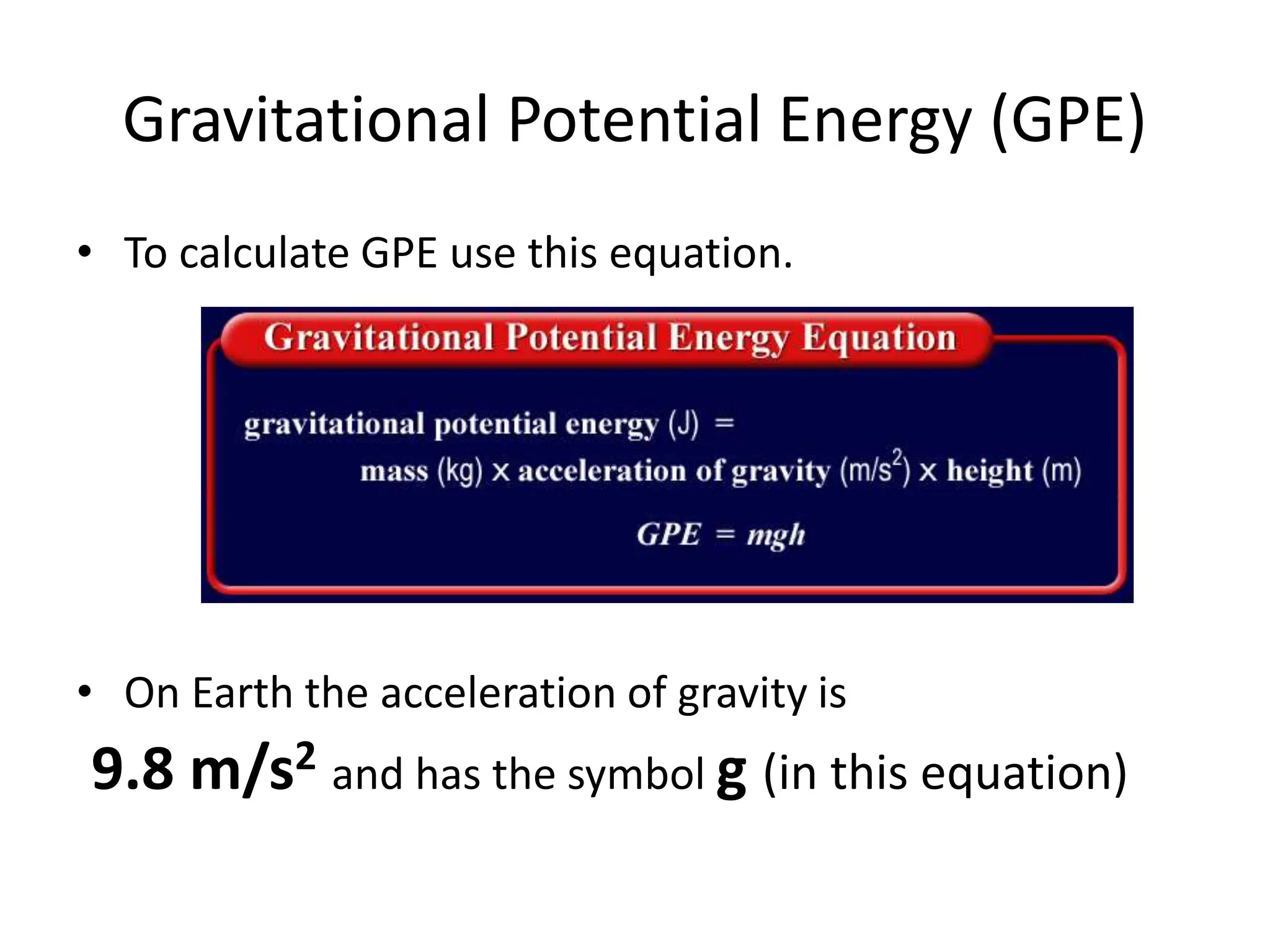
• To calculate GPE use this equation.
• On Earth the acceleration of gravity is
9.8 m/s2 and has the symbol g (in this equation)
Changing Gravitational Potential
Energy (GPE)
• The Gravitational potential energy of an object
can be increased by increasing the height.
• If the objects are at the same height then
what?
– The object with the larger mass would have more
gravitational pull.
Elastic Potential Energy
• Elastic Potential Energy: potential energy
associated with objects that can be stretched
or compressed.
– Pulling back a rubber band
– Winding up a toy
Elastic Potential Energy
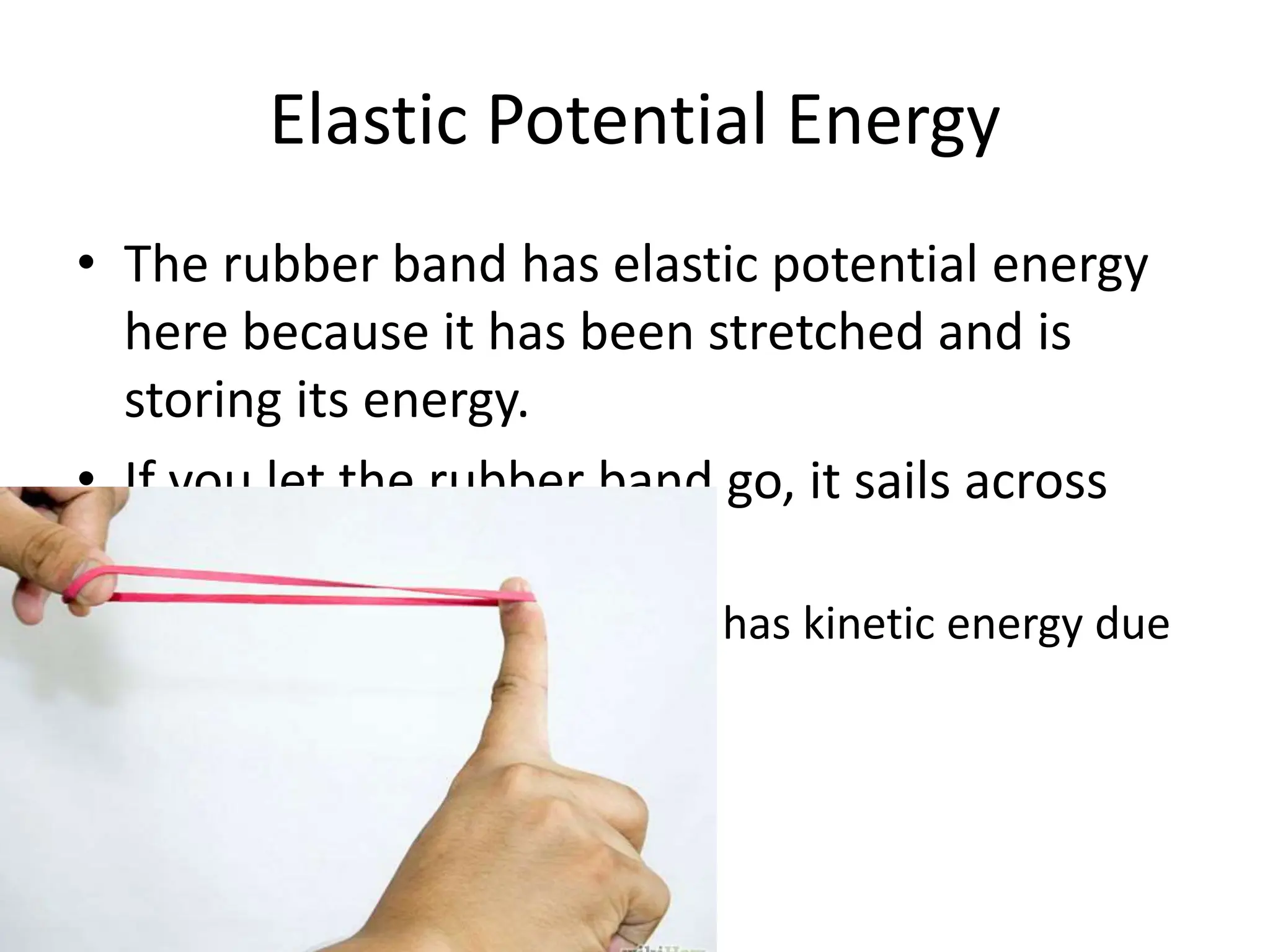
• The rubber band has elastic potential energy
here because it has been stretched and is
storing its energy.
• If you let the rubber band go, it sails across
the room.
– As it flies through the air it has kinetic energy due
to its motion.
Remember this!
• Energy comes in MANY different forms!!!!
Mechanical Energy
• What is Mechanical Energy?
–
– Motion
Mechanical = Potential + Kinetic
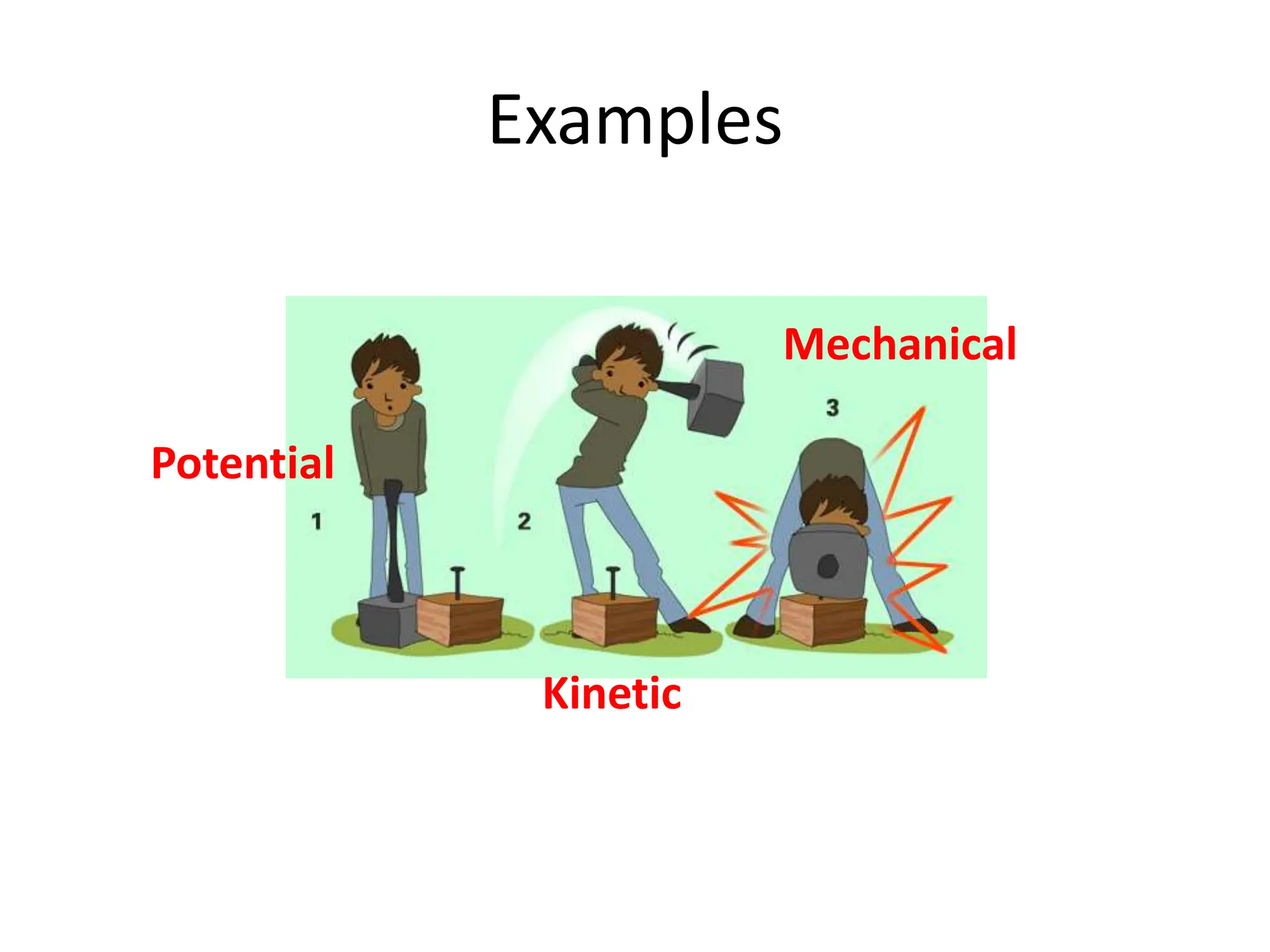
Examples
Potential
Kinetic
Mechanical
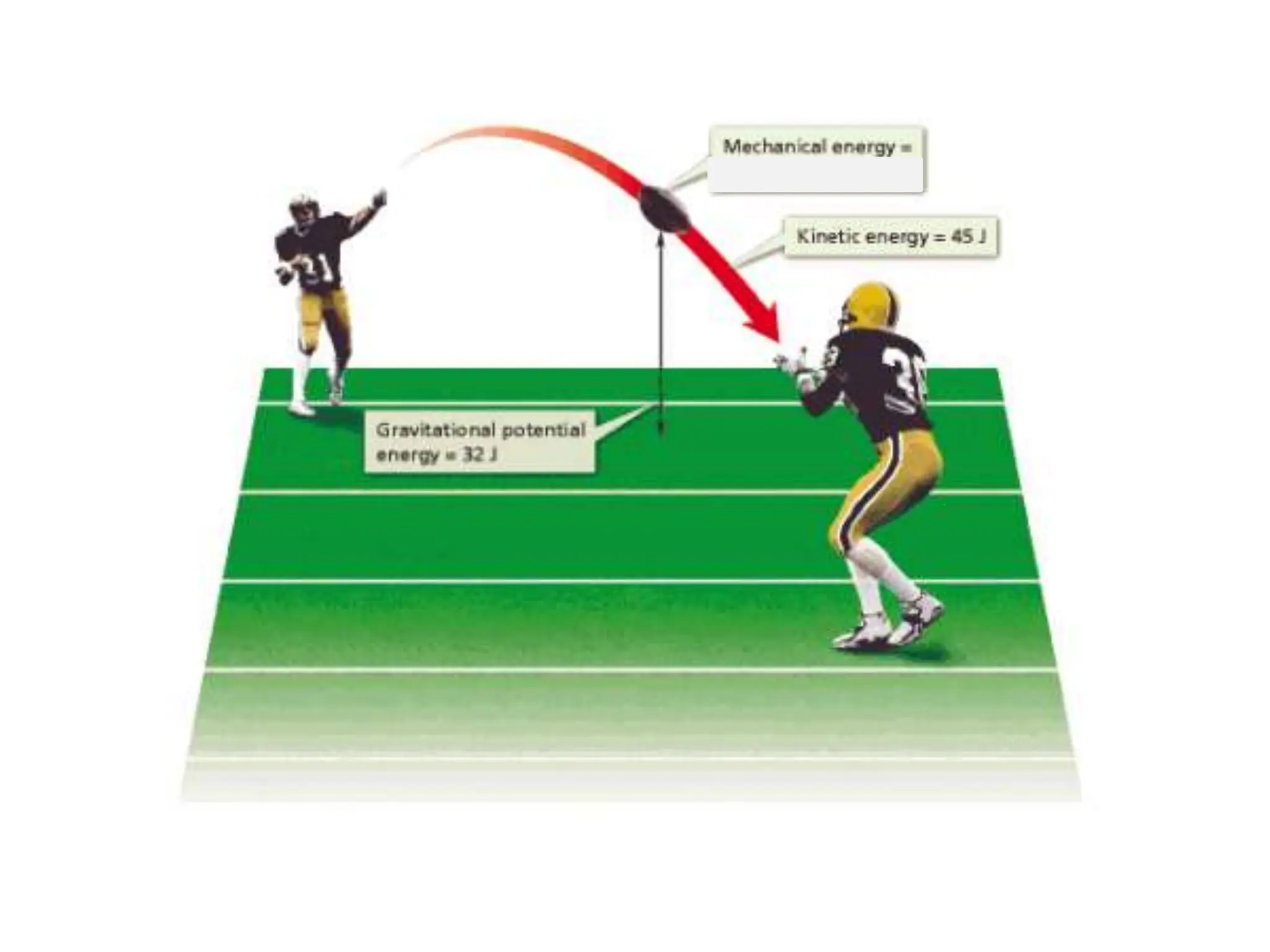
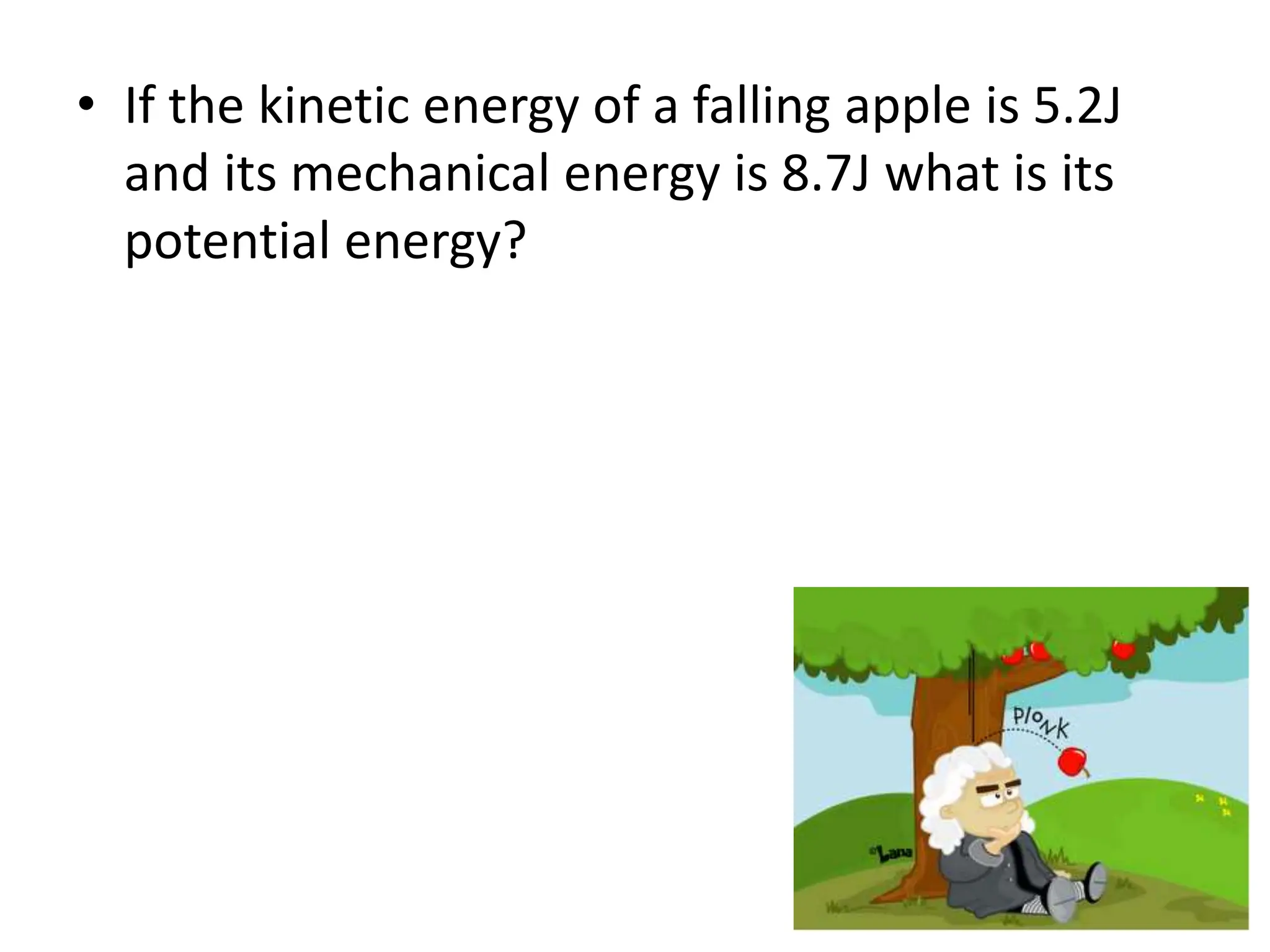
• If the kinetic energy of a falling apple is 5.2J
and its mechanical energy is 8.7J what is its
potential energy?
Potential = Kinetic
Kinetic = Potential
Mechanical Energy
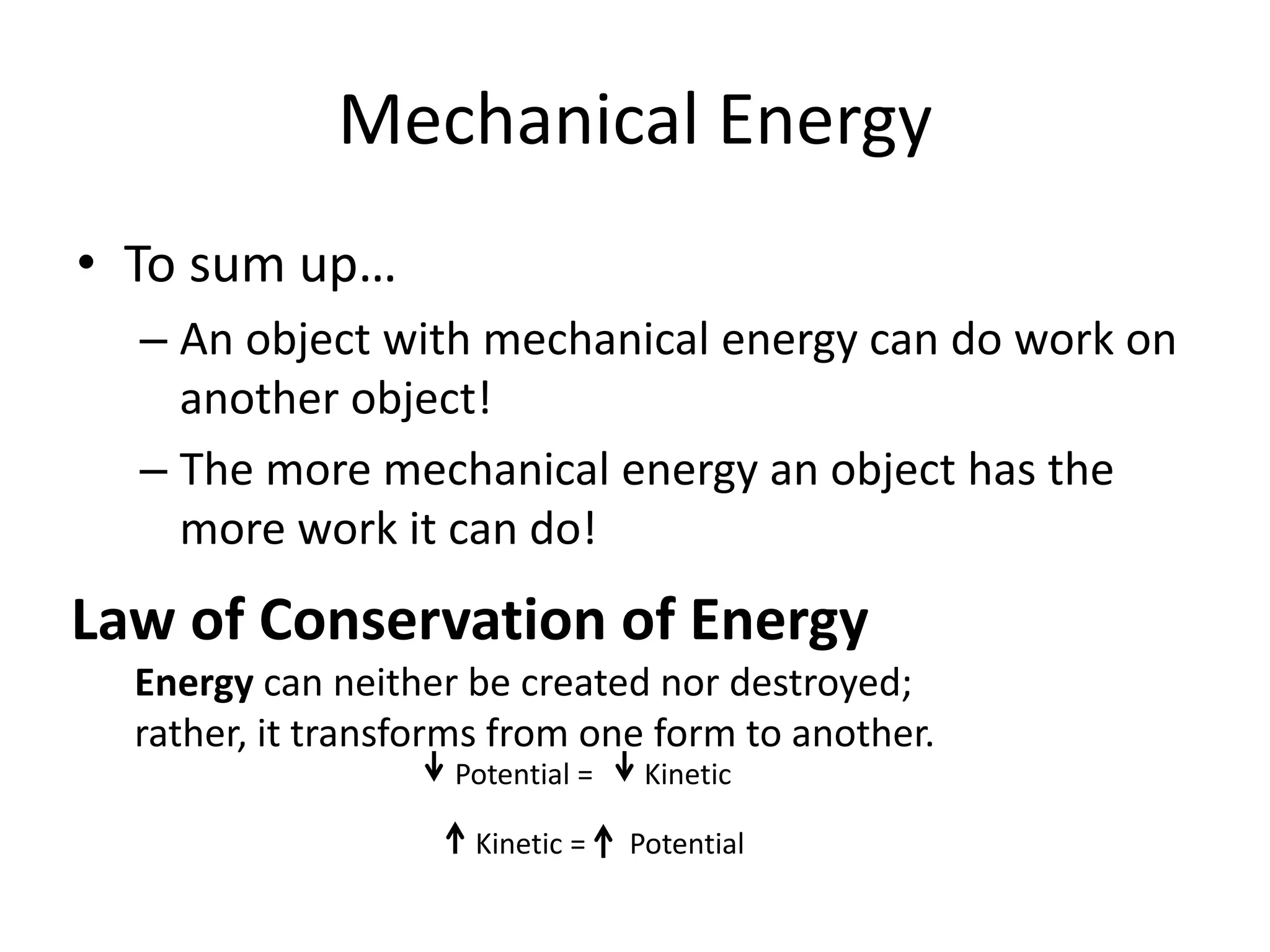
• To sum up…
– An object with mechanical energy can do work on
another object!
– The more mechanical energy an object has the
more work it can do!
Law of Conservation of Energy
Energy can neither be created nor destroyed;
rather, it transforms from one form to another.
Thermal Energy
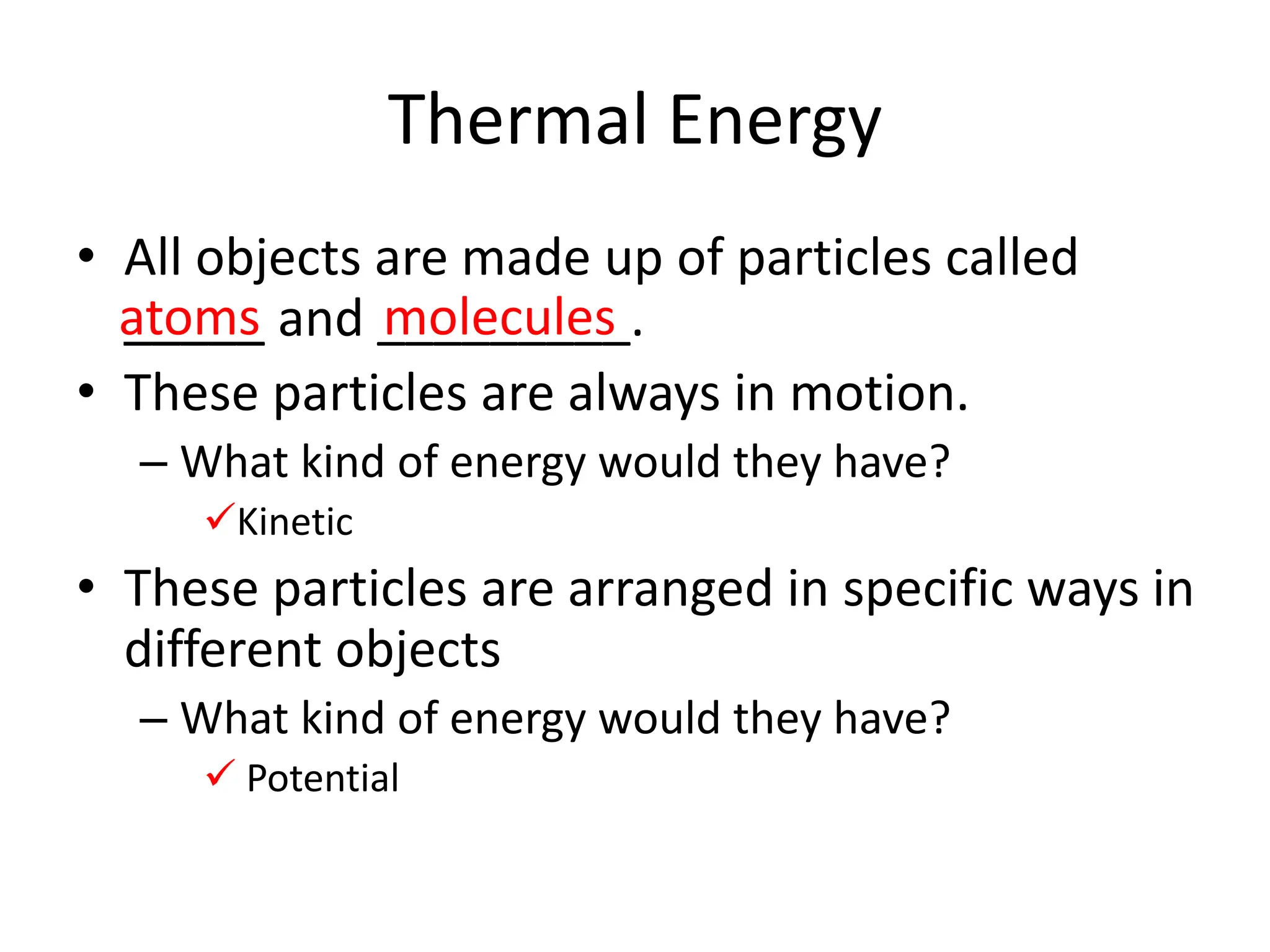
• All objects are made up of particles called
_____ and _________.
• These particles are always in motion.
– What kind of energy would they have?
Kinetic
• These particles are arranged in specific ways in
different objects
– What kind of energy would they have?
 Potential
atoms molecules
Thermal Energy
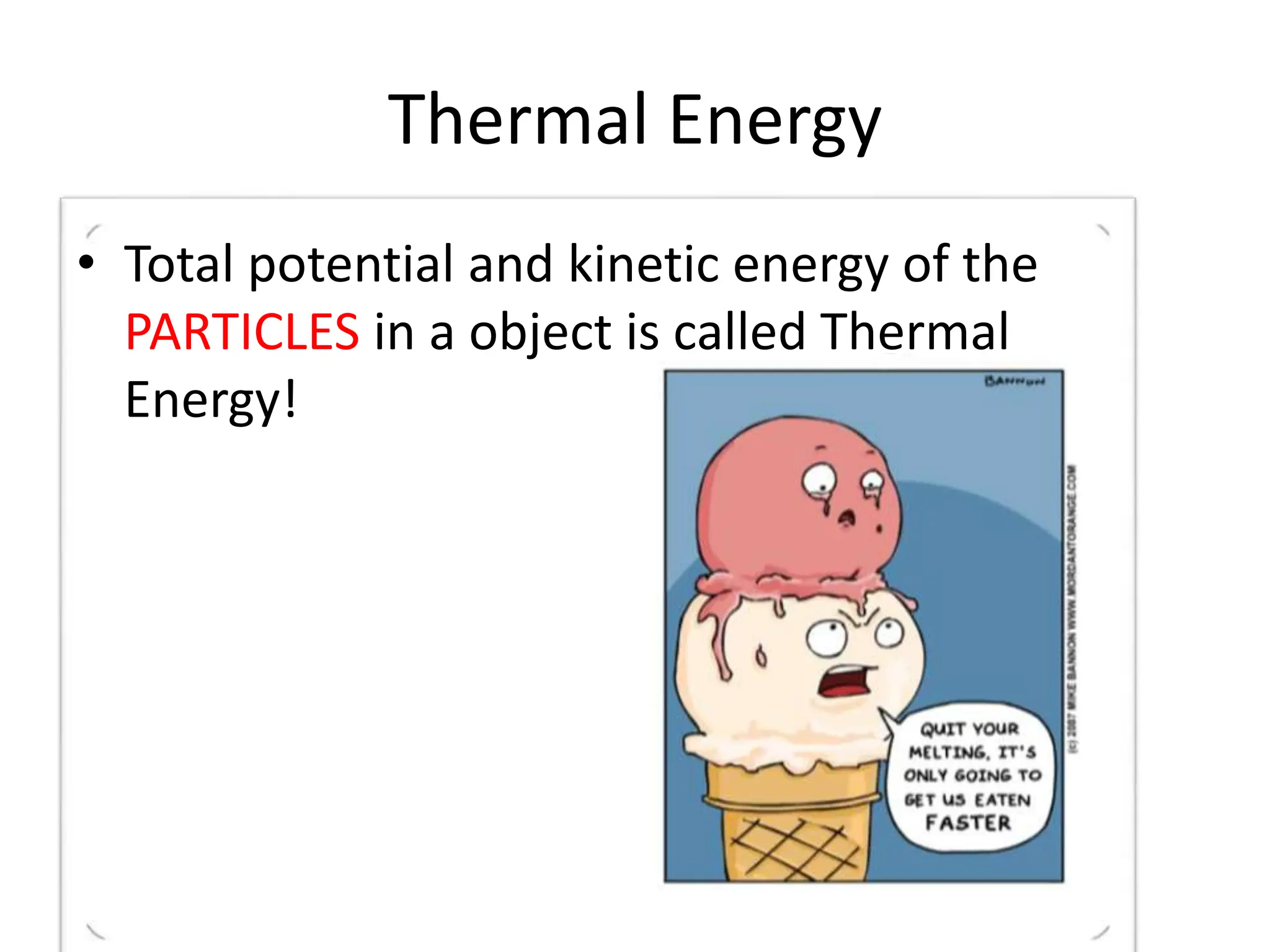
• Total potential and kinetic energy of the
PARTICLES in a object is called Thermal
Energy!
Electrical Energy
• What do you think this is?
– Again this is energy of particles!
– The energy of tiny charged particles called…..
– Lets think of some examples....
ELECTRONS!!!!
Chemical Energy
• Chemical compounds are made up of _____
and _________.
• Bonds hold these atoms and molecules
together.
• These bonds have Chemical Energy!!!!
• Chemical energy can be released when these
bonds break!!!
atoms
molecules
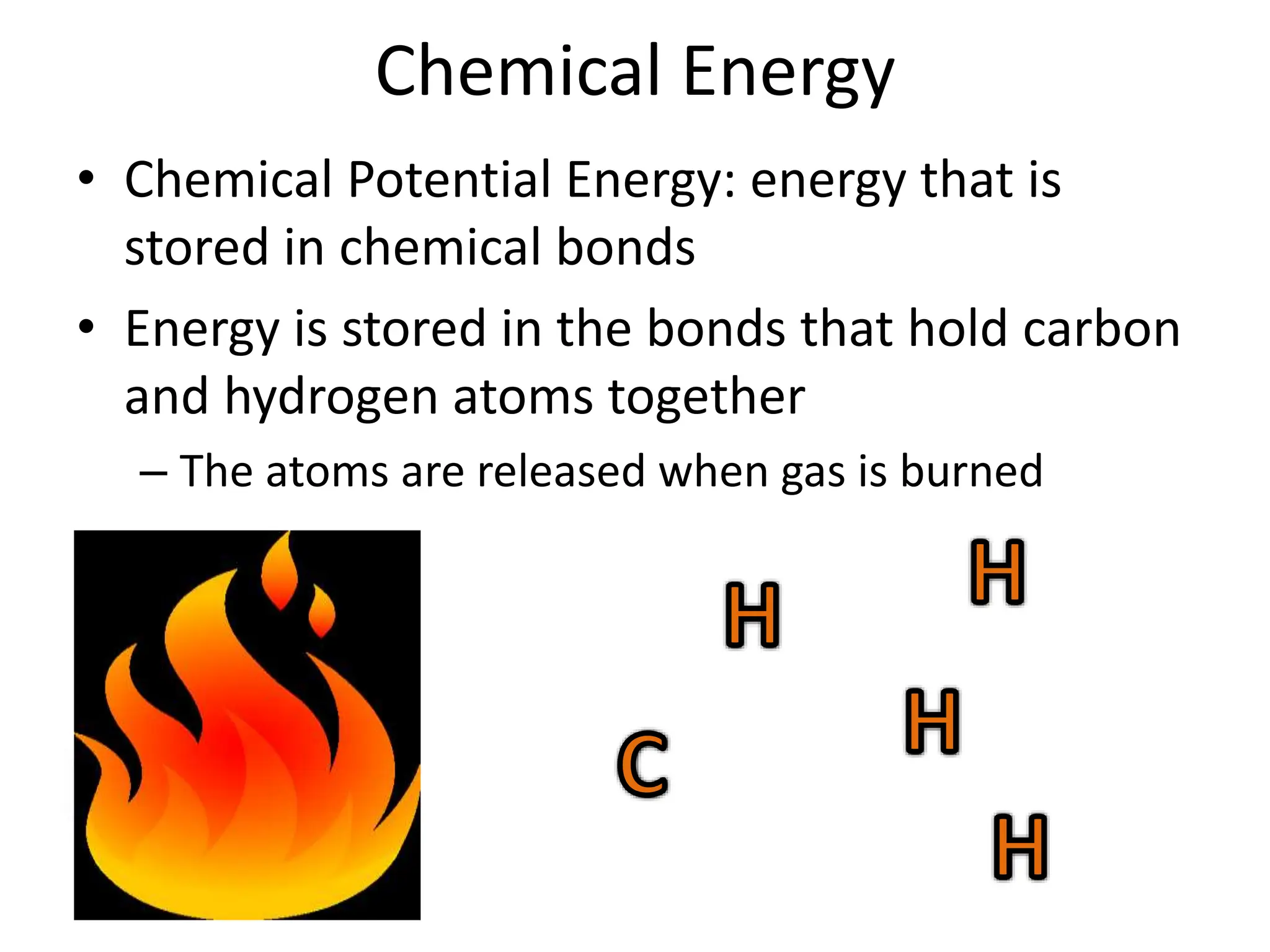
Chemical Energy
• Chemical Potential Energy: energy that is
stored in chemical bonds
• Energy is stored in the bonds that hold carbon
and hydrogen atoms together
– The atoms are released when gas is burned
Nuclear Energy
• Potential or Kinetic?
• Where is the energy stored?
– NUCLEUS!
• When is the energy released?
– NUCLEAR REACTIONS!
• 2 kinds
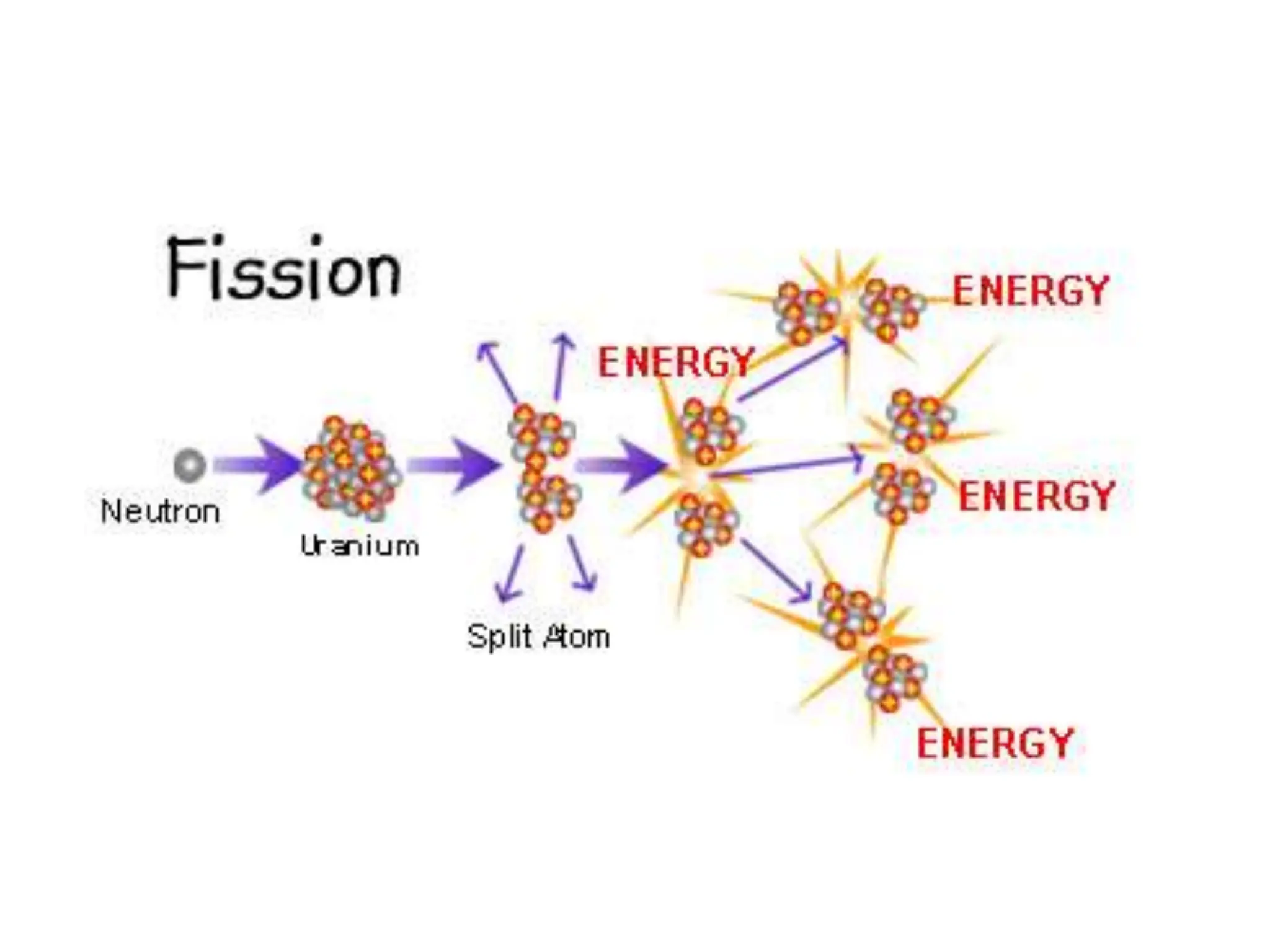
1. Nuclear Fission
• Example?
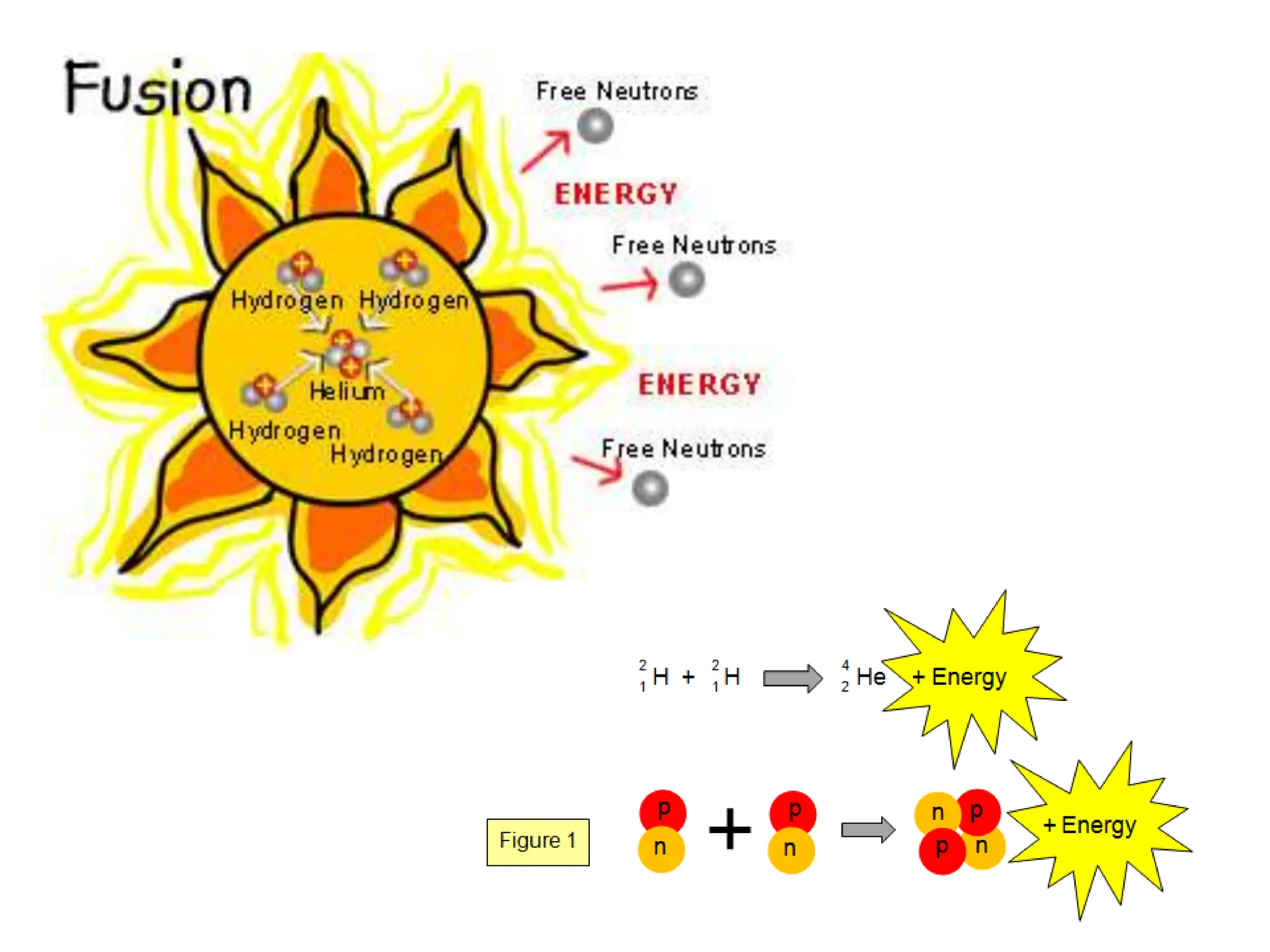
2. Nuclear Fusion
• Example?
Electromagnetic Energy
• Travels in waves
– Does anyone know what waves are?
– These waves have…
• Electrical properties
• Magnetic properties
• What are some examples that we know of
that use waves to transfer energy?
Electromagnetic!
Kinetic
Potential
Gravitational
Elastic
Electromagnetic
Nuclear
Thermal
Electrical
Chemical
Mechanical

8th grade PE and KE introDUCTION FOR STUDENTS

  • 2.
    Table of Contents •How is work, power and energy related? • What is energy? – 2 types • Kinetic • Potential – 2 types » Gravitational » Elastic
  • 3.
    Table of Contents •What are other forms of energy? 1. Mechanical 2. Thermal 3. Electrical 4. Chemical 5. Nuclear 6. Electromagnetic
  • 4.
    Work, Power andEnergy • What is WORK? – Work is done on an object when the object moves in the same direction that the force was applied. • Lifting your book bag • Work= Force (N) x Distance (m) – 1Nm = 1J • What is POWER? – The rate at which work is done. • Running vs walking with your book bag • Power= work (J) / time (s) – 1J/s = 1W
  • 5.
    Work, Power, Energy •Energy: The ability to do work or cause a change. – Whenever work is done energy is transferred to that object. – Power is the rate at which the energy is transferred. • What do YOU think the unit for energy is? JOULES YAY!
  • 6.
    Two Types ofEnergy 1. Kinetic Energy 2. Potential Energy
  • 7.
    Kinetic Energy • “Themoving energy”
  • 8.
    Kinetic Energy • KineticEnergy increases as mass and velocity increase
  • 9.
  • 10.
    Kinetic Energy • Velocityis squared – Would velocity have the same, less or more of a effect than mass on the kinetic energy of an object? MORE
  • 11.
    Kinetic Energy Example •1. Determine the kinetic energy of a 625-kg roller coaster car that is moving with a speed of 18.3 m/s. • 2. If the roller coaster car in the above problem were moving with twice the speed, then what would be its new kinetic energy?
  • 12.
    • An objectcan have energy even when its not moving! – Stored energy based off of the objects shape or position
  • 13.
    Potential Energy • Energyis stored or held in readiness – Book on your desk – Apple hanging from a tree – Pulling back a rubber band • If the apple stays in the tree, it will keep the stored energy due to its height above the ground. • If the apple falls, that stored energy of position is converted to energy of motion.
  • 14.
    Types of PotentialEnergy 1. Gravitational Potential Energy (GPE) 2. Elastic Potential Energy
  • 15.
    Gravitational Potential Energy(GPE) • GPE: The potential energy related to an objects position above earths surface. – Lifting your book on top of your desk = the work you did to lift it • Distance the book was moved: height • Force you used to lift it: weight
  • 16.
    Gravitational Potential Energy(GPE) • Gravitational Potential Energy increases as weight and height increase.
  • 17.
    Gravitational Potential Energy(GPE) • To calculate GPE use this equation. • On Earth the acceleration of gravity is 9.8 m/s2 and has the symbol g (in this equation)
  • 18.
    Changing Gravitational Potential Energy(GPE) • The Gravitational potential energy of an object can be increased by increasing the height. • If the objects are at the same height then what? – The object with the larger mass would have more gravitational pull.
  • 19.
    Elastic Potential Energy •Elastic Potential Energy: potential energy associated with objects that can be stretched or compressed. – Pulling back a rubber band – Winding up a toy
  • 20.
    Elastic Potential Energy •The rubber band has elastic potential energy here because it has been stretched and is storing its energy. • If you let the rubber band go, it sails across the room. – As it flies through the air it has kinetic energy due to its motion.
  • 21.
    Remember this! • Energycomes in MANY different forms!!!!
  • 22.
    Mechanical Energy • Whatis Mechanical Energy? – – Motion Mechanical = Potential + Kinetic
  • 23.
  • 25.
    • If thekinetic energy of a falling apple is 5.2J and its mechanical energy is 8.7J what is its potential energy?
  • 26.
    Potential = Kinetic Kinetic= Potential Mechanical Energy • To sum up… – An object with mechanical energy can do work on another object! – The more mechanical energy an object has the more work it can do! Law of Conservation of Energy Energy can neither be created nor destroyed; rather, it transforms from one form to another.
  • 27.
    Thermal Energy • Allobjects are made up of particles called _____ and _________. • These particles are always in motion. – What kind of energy would they have? Kinetic • These particles are arranged in specific ways in different objects – What kind of energy would they have?  Potential atoms molecules
  • 28.
    Thermal Energy • Totalpotential and kinetic energy of the PARTICLES in a object is called Thermal Energy!
  • 29.
    Electrical Energy • Whatdo you think this is? – Again this is energy of particles! – The energy of tiny charged particles called….. – Lets think of some examples.... ELECTRONS!!!!
  • 30.
    Chemical Energy • Chemicalcompounds are made up of _____ and _________. • Bonds hold these atoms and molecules together. • These bonds have Chemical Energy!!!! • Chemical energy can be released when these bonds break!!! atoms molecules
  • 31.
    Chemical Energy • ChemicalPotential Energy: energy that is stored in chemical bonds • Energy is stored in the bonds that hold carbon and hydrogen atoms together – The atoms are released when gas is burned
  • 32.
    Nuclear Energy • Potentialor Kinetic? • Where is the energy stored? – NUCLEUS! • When is the energy released? – NUCLEAR REACTIONS! • 2 kinds 1. Nuclear Fission • Example? 2. Nuclear Fusion • Example?
  • 35.
    Electromagnetic Energy • Travelsin waves – Does anyone know what waves are? – These waves have… • Electrical properties • Magnetic properties • What are some examples that we know of that use waves to transfer energy? Electromagnetic!
  • 36.