Presentation by
       :

Bhuvaneshwari
     And
   Purnima
OVERVIEW:

o   What is 4G ?
o   Evolution of 4G
o   Features
o   4G hardware and software
o   Technologies
o   Applications
o   Advantages and Disadvantages
o   Conclusion
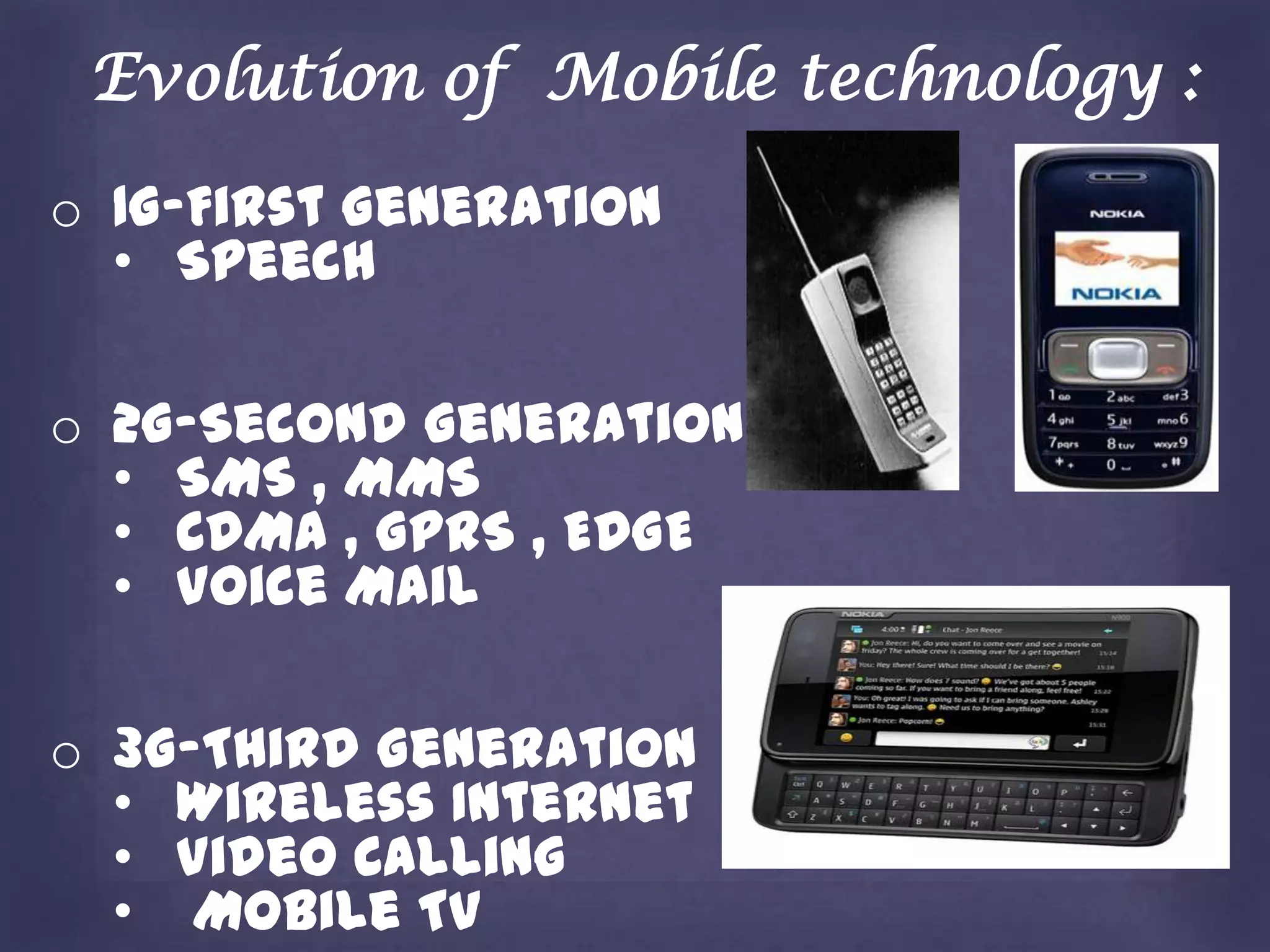
Evolution of Mobile technology :
o 1G-First Generation
  • Speech

o 2G-Second Generation
  • SMS , MMS
  • CDMA , GPRS , EDGE
  • Voice Mail

o 3G-Third Generation
  • Wireless Internet
  • Video Calling
  • Mobile TV
What is 4G ?

o Fourth Generation of Cellular
  Communications .

o Beyond 3G .

o Data transfer rate up to 100
 Mbps for         high mobility
 and 1 Gbps for low mobility .
What’s new in 4G ?


o IP (Internet
  Protocol) based
  mobile systems.

o Entirely packet-
  switched networks.

o Digital in nature

o Wider Bandwidths
  100Mhz
o 10 times faster than current 3G

o Global mobility and service
  portability.

o User Friendly.

MAGIC :

M : Mobile Multimedia
A : Anytime / Anywhere
G : Global Mobility Support
I : Integrated
C : Customized Personal Network
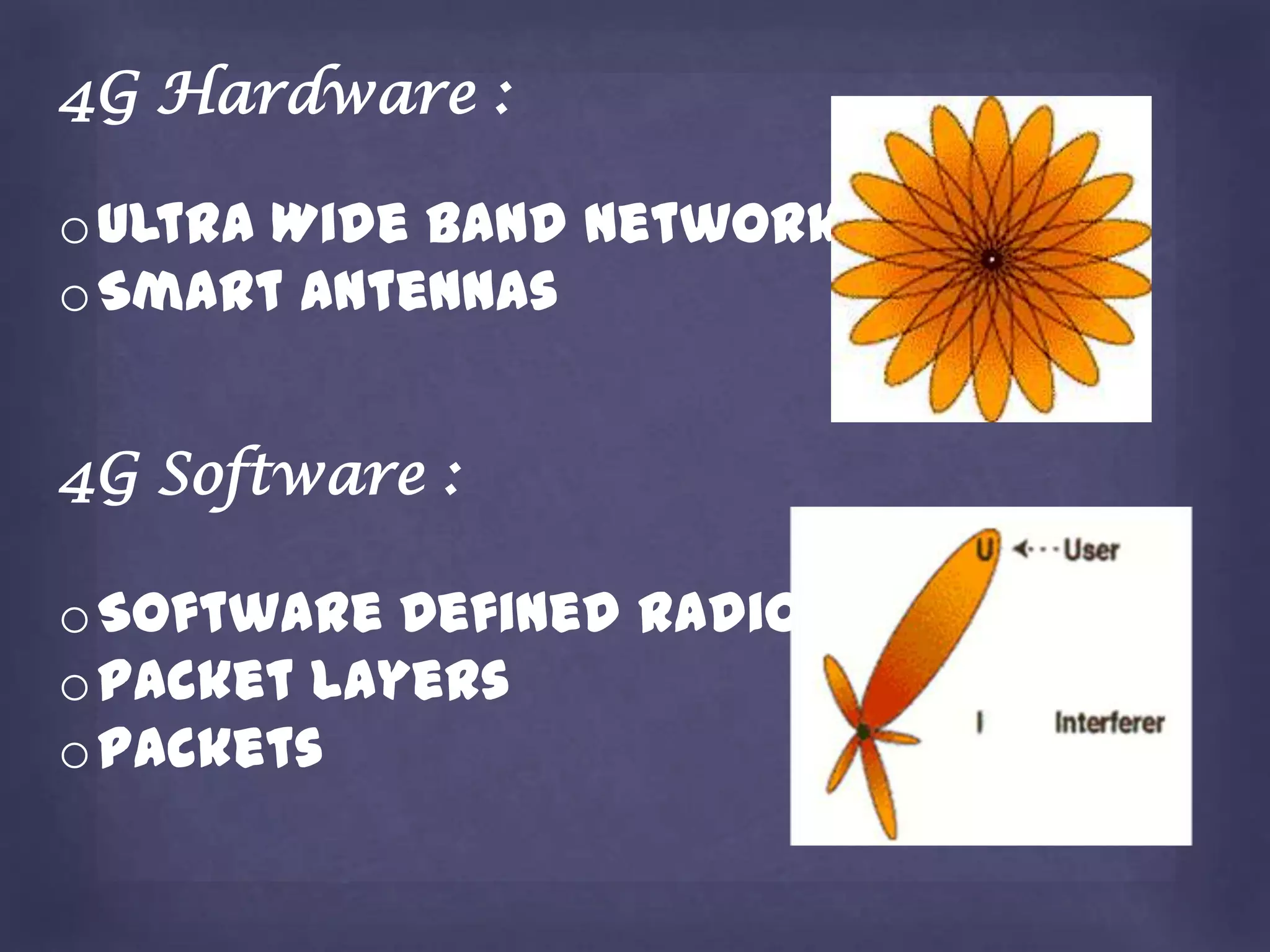
4G Hardware :

o Ultra Wide Band Networks
o Smart Antennas


4G Software :

o Software Defined Radio
o Packet Layers
o Packets
Technology Standards :

• WiMAX ,LTE


• The advantages of LTE are:

(i) 100 Mbps - download & 50 Mbps –
    upload
(ii) It offers both FDD and TDD duplexing
(iii) Uses OFDM
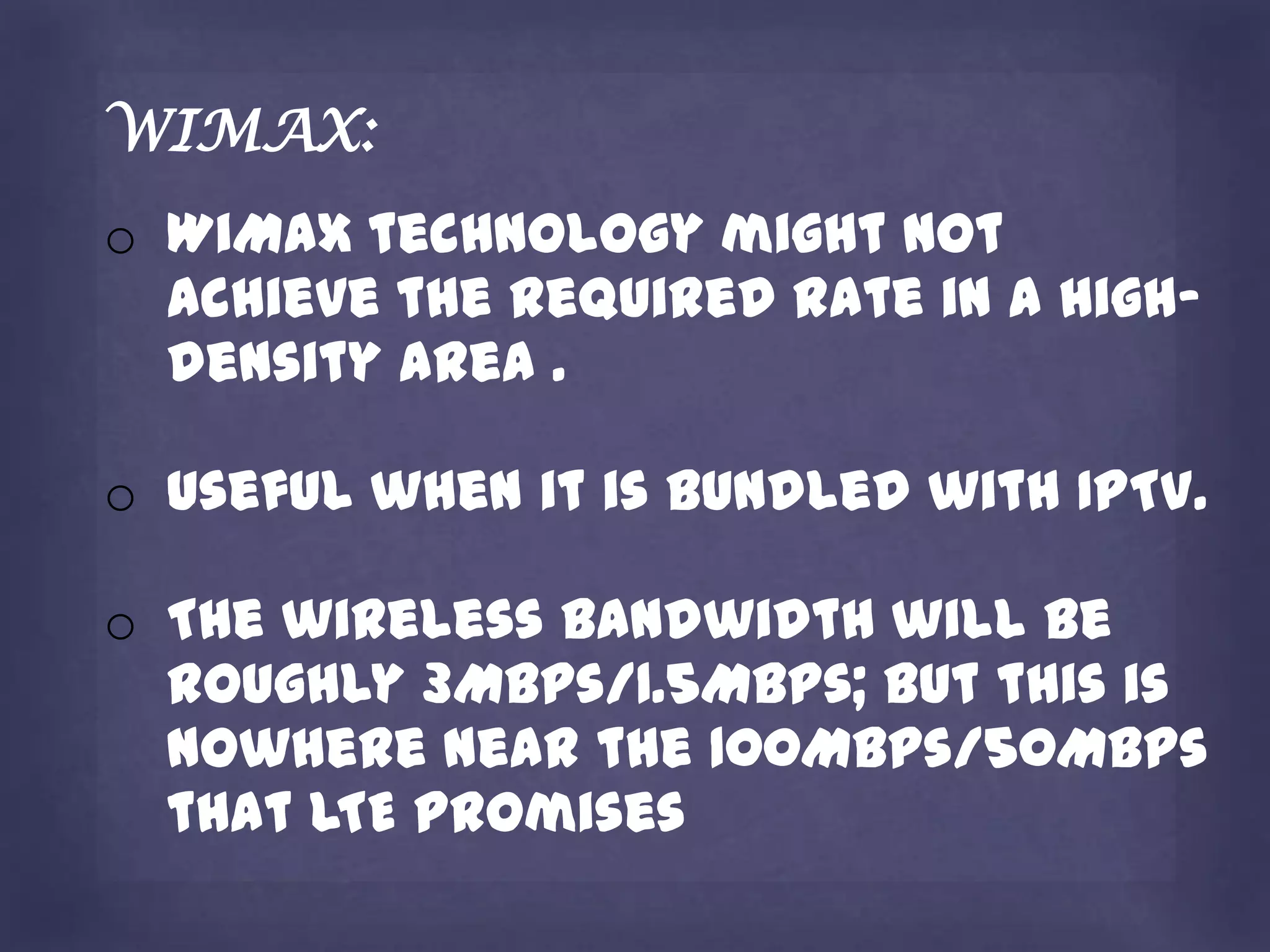
WIMAX:
o WiMax technology might not
  achieve the required rate in a high-
  density area .

o useful when it is bundled with IPTV.

o The wireless bandwidth will be
  roughly 3Mbps/1.5Mbps; but this is
  nowhere near the 100Mbps/50Mbps
  that LTE promises
OFDM :
• OFDM stands for
  Orthogonal
  Frequency Division
  Multiplexing.

• It distributes the
  data over a
  large number of
  carriers that are
  spaced apart at
  precise
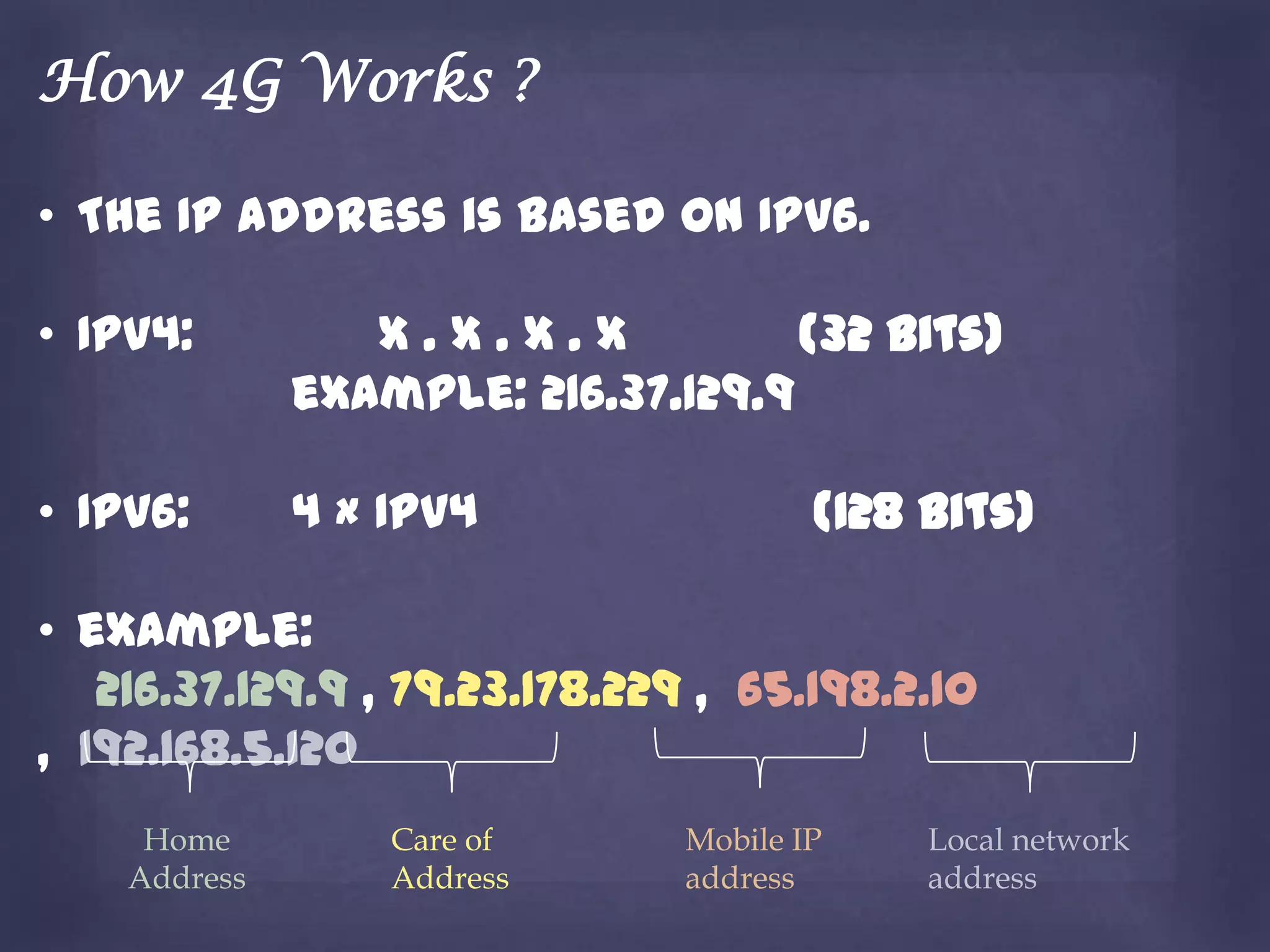
How 4G Works ?

• The IP address is based on IPv6.

• IPv4:          X.X.X.X            (32 bits)
              example: 216.37.129.9

• IPv6:       4 × IPv4                 (128 bits)

• example:
   216.37.129.9 , 79.23.178.229 , 65.198.2.10
, 192.168.5.120
     Home         Care of      Mobile IP    Local network
    Address       Address      address      address
Applications :
• Virtual Presence

• Virtual Navigation

• Crisis Management Application

• Telegeoprocessing, telemedicine

• Security
Advantages :

• High usability: anytime, anywhere, and
  with any technology.

• Support for multimedia services at low
transmission cost.

• Higher bandwidth, tight network security.


Disadvantages :

• Expensive.
• Battery uses are more.
• Hard to implement
4G technology
4G technology

4G technology

  • 1.
    Presentation by : Bhuvaneshwari And Purnima
  • 2.
    OVERVIEW: o What is 4G ? o Evolution of 4G o Features o 4G hardware and software o Technologies o Applications o Advantages and Disadvantages o Conclusion
  • 3.
    Evolution of Mobiletechnology : o 1G-First Generation • Speech o 2G-Second Generation • SMS , MMS • CDMA , GPRS , EDGE • Voice Mail o 3G-Third Generation • Wireless Internet • Video Calling • Mobile TV
  • 4.
    What is 4G? o Fourth Generation of Cellular Communications . o Beyond 3G . o Data transfer rate up to 100 Mbps for high mobility and 1 Gbps for low mobility .
  • 5.
    What’s new in4G ? o IP (Internet Protocol) based mobile systems. o Entirely packet- switched networks. o Digital in nature o Wider Bandwidths 100Mhz
  • 6.
    o 10 timesfaster than current 3G o Global mobility and service portability. o User Friendly. MAGIC : M : Mobile Multimedia A : Anytime / Anywhere G : Global Mobility Support I : Integrated C : Customized Personal Network
  • 7.
    4G Hardware : oUltra Wide Band Networks o Smart Antennas 4G Software : o Software Defined Radio o Packet Layers o Packets
  • 8.
    Technology Standards : •WiMAX ,LTE • The advantages of LTE are: (i) 100 Mbps - download & 50 Mbps – upload (ii) It offers both FDD and TDD duplexing (iii) Uses OFDM
  • 9.
    WIMAX: o WiMax technologymight not achieve the required rate in a high- density area . o useful when it is bundled with IPTV. o The wireless bandwidth will be roughly 3Mbps/1.5Mbps; but this is nowhere near the 100Mbps/50Mbps that LTE promises
  • 10.
    OFDM : • OFDMstands for Orthogonal Frequency Division Multiplexing. • It distributes the data over a large number of carriers that are spaced apart at precise
  • 11.
    How 4G Works? • The IP address is based on IPv6. • IPv4: X.X.X.X (32 bits) example: 216.37.129.9 • IPv6: 4 × IPv4 (128 bits) • example: 216.37.129.9 , 79.23.178.229 , 65.198.2.10 , 192.168.5.120 Home Care of Mobile IP Local network Address Address address address
  • 12.
    Applications : • VirtualPresence • Virtual Navigation • Crisis Management Application • Telegeoprocessing, telemedicine • Security
  • 13.
    Advantages : • Highusability: anytime, anywhere, and with any technology. • Support for multimedia services at low transmission cost. • Higher bandwidth, tight network security. Disadvantages : • Expensive. • Battery uses are more. • Hard to implement