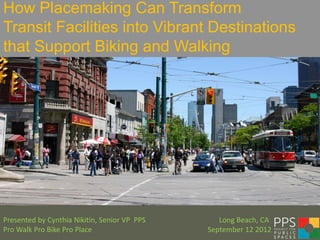
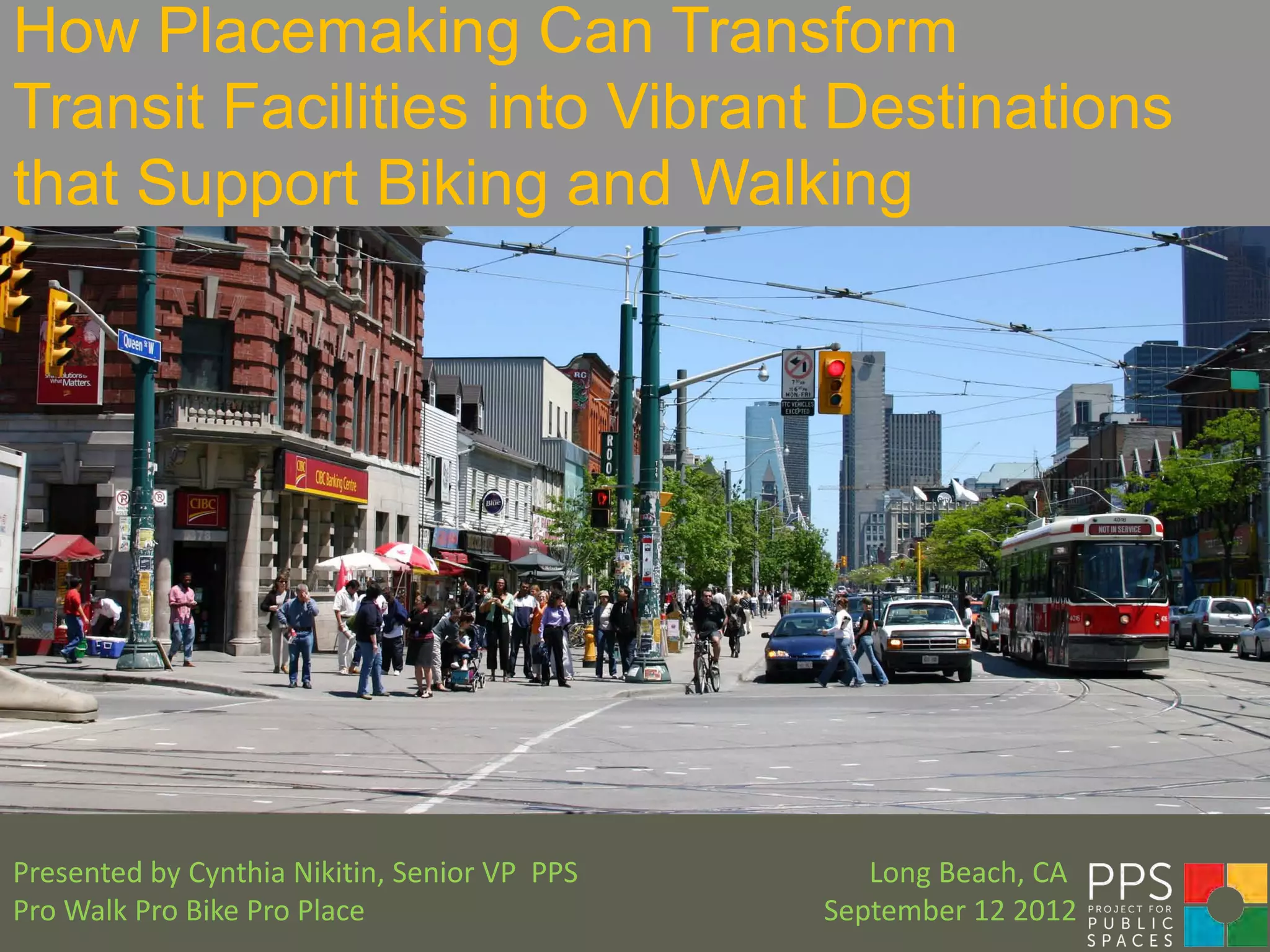
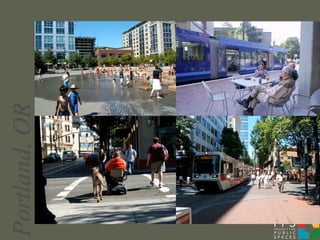
How Placemaking Can Transform
Transit Facilities into Vibrant Destinations
that Support Biking and Walking


Presented by Cynthia Nikitin, Senior VP PPS      Long Beach, CA
Pro Walk Pro Bike Pro Place                   September 12 2012
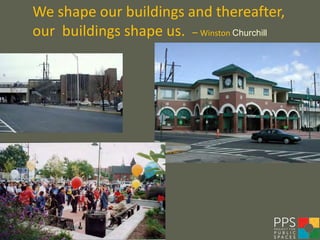
We shape our buildings and thereafter,
our buildings shape us. – Winston Churchill
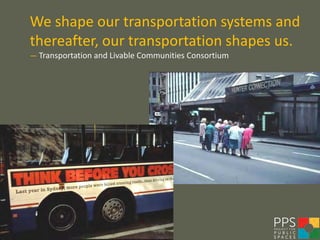
We shape our transportation systems and
thereafter, our transportation shapes us.
— Transportation and Livable Communities Consortium
Key Attributes
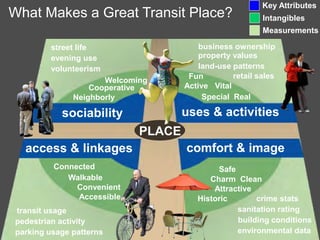
What Makes a Great Transit Place?                        Intangibles
                                                         Measurements

        street life                     business ownership
        evening use                     property values
        volunteerism                    land-use patterns
                                     Fun         retail sales
                     Welcoming
                  Cooperative       Active Vital
              Neighborly                 Special Real

           sociability              uses & activities
                            PLACE
  access & linkages                 comfort & image
         Connected                          Safe
            Walkable                      Charm Clean
              Convenient                   Attractive
              Accessible               Historic       crime stats
transit usage                                    sanitation rating
pedestrian activity                              building conditions
parking usage patterns                           environmental data
What is Placemaking?
Placemaking is a process that fosters the creation of
vital, multi-use public destinations. These multi-use
destinations are not defined just by architecture or
design features, but rather by the public uses and
activities that engage people's participation within he
space and encourage them to return again and again.

Placemaking leverages the investments in existing
infrastructure as well as a broad range of local
assets. Through the combination of lower-cost, short
term physical improvements, combined with public
space programming, the use and perception of public
space can be transformed.
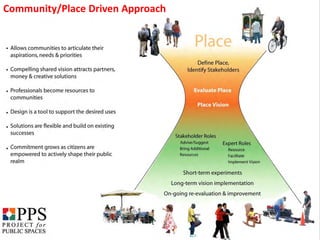
Community/Place Driven Approach
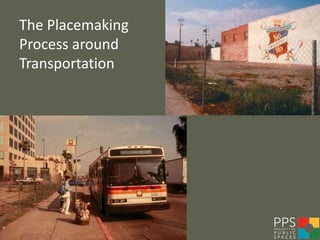
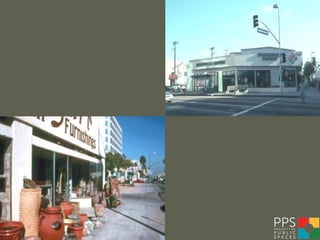
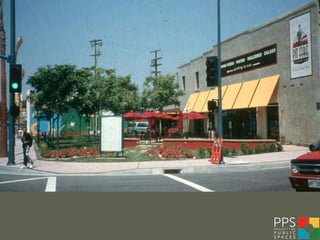
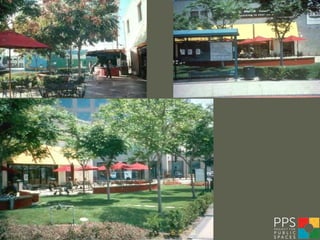
The Placemaking
Process around
Transportation
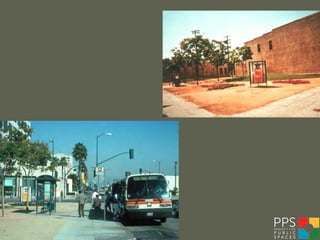
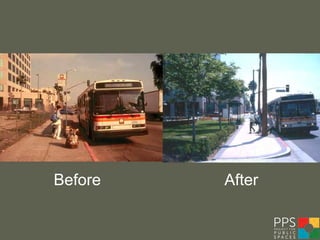
Before   After
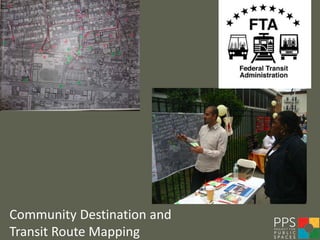
Community Destination and
Transit Route Mapping
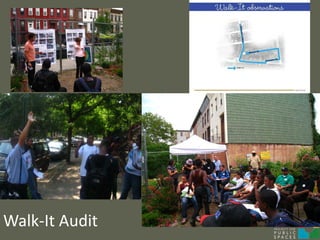
Walk-It Audit
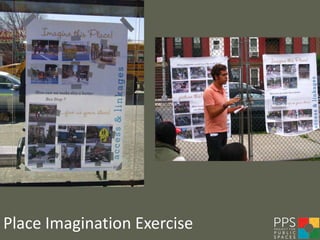
Place Imagination Exercise
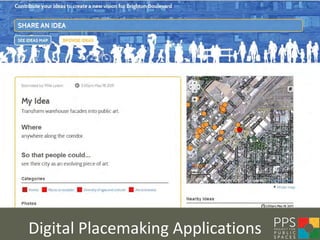
Digital Placemaking Applications
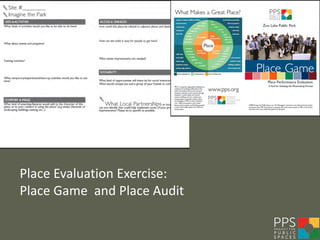
Place Evaluation Exercise:
Place Game and Place Audit
Twenty Strategies
      For Thinking Beyond the Station:
  Building Walkable Places Around Transit
Design, Build & Manage Stations
           as Places


            Rail stations and bus stops can
            serve as community focal
            points while providing a safe,
            comfortable, and attractive
            experience for transit
            passengers
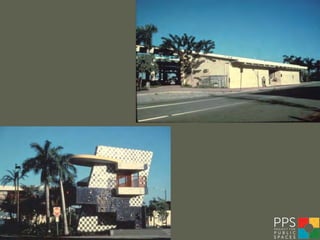
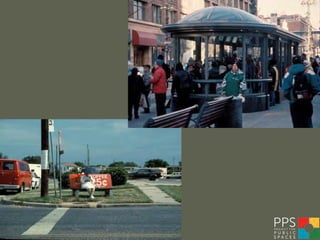
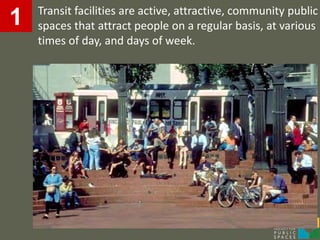
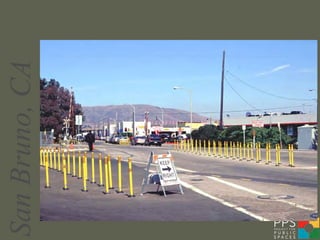
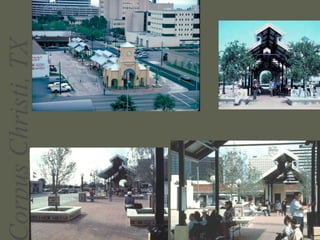
Transit facilities are active, attractive, community public
1   spaces that attract people on a regular basis, at various
    times of day, and days of week.
San Bruno, CA
orpus Christi, TX
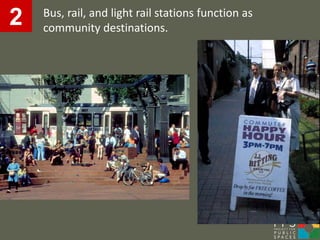
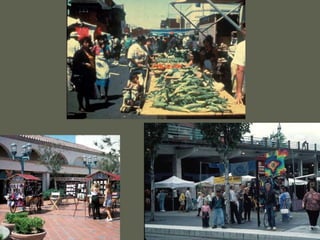
Bus, rail, and light rail stations function as
2   community destinations.
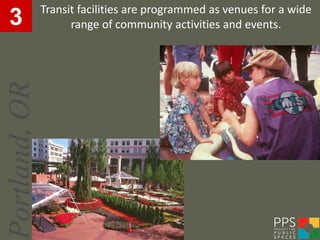
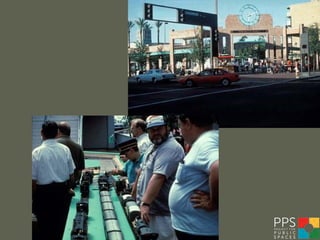
Transit facilities are programmed as venues for a wide
3
Portland, OR         range of community activities and events.
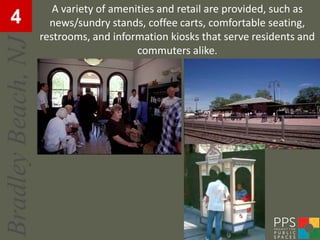
A variety of amenities and retail are provided, such as
  4                   news/sundry stands, coffee carts, comfortable seating,
                    restrooms, and information kiosks that serve residents and
Bradley Beach, NJ
                                         commuters alike.
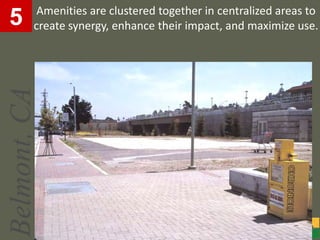
Amenities are clustered together in centralized areas to
5        create synergy, enhance their impact, and maximize use.
Belmont, CA
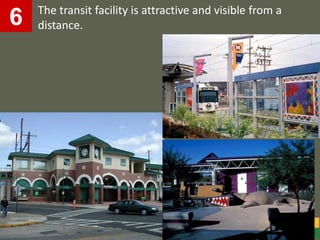
The transit facility is attractive and visible from a
6   distance.
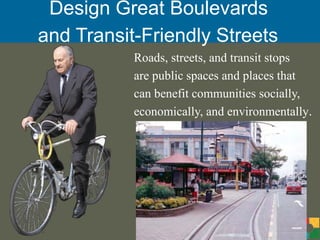
Design Great Boulevards
and Transit-Friendly Streets
           Roads, streets, and transit stops
           are public spaces and places that
           can benefit communities socially,
           economically, and environmentally.
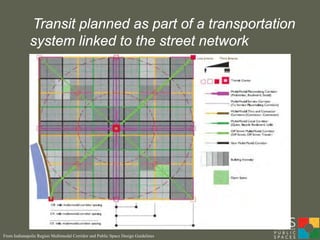
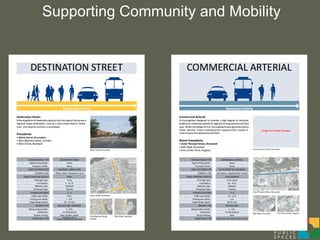
Transit planned as part of a transportation
             system linked to the street network


From Indianapolis Region Multimodal Corridor and Public Space Design Guidelines
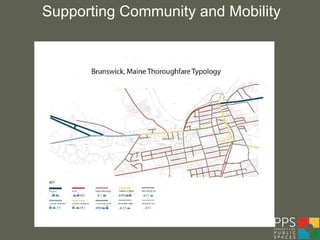
Supporting Community and Mobility
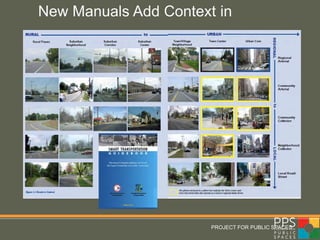
New Manuals Add Context in


                       PROJECT FOR PUBLIC SPACES
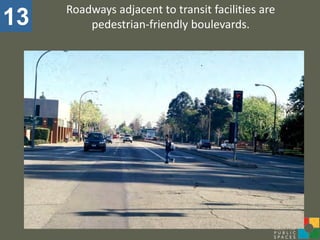
Roadways adjacent to transit facilities are
13       pedestrian-friendly boulevards.
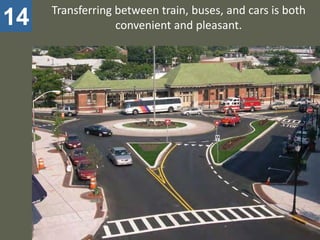
Transferring between train, buses, and cars is both
14                convenient and pleasant.
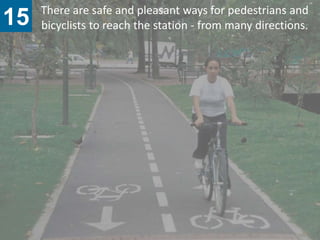
There are safe and pleasant ways for pedestrians and
15   bicyclists to reach the station - from many directions.
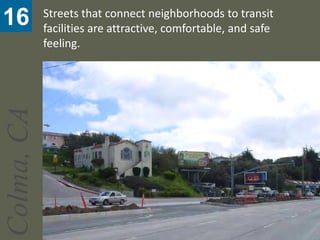
Streets that connect neighborhoods to transit
16          facilities are attractive, comfortable, and safe
            feeling.
Colma, CA
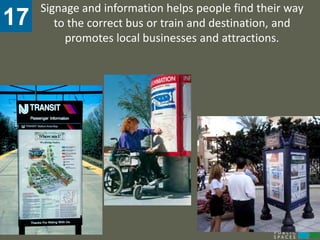
Signage and information helps people find their way
17      to the correct bus or train and destination, and
          promotes local businesses and attractions.
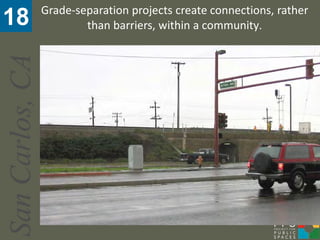
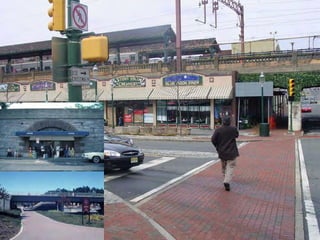
Grade-separation projects create connections, rather
18
San Carlos, CA           than barriers, within a community.
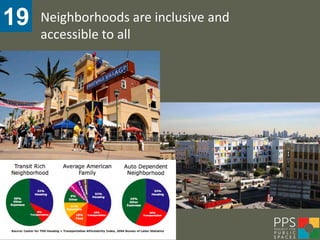
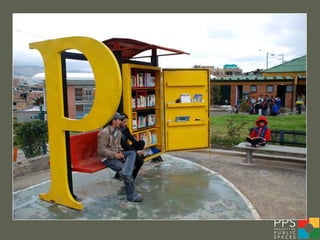
19   Neighborhoods are inclusive and
     accessible to all
Portland, OR
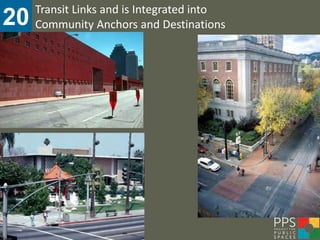
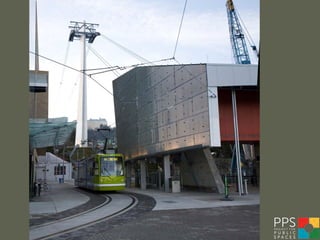
Transit Links and is Integrated into
20   Community Anchors and Destinations
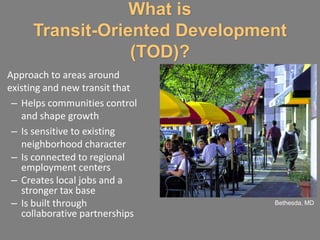
What is
     Transit-Oriented Development
                 (TOD)?
Approach to areas around
existing and new transit that
 – Helps communities control
   and shape growth
 – Is sensitive to existing
   neighborhood character
 – Is connected to regional
   employment centers
 – Creates local jobs and a
   stronger tax base
 – Is built through             Bethesda, MD
   collaborative partnerships
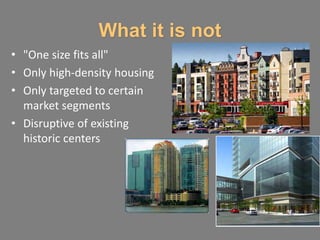
What it is not
• "One size fits all"
• Only high-density housing
• Only targeted to certain
  market segments
• Disruptive of existing
  historic centers
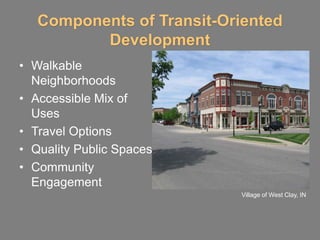
Components of Transit-Oriented
          Development
• Walkable
  Neighborhoods
• Accessible Mix of
  Uses
• Travel Options
• Quality Public Spaces
• Community
  Engagement
                           Village of West Clay, IN
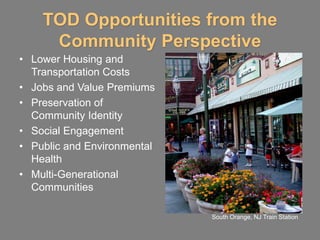
TOD Opportunities from the
     Community Perspective
• Lower Housing and
  Transportation Costs
• Jobs and Value Premiums
• Preservation of
  Community Identity
• Social Engagement
• Public and Environmental
  Health
• Multi-Generational
  Communities

                             South Orange, NJ Train Station
TOD Opportunities from the
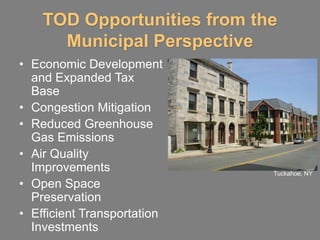
      Municipal Perspective
• Economic Development
  and Expanded Tax
  Base
• Congestion Mitigation
• Reduced Greenhouse
  Gas Emissions
• Air Quality
  Improvements               Tuckahoe, NY
• Open Space
  Preservation
• Efficient Transportation
  Investments
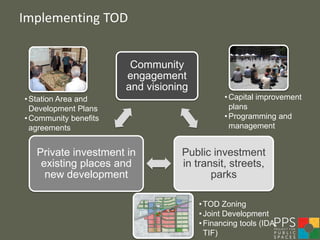
Implementing TOD


                        Community
                       engagement
                       and visioning
• Station Area and                            • Capital improvement
  Development Plans                             plans
• Community benefits                          • Programming and
  agreements                                    management


   Private investment in          Public investment
    existing places and           in transit, streets,
     new development                     parks

                                       • TOD Zoning
                                       • Joint Development
                                       • Financing tools (IDA,
                                         TIF)
Benefits of Transit-Oriented
            Development
1.   Economic Development
2.   Lower Housing and Transportation Costs
3.   Placemaking
4.   Environmental and Public Health
5.   Community and Historic Preservation
6.   Meet Market Demand
7.   Improved Transportation System Performance
8.   Transportation Choice
Benefits of a Placemaking Approach for
Community Supportive Transit
• Transit stations become community assets and destinations
• Pressure to increase parking capacity is reduced
• Station areas become more desirable as places to live and operate
  businesses
• Ridership increases – alleviating auto dependence
• Real estate near train stations becomes more valuable
• Opportunities for partnering with other agencies, cities and civic
  groups
• A sense of ownership is generated in the community
• Transit investments and assets are leveraged to achieve community
  benefits
www.pps.org
    @CynthiaNikitin

    Cnikitin@pps.org

#43 How Placemaking Can Transform Transit Stations and Institutions into Vibrant, Multimodal Public Spaces - Nikitin

  • 1.
    How Placemaking CanTransform Transit Facilities into Vibrant Destinations that Support Biking and Walking Presented by Cynthia Nikitin, Senior VP PPS Long Beach, CA Pro Walk Pro Bike Pro Place September 12 2012
  • 2.
    We shape ourbuildings and thereafter, our buildings shape us. – Winston Churchill
  • 3.
    We shape ourtransportation systems and thereafter, our transportation shapes us. — Transportation and Livable Communities Consortium
  • 7.
    Key Attributes What Makesa Great Transit Place? Intangibles Measurements street life business ownership evening use property values volunteerism land-use patterns Fun retail sales Welcoming Cooperative Active Vital Neighborly Special Real sociability uses & activities PLACE access & linkages comfort & image Connected Safe Walkable Charm Clean Convenient Attractive Accessible Historic crime stats transit usage sanitation rating pedestrian activity building conditions parking usage patterns environmental data
  • 8.
    What is Placemaking? Placemakingis a process that fosters the creation of vital, multi-use public destinations. These multi-use destinations are not defined just by architecture or design features, but rather by the public uses and activities that engage people's participation within he space and encourage them to return again and again. Placemaking leverages the investments in existing infrastructure as well as a broad range of local assets. Through the combination of lower-cost, short term physical improvements, combined with public space programming, the use and perception of public space can be transformed.
  • 9.
  • 10.
  • 15.
    Before After
  • 16.
  • 17.
  • 18.
  • 19.
  • 20.
  • 21.
    Twenty Strategies For Thinking Beyond the Station: Building Walkable Places Around Transit
  • 22.
    Design, Build &Manage Stations as Places Rail stations and bus stops can serve as community focal points while providing a safe, comfortable, and attractive experience for transit passengers
  • 23.
    Transit facilities areactive, attractive, community public 1 spaces that attract people on a regular basis, at various times of day, and days of week.
  • 24.
  • 25.
  • 26.
    Bus, rail, andlight rail stations function as 2 community destinations.
  • 28.
    Transit facilities areprogrammed as venues for a wide 3 Portland, OR range of community activities and events.
  • 30.
    A variety ofamenities and retail are provided, such as 4 news/sundry stands, coffee carts, comfortable seating, restrooms, and information kiosks that serve residents and Bradley Beach, NJ commuters alike.
  • 31.
    Amenities are clusteredtogether in centralized areas to 5 create synergy, enhance their impact, and maximize use. Belmont, CA
  • 32.
    The transit facilityis attractive and visible from a 6 distance.
  • 33.
    Design Great Boulevards andTransit-Friendly Streets Roads, streets, and transit stops are public spaces and places that can benefit communities socially, economically, and environmentally.
  • 34.
    Transit planned aspart of a transportation system linked to the street network From Indianapolis Region Multimodal Corridor and Public Space Design Guidelines
  • 35.
  • 36.
  • 37.
    New Manuals AddContext in PROJECT FOR PUBLIC SPACES
  • 38.
    Roadways adjacent totransit facilities are 13 pedestrian-friendly boulevards.
  • 39.
    Transferring between train,buses, and cars is both 14 convenient and pleasant.
  • 40.
    There are safeand pleasant ways for pedestrians and 15 bicyclists to reach the station - from many directions.
  • 42.
    Streets that connectneighborhoods to transit 16 facilities are attractive, comfortable, and safe feeling. Colma, CA
  • 43.
    Signage and informationhelps people find their way 17 to the correct bus or train and destination, and promotes local businesses and attractions.
  • 44.
    Grade-separation projects createconnections, rather 18 San Carlos, CA than barriers, within a community.
  • 46.
    19 Neighborhoods are inclusive and accessible to all
  • 47.
  • 48.
    Transit Links andis Integrated into 20 Community Anchors and Destinations
  • 51.
    What is Transit-Oriented Development (TOD)? Approach to areas around existing and new transit that – Helps communities control and shape growth – Is sensitive to existing neighborhood character – Is connected to regional employment centers – Creates local jobs and a stronger tax base – Is built through Bethesda, MD collaborative partnerships
  • 52.
    What it isnot • "One size fits all" • Only high-density housing • Only targeted to certain market segments • Disruptive of existing historic centers
  • 53.
    Components of Transit-Oriented Development • Walkable Neighborhoods • Accessible Mix of Uses • Travel Options • Quality Public Spaces • Community Engagement Village of West Clay, IN
  • 54.
    TOD Opportunities fromthe Community Perspective • Lower Housing and Transportation Costs • Jobs and Value Premiums • Preservation of Community Identity • Social Engagement • Public and Environmental Health • Multi-Generational Communities South Orange, NJ Train Station
  • 55.
    TOD Opportunities fromthe Municipal Perspective • Economic Development and Expanded Tax Base • Congestion Mitigation • Reduced Greenhouse Gas Emissions • Air Quality Improvements Tuckahoe, NY • Open Space Preservation • Efficient Transportation Investments
  • 56.
    Implementing TOD Community engagement and visioning • Station Area and • Capital improvement Development Plans plans • Community benefits • Programming and agreements management Private investment in Public investment existing places and in transit, streets, new development parks • TOD Zoning • Joint Development • Financing tools (IDA, TIF)
  • 57.
    Benefits of Transit-Oriented Development 1. Economic Development 2. Lower Housing and Transportation Costs 3. Placemaking 4. Environmental and Public Health 5. Community and Historic Preservation 6. Meet Market Demand 7. Improved Transportation System Performance 8. Transportation Choice
  • 58.
    Benefits of aPlacemaking Approach for Community Supportive Transit • Transit stations become community assets and destinations • Pressure to increase parking capacity is reduced • Station areas become more desirable as places to live and operate businesses • Ridership increases – alleviating auto dependence • Real estate near train stations becomes more valuable • Opportunities for partnering with other agencies, cities and civic groups • A sense of ownership is generated in the community • Transit investments and assets are leveraged to achieve community benefits
  • 59.
    www.pps.org @CynthiaNikitin Cnikitin@pps.org