Data Collection Methodology 
RESEARCH METHODOLOGY
COLLECTION OF PRIMARY DATA
COLLECTION OF PRIMARY DATA 
 Observation method 
 Interview method 
 Through questionnaires 
 Through schedules 
 Some more methods
OBSERVATION METHOD 
 Structured and Unstructured observation 
 Participant, Non-participant and Disguised 
observation 
 Controlled and Uncontrolled observation
INTERVIEW METHOD 
 Personal interview 
 Direct personal investigation 
 Indirect oral investigation 
Strengths and Weaknesses 
 Telephonic interview 
Strengths and Weaknesses
THROUGH QUESTIONNAIRES 
Merits and Demerits 
 General form 
 Question sequence 
 Question formulation and wording
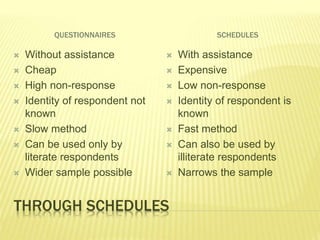
QUESTIONNAIRES SCHEDULES 
 Without assistance 
 Cheap 
 High non-response 
 Identity of respondent not 
known 
 Slow method 
 Can be used only by 
literate respondents 
 Wider sample possible 
 With assistance 
 Expensive 
 Low non-response 
 Identity of respondent is 
THROUGH SCHEDULES 
known 
 Fast method 
 Can also be used by 
illiterate respondents 
 Narrows the sample
SOME OTHER METHODS 
Warranty cards 
 Distributor or store audits 
 Pantry audits 
 Consumer panels 
 Depth interviews 
 Content analysis 
 Projective techniques
PROJECTIVE TECHNIQUES 
Word association tests 
 Sentence completion tests 
 Story completion tests 
 Verbal projection tests 
 Play techniques 
 Quizzes, tests and examinations 
 Sociometry 
 Pictorial techniques
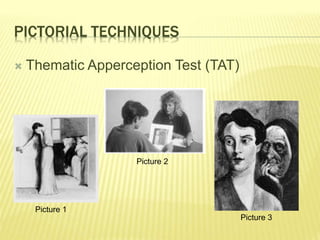
PICTORIAL TECHNIQUES 
 Thematic Apperception Test (TAT) 
Picture 1 
Picture 2 
Picture 3
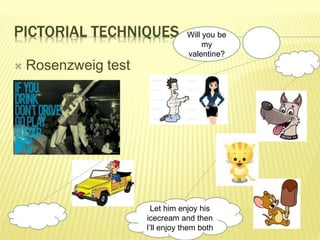
PICTORIAL TECHNIQUES 
 Rosenzweig test 
Will you be 
my 
valentine? 
Let him enjoy his 
icecream and then 
I’ll enjoy them both
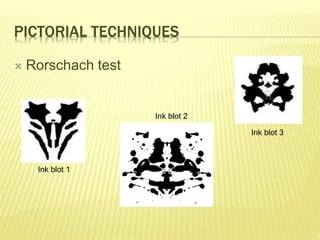
PICTORIAL TECHNIQUES 
 Rorschach test 
Ink blot 1 
Ink blot 2 
Ink blot 3
PICTORIAL TECHNIQUES 
 Holtzman Inkblot Test (HIT) 
 Tomkins-Horn picture arrangement test
PICTORIAL TECHNIQUES 
 Thematic Apperception Test (TAT) 
 Rosenzweig test 
 Rorschach test 
 Holtzman Inkblot Test (HIT) 
 Tomkins-Horn picture arrangement test
COLLECTION OF PRIMARY DATA 
 Observation method 
 Interview method 
 Through questionnaires 
 Through schedules 
 Some more methods
COLLECTION OF SECONDARY DATA 
 Reliability of data 
 Suitability of data 
 Adequacy of data
SELECTION OF APPROPRIATE METHOD FOR 
DATA COLLECTION 
 Nature, scope and object of enquiry 
 Availability of funds 
 Time factor 
 Precision required
CASE STUDY METHOD 
 Meaning 
 Characteristics 
 Evolution and scope 
 Assumptions 
 Major phases involved 
 Advantages 
 Limitations 
 Conclusion

Data collection methodology

  • 1.
    Data Collection Methodology RESEARCH METHODOLOGY
  • 2.
  • 3.
    COLLECTION OF PRIMARYDATA  Observation method  Interview method  Through questionnaires  Through schedules  Some more methods
  • 4.
    OBSERVATION METHOD Structured and Unstructured observation  Participant, Non-participant and Disguised observation  Controlled and Uncontrolled observation
  • 5.
    INTERVIEW METHOD Personal interview  Direct personal investigation  Indirect oral investigation Strengths and Weaknesses  Telephonic interview Strengths and Weaknesses
  • 6.
    THROUGH QUESTIONNAIRES Meritsand Demerits  General form  Question sequence  Question formulation and wording
  • 7.
    QUESTIONNAIRES SCHEDULES Without assistance  Cheap  High non-response  Identity of respondent not known  Slow method  Can be used only by literate respondents  Wider sample possible  With assistance  Expensive  Low non-response  Identity of respondent is THROUGH SCHEDULES known  Fast method  Can also be used by illiterate respondents  Narrows the sample
  • 8.
    SOME OTHER METHODS Warranty cards  Distributor or store audits  Pantry audits  Consumer panels  Depth interviews  Content analysis  Projective techniques
  • 9.
    PROJECTIVE TECHNIQUES Wordassociation tests  Sentence completion tests  Story completion tests  Verbal projection tests  Play techniques  Quizzes, tests and examinations  Sociometry  Pictorial techniques
  • 10.
    PICTORIAL TECHNIQUES Thematic Apperception Test (TAT) Picture 1 Picture 2 Picture 3
  • 11.
    PICTORIAL TECHNIQUES Rosenzweig test Will you be my valentine? Let him enjoy his icecream and then I’ll enjoy them both
  • 12.
    PICTORIAL TECHNIQUES Rorschach test Ink blot 1 Ink blot 2 Ink blot 3
  • 13.
    PICTORIAL TECHNIQUES Holtzman Inkblot Test (HIT)  Tomkins-Horn picture arrangement test
  • 14.
    PICTORIAL TECHNIQUES Thematic Apperception Test (TAT)  Rosenzweig test  Rorschach test  Holtzman Inkblot Test (HIT)  Tomkins-Horn picture arrangement test
  • 15.
    COLLECTION OF PRIMARYDATA  Observation method  Interview method  Through questionnaires  Through schedules  Some more methods
  • 16.
    COLLECTION OF SECONDARYDATA  Reliability of data  Suitability of data  Adequacy of data
  • 17.
    SELECTION OF APPROPRIATEMETHOD FOR DATA COLLECTION  Nature, scope and object of enquiry  Availability of funds  Time factor  Precision required
  • 18.
    CASE STUDY METHOD  Meaning  Characteristics  Evolution and scope  Assumptions  Major phases involved  Advantages  Limitations  Conclusion