http://www.free-powerpoint-template-design.com
Survey and Observation
Method
Survey method and its classification
Observation method and its classification
Presented By
Rohan Ahamed
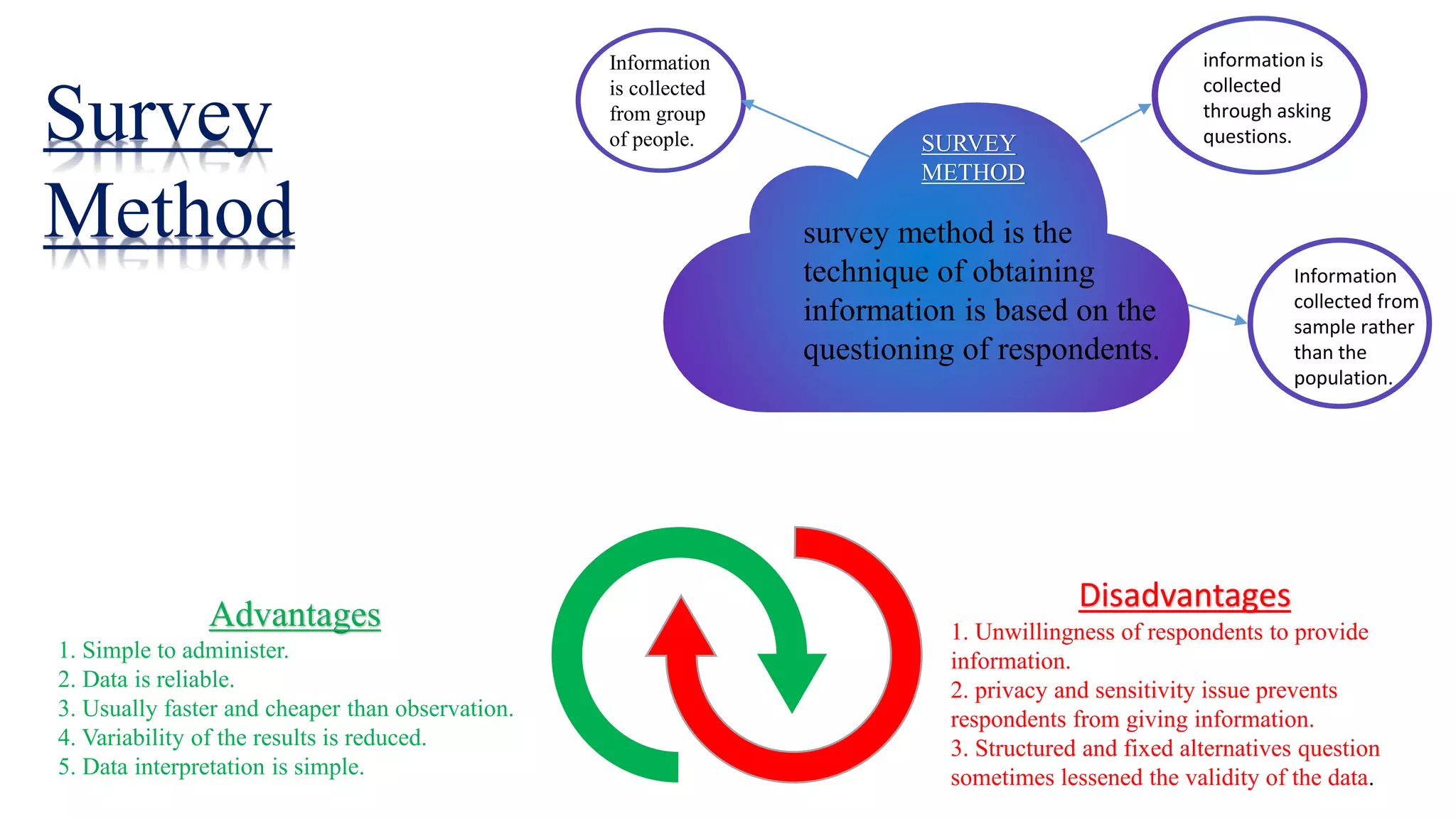
survey method is the
technique of obtaining
information is based on the
questioning of respondents.
SURVEY
METHOD
Information
is collected
from group
of people.
information is
collected
through asking
questions.
Information
collected from
sample rather
than the
population.
Advantages
1. Simple to administer.
2. Data is reliable.
3. Usually faster and cheaper than observation.
4. Variability of the results is reduced.
5. Data interpretation is simple.
Disadvantages
1. Unwillingness of respondents to provide
information.
2. privacy and sensitivity issue prevents
respondents from giving information.
3. Structured and fixed alternatives question
sometimes lessened the validity of the data.
Survey
Method
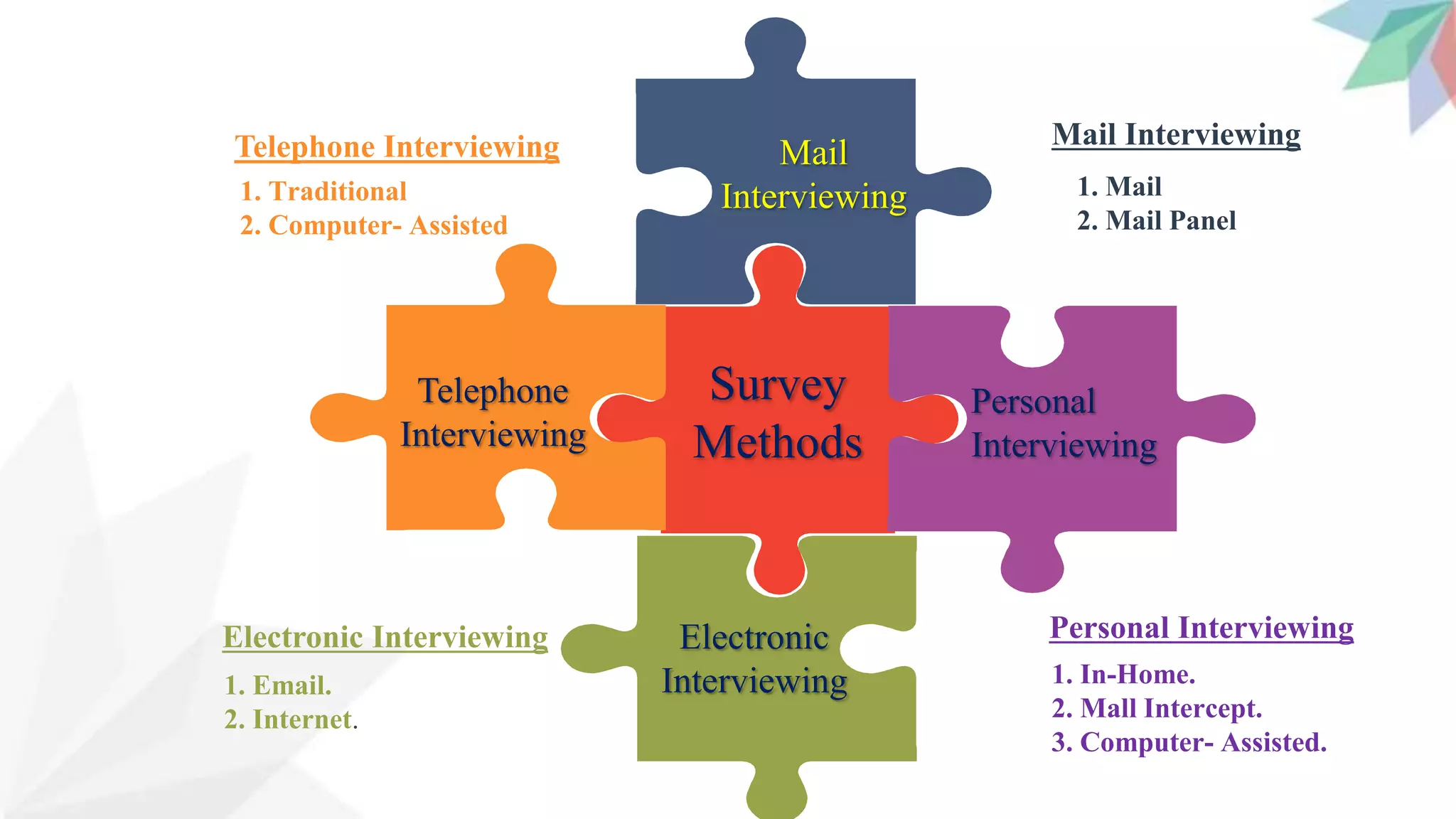
1. Mail
2. Mail Panel
Mail Interviewing
1. Traditional
2. Computer- Assisted
Telephone Interviewing
1. In-Home.
2. Mall Intercept.
3. Computer- Assisted.
Personal Interviewing
1. Email.
2. Internet.
Electronic Interviewing
Survey
Methods
Personal
Interviewing
Telephone
Interviewing
Mail
Interviewing
Electronic
Interviewing
Telephone Interviewing
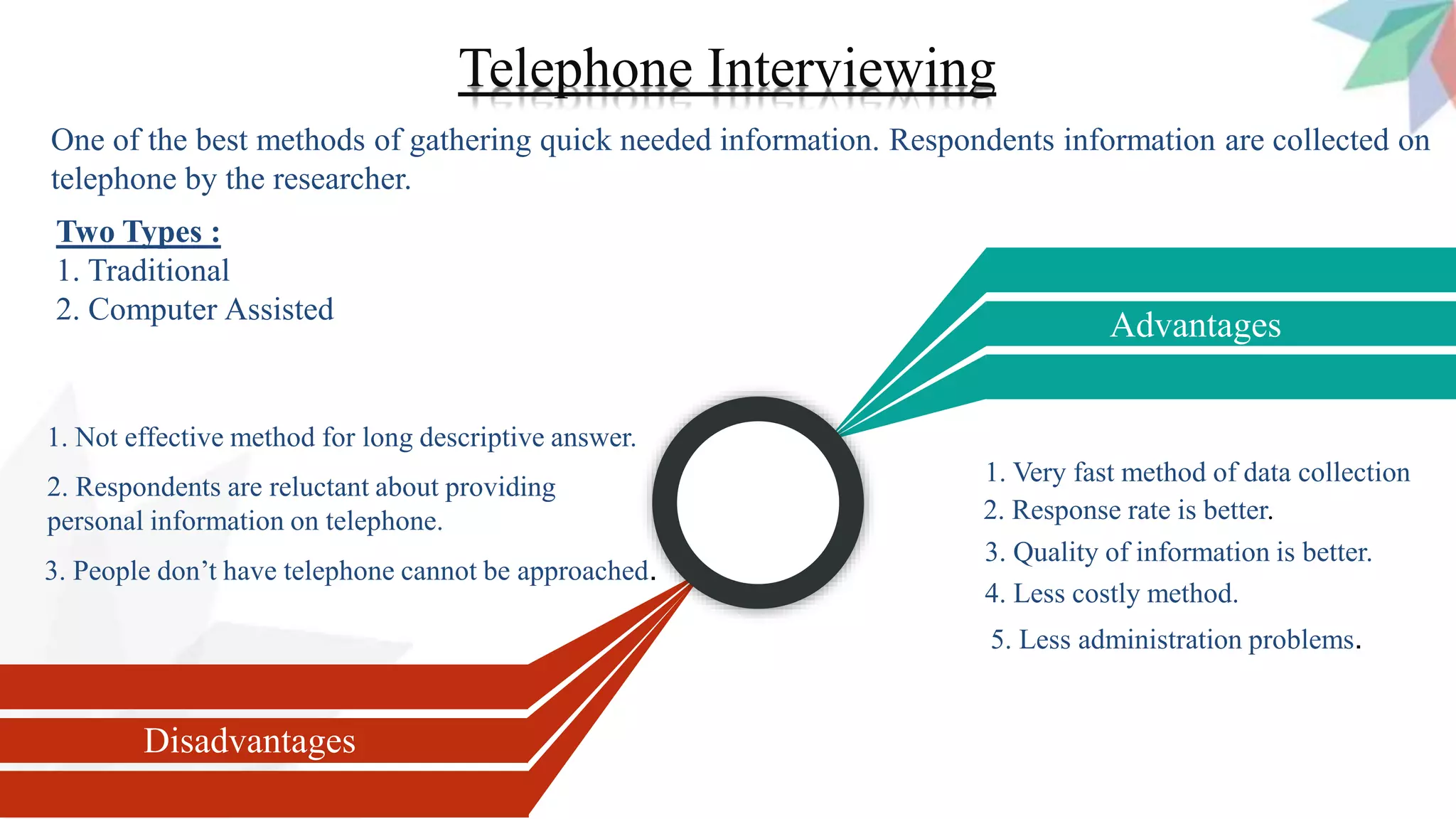
One of the best methods of gathering quick needed information. Respondents information are collected on
telephone by the researcher.
Two Types :
1. Traditional
2. Computer Assisted
Disadvantages
Advantages
1. Not effective method for long descriptive answer.
3. People don’t have telephone cannot be approached.
2. Respondents are reluctant about providing
personal information on telephone.
1. Very fast method of data collection
2. Response rate is better.
3. Quality of information is better.
4. Less costly method.
5. Less administration problems.
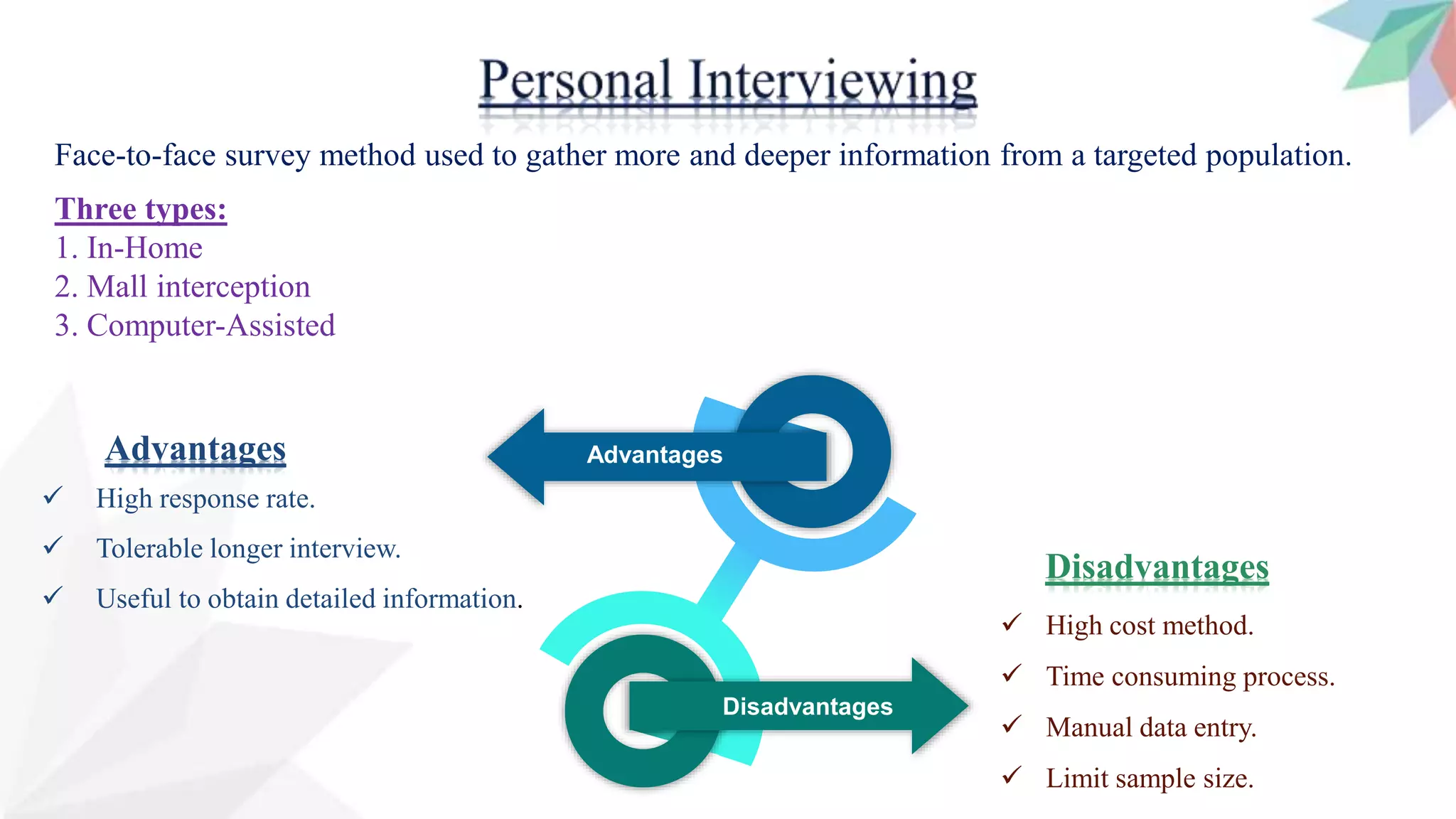
Face-to-face survey method used to gather more and deeper information from a targeted population.
Three types:
1. In-Home
2. Mall interception
3. Computer-Assisted
Disadvantages
AdvantagesAdvantages
 High response rate.
 Tolerable longer interview.
 Useful to obtain detailed information.
Disadvantages
 High cost method.
 Time consuming process.
 Manual data entry.
 Limit sample size.
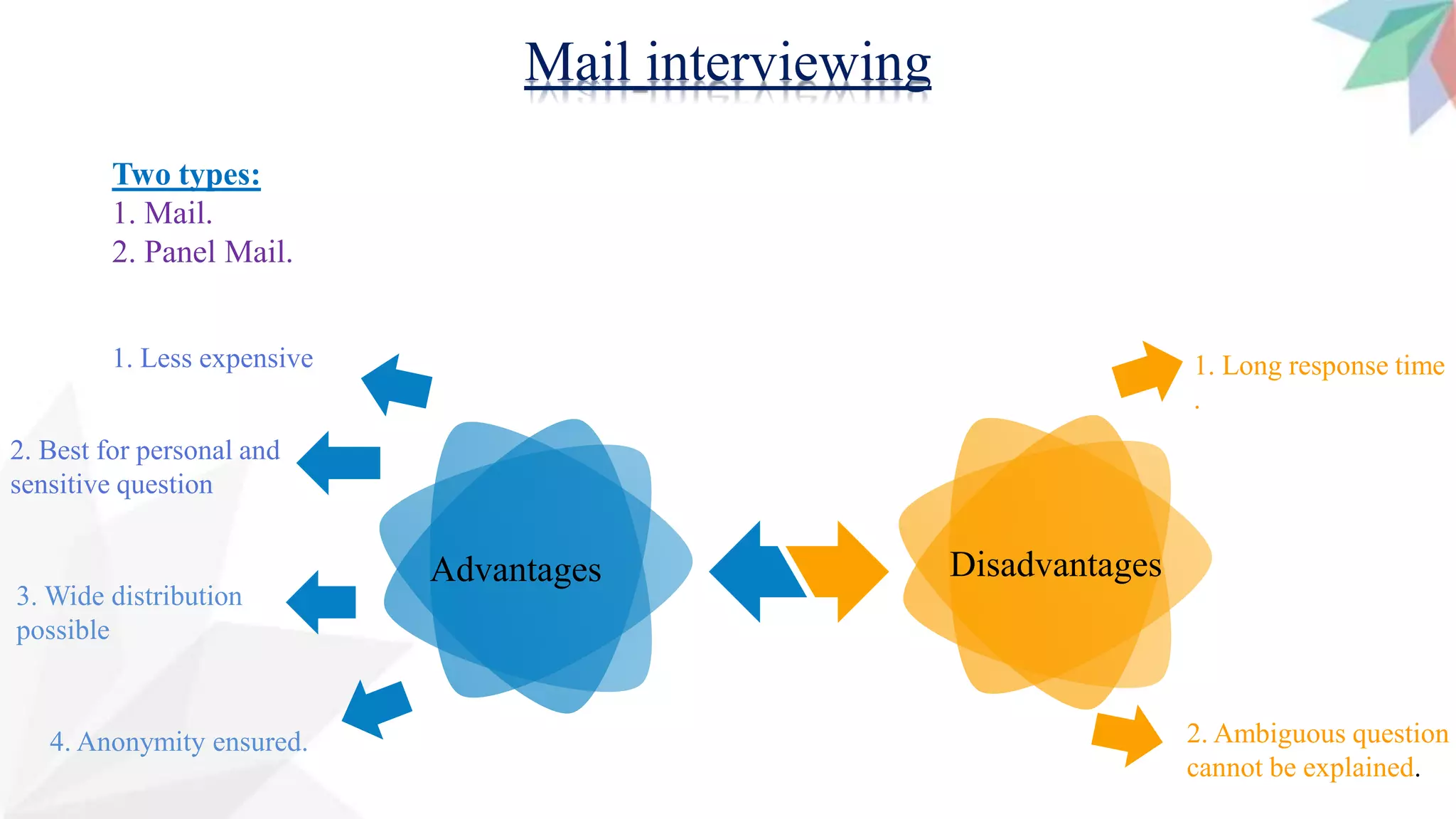
Mail interviewing
Two types:
1. Mail.
2. Panel Mail.
DisadvantagesAdvantages
1. Less expensive
2. Best for personal and
sensitive question
3. Wide distribution
possible
4. Anonymity ensured. 2. Ambiguous question
cannot be explained.
1. Long response time
.
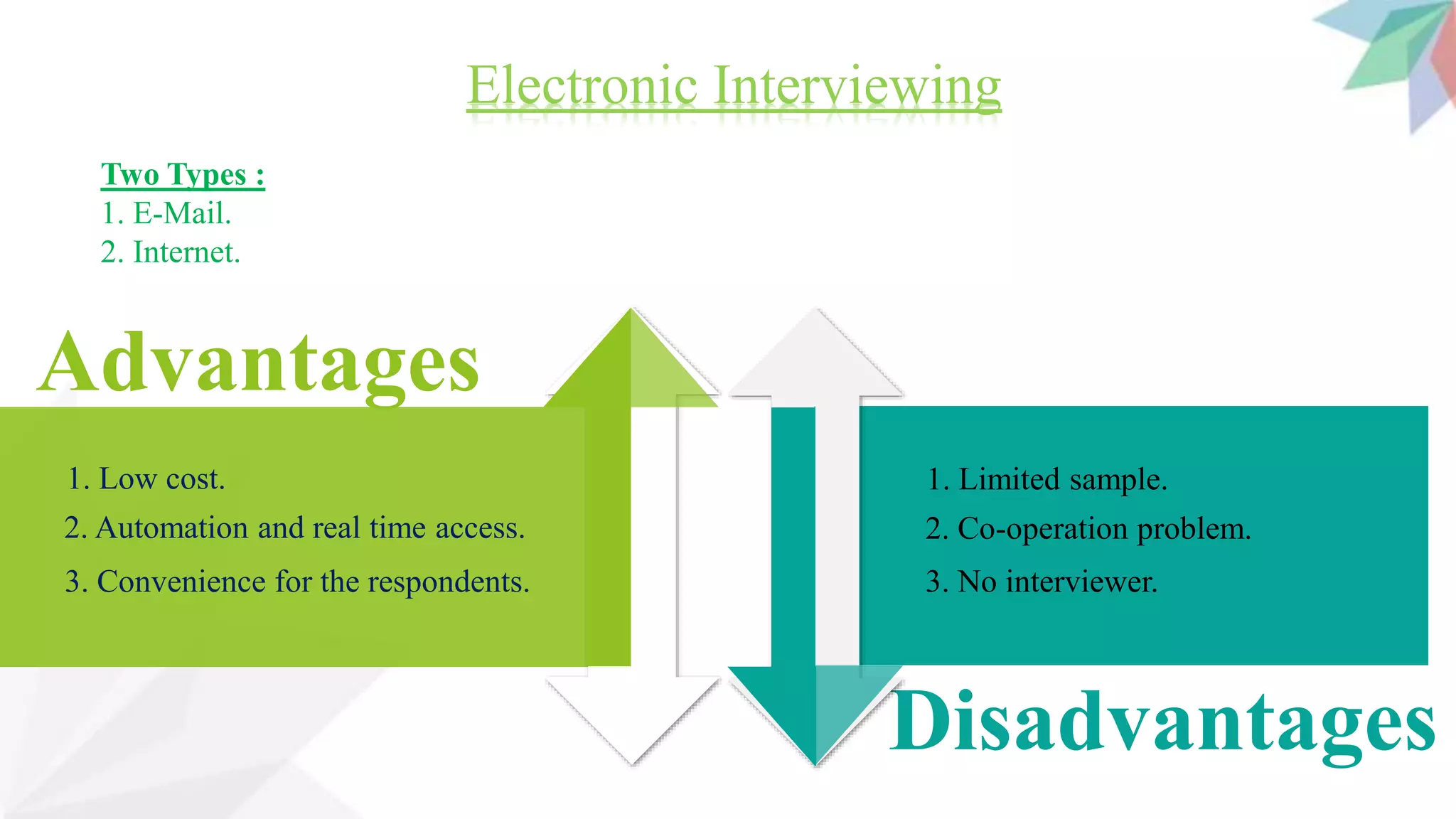
Electronic Interviewing
Two Types :
1. E-Mail.
2. Internet.
Advantages
Disadvantages
1. Low cost.
2. Automation and real time access.
3. Convenience for the respondents.
1. Limited sample.
2. Co-operation problem.
3. No interviewer.
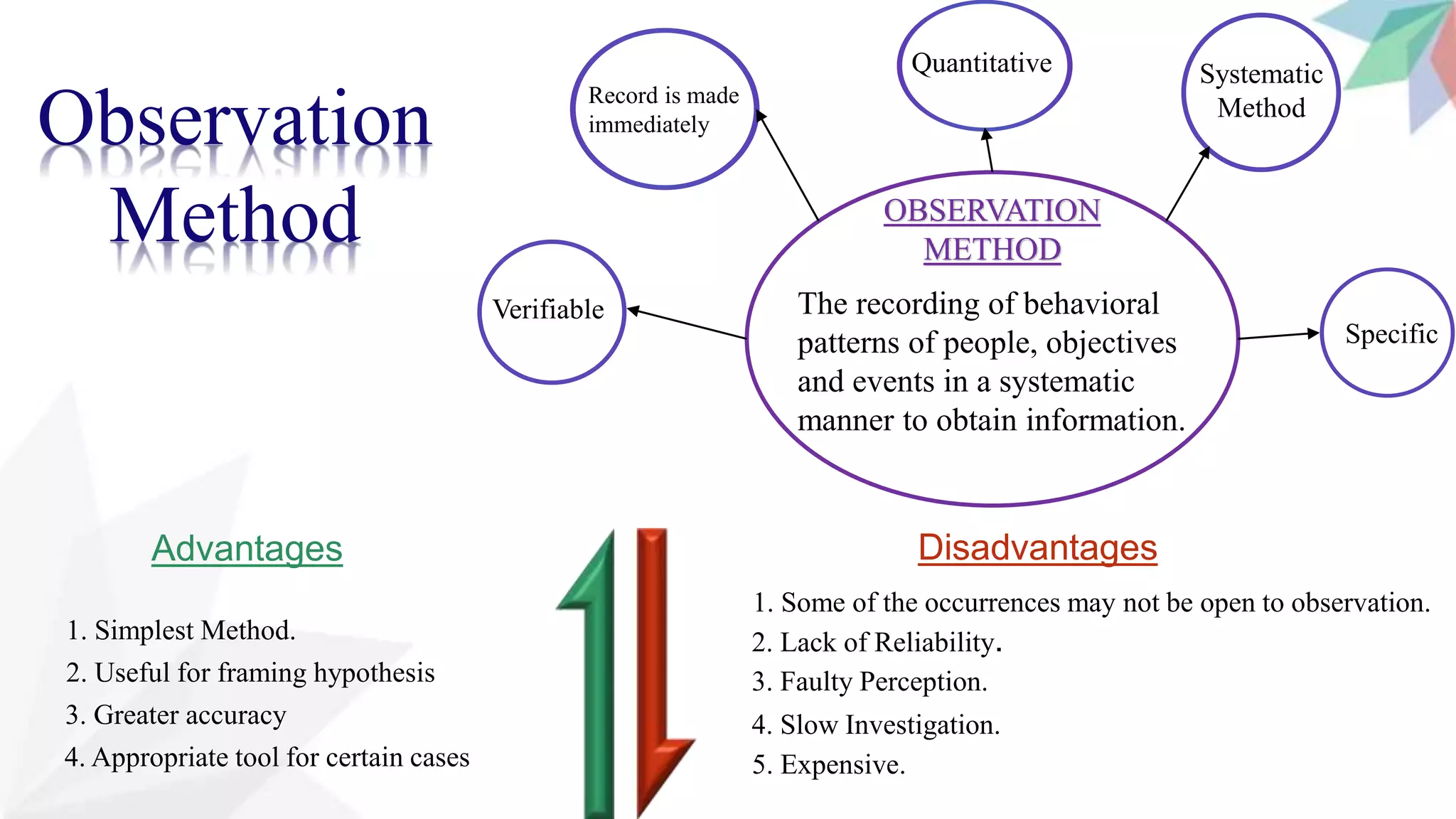
Observation
Method
The recording of behavioral
patterns of people, objectives
and events in a systematic
manner to obtain information.
OBSERVATION
METHOD
Record is made
immediately
Systematic
Method
Specific
Quantitative
Verifiable
Advantages Disadvantages
1. Simplest Method.
2. Useful for framing hypothesis
3. Greater accuracy
4. Appropriate tool for certain cases
1. Some of the occurrences may not be open to observation.
2. Lack of Reliability.
3. Faulty Perception.
4. Slow Investigation.
5. Expensive.
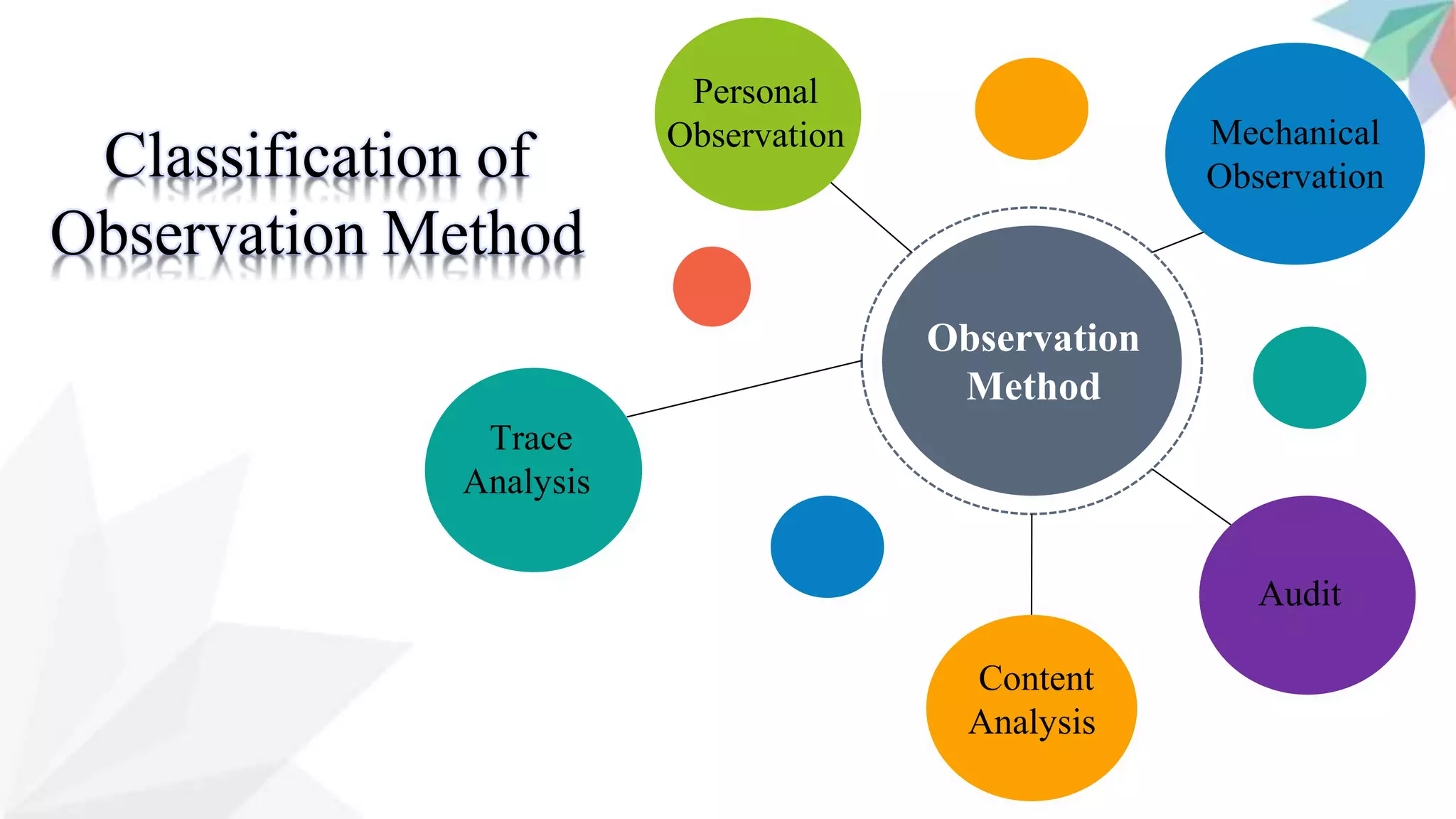
Observation
Method
Personal
Observation Mechanical
Observation
Audit
Content
Analysis
Trace
Analysis
Classification of
Observation Method
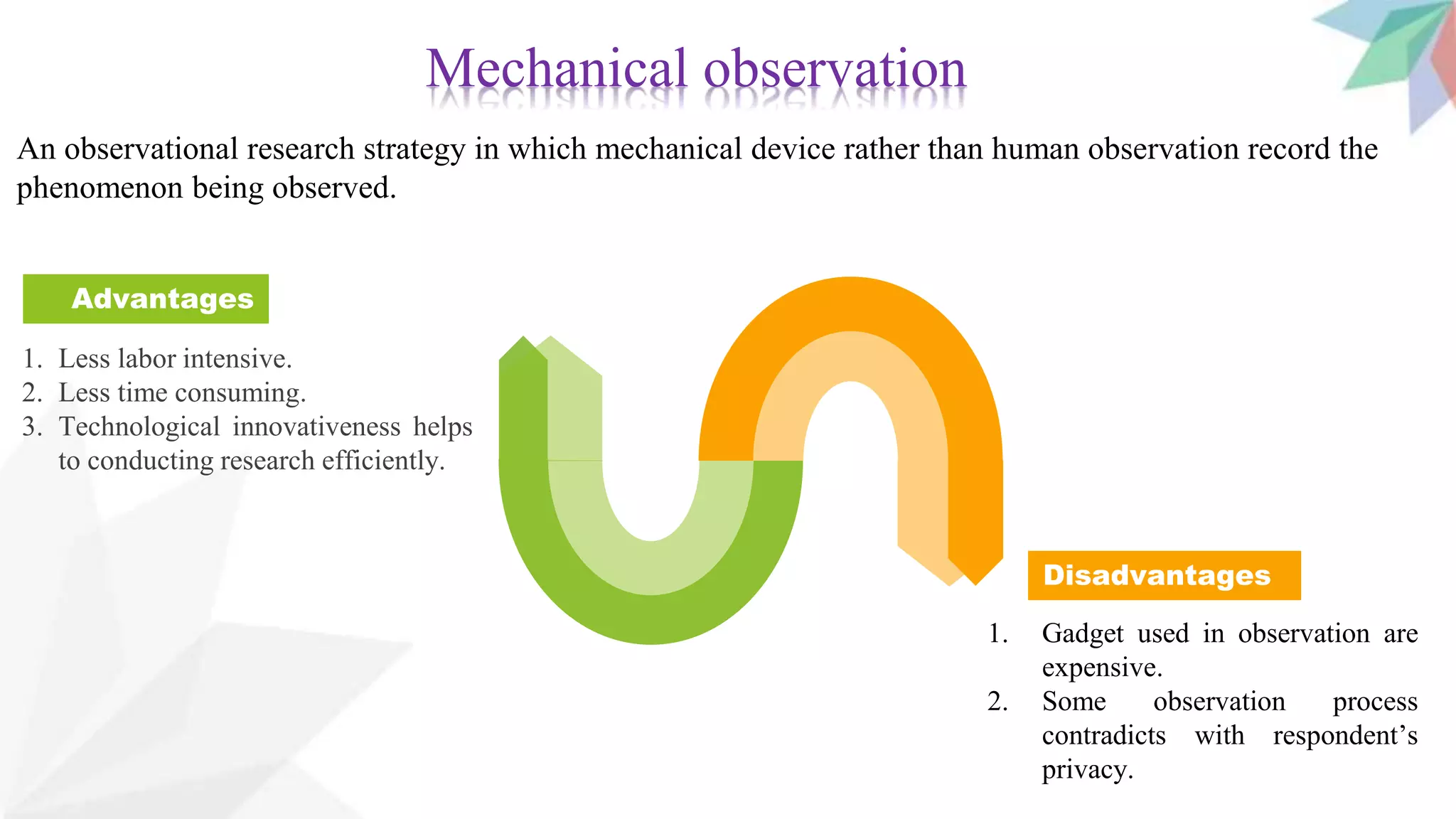
Mechanical observation
An observational research strategy in which mechanical device rather than human observation record the
phenomenon being observed.
Advantages
1. Less labor intensive.
2. Less time consuming.
3. Technological innovativeness helps
to conducting research efficiently.
Disadvantages
1. Gadget used in observation are
expensive.
2. Some observation process
contradicts with respondent’s
privacy.
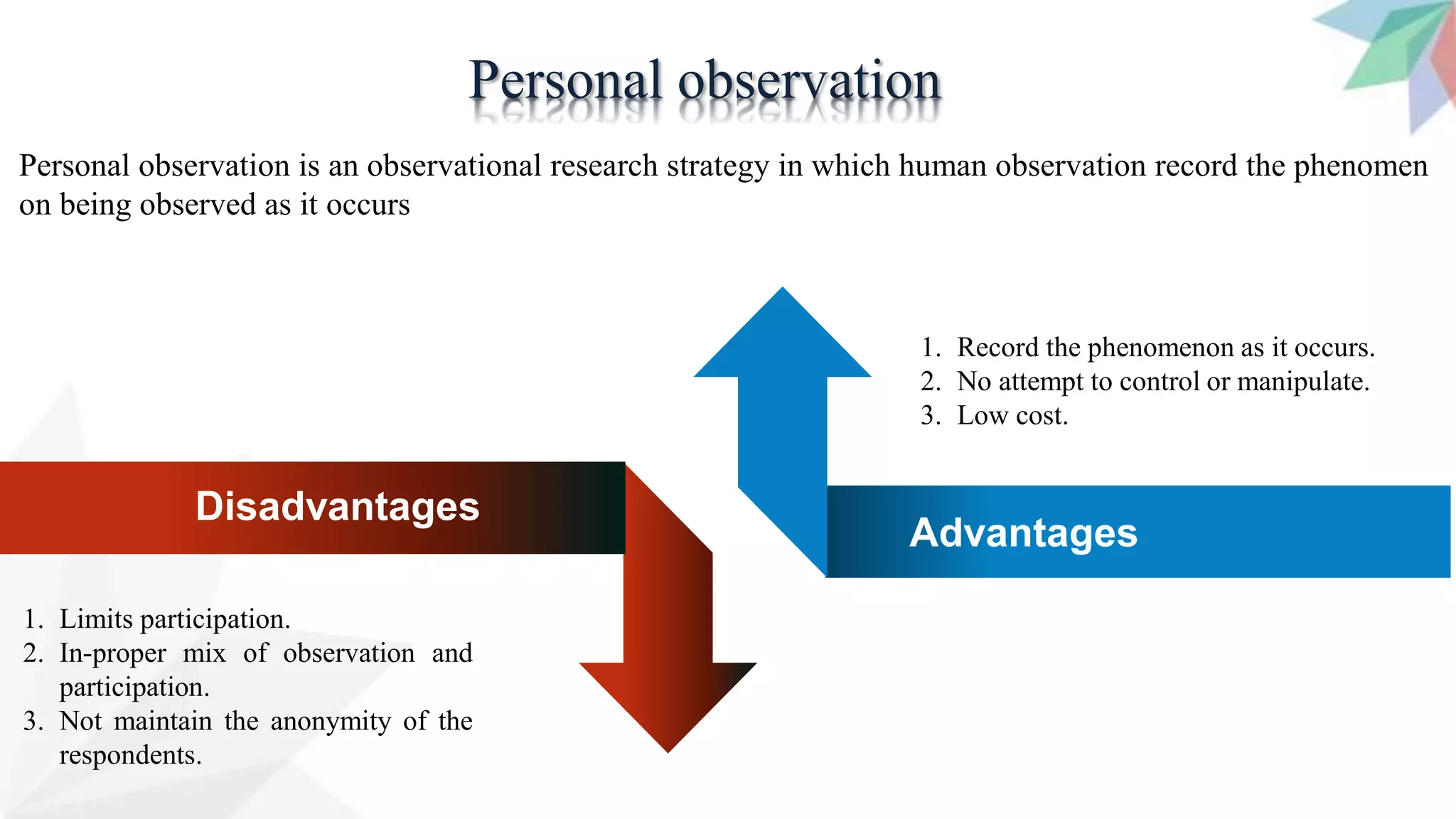
Personal observation
Personal observation is an observational research strategy in which human observation record the phenomen
on being observed as it occurs
01
AdvantagesYour Text Here
1. Record the phenomenon as it occurs.
2. No attempt to control or manipulate.
3. Low cost.
1. Limits participation.
2. In-proper mix of observation and
participation.
3. Not maintain the anonymity of the
respondents.
Disadvantages
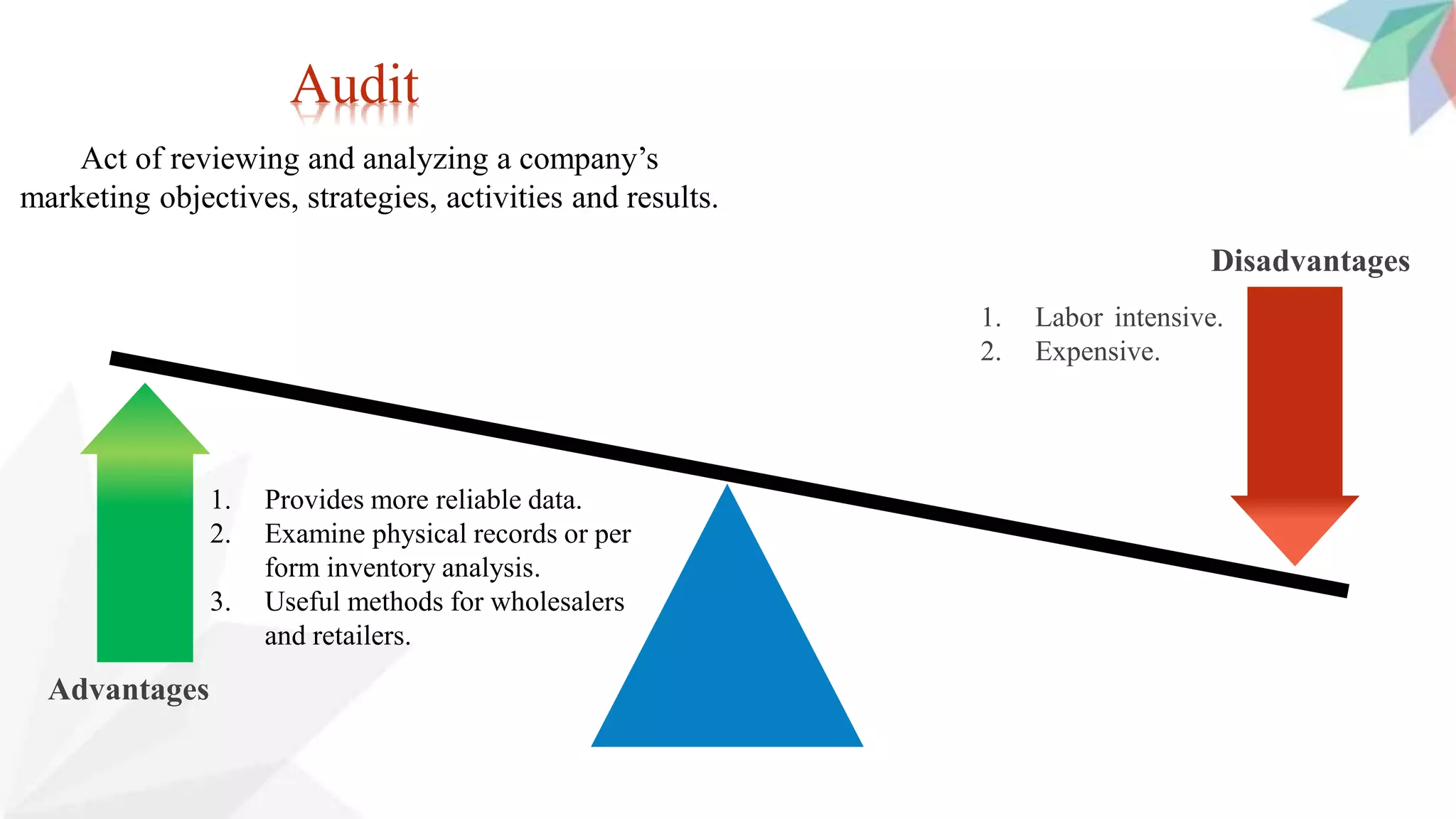
Audit
Act of reviewing and analyzing a company’s
marketing objectives, strategies, activities and results.
1. Labor intensive.
2. Expensive.
Advantages
Disadvantages
1. Provides more reliable data.
2. Examine physical records or per
form inventory analysis.
3. Useful methods for wholesalers
and retailers.
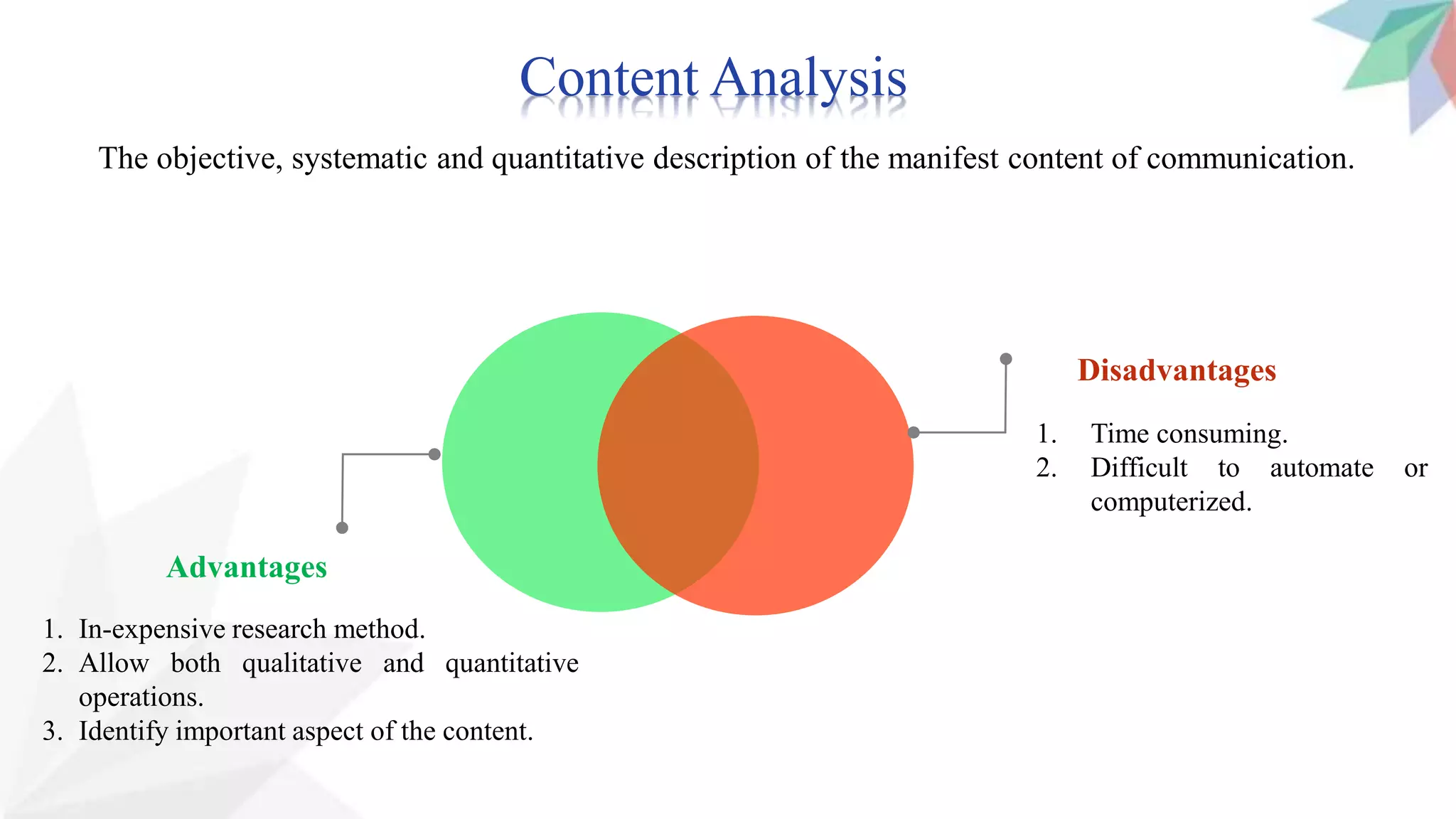
Content Analysis
The objective, systematic and quantitative description of the manifest content of communication.
Disadvantages
1. Time consuming.
2. Difficult to automate or
computerized.
Advantages
1. In-expensive research method.
2. Allow both qualitative and quantitative
operations.
3. Identify important aspect of the content.
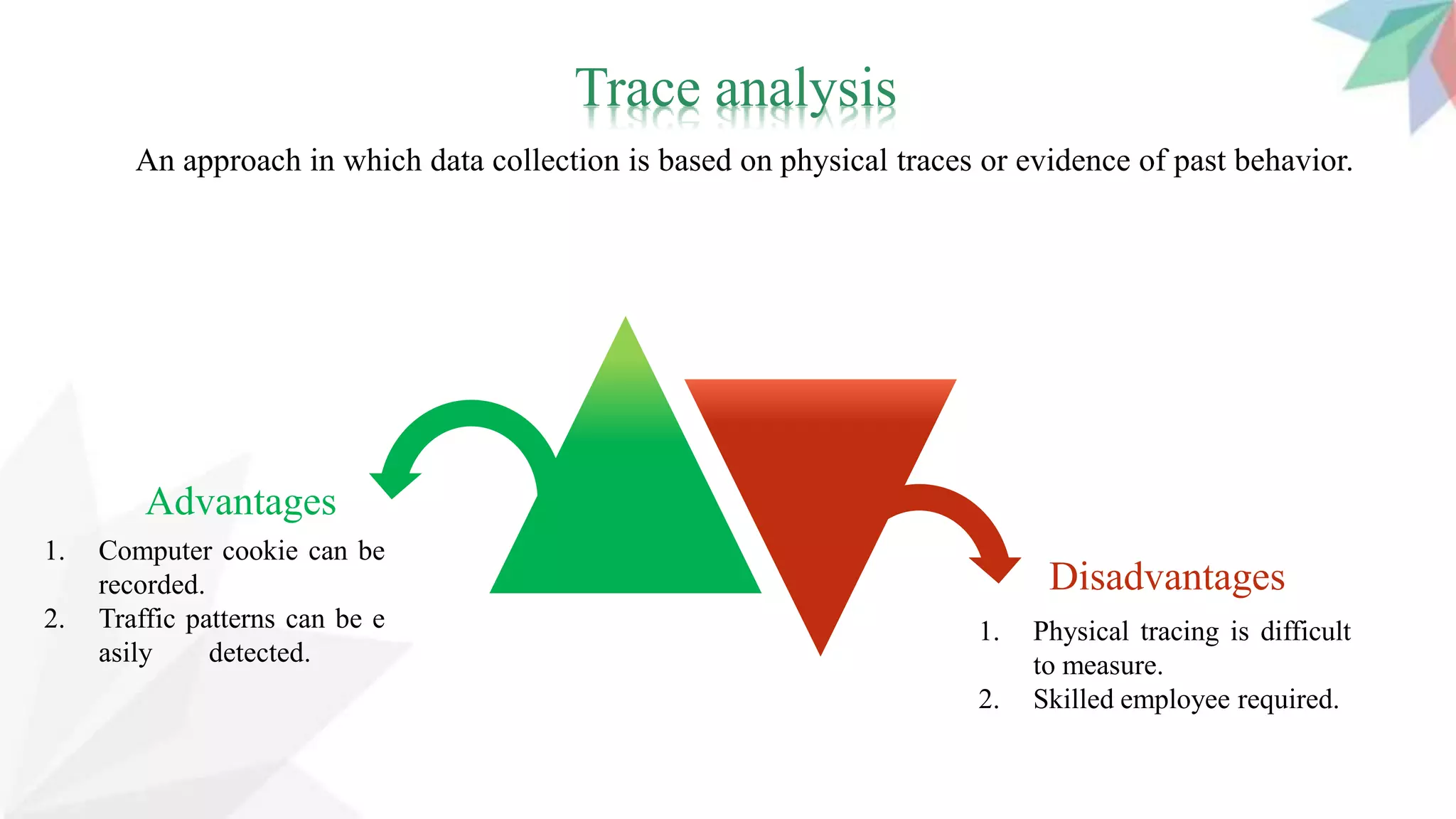
Trace analysis
An approach in which data collection is based on physical traces or evidence of past behavior.
A
Advantages
Disadvantages
1. Computer cookie can be
recorded.
2. Traffic patterns can be e
asily detected.
1. Physical tracing is difficult
to measure.
2. Skilled employee required.
Thank you

Survey and observation method

  • 1.
    http://www.free-powerpoint-template-design.com Survey and Observation Method Surveymethod and its classification Observation method and its classification
  • 2.
  • 3.
    survey method isthe technique of obtaining information is based on the questioning of respondents. SURVEY METHOD Information is collected from group of people. information is collected through asking questions. Information collected from sample rather than the population. Advantages 1. Simple to administer. 2. Data is reliable. 3. Usually faster and cheaper than observation. 4. Variability of the results is reduced. 5. Data interpretation is simple. Disadvantages 1. Unwillingness of respondents to provide information. 2. privacy and sensitivity issue prevents respondents from giving information. 3. Structured and fixed alternatives question sometimes lessened the validity of the data. Survey Method
  • 4.
    1. Mail 2. MailPanel Mail Interviewing 1. Traditional 2. Computer- Assisted Telephone Interviewing 1. In-Home. 2. Mall Intercept. 3. Computer- Assisted. Personal Interviewing 1. Email. 2. Internet. Electronic Interviewing Survey Methods Personal Interviewing Telephone Interviewing Mail Interviewing Electronic Interviewing
  • 5.
    Telephone Interviewing One ofthe best methods of gathering quick needed information. Respondents information are collected on telephone by the researcher. Two Types : 1. Traditional 2. Computer Assisted Disadvantages Advantages 1. Not effective method for long descriptive answer. 3. People don’t have telephone cannot be approached. 2. Respondents are reluctant about providing personal information on telephone. 1. Very fast method of data collection 2. Response rate is better. 3. Quality of information is better. 4. Less costly method. 5. Less administration problems.
  • 6.
    Face-to-face survey methodused to gather more and deeper information from a targeted population. Three types: 1. In-Home 2. Mall interception 3. Computer-Assisted Disadvantages AdvantagesAdvantages  High response rate.  Tolerable longer interview.  Useful to obtain detailed information. Disadvantages  High cost method.  Time consuming process.  Manual data entry.  Limit sample size.
  • 7.
    Mail interviewing Two types: 1.Mail. 2. Panel Mail. DisadvantagesAdvantages 1. Less expensive 2. Best for personal and sensitive question 3. Wide distribution possible 4. Anonymity ensured. 2. Ambiguous question cannot be explained. 1. Long response time .
  • 8.
    Electronic Interviewing Two Types: 1. E-Mail. 2. Internet. Advantages Disadvantages 1. Low cost. 2. Automation and real time access. 3. Convenience for the respondents. 1. Limited sample. 2. Co-operation problem. 3. No interviewer.
  • 9.
    Observation Method The recording ofbehavioral patterns of people, objectives and events in a systematic manner to obtain information. OBSERVATION METHOD Record is made immediately Systematic Method Specific Quantitative Verifiable Advantages Disadvantages 1. Simplest Method. 2. Useful for framing hypothesis 3. Greater accuracy 4. Appropriate tool for certain cases 1. Some of the occurrences may not be open to observation. 2. Lack of Reliability. 3. Faulty Perception. 4. Slow Investigation. 5. Expensive.
  • 10.
  • 11.
    Mechanical observation An observationalresearch strategy in which mechanical device rather than human observation record the phenomenon being observed. Advantages 1. Less labor intensive. 2. Less time consuming. 3. Technological innovativeness helps to conducting research efficiently. Disadvantages 1. Gadget used in observation are expensive. 2. Some observation process contradicts with respondent’s privacy.
  • 12.
    Personal observation Personal observationis an observational research strategy in which human observation record the phenomen on being observed as it occurs 01 AdvantagesYour Text Here 1. Record the phenomenon as it occurs. 2. No attempt to control or manipulate. 3. Low cost. 1. Limits participation. 2. In-proper mix of observation and participation. 3. Not maintain the anonymity of the respondents. Disadvantages
  • 13.
    Audit Act of reviewingand analyzing a company’s marketing objectives, strategies, activities and results. 1. Labor intensive. 2. Expensive. Advantages Disadvantages 1. Provides more reliable data. 2. Examine physical records or per form inventory analysis. 3. Useful methods for wholesalers and retailers.
  • 14.
    Content Analysis The objective,systematic and quantitative description of the manifest content of communication. Disadvantages 1. Time consuming. 2. Difficult to automate or computerized. Advantages 1. In-expensive research method. 2. Allow both qualitative and quantitative operations. 3. Identify important aspect of the content.
  • 15.
    Trace analysis An approachin which data collection is based on physical traces or evidence of past behavior. A Advantages Disadvantages 1. Computer cookie can be recorded. 2. Traffic patterns can be e asily detected. 1. Physical tracing is difficult to measure. 2. Skilled employee required.
  • 16.