I Primary Data
II Secondary Data
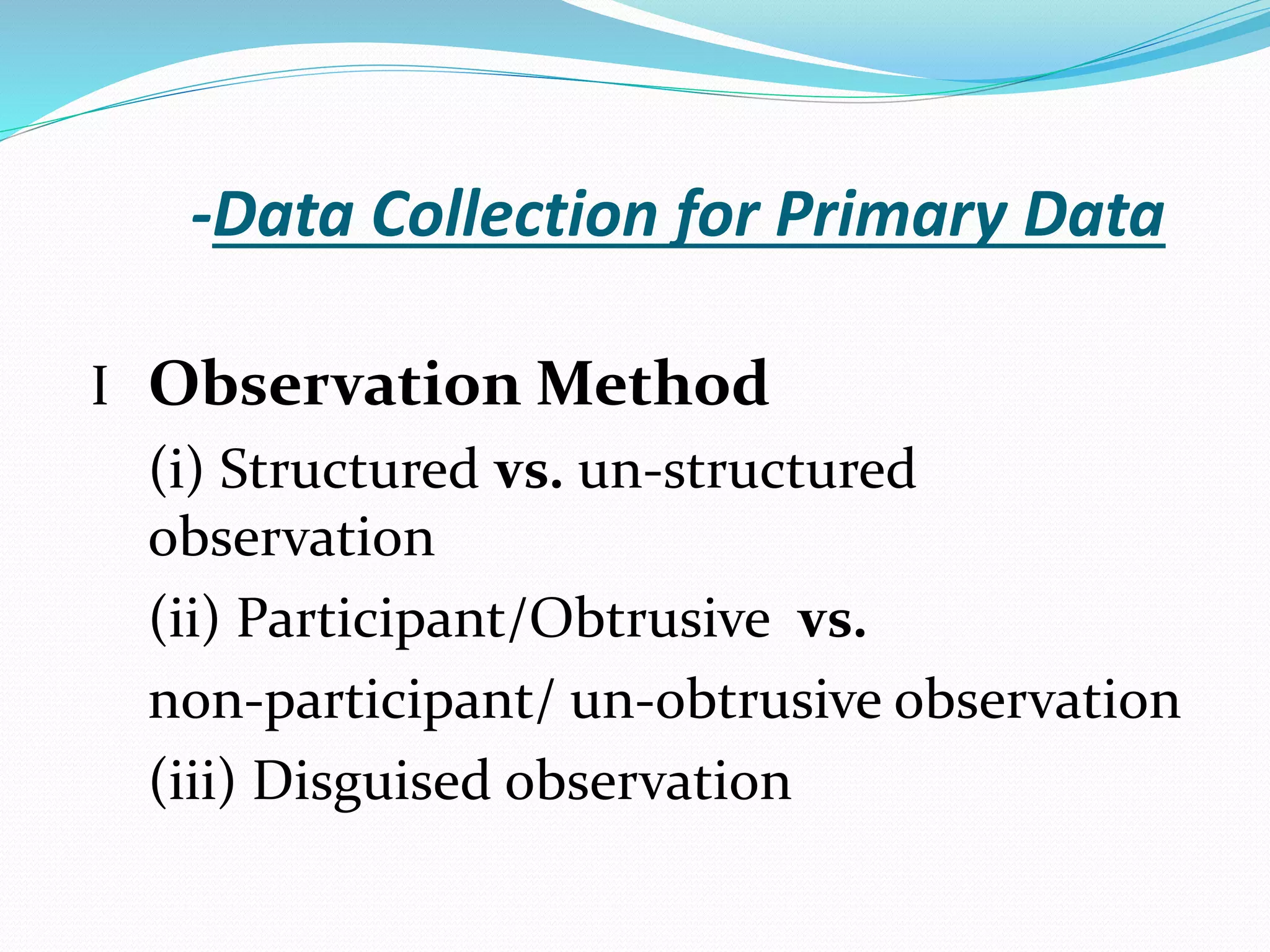
-Data Collection for Primary Data
I Observation Method
(i) Structured vs. un-structured
observation
(ii) Participant/Obtrusive vs.
non-participant/ un-obtrusive observation
(iii) Disguised observation
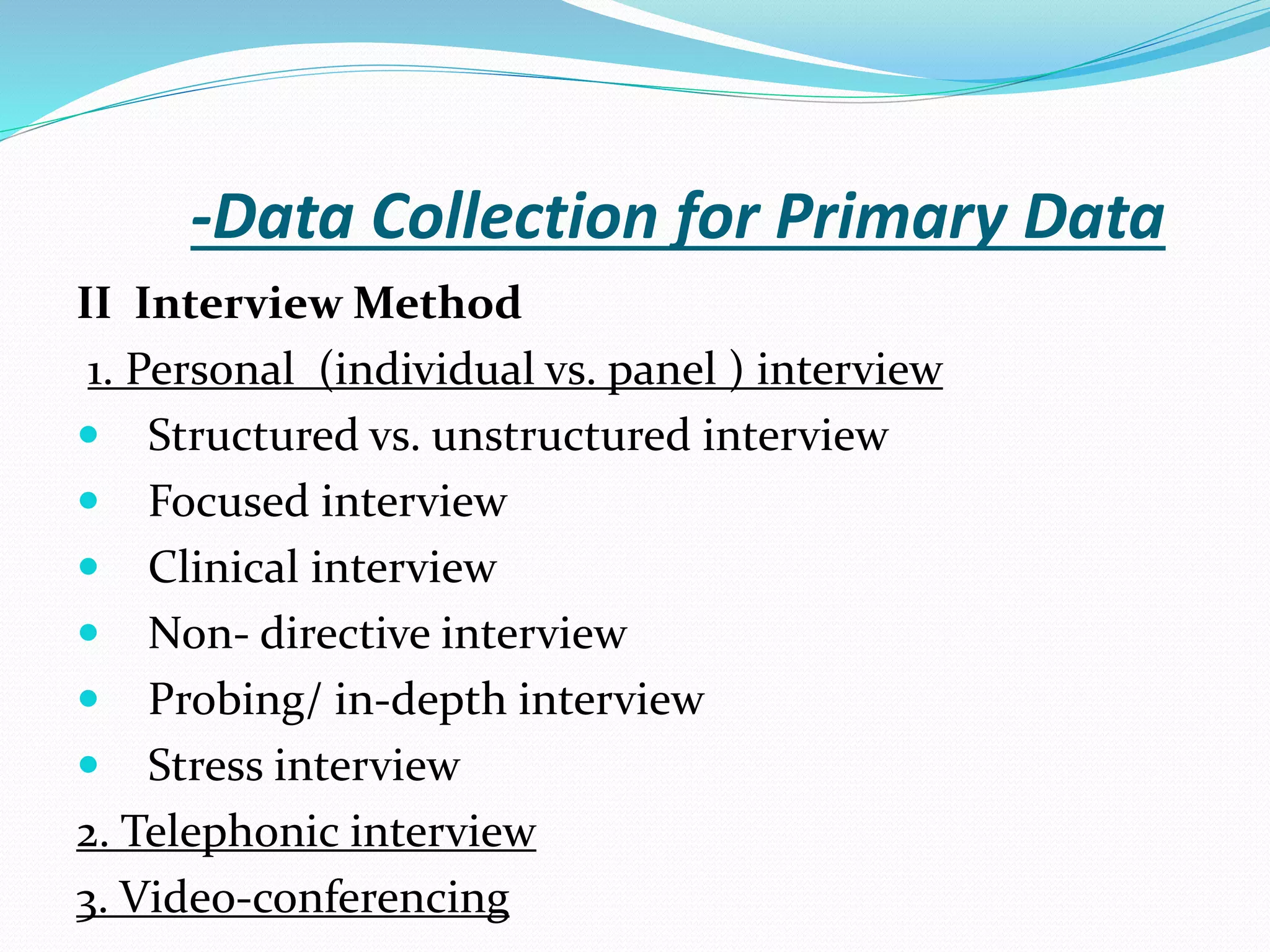
-Data Collection for Primary Data
II Interview Method
1. Personal (individual vs. panel ) interview
 Structured vs. unstructured interview
 Focused interview
 Clinical interview
 Non- directive interview
 Probing/ in-depth interview
 Stress interview
2. Telephonic interview
3. Video-conferencing
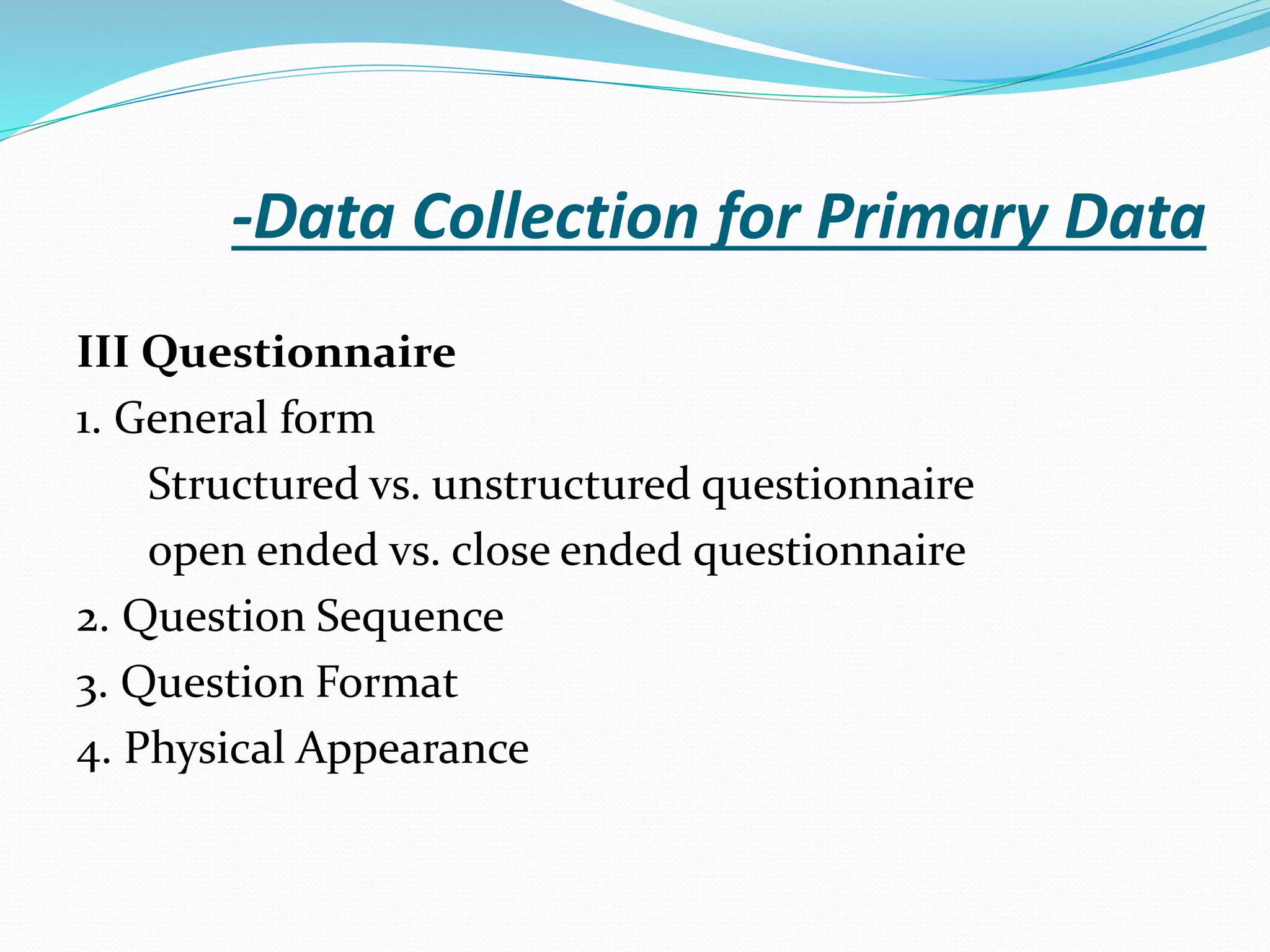
-Data Collection for Primary Data
III Questionnaire
1. General form
Structured vs. unstructured questionnaire
open ended vs. close ended questionnaire
2. Question Sequence
3. Question Format
4. Physical Appearance
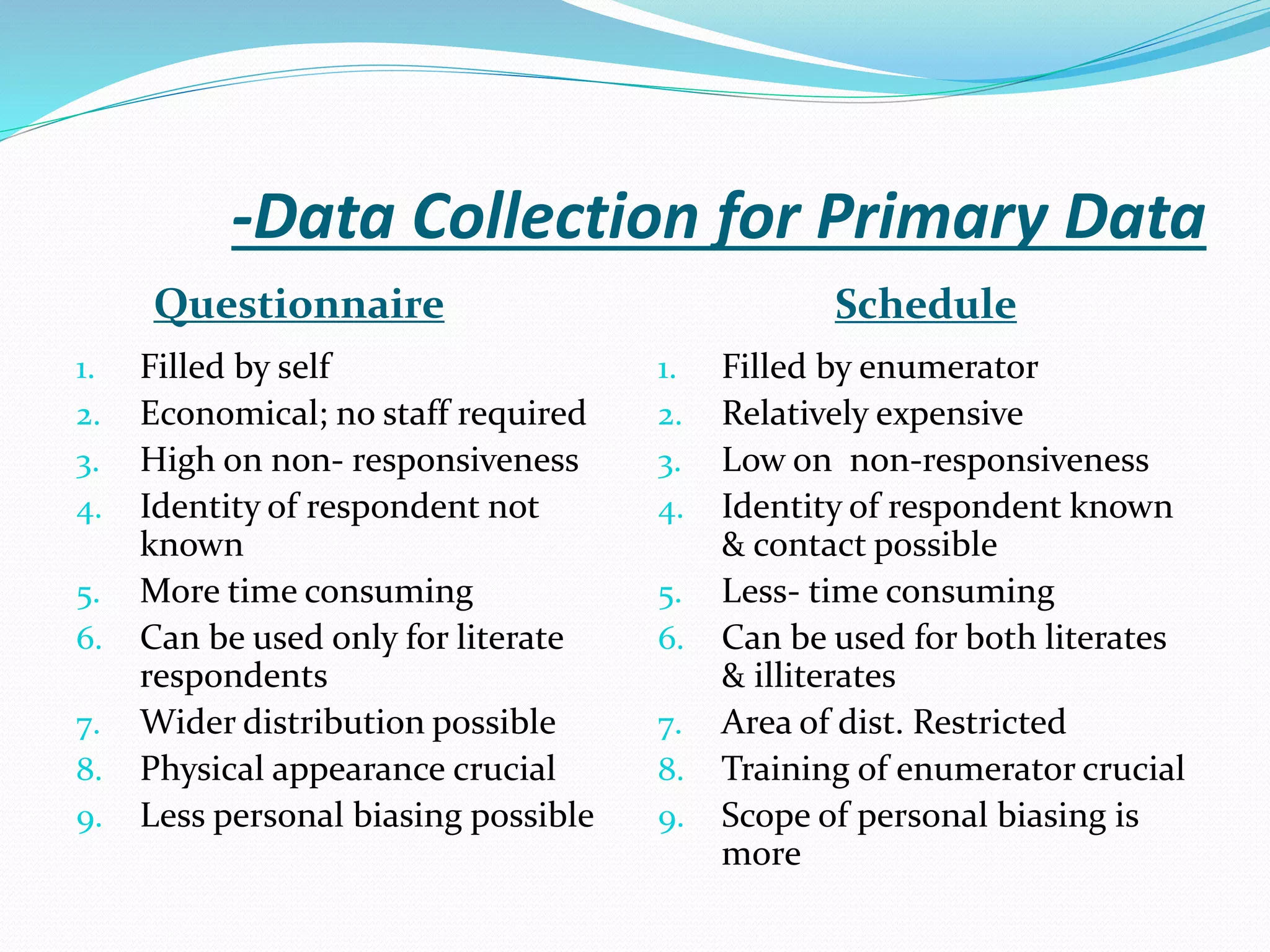
-Data Collection for Primary Data
Questionnaire Schedule
1. Filled by self
2. Economical; no staff required
3. High on non- responsiveness
4. Identity of respondent not
known
5. More time consuming
6. Can be used only for literate
respondents
7. Wider distribution possible
8. Physical appearance crucial
9. Less personal biasing possible
1. Filled by enumerator
2. Relatively expensive
3. Low on non-responsiveness
4. Identity of respondent known
& contact possible
5. Less- time consuming
6. Can be used for both literates
& illiterates
7. Area of dist. Restricted
8. Training of enumerator crucial
9. Scope of personal biasing is
more
-Data Collection for Primary Data
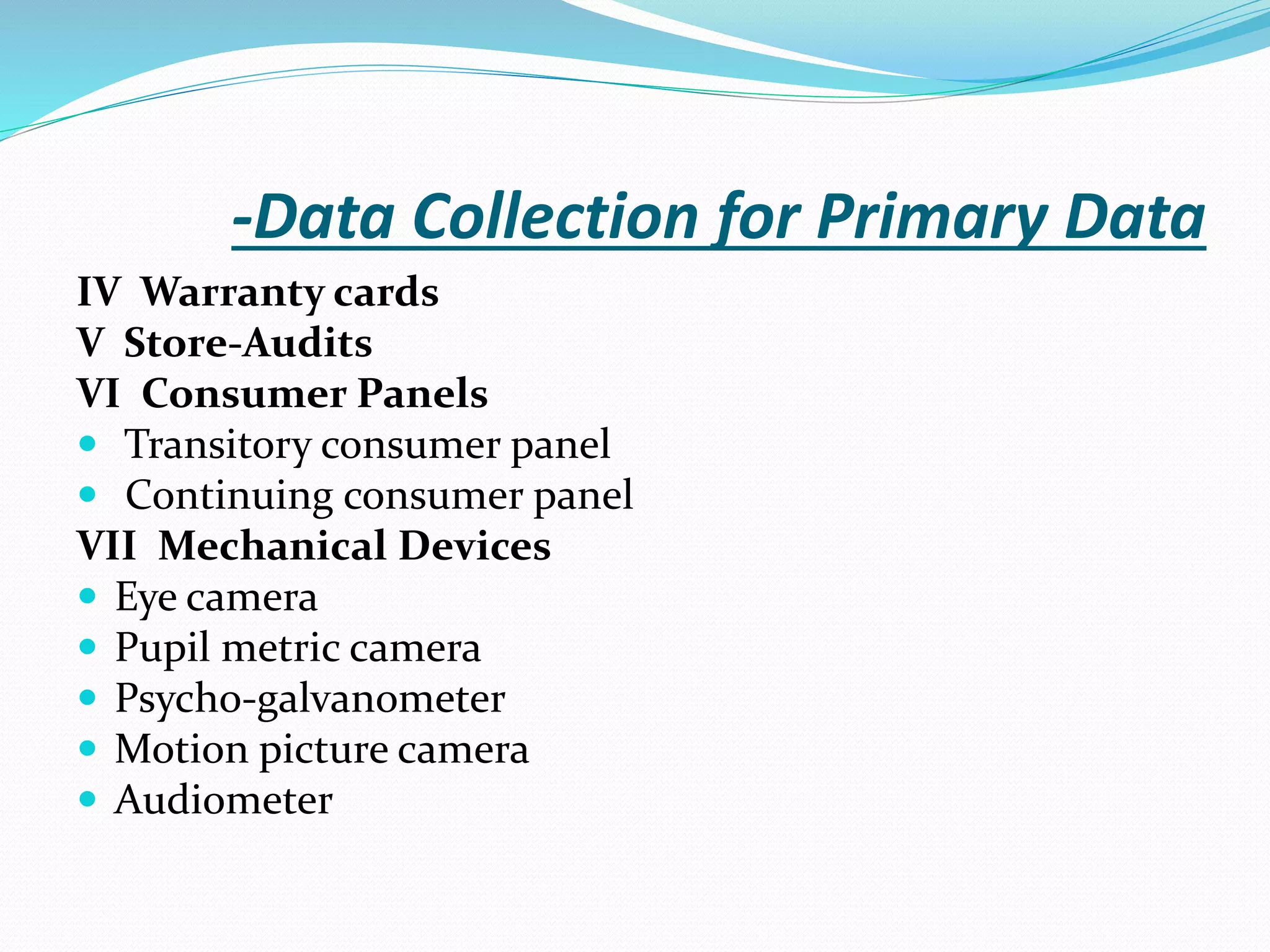
IV Warranty cards
V Store-Audits
VI Consumer Panels
 Transitory consumer panel
 Continuing consumer panel
VII Mechanical Devices
 Eye camera
 Pupil metric camera
 Psycho-galvanometer
 Motion picture camera
 Audiometer
-Data Collection for Primary Data
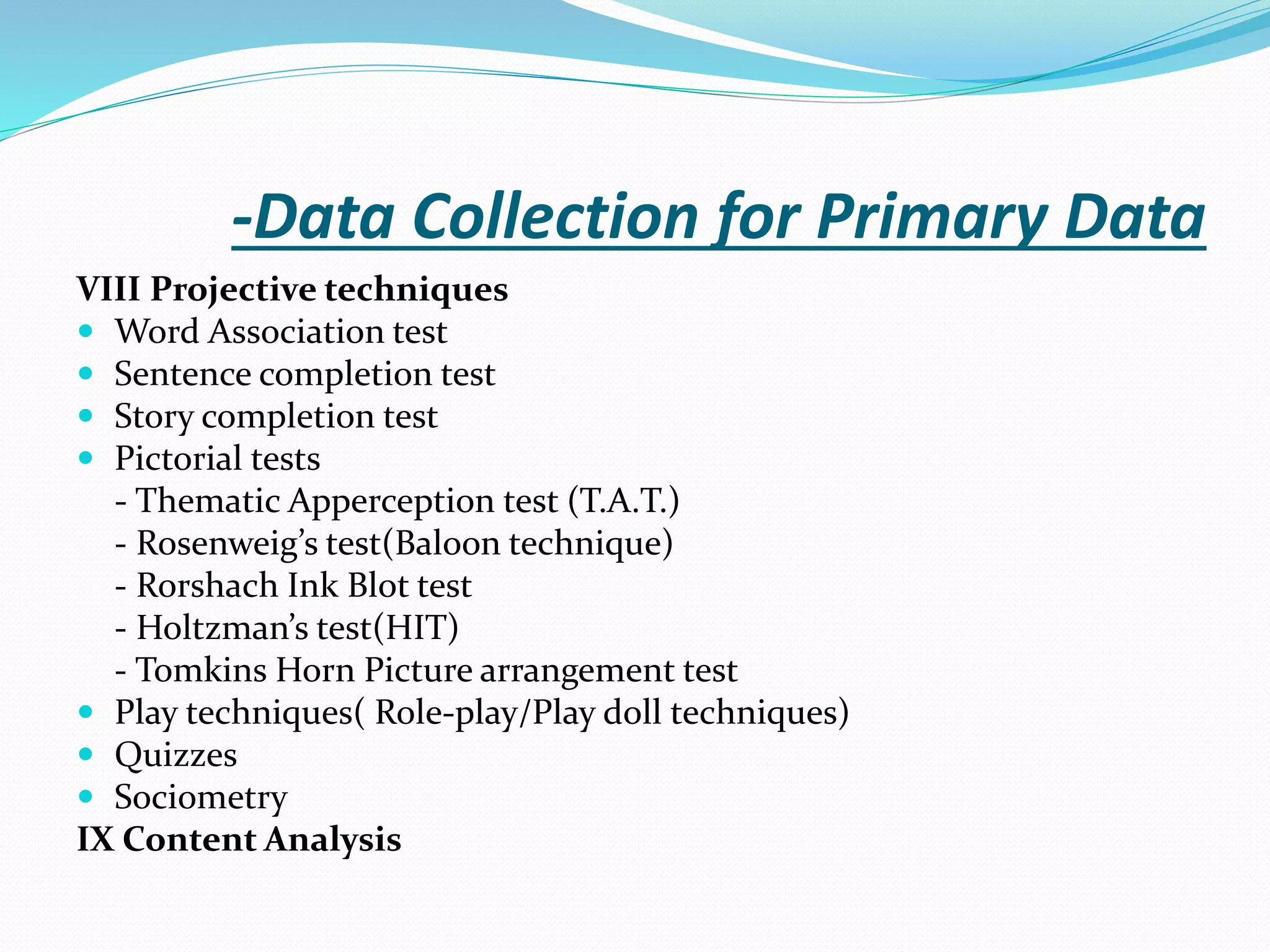
VIII Projective techniques
 Word Association test
 Sentence completion test
 Story completion test
 Pictorial tests
- Thematic Apperception test (T.A.T.)
- Rosenweig’s test(Baloon technique)
- Rorshach Ink Blot test
- Holtzman’s test(HIT)
- Tomkins Horn Picture arrangement test
 Play techniques( Role-play/Play doll techniques)
 Quizzes
 Sociometry
IX Content Analysis
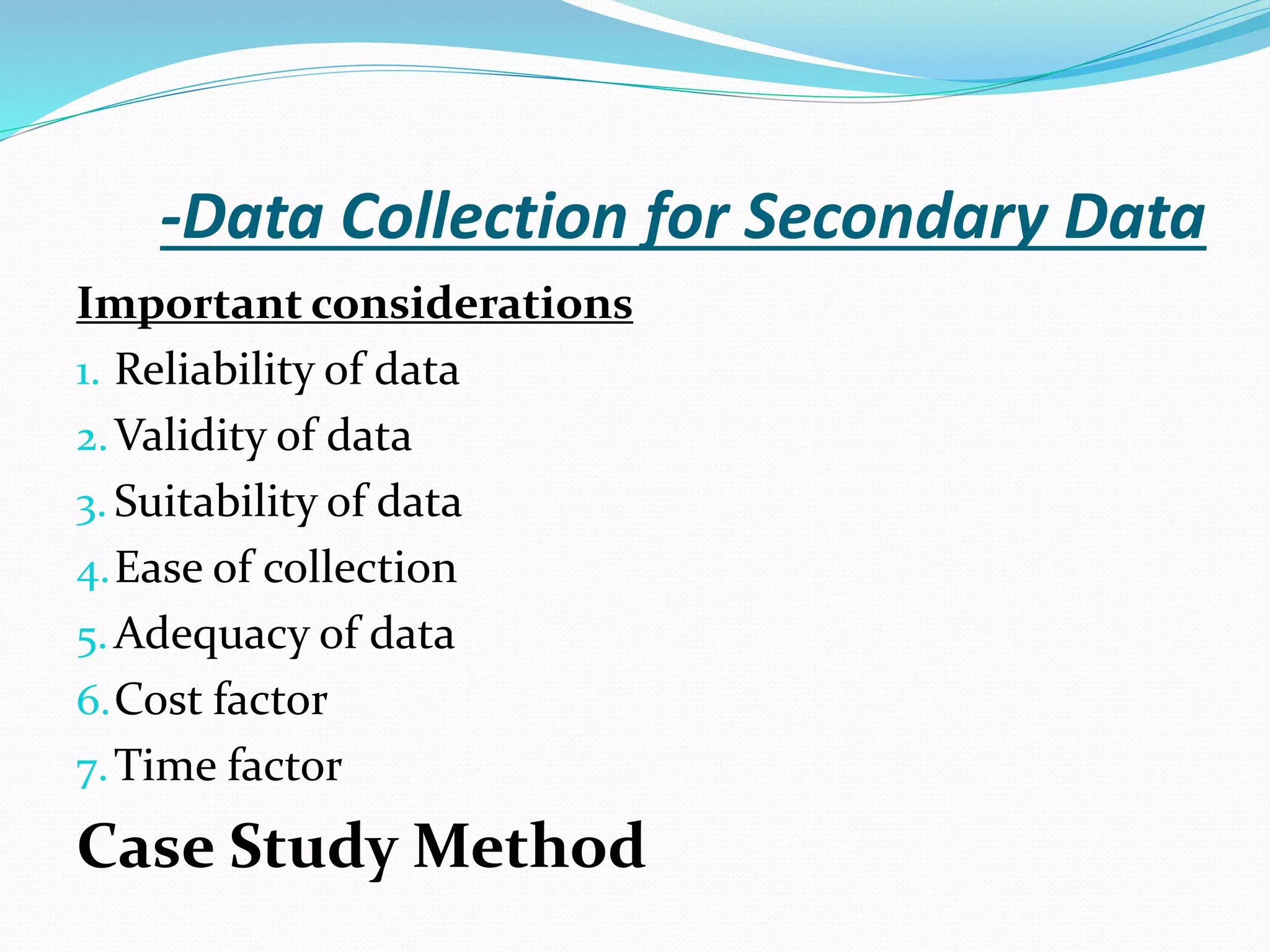
-Data Collection for Secondary Data
Important considerations
1. Reliability of data
2.Validity of data
3. Suitability of data
4.Ease of collection
5.Adequacy of data
6.Cost factor
7.Time factor
Case Study Method

Data Collection.pptx

  • 1.
    I Primary Data IISecondary Data
  • 2.
    -Data Collection forPrimary Data I Observation Method (i) Structured vs. un-structured observation (ii) Participant/Obtrusive vs. non-participant/ un-obtrusive observation (iii) Disguised observation
  • 3.
    -Data Collection forPrimary Data II Interview Method 1. Personal (individual vs. panel ) interview  Structured vs. unstructured interview  Focused interview  Clinical interview  Non- directive interview  Probing/ in-depth interview  Stress interview 2. Telephonic interview 3. Video-conferencing
  • 4.
    -Data Collection forPrimary Data III Questionnaire 1. General form Structured vs. unstructured questionnaire open ended vs. close ended questionnaire 2. Question Sequence 3. Question Format 4. Physical Appearance
  • 5.
    -Data Collection forPrimary Data Questionnaire Schedule 1. Filled by self 2. Economical; no staff required 3. High on non- responsiveness 4. Identity of respondent not known 5. More time consuming 6. Can be used only for literate respondents 7. Wider distribution possible 8. Physical appearance crucial 9. Less personal biasing possible 1. Filled by enumerator 2. Relatively expensive 3. Low on non-responsiveness 4. Identity of respondent known & contact possible 5. Less- time consuming 6. Can be used for both literates & illiterates 7. Area of dist. Restricted 8. Training of enumerator crucial 9. Scope of personal biasing is more
  • 6.
    -Data Collection forPrimary Data IV Warranty cards V Store-Audits VI Consumer Panels  Transitory consumer panel  Continuing consumer panel VII Mechanical Devices  Eye camera  Pupil metric camera  Psycho-galvanometer  Motion picture camera  Audiometer
  • 7.
    -Data Collection forPrimary Data VIII Projective techniques  Word Association test  Sentence completion test  Story completion test  Pictorial tests - Thematic Apperception test (T.A.T.) - Rosenweig’s test(Baloon technique) - Rorshach Ink Blot test - Holtzman’s test(HIT) - Tomkins Horn Picture arrangement test  Play techniques( Role-play/Play doll techniques)  Quizzes  Sociometry IX Content Analysis
  • 8.
    -Data Collection forSecondary Data Important considerations 1. Reliability of data 2.Validity of data 3. Suitability of data 4.Ease of collection 5.Adequacy of data 6.Cost factor 7.Time factor Case Study Method