


360 Degree Appraisal 
Presented By: 
Veer Pratap Singh 
13DM056
INTRODUCTION 
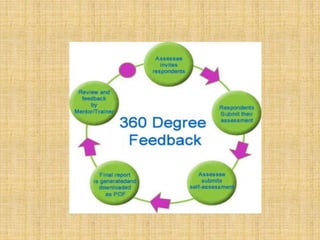
• The 360 evaluation feedback method was first used in the 1940s. 
• 360-degree feedback or multi-source feedback is an appraisal or performance 
assessment tool that incorporates feedback from all who observe and are 
affected by the performance of a candidate. 
• Usually, this tool is used for employees at middle and senior level. The 
complexity of their roles enables the organization to generate sufficient data 
from all stakeholders for a meaningful assessment.
 What does 360 degree appraisal measure? 
• 360 degree measures manners and capacities. 
• 360 degree improves such skills as listening, planning and goal-setting. 
• 360 degree concentrates on subjective areas, for example efficiencies of 
teamwork, character, and leadership. 
• 360 degree supplies on the way others think about a specific staff.
 WHICH ORGANISATIONS USE THIS TO ASSESS EMPLOYEE PERFORMANCE? 
• Most organizations that focus on employee development use the 360-degree tool to 
assess performance and potential of staff and enable the employees to map their 
career path based on the feedback. 
• Organizations take 360-degree feedback about an employee before taking a major 
decision about the professional's career. 
• The results from 360-degree feedback are often used by the person receiving the 
feedback to plan training and development. 
• Results are also used by some organizations in making administrative decisions, such 
as pay or promotion.
 Participants in 360 Degree Appraisal: 
• Subordinates 
• Peers 
• Managers ( Superiors) 
• Team Members 
• Customers 
• Suppliers/ Vendors
 Advantages: 
• Offer a more comprehensive view towards the performance of employees. 
• Improve credibility of performance appraisal. 
• Such colleague’s feedback will help strengthen self-development. 
• Increases responsibilities of employees to their customers. 
• The mix of ideas can give a more accurate assessment. 
• Opinions gathered from lots of staff are sure to be more persuasive. 
• People who undervalue themselves are often motivated by feedback from 
others. 
• If more staff takes part in the process of performance appraisal, the 
organizational culture of the company will become more honest.
 Disadvantages: 
• Taking a lot of time, and being complex in administration 
• Extension of exchange feedback can cause troubles and tensions to several staff. 
• There is requirement for training and important effort in order to achieve 
efficient working. 
• It will be very hard to figure out the results. 
• Feedback can be useless if it is not carefully and smoothly dealt. 
• Can impose an environment of suspicion if the information is not openly and 
honestly managed.
HOW TO USE 360 APPRAISAL EFFECTIVELY 
• Make it easy to use. 
• Focus on the top three behaviors 
• Tell the managers exactly how to change 
• Don’t include norms or self rating 
• Drive accountability
360 Degree Appraisal System

360 Degree Appraisal System

  • 1.
    360 Degree Appraisal Presented By: Veer Pratap Singh 13DM056
  • 2.
    INTRODUCTION • The360 evaluation feedback method was first used in the 1940s. • 360-degree feedback or multi-source feedback is an appraisal or performance assessment tool that incorporates feedback from all who observe and are affected by the performance of a candidate. • Usually, this tool is used for employees at middle and senior level. The complexity of their roles enables the organization to generate sufficient data from all stakeholders for a meaningful assessment.
  • 3.
     What does360 degree appraisal measure? • 360 degree measures manners and capacities. • 360 degree improves such skills as listening, planning and goal-setting. • 360 degree concentrates on subjective areas, for example efficiencies of teamwork, character, and leadership. • 360 degree supplies on the way others think about a specific staff.
  • 4.
     WHICH ORGANISATIONSUSE THIS TO ASSESS EMPLOYEE PERFORMANCE? • Most organizations that focus on employee development use the 360-degree tool to assess performance and potential of staff and enable the employees to map their career path based on the feedback. • Organizations take 360-degree feedback about an employee before taking a major decision about the professional's career. • The results from 360-degree feedback are often used by the person receiving the feedback to plan training and development. • Results are also used by some organizations in making administrative decisions, such as pay or promotion.
  • 5.
     Participants in360 Degree Appraisal: • Subordinates • Peers • Managers ( Superiors) • Team Members • Customers • Suppliers/ Vendors
  • 8.
     Advantages: •Offer a more comprehensive view towards the performance of employees. • Improve credibility of performance appraisal. • Such colleague’s feedback will help strengthen self-development. • Increases responsibilities of employees to their customers. • The mix of ideas can give a more accurate assessment. • Opinions gathered from lots of staff are sure to be more persuasive. • People who undervalue themselves are often motivated by feedback from others. • If more staff takes part in the process of performance appraisal, the organizational culture of the company will become more honest.
  • 9.
     Disadvantages: •Taking a lot of time, and being complex in administration • Extension of exchange feedback can cause troubles and tensions to several staff. • There is requirement for training and important effort in order to achieve efficient working. • It will be very hard to figure out the results. • Feedback can be useless if it is not carefully and smoothly dealt. • Can impose an environment of suspicion if the information is not openly and honestly managed.
  • 10.
    HOW TO USE360 APPRAISAL EFFECTIVELY • Make it easy to use. • Focus on the top three behaviors • Tell the managers exactly how to change • Don’t include norms or self rating • Drive accountability