Developmental Research 
Methods 
Topic 12: Small N Research 
10/1/2014 CEDP 321/322 Ryan Sain, Ph.D. 1
Single Subject (small n) 
 Problems with group analysis 
◦ Individual differences are ignored 
 These are important factors! 
◦ This logic is based on farming analysis!
Single subject logic 
 The logic of single subject is high 
levels of internal validity (control) then 
replication. 
◦ Systematic replication 
◦ Direct replication
Experimental Single Subject 
Design 
 Using a subject as their own control 
◦ If we establish a pattern of responding 
◦ change that pattern of responding 
 exact moment the IV is present 
◦ conclude that it was the IV that had the 
effect
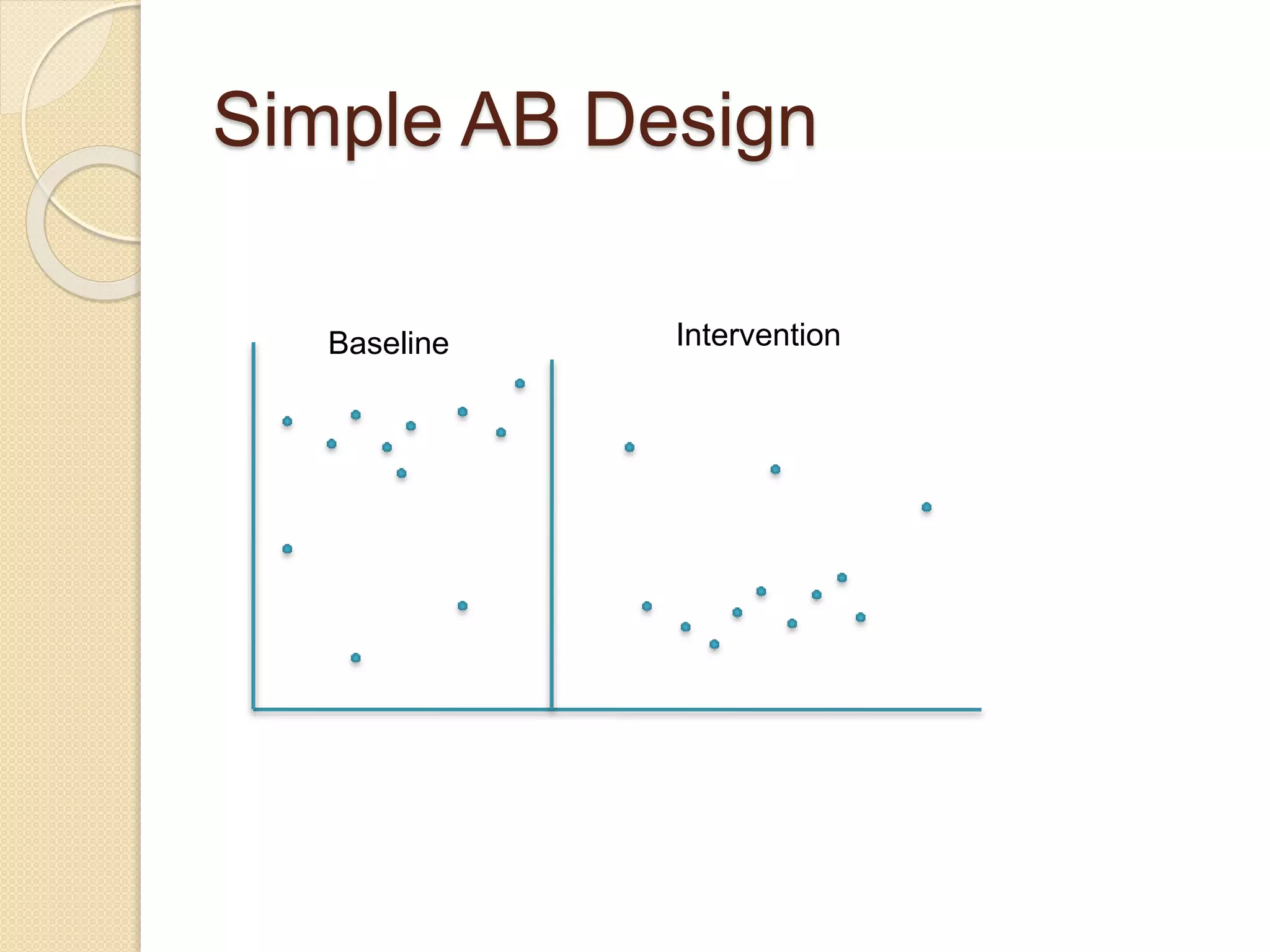
Simple AB Design 
Baseline Intervention
Reversal design 
• Shifting conditions – must be something 
that is not a permanent change 
• Baseline (Stability) 
• Treatment (stability) 
• Baseline (stability) 
• ABA designs 
• Ethics
ABA Design 
Baseline Intervention Baseline 2
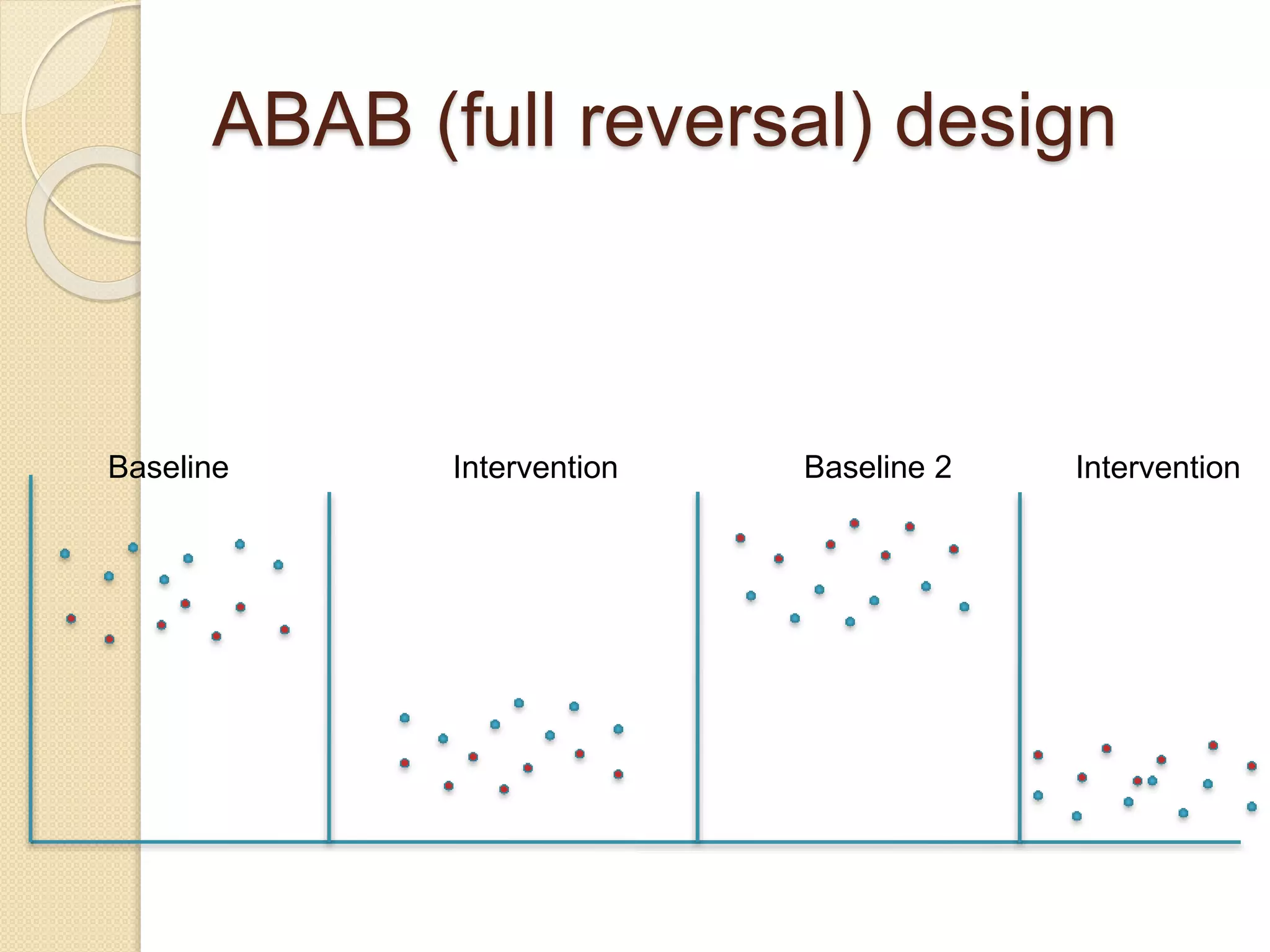
ABAB Design 
 Full reversal 
 Cannot be permanent change 
 Ethics 
 Showing effects across people
ABAB (full reversal) design 
Baseline Intervention Baseline 2 Intervention
ABAC Design 
Baseline Intervention Baseline 2 Intervention 2
Multiple Baseline 
 Several individuals 
 Baselines overlap to control for 
environmental variables. 
 The treatment is then introduced at 
different times for each 
 If the behavior changes in each 
person at the treatment time, then the 
IV has the effect.
Multiple Baseline 
Baseline Intervention 
Toks 
Home 
Qudsia 
Toks 
School 
Toks 
Toks 
Daycare 
Tusu

Psyc 321_12 small n research

  • 1.
    Developmental Research Methods Topic 12: Small N Research 10/1/2014 CEDP 321/322 Ryan Sain, Ph.D. 1
  • 2.
    Single Subject (smalln)  Problems with group analysis ◦ Individual differences are ignored  These are important factors! ◦ This logic is based on farming analysis!
  • 3.
    Single subject logic  The logic of single subject is high levels of internal validity (control) then replication. ◦ Systematic replication ◦ Direct replication
  • 4.
    Experimental Single Subject Design  Using a subject as their own control ◦ If we establish a pattern of responding ◦ change that pattern of responding  exact moment the IV is present ◦ conclude that it was the IV that had the effect
  • 5.
    Simple AB Design Baseline Intervention
  • 6.
    Reversal design •Shifting conditions – must be something that is not a permanent change • Baseline (Stability) • Treatment (stability) • Baseline (stability) • ABA designs • Ethics
  • 7.
    ABA Design BaselineIntervention Baseline 2
  • 8.
    ABAB Design Full reversal  Cannot be permanent change  Ethics  Showing effects across people
  • 9.
    ABAB (full reversal)design Baseline Intervention Baseline 2 Intervention
  • 10.
    ABAC Design BaselineIntervention Baseline 2 Intervention 2
  • 11.
    Multiple Baseline Several individuals  Baselines overlap to control for environmental variables.  The treatment is then introduced at different times for each  If the behavior changes in each person at the treatment time, then the IV has the effect.
  • 12.
    Multiple Baseline BaselineIntervention Toks Home Qudsia Toks School Toks Toks Daycare Tusu