



American Life in the “Roaring Twenties”1919-1929
What problems are shown in post-war America?
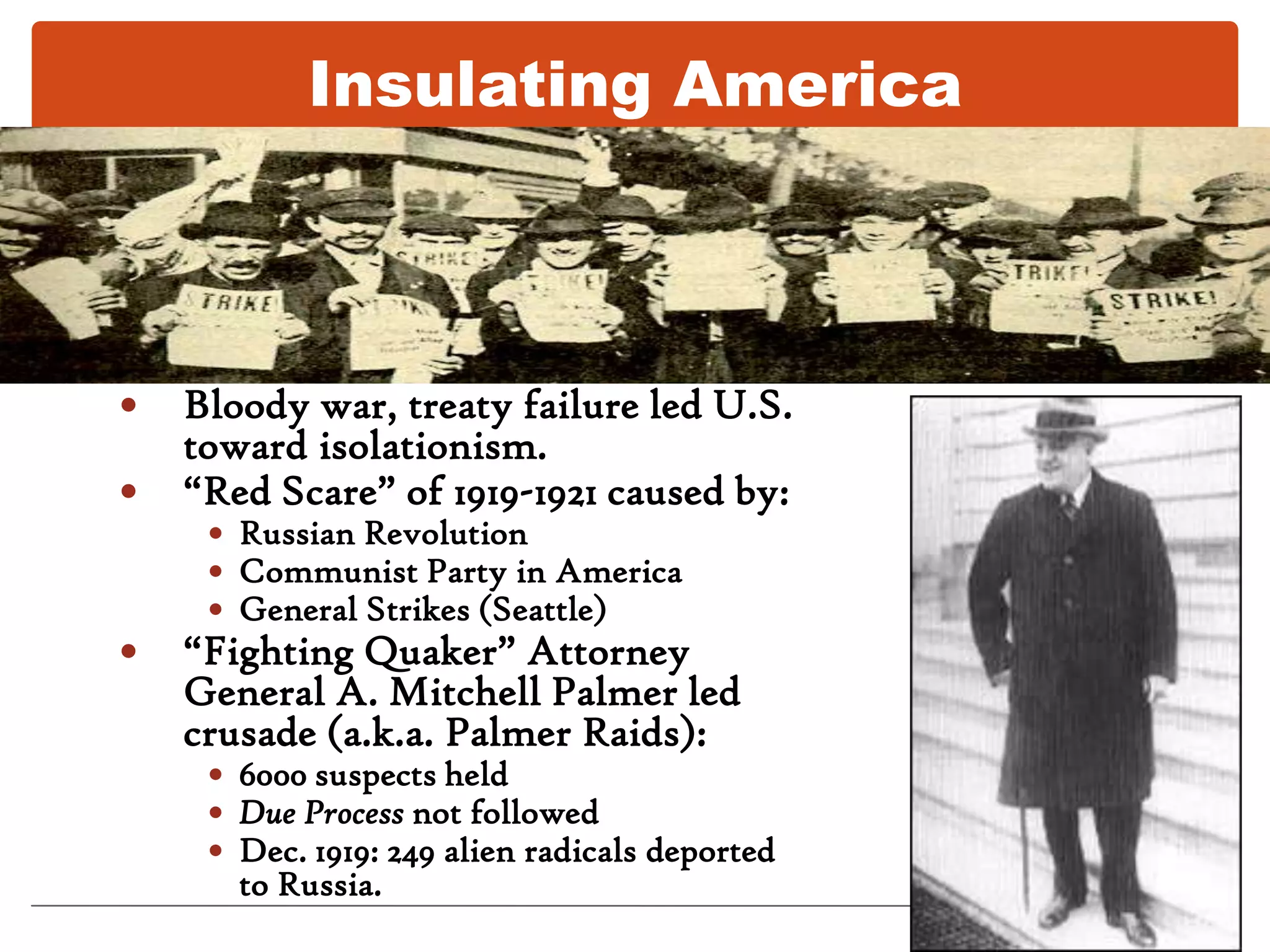
Insulating AmericaBloody war, treaty failure led U.S. toward isolationism.“Red Scare” of 1919-1921 caused by:Russian RevolutionCommunist Party in AmericaGeneral Strikes (Seattle)“Fighting Quaker” Attorney General A. Mitchell Palmer led crusade (a.k.a. Palmer Raids): 6000 suspects heldDue Process not followedDec. 1919: 249 alien radicals deported to Russia.
Rounding Up “Reds”
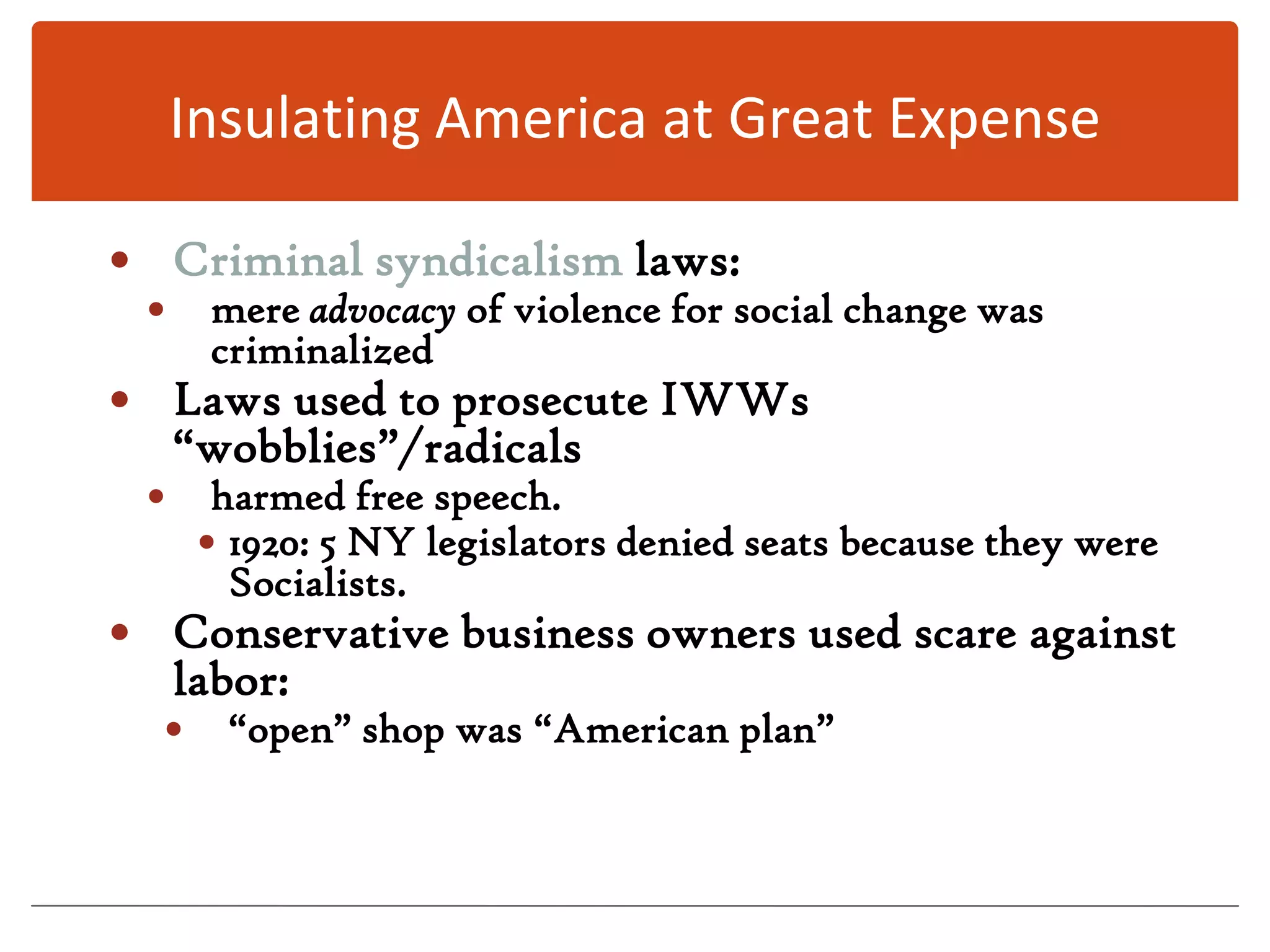
Insulating America at Great ExpenseCriminal syndicalism laws:mere advocacy of violence for social change was criminalizedLaws used to prosecute IWWs “wobblies”/radicalsharmed free speech.1920: 5 NY legislators denied seats because they were Socialists.Conservative business owners used scare against labor: “open” shop was “American plan”
Sacco and Vanzetti1921: Liberals regarded conviction of Sacco & Vanzetti as a “judicial lynching” because they were Italians, atheists, anarchists, draft dodgers.
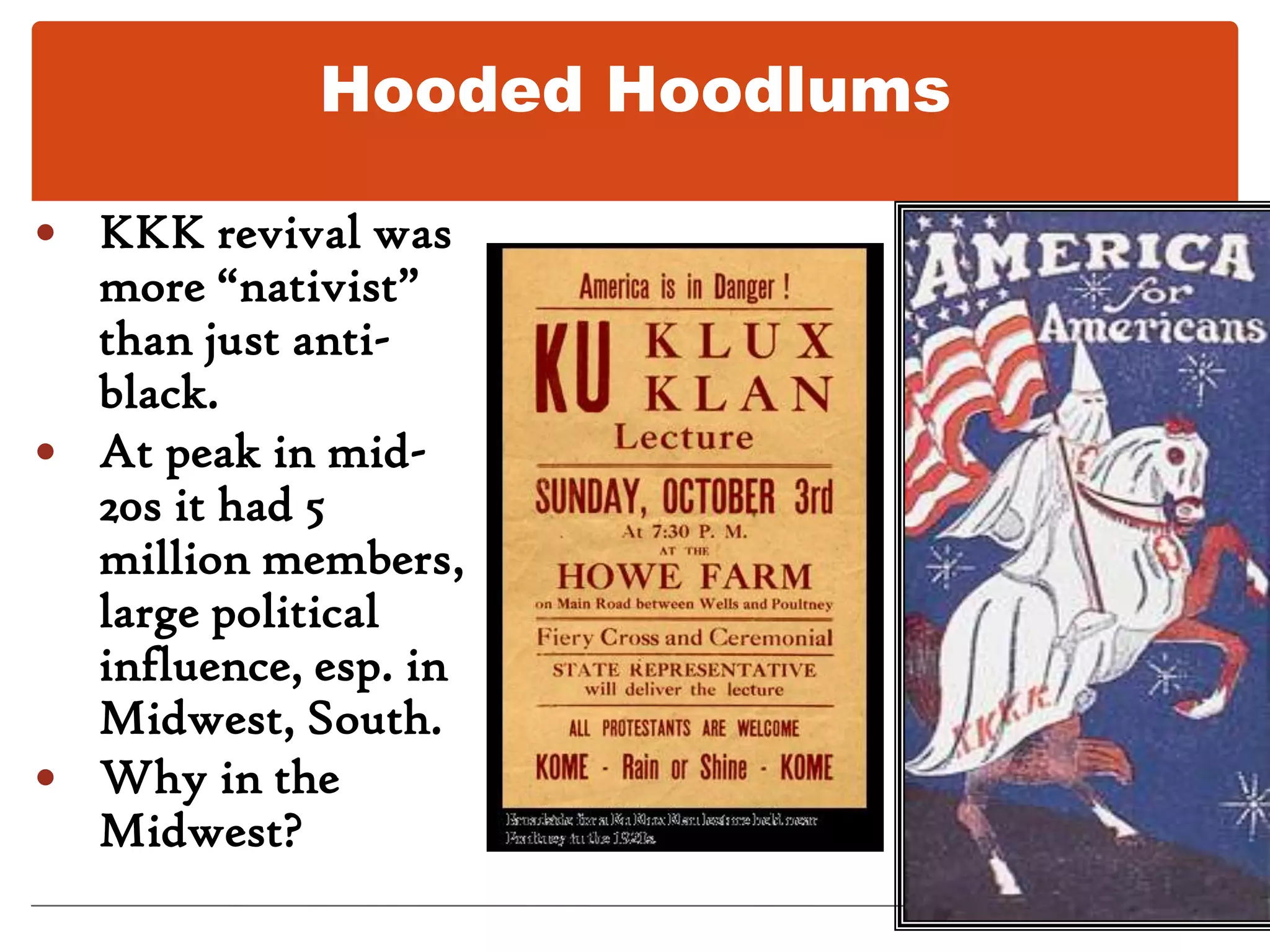
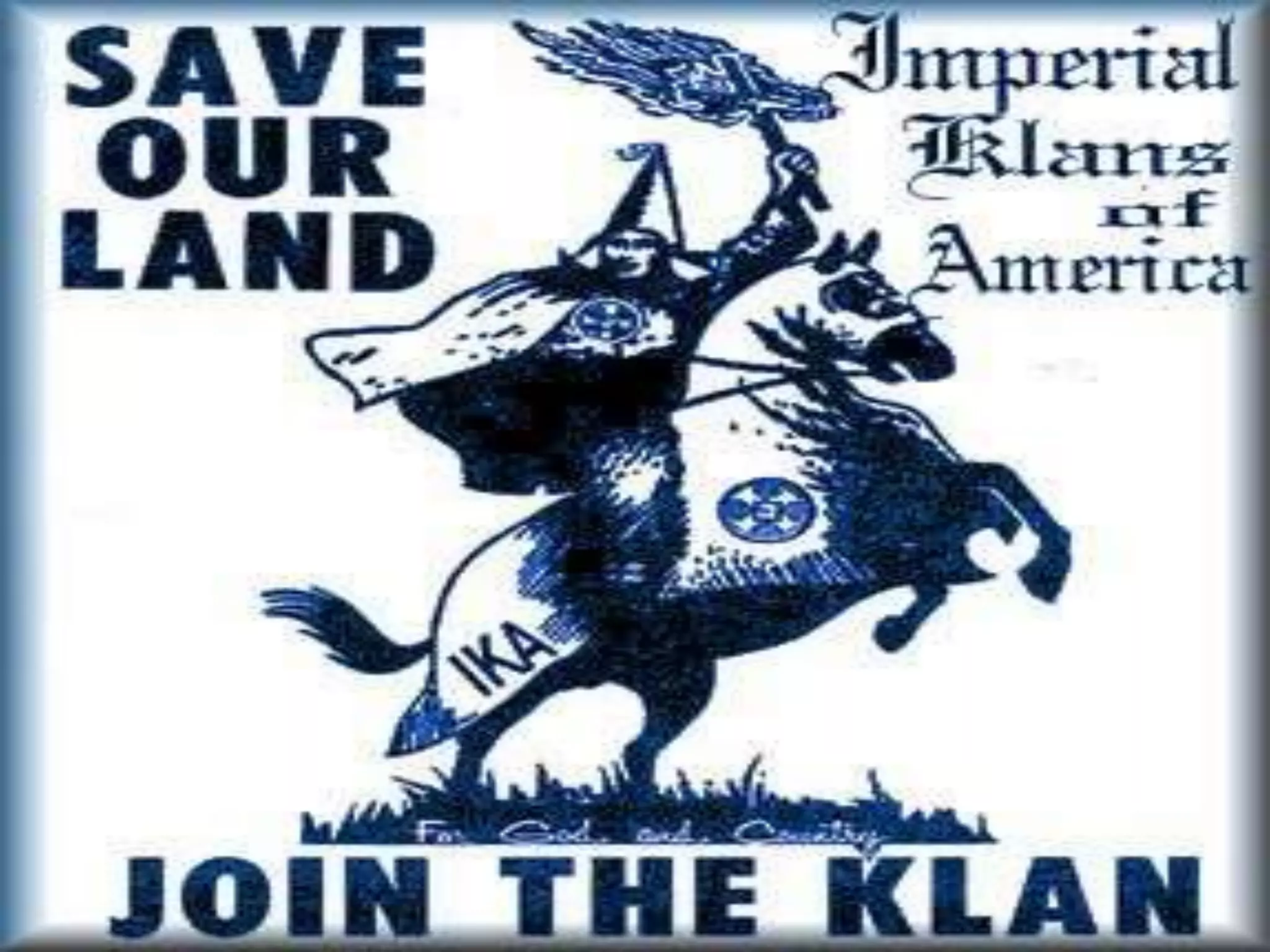
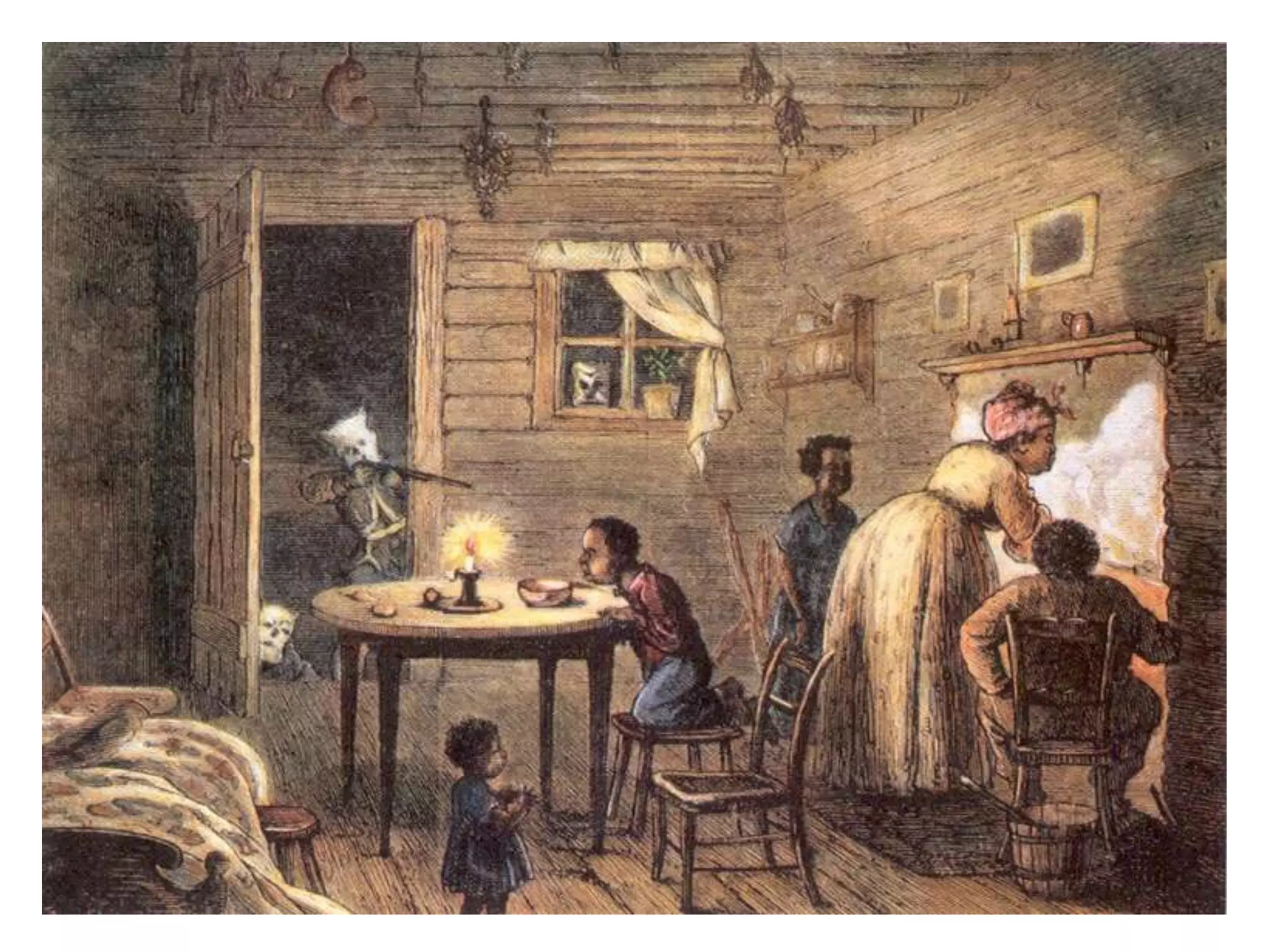
Hooded HoodlumsKKK revival was more “nativist” than just anti-black.At peak in mid-20s it had 5 million members, large political influence, esp. in Midwest, South.Why in the Midwest?
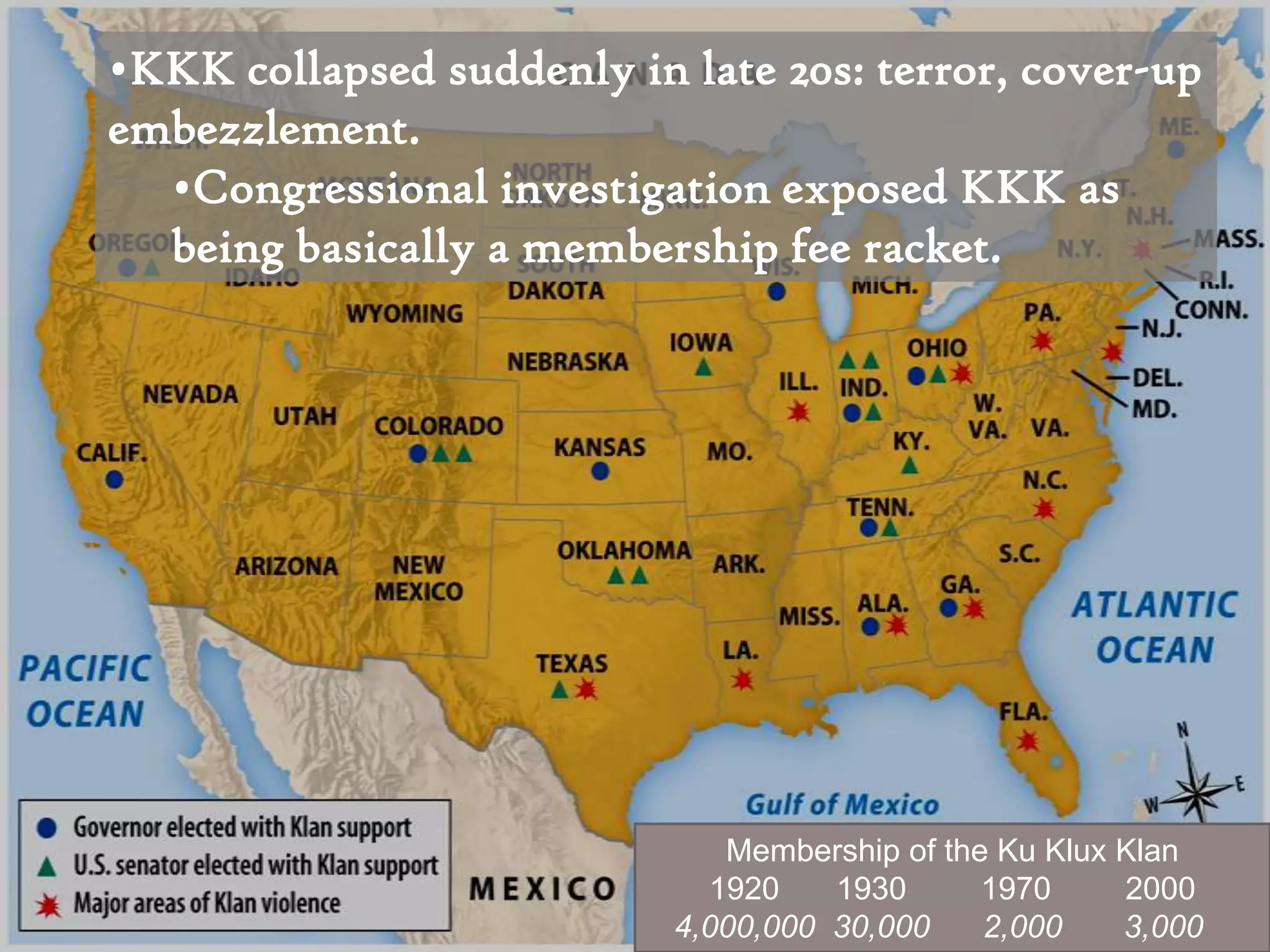
KKK collapsed suddenly in late 20s: terror, cover-up embezzlement.
Congressional investigation exposed KKK as being basically a membership fee racket.Membership of the Ku Klux Klan1920	1930 	  1970 	    2000   4,000,000  30,000      2,000       3,000
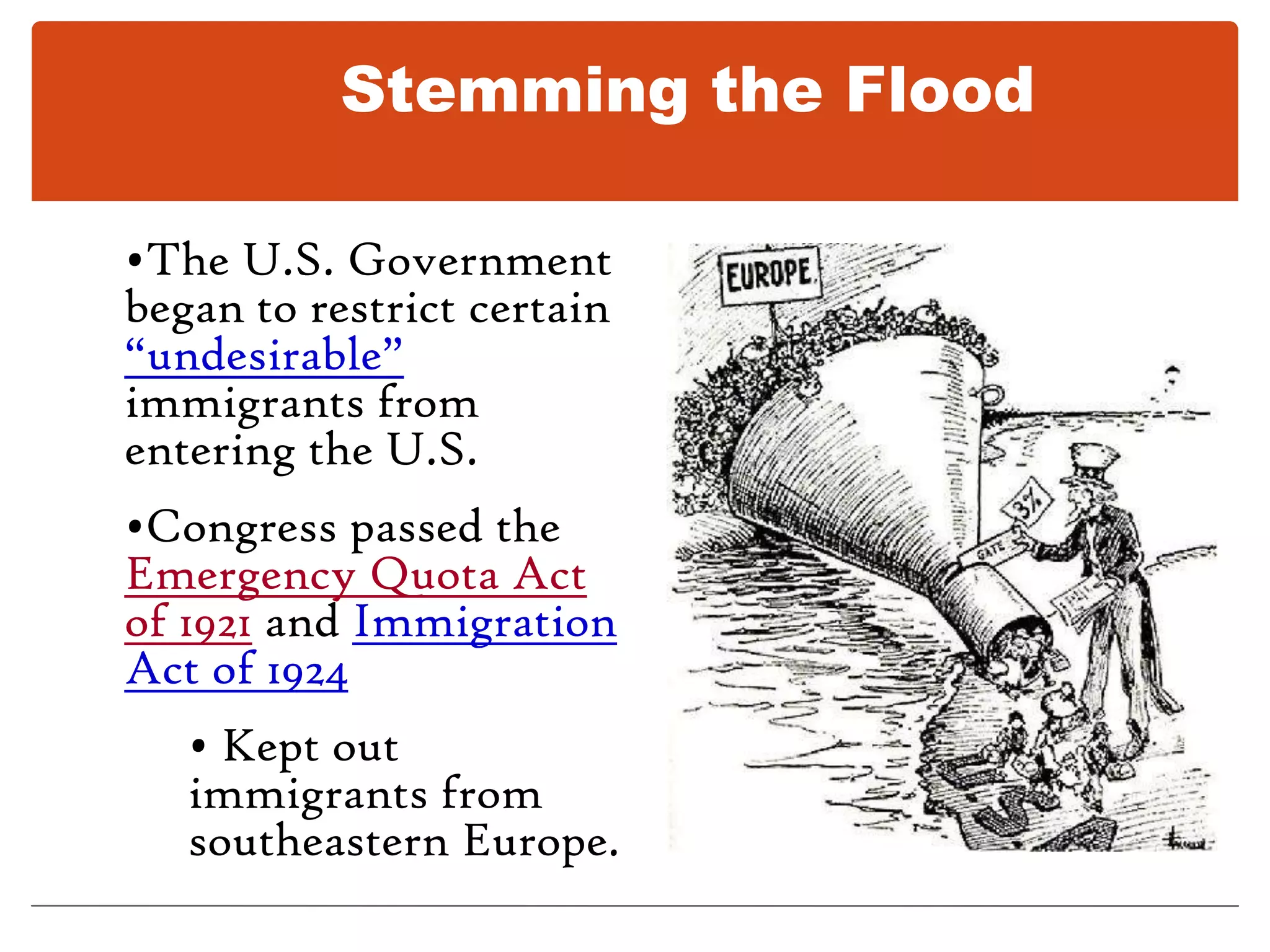
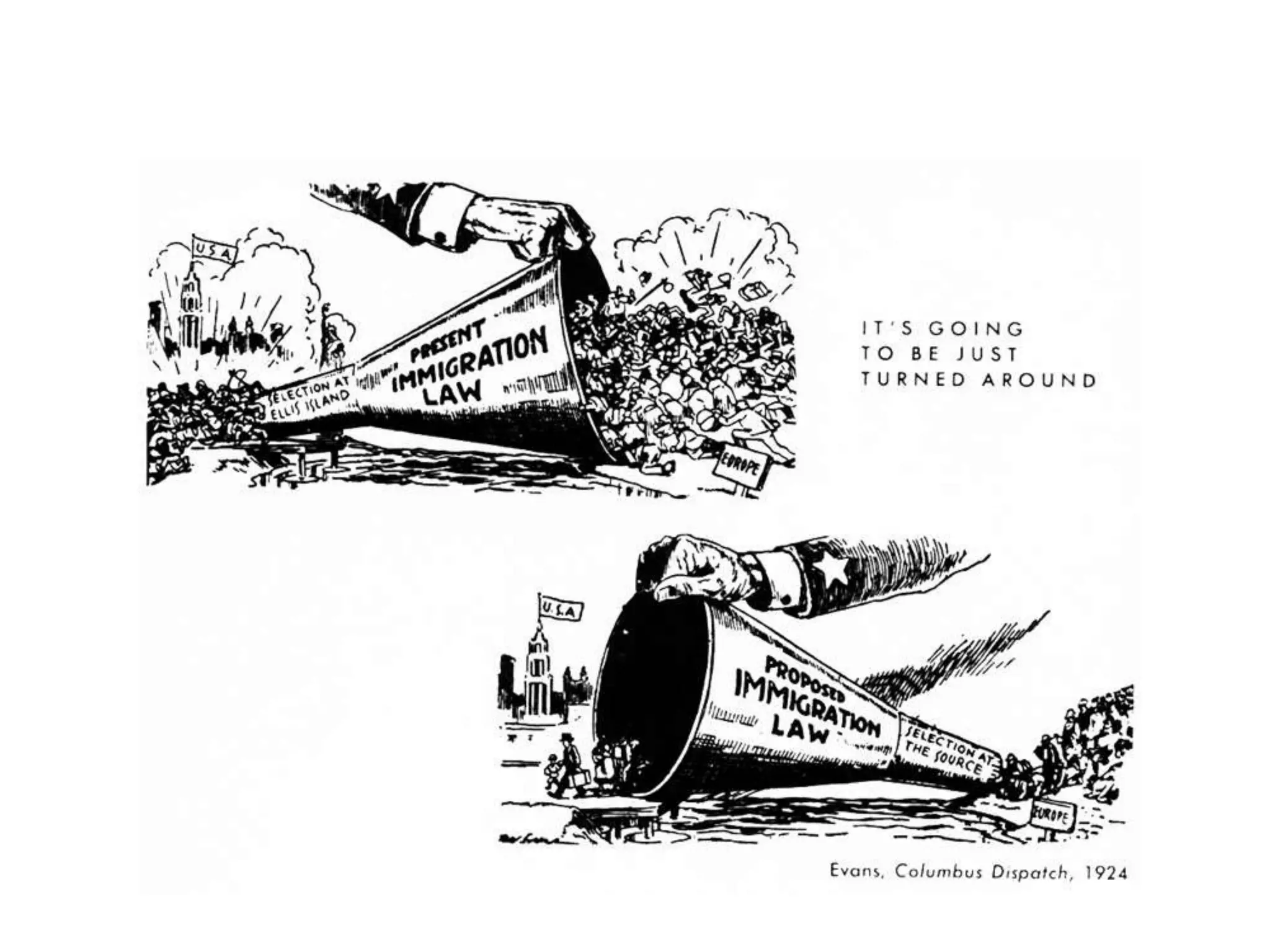
Stemming the FloodThe U.S. Government began to restrict certain “undesirable” immigrants from entering the U.S.
Congress passed the Emergency Quota Act of 1921 and Immigration Act of 1924
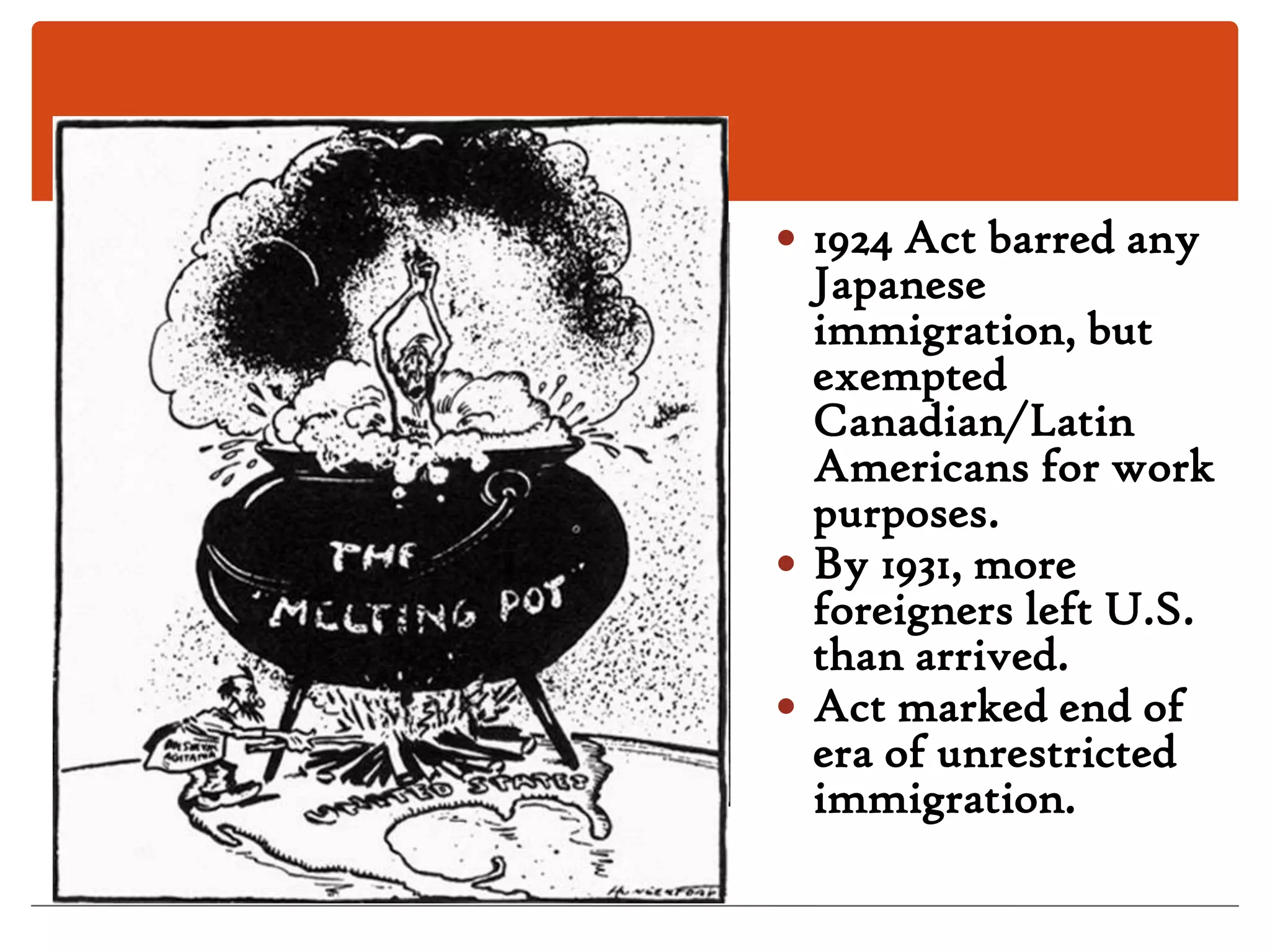
Kept out immigrants from southeastern Europe.1924 Act barred any Japanese immigration, but exempted Canadian/Latin Americans for work purposes.By 1931, more foreigners left U.S. than arrived.Act marked end of era of unrestricted immigration.
What is the most dangerous drug in America?
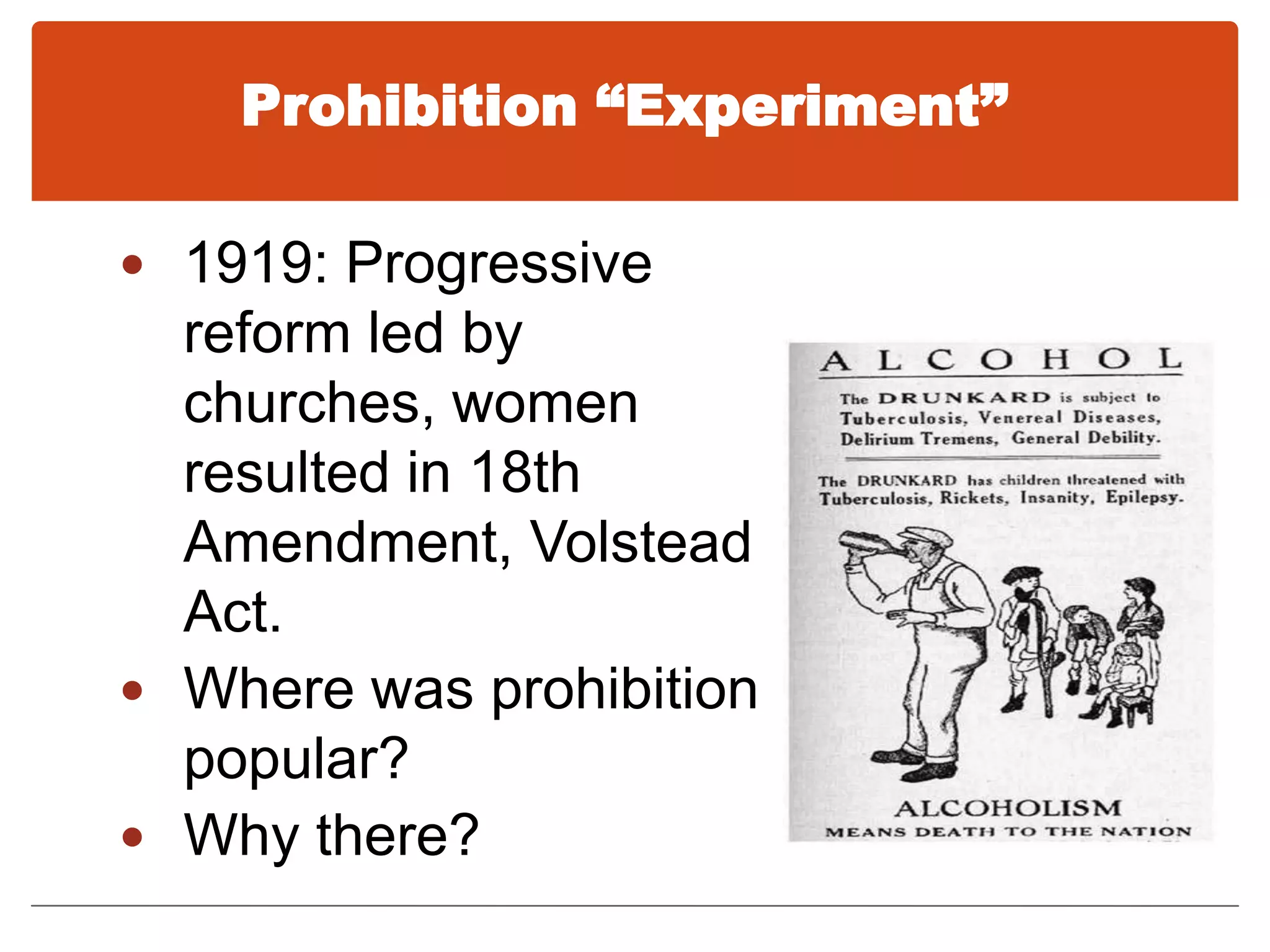
Prohibition “Experiment”1919: Progressive reform led by churches, women resulted in 18th Amendment, Volstead Act.Where was prohibition popular?Why there?
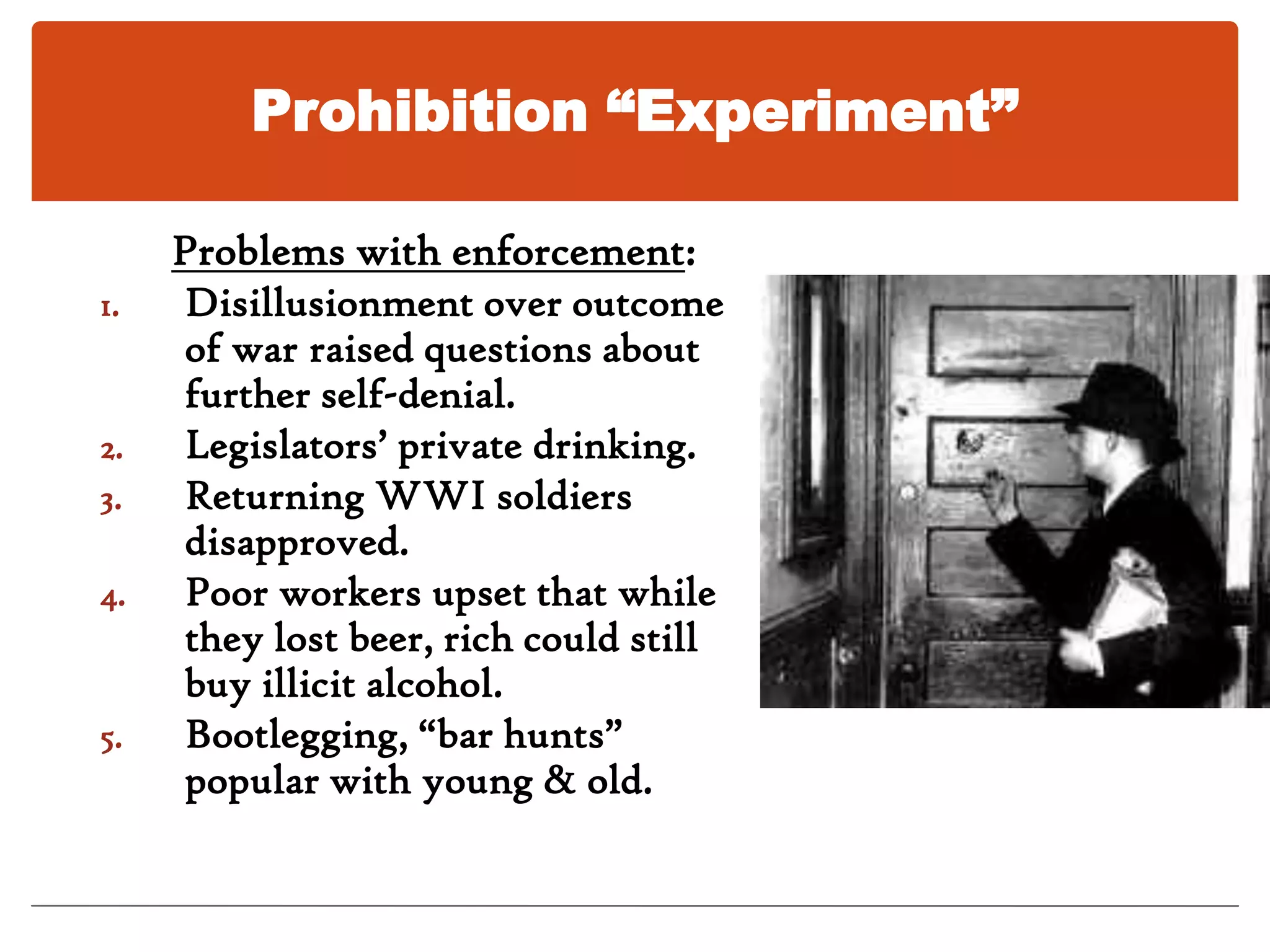
Prohibition “Experiment”Problems with enforcement:Disillusionment over outcome of war raised questions about further self-denial.Legislators’ private drinking.Returning WWI soldiers disapproved.Poor workers upset that while they lost beer, rich could still buy illicit alcohol.Bootlegging, “bar hunts” popular with young & old.
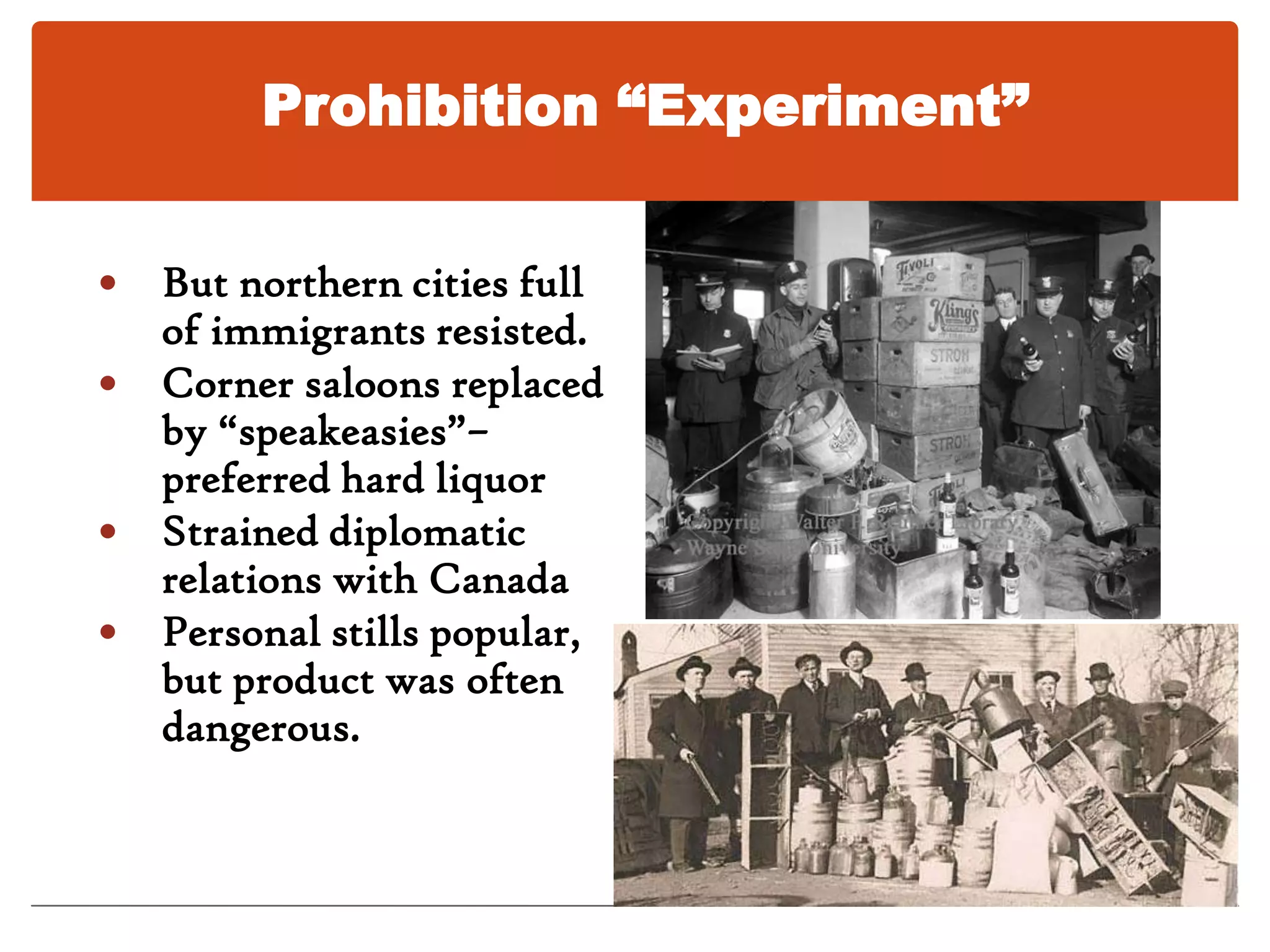
Prohibition “Experiment”But northern cities full of immigrants resisted.Corner saloons replaced by “speakeasies”– preferred hard liquorStrained diplomatic relations with CanadaPersonal stills popular, but product was often dangerous.
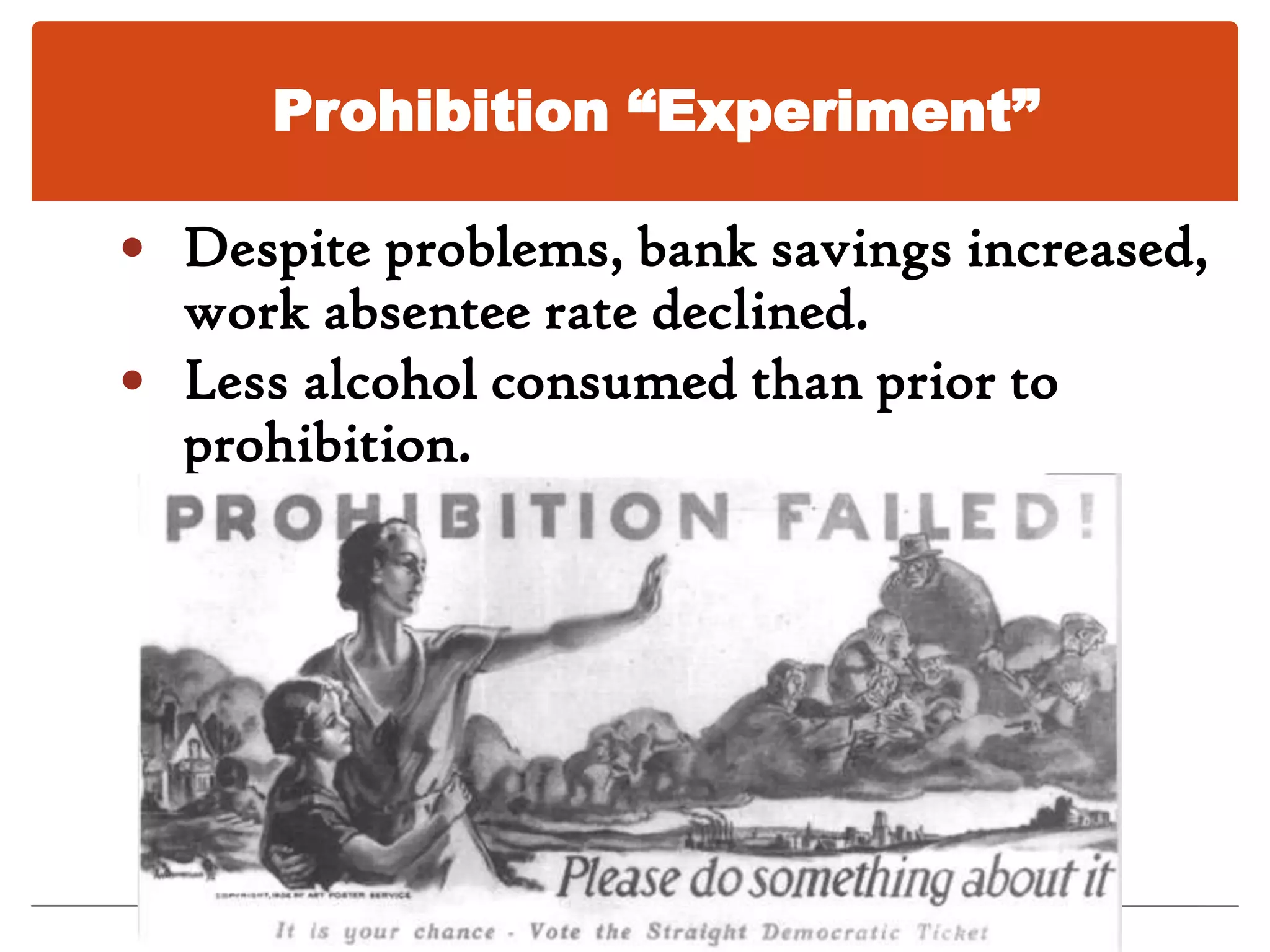
Prohibition “Experiment”Despite problems, bank savings increased, work absentee rate declined.Less alcohol consumed than prior to prohibition.
The Night Chicago Died
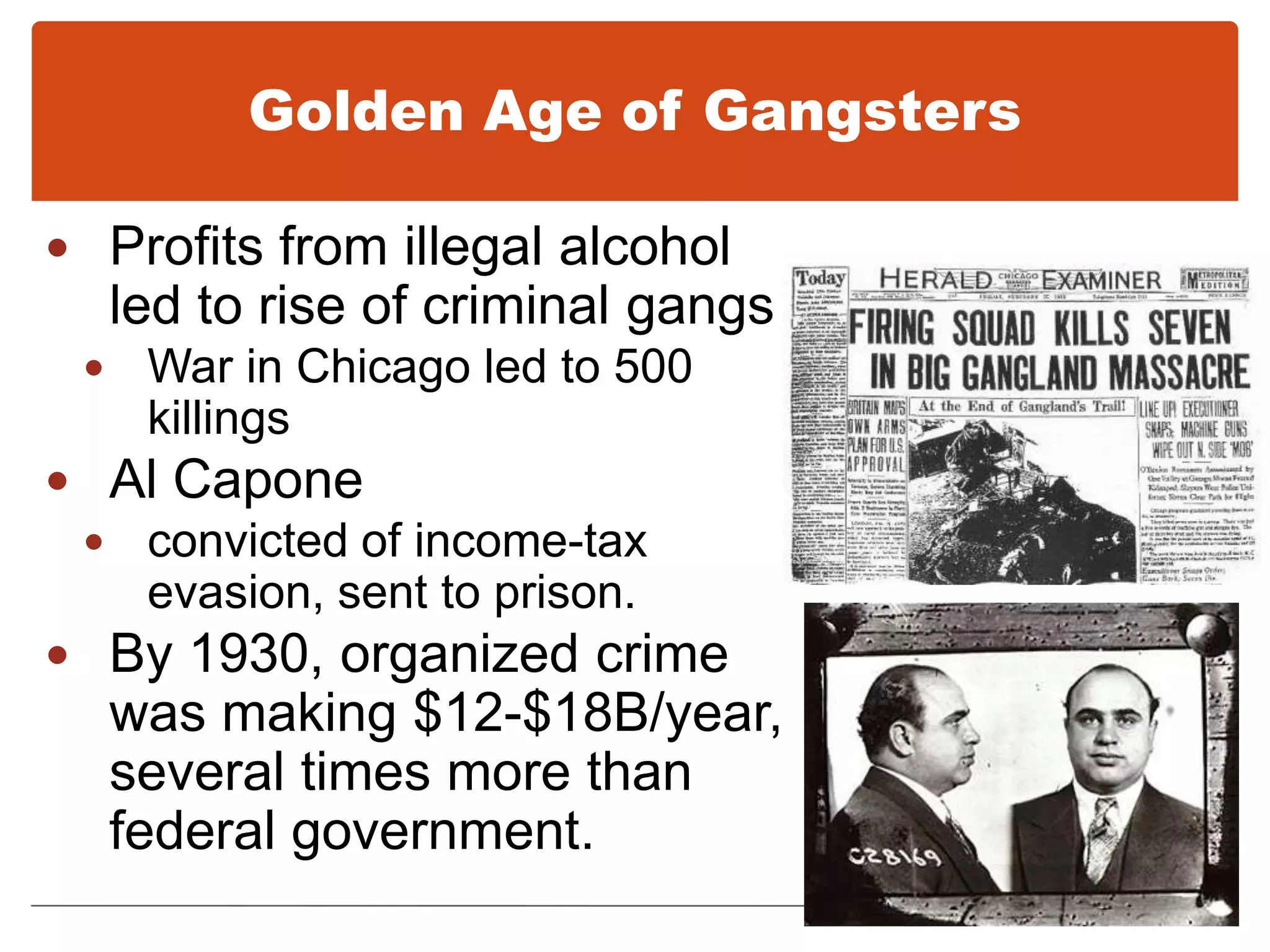
Golden Age of GangstersProfits from illegal alcohol led to rise of criminal gangsWar in Chicago led to 500 killingsAl Caponeconvicted of income-tax evasion, sent to prison.By 1930, organized crime was making $12-$18B/year, several times more than federal government.
Happy Valentine’s Day
Progress in EducationMore states requiring high schoolrate of high school completion doubledDewey’s principle of progressive education or “learning by doing” led to more practical, attractive schoolsScientific breakthroughs:Rockefeller Foundation program wiped out hookworm in South.Life expectancy grew from 50 to 59 from 1901-1929.
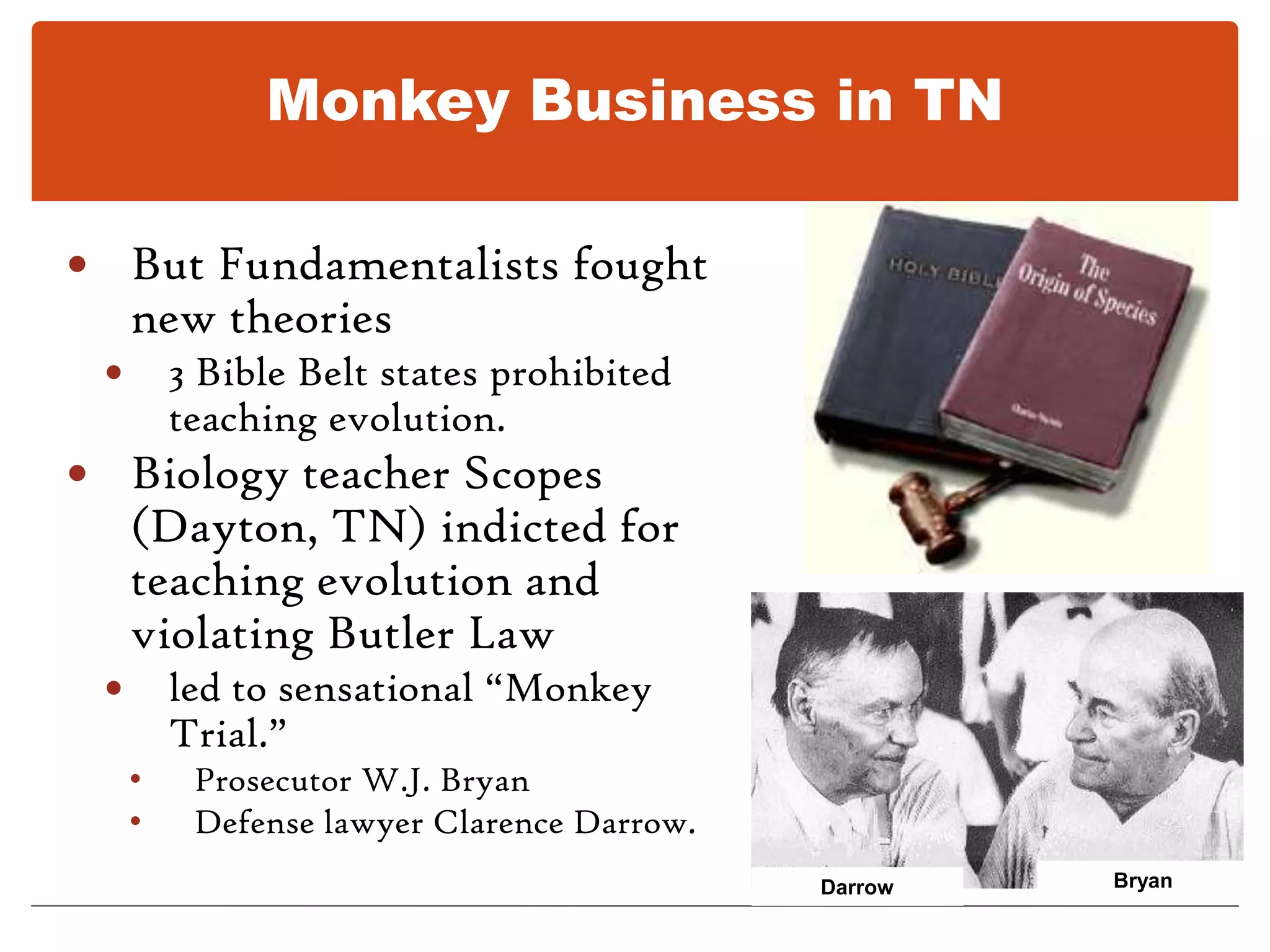
Monkey Business in TNBut Fundamentalists fought new theories3 Bible Belt states prohibited teaching evolution.Biology teacher Scopes (Dayton, TN) indicted for teaching evolution and violating Butler Lawled to sensational “Monkey Trial.”Prosecutor W.J. Bryan    Defense lawyer Clarence Darrow.BryanDarrow
Clip from Inherit the Wind
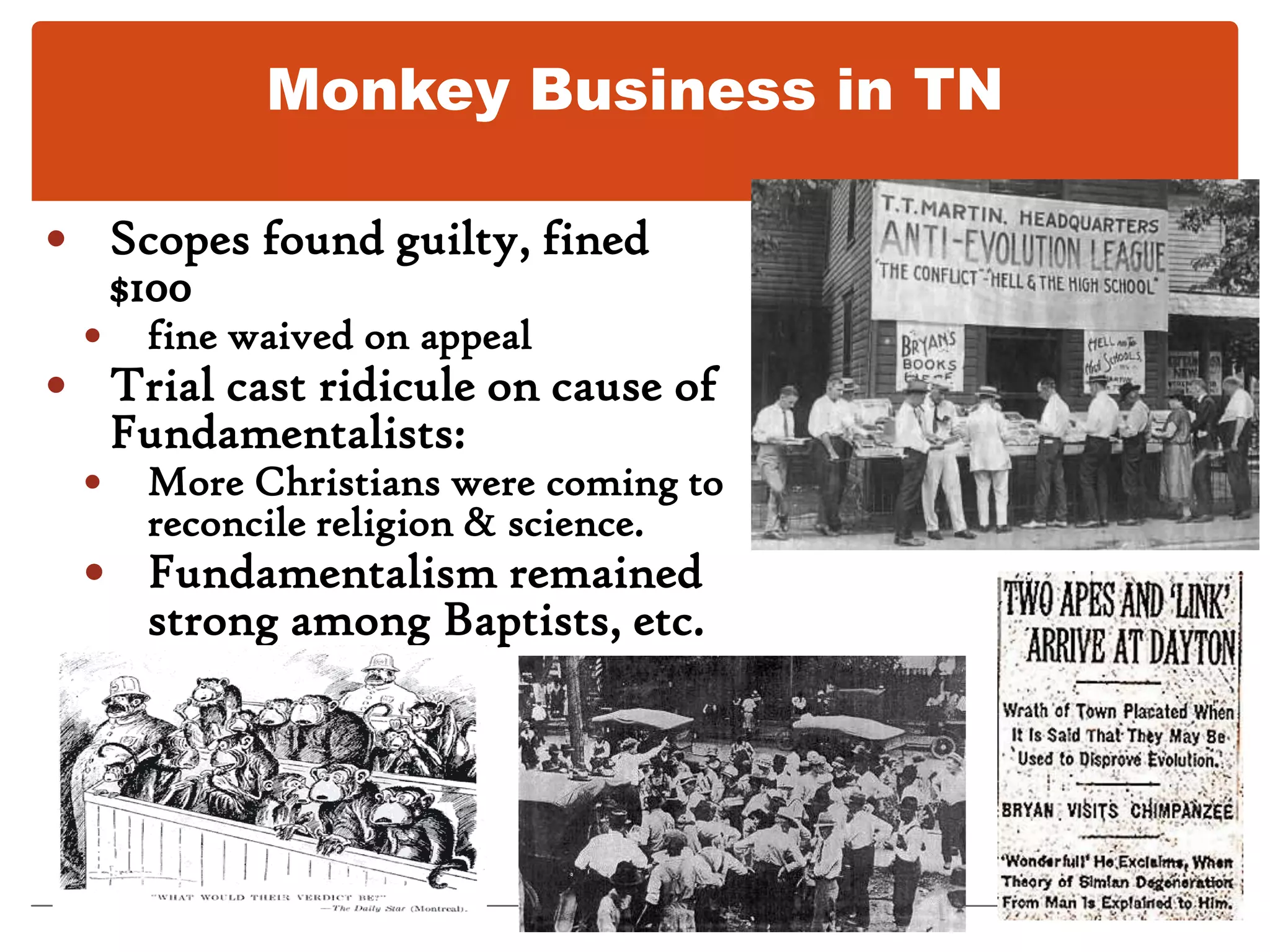
Monkey Business in TNScopes found guilty, fined $100 fine waived on appealTrial cast ridicule on cause of Fundamentalists:More Christians were coming to reconcile religion & science.Fundamentalism remained strong among Baptists, etc.
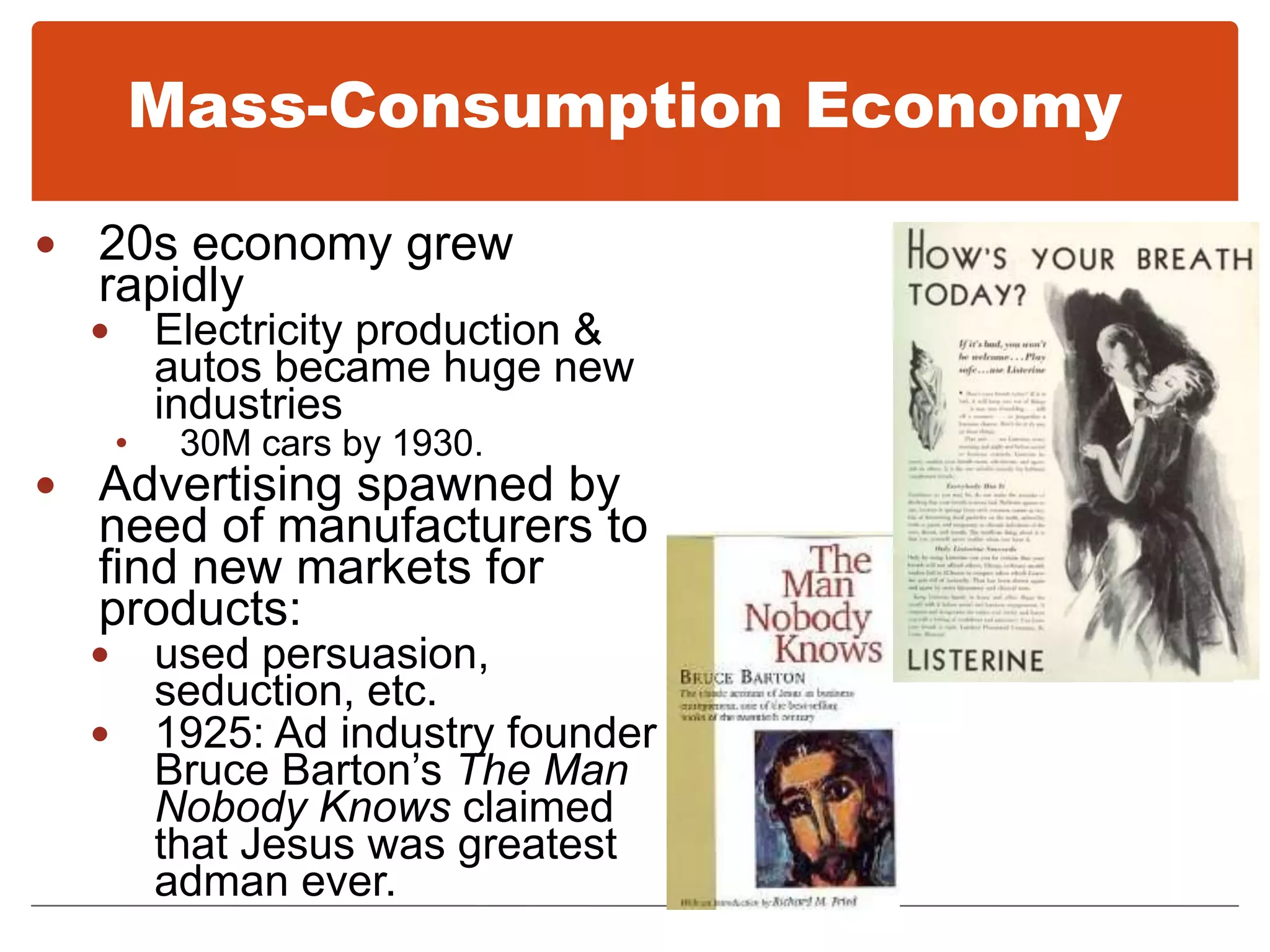
Mass-Consumption Economy20s economy grew rapidly Electricity production & autos became huge new industries30M cars by 1930.Advertising spawned by need of manufacturers to find new markets for products: used persuasion, seduction, etc.1925: Ad industry founder Bruce Barton’s The Man Nobody Knows claimed that Jesus was greatest adman ever.
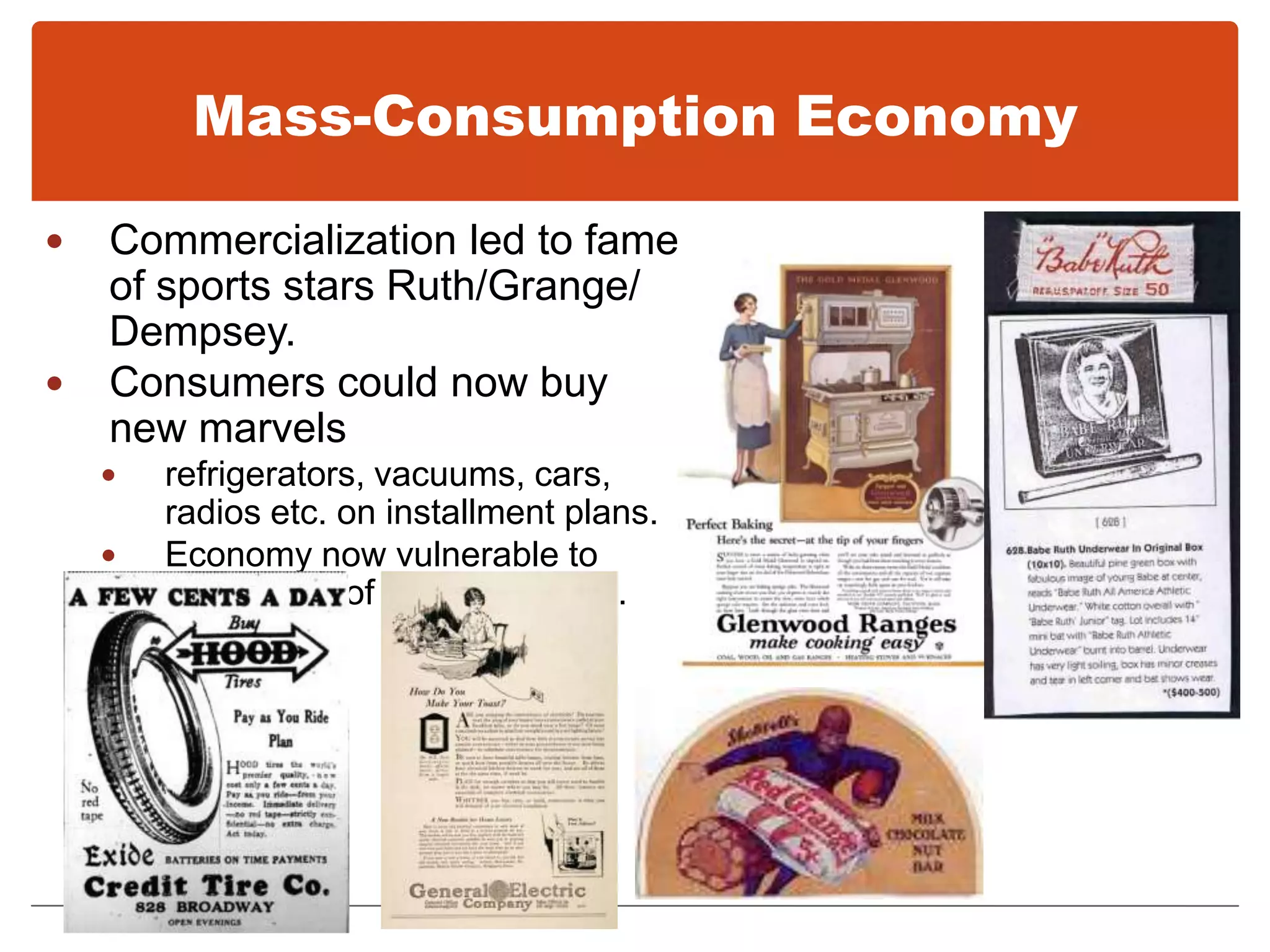
Mass-Consumption Economy Commercialization led to fame of sports stars Ruth/Grange/ Dempsey.Consumers could now buy new marvels refrigerators, vacuums, cars, radios etc. on installment plans.Economy now vulnerable to disruptions of credit structure.
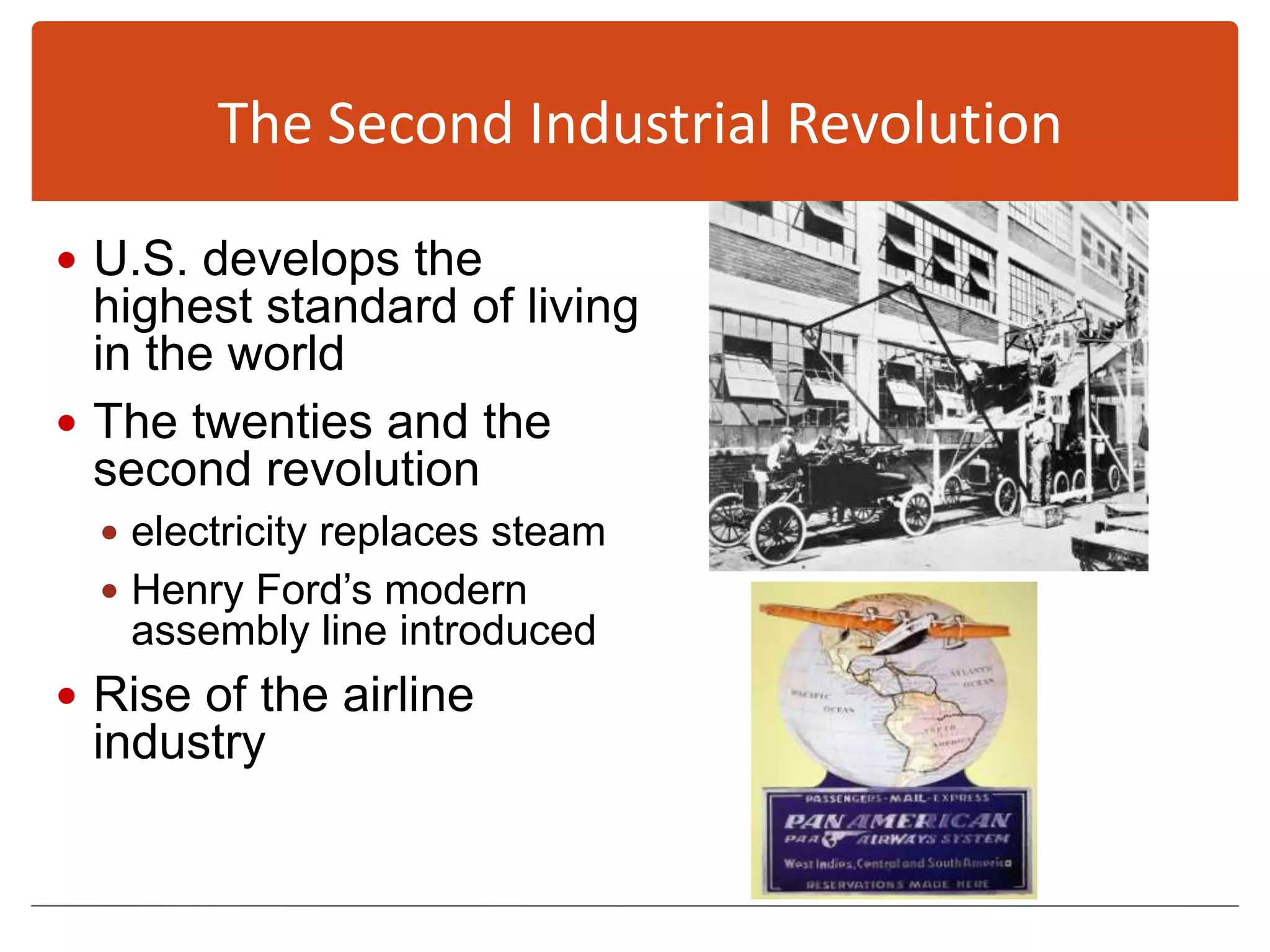
The Second Industrial RevolutionU.S. develops the highest standard of living in the world The twenties and the second revolutionelectricity replaces steam Henry Ford’s modern assembly line introduced Rise of the airline industry
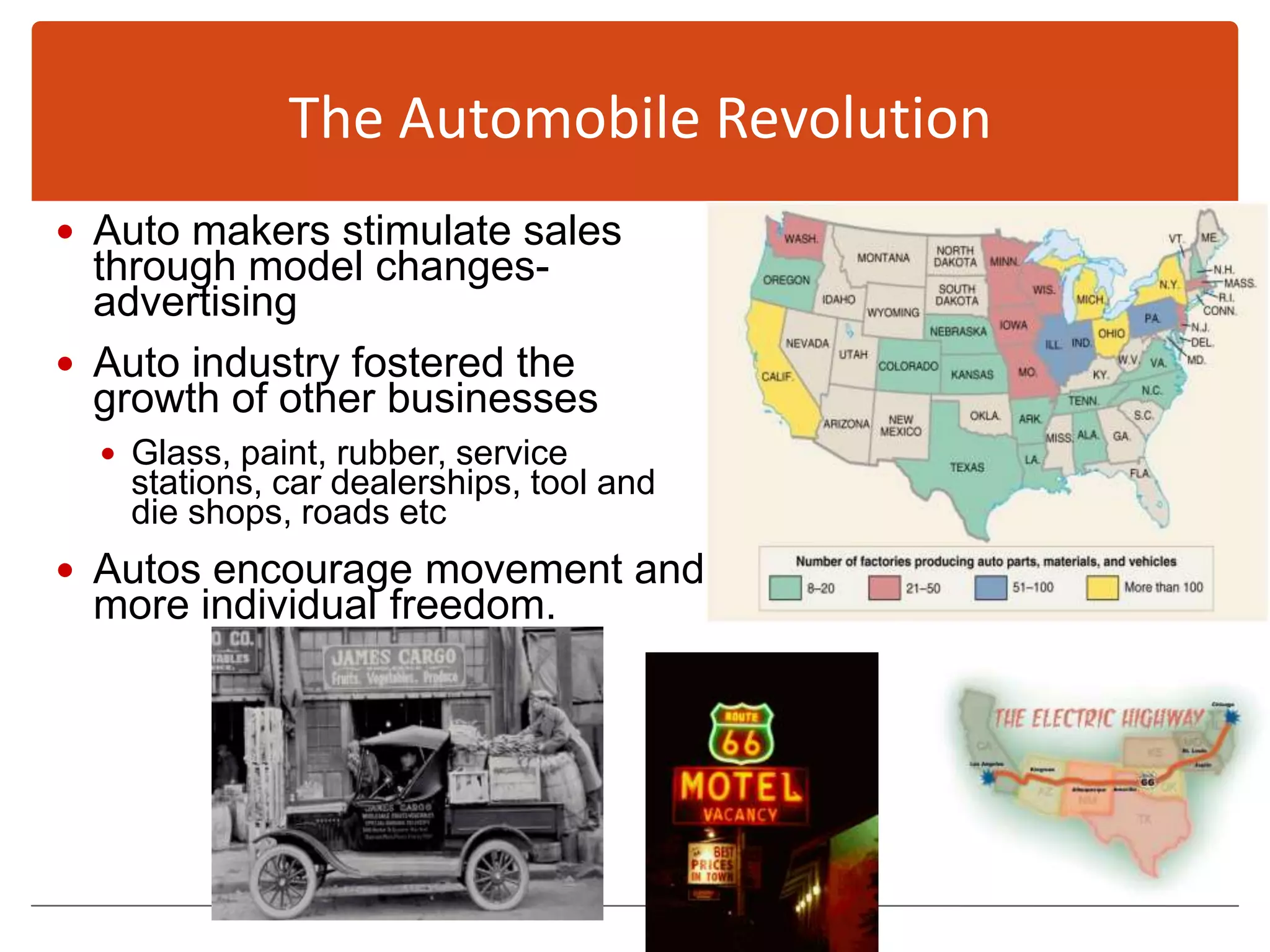
The Automobile RevolutionAuto makers stimulate sales through model changes- advertising Auto industry fostered the growth of other businessesGlass, paint, rubber, service stations, car dealerships, tool and die shops, roads etcAutos encourage movement and more individual freedom.
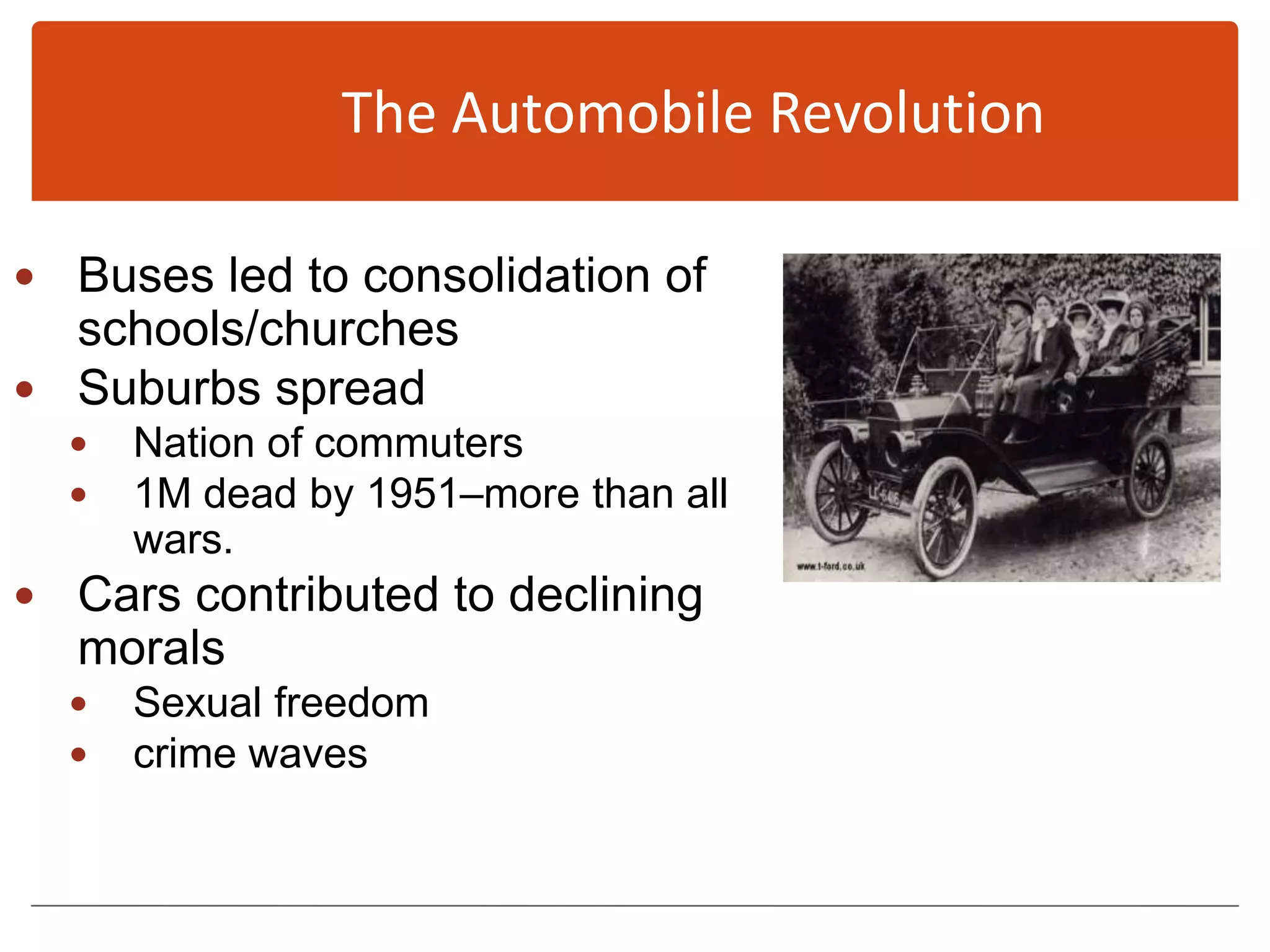
The Automobile RevolutionBuses led to consolidation of schools/churchesSuburbs spread Nation of commuters1M dead by 1951–more than all wars.Cars contributed to declining moralsSexual freedomcrime waves
Aviation Revolution12/17/03: Gas engines led to Wright Bros. flight at Kitty Hawk.“Flying coffins” with stunt pilots were popular at fairs.Planes had moderate success in WWI.After war, private companies flew passengers, air mail.1927: Cynical U.S. found hero in Lindbergh after Spirit of St. Louis transatlantic flight.Flight popularized flying, gave boost to aviation industry.Though early accidents, by 30s & 40s was safer than car.Another setback for RRs.
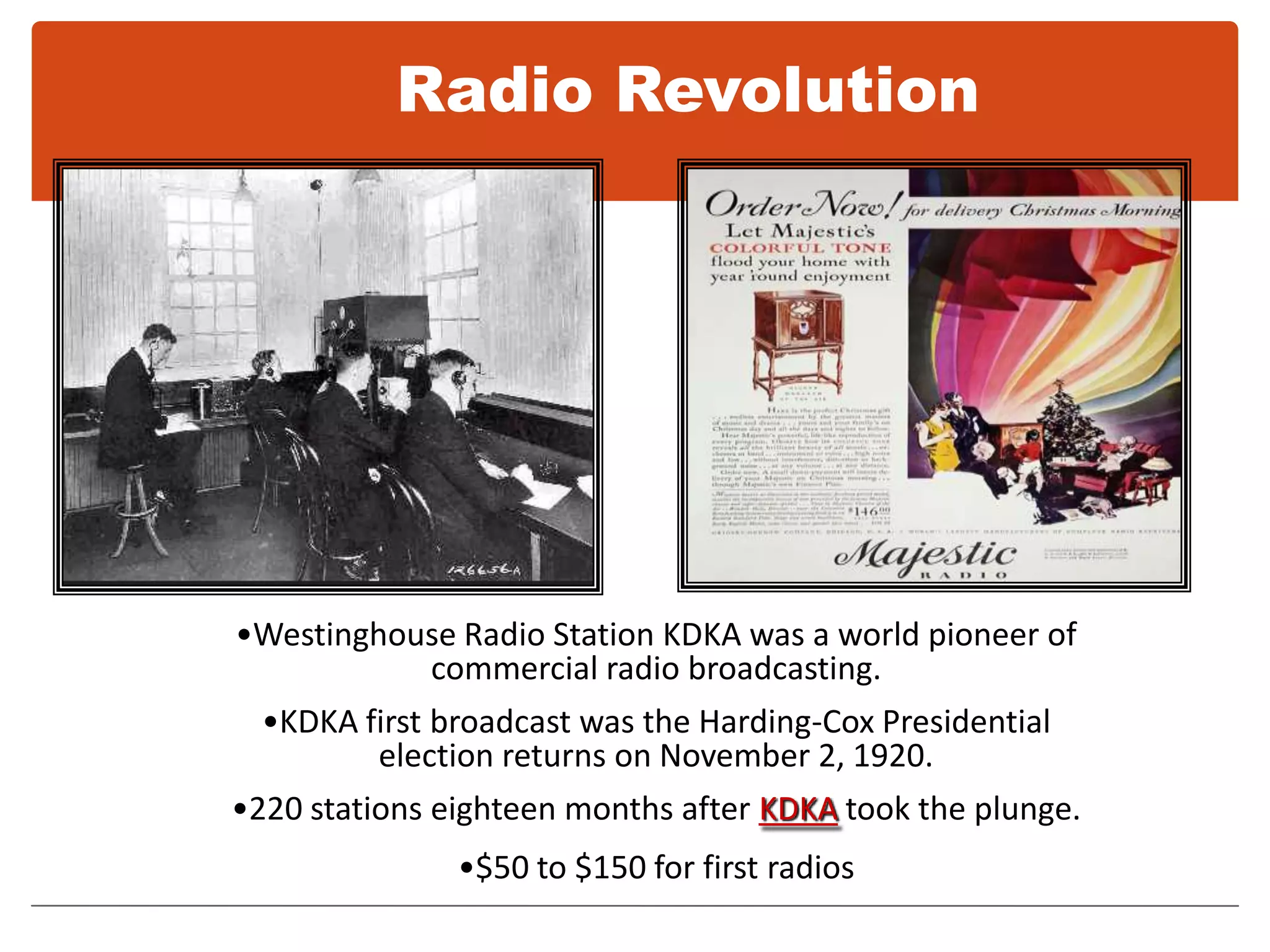
Radio RevolutionWestinghouse Radio Station KDKA was a world pioneer of commercial radio broadcasting.
KDKA first broadcast was the Harding-Cox Presidential election returns on November 2, 1920.
220 stations eighteen months after KDKA took the plunge.
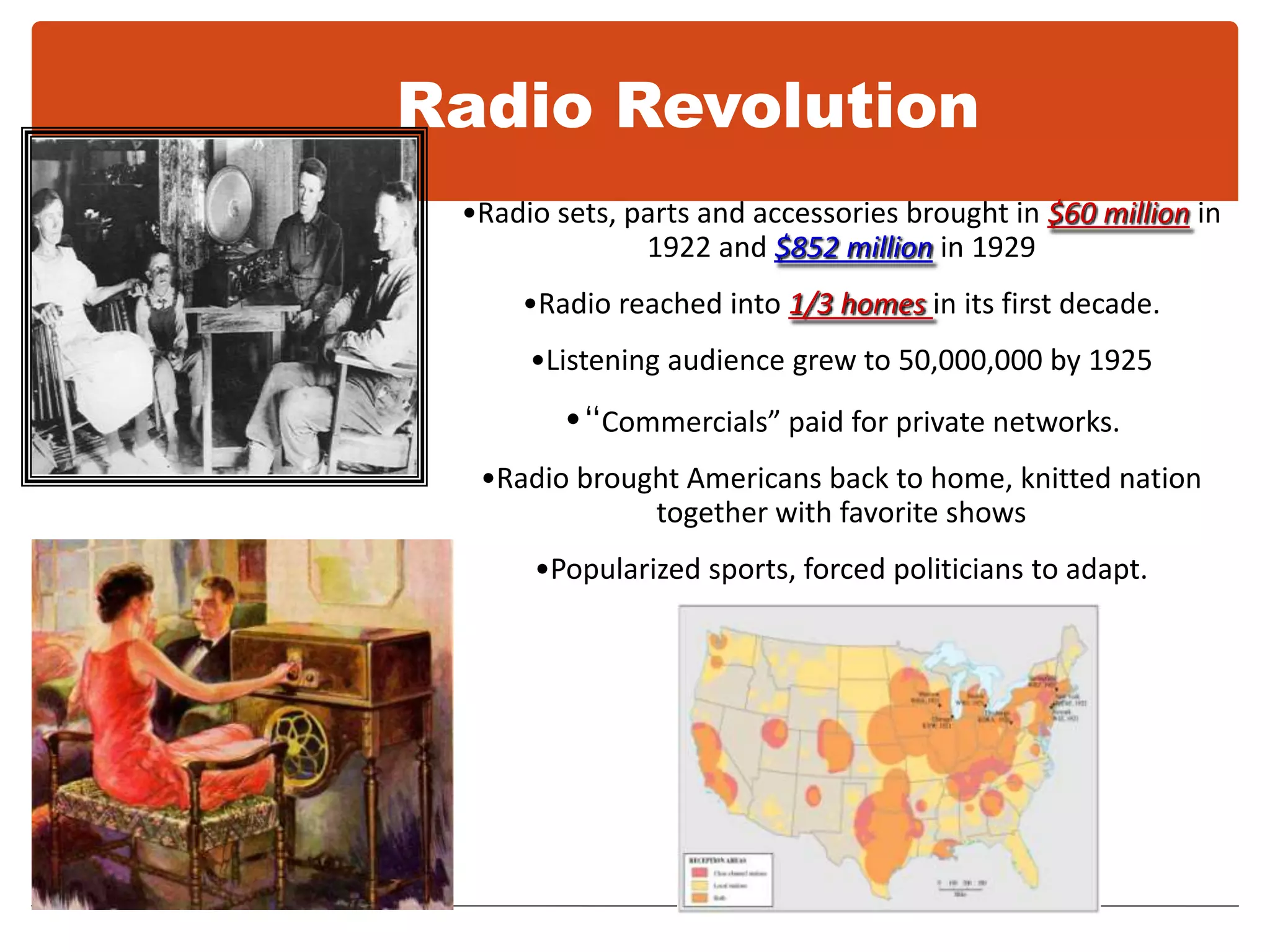
$50 to $150 for first radiosRadio RevolutionRadio sets, parts and accessories brought in $60 million in 1922 and $852 million in 1929
Radio reached into 1/3 homes in its first decade.
Listening audience grew to 50,000,000 by 1925
“Commercials” paid for private networks.

32 Slide Share

  • 1.
    American Life inthe “Roaring Twenties”1919-1929
  • 2.
    What problems areshown in post-war America?
  • 3.
    Insulating AmericaBloody war,treaty failure led U.S. toward isolationism.“Red Scare” of 1919-1921 caused by:Russian RevolutionCommunist Party in AmericaGeneral Strikes (Seattle)“Fighting Quaker” Attorney General A. Mitchell Palmer led crusade (a.k.a. Palmer Raids): 6000 suspects heldDue Process not followedDec. 1919: 249 alien radicals deported to Russia.
  • 4.
  • 5.
    Insulating America atGreat ExpenseCriminal syndicalism laws:mere advocacy of violence for social change was criminalizedLaws used to prosecute IWWs “wobblies”/radicalsharmed free speech.1920: 5 NY legislators denied seats because they were Socialists.Conservative business owners used scare against labor: “open” shop was “American plan”
  • 6.
    Sacco and Vanzetti1921:Liberals regarded conviction of Sacco & Vanzetti as a “judicial lynching” because they were Italians, atheists, anarchists, draft dodgers.
  • 8.
    Hooded HoodlumsKKK revivalwas more “nativist” than just anti-black.At peak in mid-20s it had 5 million members, large political influence, esp. in Midwest, South.Why in the Midwest?
  • 12.
    KKK collapsed suddenlyin late 20s: terror, cover-up embezzlement.
  • 13.
    Congressional investigation exposedKKK as being basically a membership fee racket.Membership of the Ku Klux Klan1920 1930 1970 2000 4,000,000 30,000 2,000 3,000
  • 14.
    Stemming the FloodTheU.S. Government began to restrict certain “undesirable” immigrants from entering the U.S.
  • 15.
    Congress passed theEmergency Quota Act of 1921 and Immigration Act of 1924
  • 16.
    Kept out immigrantsfrom southeastern Europe.1924 Act barred any Japanese immigration, but exempted Canadian/Latin Americans for work purposes.By 1931, more foreigners left U.S. than arrived.Act marked end of era of unrestricted immigration.
  • 18.
    What is themost dangerous drug in America?
  • 19.
    Prohibition “Experiment”1919: Progressivereform led by churches, women resulted in 18th Amendment, Volstead Act.Where was prohibition popular?Why there?
  • 20.
    Prohibition “Experiment”Problems withenforcement:Disillusionment over outcome of war raised questions about further self-denial.Legislators’ private drinking.Returning WWI soldiers disapproved.Poor workers upset that while they lost beer, rich could still buy illicit alcohol.Bootlegging, “bar hunts” popular with young & old.
  • 21.
    Prohibition “Experiment”But northerncities full of immigrants resisted.Corner saloons replaced by “speakeasies”– preferred hard liquorStrained diplomatic relations with CanadaPersonal stills popular, but product was often dangerous.
  • 22.
    Prohibition “Experiment”Despite problems,bank savings increased, work absentee rate declined.Less alcohol consumed than prior to prohibition.
  • 23.
  • 24.
    Golden Age ofGangstersProfits from illegal alcohol led to rise of criminal gangsWar in Chicago led to 500 killingsAl Caponeconvicted of income-tax evasion, sent to prison.By 1930, organized crime was making $12-$18B/year, several times more than federal government.
  • 25.
  • 26.
    Progress in EducationMorestates requiring high schoolrate of high school completion doubledDewey’s principle of progressive education or “learning by doing” led to more practical, attractive schoolsScientific breakthroughs:Rockefeller Foundation program wiped out hookworm in South.Life expectancy grew from 50 to 59 from 1901-1929.
  • 27.
    Monkey Business inTNBut Fundamentalists fought new theories3 Bible Belt states prohibited teaching evolution.Biology teacher Scopes (Dayton, TN) indicted for teaching evolution and violating Butler Lawled to sensational “Monkey Trial.”Prosecutor W.J. Bryan Defense lawyer Clarence Darrow.BryanDarrow
  • 28.
  • 29.
    Monkey Business inTNScopes found guilty, fined $100 fine waived on appealTrial cast ridicule on cause of Fundamentalists:More Christians were coming to reconcile religion & science.Fundamentalism remained strong among Baptists, etc.
  • 30.
    Mass-Consumption Economy20s economygrew rapidly Electricity production & autos became huge new industries30M cars by 1930.Advertising spawned by need of manufacturers to find new markets for products: used persuasion, seduction, etc.1925: Ad industry founder Bruce Barton’s The Man Nobody Knows claimed that Jesus was greatest adman ever.
  • 31.
    Mass-Consumption Economy Commercializationled to fame of sports stars Ruth/Grange/ Dempsey.Consumers could now buy new marvels refrigerators, vacuums, cars, radios etc. on installment plans.Economy now vulnerable to disruptions of credit structure.
  • 32.
    The Second IndustrialRevolutionU.S. develops the highest standard of living in the world The twenties and the second revolutionelectricity replaces steam Henry Ford’s modern assembly line introduced Rise of the airline industry
  • 33.
    The Automobile RevolutionAutomakers stimulate sales through model changes- advertising Auto industry fostered the growth of other businessesGlass, paint, rubber, service stations, car dealerships, tool and die shops, roads etcAutos encourage movement and more individual freedom.
  • 34.
    The Automobile RevolutionBusesled to consolidation of schools/churchesSuburbs spread Nation of commuters1M dead by 1951–more than all wars.Cars contributed to declining moralsSexual freedomcrime waves
  • 35.
    Aviation Revolution12/17/03: Gasengines led to Wright Bros. flight at Kitty Hawk.“Flying coffins” with stunt pilots were popular at fairs.Planes had moderate success in WWI.After war, private companies flew passengers, air mail.1927: Cynical U.S. found hero in Lindbergh after Spirit of St. Louis transatlantic flight.Flight popularized flying, gave boost to aviation industry.Though early accidents, by 30s & 40s was safer than car.Another setback for RRs.
  • 36.
    Radio RevolutionWestinghouse RadioStation KDKA was a world pioneer of commercial radio broadcasting.
  • 37.
    KDKA first broadcastwas the Harding-Cox Presidential election returns on November 2, 1920.
  • 38.
    220 stations eighteenmonths after KDKA took the plunge.
  • 39.
    $50 to $150for first radiosRadio RevolutionRadio sets, parts and accessories brought in $60 million in 1922 and $852 million in 1929
  • 40.
    Radio reached into1/3 homes in its first decade.
  • 41.
    Listening audience grewto 50,000,000 by 1925
  • 42.
  • 43.
    Radio brought Americansback to home, knitted nation together with favorite shows
  • 44.
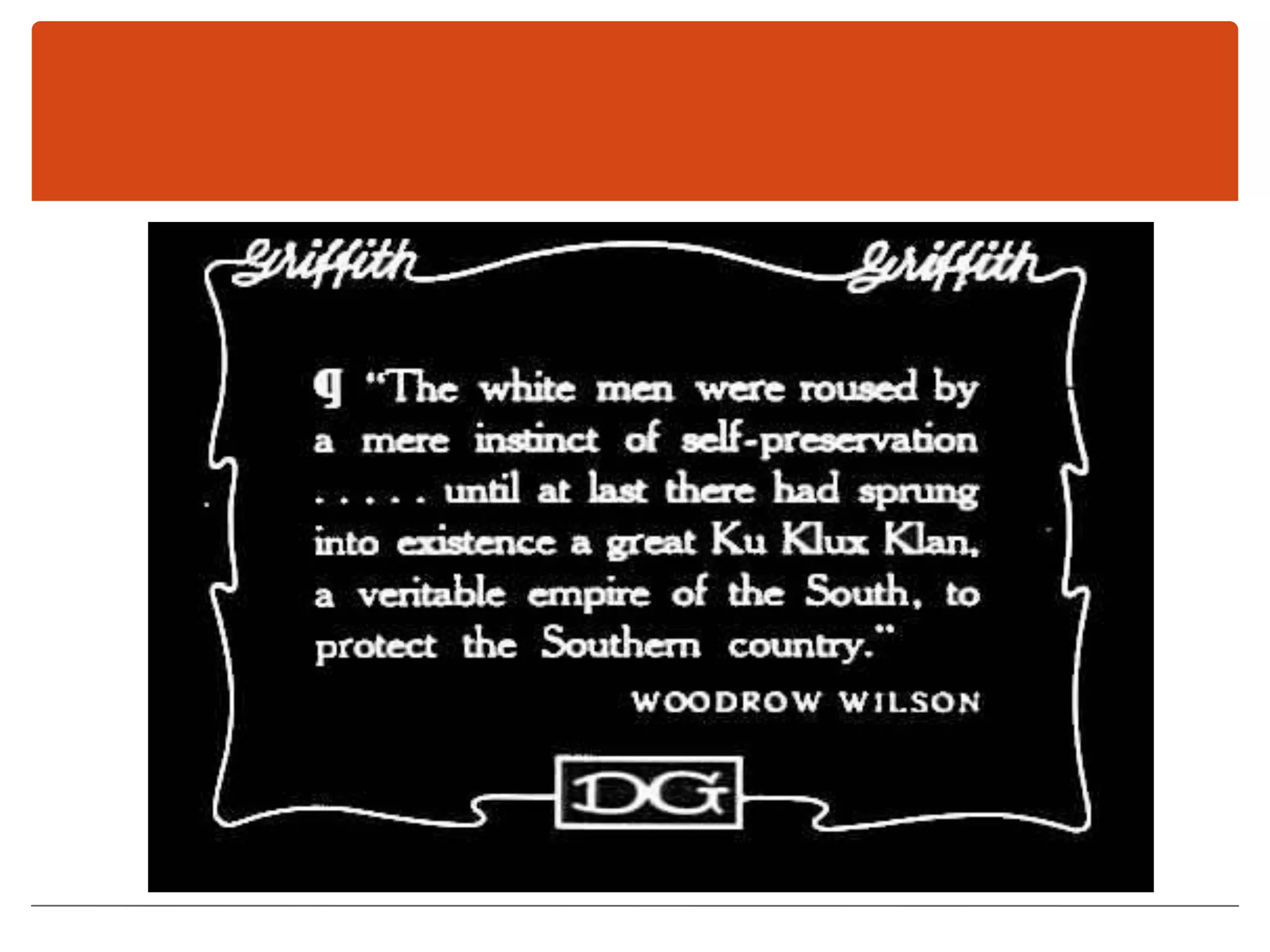
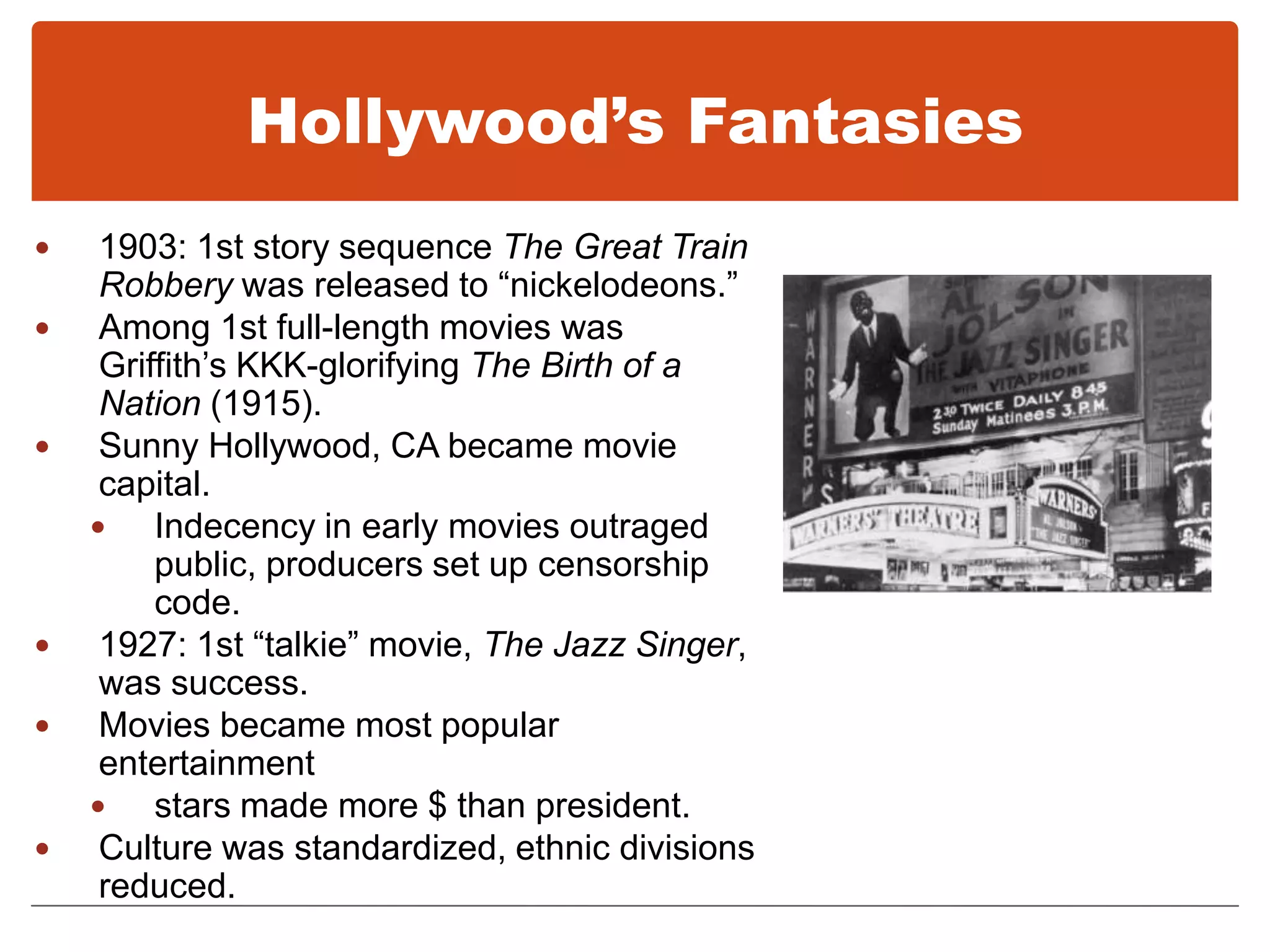
    Popularized sports, forcedpoliticians to adapt.Hollywood’s Fantasies1903: 1st story sequence The Great Train Robbery was released to “nickelodeons.”Among 1st full-length movies was Griffith’s KKK-glorifying The Birth of a Nation (1915).Sunny Hollywood, CA became movie capital.Indecency in early movies outraged public, producers set up censorship code.1927: 1st “talkie” movie, The Jazz Singer, was success.Movies became most popular entertainmentstars made more $ than president.Culture was standardized, ethnic divisions reduced.
  • 45.
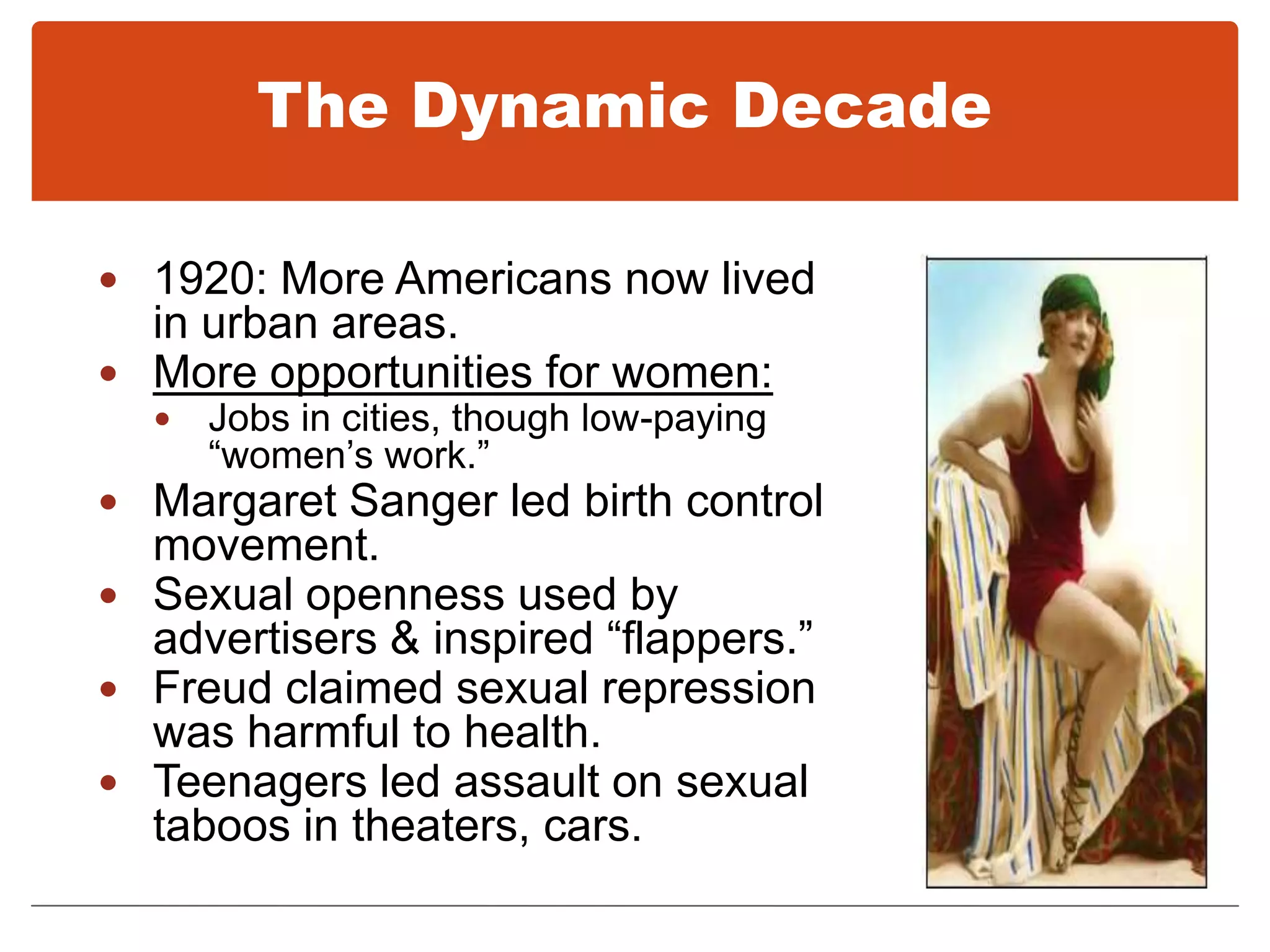
    The Dynamic Decade1920:More Americans now lived in urban areas.More opportunities for women:Jobs in cities, though low-paying “women’s work.”Margaret Sanger led birth control movement.Sexual openness used by advertisers & inspired “flappers.”Freud claimed sexual repression was harmful to health.Teenagers led assault on sexual taboos in theaters, cars.
  • 46.
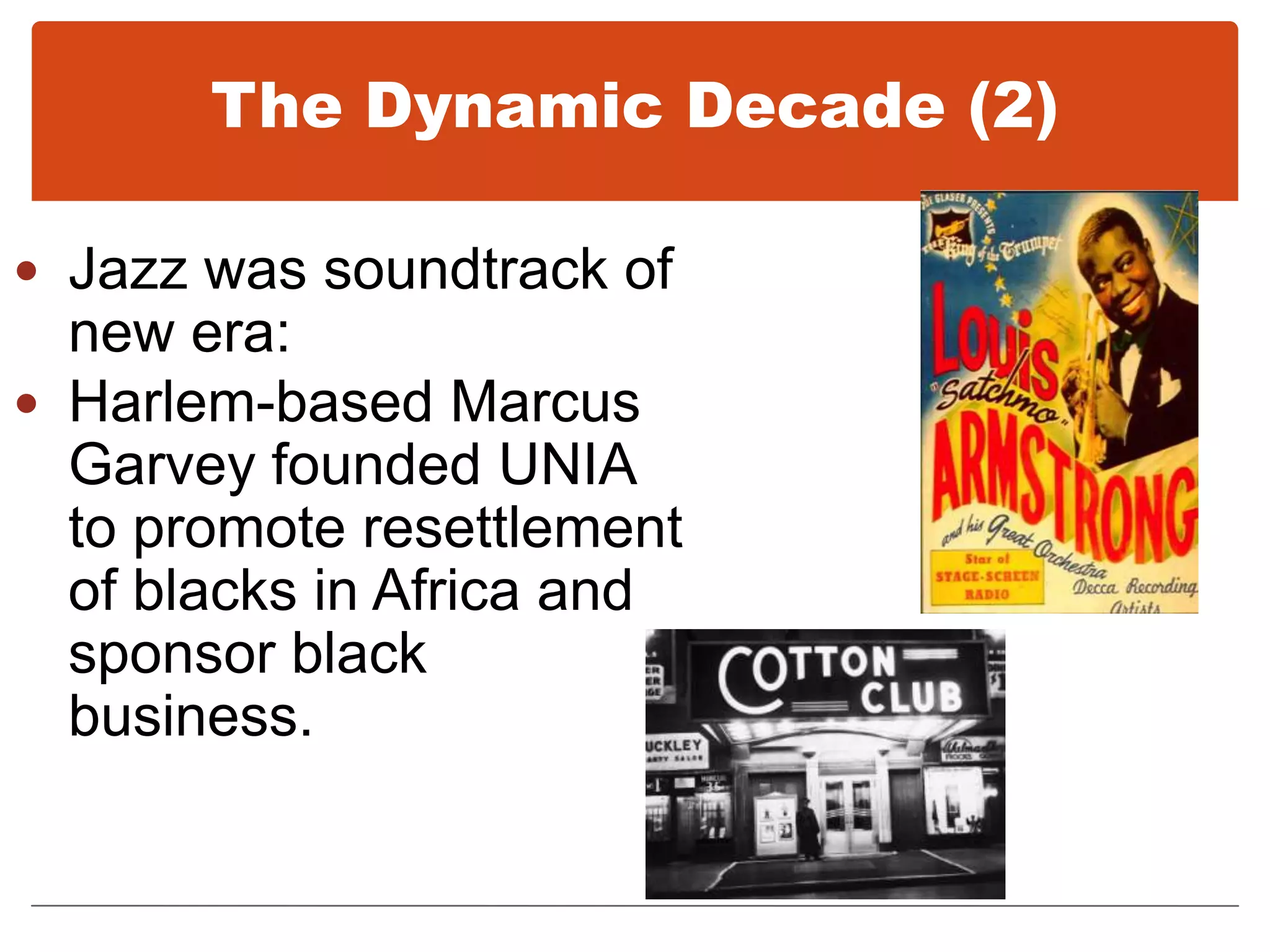
    The Dynamic Decade(2)Jazz was soundtrack of new era: Harlem-based Marcus Garvey founded UNIA to promote resettlement of blacks in Africa and sponsor black business.
  • 47.
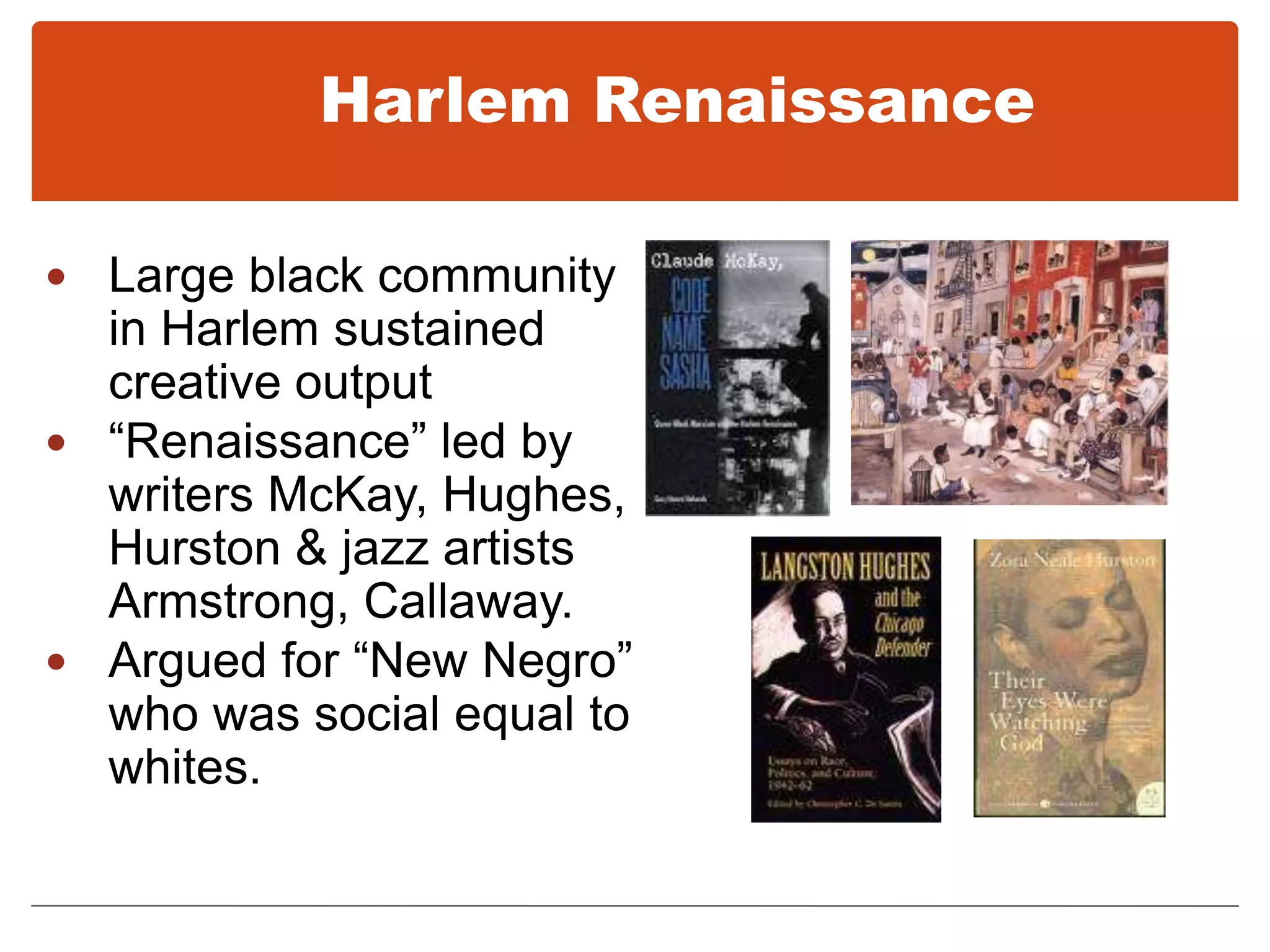
    Harlem RenaissanceLarge blackcommunity in Harlem sustained creative output“Renaissance” led by writers McKay, Hughes, Hurston & jazz artists Armstrong, Callaway.Argued for “New Negro” who was social equal to whites.
  • 48.
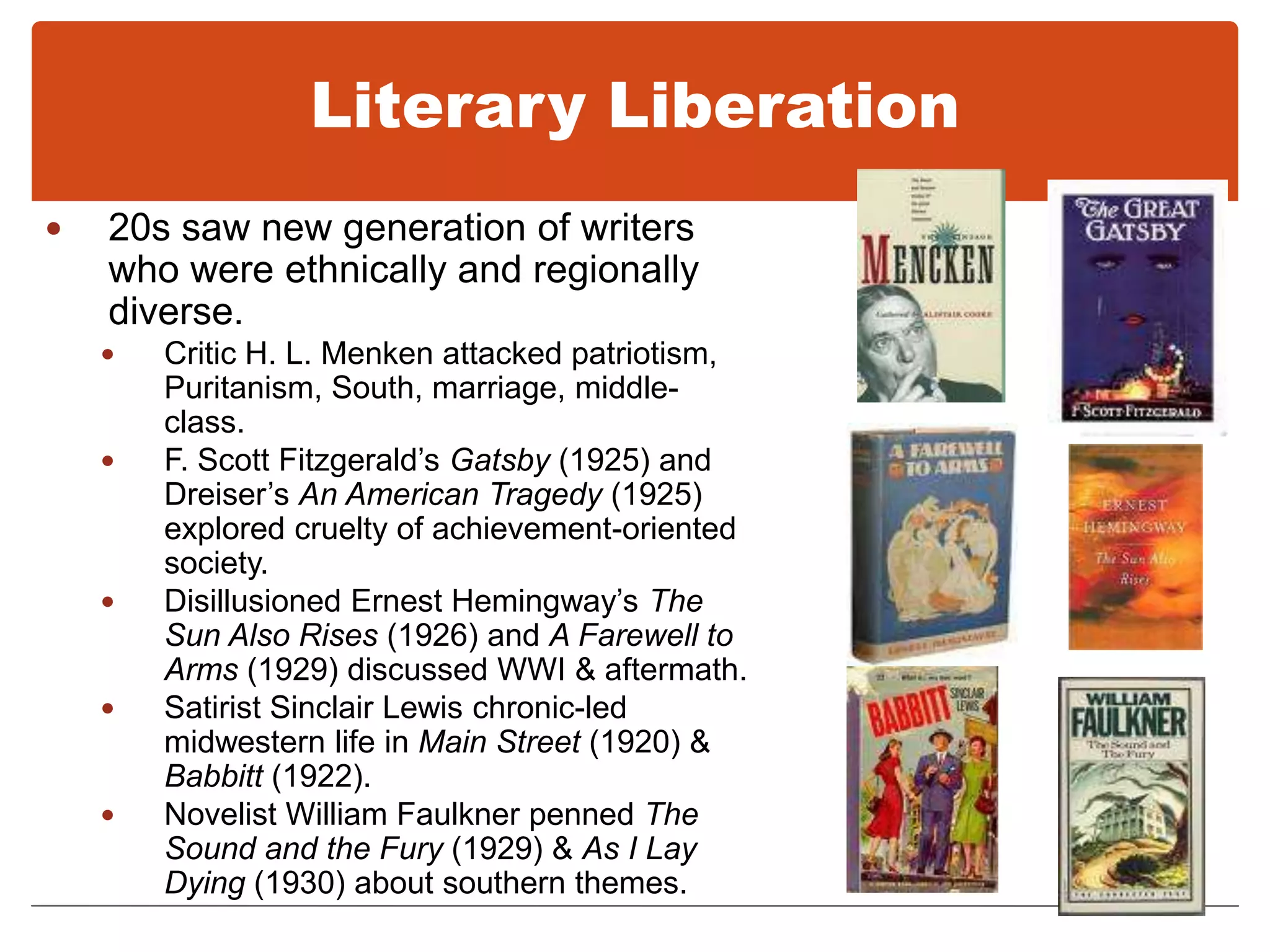
    Literary Liberation20s sawnew generation of writers who were ethnically and regionally diverse.Critic H. L. Menken attacked patriotism, Puritanism, South, marriage, middle-class.F. Scott Fitzgerald’s Gatsby (1925) and Dreiser’s An American Tragedy (1925) explored cruelty of achievement-oriented society.Disillusioned Ernest Hemingway’s The Sun Also Rises (1926) and A Farewell to Arms (1929) discussed WWI & aftermath.Satirist Sinclair Lewis chronic-led midwestern life in Main Street (1920) & Babbitt (1922).Novelist William Faulkner penned The Sound and the Fury (1929) & As I Lay Dying (1930) about southern themes.
  • 49.
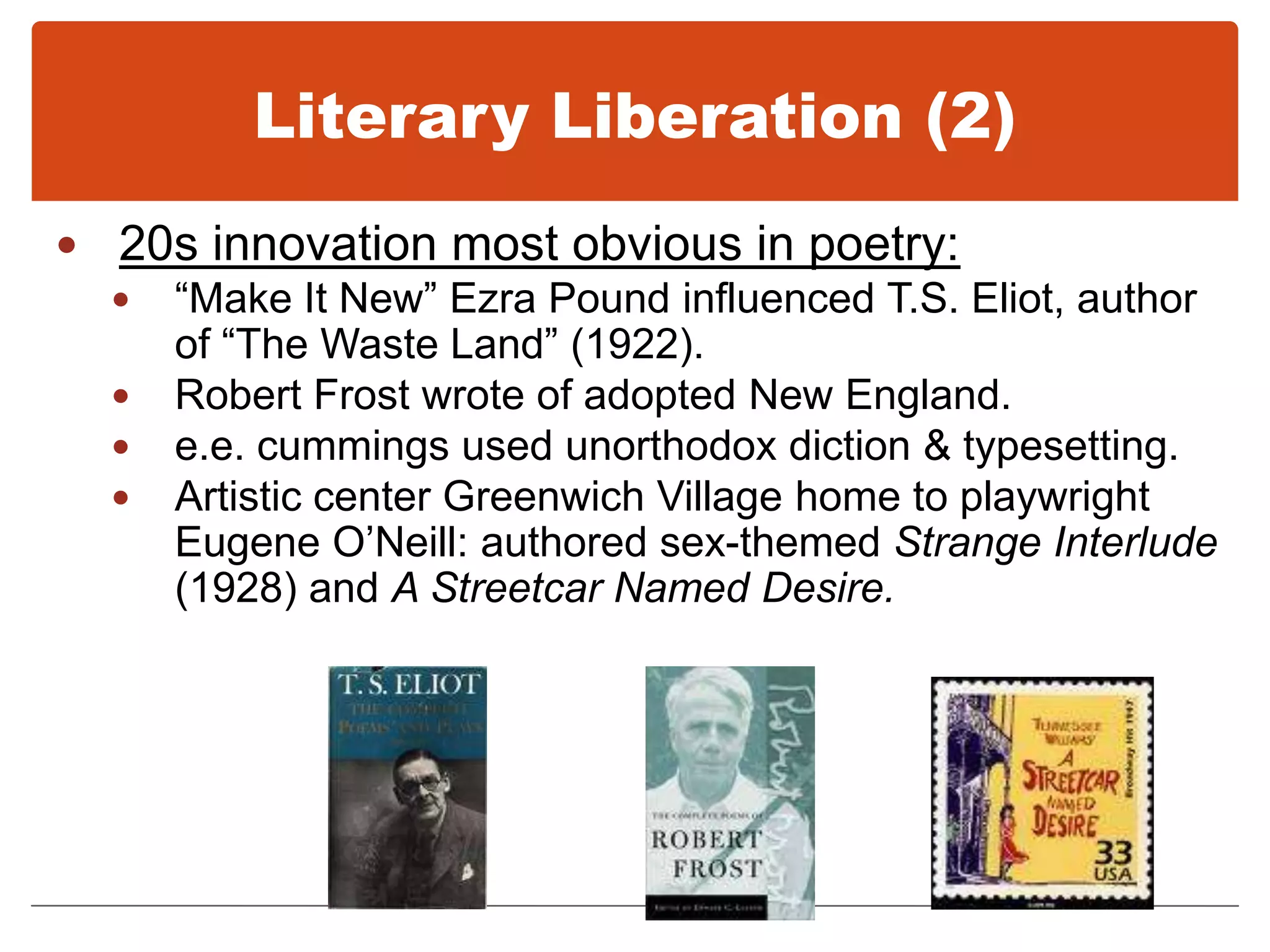
    Literary Liberation (2)20sinnovation most obvious in poetry:“Make It New” Ezra Pound influenced T.S. Eliot, author of “The Waste Land” (1922).Robert Frost wrote of adopted New England.e.e. cummings used unorthodox diction & typesetting.Artistic center Greenwich Village home to playwright Eugene O’Neill: authored sex-themed Strange Interlude (1928) and A Streetcar Named Desire.
  • 50.
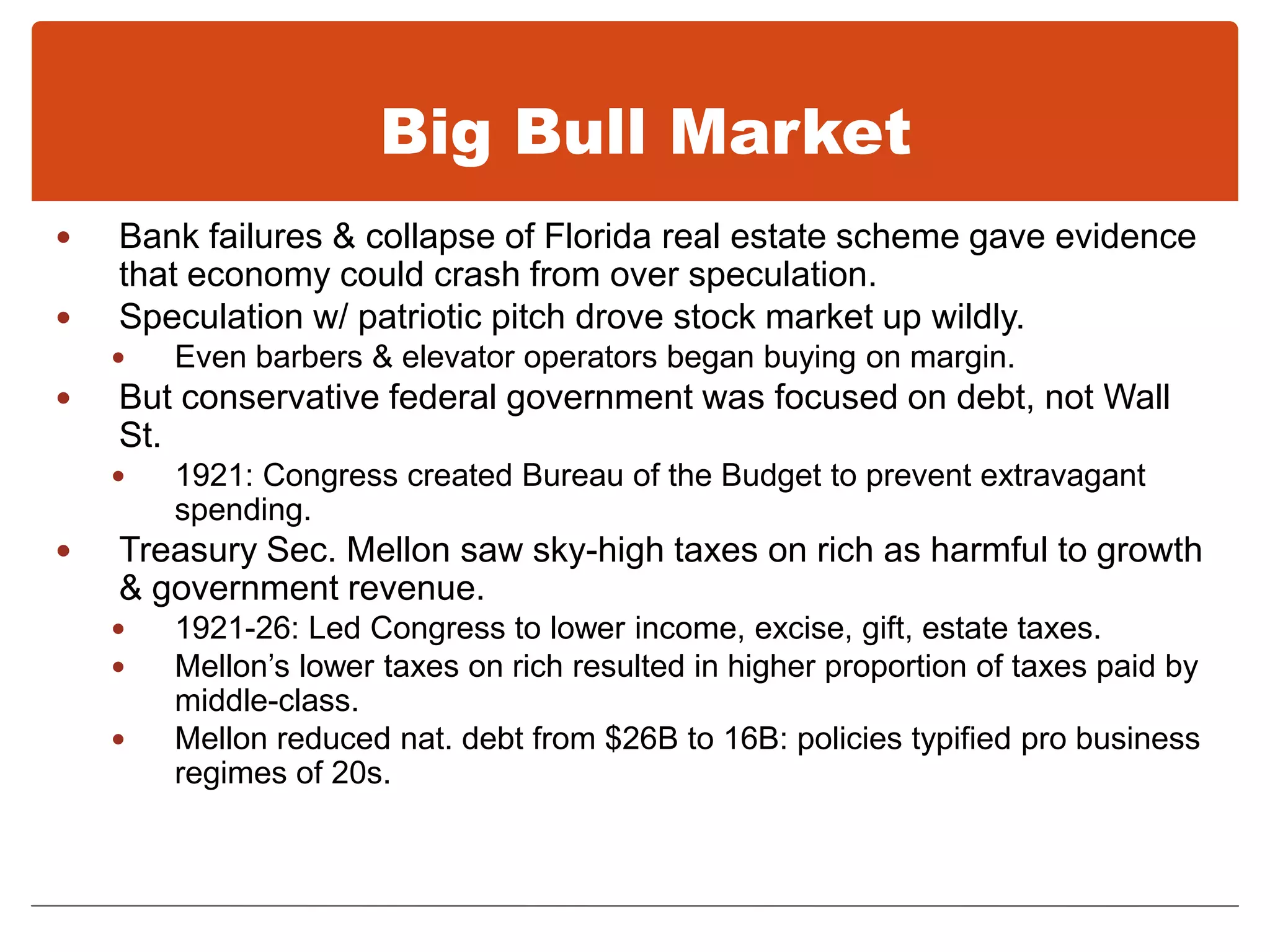
    Big Bull MarketBankfailures & collapse of Florida real estate scheme gave evidence that economy could crash from over speculation.Speculation w/ patriotic pitch drove stock market up wildly.Even barbers & elevator operators began buying on margin.But conservative federal government was focused on debt, not Wall St.1921: Congress created Bureau of the Budget to prevent extravagant spending.Treasury Sec. Mellon saw sky-high taxes on rich as harmful to growth & government revenue.1921-26: Led Congress to lower income, excise, gift, estate taxes. Mellon’s lower taxes on rich resulted in higher proportion of taxes paid by middle-class.Mellon reduced nat. debt from $26B to 16B: policies typified pro business regimes of 20s.

Editor's Notes

  • #5 Rounding Up the "Reds" in a Nation-Wide Campaign Against Revolutionaries : Police Searching a Group of Arrested "Suspects" in Police Headquarters, ChicagoRounding Up the "Reds" in a Nation-Wide Campaign Against RevolutionariesOutlook, 1/21/20.Originally from the International (c).photograph