Canada in the
Roaring Twenties
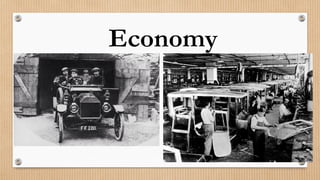
Economy
Economy Canada’s Primary Industries:
 “Staple” exports: Wheat, Mining, Pulp & Paper
 Hydro Electricity
 Big Three American Auto Companies:
 Ford
 Chrysler
 General Motors
Canadian economy tied to US; relies heavily on US trade and US
companies (manufacturing)
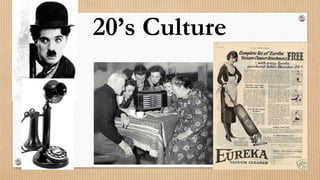
20’s Culture
20’s Culture
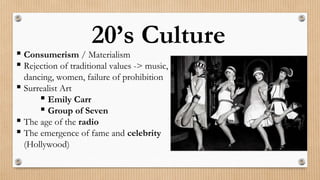
 Consumerism / Materialism
 Rejection of traditional values -> music,
dancing, women, failure of prohibition
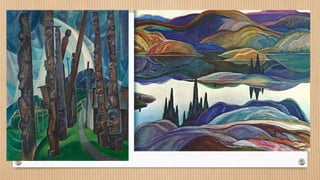
 Surrealist Art
 Emily Carr
 Group of Seven
 The age of the radio
 The emergence of fame and celebrity
(Hollywood)
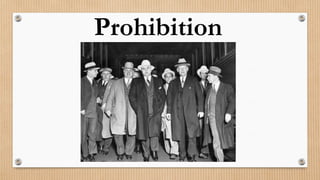
Prohibition
Prohibition Woman’s Christian Temperance Union (WCTU)
 Successfully lobby for prohibition
 “Vote Dry” / “Vote Wet”
 Didn’t last long in Canada
 Rum-Running:
 West Coast to Washington, Oregon, Cali…;
 Great Lakes to Chicago
 Al Capone
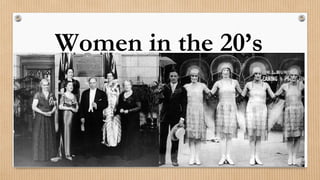
Women in the 20’s
Women in the 20’sPolitical and Legal Rights
Agnes Macphail: 1st
woman MP (Member of Parliament) 1921
Nellie McClung, Emily Murphy*, and the Famous Five
 Emily Murphy = 1st
woman judge, 1916
 Male colleagues not too happy, she is discriminated against; women can’t
serve in Senate
 British North America Act (BNA Act 1867): “Only qualified ‘Persons’
may serve”
 “Persons” Case 1929 – a victory for women
Society
Flappers
 Non-conservative clothing
 Short hair
 Beginnings of social liberation
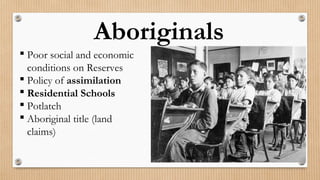
Aboriginals
 Poor social and economic
conditions on Reserves
 Policy of assimilation
 Residential Schools
 Potlatch
 Aboriginal title (land
claims)
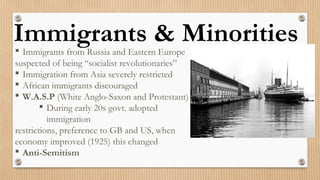
Immigrants & Minorities Immigrants from Russia and Eastern Europe
suspected of being “socialist revolutionaries”
 Immigration from Asia severely restricted
 African immigrants discouraged
 W.A.S.P (White Anglo-Saxon and Protestant)
 During early 20s govt. adopted
immigration
restrictions, preference to GB and US, when
economy improved (1925) this changed
 Anti-Semitism
In your groups: craft a thesis for
the framing essay question. 5 min
max.
Great Depression
The Dirty Thirties
 Laissez-Faire capitalism – “Let Do / Let it be” = little government
intervention in the economy
 Supply & Demand
 From Boom to Bust to Depression
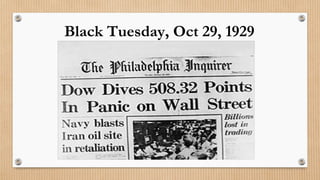
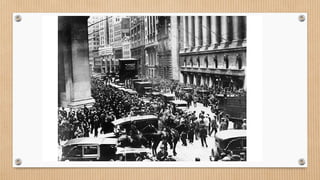
 October 29, 1929 Stock Market Crash (Black Tuesday)
 New York, Montreal, Toronto
 Worldwide depression is “made in America”
Black Tuesday, Oct 29, 1929
Causes1. Overproduction
2. Reliance on staple exports
3. Canada too reliant on USA
4. Black Tuesday market crash – over speculation, buying on margin
5. Protectionism and Tariffs
- Tariffs = taxes on foreign goods entering the country
- You protect your own industry by taxing foreign competition
(protectionism)
6. Debt from WWI
1. Todd Bertuzzi was a vicious and violent player.
2. The punch was retaliation for a hit Moore had laid on one of
Bertuzzi’s teammates the prior game.
3. Coach Marc Crawford had encouraged his players to hurt
Moore
4. The incident was a result of the violent culture in the NHL.
5. The incident was caused by the removal of the instigator rule.
Underlying or Immediate Cause?

Canada in the roaring twenties

  • 1.
  • 2.
  • 3.
    Economy Canada’s PrimaryIndustries:  “Staple” exports: Wheat, Mining, Pulp & Paper  Hydro Electricity  Big Three American Auto Companies:  Ford  Chrysler  General Motors Canadian economy tied to US; relies heavily on US trade and US companies (manufacturing)
  • 4.
  • 5.
    20’s Culture  Consumerism/ Materialism  Rejection of traditional values -> music, dancing, women, failure of prohibition  Surrealist Art  Emily Carr  Group of Seven  The age of the radio  The emergence of fame and celebrity (Hollywood)
  • 7.
  • 8.
    Prohibition Woman’s ChristianTemperance Union (WCTU)  Successfully lobby for prohibition  “Vote Dry” / “Vote Wet”  Didn’t last long in Canada  Rum-Running:  West Coast to Washington, Oregon, Cali…;  Great Lakes to Chicago  Al Capone
  • 9.
  • 10.
    Women in the20’sPolitical and Legal Rights Agnes Macphail: 1st woman MP (Member of Parliament) 1921 Nellie McClung, Emily Murphy*, and the Famous Five  Emily Murphy = 1st woman judge, 1916  Male colleagues not too happy, she is discriminated against; women can’t serve in Senate  British North America Act (BNA Act 1867): “Only qualified ‘Persons’ may serve”  “Persons” Case 1929 – a victory for women Society Flappers  Non-conservative clothing  Short hair  Beginnings of social liberation
  • 11.
    Aboriginals  Poor socialand economic conditions on Reserves  Policy of assimilation  Residential Schools  Potlatch  Aboriginal title (land claims)
  • 12.
    Immigrants & MinoritiesImmigrants from Russia and Eastern Europe suspected of being “socialist revolutionaries”  Immigration from Asia severely restricted  African immigrants discouraged  W.A.S.P (White Anglo-Saxon and Protestant)  During early 20s govt. adopted immigration restrictions, preference to GB and US, when economy improved (1925) this changed  Anti-Semitism
  • 13.
    In your groups:craft a thesis for the framing essay question. 5 min max.
  • 14.
    Great Depression The DirtyThirties  Laissez-Faire capitalism – “Let Do / Let it be” = little government intervention in the economy  Supply & Demand  From Boom to Bust to Depression  October 29, 1929 Stock Market Crash (Black Tuesday)  New York, Montreal, Toronto  Worldwide depression is “made in America”
  • 15.
  • 17.
    Causes1. Overproduction 2. Relianceon staple exports 3. Canada too reliant on USA 4. Black Tuesday market crash – over speculation, buying on margin 5. Protectionism and Tariffs - Tariffs = taxes on foreign goods entering the country - You protect your own industry by taxing foreign competition (protectionism) 6. Debt from WWI
  • 18.
    1. Todd Bertuzziwas a vicious and violent player. 2. The punch was retaliation for a hit Moore had laid on one of Bertuzzi’s teammates the prior game. 3. Coach Marc Crawford had encouraged his players to hurt Moore 4. The incident was a result of the violent culture in the NHL. 5. The incident was caused by the removal of the instigator rule. Underlying or Immediate Cause?