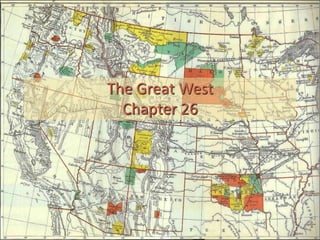

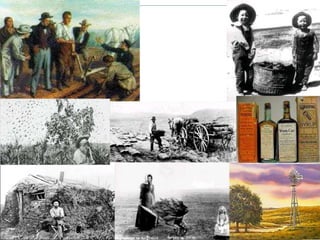

The Great WestChapter 26
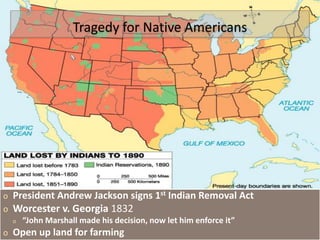
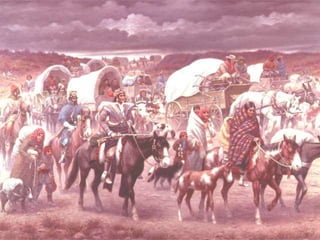
Tragedy for Native AmericansPresident Andrew Jackson signs 1st Indian Removal Act
Worcester v. Georgia 1832
“John Marshall made his decision, now let him enforce it”
Open up land for farming
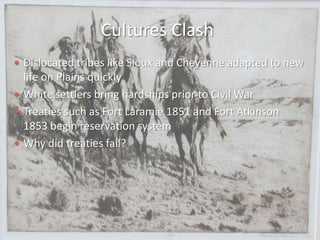
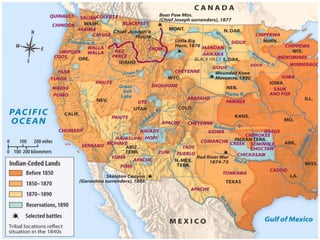
Cultures ClashDislocated tribes like Sioux and Cheyenne adapted to new life on Plains quicklyWhite settlers bring hardships prior to Civil WarTreaties such as Fort Laramie 1851 and Fort Atkinson 1853 begin reservation systemWhy did treaties fail?
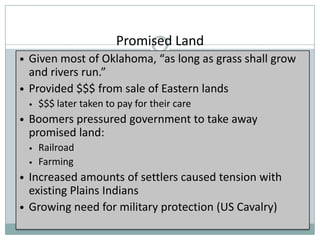
Promised LandGiven most of Oklahoma, “as long as grass shall grow and rivers run.”
Provided $$$ from sale of Eastern lands
$$$ later taken to pay for their care
Boomers pressured government to take away promised land:
Railroad
Farming
Increased amounts of settlers caused tension with existing Plains Indians
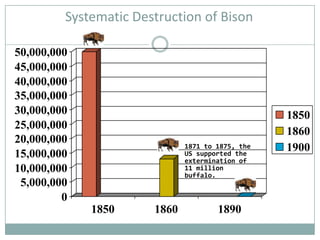
Growing need for military protection (US Cavalry)Systematic Destruction of Bison1871 to 1875, the US supported the extermination of 11 million buffalo.
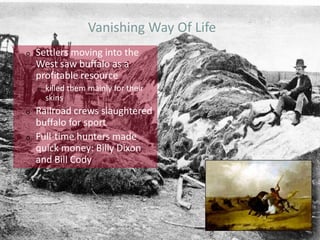
Vanishing Way Of LifeSettlers moving into the West saw buffalo as a profitable resource
killed them mainly for their skins
Railroad crews slaughtered buffalo for sport
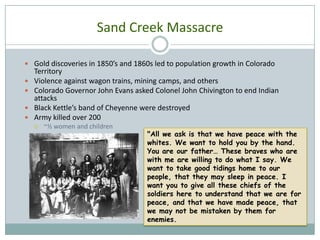
Full-time hunters made quick money: Billy Dixon and Bill CodySand Creek MassacreGold discoveries in 1850’s and 1860s led to population growth in Colorado TerritoryViolence against wagon trains, mining camps, and others Colorado Governor John Evans asked Colonel John Chivington to end Indian attacks Black Kettle’s band of Cheyenne were destroyedArmy killed over 200~½ women and children"All we ask is that we have peace with the whites. We want to hold you by the hand. You are our father… These braves who are with me are willing to do what I say. We want to take good tidings home to our people, that they may sleep in peace. I want you to give all these chiefs of the soldiers here to understand that we are for peace, and that we have made peace, that we may not be mistaken by them for enemies.
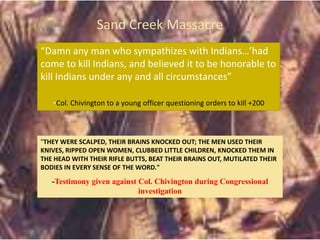
Sand Creek Massacre“Damn any man who sympathizes with Indians…’had come to kill Indians, and believed it to be honorable to kill Indians under any and all circumstances”  -Col. Chivington to a young officer questioning orders to kill +200 "THEY WERE SCALPED, THEIR BRAINS KNOCKED OUT; THE MEN USED THEIR KNIVES, RIPPED OPEN WOMEN, CLUBBED LITTLE CHILDREN, KNOCKED THEM IN THE HEAD WITH THEIR RIFLE BUTTS, BEAT THEIR BRAINS OUT, MUTILATED THEIR BODIES IN EVERY SENSE OF THE WORD." -Testimony given against Col. Chivington during Congressional investigation
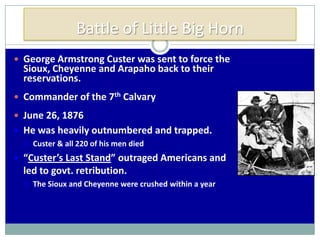
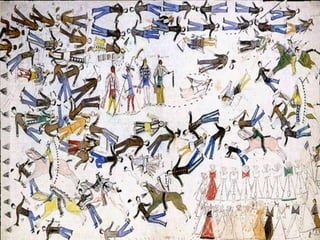
Battle of Little Big HornGeorge Armstrong Custer was sent to force the Sioux, Cheyenne and Arapaho back to their reservations.Commander of the 7th CalvaryJune 26, 1876He was heavily outnumbered and trapped.Custer & all 220 of his men died“Custer’s Last Stand” outraged Americans and led to govt. retribution.The Sioux and Cheyenne were crushed within a year
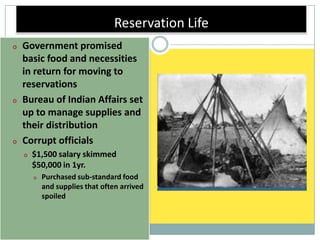
Reservation LifeGovernment promised basic food and necessities in return for moving to reservations
Bureau of Indian Affairs set up to manage supplies and their distribution
Corrupt officials
$1,500 salary skimmed $50,000 in 1yr.
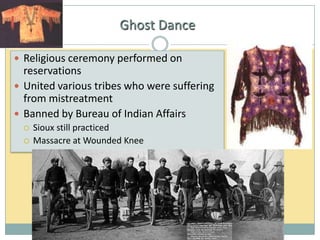
Purchased sub-standard food and supplies that often arrived spoiledGhost DanceReligious ceremony performed on reservationsUnited various tribes who were suffering from mistreatmentBanned by Bureau of Indian AffairsSioux still practicedMassacre at Wounded Knee
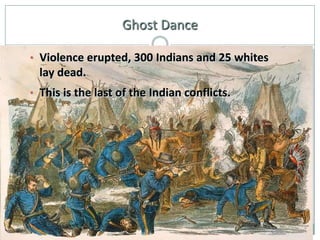
Ghost DanceViolence erupted, 300 Indians and 25 whites lay dead.
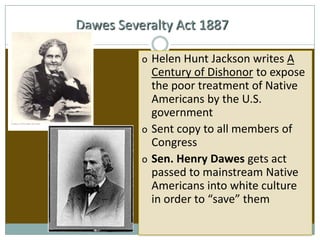
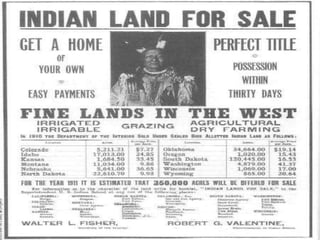
This is the last of the Indian conflicts.Dawes Severalty Act 1887Helen Hunt Jackson writes A Century of Dishonor to expose the poor treatment of Native Americans by the U.S. government
Sent copy to all members of Congress
Sen. Henry Dawes gets act passed to mainstream Native Americans into white culture in order to “save” them
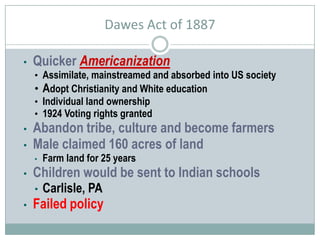
Dawes Act of 1887Quicker Americanization
Assimilate, mainstreamed and absorbed into US society
Adopt Christianity and White education
Individual land ownership
1924 Voting rights granted
Abandon tribe, culture and become farmers
Male claimed 160 acres of land
Farm land for 25 years
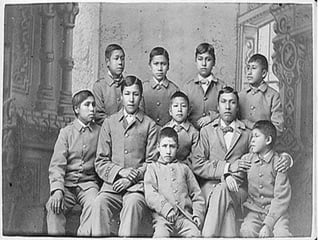
Children would be sent to Indian schools
Carlisle, PA
Failed policy
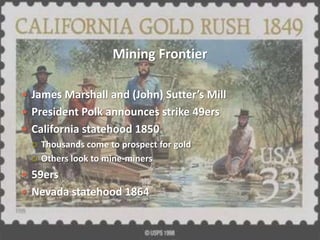
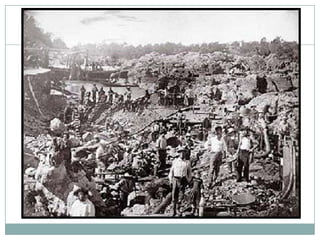
Mining FrontierJames Marshall and (John) Sutter’s Mill President Polk announces strike 49ersCalifornia statehood 1850Thousands come to prospect for goldOthers look to mine-miners59ersNevada statehood 1864
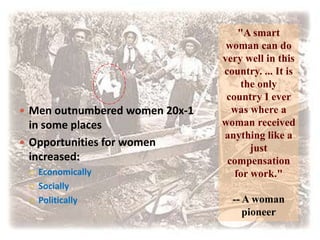
"A smart woman can do very well in this country. ... It is the only country I ever was where a woman received anything like a just compensation for work."-- A woman pioneerMen outnumbered women 20x-1 in some placesOpportunities for women increased: EconomicallySociallyPolitically
TheCowboys
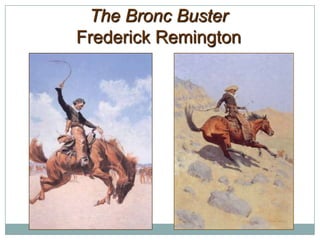
The Bronc BusterFrederick Remington
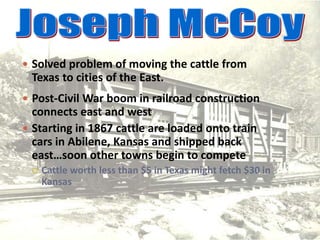
Joseph McCoySolved problem of moving the cattle from Texas to cities of the East.Post-Civil War boom in railroad construction connects east and westStarting in 1867 cattle are loaded onto train cars in Abilene, Kansas and shipped back east…soon other towns begin to competeCattle worth less than $5 in Texas might fetch $30 in Kansas
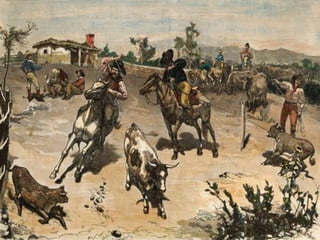
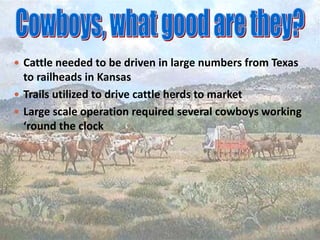
Cattle needed to be driven in large numbers from Texas to railheads in KansasTrails utilized to drive cattle herds to marketLarge scale operation required several cowboys working ‘round the clockCowboys, what good are they?
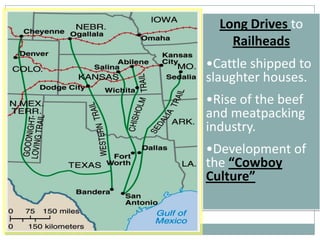
Long Drives to RailheadsCattle shipped to slaughter houses.
Rise of the beef and meatpacking industry.
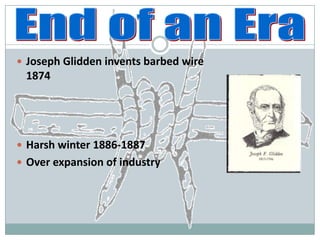
Development of the “Cowboy Culture”End of an EraJoseph Glidden invents barbed wire 1874Harsh winter 1886-1887Over expansion of industry
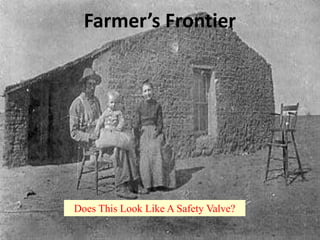
Does This Look Like A Safety Valve?Farmer’s Frontier
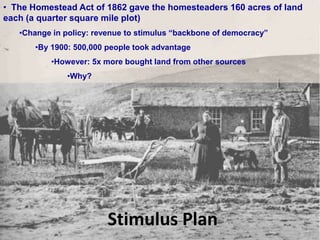
  The Homestead Act of 1862 gave the homesteaders 160 acres of land each (a quarter square mile plot)
Change in policy: revenue to stimulus “backbone of democracy”
By 1900: 500,000 people took advantage
However: 5x more bought land from other sources
Why?	Stimulus Plan
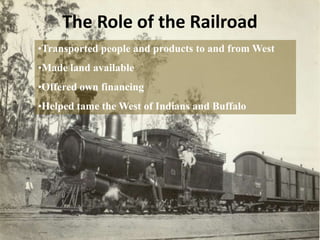
Transported people and products to and from West
Made land available
Offered own financing
Helped tame the West of Indians and BuffaloThe Role of the Railroad
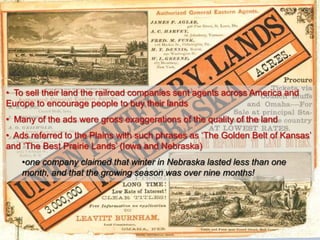
  To sell their land the railroad companies sent agents across America and Europe to encourage people to buy their lands
Many of the ads were gross exaggerations of the quality of the land
  Ads referred to the Plains with such phrases as ‘The Golden Belt of Kansas’ and ‘The Best Prairie Lands’ (Iowa and Nebraska)
one company claimed that winter in Nebraska lasted less than one month, and that the growing season was over nine months!Primary Sources: Letters and DiariesWhat can we learn from Uriah Oblinger and his family about life as a homesteader?
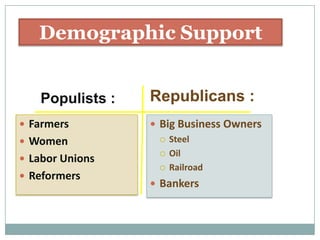
Farmers Woes and ResponseLow prices…why?Static money supplyForeclosure: mortgage rates as high as 40%Railroad monopolies
Farmers OrganizePeople’s Party (a.k.a. Populist Party)Response to concerns over low prices and tight money supply
Comprised mostly of farmers
Born out of Farmer’s Alliance (Granges)
Attacked railroad industry
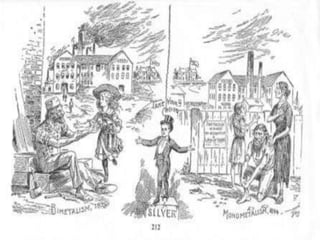
Formed co-op’s to reduce expensesPopulist Platform:Bi-metallic Supporters
Direct Election of Senators
Low Tariffs
Government ownership of railroads, telephones, and telegraphs
Women’s suffrage
Public Works Projects during economic hardships
Coxey’s Army
Graduated income tax
Ending Child Labor
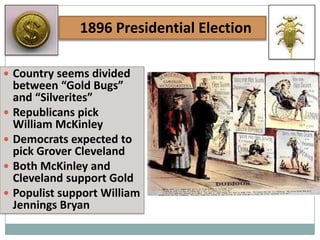
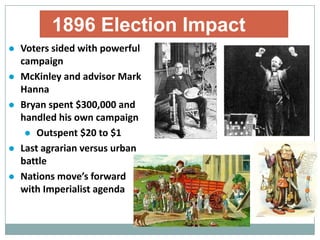
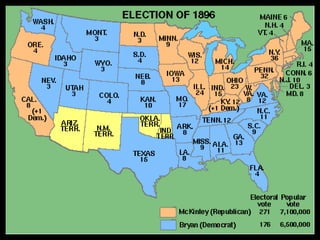
1896 Presidential ElectionCountry seems divided between “Gold Bugs” and “Silverites”
Republicans pick William McKinley
Democrats expected to pick Grover Cleveland
Both McKinley and Cleveland support Gold
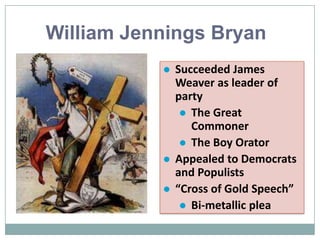
Populist support William Jennings BryanWilliam Jennings BryanSucceeded James Weaver as leader of party
The Great Commoner
The Boy Orator
Appealed to Democrats and Populists
“Cross of Gold Speech”

APUSH West