*The

Roaring 20s
*
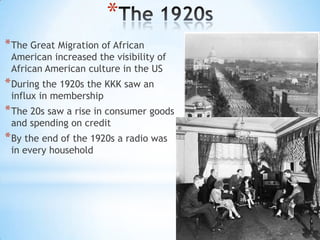
* The Great Migration of African

American increased the visibility of
African American culture in the US

* During the 1920s the KKK saw an
influx in membership

* The 20s saw a rise in consumer goods
and spending on credit

* By the end of the 1920s a radio was
in every household
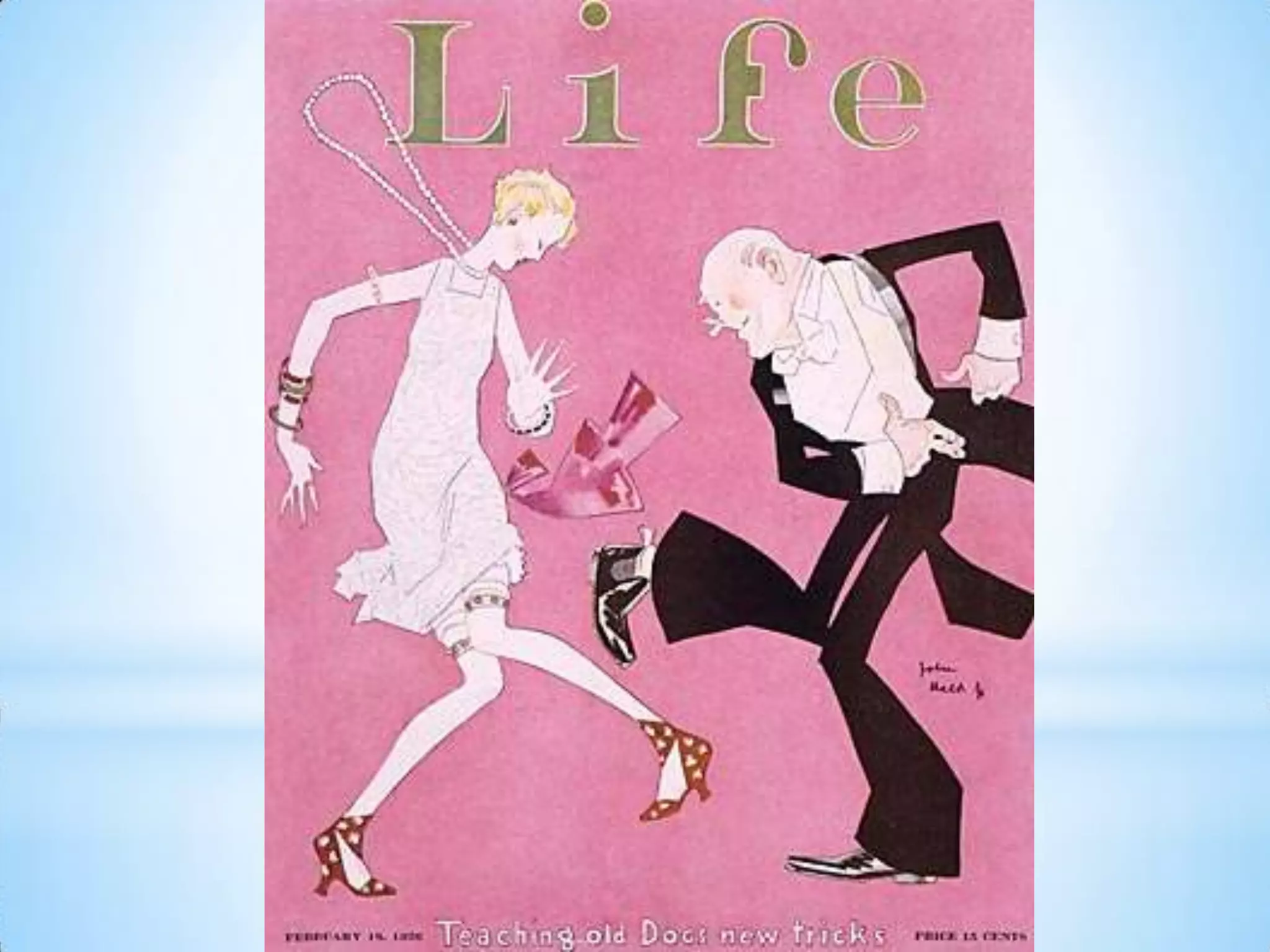
* The most familiar symbol of the era is
the flapper: young women who wore
bobbed hair, short skirts, they drank,
smoked, and swore

* the 1920s saw the rise of the Jazz Age
and the older generation hated it

* Prohibition

was seen by young people
as a way to rebel against the older
generation
*
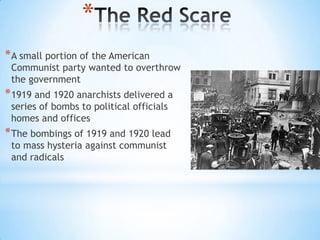
* A small portion of the American

Communist party wanted to overthrow
the government

* 1919 and 1920 anarchists delivered a
series of bombs to political officials
homes and offices

* The bombings of 1919 and 1920 lead
to mass hysteria against communist
and radicals
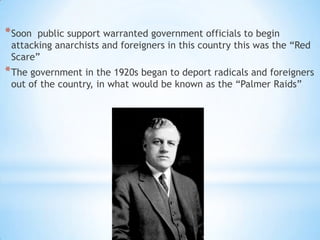
* Soon

public support warranted government officials to begin
attacking anarchists and foreigners in this country this was the “Red
Scare”

* The government in the 1920s began to deport radicals and foreigners
out of the country, in what would be known as the “Palmer Raids”
*
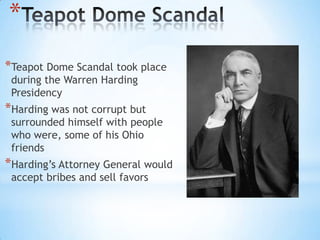
*Teapot Dome Scandal took place
during the Warren Harding
Presidency

*Harding was not corrupt but

surrounded himself with people
who were, some of his Ohio
friends

*Harding’s Attorney General would
accept bribes and sell favors
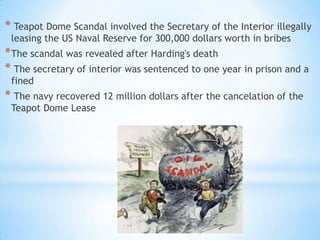
* Teapot Dome Scandal involved the Secretary of the Interior illegally
leasing the US Naval Reserve for 300,000 dollars worth in bribes

* The scandal was revealed after Harding's death
* The secretary of interior was sentenced to one year in prison and a
fined

* The navy recovered 12 million dollars after the cancelation of the
Teapot Dome Lease
*
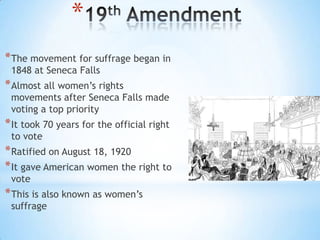
* The movement for suffrage began in
1848 at Seneca Falls

* Almost all women’s rights

movements after Seneca Falls made
voting a top priority

* It took 70 years for the official right
to vote

* Ratified on August 18, 1920
* It gave American women the right to
vote

* This is also known as women’s
suffrage
*
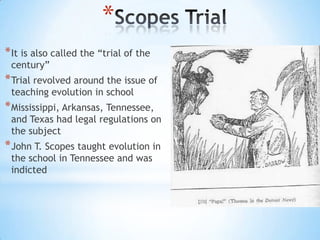
* It is also called the “trial of the
century”

* Trial revolved around the issue of
teaching evolution in school

* Mississippi, Arkansas, Tennessee,

and Texas had legal regulations on
the subject

* John T. Scopes taught evolution in
the school in Tennessee and was
indicted
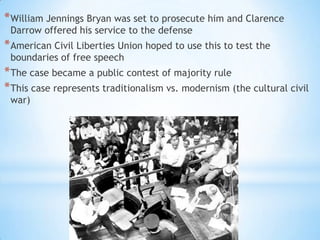
* William Jennings Bryan was set to prosecute him and Clarence
Darrow offered his service to the defense

* American Civil Liberties Union hoped to use this to test the
boundaries of free speech

* The case became a public contest of majority rule
* This case represents traditionalism vs. modernism (the cultural civil
war)
*
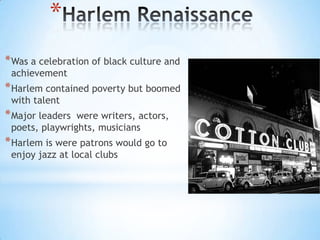
* Was a celebration of black culture and
achievement

* Harlem contained poverty but boomed
with talent

* Major leaders

were writers, actors,
poets, playwrights, musicians

* Harlem is were patrons would go to
enjoy jazz at local clubs
* Marcus Garvey preached black pride and urged African Americans to

return to Africa
* W.E.B Dubois preached in black pride but also being an American
* In Langston Hughes writings he would talk about racial pride & social
justice
* Even though segregation was a big part of the country, clubs in
Harlem usually contained all white audiences

The Roaring 20s

  • 2.
  • 3.
    * * The GreatMigration of African American increased the visibility of African American culture in the US * During the 1920s the KKK saw an influx in membership * The 20s saw a rise in consumer goods and spending on credit * By the end of the 1920s a radio was in every household
  • 4.
    * The mostfamiliar symbol of the era is the flapper: young women who wore bobbed hair, short skirts, they drank, smoked, and swore * the 1920s saw the rise of the Jazz Age and the older generation hated it * Prohibition was seen by young people as a way to rebel against the older generation
  • 5.
    * * A smallportion of the American Communist party wanted to overthrow the government * 1919 and 1920 anarchists delivered a series of bombs to political officials homes and offices * The bombings of 1919 and 1920 lead to mass hysteria against communist and radicals
  • 6.
    * Soon public supportwarranted government officials to begin attacking anarchists and foreigners in this country this was the “Red Scare” * The government in the 1920s began to deport radicals and foreigners out of the country, in what would be known as the “Palmer Raids”
  • 7.
    * *Teapot Dome Scandaltook place during the Warren Harding Presidency *Harding was not corrupt but surrounded himself with people who were, some of his Ohio friends *Harding’s Attorney General would accept bribes and sell favors
  • 8.
    * Teapot DomeScandal involved the Secretary of the Interior illegally leasing the US Naval Reserve for 300,000 dollars worth in bribes * The scandal was revealed after Harding's death * The secretary of interior was sentenced to one year in prison and a fined * The navy recovered 12 million dollars after the cancelation of the Teapot Dome Lease
  • 9.
    * * The movementfor suffrage began in 1848 at Seneca Falls * Almost all women’s rights movements after Seneca Falls made voting a top priority * It took 70 years for the official right to vote * Ratified on August 18, 1920 * It gave American women the right to vote * This is also known as women’s suffrage
  • 10.
    * * It isalso called the “trial of the century” * Trial revolved around the issue of teaching evolution in school * Mississippi, Arkansas, Tennessee, and Texas had legal regulations on the subject * John T. Scopes taught evolution in the school in Tennessee and was indicted
  • 11.
    * William JenningsBryan was set to prosecute him and Clarence Darrow offered his service to the defense * American Civil Liberties Union hoped to use this to test the boundaries of free speech * The case became a public contest of majority rule * This case represents traditionalism vs. modernism (the cultural civil war)
  • 12.
    * * Was acelebration of black culture and achievement * Harlem contained poverty but boomed with talent * Major leaders were writers, actors, poets, playwrights, musicians * Harlem is were patrons would go to enjoy jazz at local clubs
  • 13.
    * Marcus Garveypreached black pride and urged African Americans to return to Africa * W.E.B Dubois preached in black pride but also being an American * In Langston Hughes writings he would talk about racial pride & social justice * Even though segregation was a big part of the country, clubs in Harlem usually contained all white audiences