CARBOXYLIC ACIDS
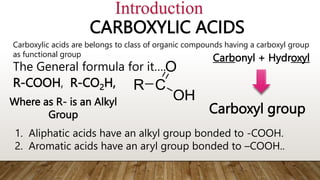
The General formula for it….
R-COOH, R-CO2H, R C
OH
O
Where as R- is an Alkyl
Group
Introduction
Carboxylic acids are belongs to class of organic compounds having a carboxyl group
as functional group
1. Aliphatic acids have an alkyl group bonded to -COOH.
2. Aromatic acids have an aryl group bonded to –COOH..
Carbonyl + Hydroxyl
Carboxyl group
IUPAC
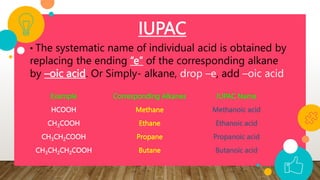
• The systematic name of individual acid is obtained by
replacing the ending “e” of the corresponding alkane
by –oic acid. Or Simply- alkane, drop –e, add –oic acid
Example Corresponding Alkanes IUPAC Name
HCOOH Methane Methanoic acid
CH3COOH Ethane Ethanoic acid
CH3CH2COOH Propane Propanoic acid
CH3CH2CH2COOH Butane Butanoic acid
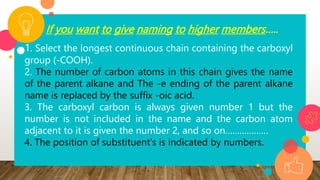
If you want to give naming to higher members…..
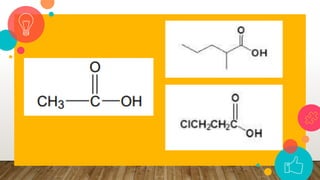
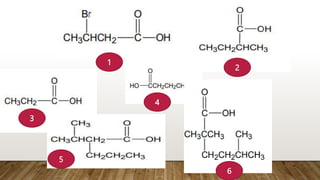
1. Select the longest continuous chain containing the carboxyl
group (-COOH).
2. The number of carbon atoms in this chain gives the name
of the parent alkane and The -e ending of the parent alkane
name is replaced by the suffix -oic acid.
3. The carboxyl carbon is always given number 1 but the
number is not included in the name and the carbon atom
adjacent to it is given the number 2, and so on………………
4. The position of substituent's is indicated by numbers.
1
2
3
4
5
6
6
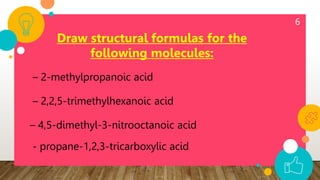
Draw structural formulas for the
following molecules:
– 2-methylpropanoic acid
– 2,2,5-trimethylhexanoic acid
– 4,5-dimethyl-3-nitrooctanoic acid
- propane-1,2,3-tricarboxylic acid
7
8
Methods of Preparation for Carboxylic acid
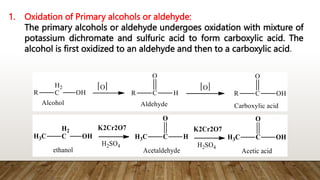
1. Oxidation of Primary alcohols or aldehyde:
The primary alcohols or aldehyde undergoes oxidation with mixture of
potassium dichromate and sulfuric acid to form carboxylic acid. The
alcohol is first oxidized to an aldehyde and then to a carboxylic acid.
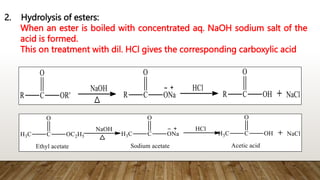
2. Hydrolysis of esters:
When an ester is boiled with concentrated aq. NaOH sodium salt of the
acid is formed.
This on treatment with dil. HCl gives the corresponding carboxylic acid
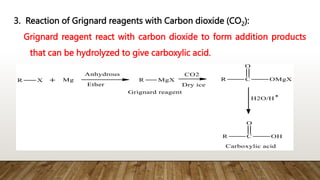
3. Reaction of Grignard reagents with Carbon dioxide (CO2):
Grignard reagent react with carbon dioxide to form addition products
that can be hydrolyzed to give carboxylic acid.
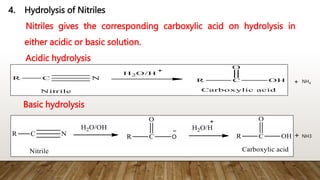
4. Hydrolysis of Nitriles
Nitriles gives the corresponding carboxylic acid on hydrolysis in
either acidic or basic solution.
Acidic hydrolysis
Basic hydrolysis
NH4
NH3
+
+
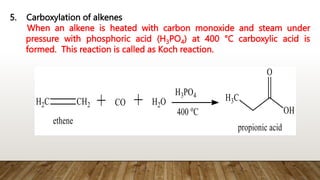
5. Carboxylation of alkenes
When an alkene is heated with carbon monoxide and steam under
pressure with phosphoric acid (H3PO4) at 400 ℃ carboxylic acid is
formed. This reaction is called as Koch reaction.
15
Physical properties of Carboxylic acid
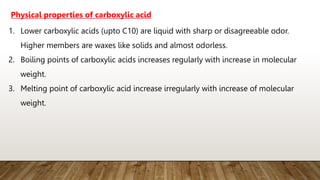
1. Lower carboxylic acids (upto C10) are liquid with sharp or disagreeable odor.
Higher members are waxes like solids and almost odorless.
2. Boiling points of carboxylic acids increases regularly with increase in molecular
weight.
3. Melting point of carboxylic acid increase irregularly with increase of molecular
weight.
Physical properties of carboxylic acid
17
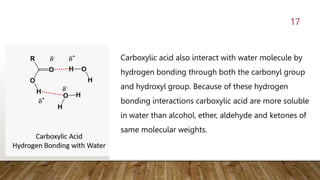
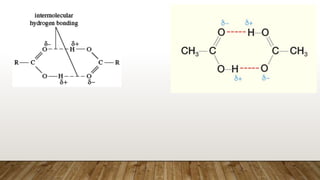
Carboxylic acid also interact with water molecule by
hydrogen bonding through both the carbonyl group
and hydroxyl group. Because of these hydrogen
bonding interactions carboxylic acid are more soluble
in water than alcohol, ether, aldehyde and ketones of
same molecular weights.
18
Reactions of Carboxylic acids
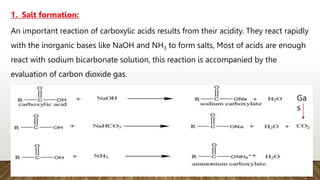
1. Salt formation:
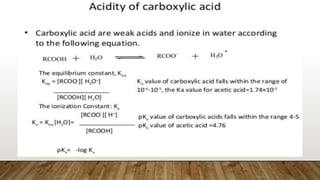
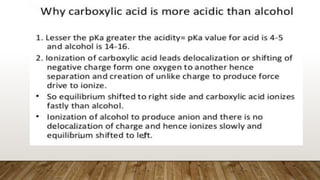
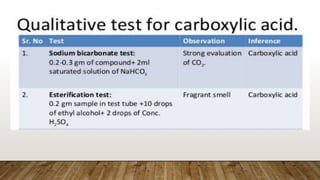
An important reaction of carboxylic acids results from their acidity. They react rapidly
with the inorganic bases like NaOH and NH3 to form salts, Most of acids are enough
react with sodium bicarbonate solution, this reaction is accompanied by the
evaluation of carbon dioxide gas.
Ga
s
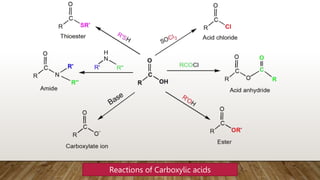
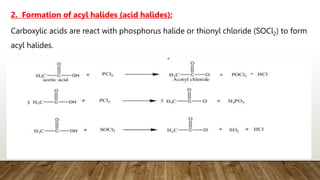
Carboxylic acids are react with phosphorus halide or thionyl chloride (SOCl2) to form
acyl halides.
2. Formation of acyl halides (acid halides):
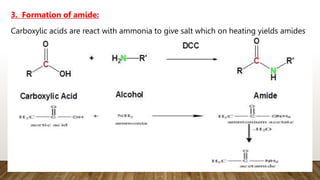
Carboxylic acids are react with ammonia to give salt which on heating yields amides
3. Formation of amide:
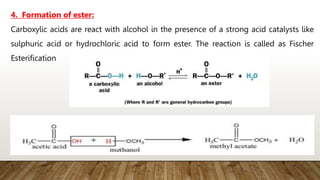
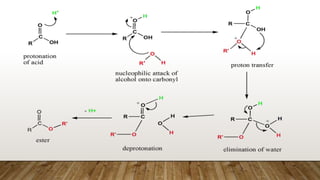
Carboxylic acids are react with alcohol in the presence of a strong acid catalysts like
sulphuric acid or hydrochloric acid to form ester. The reaction is called as Fischer
Esterification
4. Formation of ester:
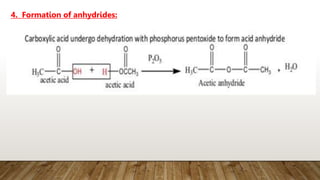
4. Formation of anhydrides:
26
Uses Of Carboxylic Acid
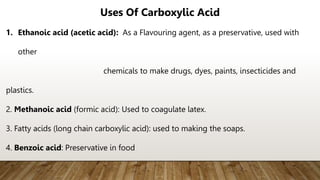
1. Ethanoic acid (acetic acid): As a Flavouring agent, as a preservative, used with
other
chemicals to make drugs, dyes, paints, insecticides and
plastics.
2. Methanoic acid (formic acid): Used to coagulate latex.
3. Fatty acids (long chain carboxylic acid): used to making the soaps.
4. Benzoic acid: Preservative in food

2-Unit-Carboxylic acid.pptx

  • 1.
    CARBOXYLIC ACIDS The Generalformula for it…. R-COOH, R-CO2H, R C OH O Where as R- is an Alkyl Group Introduction Carboxylic acids are belongs to class of organic compounds having a carboxyl group as functional group 1. Aliphatic acids have an alkyl group bonded to -COOH. 2. Aromatic acids have an aryl group bonded to –COOH.. Carbonyl + Hydroxyl Carboxyl group
  • 2.
    IUPAC • The systematicname of individual acid is obtained by replacing the ending “e” of the corresponding alkane by –oic acid. Or Simply- alkane, drop –e, add –oic acid Example Corresponding Alkanes IUPAC Name HCOOH Methane Methanoic acid CH3COOH Ethane Ethanoic acid CH3CH2COOH Propane Propanoic acid CH3CH2CH2COOH Butane Butanoic acid
  • 3.
    If you wantto give naming to higher members….. 1. Select the longest continuous chain containing the carboxyl group (-COOH). 2. The number of carbon atoms in this chain gives the name of the parent alkane and The -e ending of the parent alkane name is replaced by the suffix -oic acid. 3. The carboxyl carbon is always given number 1 but the number is not included in the name and the carbon atom adjacent to it is given the number 2, and so on……………… 4. The position of substituent's is indicated by numbers.
  • 5.
  • 6.
    6 Draw structural formulasfor the following molecules: – 2-methylpropanoic acid – 2,2,5-trimethylhexanoic acid – 4,5-dimethyl-3-nitrooctanoic acid - propane-1,2,3-tricarboxylic acid
  • 7.
  • 8.
  • 9.
    Methods of Preparationfor Carboxylic acid
  • 10.
    1. Oxidation ofPrimary alcohols or aldehyde: The primary alcohols or aldehyde undergoes oxidation with mixture of potassium dichromate and sulfuric acid to form carboxylic acid. The alcohol is first oxidized to an aldehyde and then to a carboxylic acid.
  • 11.
    2. Hydrolysis ofesters: When an ester is boiled with concentrated aq. NaOH sodium salt of the acid is formed. This on treatment with dil. HCl gives the corresponding carboxylic acid
  • 12.
    3. Reaction ofGrignard reagents with Carbon dioxide (CO2): Grignard reagent react with carbon dioxide to form addition products that can be hydrolyzed to give carboxylic acid.
  • 13.
    4. Hydrolysis ofNitriles Nitriles gives the corresponding carboxylic acid on hydrolysis in either acidic or basic solution. Acidic hydrolysis Basic hydrolysis NH4 NH3 + +
  • 14.
    5. Carboxylation ofalkenes When an alkene is heated with carbon monoxide and steam under pressure with phosphoric acid (H3PO4) at 400 ℃ carboxylic acid is formed. This reaction is called as Koch reaction.
  • 15.
  • 16.
    1. Lower carboxylicacids (upto C10) are liquid with sharp or disagreeable odor. Higher members are waxes like solids and almost odorless. 2. Boiling points of carboxylic acids increases regularly with increase in molecular weight. 3. Melting point of carboxylic acid increase irregularly with increase of molecular weight. Physical properties of carboxylic acid
  • 17.
    17 Carboxylic acid alsointeract with water molecule by hydrogen bonding through both the carbonyl group and hydroxyl group. Because of these hydrogen bonding interactions carboxylic acid are more soluble in water than alcohol, ether, aldehyde and ketones of same molecular weights.
  • 18.
  • 19.
  • 20.
    1. Salt formation: Animportant reaction of carboxylic acids results from their acidity. They react rapidly with the inorganic bases like NaOH and NH3 to form salts, Most of acids are enough react with sodium bicarbonate solution, this reaction is accompanied by the evaluation of carbon dioxide gas. Ga s
  • 21.
    Carboxylic acids arereact with phosphorus halide or thionyl chloride (SOCl2) to form acyl halides. 2. Formation of acyl halides (acid halides):
  • 22.
    Carboxylic acids arereact with ammonia to give salt which on heating yields amides 3. Formation of amide:
  • 23.
    Carboxylic acids arereact with alcohol in the presence of a strong acid catalysts like sulphuric acid or hydrochloric acid to form ester. The reaction is called as Fischer Esterification 4. Formation of ester:
  • 25.
    4. Formation ofanhydrides:
  • 26.
  • 27.
    Uses Of CarboxylicAcid 1. Ethanoic acid (acetic acid): As a Flavouring agent, as a preservative, used with other chemicals to make drugs, dyes, paints, insecticides and plastics. 2. Methanoic acid (formic acid): Used to coagulate latex. 3. Fatty acids (long chain carboxylic acid): used to making the soaps. 4. Benzoic acid: Preservative in food