Guided by : Miss Pratiksha marwadkar
presented By : Darshana
Bafna
 Keratin is a protein that helps form hair, nails and your skin’s outer
layer (epidermis).
 It helps support your skin, heal wounds and keep your nails and hair
healthy
 There are two forms of keratin:
 Alpha-keratin: Alpha-keratin is in the hair, epidermis, horns and nails of
mammals. Type I and type II keratins are alpha-keratins.
 Beta-keratin: Beta-keratin is in the feathers, claws, beaks and scales of
birds and reptiles.
 Keratinocytes are the primary type of cell found in the epidermis, the outermost
layer of the skin.
 In humans, they constitute 90% of epidermal skin cells. Basal cells in the basal
layer (stratum basale) of the skin are sometimes referred to as basal keratinocytes
 Keratinocytes form a barrier against environmental damage by heat, UV
radiation, water loss, pathogenic bacteria, fungi, parasites, and viruses.
 A number of structural proteins, enzymes, lipids, and antimicrobial
peptides contribute to maintain the important barrier function of the skin.
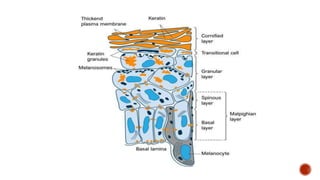
 Keratinocytes differentiate from epidermal stem cells in the lower part of the
epidermis and migrate towards the surface, finally becoming corneocytes and
eventually be shed offwhich happens every 40 to 56 days in humans
 Such process also known as Cornification.
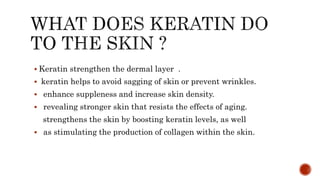
 Keratin strengthen the dermal layer .
 keratin helps to avoid sagging of skin or prevent wrinkles.
 enhance suppleness and increase skin density.
 revealing stronger skin that resists the effects of aging.
strengthens the skin by boosting keratin levels, as well
 as stimulating the production of collagen within the skin.
keratinization.pptx
keratinization.pptx
keratinization.pptx

keratinization.pptx

  • 1.
    Guided by :Miss Pratiksha marwadkar presented By : Darshana Bafna
  • 2.
     Keratin isa protein that helps form hair, nails and your skin’s outer layer (epidermis).  It helps support your skin, heal wounds and keep your nails and hair healthy  There are two forms of keratin:  Alpha-keratin: Alpha-keratin is in the hair, epidermis, horns and nails of mammals. Type I and type II keratins are alpha-keratins.  Beta-keratin: Beta-keratin is in the feathers, claws, beaks and scales of birds and reptiles.
  • 3.
     Keratinocytes arethe primary type of cell found in the epidermis, the outermost layer of the skin.  In humans, they constitute 90% of epidermal skin cells. Basal cells in the basal layer (stratum basale) of the skin are sometimes referred to as basal keratinocytes  Keratinocytes form a barrier against environmental damage by heat, UV radiation, water loss, pathogenic bacteria, fungi, parasites, and viruses.  A number of structural proteins, enzymes, lipids, and antimicrobial peptides contribute to maintain the important barrier function of the skin.  Keratinocytes differentiate from epidermal stem cells in the lower part of the epidermis and migrate towards the surface, finally becoming corneocytes and eventually be shed offwhich happens every 40 to 56 days in humans  Such process also known as Cornification.
  • 5.
     Keratin strengthenthe dermal layer .  keratin helps to avoid sagging of skin or prevent wrinkles.  enhance suppleness and increase skin density.  revealing stronger skin that resists the effects of aging. strengthens the skin by boosting keratin levels, as well  as stimulating the production of collagen within the skin.