Designing student centred and
online learning approaches to
develop clinical judgement:
The student experience
Helen Wozniak
Prof Hugh Grantham
Dr Clare Harvey
Prof Kay Morris Matthews
Dr Elaine Papps
Disclosure statement
• Faculty: Helen Wozniak & Hugh Grantham
• No relationships with commercial interests
• Mitigating bias: Teacher – student relationship:
independent researcher
http://www.shutterstock.com/video/clip-2438942-stock-
footage-lab-rat-taken-by-scientist-hd-lab-rat-hairless-taken-
from-a-glass-cage-by-a-scientist-in-two.html
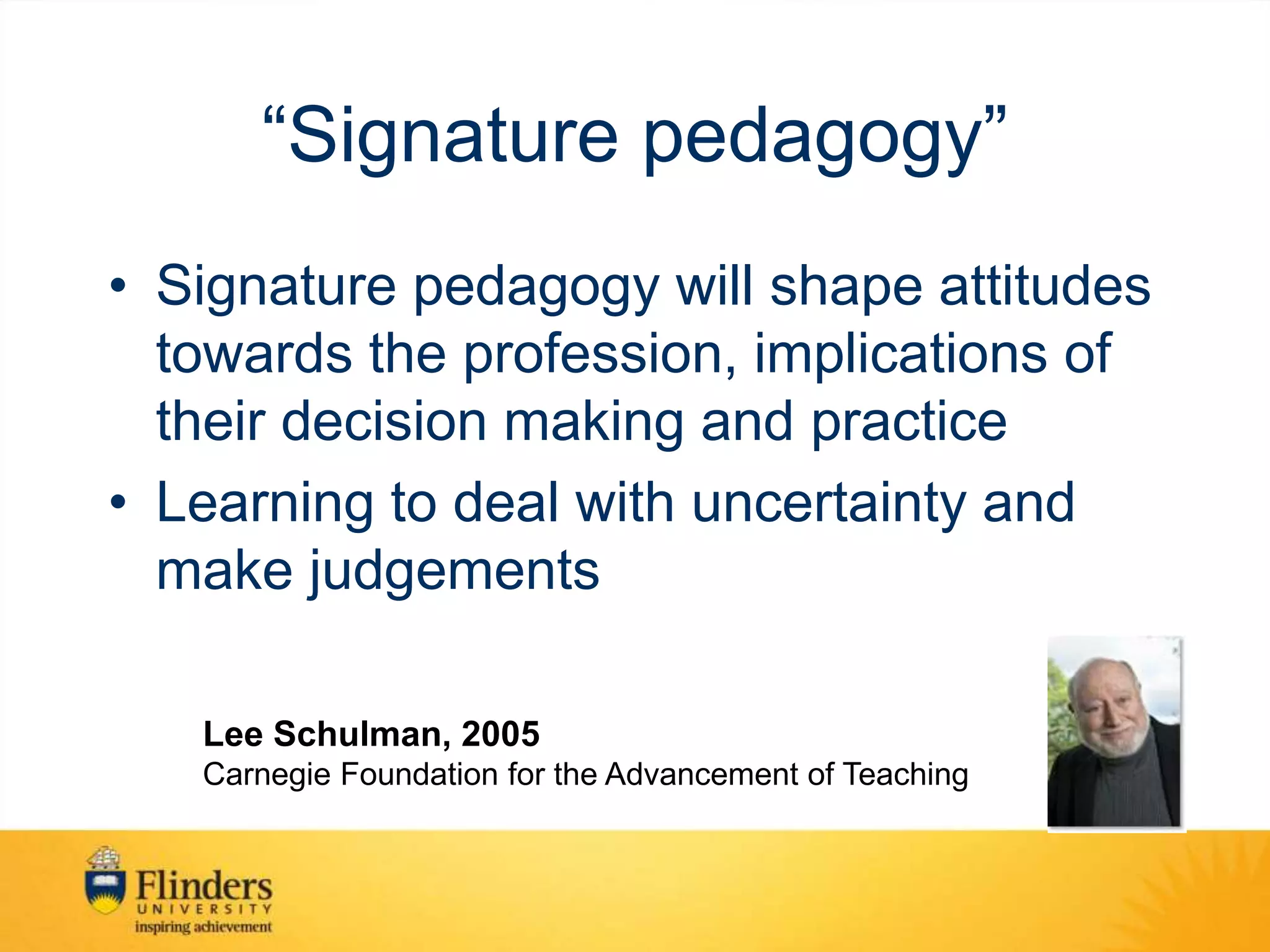
“Signature pedagogy”
• Signature pedagogy will shape attitudes
towards the profession, implications of
their decision making and practice
• Learning to deal with uncertainty and
make judgements
Lee Schulman, 2005
Carnegie Foundation for the Advancement of Teaching
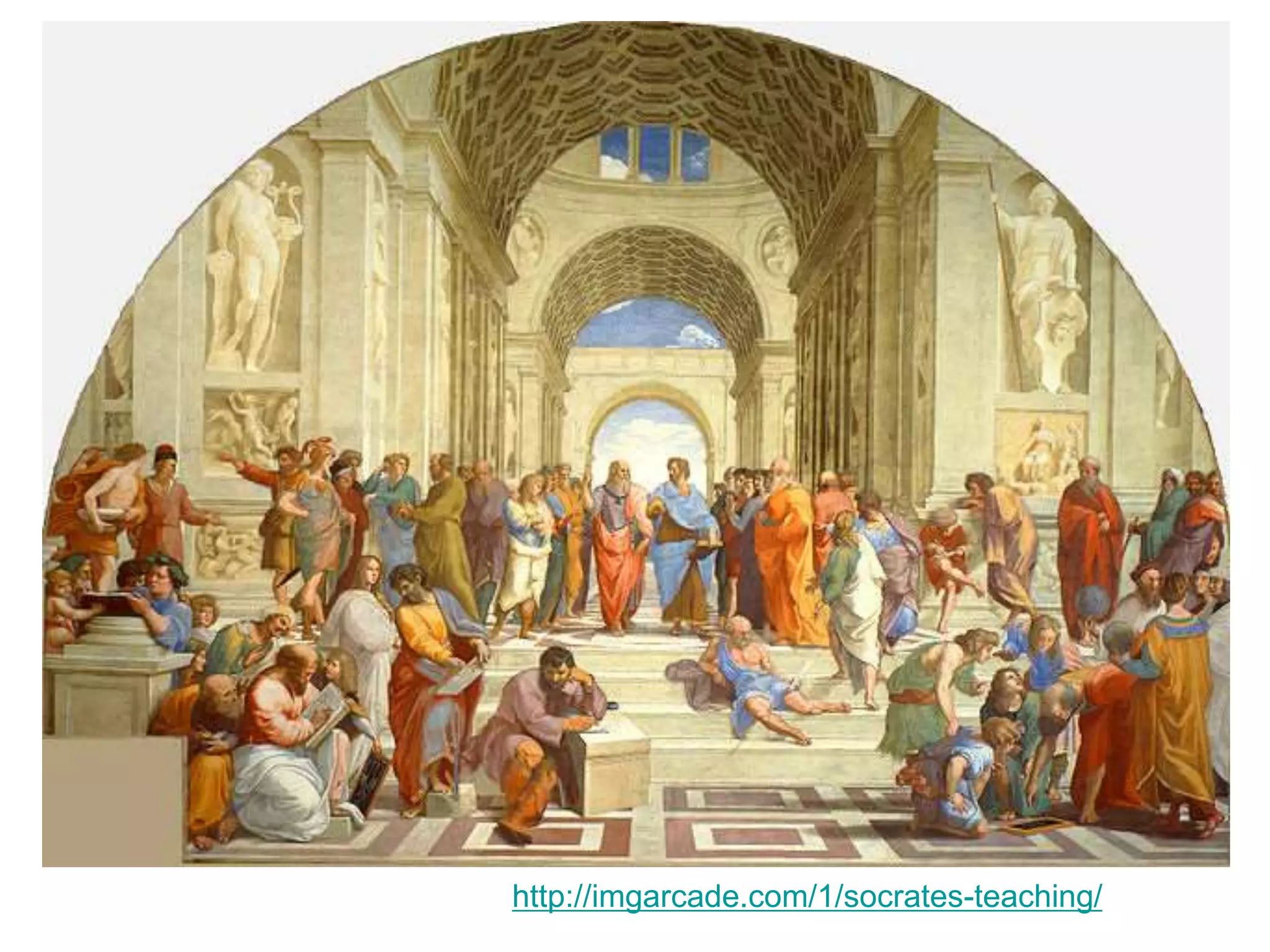
http://imgarcade.com/1/socrates-teaching/
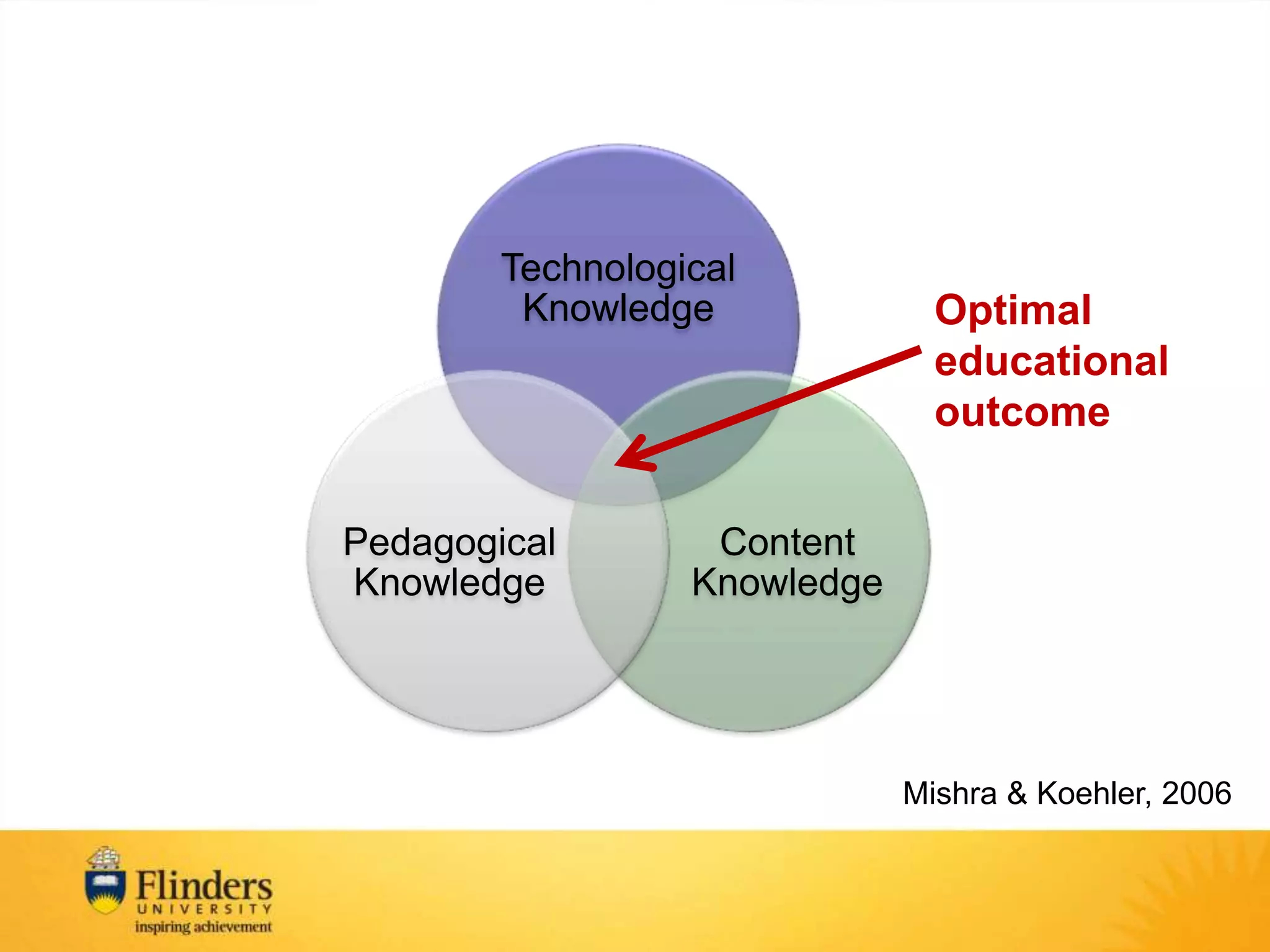
Technological
Knowledge
Content
Knowledge
Pedagogical
Knowledge
Mishra & Koehler, 2006
Optimal
educational
outcome
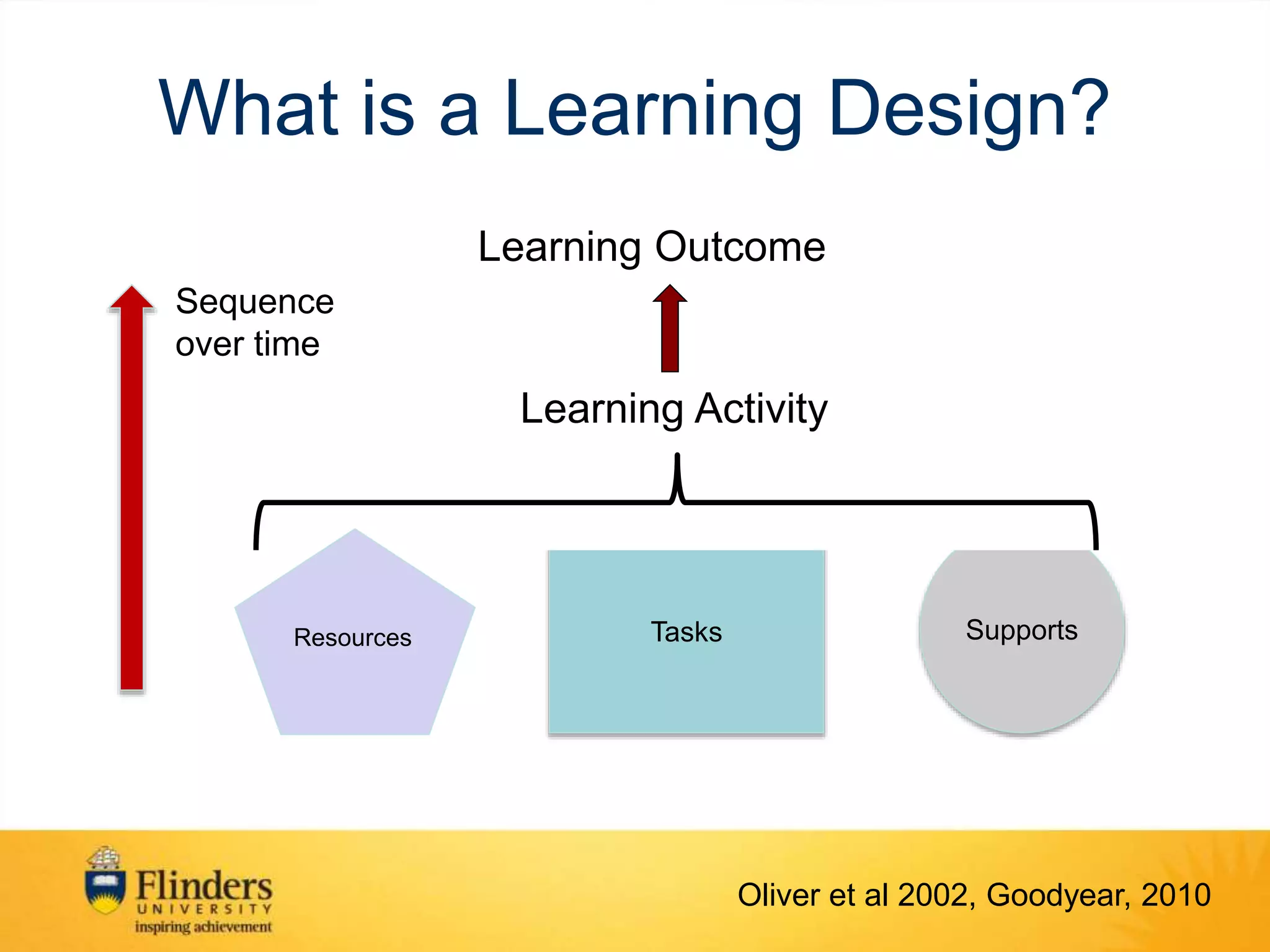
What is a Learning Design?
Tasks Supports
Sequence
over time
Learning Outcome
Oliver et al 2002, Goodyear, 2010
Learning Activity
Resources
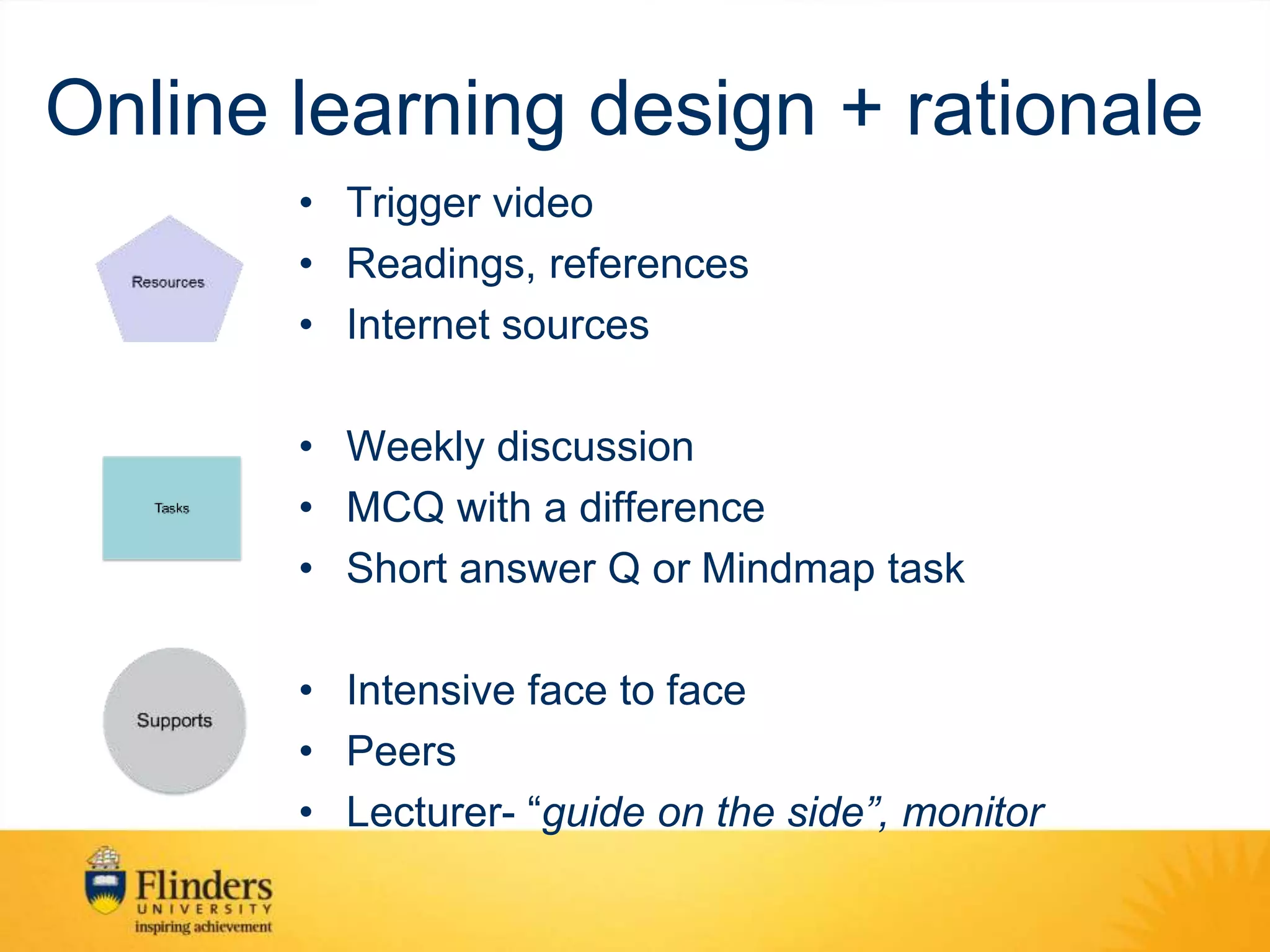
Online learning design + rationale
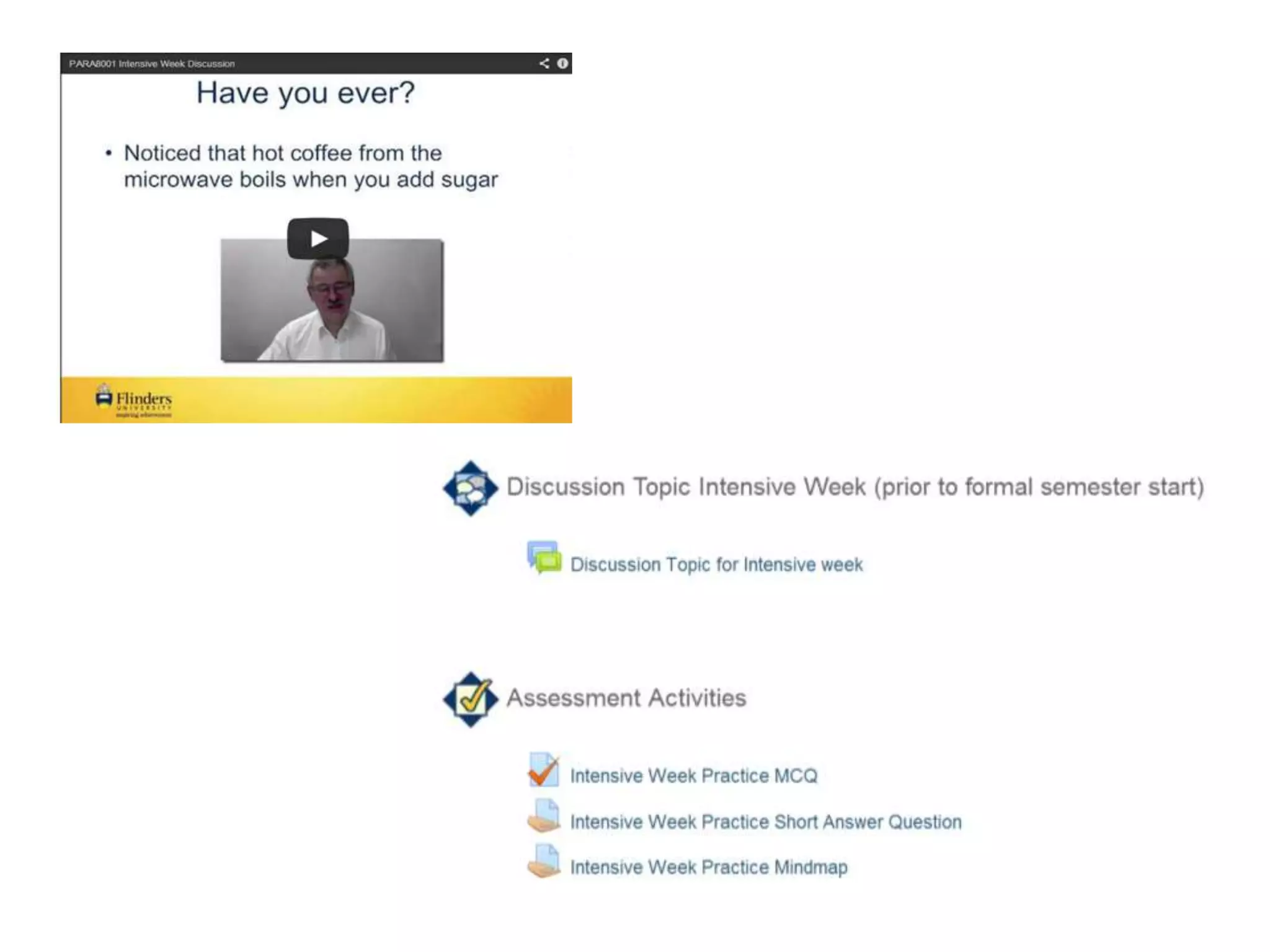
• Trigger video
• Readings, references
• Internet sources
• Weekly discussion
• MCQ with a difference
• Short answer Q or Mindmap task
• Intensive face to face
• Peers
• Lecturer- “guide on the side”, monitor
Research Questions
• Can online strategies be used to
develop critical thinking and judgement
based on best evidence?
• What was the student experience of
such approaches?
• Mixed methods
– Pre / post self assessment n=19
– In depth student interviews n=4
– Content analysis of discussion postings
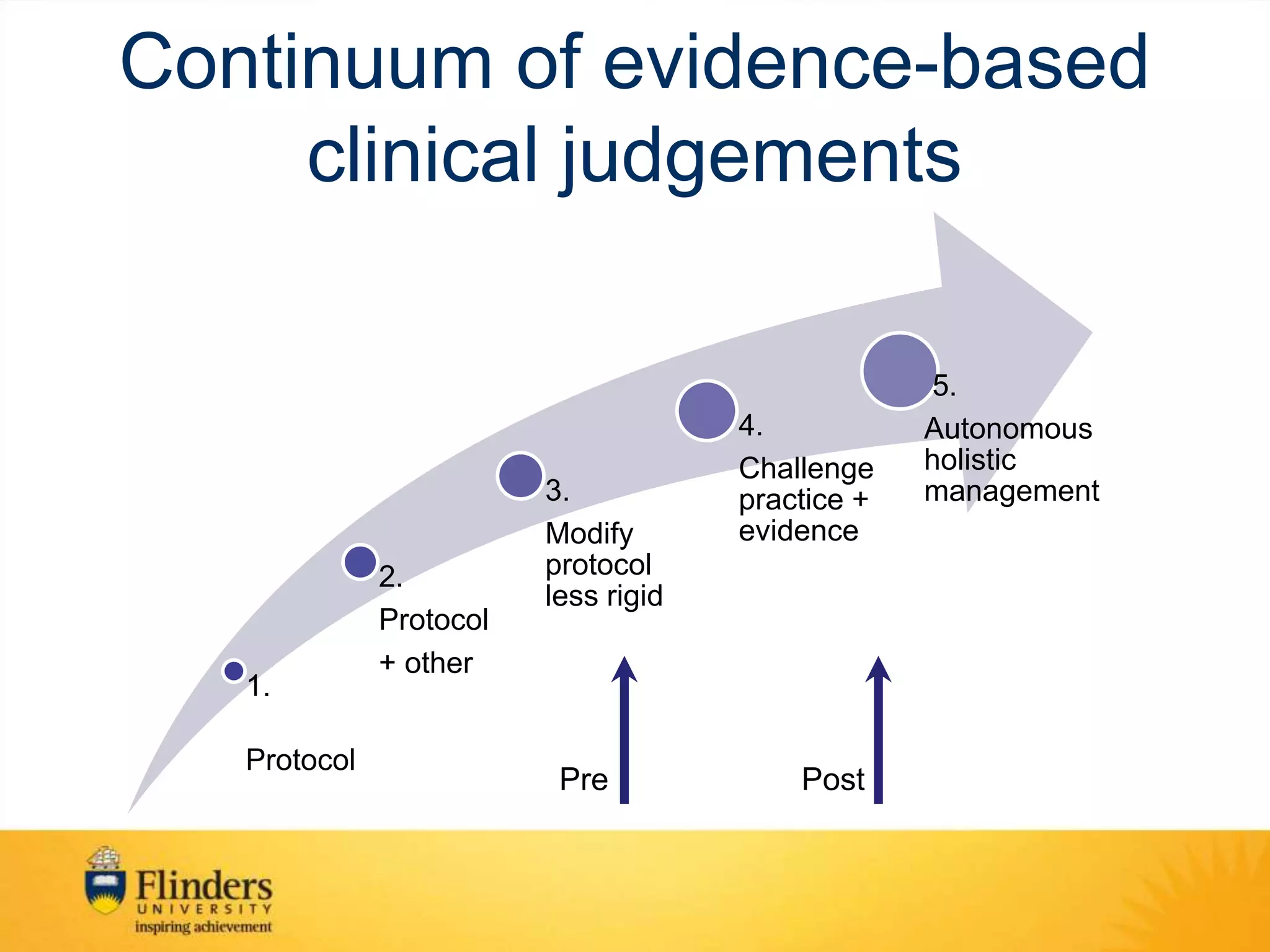
Continuum of evidence-based
clinical judgements
1.
Protocol
2.
Protocol
+ other
3.
Modify
protocol
less rigid
4.
Challenge
practice +
evidence
5.
Autonomous
holistic
management
Pre Post
Student interview themes (n=4)
Style of learning
• Unlike other prior learning experiences
“messing with my head”, “bastard MCQ”
“learner’s high like a runner’s high”
Impact and outcomes on practice
• Seeks out feedback on patients
• Change in attitudes by work colleagues
• Student retention high
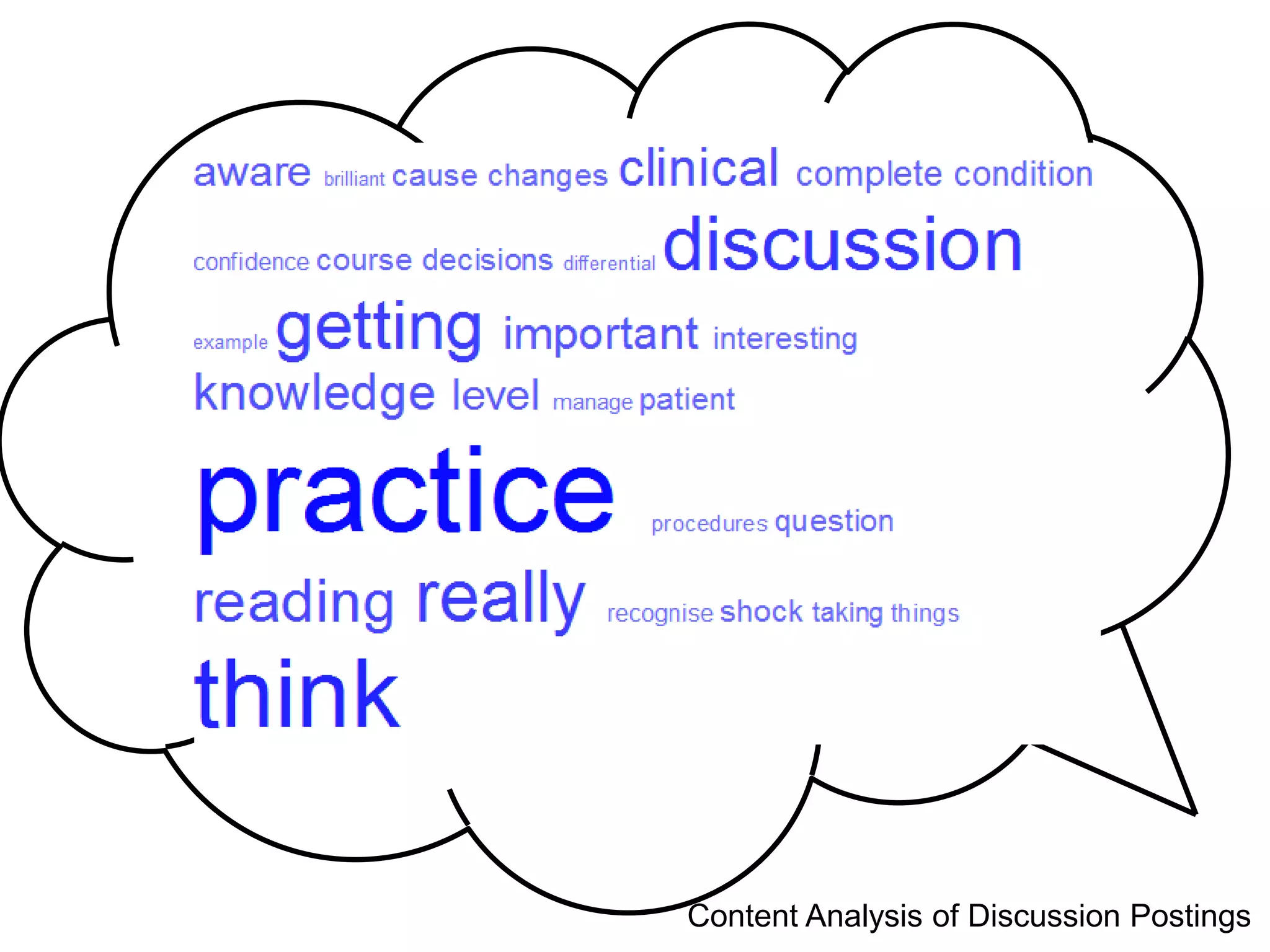
Content Analysis of Discussion Postings
“It certainly has been a journey, we have learnt a lot
along the way and hopefully remember much of it. We
are the first of many and will soon be on the road as
ICP's, its been a pleasure being with a good group of
people who have been respectful and entertaining in
both the discussion forums and our intensive weeks.”
“I have enjoyed the discussions Hugh.”
“I too have valued everyone's support, encouragement
and respect towards each other throughout the
course. Thanks to all for the great laughs and sharing of
personal and professional experiences and knowledge.”
References
• Goodyear, P. (2010) Teaching, technology and educational design:
The architecture of productive learning environments. Final report
Senior Fellowship, ALTC
• Mishra, Punya, & Koehler, Matthew J. (2006). Technological
Pedagogical Content Knowledge: A Framework for Teacher
Knowledge. Teachers College Record, 108(6), 1017-1054
• Oliver, R. & Harper, B., Hedberg, J., Wills, S., & Agostinho, S.
(2002). Exploring strategies to formalise the description of learning
designs. In A. Goody, J. Herrington & M. Northcote (Eds.), Quality
conversations: Research and Development in Higher Education,
Volume 25 (pp. 496-504). Jamison, ACT: HERDSA
• Shulman, L. (2005). Signature pedagogies in the
professions. Daedalus, 134(3), 52-59.

29 muster2014 wozniak

  • 1.
    Designing student centredand online learning approaches to develop clinical judgement: The student experience Helen Wozniak Prof Hugh Grantham Dr Clare Harvey Prof Kay Morris Matthews Dr Elaine Papps
  • 2.
    Disclosure statement • Faculty:Helen Wozniak & Hugh Grantham • No relationships with commercial interests • Mitigating bias: Teacher – student relationship: independent researcher http://www.shutterstock.com/video/clip-2438942-stock- footage-lab-rat-taken-by-scientist-hd-lab-rat-hairless-taken- from-a-glass-cage-by-a-scientist-in-two.html
  • 3.
    “Signature pedagogy” • Signaturepedagogy will shape attitudes towards the profession, implications of their decision making and practice • Learning to deal with uncertainty and make judgements Lee Schulman, 2005 Carnegie Foundation for the Advancement of Teaching
  • 4.
  • 5.
  • 6.
    What is aLearning Design? Tasks Supports Sequence over time Learning Outcome Oliver et al 2002, Goodyear, 2010 Learning Activity Resources
  • 7.
    Online learning design+ rationale • Trigger video • Readings, references • Internet sources • Weekly discussion • MCQ with a difference • Short answer Q or Mindmap task • Intensive face to face • Peers • Lecturer- “guide on the side”, monitor
  • 9.
    Research Questions • Canonline strategies be used to develop critical thinking and judgement based on best evidence? • What was the student experience of such approaches? • Mixed methods – Pre / post self assessment n=19 – In depth student interviews n=4 – Content analysis of discussion postings
  • 10.
    Continuum of evidence-based clinicaljudgements 1. Protocol 2. Protocol + other 3. Modify protocol less rigid 4. Challenge practice + evidence 5. Autonomous holistic management Pre Post
  • 11.
    Student interview themes(n=4) Style of learning • Unlike other prior learning experiences “messing with my head”, “bastard MCQ” “learner’s high like a runner’s high” Impact and outcomes on practice • Seeks out feedback on patients • Change in attitudes by work colleagues • Student retention high
  • 12.
    Content Analysis ofDiscussion Postings
  • 13.
    “It certainly hasbeen a journey, we have learnt a lot along the way and hopefully remember much of it. We are the first of many and will soon be on the road as ICP's, its been a pleasure being with a good group of people who have been respectful and entertaining in both the discussion forums and our intensive weeks.” “I have enjoyed the discussions Hugh.” “I too have valued everyone's support, encouragement and respect towards each other throughout the course. Thanks to all for the great laughs and sharing of personal and professional experiences and knowledge.”
  • 14.
    References • Goodyear, P.(2010) Teaching, technology and educational design: The architecture of productive learning environments. Final report Senior Fellowship, ALTC • Mishra, Punya, & Koehler, Matthew J. (2006). Technological Pedagogical Content Knowledge: A Framework for Teacher Knowledge. Teachers College Record, 108(6), 1017-1054 • Oliver, R. & Harper, B., Hedberg, J., Wills, S., & Agostinho, S. (2002). Exploring strategies to formalise the description of learning designs. In A. Goody, J. Herrington & M. Northcote (Eds.), Quality conversations: Research and Development in Higher Education, Volume 25 (pp. 496-504). Jamison, ACT: HERDSA • Shulman, L. (2005). Signature pedagogies in the professions. Daedalus, 134(3), 52-59.