





Synchronous Online Learning in
Short Learning Programs
Iwan Wopereis
Overview
• Introduction
• Short Learning Programs
• Designing SLPs
• Synchronous Online Learning in SLPs
• Conclusion
Overview
• Introduction
• Short Learning Programs
• Designing SLPs
• Synchronous Online Learning in SLPs
• Conclusion
Introduction OUNL
• Online Distance Education
• Active Online Education
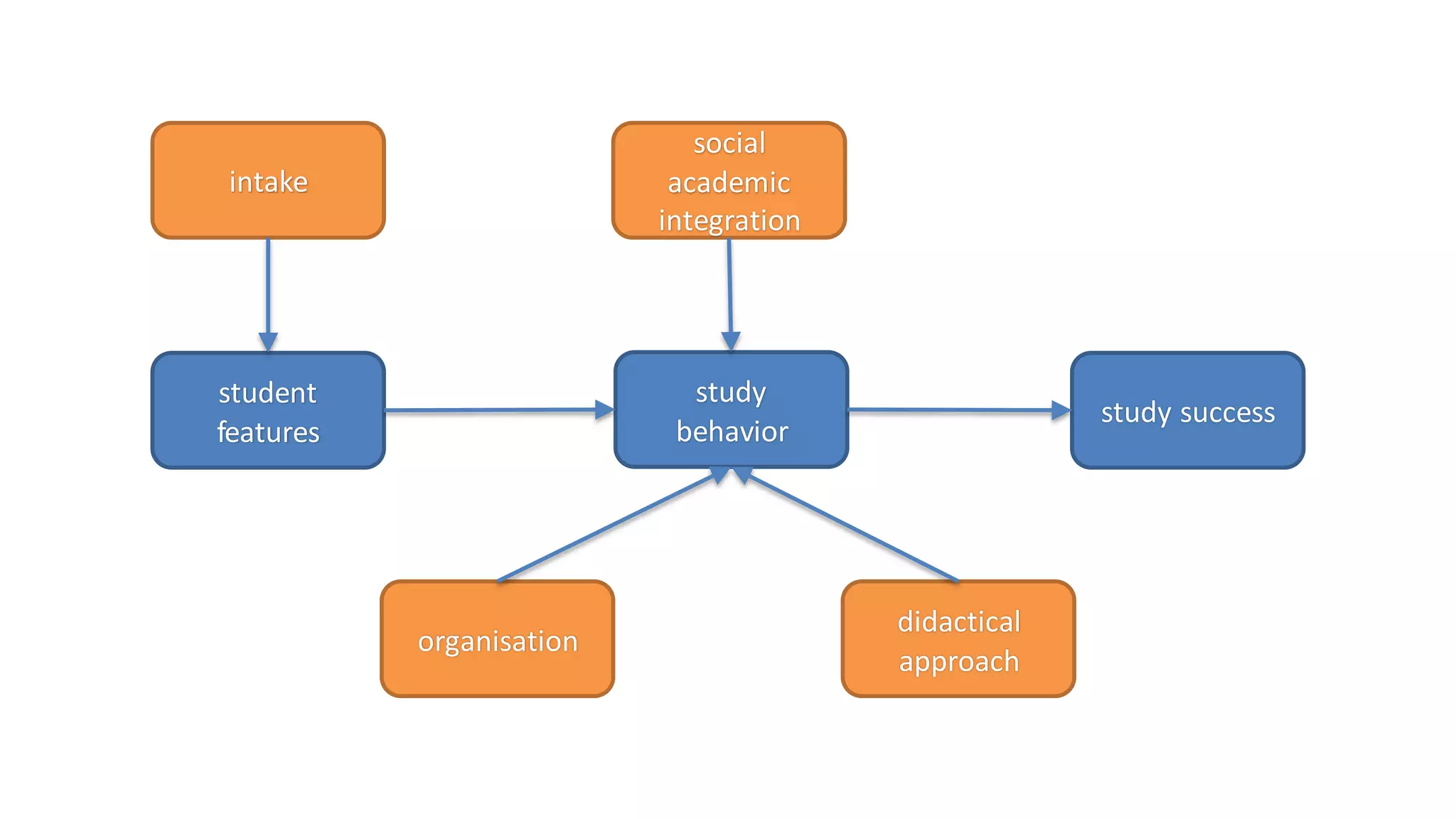
study
behavior
study success
student
features
social
academic
integration
intake
organisation
didactical
approach
Overview
• Introduction
• Short Learning Programs
• Designing SLPs
• Synchronous Online Learning in SLPs
• Conclusion
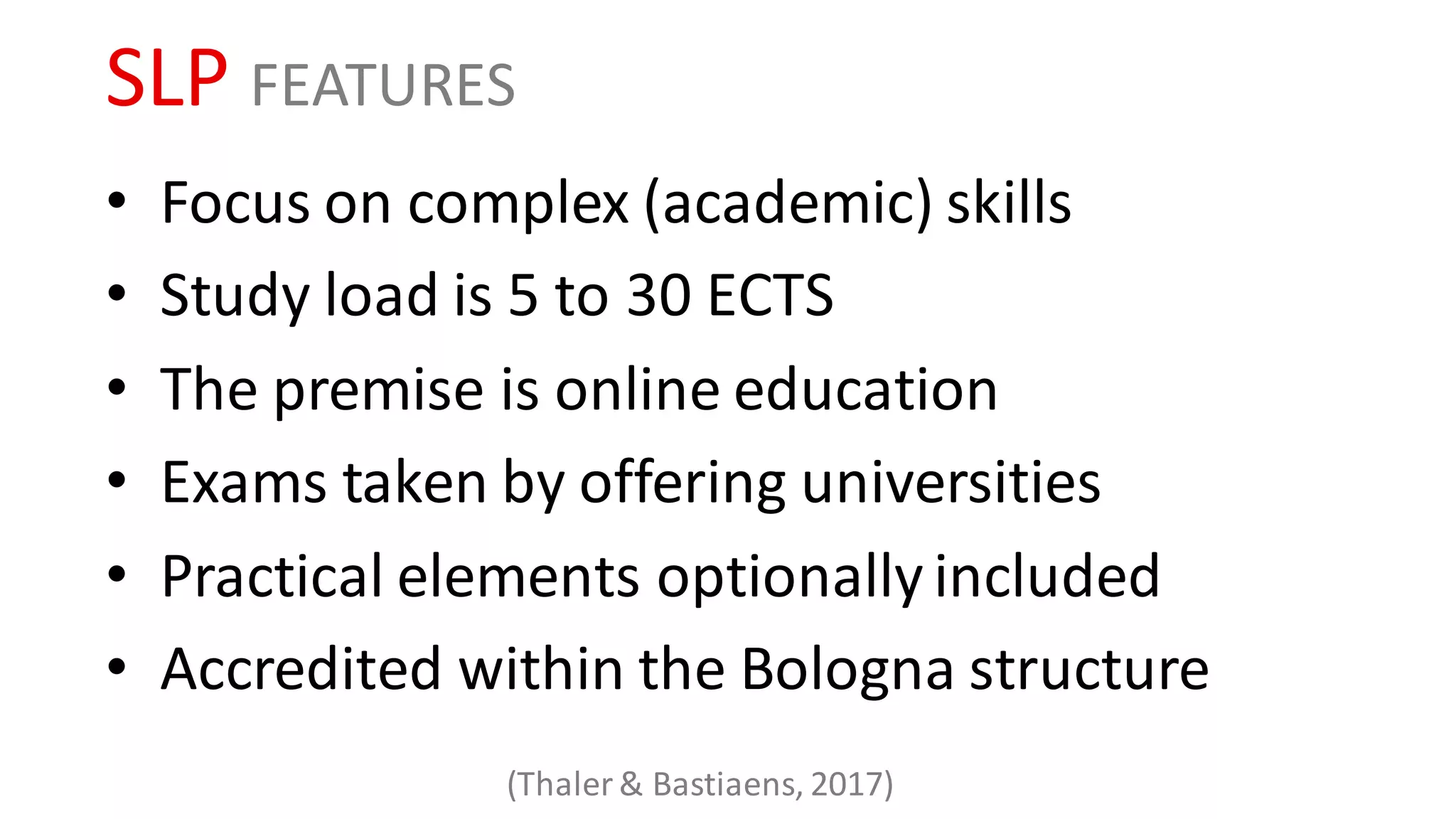
SLP FEATURES
• Focus on complex (academic) skills
• Study load is 5 to 30 ECTS
• The premise is online education
• Exams taken by offering universities
• Practical elements optionally included
• Accredited within the Bologna structure
(Thaler & Bastiaens, 2017)
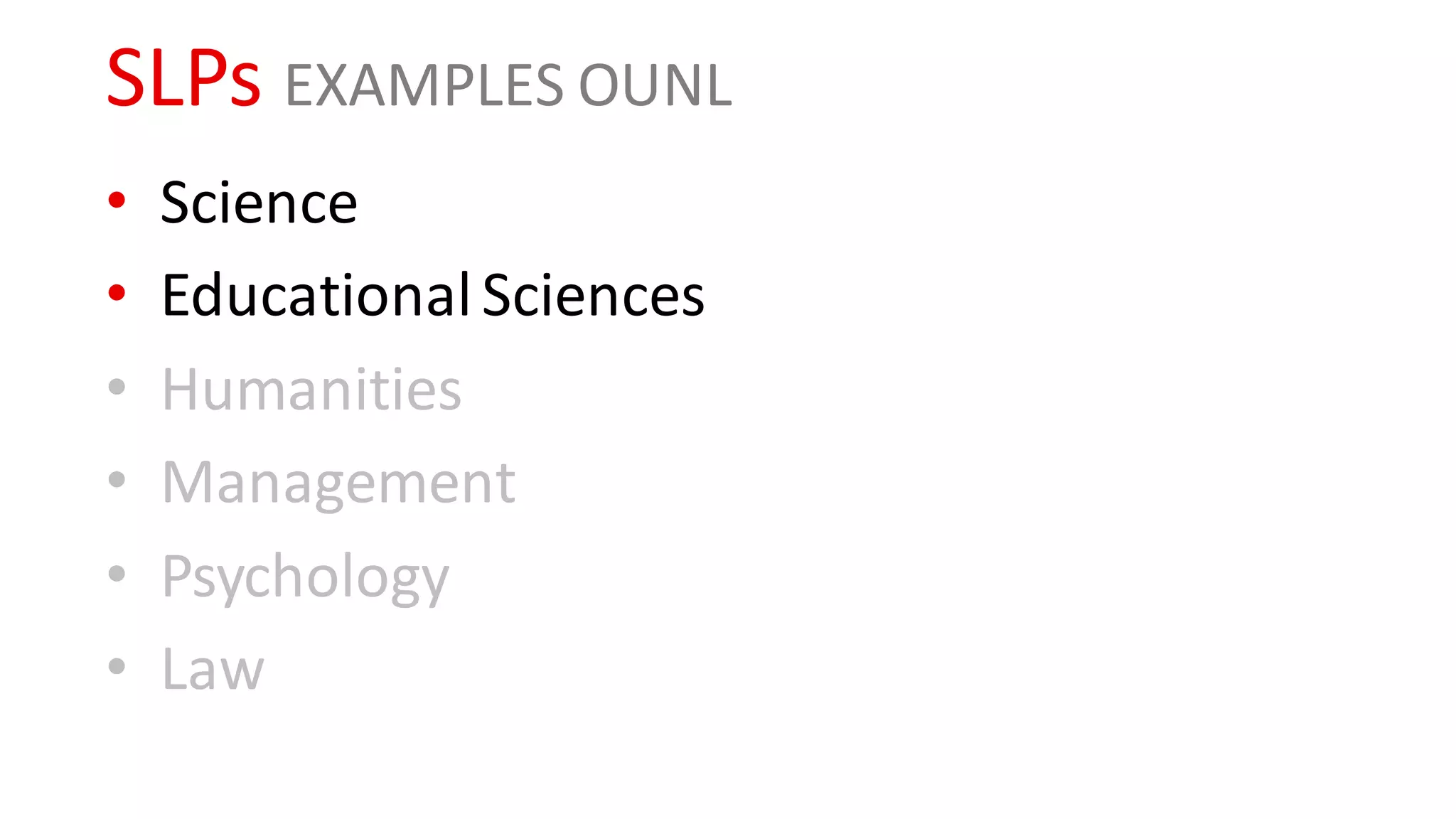
SLPs EXAMPLES OUNL
• Science
• EducationalSciences
• Humanities
• Management
• Psychology
• Law
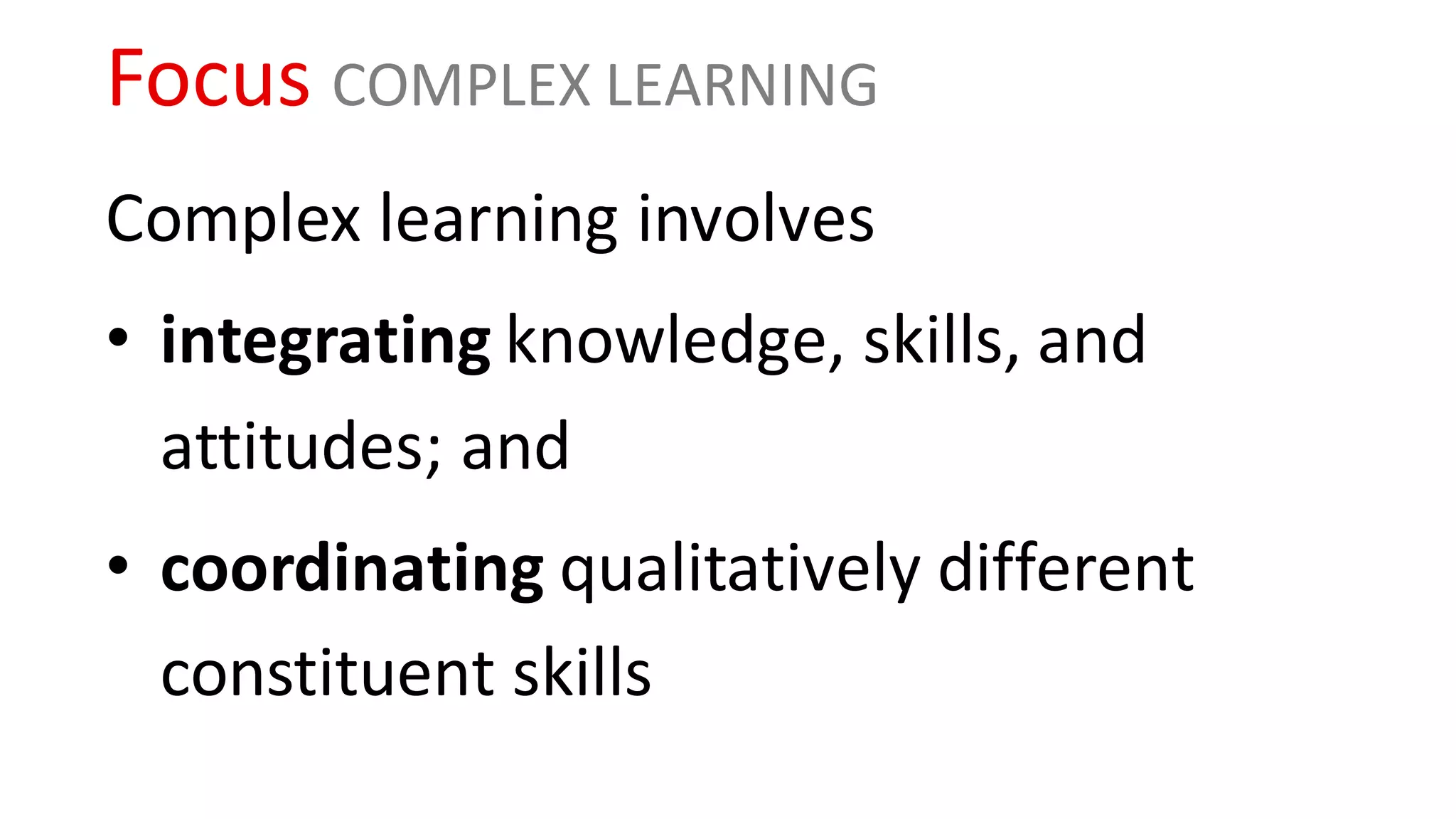
Focus COMPLEX LEARNING
Complex learning involves
• integrating knowledge, skills, and
attitudes; and
• coordinating qualitatively different
constituent skills
Focus TASK-CENTERED INSTRUCTION
• Cognitive apprenticeship
• Elaboration theory
• First principles of instruction
• Four-component instructional design
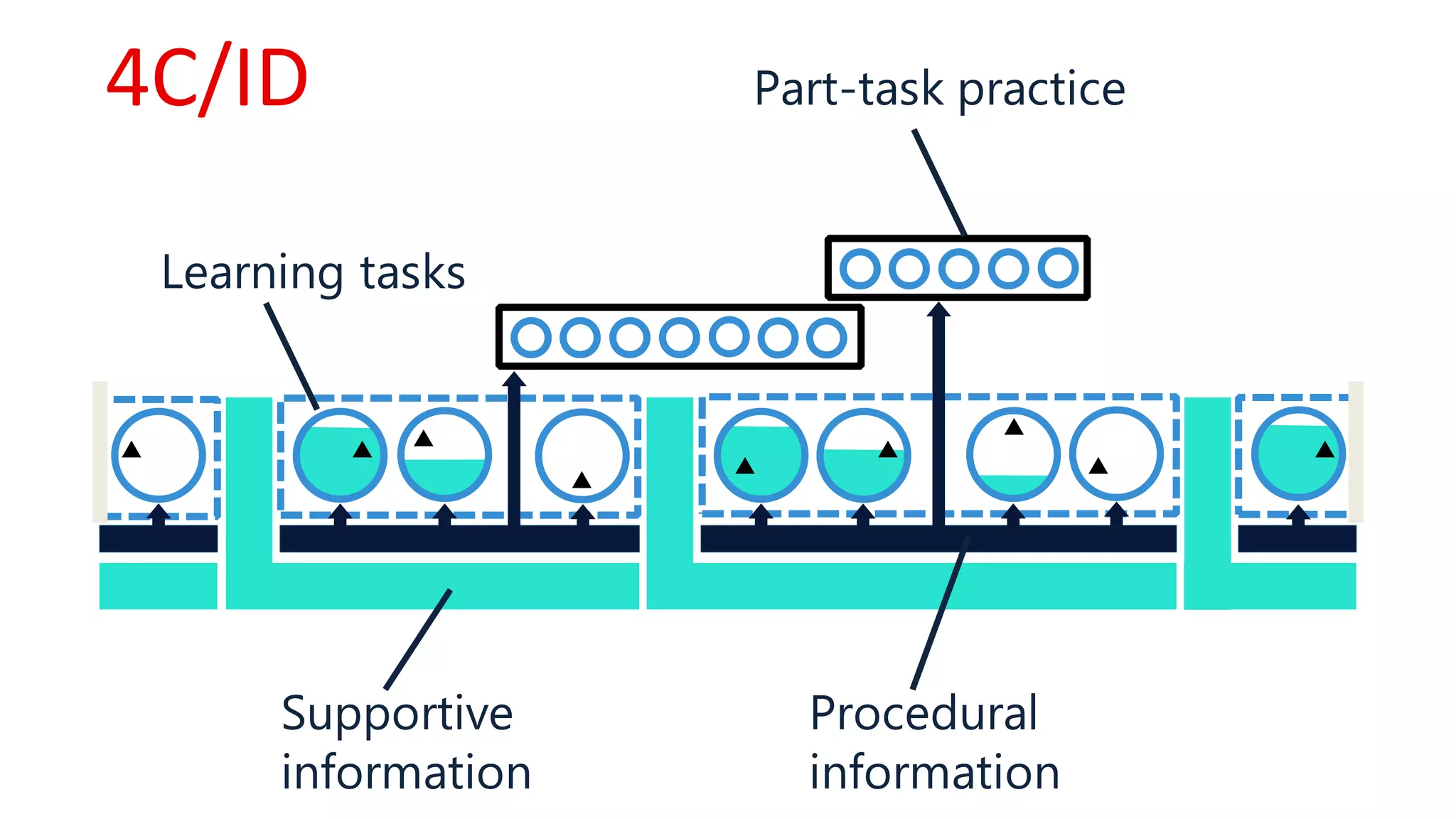
Learning tasks
Supportive
information
Procedural
information
Part-task practice4C/ID
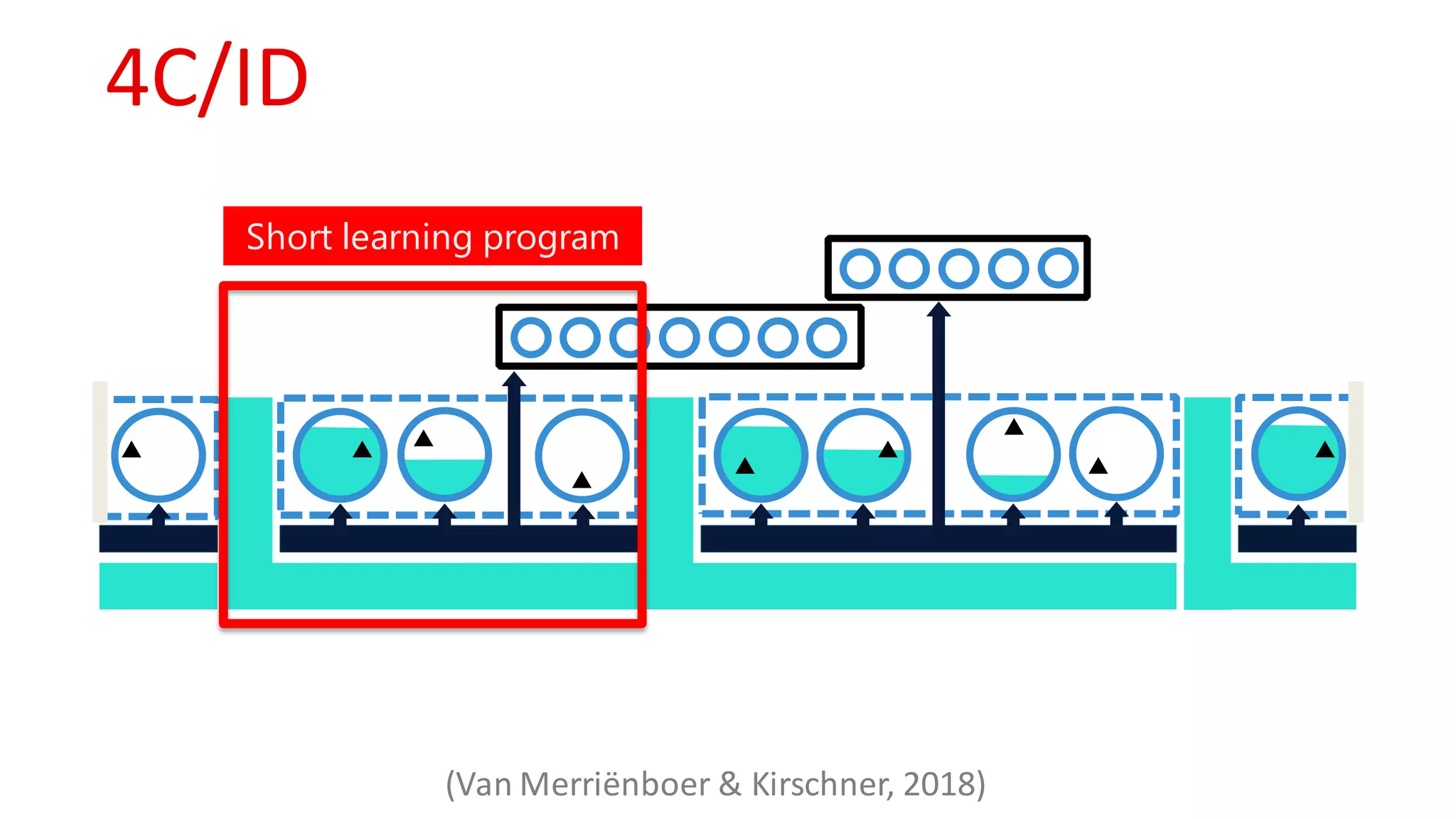
4C/ID
Short learning program
(Van Merriënboer & Kirschner, 2018)
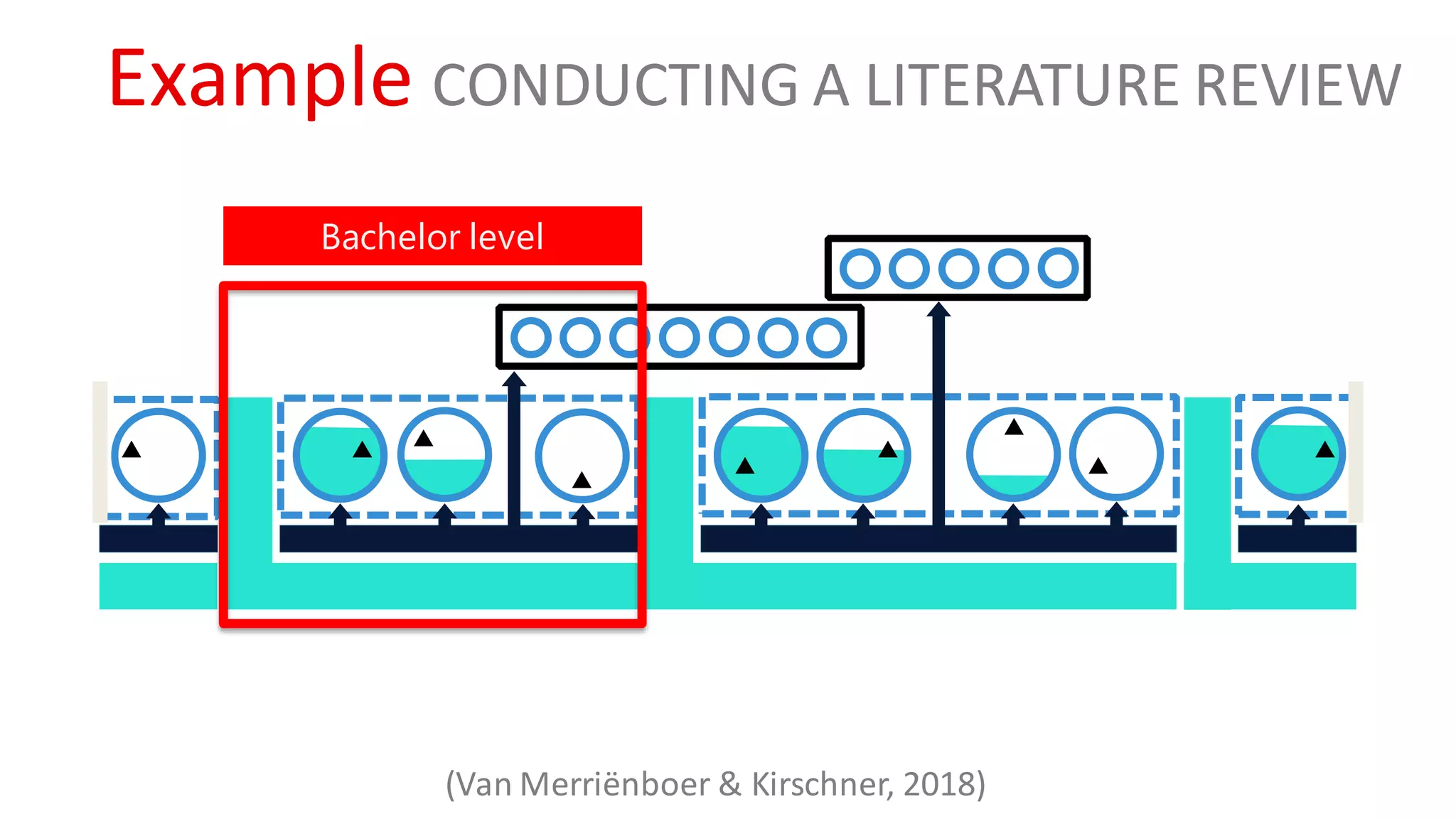
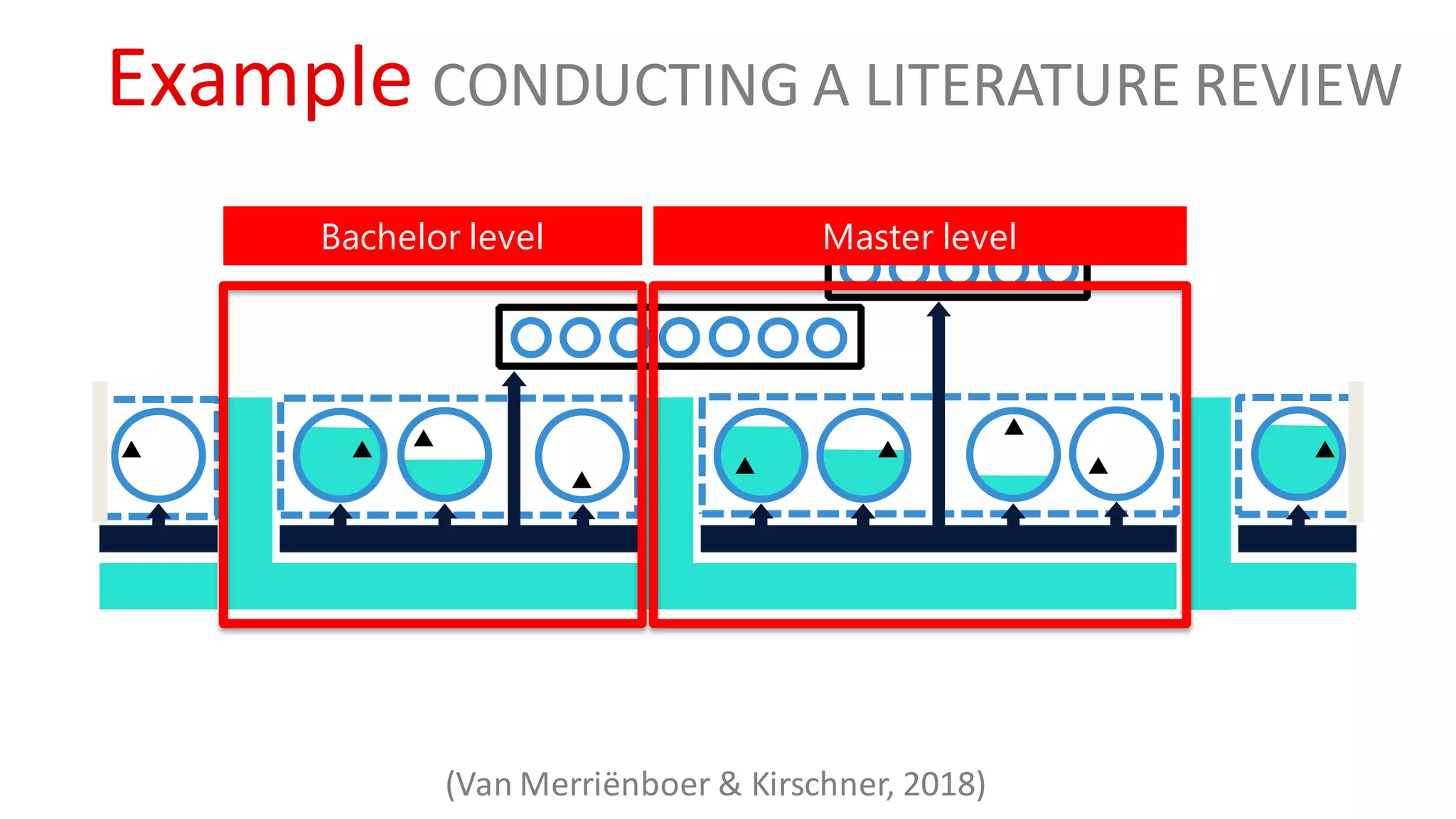
Example CONDUCTING A LITERATURE REVIEW
Bachelor level
(Van Merriënboer & Kirschner, 2018)
Example CONDUCTING A LITERATURE REVIEW
Bachelor level
(Van Merriënboer & Kirschner, 2018)
Master level
Level: bachelor
5 ECTS
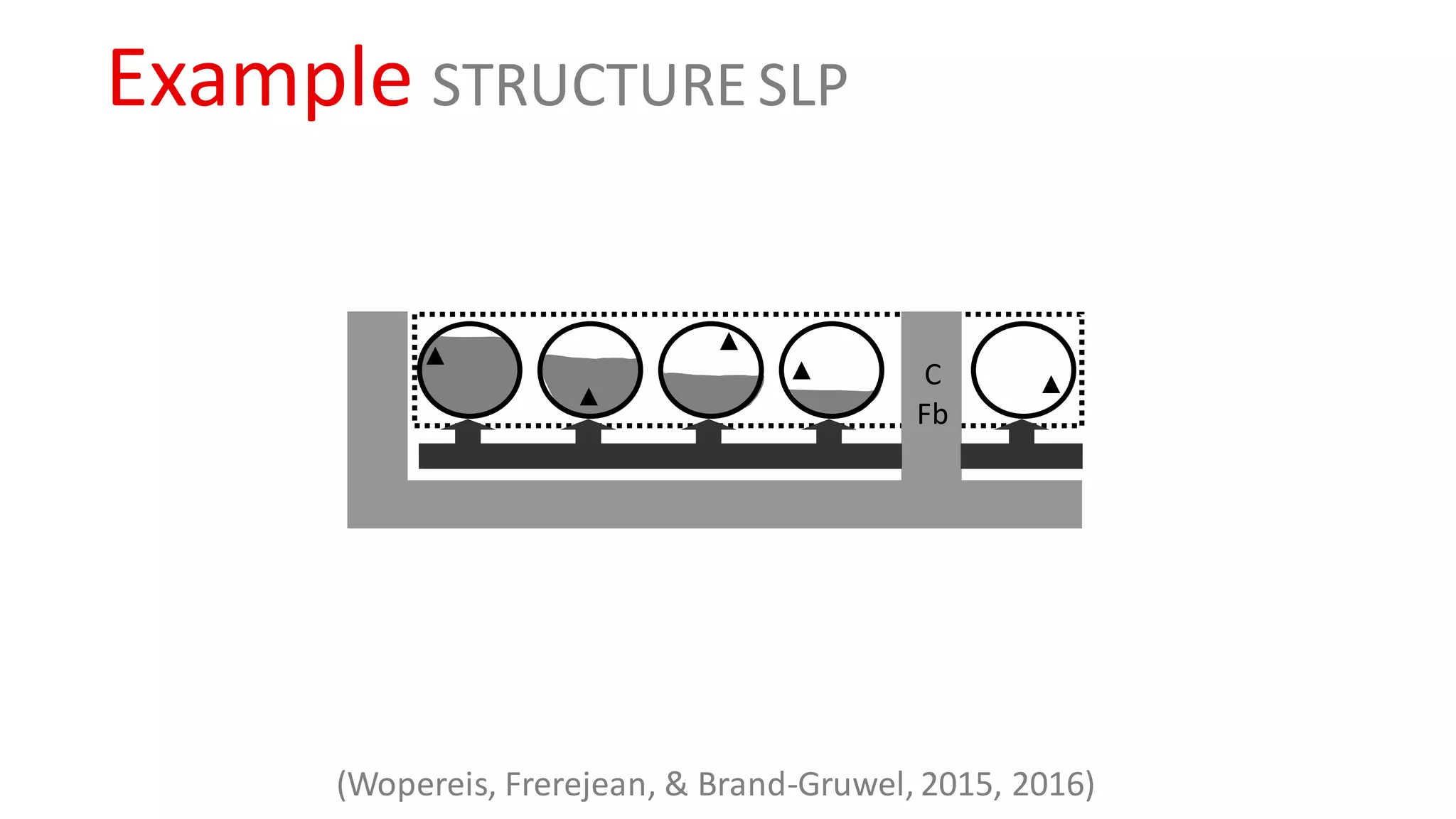
Example STRUCTURE SLP
C
Fb
(Wopereis, Frerejean, & Brand-Gruwel, 2015, 2016)
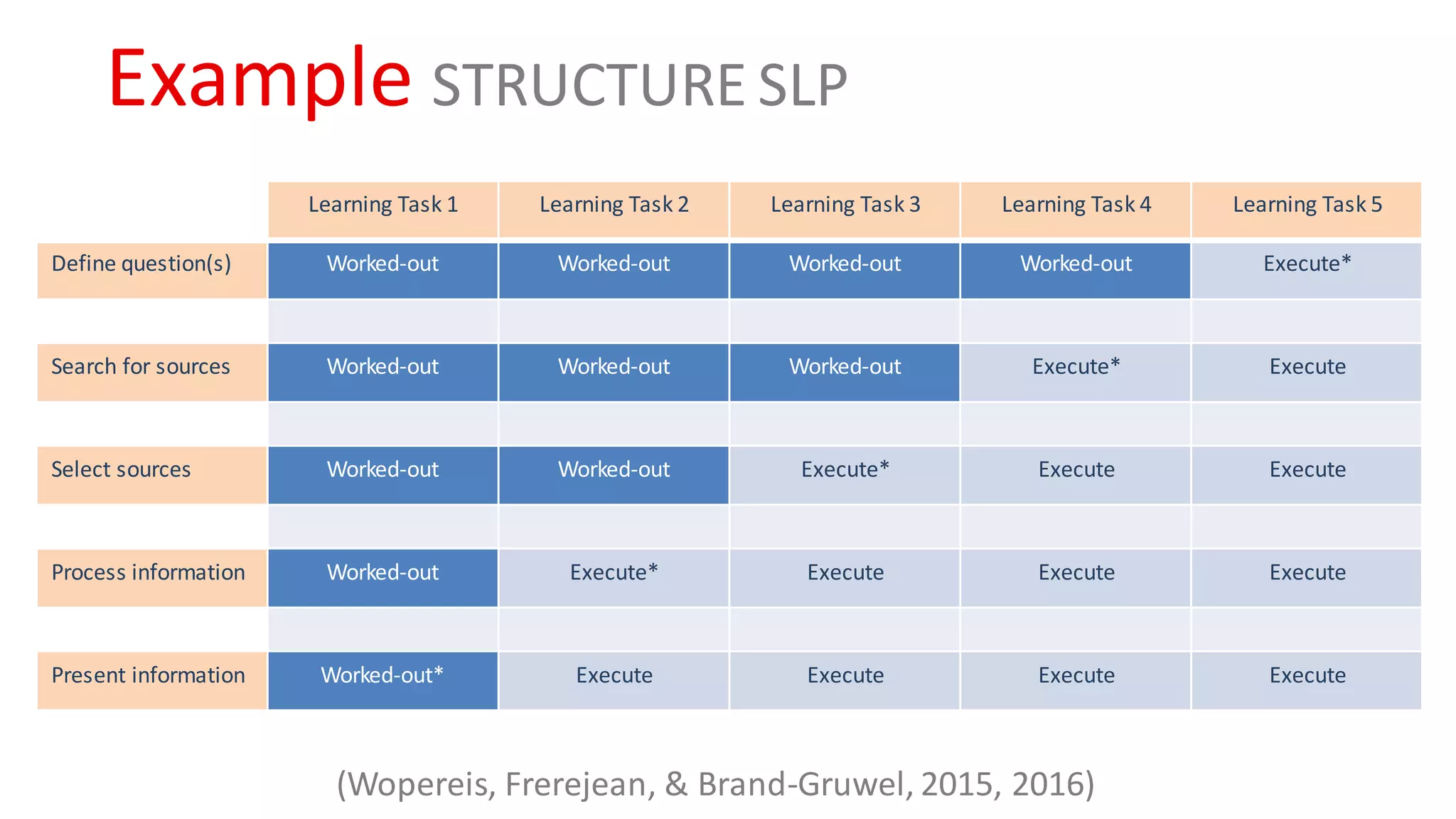
Example STRUCTURE SLP
Learning Task 1 Learning Task 2 Learning Task 3 Learning Task 4 Learning Task 5
Define question(s) Worked-out Worked-out Worked-out Worked-out Execute*
Search for sources Worked-out Worked-out Worked-out Execute* Execute
Select sources Worked-out Worked-out Execute* Execute Execute
Process information Worked-out Execute* Execute Execute Execute
Present information Worked-out* Execute Execute Execute Execute
(Wopereis, Frerejean, & Brand-Gruwel, 2015, 2016)
Overview
• Introduction
• Short Learning Programs
• Designing SLPs
• Synchronous Online Learning in SLPs
• Conclusion
Synchronous online learning
• Separation (of place) of learner and teacher
• Education in ‘real time’, such that students
are able to communicate with other students
• Through text-, audio-, and/or video-based
communicationof two-way media that
facilitates dialogue and interaction
(Martin, Ahlgrim-Delzell, & Budhrani,2017)
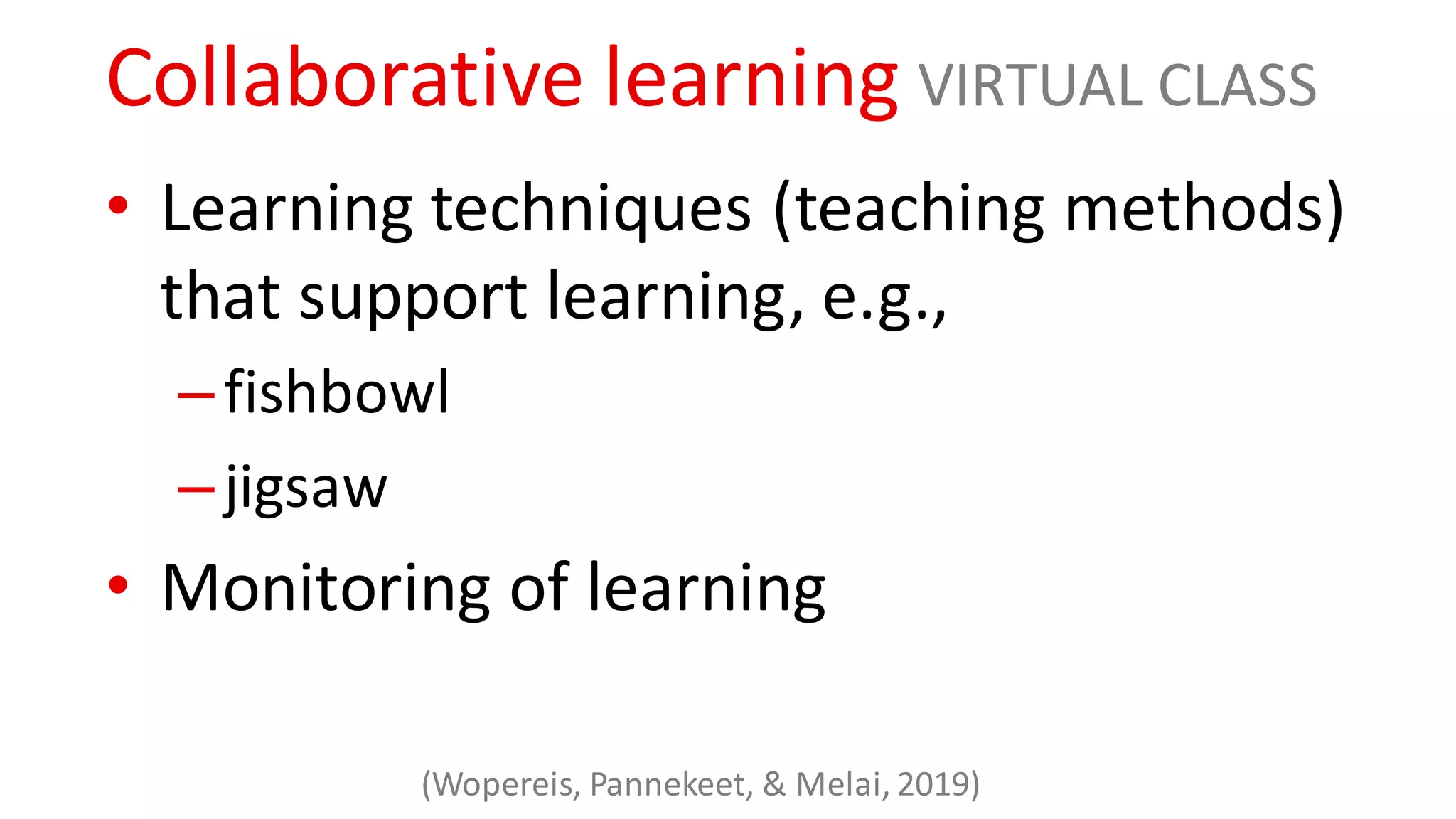
Collaborative learning
• Problem-based learning
• Project-based learning
• Case-based learning
• Inquiry-based learning
Collaborative learning VIRTUAL CLASS
• Learning techniques (teaching methods)
that support learning, e.g.,
–fishbowl
–jigsaw
• Monitoring of learning
(Wopereis, Pannekeet, & Melai, 2019)
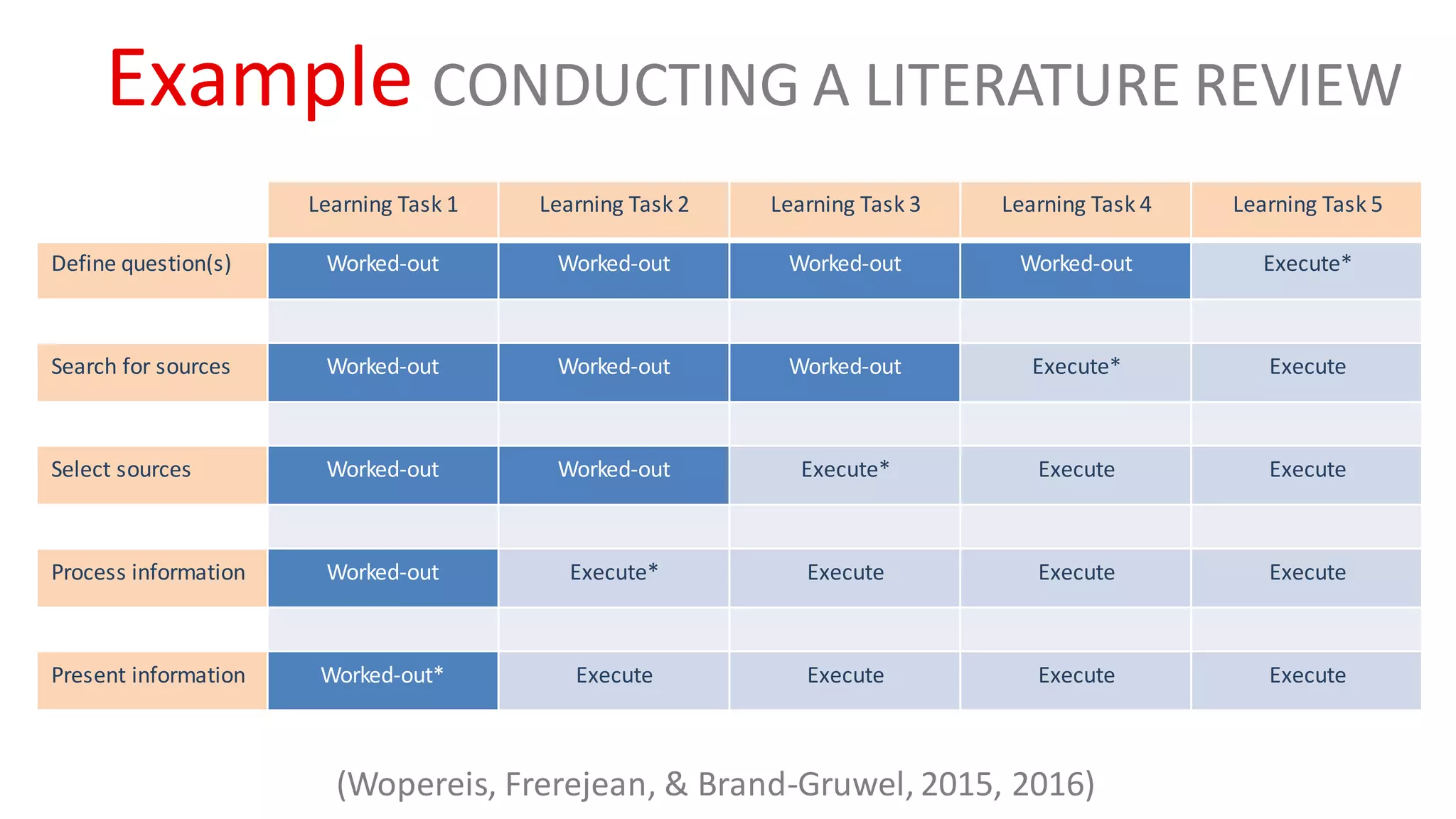
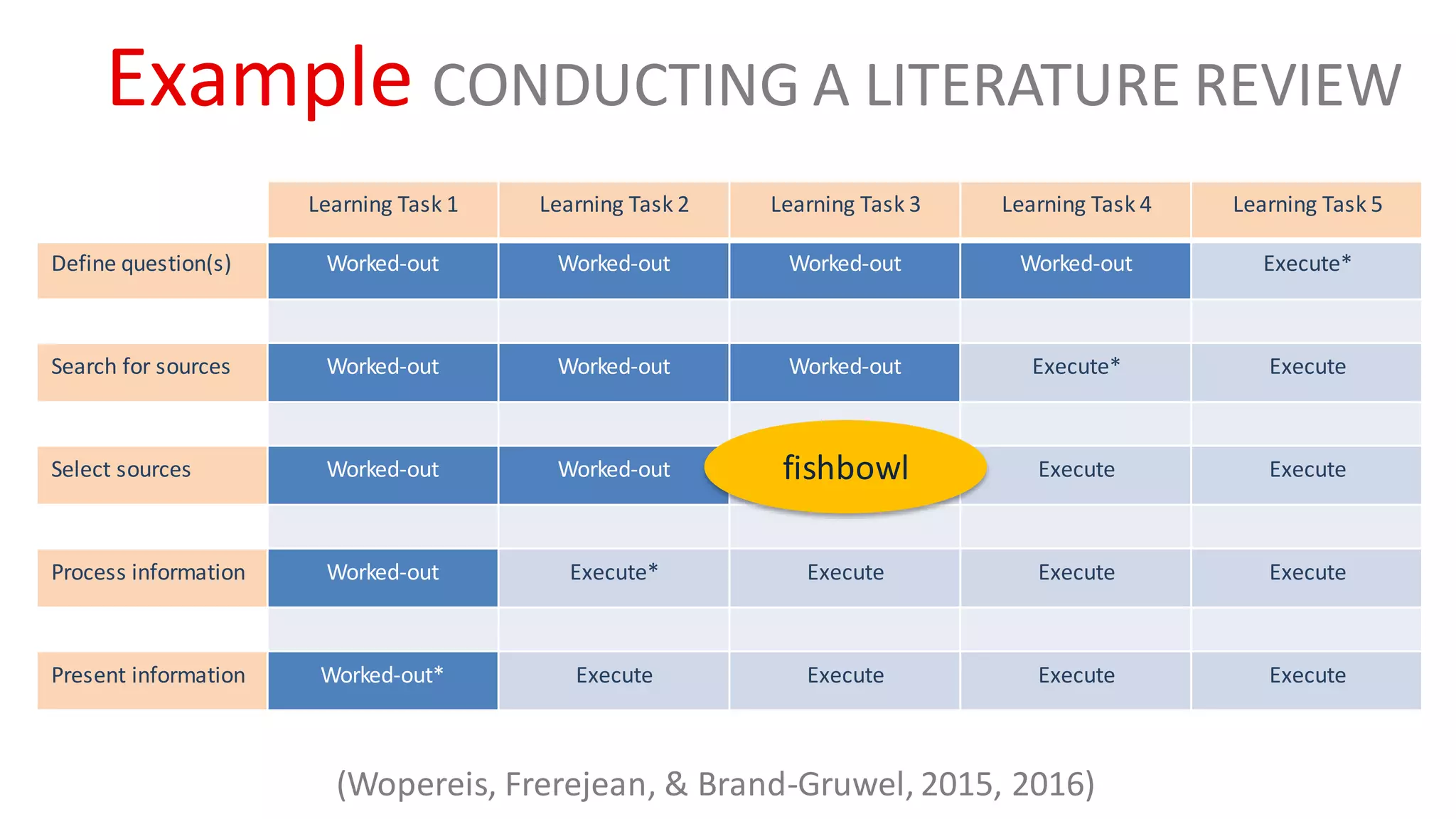
Example CONDUCTING A LITERATURE REVIEW
Learning Task 1 Learning Task 2 Learning Task 3 Learning Task 4 Learning Task 5
Define question(s) Worked-out Worked-out Worked-out Worked-out Execute*
Search for sources Worked-out Worked-out Worked-out Execute* Execute
Select sources Worked-out Worked-out Execute* Execute Execute
Process information Worked-out Execute* Execute Execute Execute
Present information Worked-out* Execute Execute Execute Execute
(Wopereis, Frerejean, & Brand-Gruwel, 2015, 2016)
Example CONDUCTING A LITERATURE REVIEW
Learning Task 1 Learning Task 2 Learning Task 3 Learning Task 4 Learning Task 5
Define question(s) Worked-out Worked-out Worked-out Worked-out Execute*
Search for sources Worked-out Worked-out Worked-out Execute* Execute
Select sources Worked-out Worked-out Execute* Execute Execute
Process information Worked-out Execute* Execute Execute Execute
Present information Worked-out* Execute Execute Execute Execute
fishbowl
(Wopereis, Frerejean, & Brand-Gruwel, 2015, 2016)
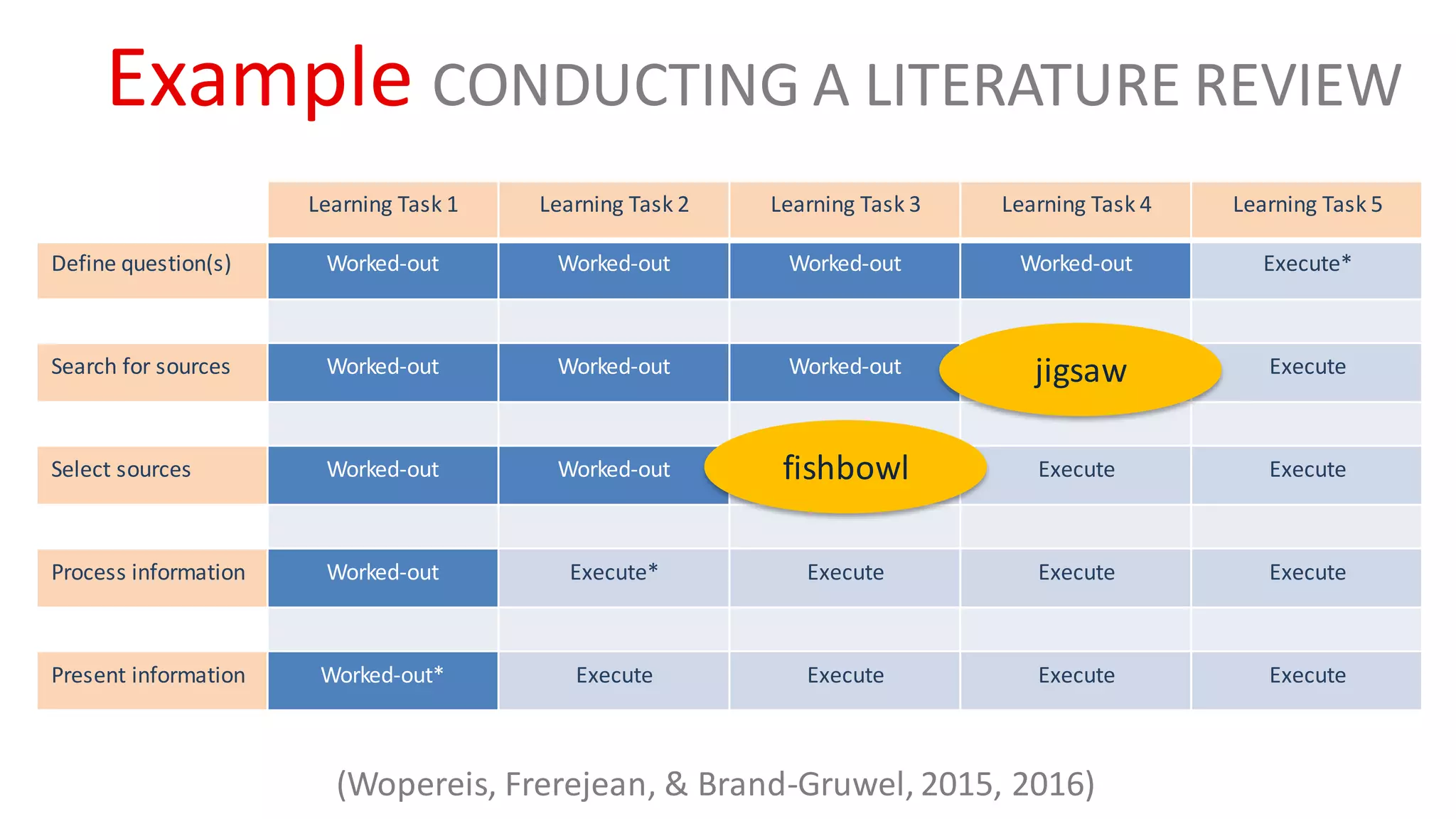
Example CONDUCTING A LITERATURE REVIEW
Learning Task 1 Learning Task 2 Learning Task 3 Learning Task 4 Learning Task 5
Define question(s) Worked-out Worked-out Worked-out Worked-out Execute*
Search for sources Worked-out Worked-out Worked-out Execute* Execute
Select sources Worked-out Worked-out Execute* Execute Execute
Process information Worked-out Execute* Execute Execute Execute
Present information Worked-out* Execute Execute Execute Execute
fishbowl
jigsaw
(Wopereis, Frerejean, & Brand-Gruwel, 2015, 2016)
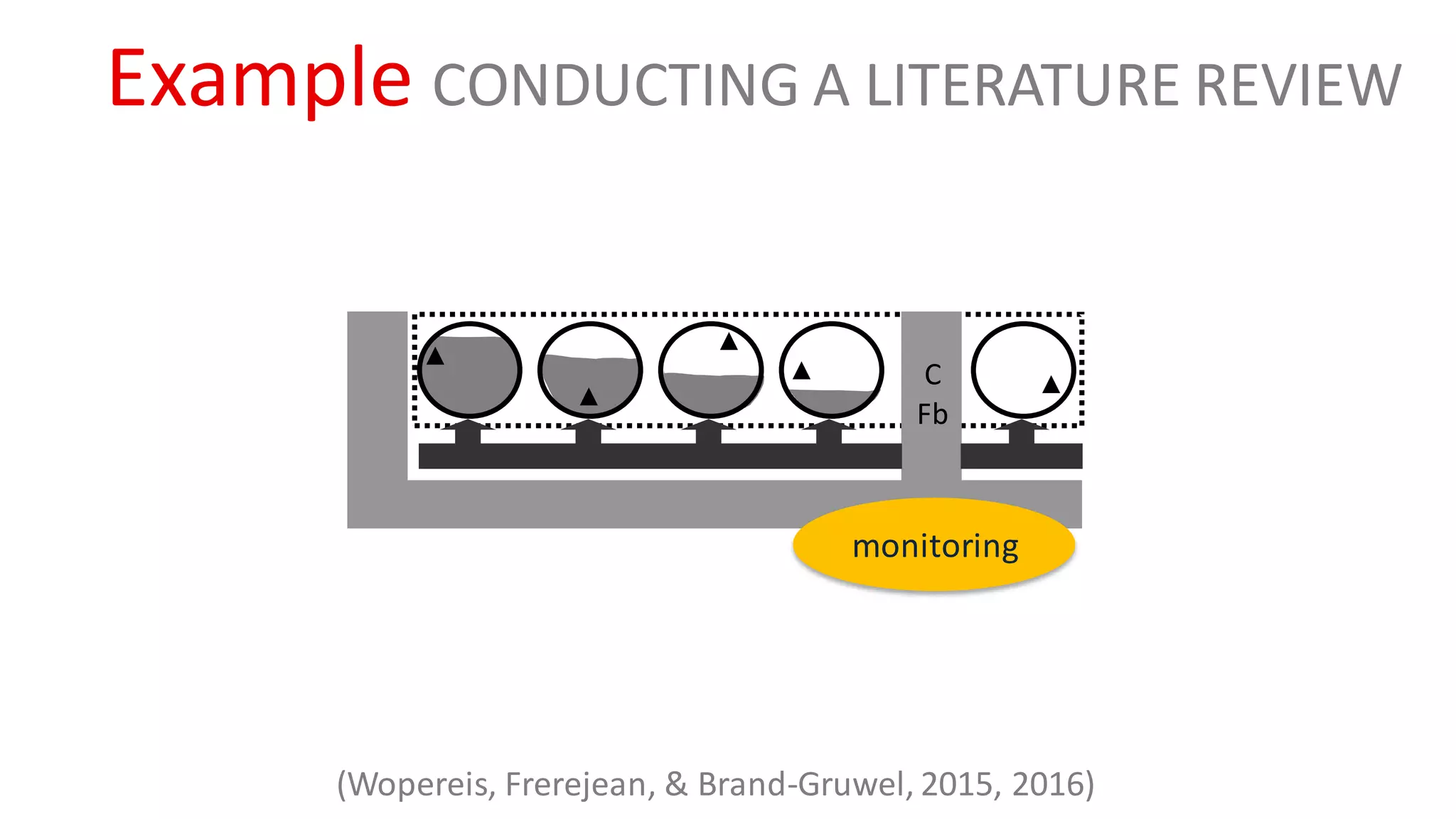
Example CONDUCTING A LITERATURE REVIEW
C
Fb
monitoring
(Wopereis, Frerejean, & Brand-Gruwel, 2015, 2016)
Overview
• Introduction
• Short Learning Programs
• Designing SLPs
• Synchronous Online Learning in SLPs
• Conclusion
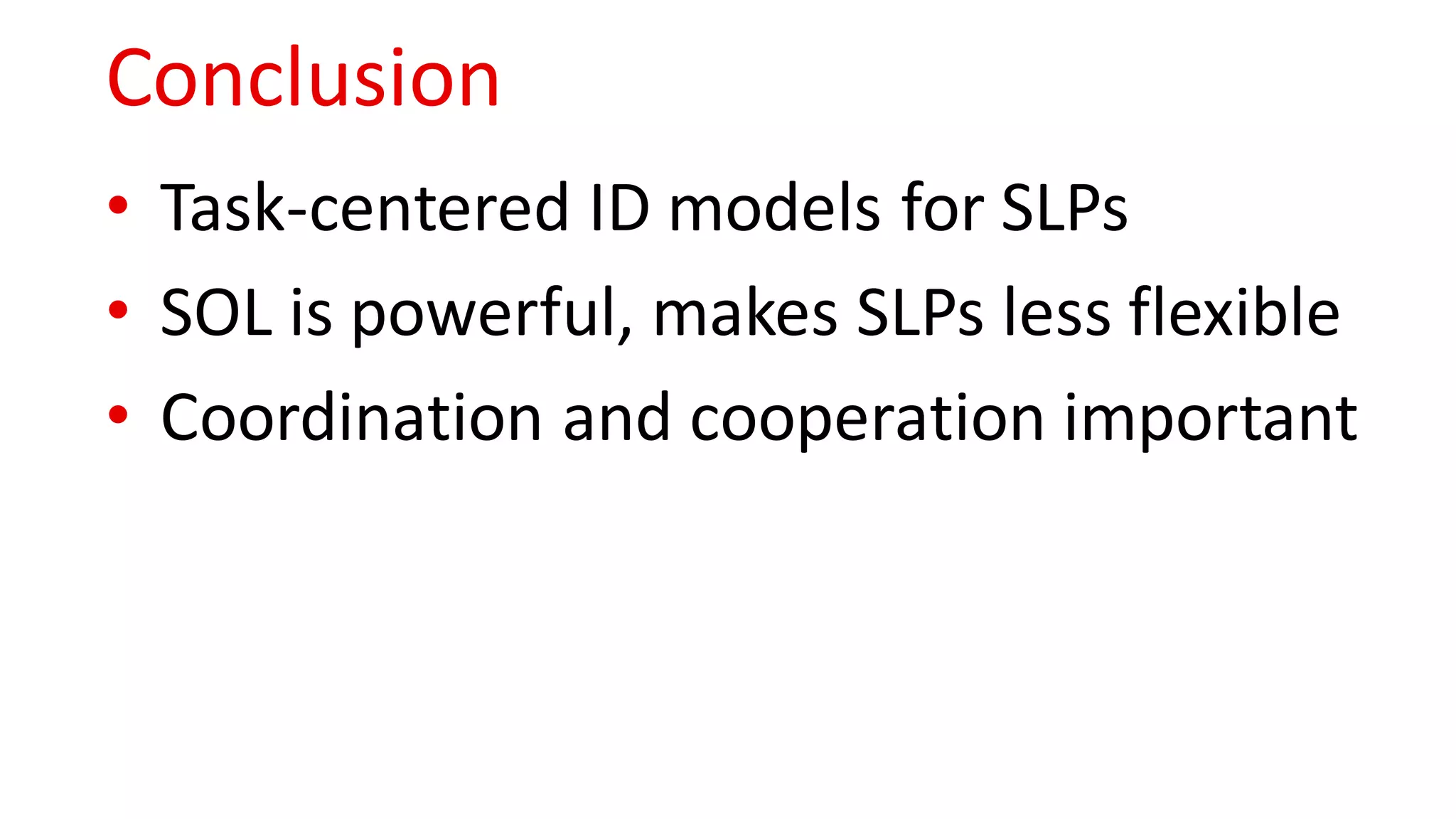
Conclusion
• Task-centered ID models for SLPs
• SOL is powerful, makes SLPs less flexible
• Coordination and cooperation important
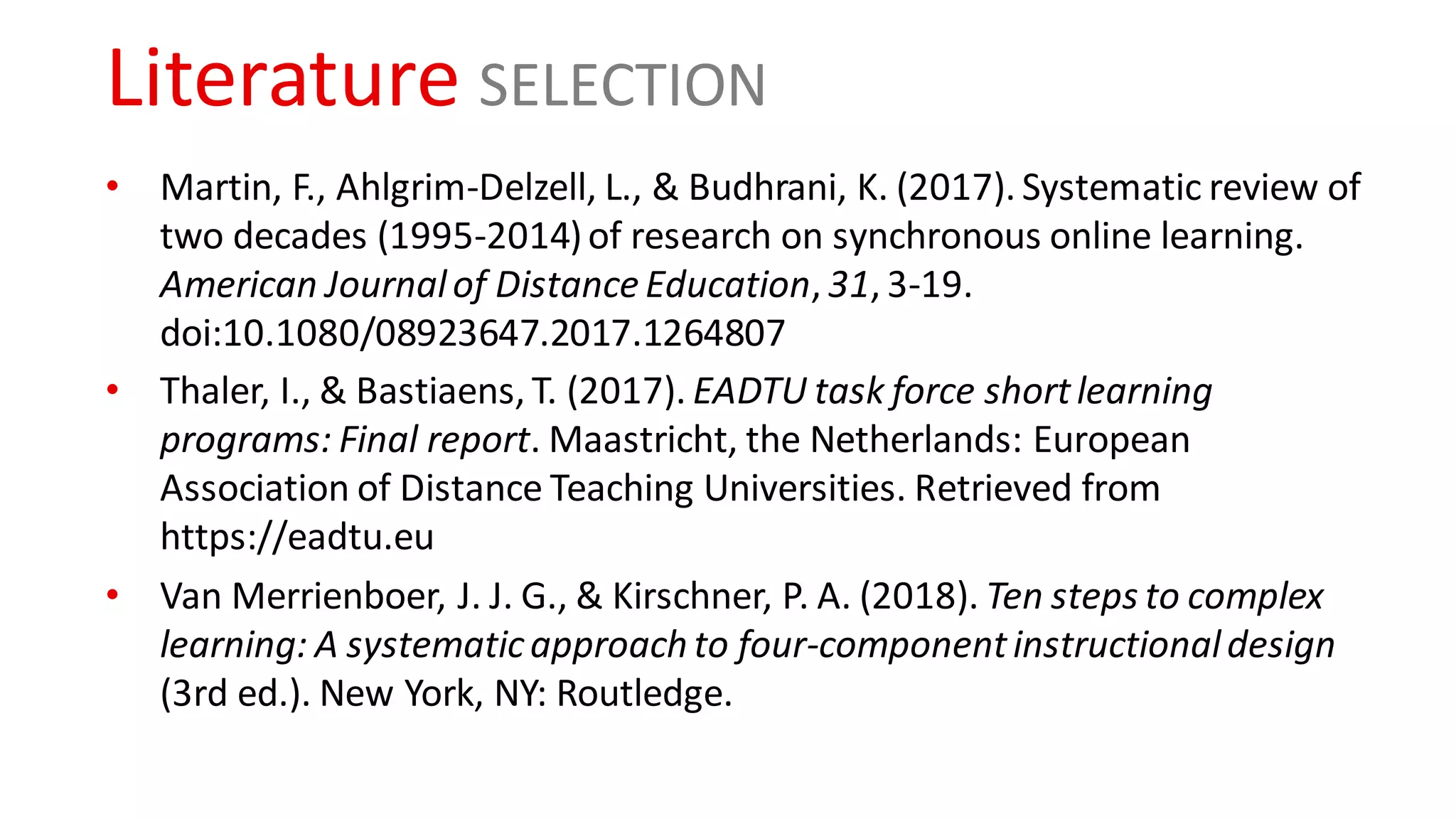
Literature SELECTION
• Martin, F., Ahlgrim-Delzell, L., & Budhrani, K. (2017). Systematic review of
two decades (1995-2014)of research on synchronous online learning.
American Journalof Distance Education, 31, 3-19.
doi:10.1080/08923647.2017.1264807
• Thaler, I., & Bastiaens, T. (2017). EADTU task force shortlearning
programs: Final report. Maastricht, the Netherlands: European
Association of Distance Teaching Universities. Retrieved from
https://eadtu.eu
• Van Merrienboer, J. J. G., & Kirschner, P. A. (2018). Ten steps to complex
learning: A systematicapproach to four-componentinstructionaldesign
(3rd ed.). New York, NY: Routledge.
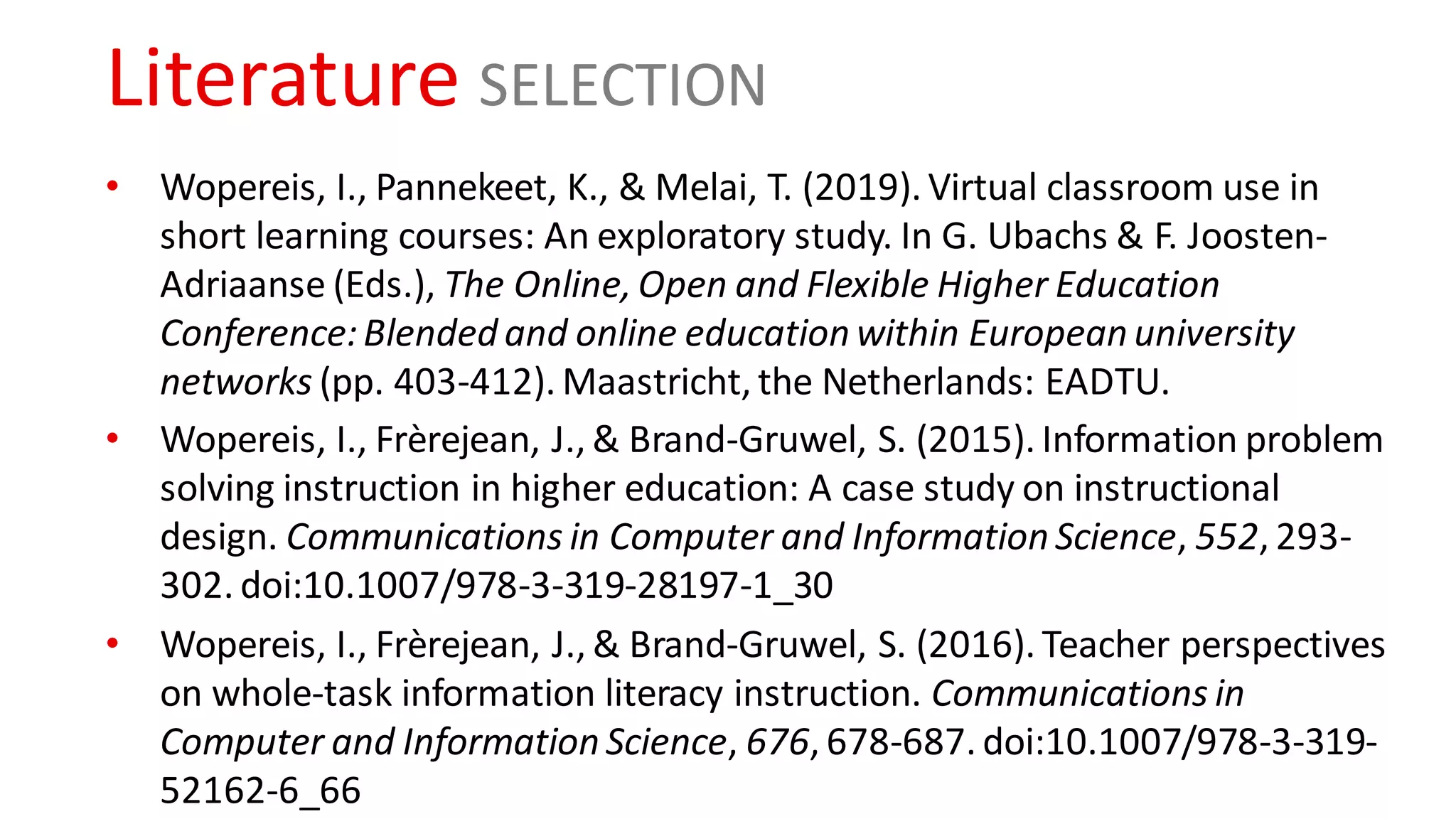
Literature SELECTION
• Wopereis, I., Pannekeet, K., & Melai, T. (2019). Virtual classroom use in
short learning courses: An exploratory study. In G. Ubachs & F. Joosten-
Adriaanse (Eds.), The Online, Open and Flexible Higher Education
Conference:Blended and online education within European university
networks (pp. 403-412). Maastricht, the Netherlands: EADTU.
• Wopereis, I., Frèrejean, J., & Brand-Gruwel, S. (2015). Information problem
solving instruction in higher education: A case study on instructional
design. Communications in Computer and Information Science, 552, 293-
302. doi:10.1007/978-3-319-28197-1_30
• Wopereis, I., Frèrejean, J., & Brand-Gruwel, S. (2016). Teacher perspectives
on whole-task information literacy instruction. Communications in
Computer and Information Science, 676, 678-687. doi:10.1007/978-3-319-
52162-6_66
Questions
iwan.wopereis@ou.nl

Synchronous online learning in short learning programs by Iwan Wopereis

  • 1.
    Synchronous Online Learningin Short Learning Programs Iwan Wopereis
  • 2.
    Overview • Introduction • ShortLearning Programs • Designing SLPs • Synchronous Online Learning in SLPs • Conclusion
  • 3.
    Overview • Introduction • ShortLearning Programs • Designing SLPs • Synchronous Online Learning in SLPs • Conclusion
  • 4.
    Introduction OUNL • OnlineDistance Education • Active Online Education
  • 5.
  • 6.
    Overview • Introduction • ShortLearning Programs • Designing SLPs • Synchronous Online Learning in SLPs • Conclusion
  • 8.
    SLP FEATURES • Focuson complex (academic) skills • Study load is 5 to 30 ECTS • The premise is online education • Exams taken by offering universities • Practical elements optionally included • Accredited within the Bologna structure (Thaler & Bastiaens, 2017)
  • 9.
    SLPs EXAMPLES OUNL •Science • EducationalSciences • Humanities • Management • Psychology • Law
  • 12.
    Focus COMPLEX LEARNING Complexlearning involves • integrating knowledge, skills, and attitudes; and • coordinating qualitatively different constituent skills
  • 13.
    Focus TASK-CENTERED INSTRUCTION •Cognitive apprenticeship • Elaboration theory • First principles of instruction • Four-component instructional design
  • 14.
  • 15.
    4C/ID Short learning program (VanMerriënboer & Kirschner, 2018)
  • 16.
    Example CONDUCTING ALITERATURE REVIEW Bachelor level (Van Merriënboer & Kirschner, 2018)
  • 17.
    Example CONDUCTING ALITERATURE REVIEW Bachelor level (Van Merriënboer & Kirschner, 2018) Master level
  • 18.
  • 19.
    Example STRUCTURE SLP C Fb (Wopereis,Frerejean, & Brand-Gruwel, 2015, 2016)
  • 20.
    Example STRUCTURE SLP LearningTask 1 Learning Task 2 Learning Task 3 Learning Task 4 Learning Task 5 Define question(s) Worked-out Worked-out Worked-out Worked-out Execute* Search for sources Worked-out Worked-out Worked-out Execute* Execute Select sources Worked-out Worked-out Execute* Execute Execute Process information Worked-out Execute* Execute Execute Execute Present information Worked-out* Execute Execute Execute Execute (Wopereis, Frerejean, & Brand-Gruwel, 2015, 2016)
  • 21.
    Overview • Introduction • ShortLearning Programs • Designing SLPs • Synchronous Online Learning in SLPs • Conclusion
  • 22.
    Synchronous online learning •Separation (of place) of learner and teacher • Education in ‘real time’, such that students are able to communicate with other students • Through text-, audio-, and/or video-based communicationof two-way media that facilitates dialogue and interaction (Martin, Ahlgrim-Delzell, & Budhrani,2017)
  • 23.
    Collaborative learning • Problem-basedlearning • Project-based learning • Case-based learning • Inquiry-based learning
  • 24.
    Collaborative learning VIRTUALCLASS • Learning techniques (teaching methods) that support learning, e.g., –fishbowl –jigsaw • Monitoring of learning (Wopereis, Pannekeet, & Melai, 2019)
  • 25.
    Example CONDUCTING ALITERATURE REVIEW Learning Task 1 Learning Task 2 Learning Task 3 Learning Task 4 Learning Task 5 Define question(s) Worked-out Worked-out Worked-out Worked-out Execute* Search for sources Worked-out Worked-out Worked-out Execute* Execute Select sources Worked-out Worked-out Execute* Execute Execute Process information Worked-out Execute* Execute Execute Execute Present information Worked-out* Execute Execute Execute Execute (Wopereis, Frerejean, & Brand-Gruwel, 2015, 2016)
  • 26.
    Example CONDUCTING ALITERATURE REVIEW Learning Task 1 Learning Task 2 Learning Task 3 Learning Task 4 Learning Task 5 Define question(s) Worked-out Worked-out Worked-out Worked-out Execute* Search for sources Worked-out Worked-out Worked-out Execute* Execute Select sources Worked-out Worked-out Execute* Execute Execute Process information Worked-out Execute* Execute Execute Execute Present information Worked-out* Execute Execute Execute Execute fishbowl (Wopereis, Frerejean, & Brand-Gruwel, 2015, 2016)
  • 27.
    Example CONDUCTING ALITERATURE REVIEW Learning Task 1 Learning Task 2 Learning Task 3 Learning Task 4 Learning Task 5 Define question(s) Worked-out Worked-out Worked-out Worked-out Execute* Search for sources Worked-out Worked-out Worked-out Execute* Execute Select sources Worked-out Worked-out Execute* Execute Execute Process information Worked-out Execute* Execute Execute Execute Present information Worked-out* Execute Execute Execute Execute fishbowl jigsaw (Wopereis, Frerejean, & Brand-Gruwel, 2015, 2016)
  • 28.
    Example CONDUCTING ALITERATURE REVIEW C Fb monitoring (Wopereis, Frerejean, & Brand-Gruwel, 2015, 2016)
  • 29.
    Overview • Introduction • ShortLearning Programs • Designing SLPs • Synchronous Online Learning in SLPs • Conclusion
  • 30.
    Conclusion • Task-centered IDmodels for SLPs • SOL is powerful, makes SLPs less flexible • Coordination and cooperation important
  • 31.
    Literature SELECTION • Martin,F., Ahlgrim-Delzell, L., & Budhrani, K. (2017). Systematic review of two decades (1995-2014)of research on synchronous online learning. American Journalof Distance Education, 31, 3-19. doi:10.1080/08923647.2017.1264807 • Thaler, I., & Bastiaens, T. (2017). EADTU task force shortlearning programs: Final report. Maastricht, the Netherlands: European Association of Distance Teaching Universities. Retrieved from https://eadtu.eu • Van Merrienboer, J. J. G., & Kirschner, P. A. (2018). Ten steps to complex learning: A systematicapproach to four-componentinstructionaldesign (3rd ed.). New York, NY: Routledge.
  • 32.
    Literature SELECTION • Wopereis,I., Pannekeet, K., & Melai, T. (2019). Virtual classroom use in short learning courses: An exploratory study. In G. Ubachs & F. Joosten- Adriaanse (Eds.), The Online, Open and Flexible Higher Education Conference:Blended and online education within European university networks (pp. 403-412). Maastricht, the Netherlands: EADTU. • Wopereis, I., Frèrejean, J., & Brand-Gruwel, S. (2015). Information problem solving instruction in higher education: A case study on instructional design. Communications in Computer and Information Science, 552, 293- 302. doi:10.1007/978-3-319-28197-1_30 • Wopereis, I., Frèrejean, J., & Brand-Gruwel, S. (2016). Teacher perspectives on whole-task information literacy instruction. Communications in Computer and Information Science, 676, 678-687. doi:10.1007/978-3-319- 52162-6_66
  • 33.