CGSC 1001
Mysteries of the Mind
by Jim Davies
jim@jimdavies.org
1
2
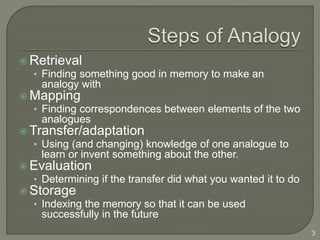
 Retrieval
• Finding something good in memory to make an
analogy with
 Mapping
• Finding correspondences between elements of the two
analogues
 Transfer/adaptation
• Using (and changing) knowledge of one analogue to
learn or invent something about the other.
 Evaluation
• Determining if the transfer did what you wanted it to do
 Storage
• Indexing the memory so that it can be used
successfully in the future
3
4
5
6
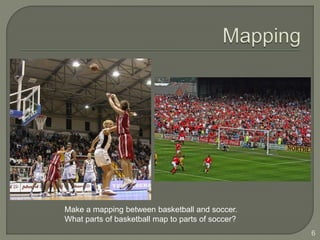
Make a mapping between basketball and soccer.
What parts of basketball map to parts of soccer?
7
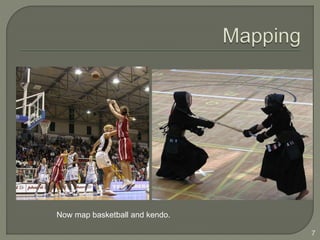
Now map basketball and kendo.
8
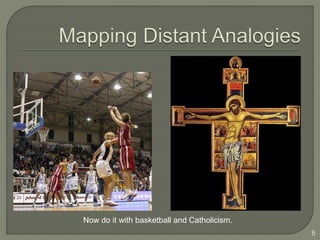
Now do it with basketball and Catholicism.
9
My friend Wallace is like a bear.
What would you infer about Wallace?
Richard Dawkins has been called
“Darwin’s pit bull.”
What would you infer about Dawkins?
That inference is analogical transfer.
10
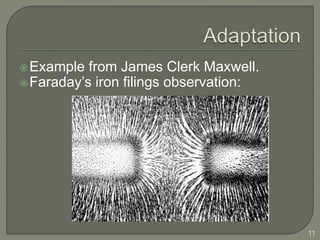
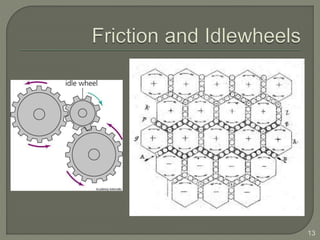
Example from James Clerk Maxwell.
Faraday’s iron filings observation:
11
12
13
Upon evaluation, one might go back and
make different choices for retrieval,
mapping, transfer, or adaptation.
14
New information is stored in memory and
indexed appropriately.
How many words can you think of that
start with “k” or “r?”
How many can you think of that have “k” or
“r” as the third letter?
15
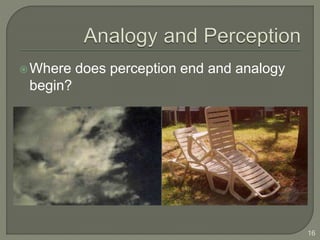
Where does perception end and analogy
begin?
16
How could analogy be used to do the
basics of cognition?
17
 Exemplar-based reasoning
• Reasoning based on particular examples rather than
on prototypes or rules
 Memory-based reasoning
• Reasoning from memories as opposed to using more
abstract reasoning rules
 Instance-based reasoning
• Same as exemplar
 Case-based reasoning
• An AI field that reasons from “cases” in memory
 Analogical reasoning
18
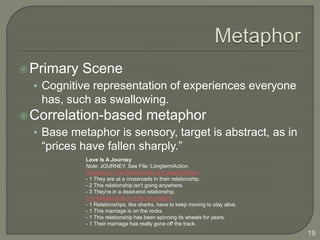
Primary Scene
• Cognitive representation of experiences everyone
has, such as swallowing.
Correlation-based metaphor
• Base metaphor is sensory, target is abstract, as in
“prices have fallen sharply.”
19
Love Is A Journey
Note: JOURNEY. See File: LongtermAction.
Progress In The Relationship Is Forward Motion
- 1 They are at a crossroads in their relationship.
- 2 This relationship isn't going anywhere.
- 3 They're in a dead-end relationship.
The Relationship Is A Moving Object.
- 1 Relationships, like sharks, have to keep moving to stay alive.
- 1 This marriage is on the rocks.
- 1 This relationship has been spinning its wheels for years.
- 1 Their marriage has really gone off the track.
Metaphorically Speaking (9:30)
http://www.ted.com/talks/james_geary_met
aphorically_speaking.html
20

The Cognitive Science of Analogy

  • 1.
    CGSC 1001 Mysteries ofthe Mind by Jim Davies jim@jimdavies.org 1
  • 2.
  • 3.
     Retrieval • Findingsomething good in memory to make an analogy with  Mapping • Finding correspondences between elements of the two analogues  Transfer/adaptation • Using (and changing) knowledge of one analogue to learn or invent something about the other.  Evaluation • Determining if the transfer did what you wanted it to do  Storage • Indexing the memory so that it can be used successfully in the future 3
  • 4.
  • 5.
  • 6.
    6 Make a mappingbetween basketball and soccer. What parts of basketball map to parts of soccer?
  • 7.
  • 8.
    8 Now do itwith basketball and Catholicism.
  • 9.
  • 10.
    My friend Wallaceis like a bear. What would you infer about Wallace? Richard Dawkins has been called “Darwin’s pit bull.” What would you infer about Dawkins? That inference is analogical transfer. 10
  • 11.
    Example from JamesClerk Maxwell. Faraday’s iron filings observation: 11
  • 12.
  • 13.
  • 14.
    Upon evaluation, onemight go back and make different choices for retrieval, mapping, transfer, or adaptation. 14
  • 15.
    New information isstored in memory and indexed appropriately. How many words can you think of that start with “k” or “r?” How many can you think of that have “k” or “r” as the third letter? 15
  • 16.
    Where does perceptionend and analogy begin? 16
  • 17.
    How could analogybe used to do the basics of cognition? 17
  • 18.
     Exemplar-based reasoning •Reasoning based on particular examples rather than on prototypes or rules  Memory-based reasoning • Reasoning from memories as opposed to using more abstract reasoning rules  Instance-based reasoning • Same as exemplar  Case-based reasoning • An AI field that reasons from “cases” in memory  Analogical reasoning 18
  • 19.
    Primary Scene • Cognitiverepresentation of experiences everyone has, such as swallowing. Correlation-based metaphor • Base metaphor is sensory, target is abstract, as in “prices have fallen sharply.” 19 Love Is A Journey Note: JOURNEY. See File: LongtermAction. Progress In The Relationship Is Forward Motion - 1 They are at a crossroads in their relationship. - 2 This relationship isn't going anywhere. - 3 They're in a dead-end relationship. The Relationship Is A Moving Object. - 1 Relationships, like sharks, have to keep moving to stay alive. - 1 This marriage is on the rocks. - 1 This relationship has been spinning its wheels for years. - 1 Their marriage has really gone off the track.
  • 20.

Editor's Notes

  • #2 Photo: Moni Agios Triadas, Meteora, Greece By Dido3 (Own work) [GFDL (www.gnu.org/copyleft/fdl.html), CC-BY-SA-3.0 (www.creativecommons.org/licenses/by-sa/3.0/) or CC-BY-SA-2.5-2.0-1.0 (www.creativecommons.org/licenses/by-sa/2.5-2.0-1.0)], via Wikimedia Commons
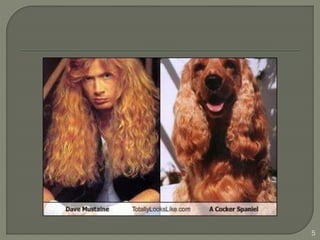
  • #6 If you like this picture, see totallylookslike.com…. After class. Mustaine is the lead guitarist of the metal band “Megadeth”
  • #7 Soccer: By Markbarnes (Own work) [GFDL (www.gnu.org/copyleft/fdl.html), CC-BY-SA-3.0 (www.creativecommons.org/licenses/by-sa/3.0/) or CC-BY-2.5 (www.creativecommons.org/licenses/by/2.5)], via Wikimedia Commons Basketball: creative commons photo
  • #8 Kendo: creative commons photo
  • #9 Crusifix: Coppo di Marcovaldo [Public domain], via Wikimedia Commons What’s interesting is that even though basketball and Catholicism are very different, with only a little effort most people can make an analogical mapping.
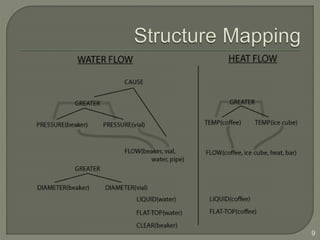
  • #10 For more information see http://www.qrg.northwestern.edu/ideas/smeidea.htm
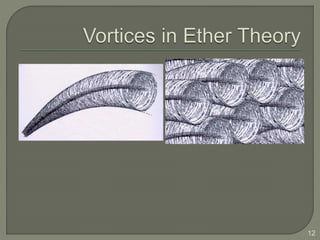
  • #12 By Alexander Wilmer Duff [Public domain], via Wikimedia Commons Maxwell saw lines in it, and tried to figure out what was causing the filings to fall into lines around the magnets.
  • #14 For more information about Maxwell and how he created his theory, see the work of cognitive scientist, and historian and philosopher of science Nancy J. Nersessian.
  • #16 There are more words with k or r as the third letter than words that start with k or r. This is because of the availability heuristic, which is at least partially a function of indexing.
  • #17 Cloud image from the Fortean Times, a magazine about skepticism and paranormal claims.
  • #18 Optional viewing: Hofstadter’s talk at http://sciencestage.com/v/19539/analogy-as-the-core-of-cognition.html It’s the talk version of the required reading, http://prelectur.stanford.edu/lecturers/hofstadter/analogy.html The introductions end around minute 13. The talk is one hour long.
  • #20 Grady, 1997 For a list of metaphors, see http://cogsci.berkeley.edu/lakoff/metaphors/