Get Social! It’s good for you
IW516
Bert Jan van der Steeg
Bert Jan
van der Steeg
@bertjanvdsteeg
http://nl.linkedin.com/in/bertjanvandersteeg
facebook.com/pages/sharepointtraining
SharePoint
Consultant
Trainer (MCT)
Social Business
Implementation
SharePoint
Competence Center
Current projects:
You’re a <fill in the blanks here> and
you’ve been tasked with
implementing an enterprise social
networking solution in your company.
You’ve gathered relevant information
and you’re ready to get started. But
where? And how?
Question 23
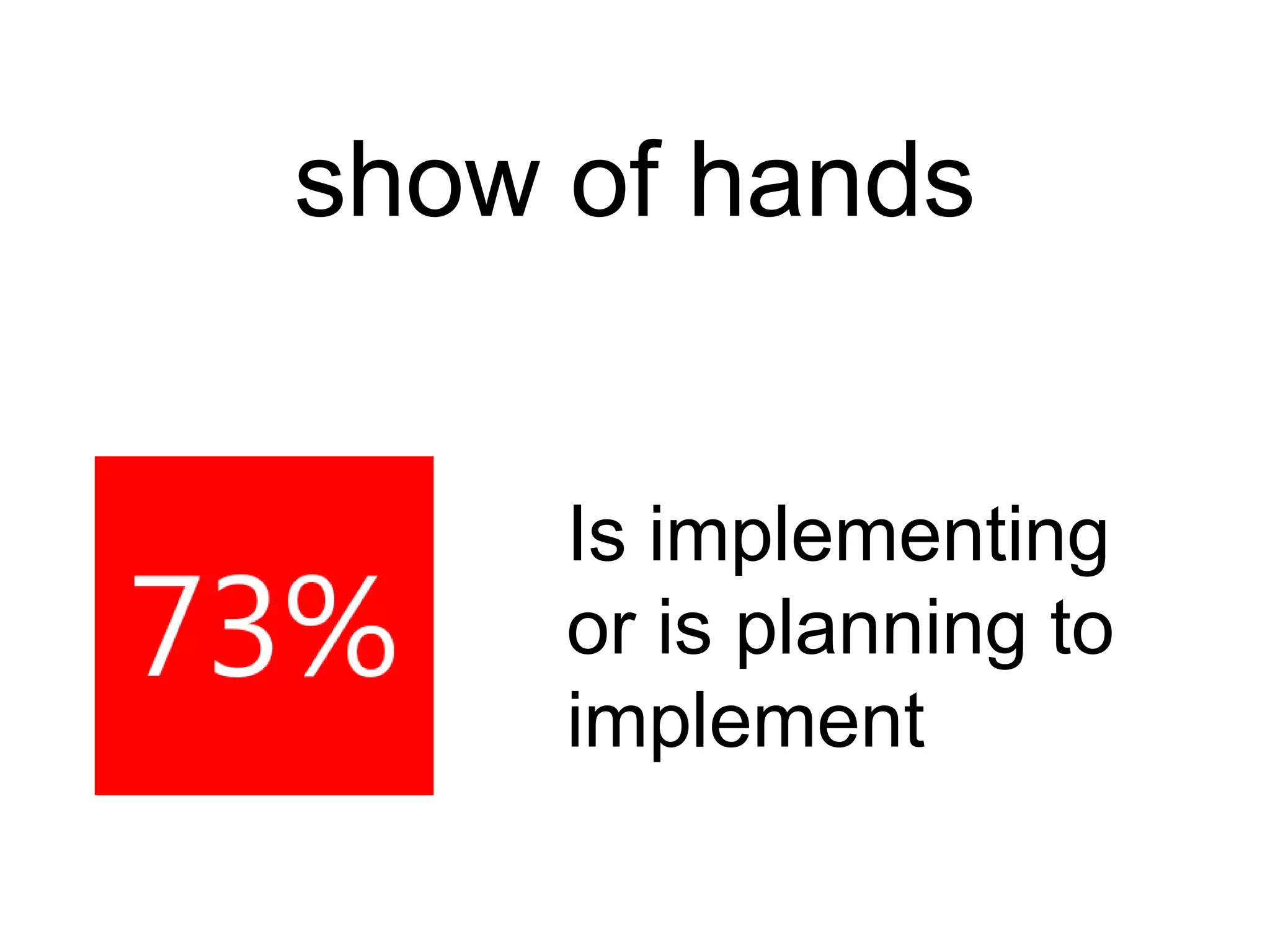
show of hands
Is implementing
or is planning to
implement
show of hands
ready, we’re
done
not planning investigating
implementing
as we speak
planning to
implement in
near future
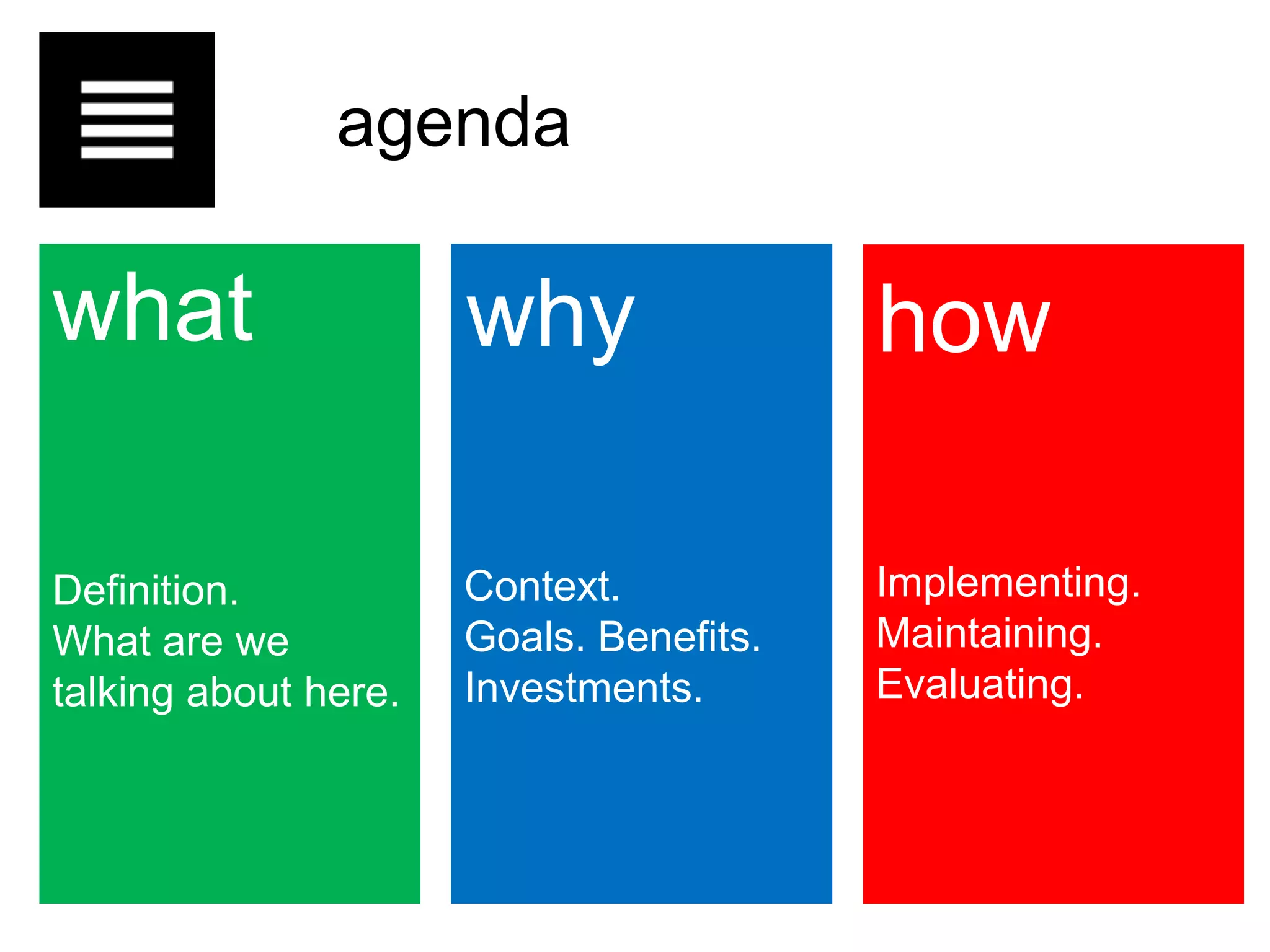
agenda
Definition.
What are we
talking about here.
what
Context.
Goals. Benefits.
Investments.
why
Implementing.
Maintaining.
Evaluating.
how
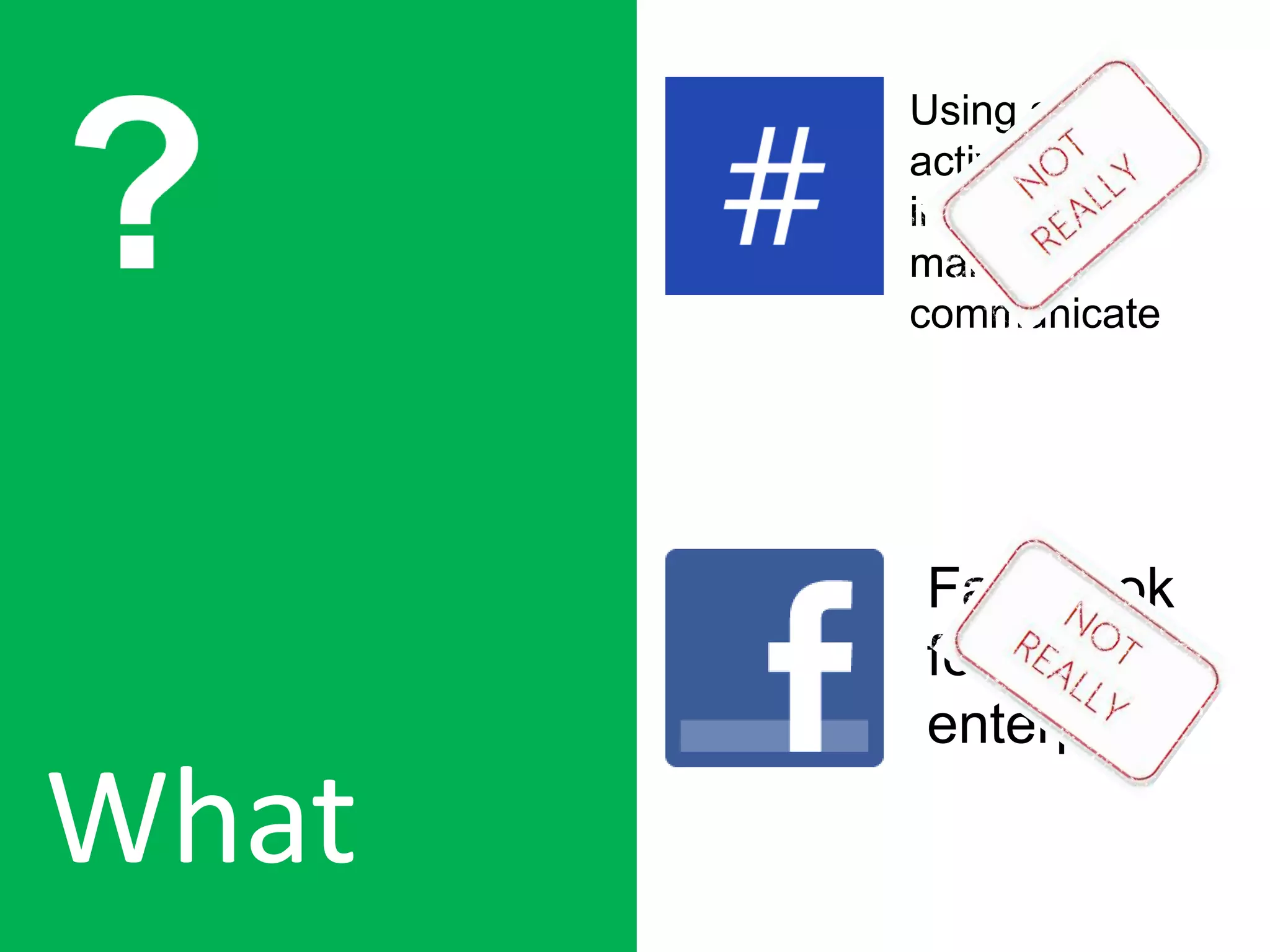
Using an
activity stream
instead of e-
mail to
communicate
Facebook
for the
enterprise
What
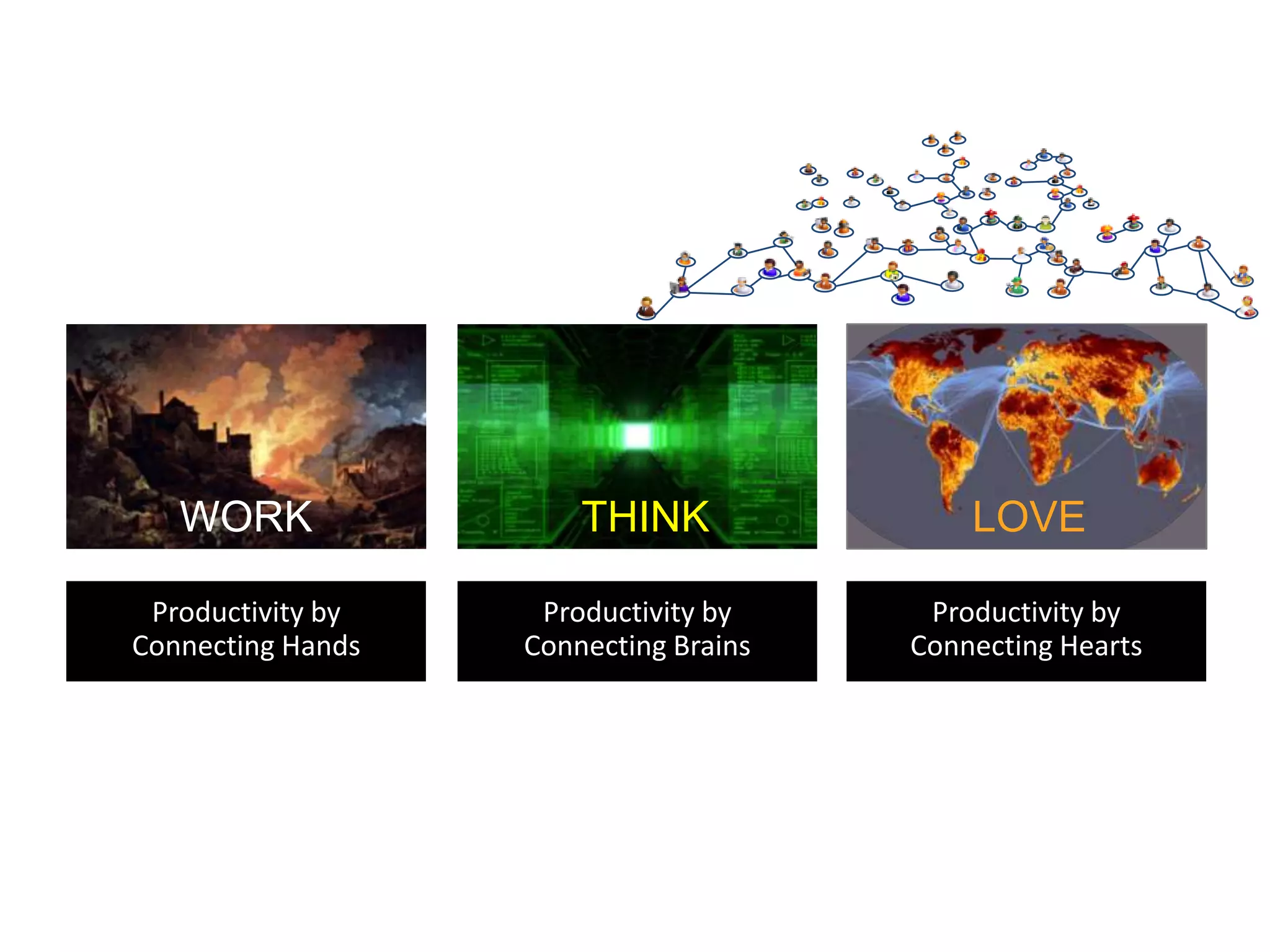
WORK
HARD
WORK
KNOWLEDGE
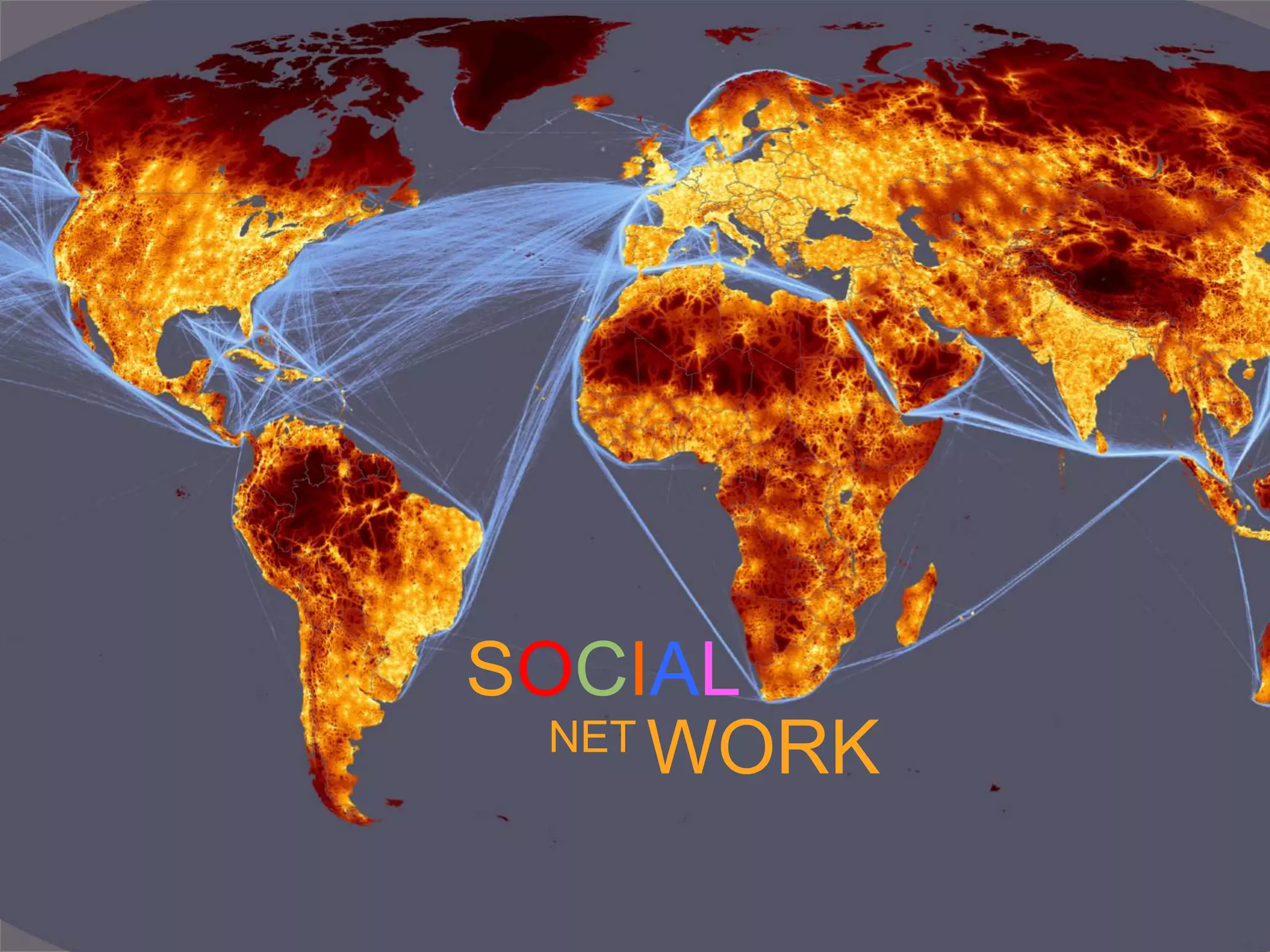
WORKNET
SOCIAL
LOVETHINKWORK
Productivity by
Connecting Hands
Productivity by
Connecting Brains
Productivity by
Connecting Hearts
social
business
[ working out loud ]
enterprise
social
networking
the
social
workplace
enterprise
2.0
The strategic application
of social computing to
enterprise challenges
(Dachis Group)
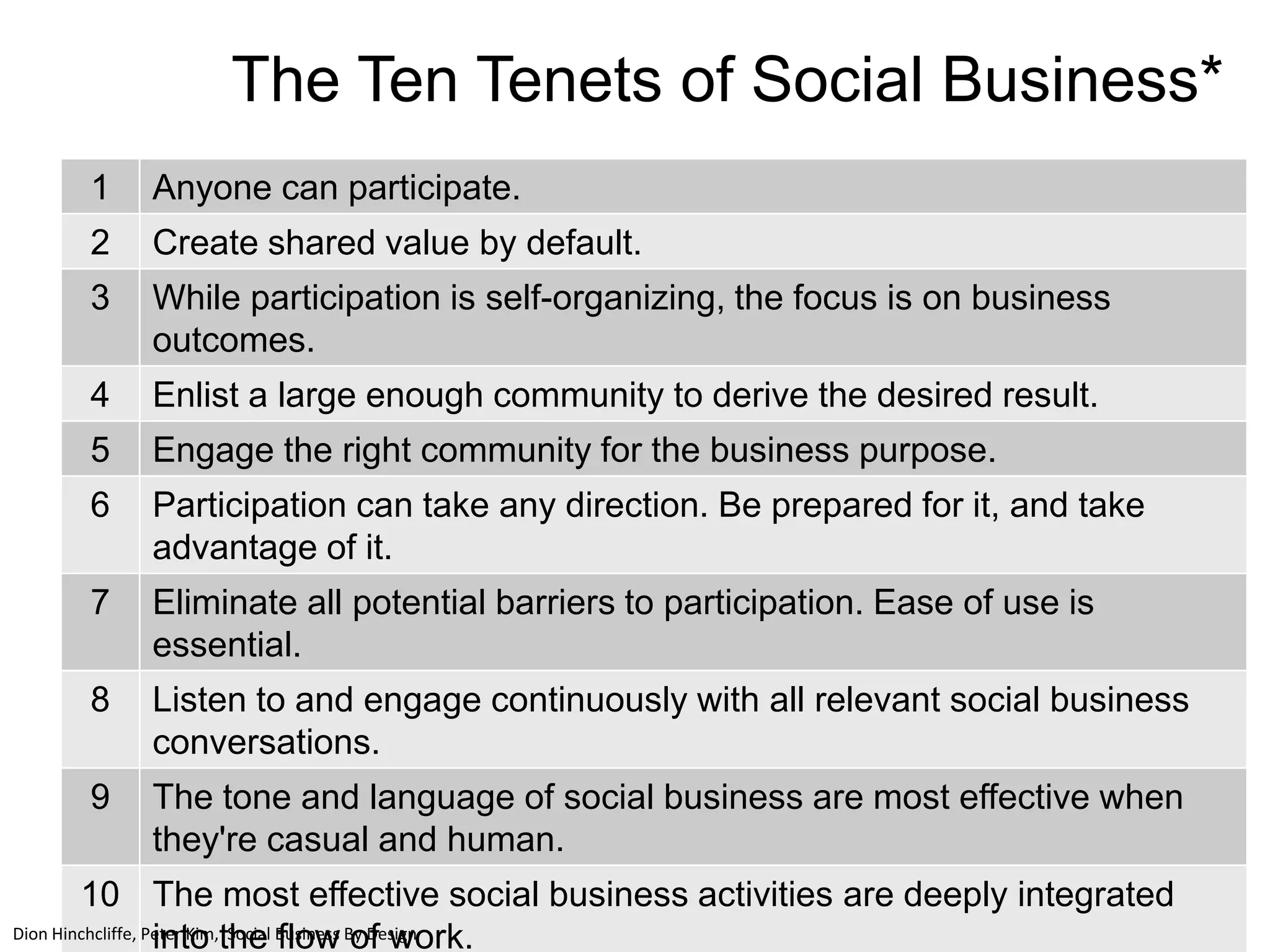
1 Anyone can participate.
2 Create shared value by default.
3 While participation is self-organizing, the focus is on business
outcomes.
4 Enlist a large enough community to derive the desired result.
5 Engage the right community for the business purpose.
6 Participation can take any direction. Be prepared for it, and take
advantage of it.
7 Eliminate all potential barriers to participation. Ease of use is
essential.
8 Listen to and engage continuously with all relevant social business
conversations.
9 The tone and language of social business are most effective when
they're casual and human.
10 The most effective social business activities are deeply integrated
into the flow of work.
The Ten Tenets of Social Business*
Dion Hinchcliffe, Peter Kim, Social Business By Design
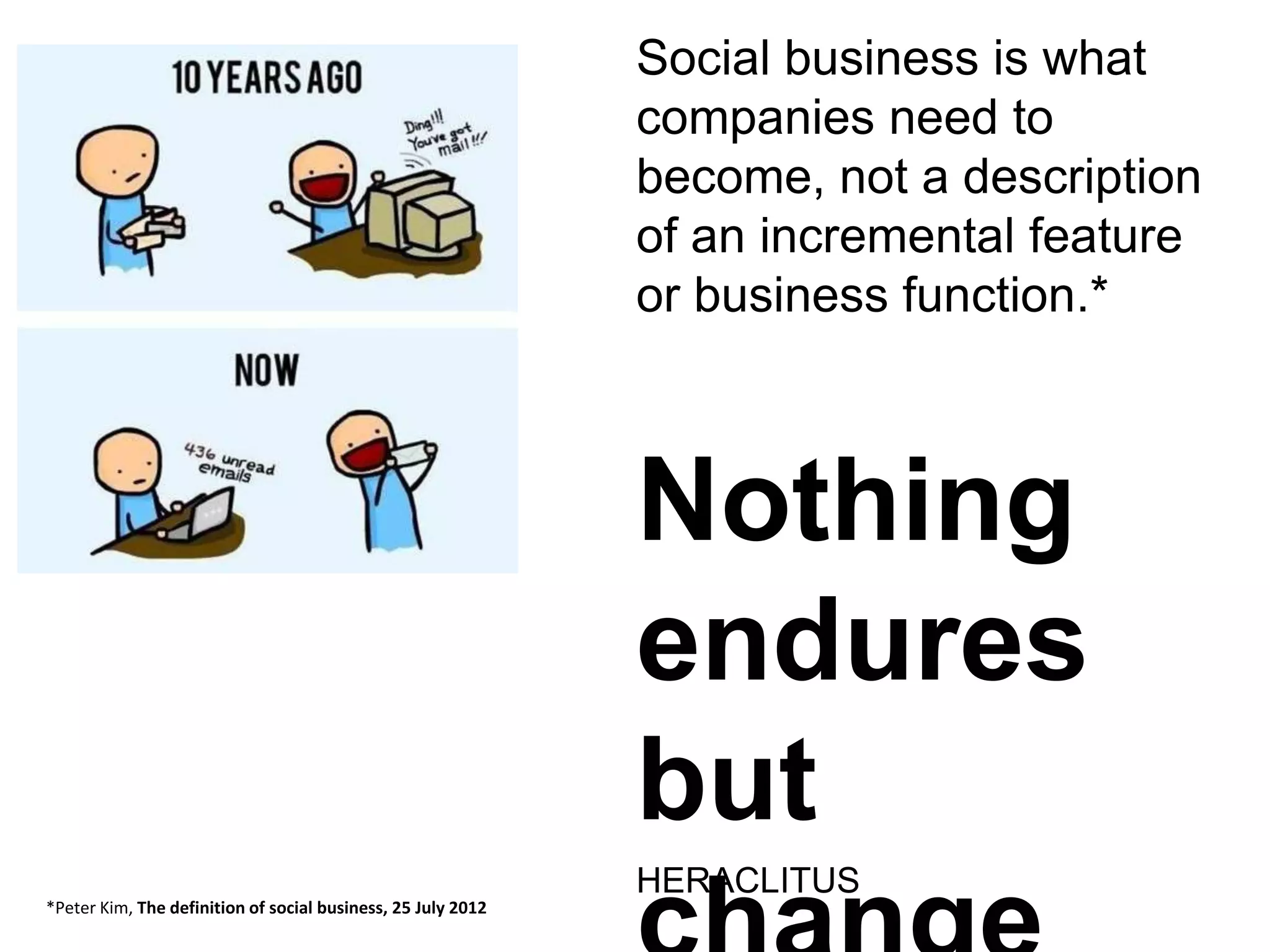
Nothing
endures
but
HERACLITUS
Social business is what
companies need to
become, not a description
of an incremental feature
or business function.*
*Peter Kim, The definition of social business, 25 July 2012
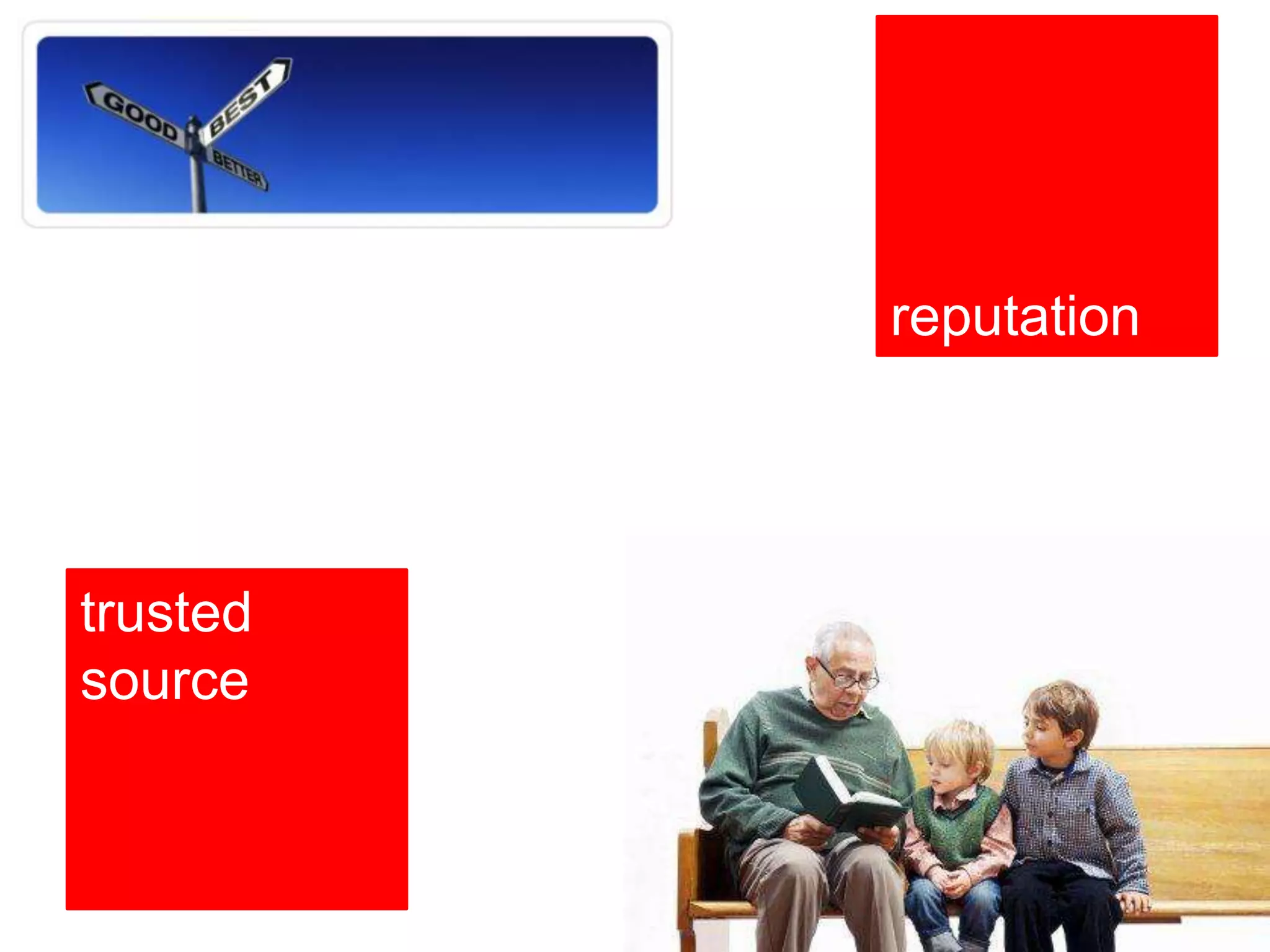
trusted
source
reputation
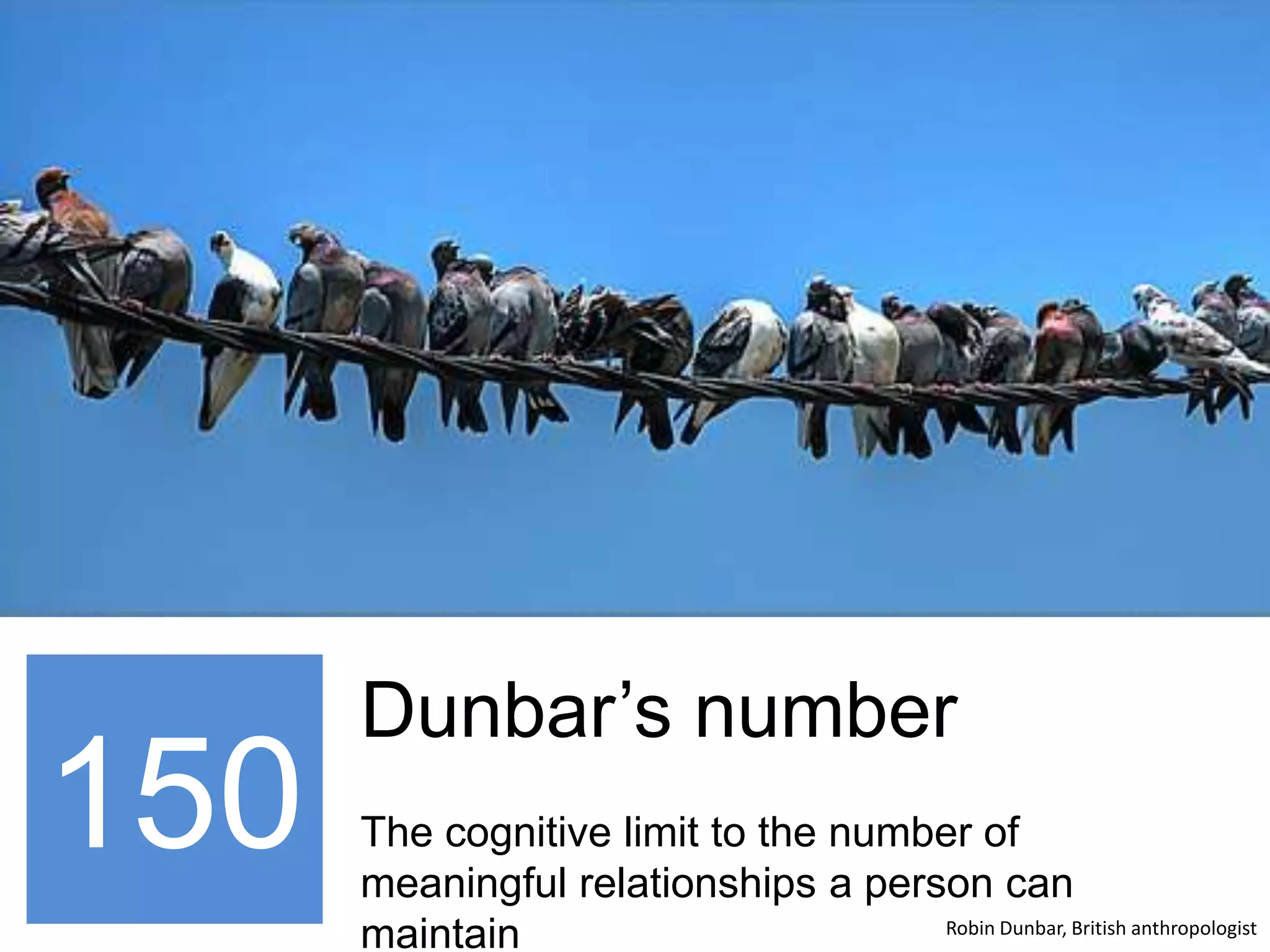
150
Dunbar’s number
The cognitive limit to the number of
meaningful relationships a person can
maintain Robin Dunbar, British anthropologist
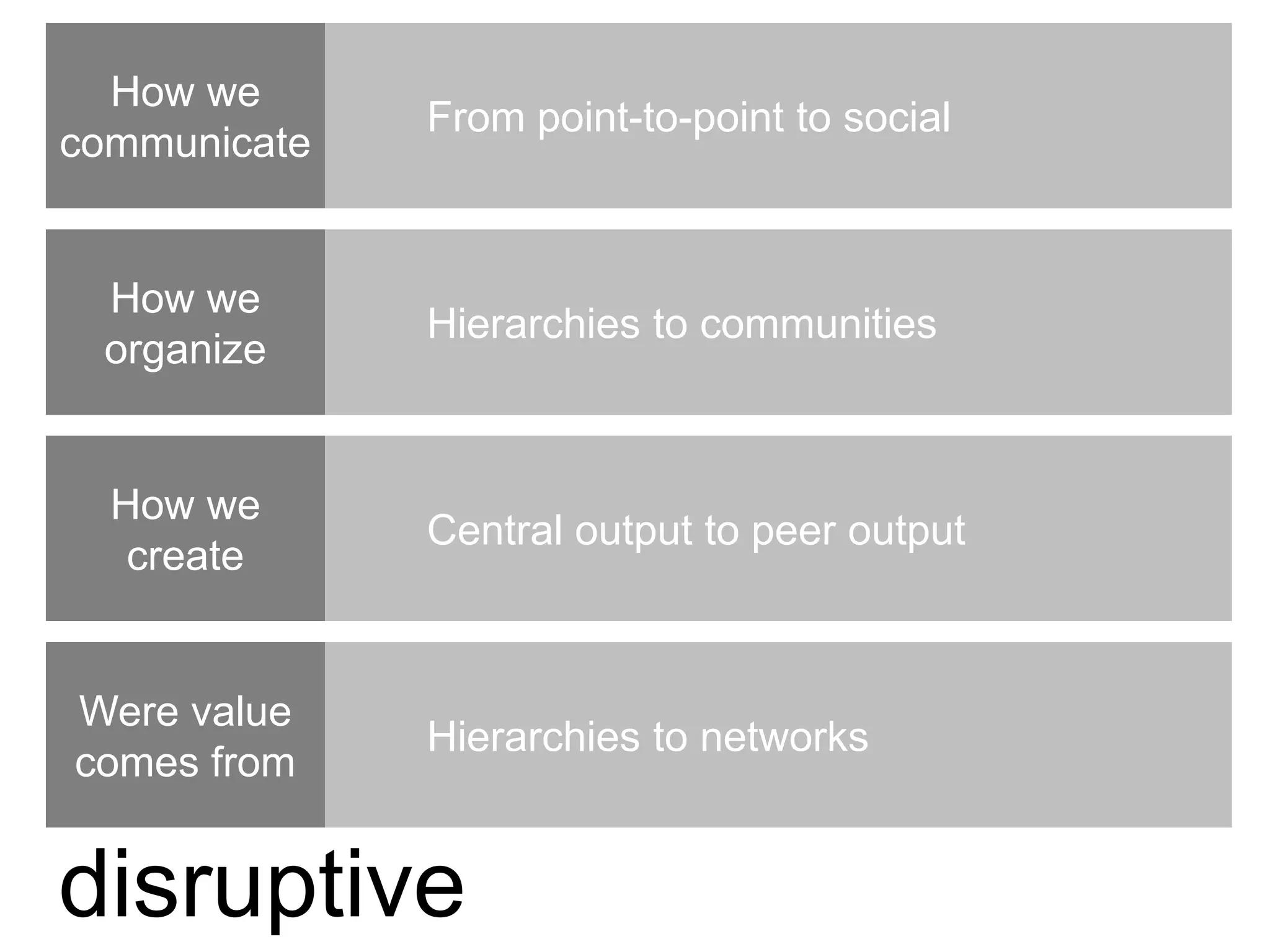
disruptive
How we
communicate
From point-to-point to social
How we
organize
Hierarchies to communities
How we
create
Central output to peer output
Were value
comes from
Hierarchies to networks
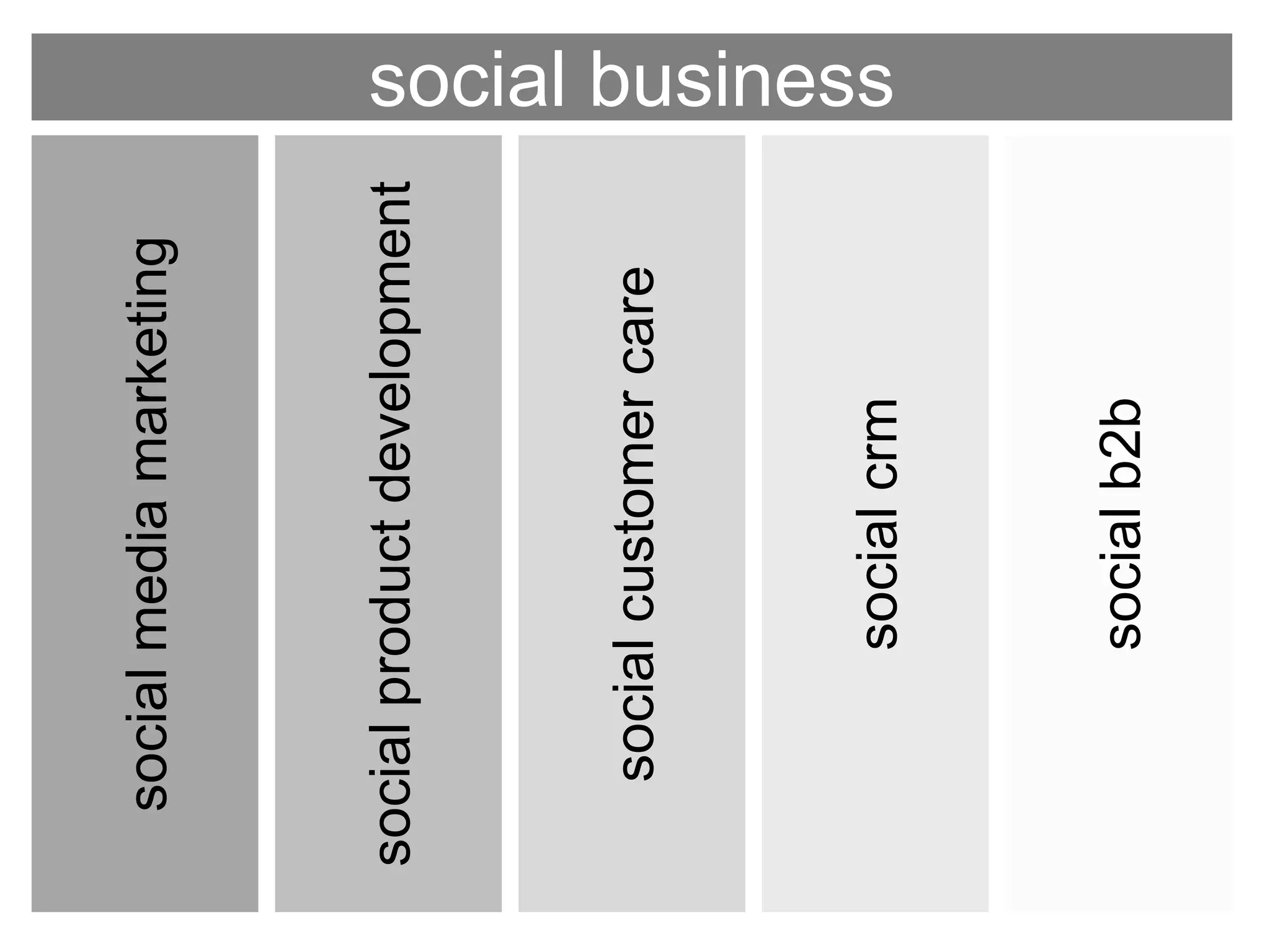
social business
socialmediamarketing
socialproductdevelopment
socialcustomercare
socialcrm
socialb2b
Why
Well…
Social business for the sake of social business is
stupid
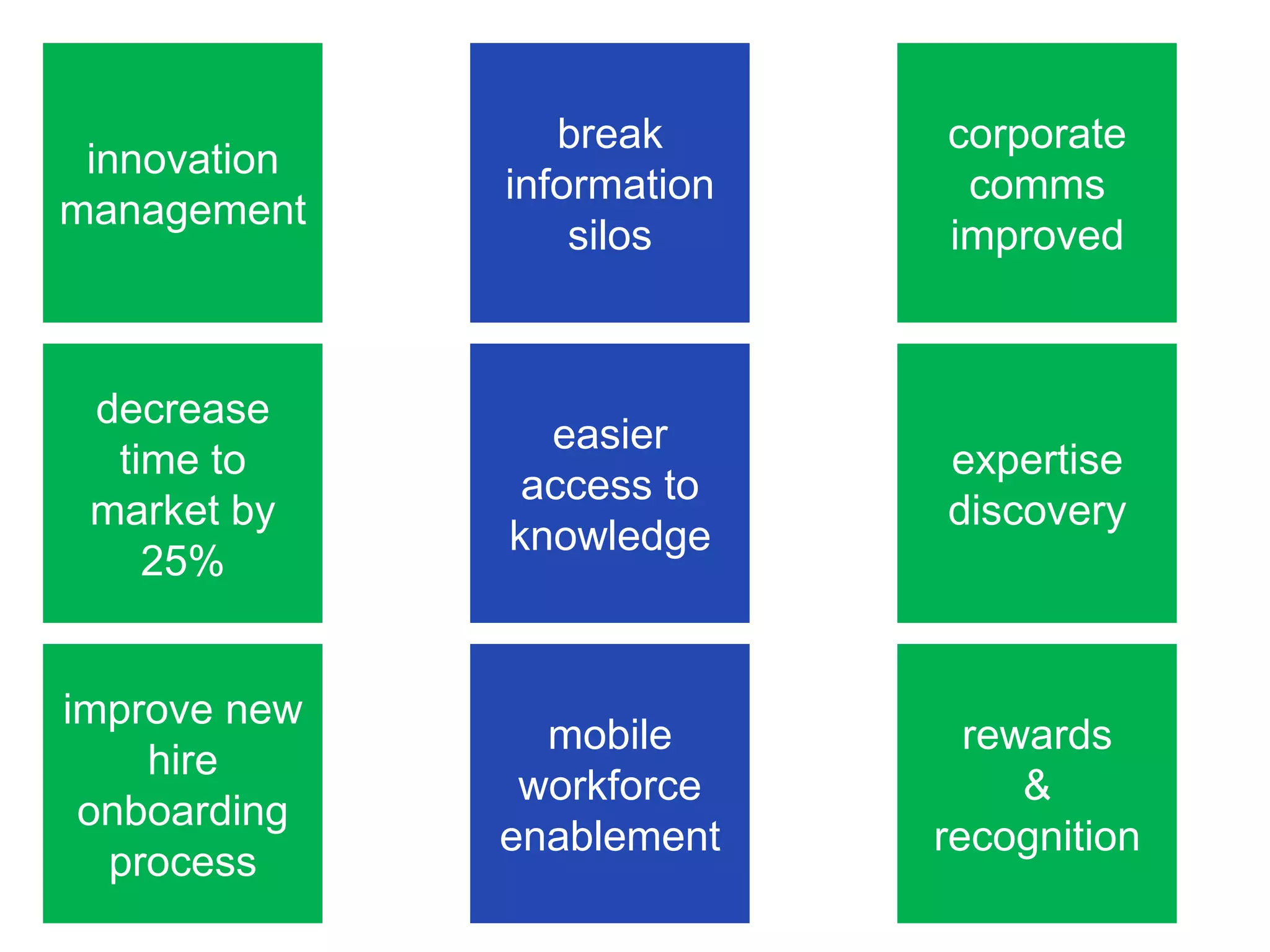
innovation
management
break
information
silos
corporate
comms
improved
decrease
time to
market by
25%
easier
access to
knowledge
expertise
discovery
improve new
hire
onboarding
process
mobile
workforce
enablement
rewards
&
recognition
huma
n
heard
happy
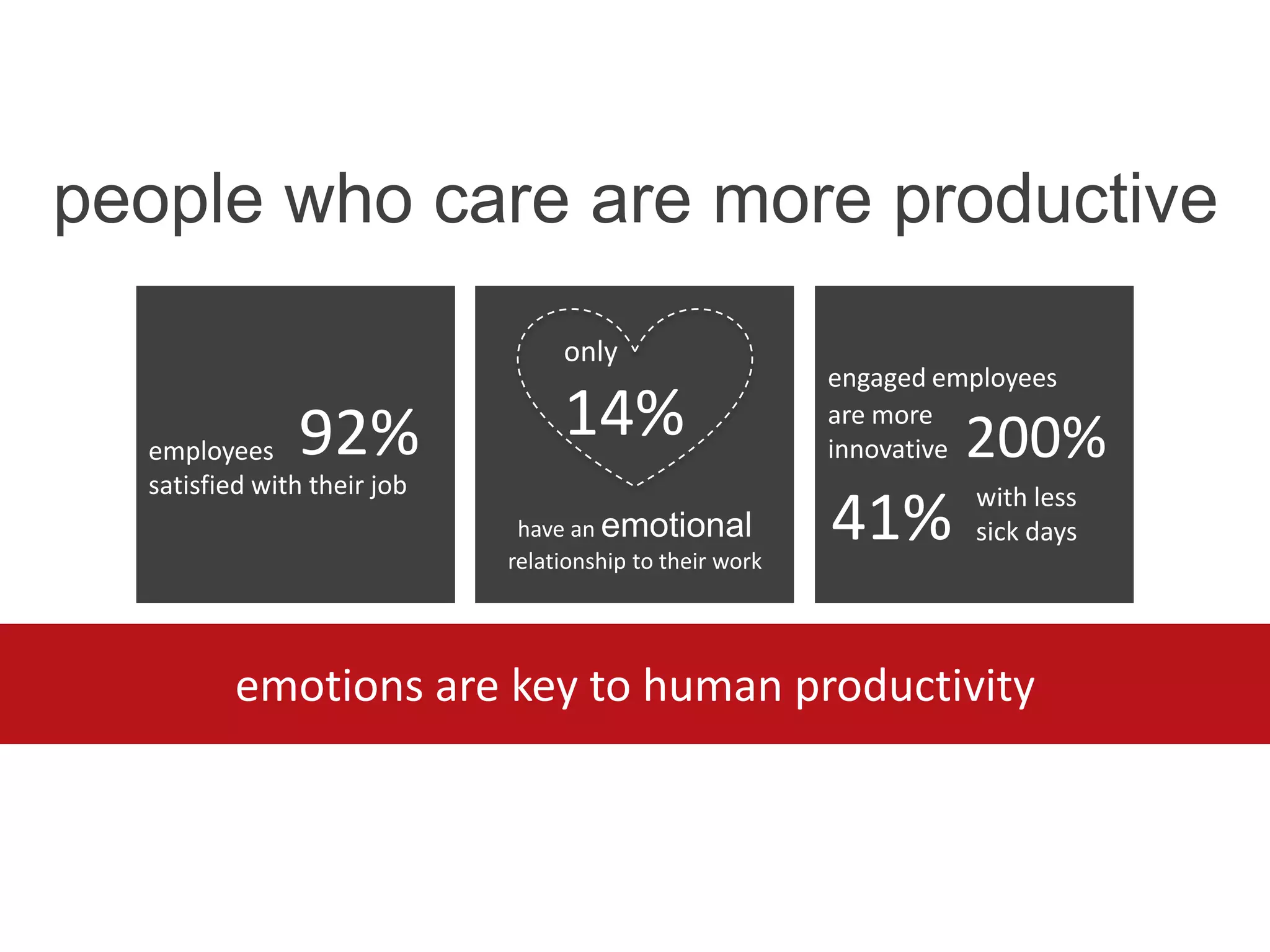
emotions are key to human productivity
92%employees
satisfied with their job
only
14%
have an emotional
relationship to their work
are more
innovative 200%
41% with less
sick days
engaged employees
people who care are more productive
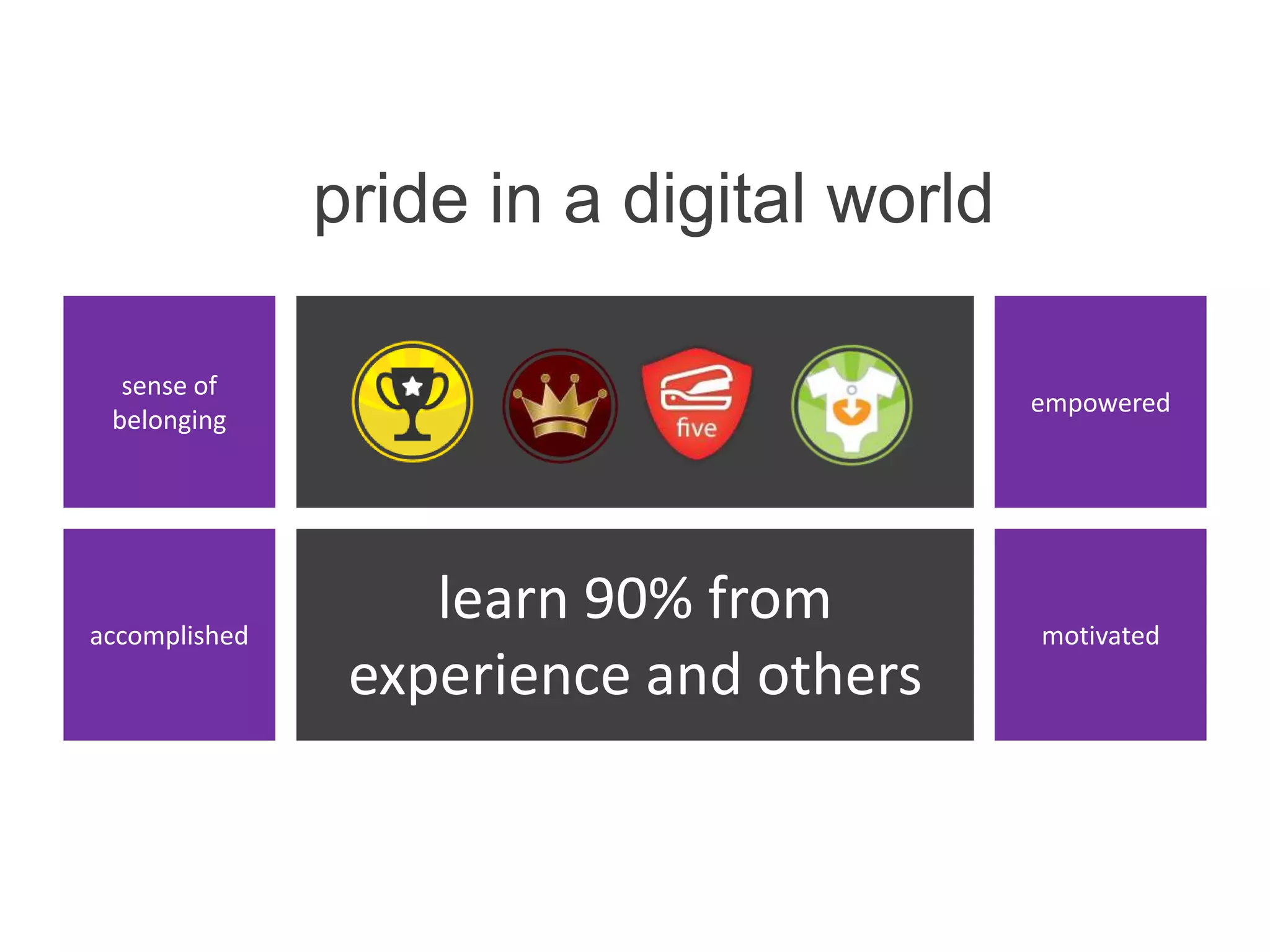
pride in a digital world
sense of
belonging
empowered
accomplished motivated
learn 90% from
experience and others
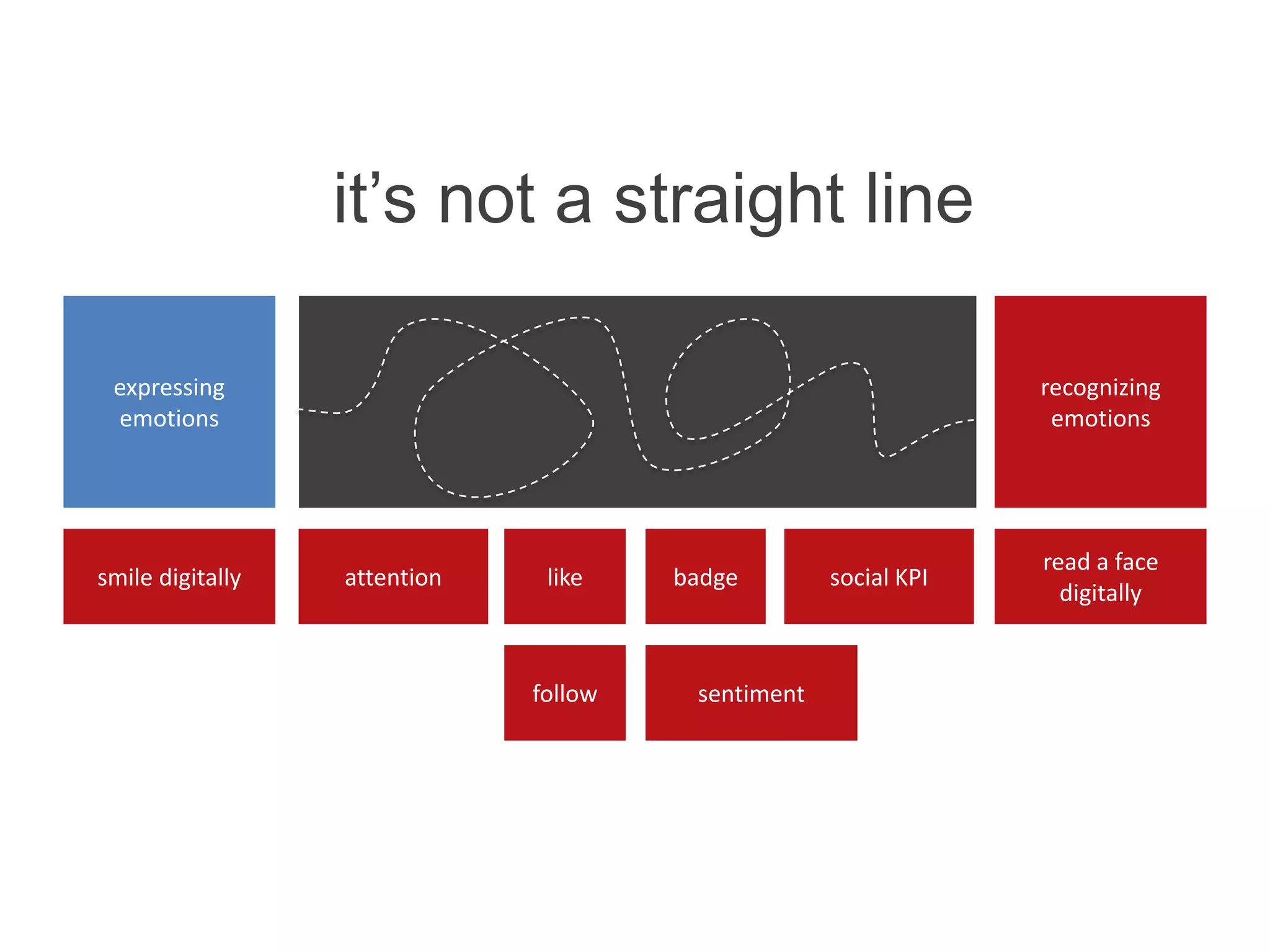
it’s not a straight line
expressing
emotions
recognizing
emotions
badgelikeattention social KPI
follow
smile digitally
read a face
digitally
sentiment
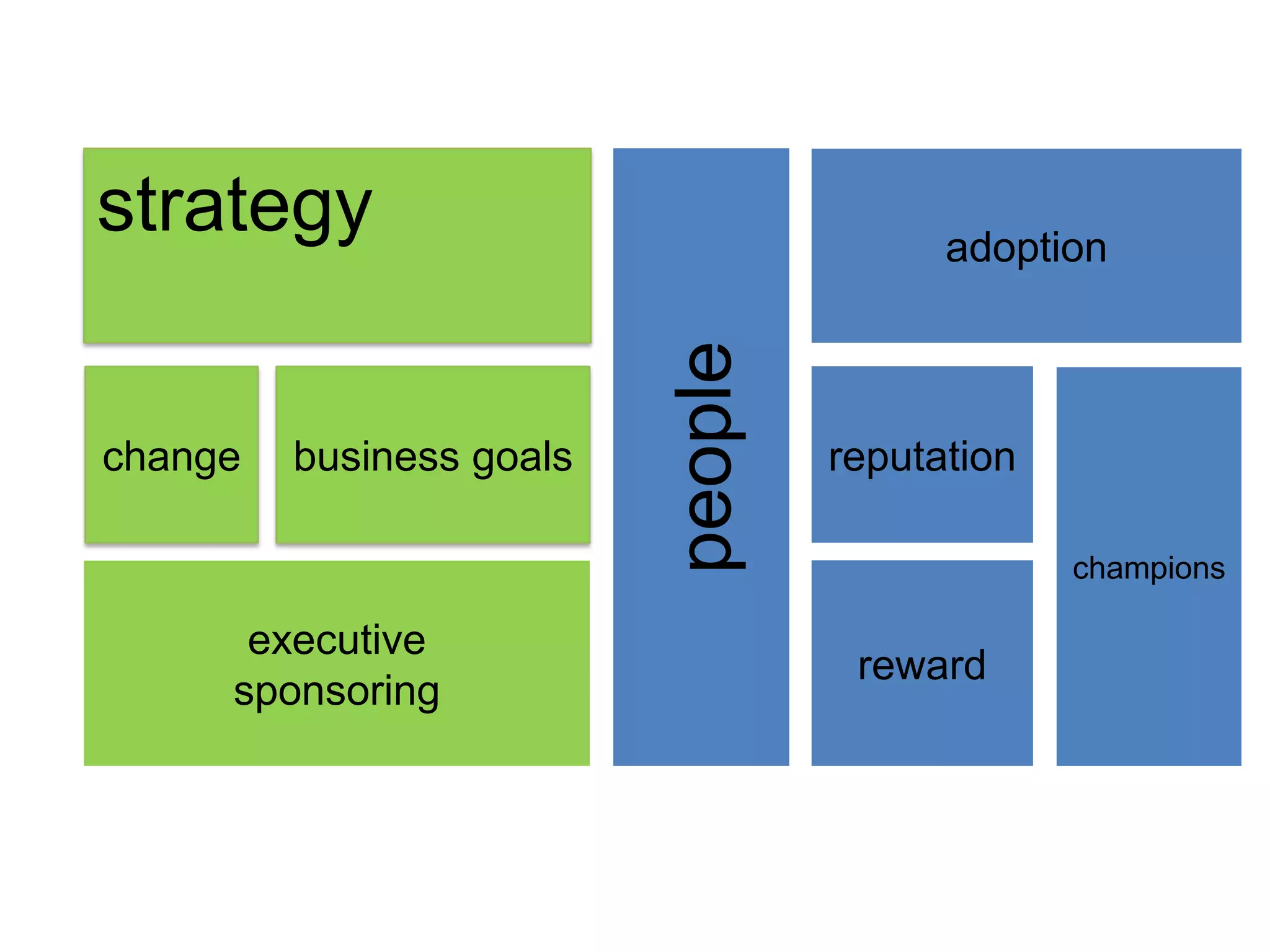
champions
people
adoption
strategy
business goals
reward
reputation
executive
sponsoring
change
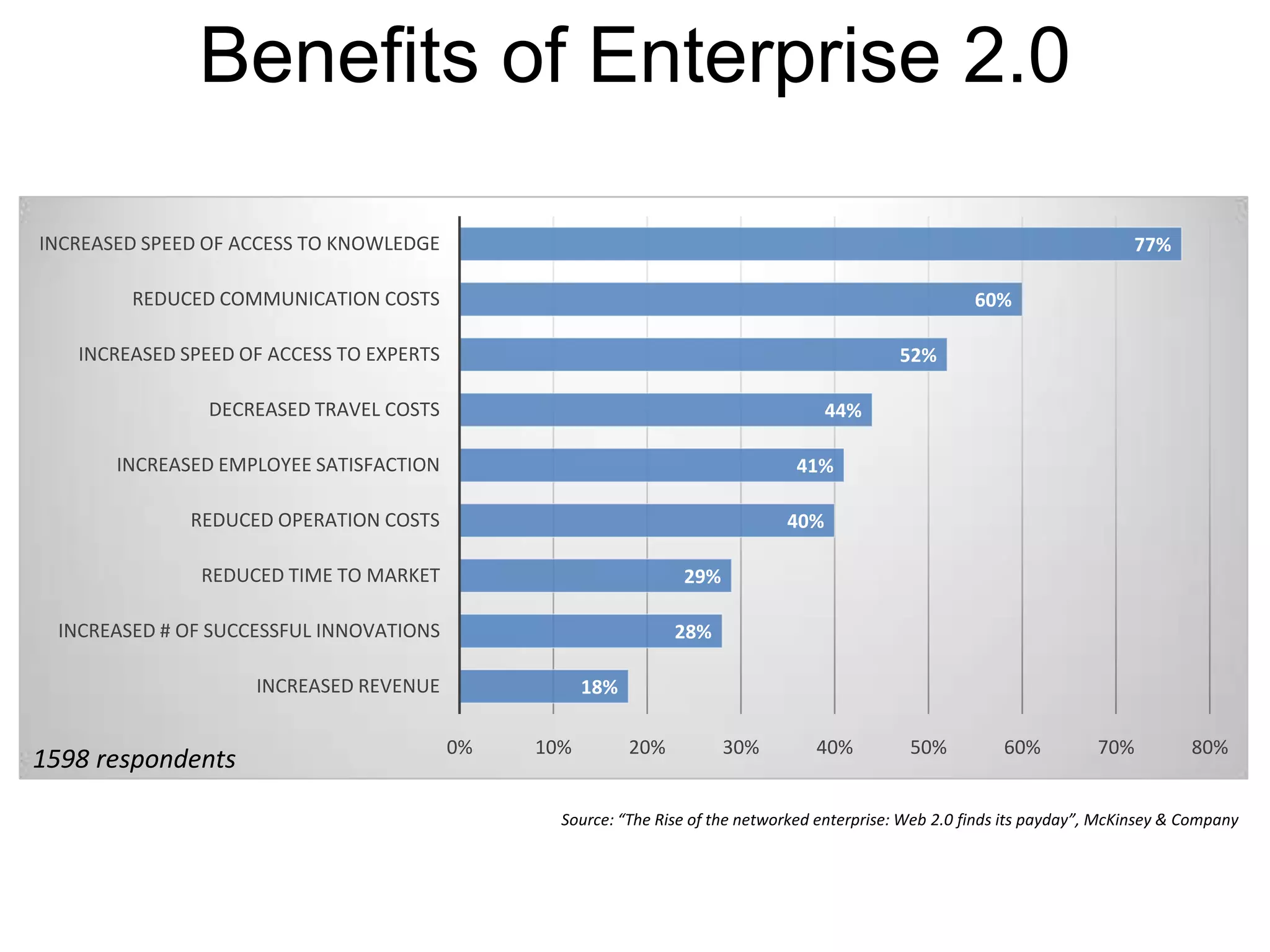
Benefits of Enterprise 2.0
18%
28%
29%
40%
41%
44%
52%
60%
77%
0% 10% 20% 30% 40% 50% 60% 70% 80%
INCREASED REVENUE
INCREASED # OF SUCCESSFUL INNOVATIONS
REDUCED TIME TO MARKET
REDUCED OPERATION COSTS
INCREASED EMPLOYEE SATISFACTION
DECREASED TRAVEL COSTS
INCREASED SPEED OF ACCESS TO EXPERTS
REDUCED COMMUNICATION COSTS
INCREASED SPEED OF ACCESS TO KNOWLEDGE
Source: “The Rise of the networked enterprise: Web 2.0 finds its payday”, McKinsey & Company
1598 respondents
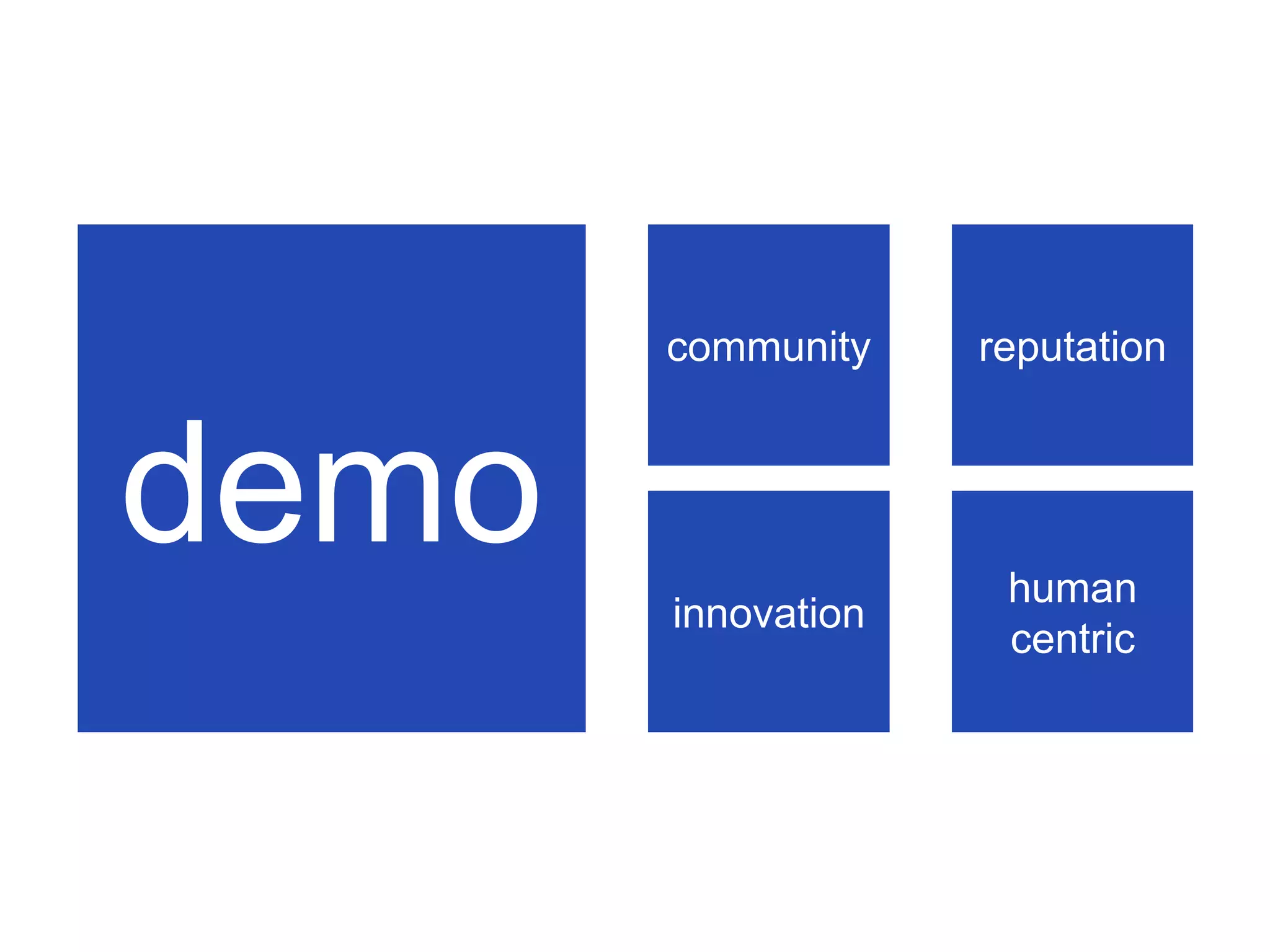
demo
community reputation
innovation
human
centric
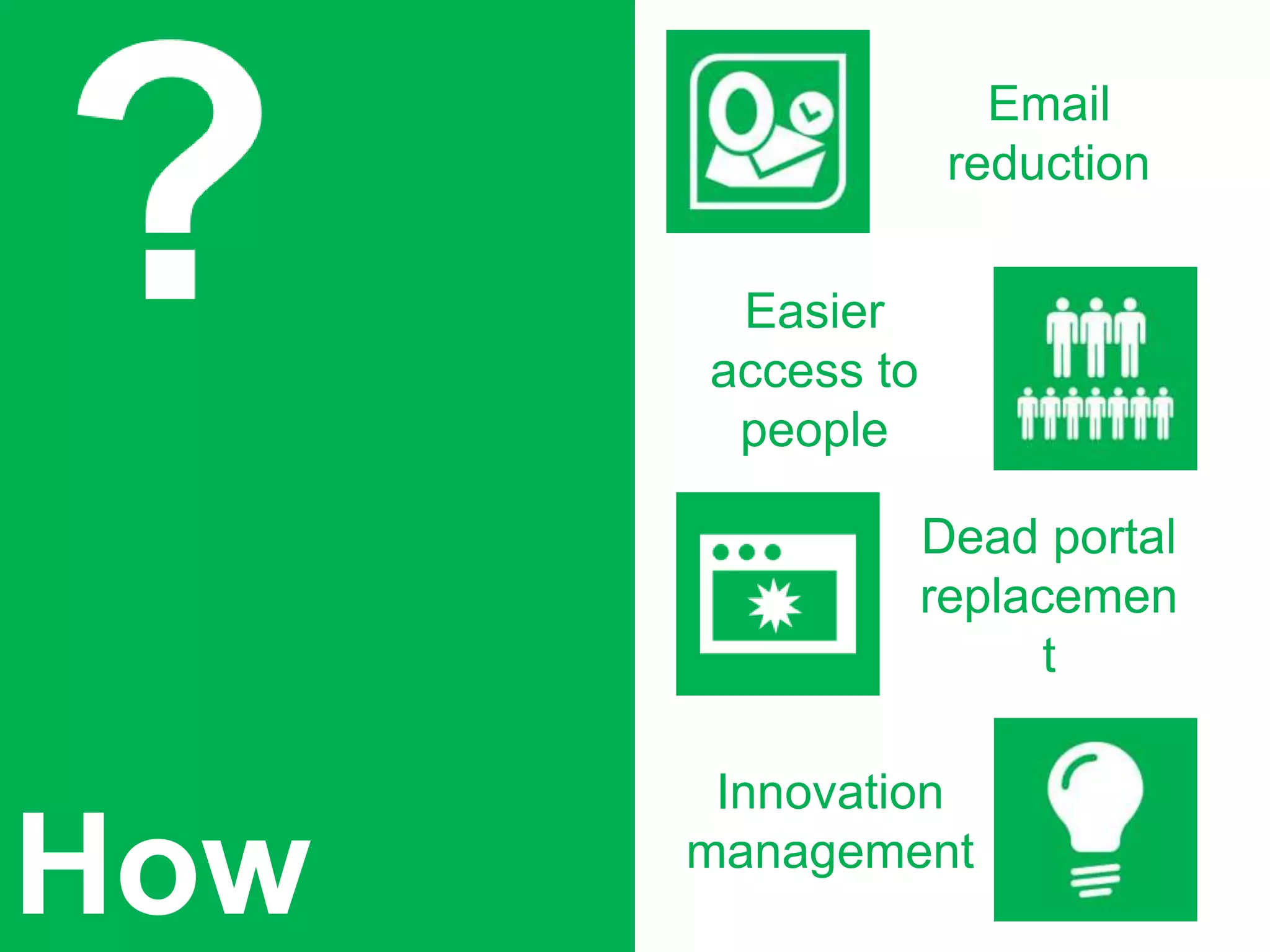
How
Email
reduction
Easier
access to
people
Dead portal
replacemen
t
Innovation
management
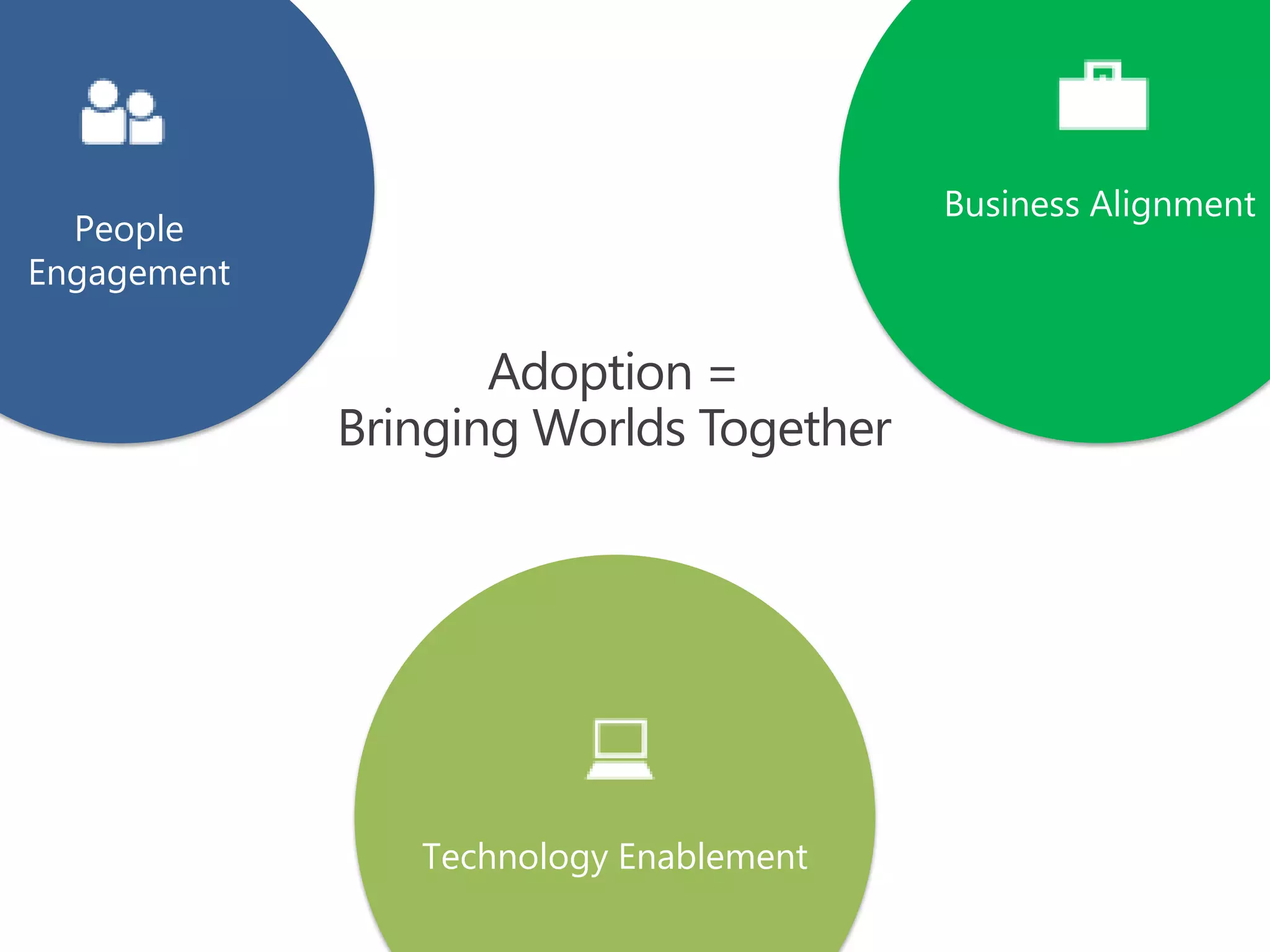
Adoption =
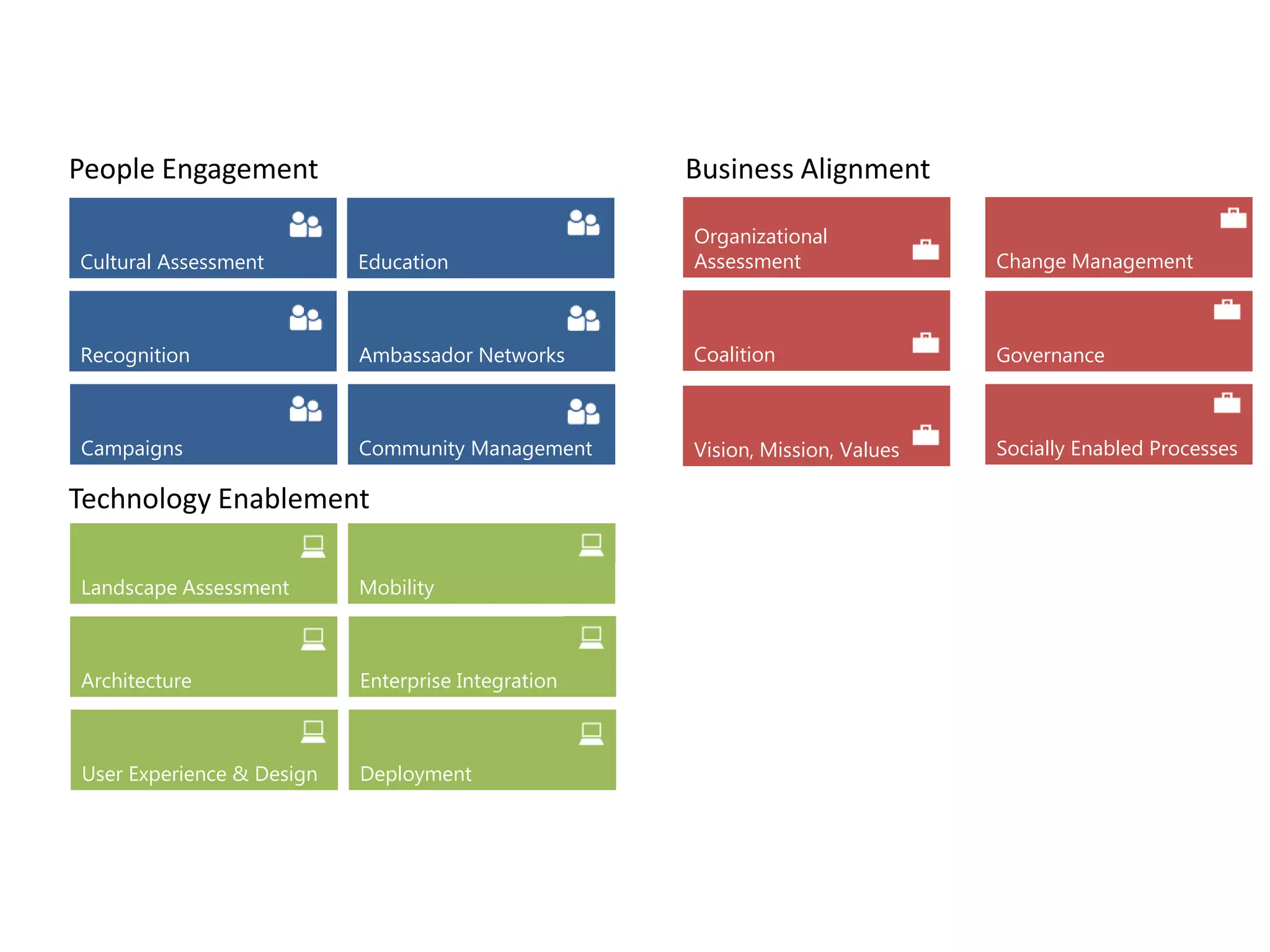
Bringing Worlds Together
Technology Enablement
People
Engagement
Business Alignment
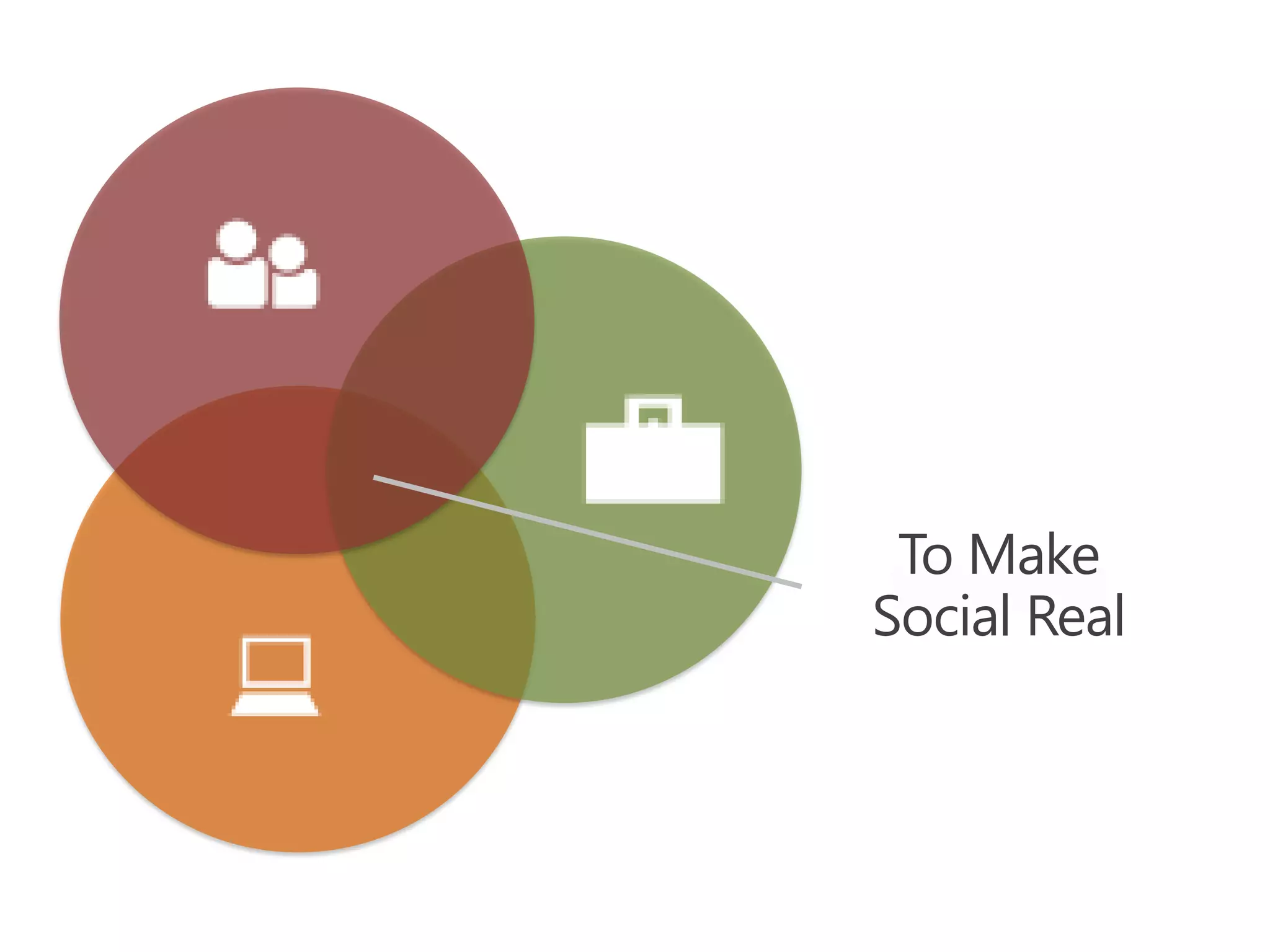
To Make
Social Real
Recognition
Campaigns
Education
Ambassador Networks
Community Management
Cultural Assessment
Architecture
User Experience & Design
Mobility
Enterprise Integration
Deployment
Landscape Assessment
Coalition
Vision, Mission, Values
Change Management
Governance
Socially Enabled Processes
Organizational
Assessment
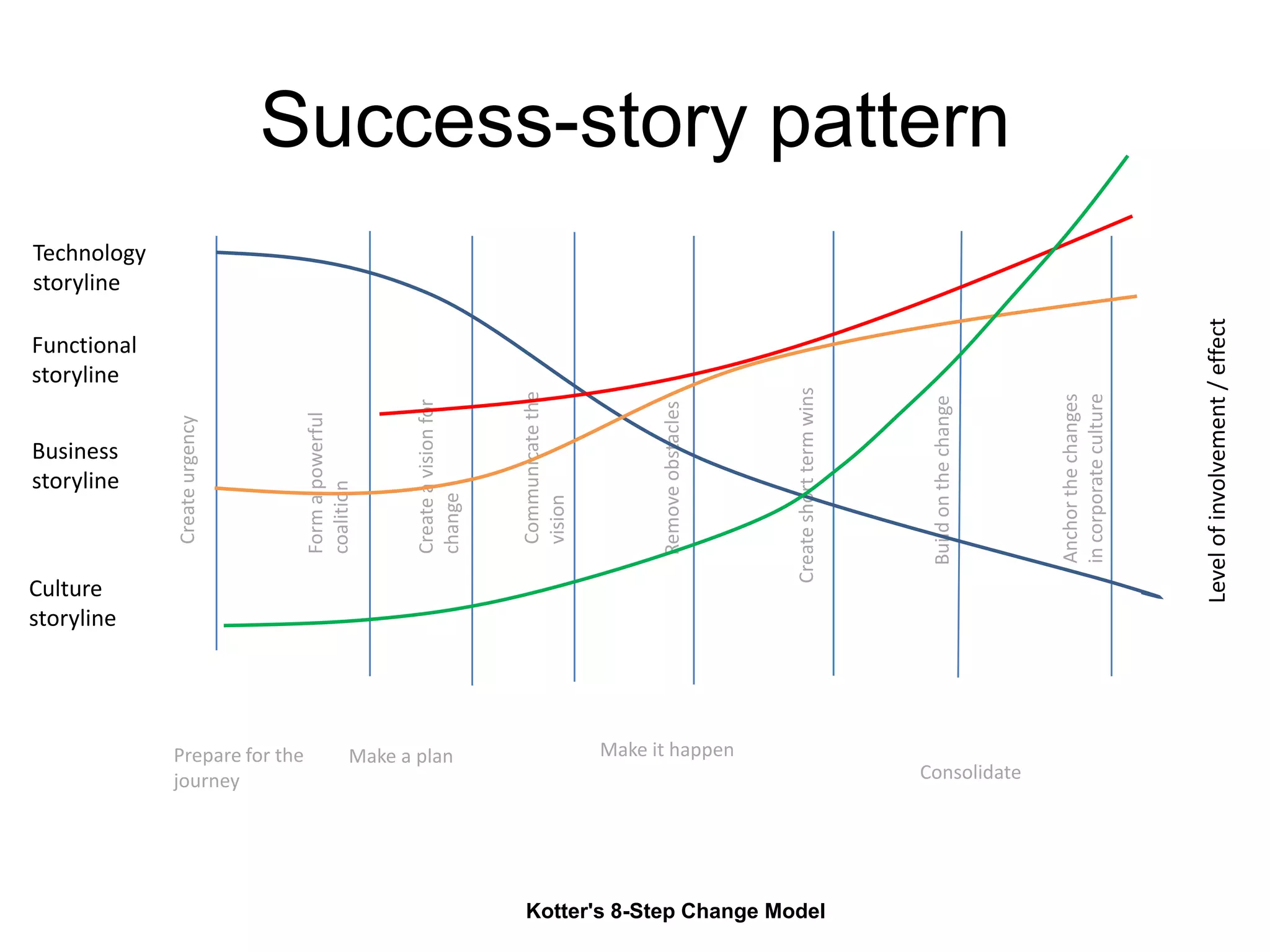
Prepare for the
journey
Make a plan
Createurgency
Formapowerful
coalition
Createavisionfor
change
Communicatethe
vision
Removeobstacles
Createshorttermwins
Buildonthechange
Anchorthechanges
incorporateculture
Make it happen
Consolidate
Technology
storyline
Business
storyline
Functional
storyline
Culture
storyline
Levelofinvolvement/effect
Success-story pattern
Kotter's 8-Step Change Model
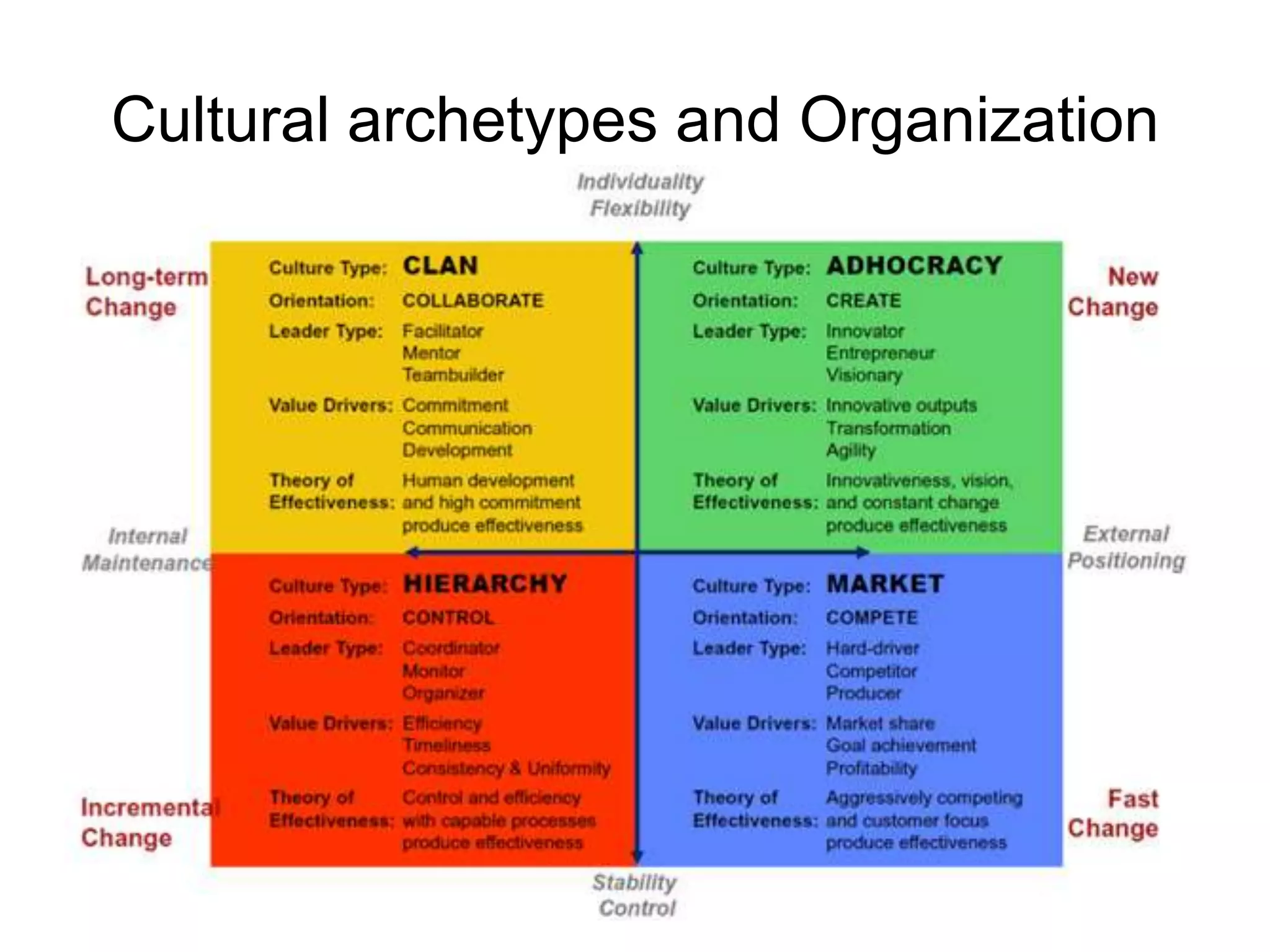
Cultural archetypes and Organization
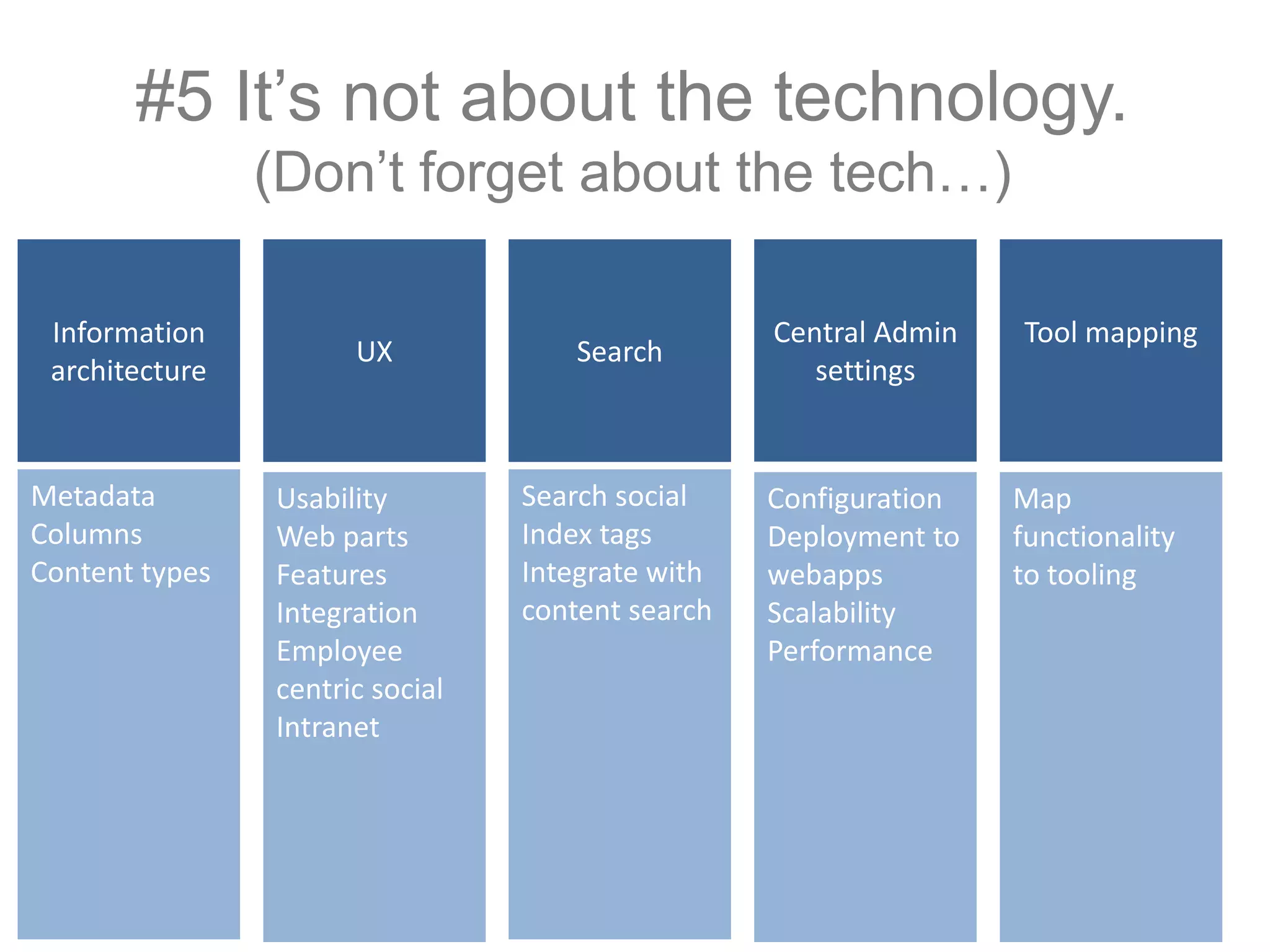
#5 It’s not about the technology.
(Don’t forget about the tech…)
Information
architecture
SearchUX
Central Admin
settings
Tool mapping
Metadata
Columns
Content types
Usability
Web parts
Features
Integration
Employee
centric social
Intranet
Search social
Index tags
Integrate with
content search
Configuration
Deployment to
webapps
Scalability
Performance
Map
functionality
to tooling
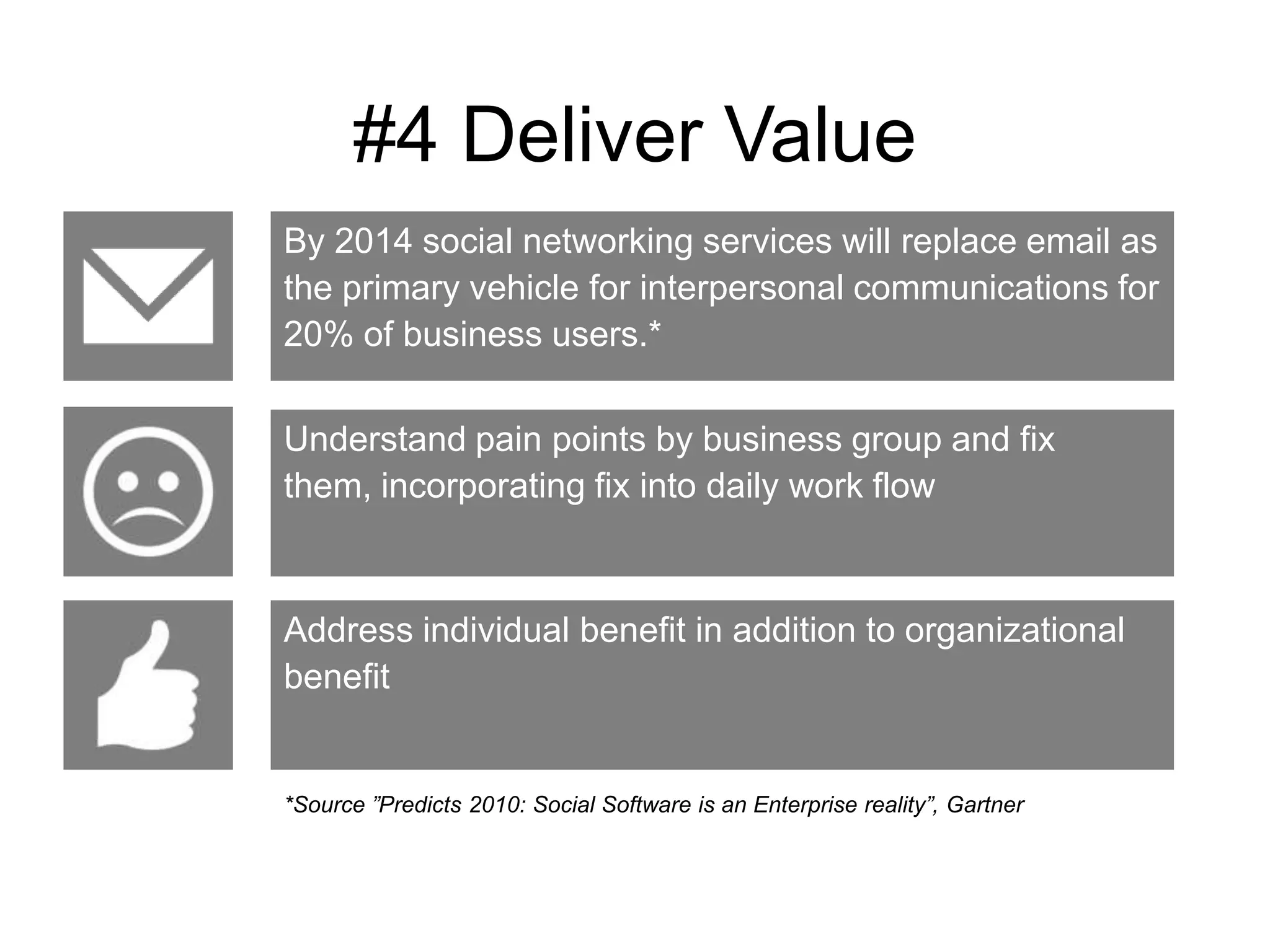
#4 Deliver Value
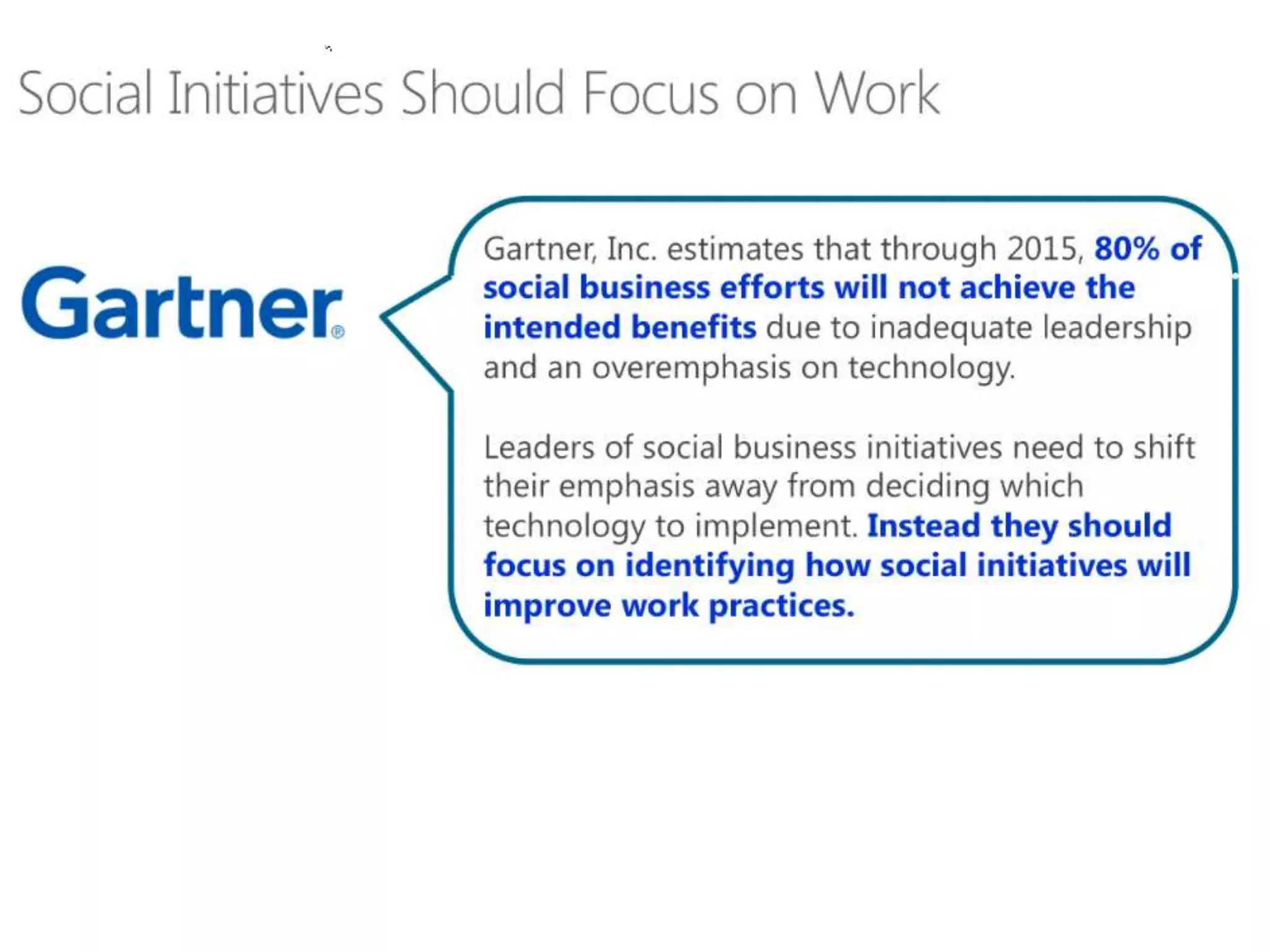
By 2014 social networking services will replace email as
the primary vehicle for interpersonal communications for
20% of business users.*
Understand pain points by business group and fix
them, incorporating fix into daily work flow
Address individual benefit in addition to organizational
benefit
*Source ”Predicts 2010: Social Software is an Enterprise reality”, Gartner
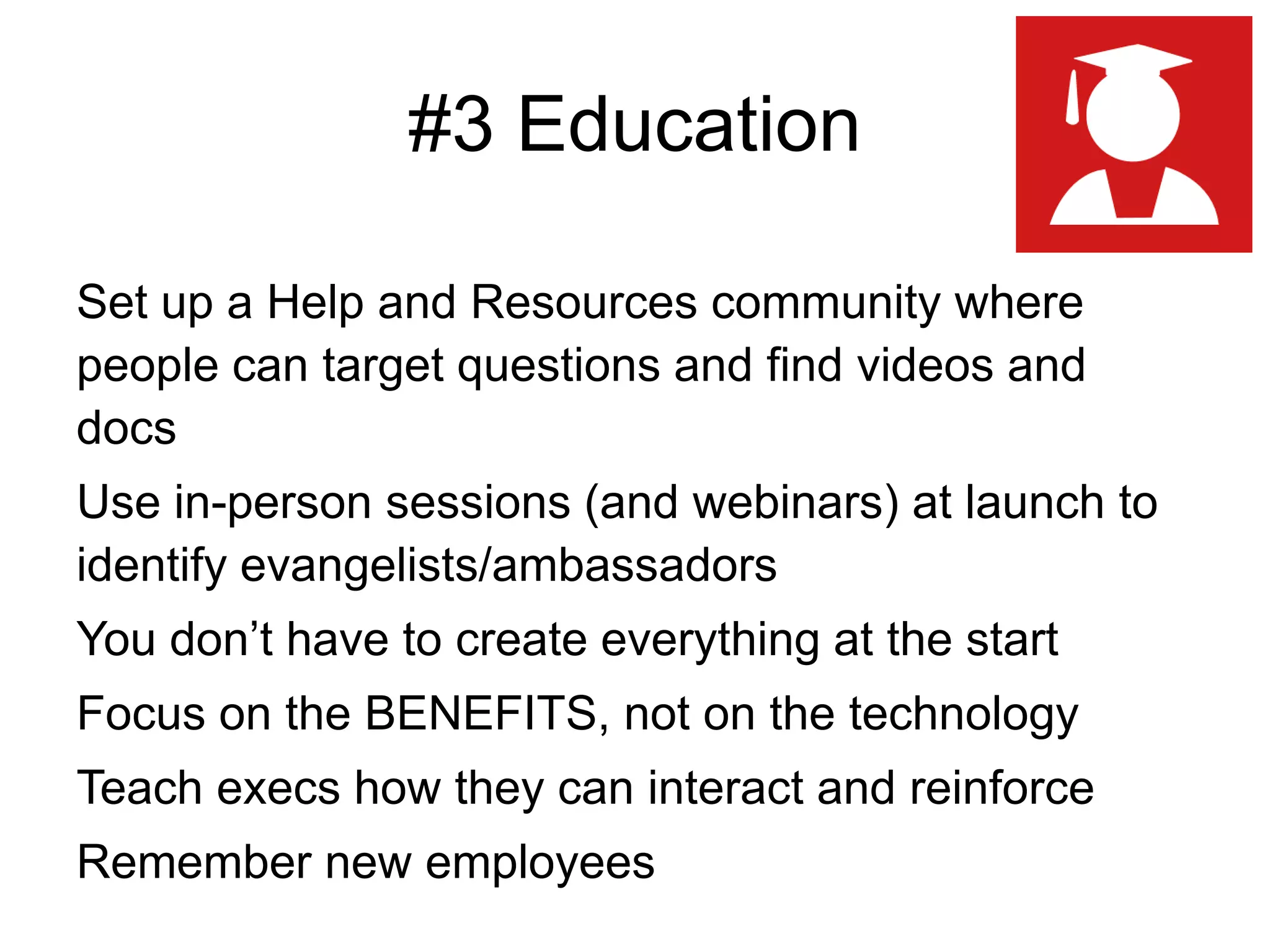
#3 Education
Set up a Help and Resources community where
people can target questions and find videos and
docs
Use in-person sessions (and webinars) at launch to
identify evangelists/ambassadors
You don’t have to create everything at the start
Focus on the BENEFITS, not on the technology
Teach execs how they can interact and reinforce
Remember new employees
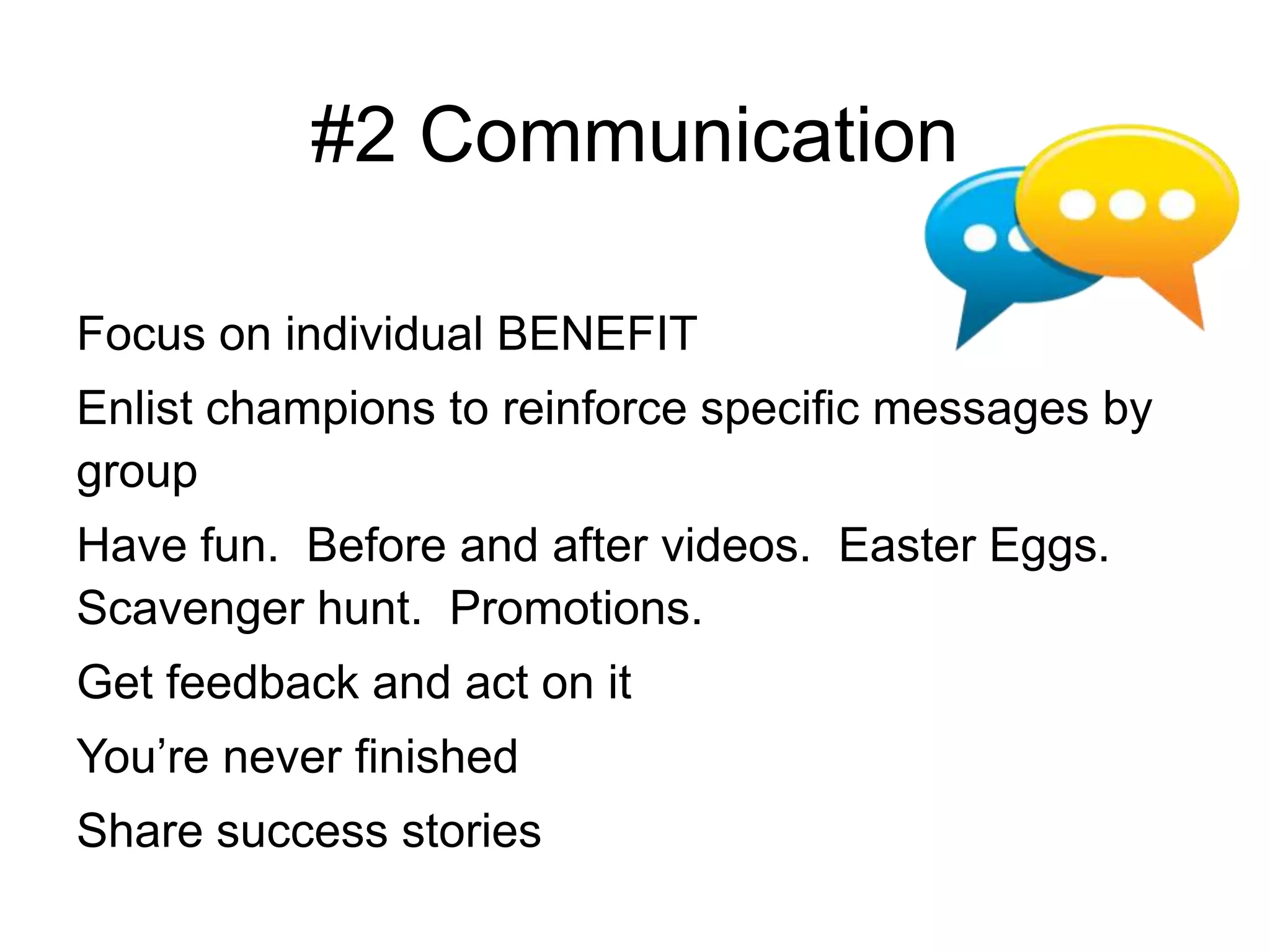
#2 Communication
Focus on individual BENEFIT
Enlist champions to reinforce specific messages by
group
Have fun. Before and after videos. Easter Eggs.
Scavenger hunt. Promotions.
Get feedback and act on it
You’re never finished
Share success stories
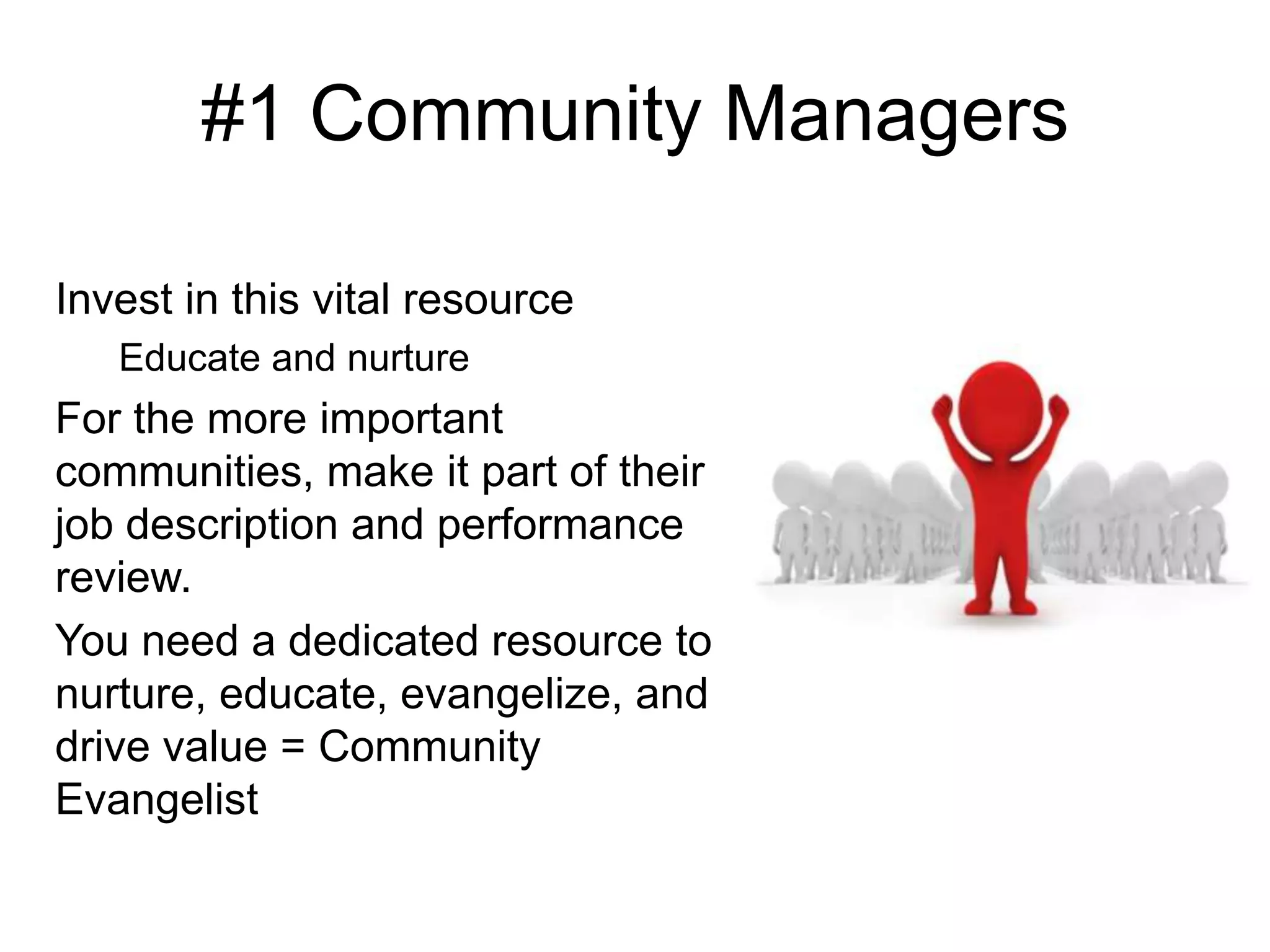
#1 Community Managers
Invest in this vital resource
Educate and nurture
For the more important
communities, make it part of their
job description and performance
review.
You need a dedicated resource to
nurture, educate, evangelize, and
drive value = Community
Evangelist
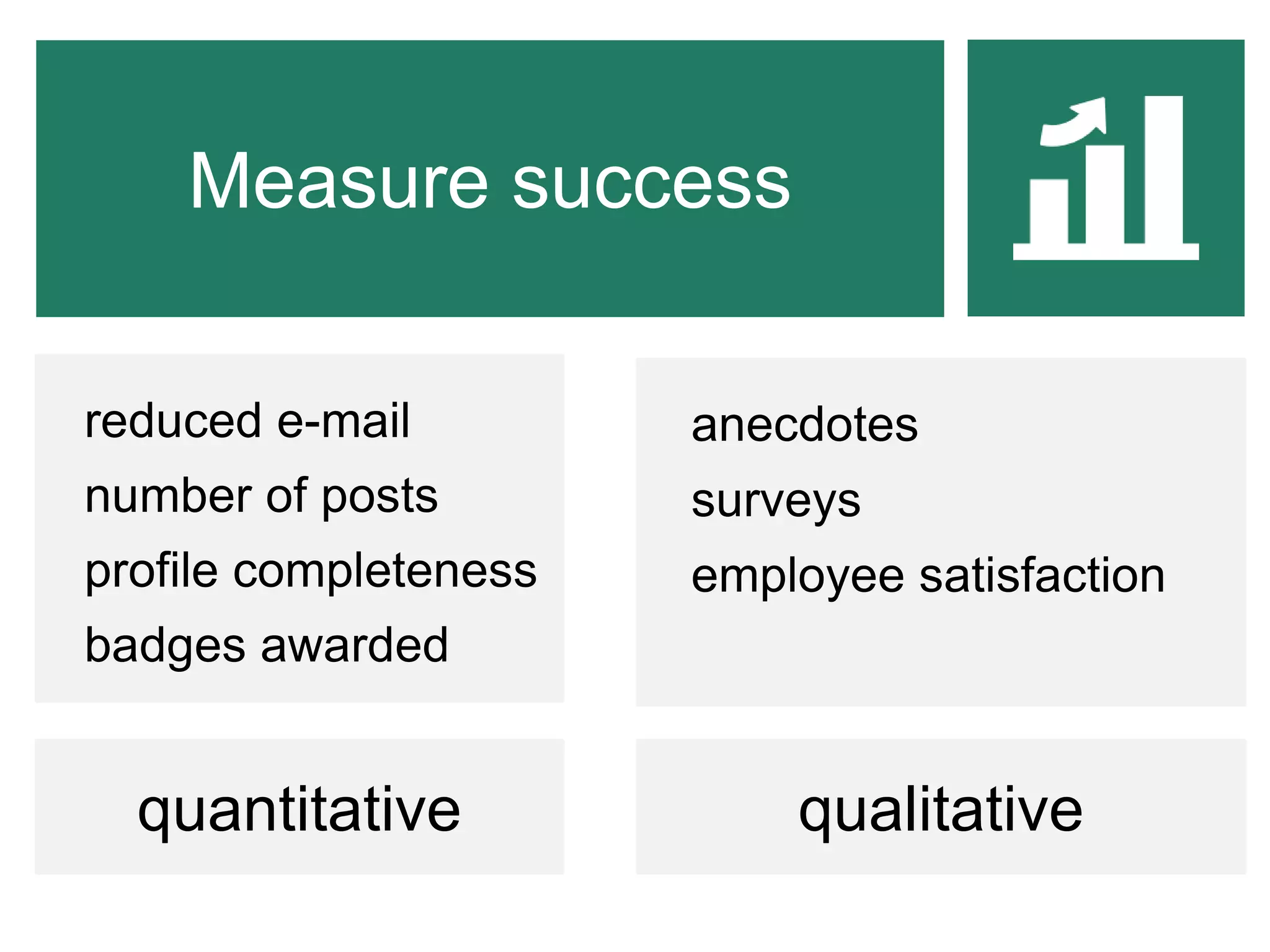
Measure success
quantitative qualitative
reduced e-mail
number of posts
profile completeness
badges awarded
anecdotes
surveys
employee satisfaction
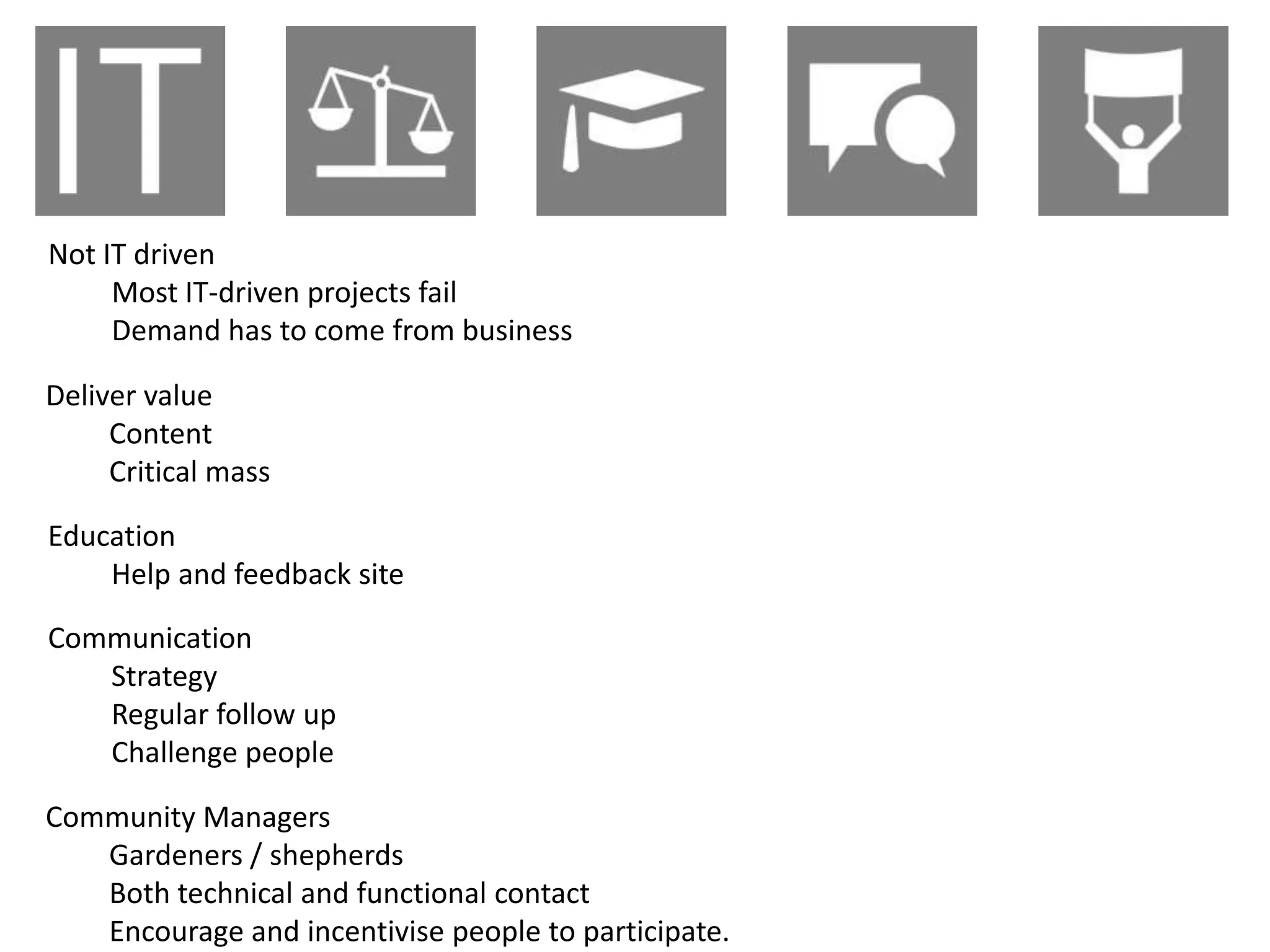
Not IT driven
Most IT-driven projects fail
Demand has to come from business
Deliver value
Content
Critical mass
Education
Help and feedback site
Communication
Strategy
Regular follow up
Challenge people
Community Managers
Gardeners / shepherds
Both technical and functional contact
Encourage and incentivise people to participate.
Q&A

GetSocial! It's Good For You (SPEvo13)

  • 1.
    Get Social! It’sgood for you IW516 Bert Jan van der Steeg
  • 2.
    Bert Jan van derSteeg @bertjanvdsteeg http://nl.linkedin.com/in/bertjanvandersteeg facebook.com/pages/sharepointtraining SharePoint Consultant Trainer (MCT) Social Business Implementation SharePoint Competence Center Current projects:
  • 3.
    You’re a <fillin the blanks here> and you’ve been tasked with implementing an enterprise social networking solution in your company. You’ve gathered relevant information and you’re ready to get started. But where? And how? Question 23
  • 4.
    show of hands Isimplementing or is planning to implement
  • 5.
    show of hands ready,we’re done not planning investigating implementing as we speak planning to implement in near future
  • 6.
    agenda Definition. What are we talkingabout here. what Context. Goals. Benefits. Investments. why Implementing. Maintaining. Evaluating. how
  • 7.
    Using an activity stream insteadof e- mail to communicate Facebook for the enterprise What
  • 8.
  • 9.
  • 10.
  • 11.
    LOVETHINKWORK Productivity by Connecting Hands Productivityby Connecting Brains Productivity by Connecting Hearts
  • 12.
    social business [ working outloud ] enterprise social networking the social workplace enterprise 2.0
  • 13.
    The strategic application ofsocial computing to enterprise challenges (Dachis Group)
  • 14.
    1 Anyone canparticipate. 2 Create shared value by default. 3 While participation is self-organizing, the focus is on business outcomes. 4 Enlist a large enough community to derive the desired result. 5 Engage the right community for the business purpose. 6 Participation can take any direction. Be prepared for it, and take advantage of it. 7 Eliminate all potential barriers to participation. Ease of use is essential. 8 Listen to and engage continuously with all relevant social business conversations. 9 The tone and language of social business are most effective when they're casual and human. 10 The most effective social business activities are deeply integrated into the flow of work. The Ten Tenets of Social Business* Dion Hinchcliffe, Peter Kim, Social Business By Design
  • 15.
    Nothing endures but HERACLITUS Social business iswhat companies need to become, not a description of an incremental feature or business function.* *Peter Kim, The definition of social business, 25 July 2012
  • 16.
  • 17.
    150 Dunbar’s number The cognitivelimit to the number of meaningful relationships a person can maintain Robin Dunbar, British anthropologist
  • 19.
    disruptive How we communicate From point-to-pointto social How we organize Hierarchies to communities How we create Central output to peer output Were value comes from Hierarchies to networks
  • 20.
  • 21.
  • 22.
  • 23.
    Social business forthe sake of social business is stupid
  • 24.
    innovation management break information silos corporate comms improved decrease time to market by 25% easier accessto knowledge expertise discovery improve new hire onboarding process mobile workforce enablement rewards & recognition
  • 26.
  • 27.
    emotions are keyto human productivity 92%employees satisfied with their job only 14% have an emotional relationship to their work are more innovative 200% 41% with less sick days engaged employees people who care are more productive
  • 28.
    pride in adigital world sense of belonging empowered accomplished motivated learn 90% from experience and others
  • 29.
    it’s not astraight line expressing emotions recognizing emotions badgelikeattention social KPI follow smile digitally read a face digitally sentiment
  • 30.
  • 31.
    Benefits of Enterprise2.0 18% 28% 29% 40% 41% 44% 52% 60% 77% 0% 10% 20% 30% 40% 50% 60% 70% 80% INCREASED REVENUE INCREASED # OF SUCCESSFUL INNOVATIONS REDUCED TIME TO MARKET REDUCED OPERATION COSTS INCREASED EMPLOYEE SATISFACTION DECREASED TRAVEL COSTS INCREASED SPEED OF ACCESS TO EXPERTS REDUCED COMMUNICATION COSTS INCREASED SPEED OF ACCESS TO KNOWLEDGE Source: “The Rise of the networked enterprise: Web 2.0 finds its payday”, McKinsey & Company 1598 respondents
  • 32.
  • 33.
  • 34.
    Adoption = Bringing WorldsTogether Technology Enablement People Engagement Business Alignment
  • 35.
  • 36.
    Recognition Campaigns Education Ambassador Networks Community Management CulturalAssessment Architecture User Experience & Design Mobility Enterprise Integration Deployment Landscape Assessment Coalition Vision, Mission, Values Change Management Governance Socially Enabled Processes Organizational Assessment
  • 39.
    Prepare for the journey Makea plan Createurgency Formapowerful coalition Createavisionfor change Communicatethe vision Removeobstacles Createshorttermwins Buildonthechange Anchorthechanges incorporateculture Make it happen Consolidate Technology storyline Business storyline Functional storyline Culture storyline Levelofinvolvement/effect Success-story pattern Kotter's 8-Step Change Model
  • 40.
  • 42.
    #5 It’s notabout the technology. (Don’t forget about the tech…) Information architecture SearchUX Central Admin settings Tool mapping Metadata Columns Content types Usability Web parts Features Integration Employee centric social Intranet Search social Index tags Integrate with content search Configuration Deployment to webapps Scalability Performance Map functionality to tooling
  • 43.
    #4 Deliver Value By2014 social networking services will replace email as the primary vehicle for interpersonal communications for 20% of business users.* Understand pain points by business group and fix them, incorporating fix into daily work flow Address individual benefit in addition to organizational benefit *Source ”Predicts 2010: Social Software is an Enterprise reality”, Gartner
  • 44.
    #3 Education Set upa Help and Resources community where people can target questions and find videos and docs Use in-person sessions (and webinars) at launch to identify evangelists/ambassadors You don’t have to create everything at the start Focus on the BENEFITS, not on the technology Teach execs how they can interact and reinforce Remember new employees
  • 45.
    #2 Communication Focus onindividual BENEFIT Enlist champions to reinforce specific messages by group Have fun. Before and after videos. Easter Eggs. Scavenger hunt. Promotions. Get feedback and act on it You’re never finished Share success stories
  • 46.
    #1 Community Managers Investin this vital resource Educate and nurture For the more important communities, make it part of their job description and performance review. You need a dedicated resource to nurture, educate, evangelize, and drive value = Community Evangelist
  • 47.
    Measure success quantitative qualitative reducede-mail number of posts profile completeness badges awarded anecdotes surveys employee satisfaction
  • 48.
    Not IT driven MostIT-driven projects fail Demand has to come from business Deliver value Content Critical mass Education Help and feedback site Communication Strategy Regular follow up Challenge people Community Managers Gardeners / shepherds Both technical and functional contact Encourage and incentivise people to participate.
  • 49.

Editor's Notes

  • #4 Assuming IT-Pro or IW audience, consider this scenario. Reference to Microsoft exams which presented this as a question. Setting the stage. What is the goal of this session? Introduction. Chances are that your company is somehow looking at implementing an ESN solution. Why?Because the competition is doing it and we can’t stay behind?Because there is a clear business case for it?Because my employees are asking for it?Because it is hip?Communication changes. Employees are turning away from e-mail. Why? What’s the alternative. E-mail is one-on-one, one-on-few at best. Activity Stream is one-on-many. Business goals. Corporations have clear goals when introducing ESN. Examples: reduce communication times.
  • #6 Let’s have a show of hands to see in which stage the audience is.Interaction moment with audience, ice breaker.
  • #7 This session talks about three things:What. We’ll try to define what ‘social’ is in a business and collaboration context.Why. The reasoning behind it, why are companies embracing this and why should you do this as well?How. What works and what doesn’t, how can you implement this? What does it take to make it a continuous success?
  • #8 What.Is it as simple as removing e-mail and start communicating through some sort of message board? Not really, but it may be part of it.Is it Facebook for the enterprise? Not really, but close.
  • #13 Social has a lot of names and synonyms which sort of mean the same, but actually are a little different. Enterprise 2.0 and social collaboration is the way that employees communicate and collaborate.Social business is when a company uses social principles for doing business, which can be rather drastic.
  • #14 One of the definitions of social business is from the Dachis Group. Enterprise challenges:How can we share business critical information with all people that need it.How can we shorten our time to market timeHow can we generate ideas for new products easierHow can we improve our customer support at minimal costHow can we make our C-level executives more accessible to the average workerHow can we leverage the creative power of our customer base to improve our products
  • #15 The 10 tenets of social business were written down by Dachis Group executives Kim and Hinchcliffe. These are ten propositions that describe what social networks/businesses look like. When companies do ‘social’ the right way, this is what they’re doing in terms of applying the principles.When companies see this list, they might think “Wow, there’s a lot of change needed to accomplish this!”
  • #16 Constant change is inevitable.Companies are constantly searching for ways to improve. Become more efficient, make more money, build durable enterprises. Get the economy going.Corporations embrace change. Corporations leverage change for business goals.Communication changes. Simple example is e-mail.
  • #17 At the same time, old principles and habits prevale. This is not new to us, we’ve done it before.We find knowledge and wisdom by going to trusted sources. Reputation is important. How do you know that the person you’re talking to is an expert? What has happened to identify him/her as an expert? Were all his answers confirmed as helpful? Has he provided a lot of answers? Or is he just a person with great charisma and leadership skills but not necessarily in-depth subject matter knowledge?The elders were the people you went to to learn.In these times, we still go to trusted sources to gather knowledge. Only faster and using modern technology. Information is digital and can be shared faster and easier.
  • #18 Dunbar’s number is the limit to the number of meaningful relationships a person can maintain. This includes people from the past you would reconnect if you met them again.Of those 150 people in your network, probably not all of them are helping you in your daily work.So, we need help. That’s where social networks come in.
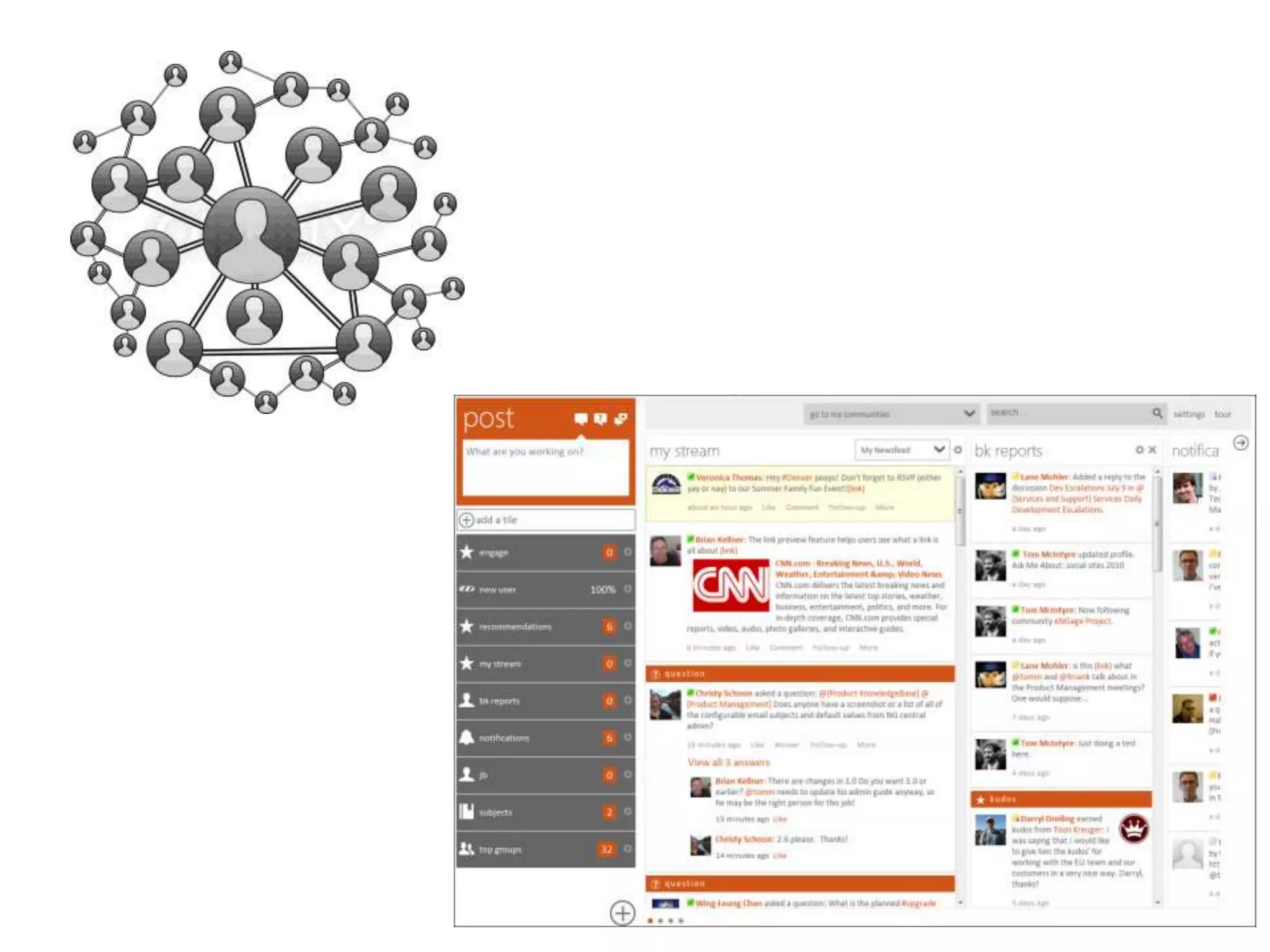
  • #19 In a general, more operational perspective, a social computing solution consists of at least these two componentsSocial graph. The employees network. Who are you connected to and what is your position in that network. Who are you connected to. Number of people you can maintain a useful and relevant relationship with is limited. (…’s number)Activity Stream. The place where relevant information comes to you. Like RSS used to do?
  • #20 Social business / social computing is a disruptive development. It shakes things up in a drastic way. It changes the way we work in lost of ways.Communication. Social communication is open. Everyone can listen in and participate. Conversations are brought to employees in a push fashion. Traditional hierarchies in communication channels are no longer there. Organisation. Traditional hierarchies are breaking down. Communities are formed based on interest, based on value creation, based on business goals. Creation. Corporate communication is no longer the ‘owner’ of the intranet. Wiki style content creation by all employees. Most of the content in social networks today is peer-created. That makes for increased speed of creation, but not always necessarily the best quality. Quality assurance is socially controlled.Value. Valuable information and knowledge is created by employees in all layers of the organization. The collective ‘wisdom’ of the company is generated from all layers of the organization.
  • #21 When talking about social business, there are a lot of opportunities. Companies can engage in social throughout their businessmodel. Social media marketing: Companies engaging in a Facebook page to reach out to customers.Social product development: companies that use social computing to interact with customers to get input and feedback for new product features. Extranet allows all customers to talk to eachother.Social customer care. Example is a company that leverages the knowledge of customers to improve customer support. Social CRM.Social B2B.This is however not the scope of todays discussion.
  • #22 Why is social computing happening.What’s the reason behind it, why are companies embracing this.Why would you do it?
  • #25 Social business has to serve a purpose. It has to be used for pursuing one or more business goals. This is the most tangible part for most companies. Since we have clear business goals, we have something we can measure against. That’s understandable, since most projects only get funding when clear goals and objectives are defined, which is a good thingBut it’s just one side of the coin. The other one, and equally important:Human Centricity
  • #26 Why?Companies leverage social to improve profitability. Improved profitability creates stronger and durable corporations.The economical principle.
  • #27 Social business allows you to be human again. It brings the human factor back into our digital livesUltimately, people want to be heard. If they have great ideas that they can share, they’re happy.Positive effects. Happier people are more effective and productive. Less absence
  • #28 “Research hasfound that engaged workers — those who participated in a forum, helped out a colleague in a chat, or provided feedback on an enterprise initiative — are 37% more likely to stay with their employers” — R “Ray” Wang, Principal Analyst and CEO, Constellation ResearchFalse satisfaction + Connection + Contribution
  • #29 Strong bonds – endorsements90/10 experience and others Informal learning is the learning that we do when we don&apos;t realize we&apos;re learningAccomplishment, Empowerment Learning at the point of need – and retaining that knowledgeOnboarding - recommendation, T&amp;C, wizards, self service; learning at the point of need with expertise directories, information discovery, video scenarios - West Point use casebuild collaborative online networksmeet the development needs of workersprovide easy access to knowledge
  • #31 Implementing social business is based mainly on two pillars; strategy and people.Strategy is required for translating the long term strategic goals into short term tactics. It also ensures executive sponsoring which is put to effect through management by example. When the C-level executives give the right example, the workforce is more motivated to follow. This is about adoption.
  • #34 First objectives for many companies areEmail reductionEasier access to people / knowledgeDead portal replacementInnovation management
  • #38 Obviously, social is not the snake oil that makes all problems go away. It needs planning, commitment, strategy and vision.
  • #39 Prerequisites for a successful implementationDetermine business goalsLess e-mailDirect access to people and knowledgeShorten innovation cycles. Get executive sponsorshipSocial is a policy, not a toolManagement by exampleSelect your pilot usersChampionsTrollsEstablish baseline, measure successStatisticsAnecdotal evidence
  • #40 http://www.mindtools.com/pages/article/newPPM_82.htm. Kotter&apos;s 8-Step Change Model
  • #41 Learning what kind of organization you have helps in determining your best approachOne of the methods is the Competing Values framework.Identify personas to target for communication and learning
  • #42 So, let’s test this out! Should we release this to a secluded audience and test it out in a Proof of Concept approach? Or should we treat the pilot group as the early adopters of the entire population?There’s a few rules of thumb when you want to start an implementation.
  • #43 Although technology is not the most important part, it cannot be the driver behind this, it does play an important role. When the technology fails, people won’t use it. Adoption stands or falls with technology delivering value.There’s probably a lot of investment in the existing environment. That needs to be protected.
  • #44 The first question employees ask is “What’s in it for me?” It has to provide value for them, creating benefit in their daily routine. Finding information easier, quicker and everywhere.It speaks to the second tenet: Create shared value by default.
  • #45 Plan education and guidance for users. Plan the introduction of new functionality as part of the project.
  • #46 Examples:Idea exchange. Employees had to market their ideas. Promote them through the Activity Stream. Get rewarded for buying the best ideas. Also get rewarded for making their ideas as marketable as possible.Anecdotal evidence is more appealing than figures.
  • #47 Think of them as gardeners, shepherds. It’s a longlasting taskTummler gets everyone going and doesn’t stop until everyone is on the floor.
  • #48 How do you measure success?StatisticsAnecdotes
  • #49 Success factorsNot IT drivenIT and technology is required, but not leadingIT-driven projects fail mostDemand has to come from businessDeliver valueContentCritical massEducationHelp and feedback siteCommunicationStrategyRegular follow upChallenge peopleCommunity ManagersGardeners / shepherdsBoth technical and functional contactEncourage and incentivise people to participate.