
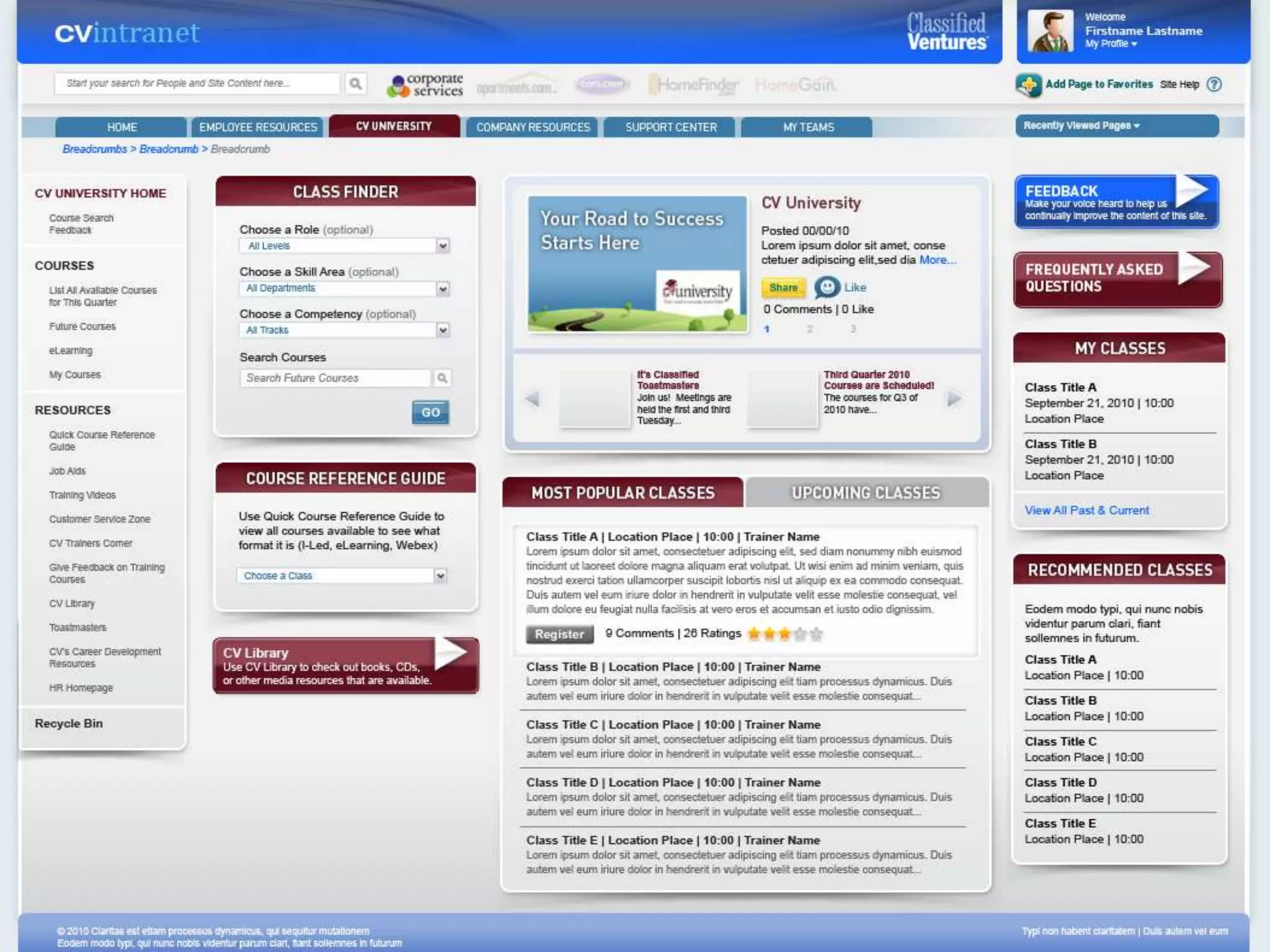
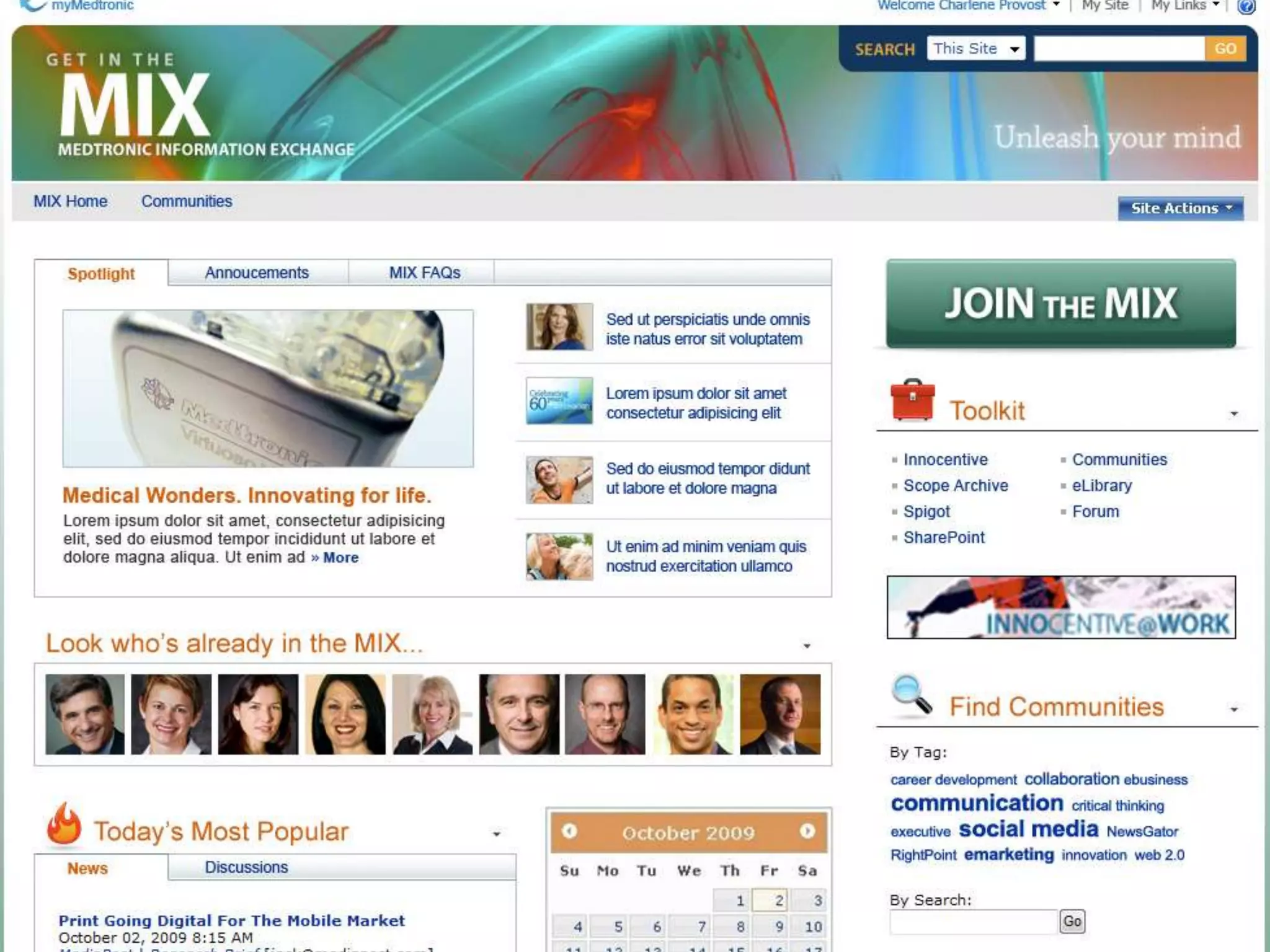
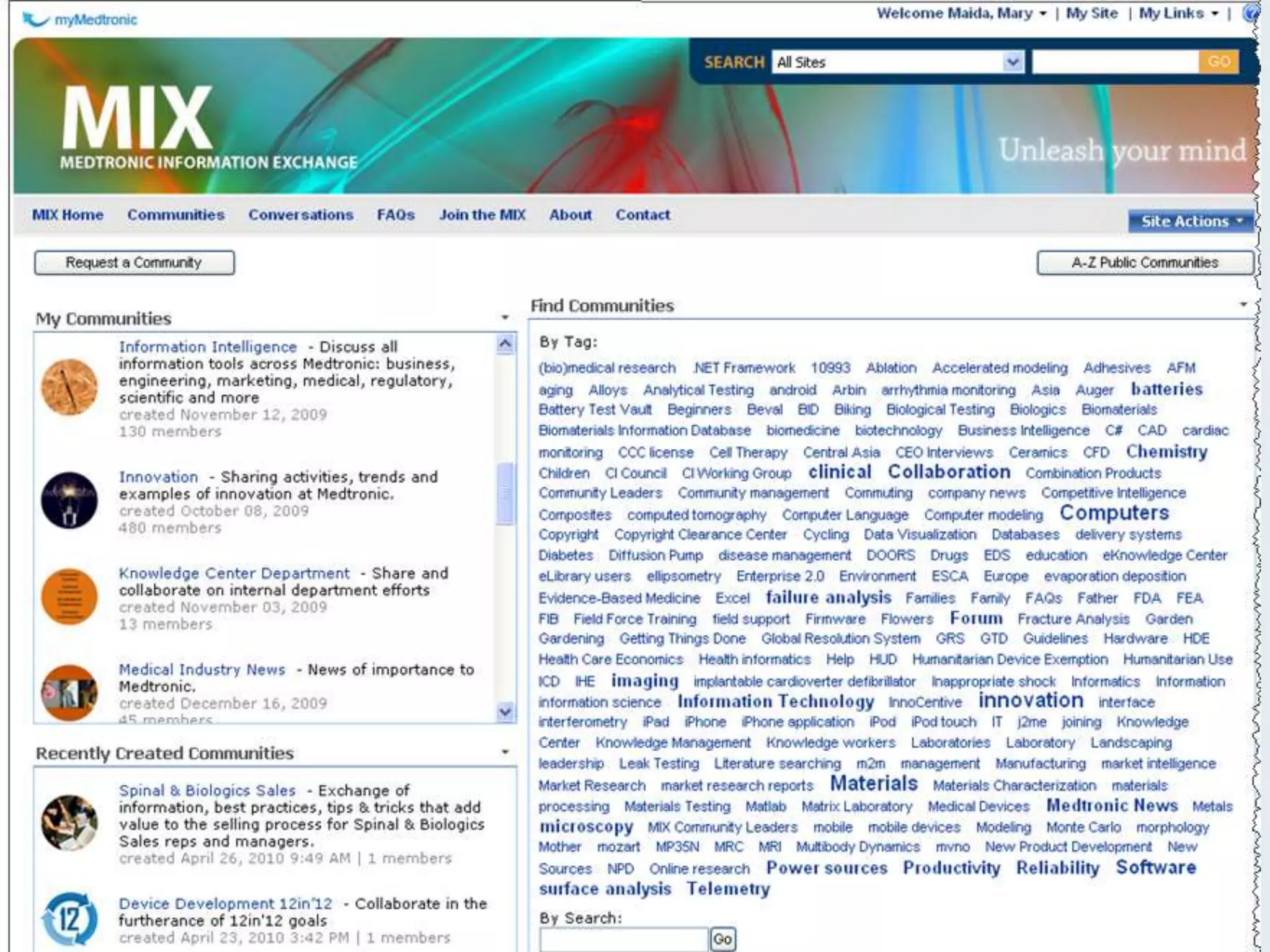
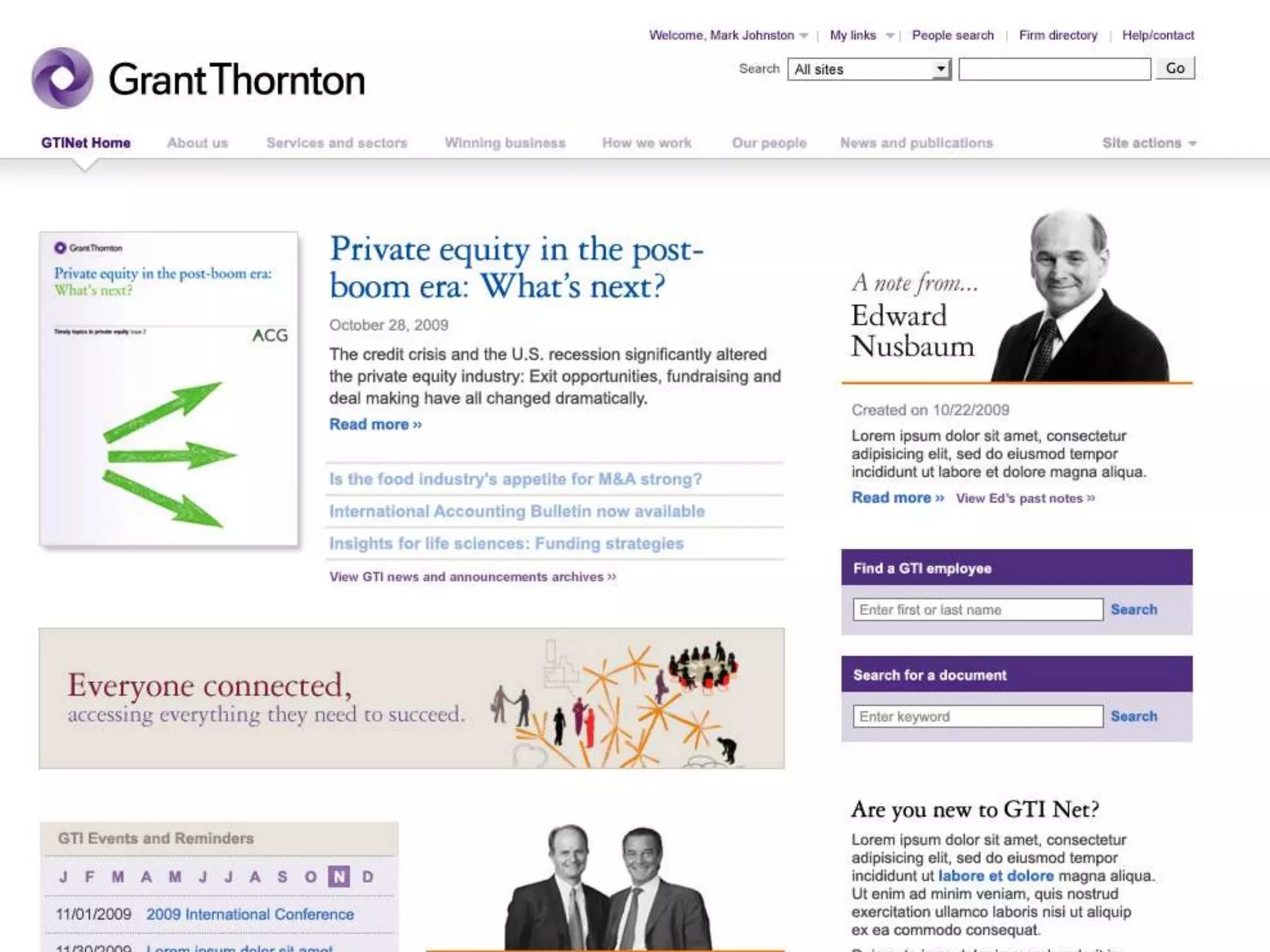

Social Computing & Collaboration Outside and Inside the 4 WallsSharePoint Fest Denver5.20.11
AgendaIntroductionPrimer: Social Networking Definitions & TrendsPart 1: SharePoint/Social Networking Outside My 4 WallsPart 2: SharePoint/Social Networking Inside My 4 WallsSummary: Review
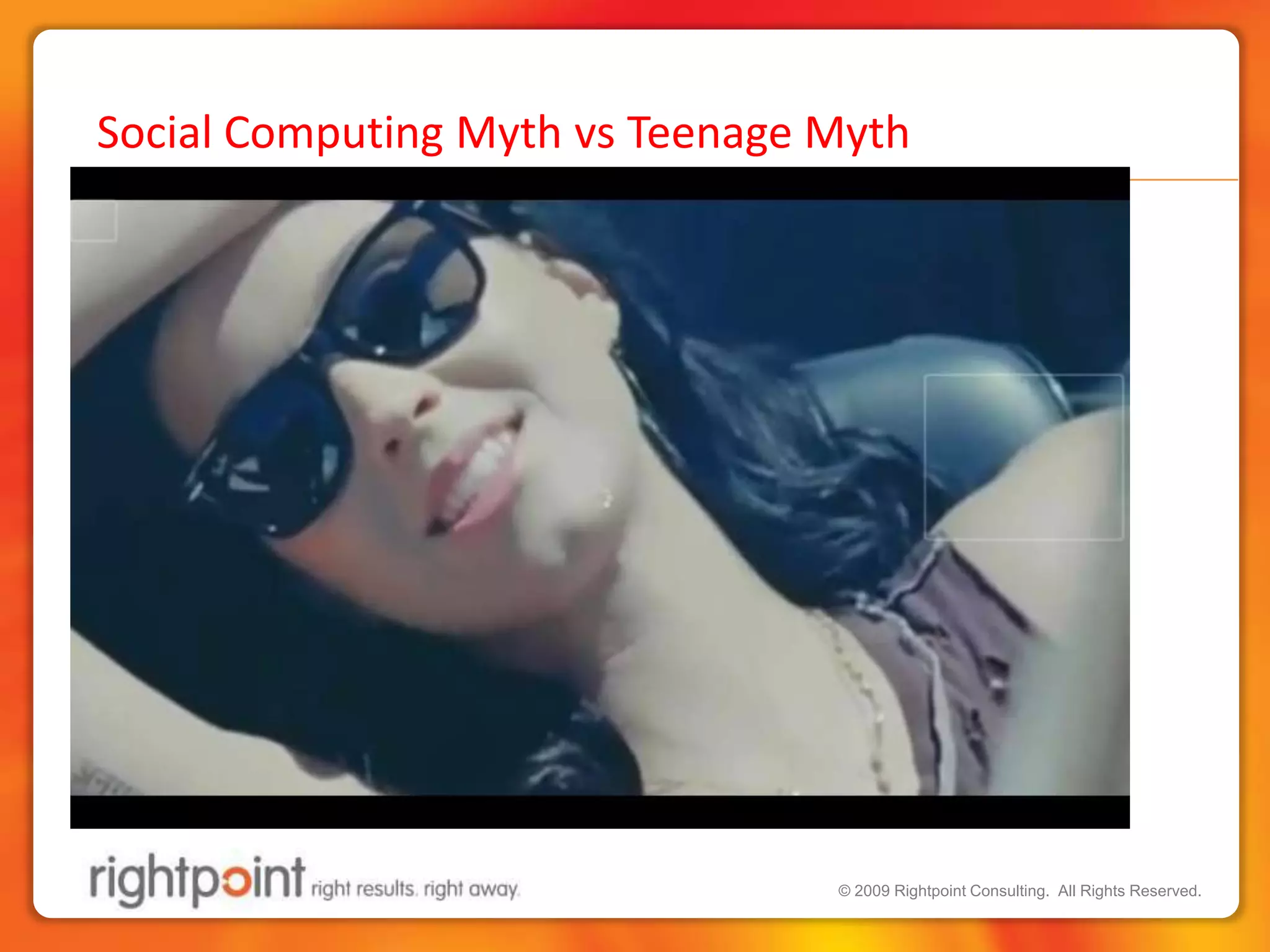
Social Computing Myth vs Teenage Myth
My BackgroundDirector of Social Computing at Rightpoint.Rightpoint is a Gold Certified and Managed Microsoft Partner with a specialization in MOSS 2007, Collaboration & Social Networking.Regular speaker and evangelist on the value of Social Networking, Social Media and Social ComputingTwitter, Facebook and LinkedIn Expert.Tweet this: “Listening to @jwillie rant and rave about SharePoint, Social Computing and Collaboration at #SharePointFest”.
Social NetworkingDefinitions & Trends
Definition of Enterprise 2.0 	“Enterprise 2.0 is the strategic integration of Web 2.0 collaboration technologies into an enterprise's intranet, extranet and business processes.”
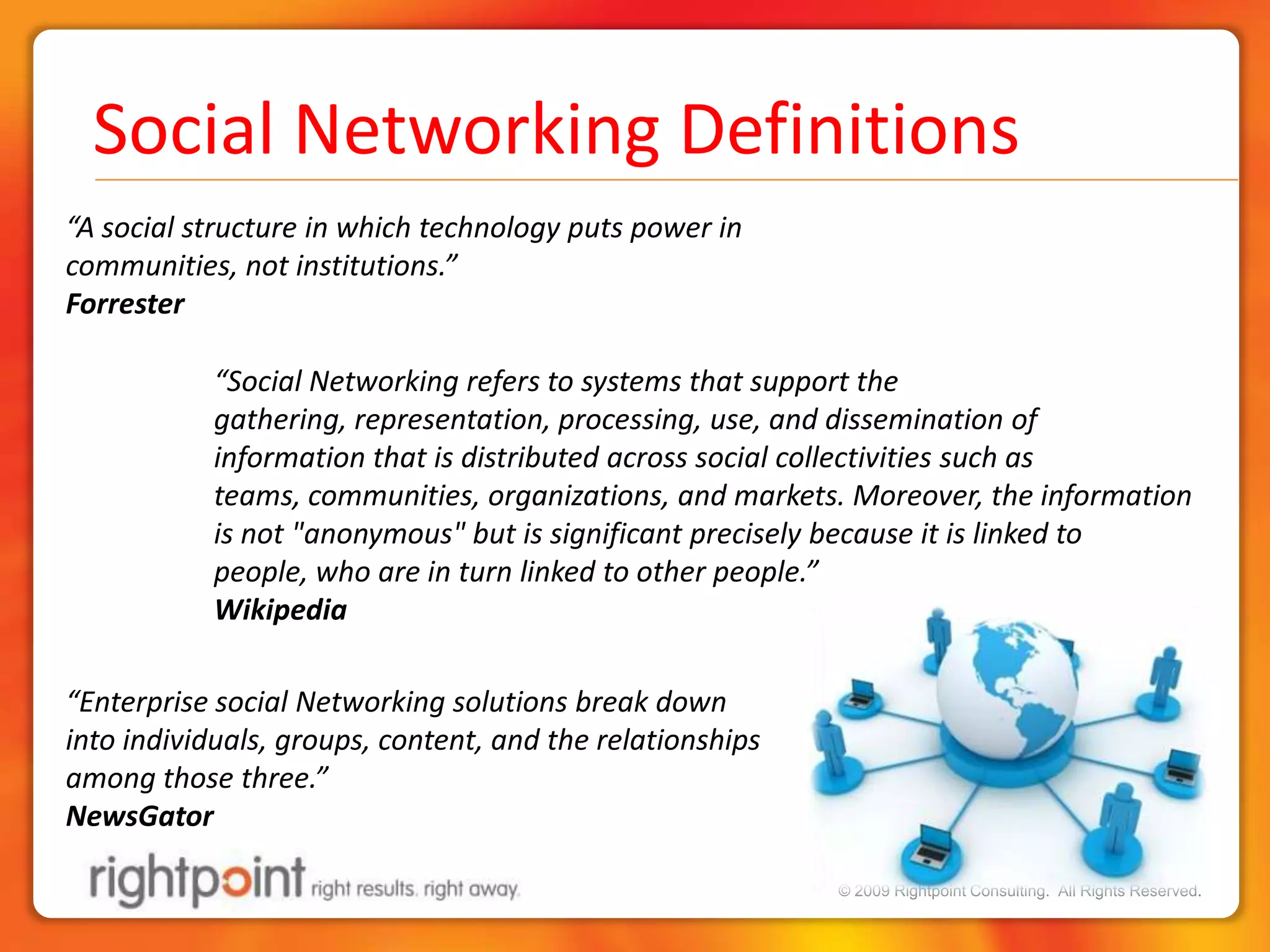
Social Networking Definitions“A social structure in which technology puts power in communities, not institutions.”Forrester“Social Networking refers to systems that support the gathering, representation, processing, use, and dissemination of information that is distributed across social collectivities such as teams, communities, organizations, and markets. Moreover, the information is not "anonymous" but is significant precisely because it is linked to people, who are in turn linked to other people.” Wikipedia“Enterprise social Networking solutions break down into individuals, groups, content, and the relationships among those three.”NewsGator
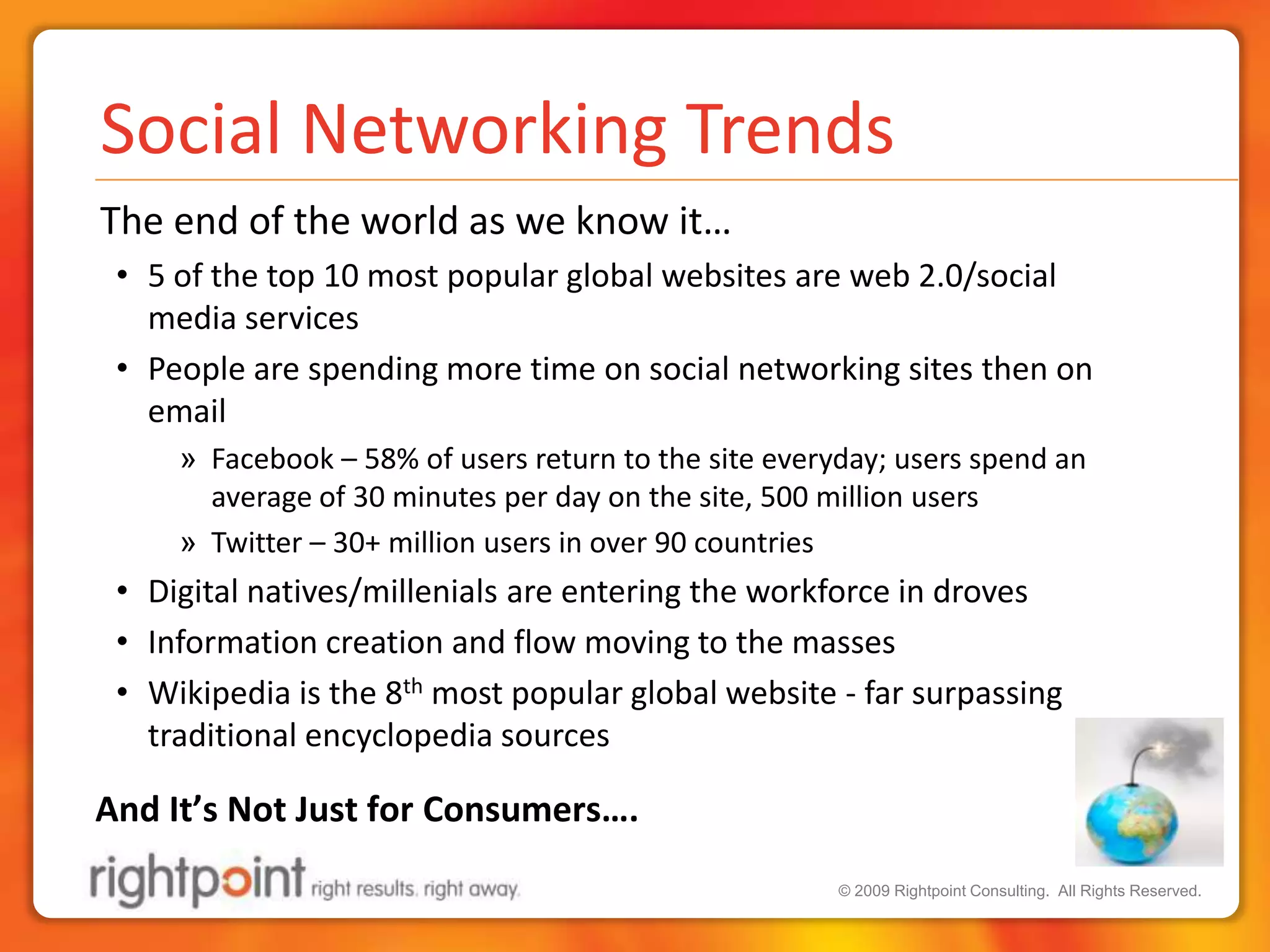
Social Networking Trends	The end of the world as we know it…5 of the top 10 most popular global websites are web 2.0/social media servicesPeople are spending more time on social networking sites then on emailFacebook – 58% of users return to the site everyday; users spend an average of 30 minutes per day on the site, 500 million usersTwitter – 30+ million users in over 90 countriesDigital natives/millenials are entering the workforce in drovesInformation creation and flow moving to the massesWikipedia is the 8th most popular global website - far surpassing traditional encyclopedia sourcesAnd It’s Not Just for Consumers….
Social Media Revolution
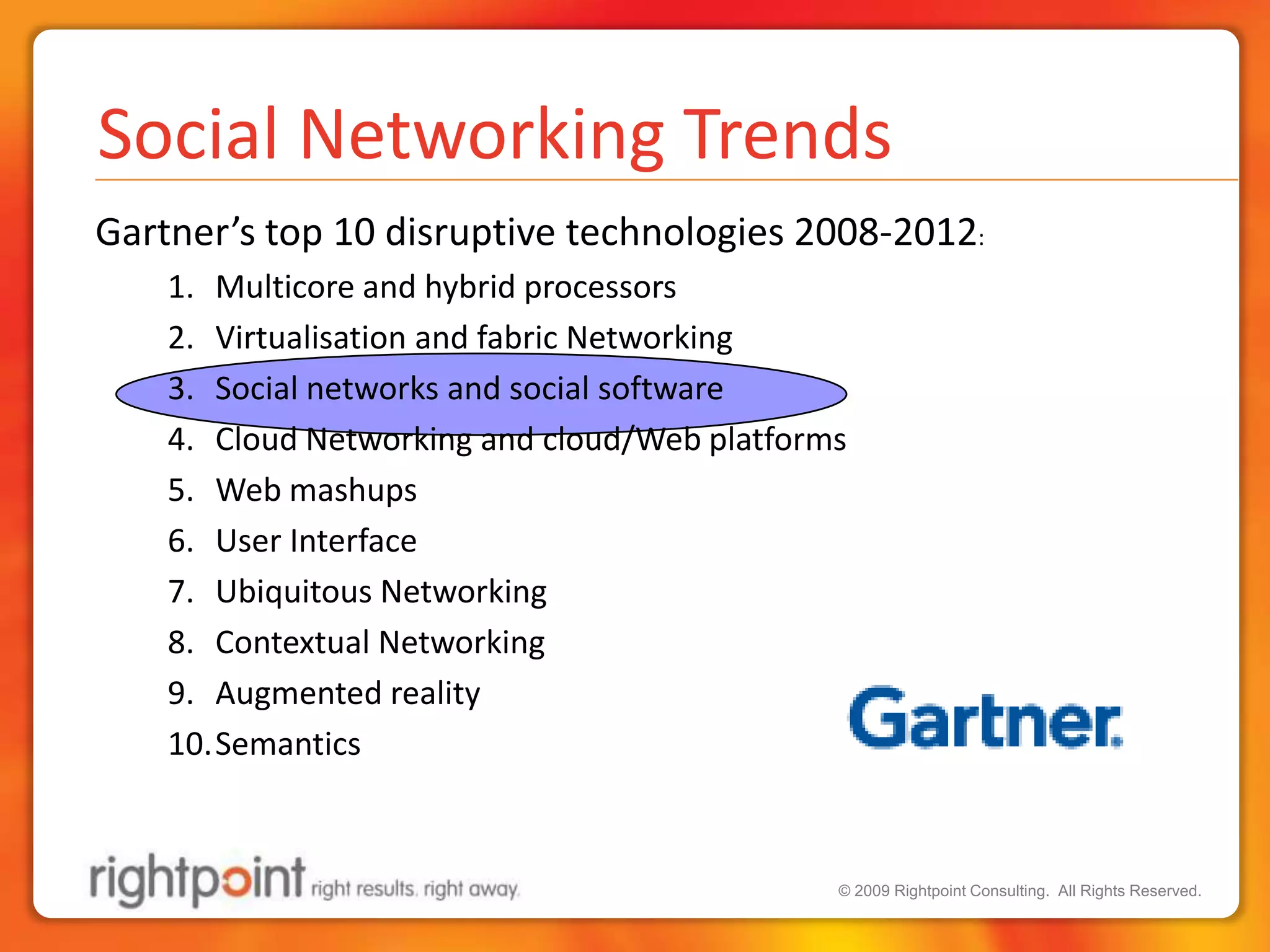
Social Networking TrendsGartner’s top 10 disruptive technologies 2008-2012:Multicore and hybrid processors Virtualisation and fabric Networking Social networks and social software Cloud Networking and cloud/Web platforms Web mashups User Interface Ubiquitous Networking Contextual Networking Augmented reality Semantics
Part I:Social Networking“Outside” Your Four Walls
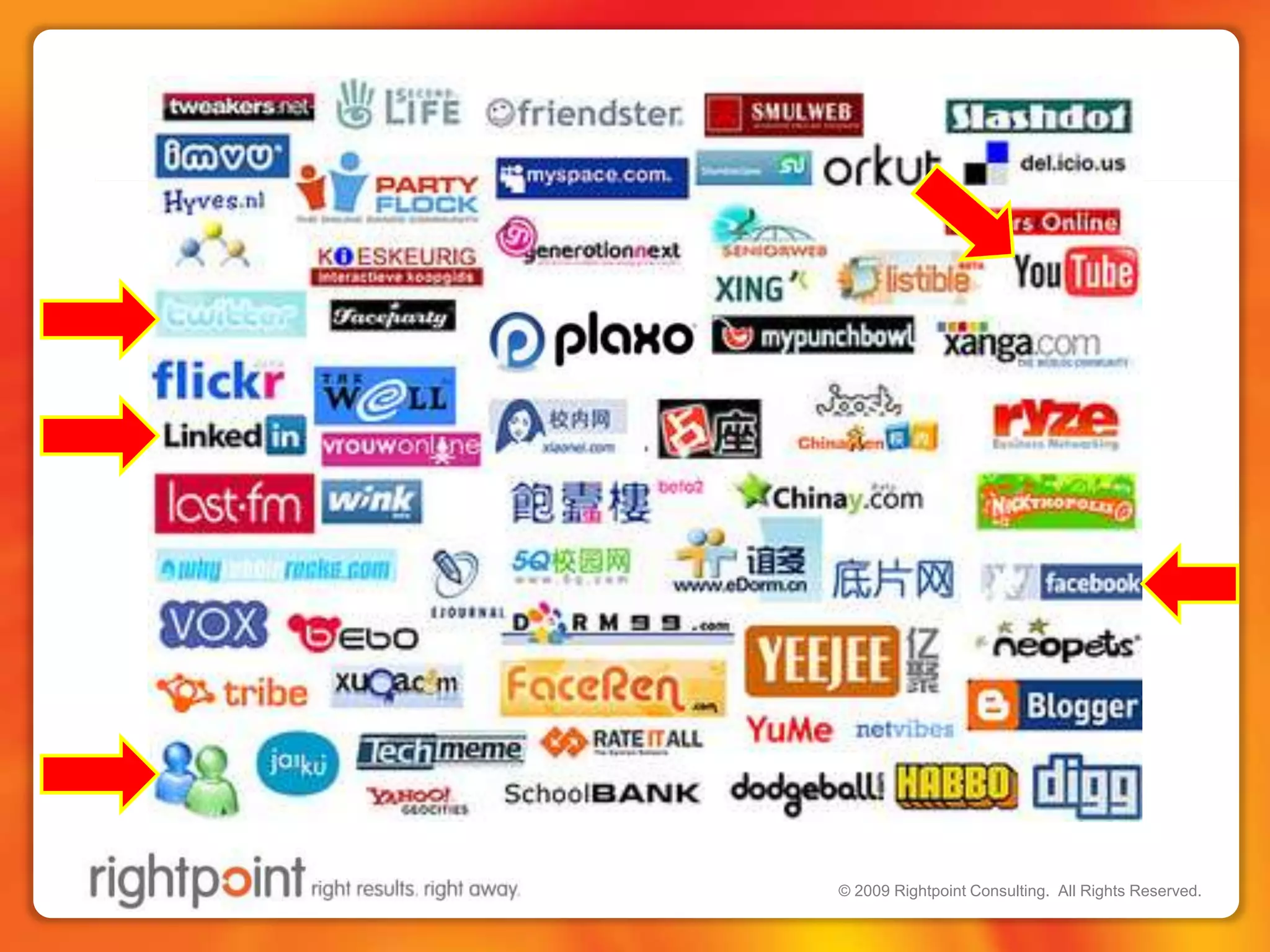
What is it?Collaboration & Social Computing In Our Life.
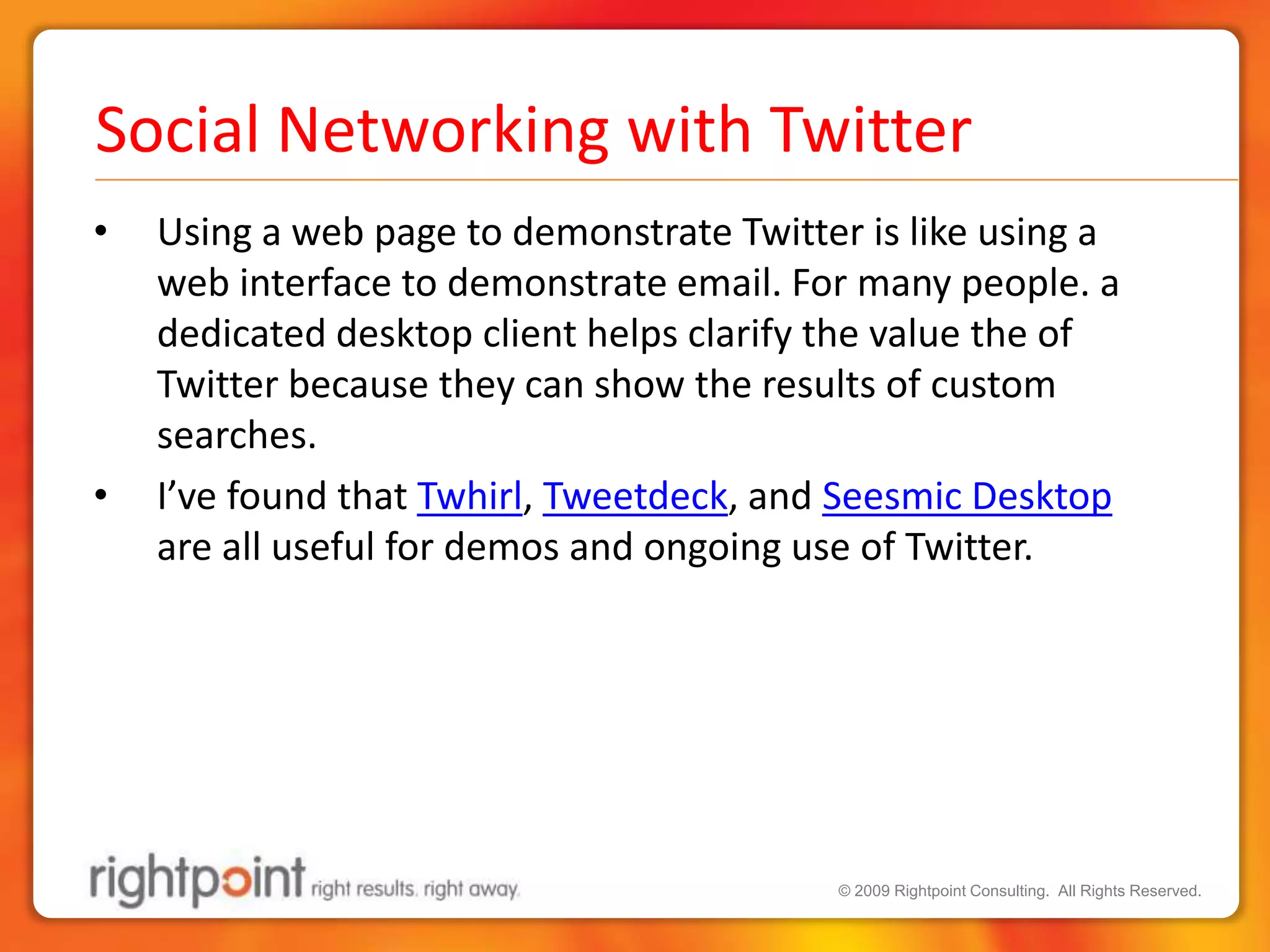
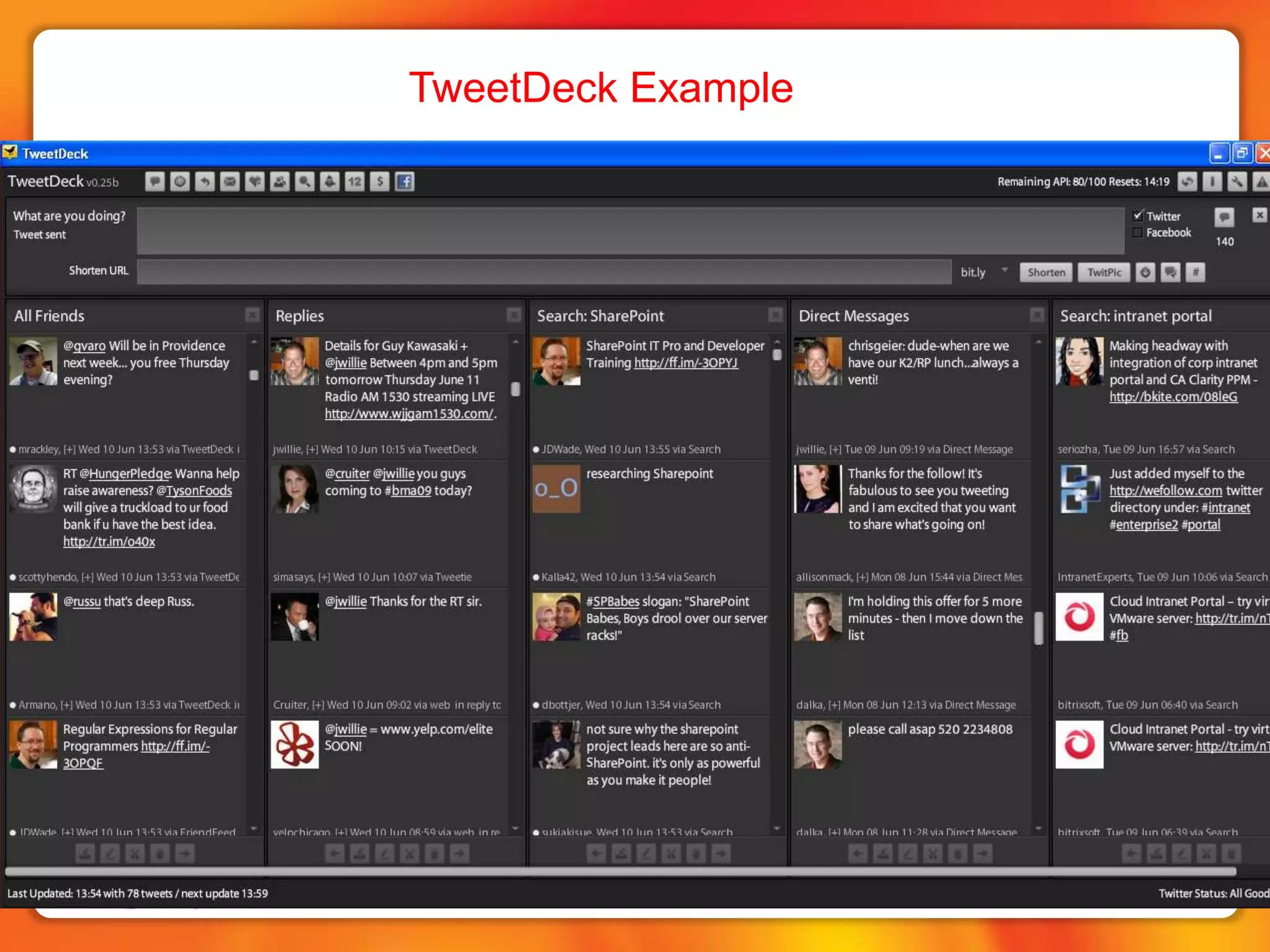
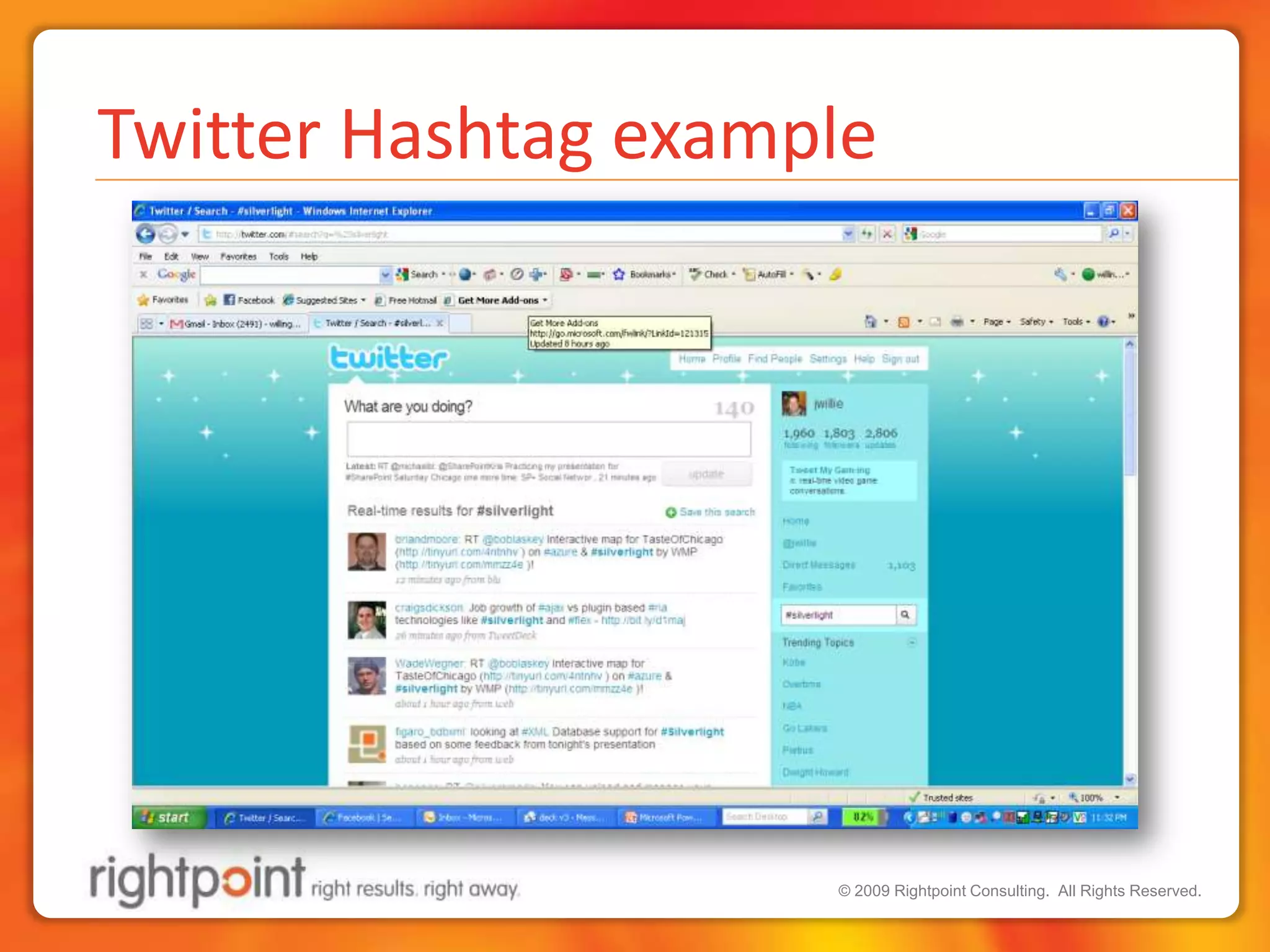
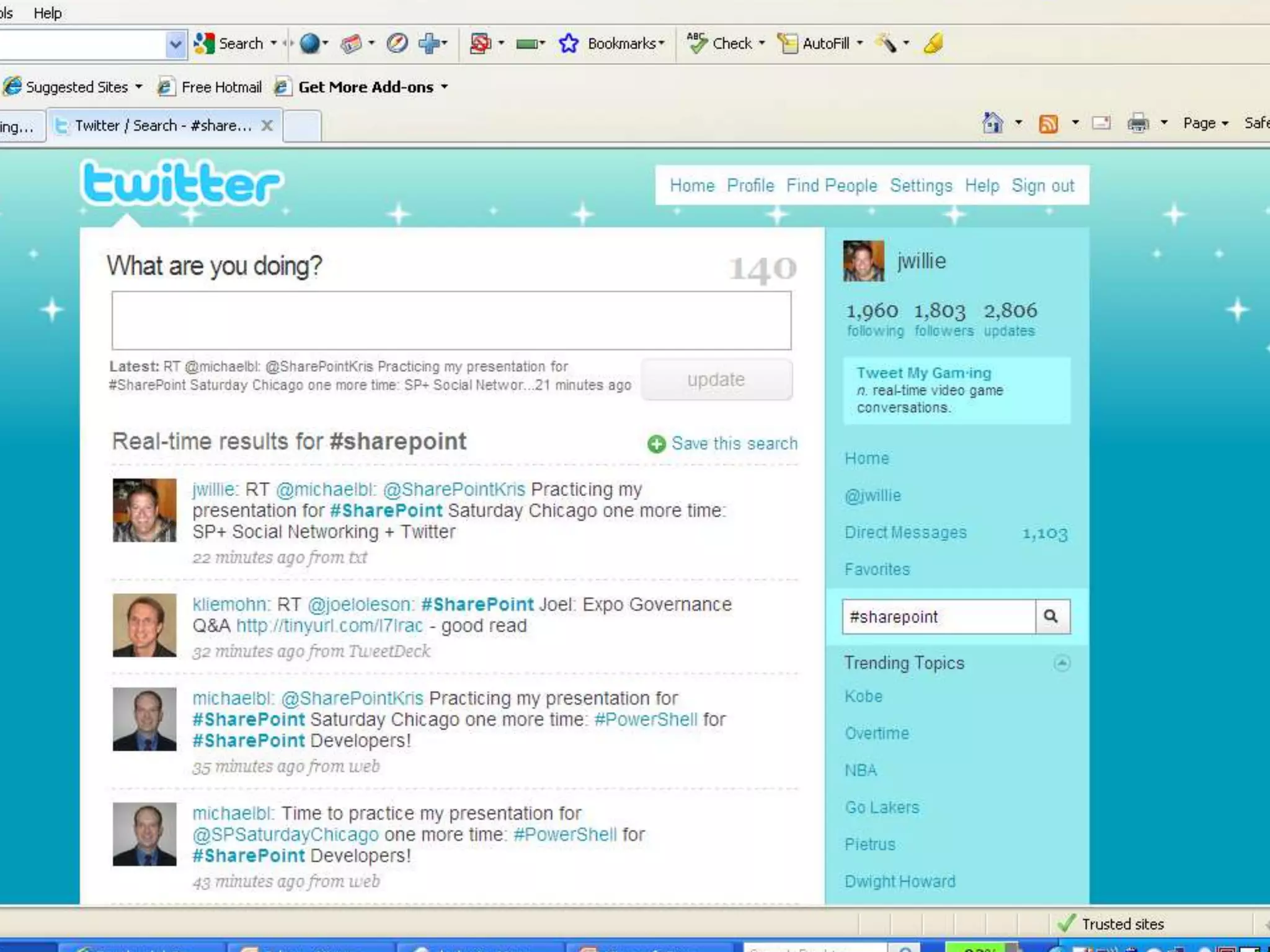
Social Networking with TwitterUsing a web page to demonstrate Twitter is like using a web interface to demonstrate email. For many people. a dedicated desktop client helps clarify the value the of Twitter because they can show the results of custom searches.I’ve found that Twhirl, Tweetdeck, and Seesmic Desktop are all useful for demos and ongoing use of Twitter.
TweetDeck Example
Twitter Hashtag example
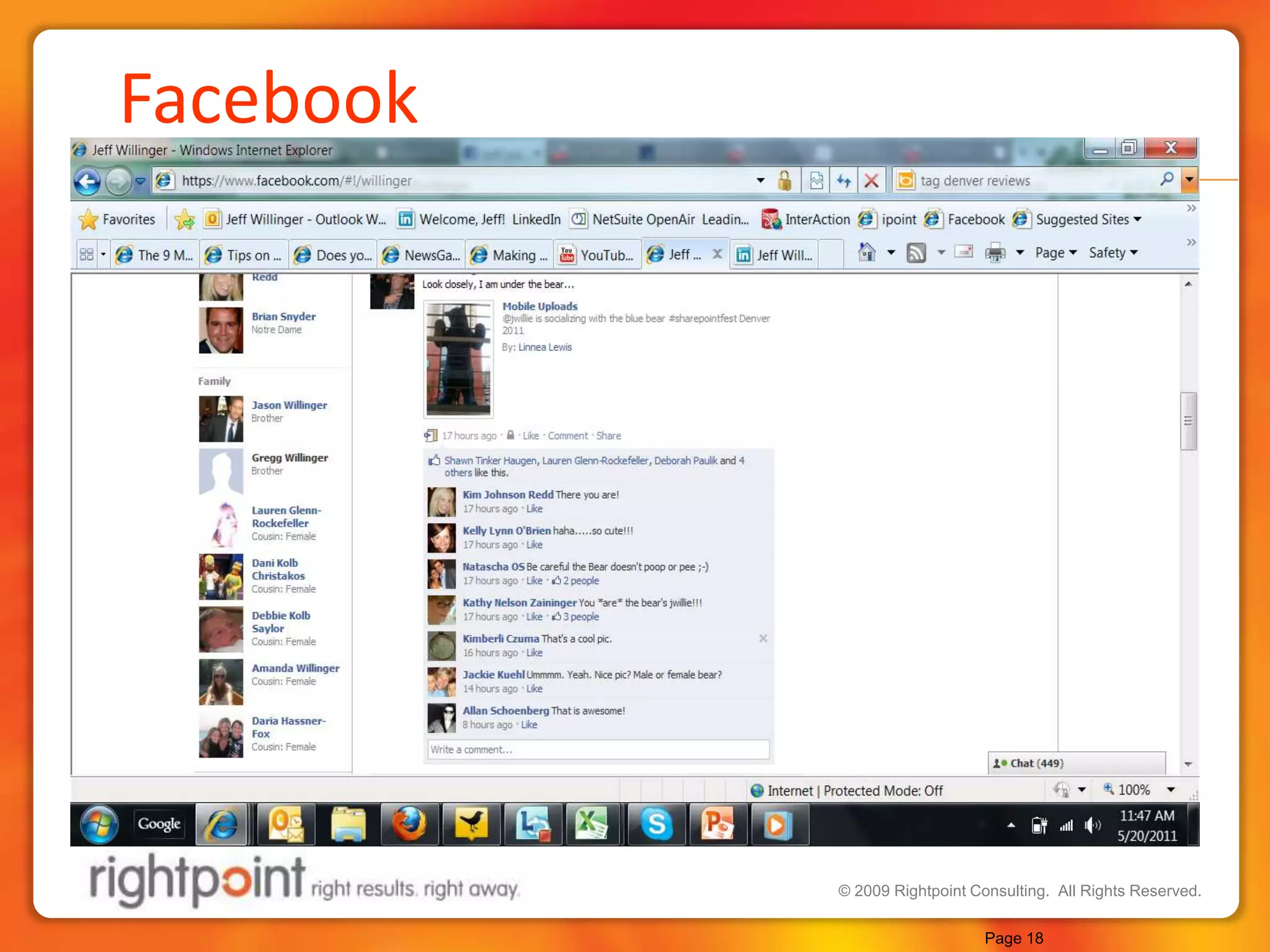
Facebook	*Facebook is built for better communication within Facebook. It’s easy to stay in contact with your network without jumping to outside email apps* Directly email anyone, even if you aren’t connected to them* Thousands of customizable apps, allowing recommendations, 2nd degree of separation, CRM like features, business cardsPage 17
Facebook	*Facebook is built for better communication within Facebook. It’s easy to stay in contact with your network without jumping to outside email apps* Directly email anyone, even if you aren’t connected to them* Thousands of customizable apps, allowing recommendations, 2nd degree of separation, CRM like features, business cardsPage 18
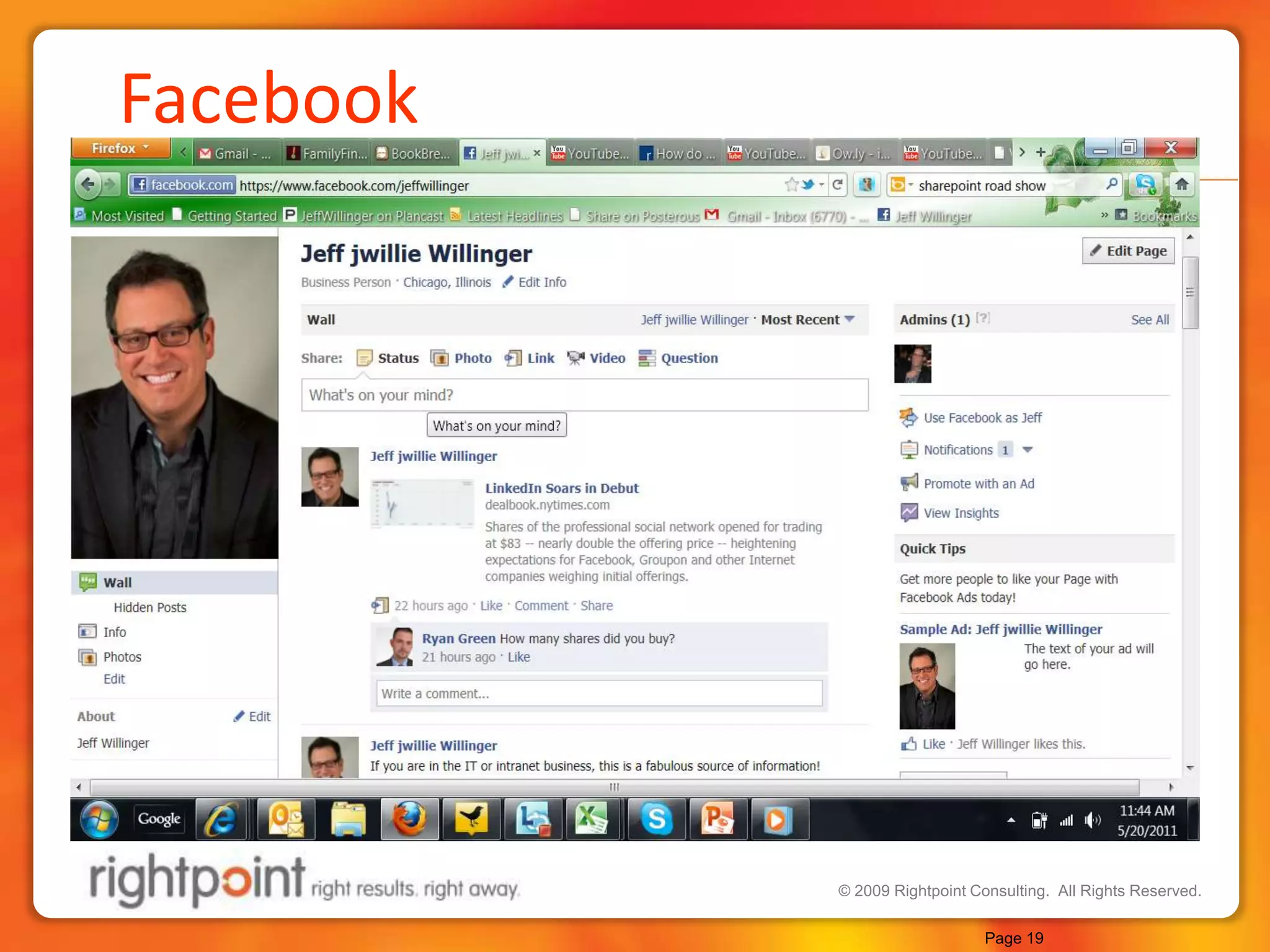
Facebook	*Facebook is excellent in blog integration, photo sharing and tagging, video sharing, and groups. Facebook integrates well with Flickr & YouTube	*Viral messaging features, which is great for spreading the word *500 million members and growing…fast. It’s 5x the size of LinkedINPage 19
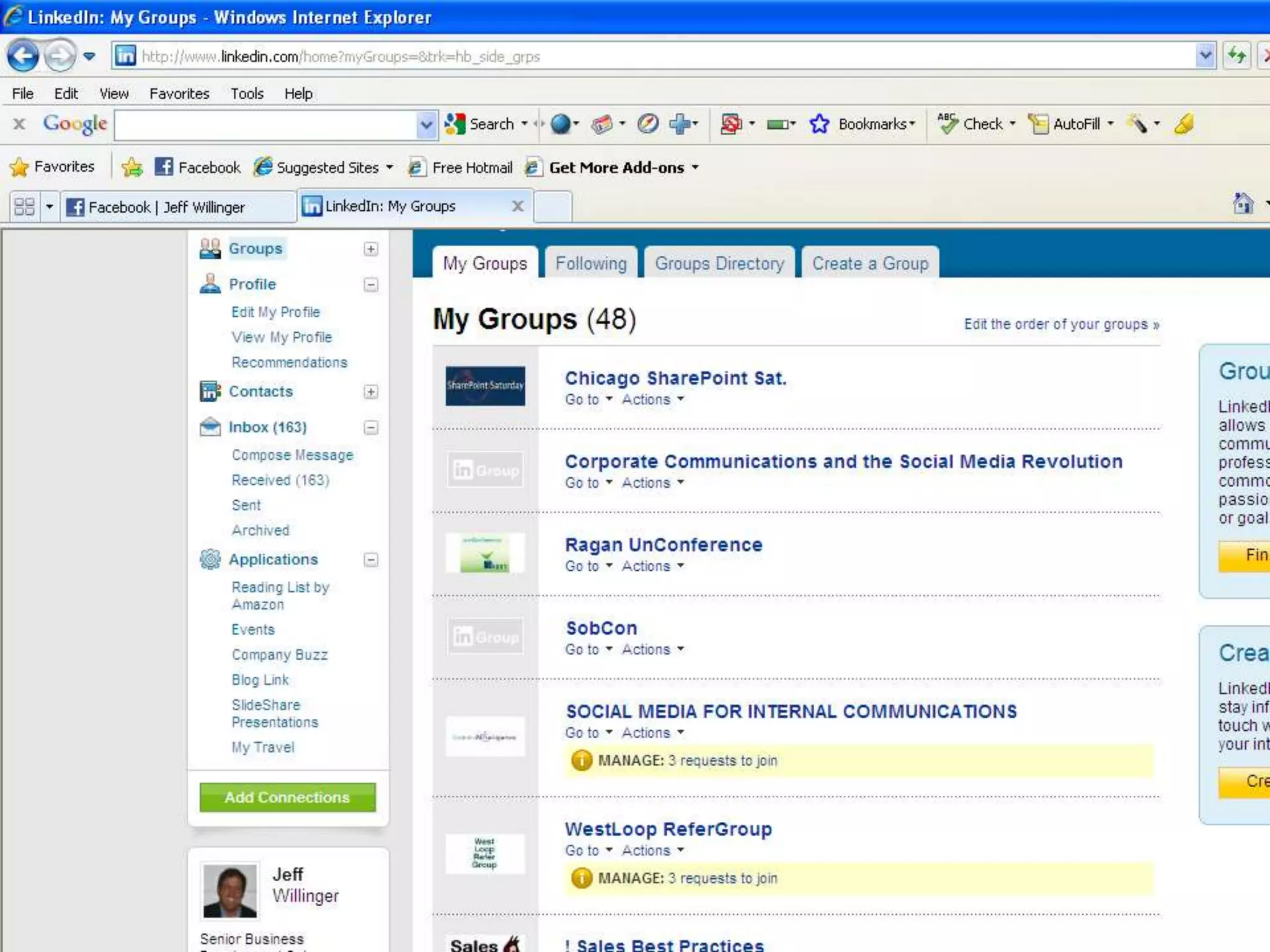
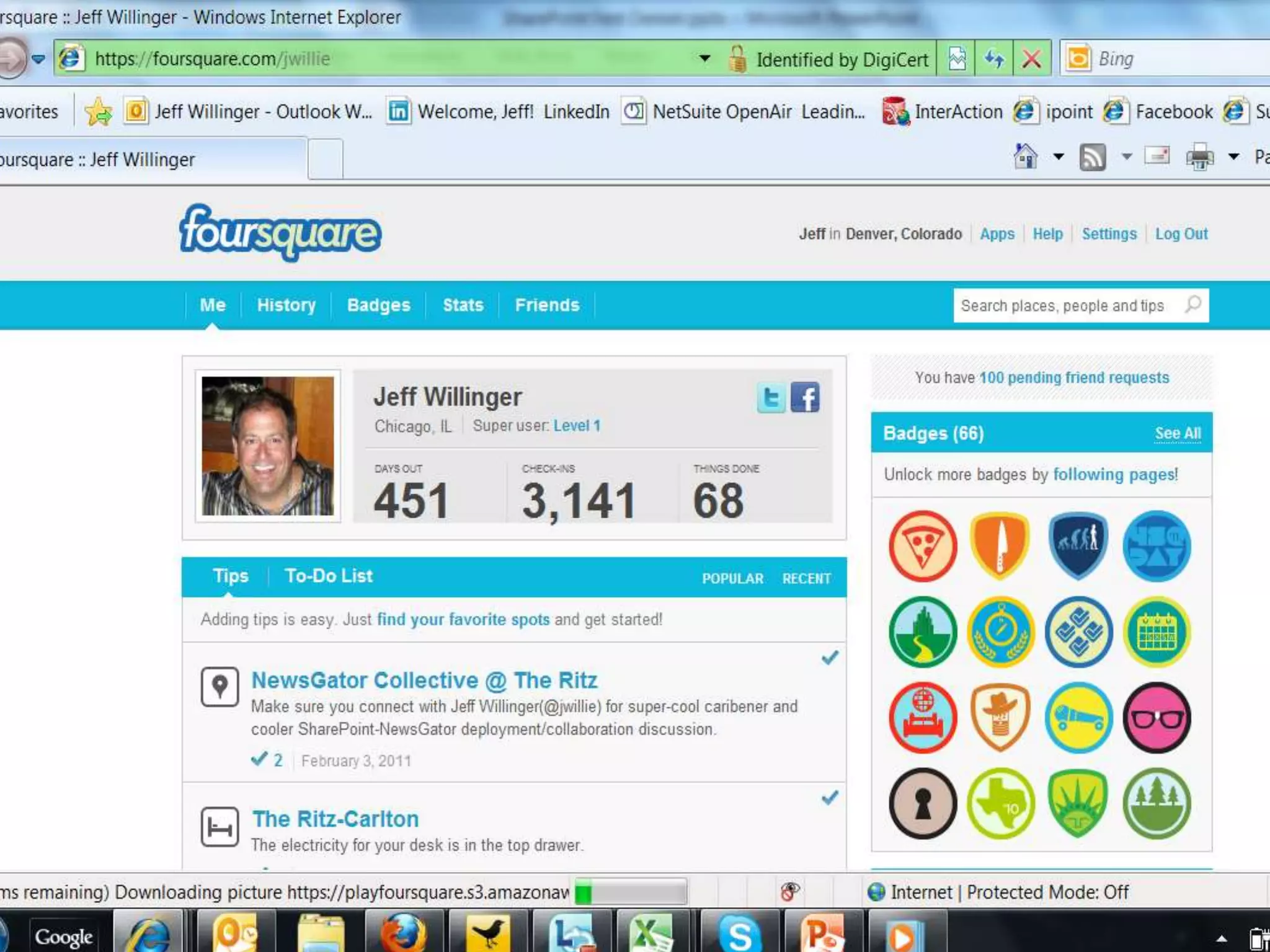
Linked INToolbarConnecting:  How to connectHomepageStatus updateGroupsPage 20
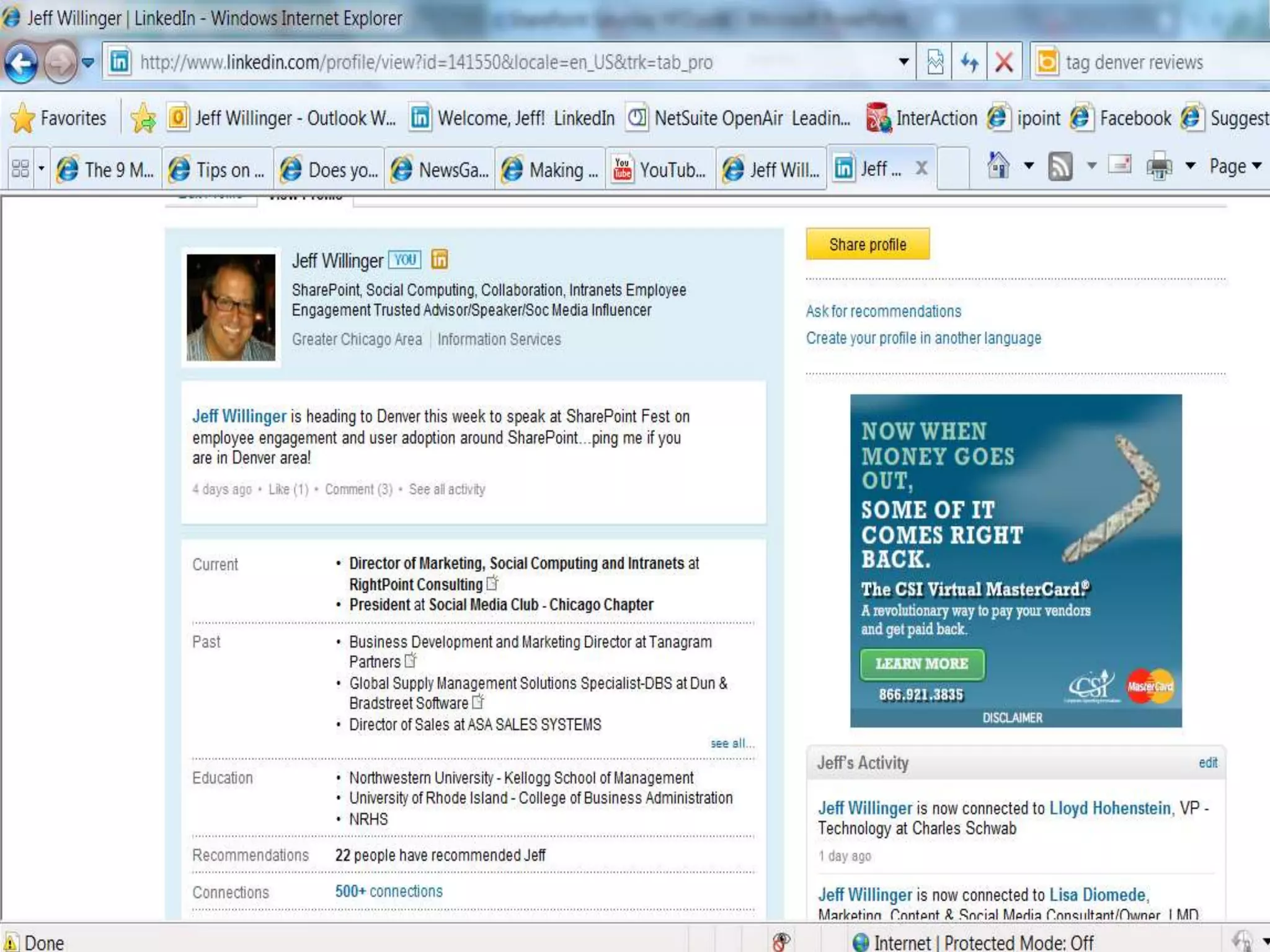
Linked INToolbarConnecting:  How to connectHomepageStatus updateGroupsPage 21
Page 22
Page 23
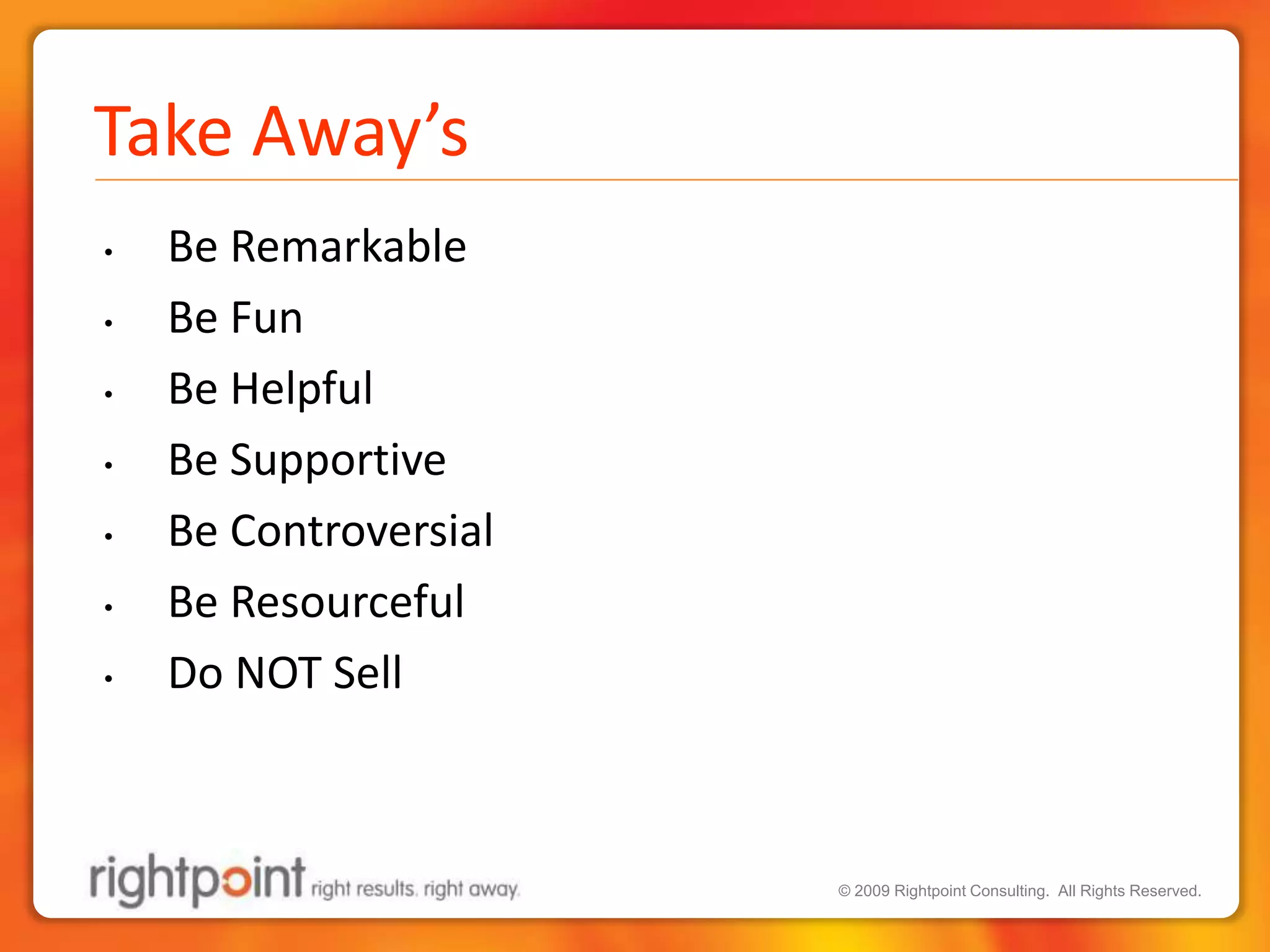
Take Away’sBe RemarkableBe FunBe HelpfulBe SupportiveBe ControversialBe ResourcefulDo NOT Sell
Part II:Social Networking“Inside” Your Four Walls
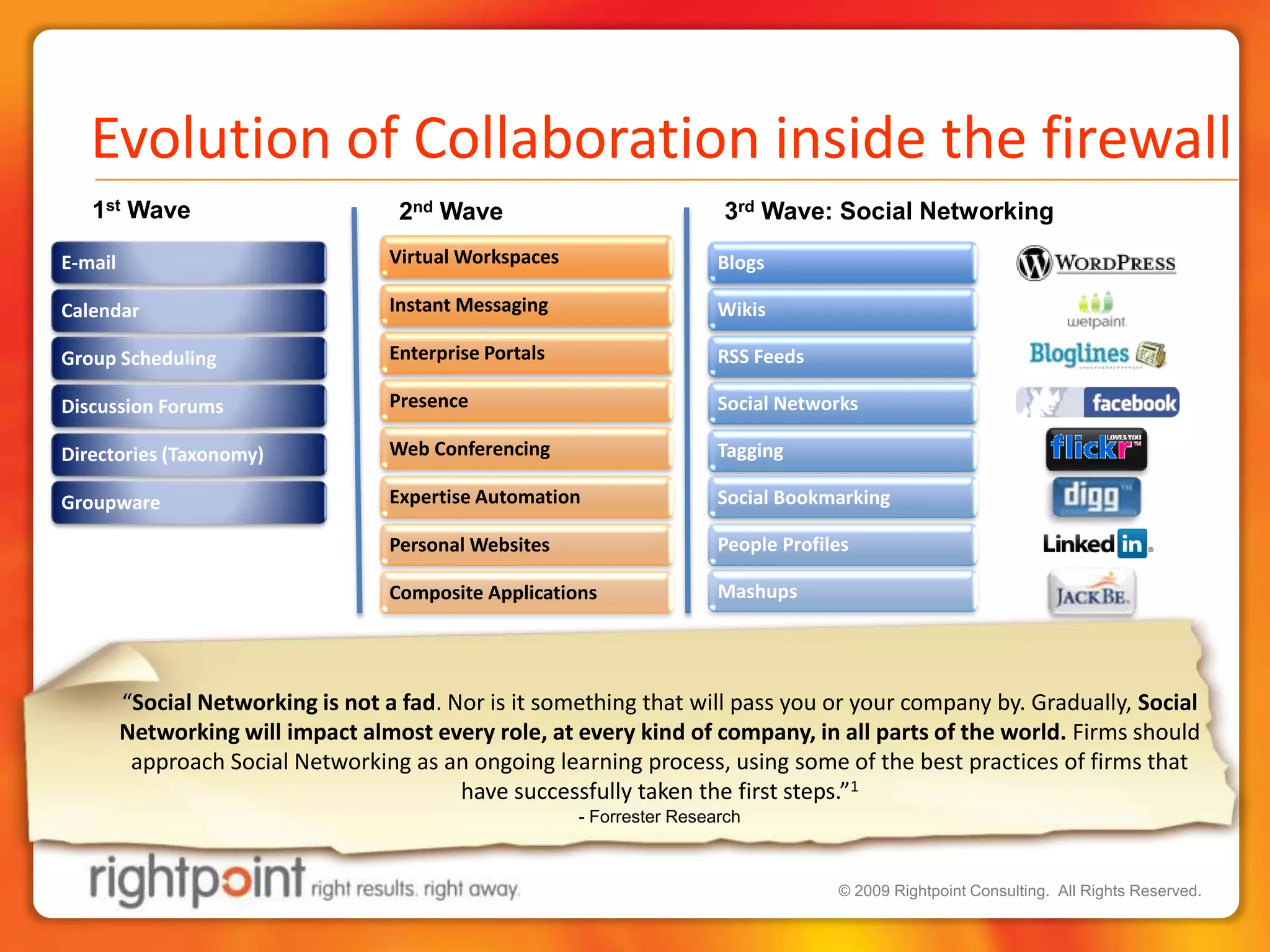
E-mailVirtual WorkspacesBlogsCalendarInstant MessagingWikisEvolutionof Collaboration inside the firewallGroup SchedulingEnterprise PortalsRSS FeedsDiscussion ForumsPresenceSocial Networks1st Wave3rd Wave: Social Networking2nd WaveDirectories (Taxonomy)Web ConferencingTaggingGroupwareExpertise AutomationSocial BookmarkingPersonal WebsitesPeople ProfilesMashupsComposite Applications“Social Networking is not a fad. Nor is it something that will pass you or your company by. Gradually, Social Networking will impact almost every role, at every kind of company, in all parts of the world. Firms should approach Social Networking as an ongoing learning process, using some of the best practices of firms that have successfully taken the first steps.”1- Forrester Research
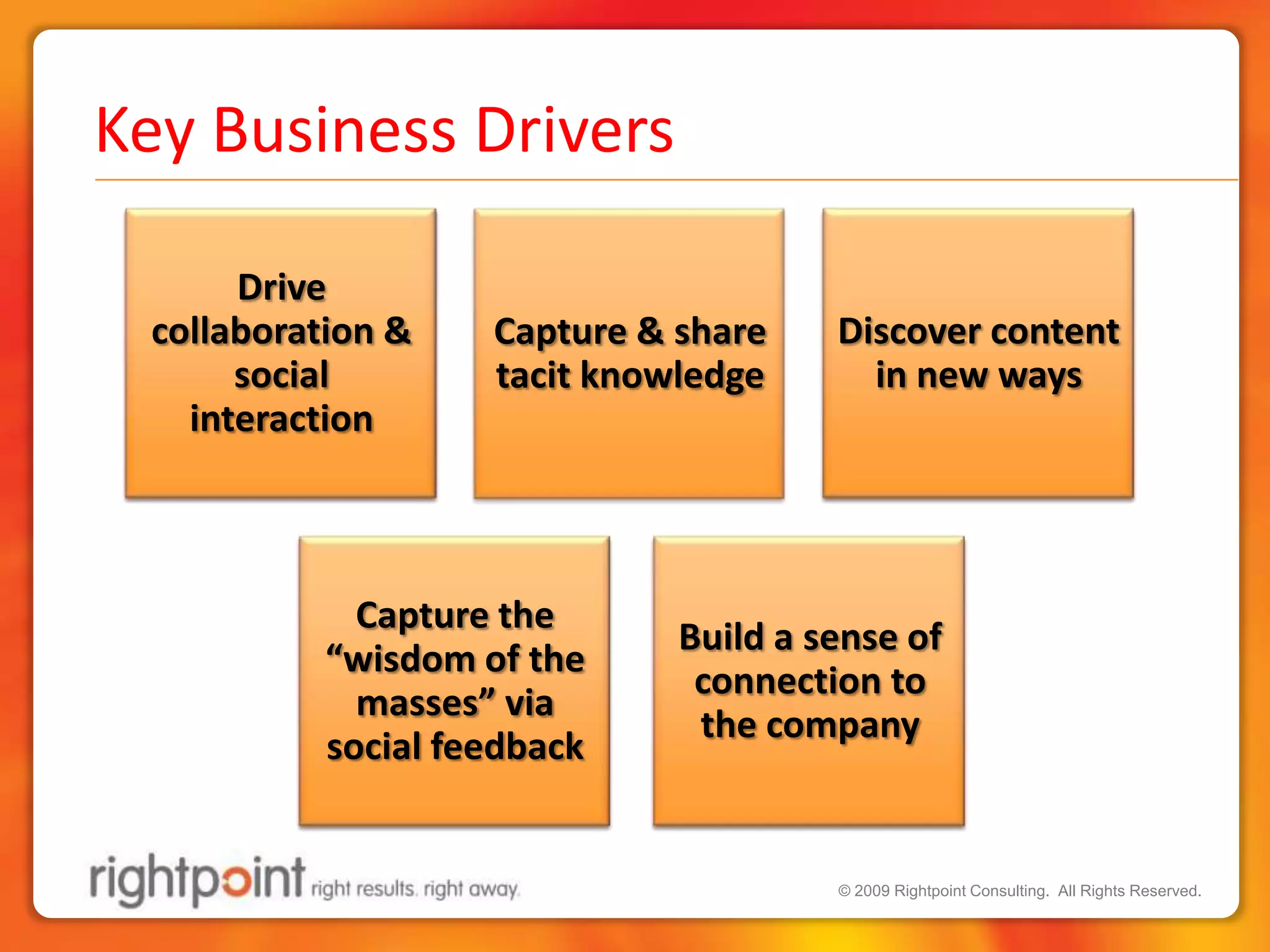
Key Business DriversDrive collaboration & social interactionDiscover content in new waysCapture & share tacit knowledgeCapture the “wisdom of the masses” via social feedbackBuild a sense of connection to the company
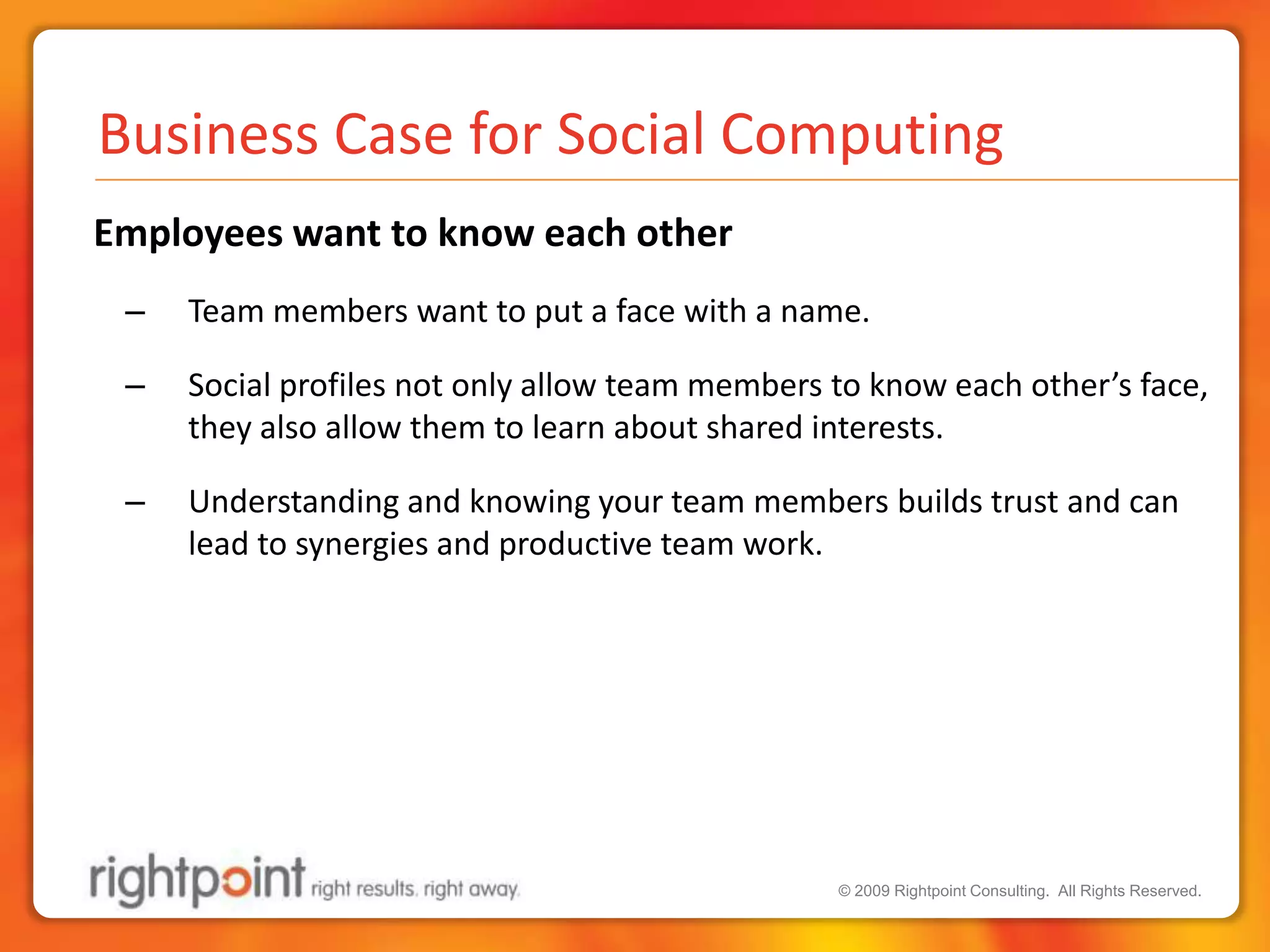
Business Case for Social Computing Employees want to know each otherTeam members want to put a face with a name.  Social profiles not only allow team members to know each other’s face, they also allow them to learn about shared interests.Understanding and knowing your team members builds trust and can lead to synergies and productive team work.
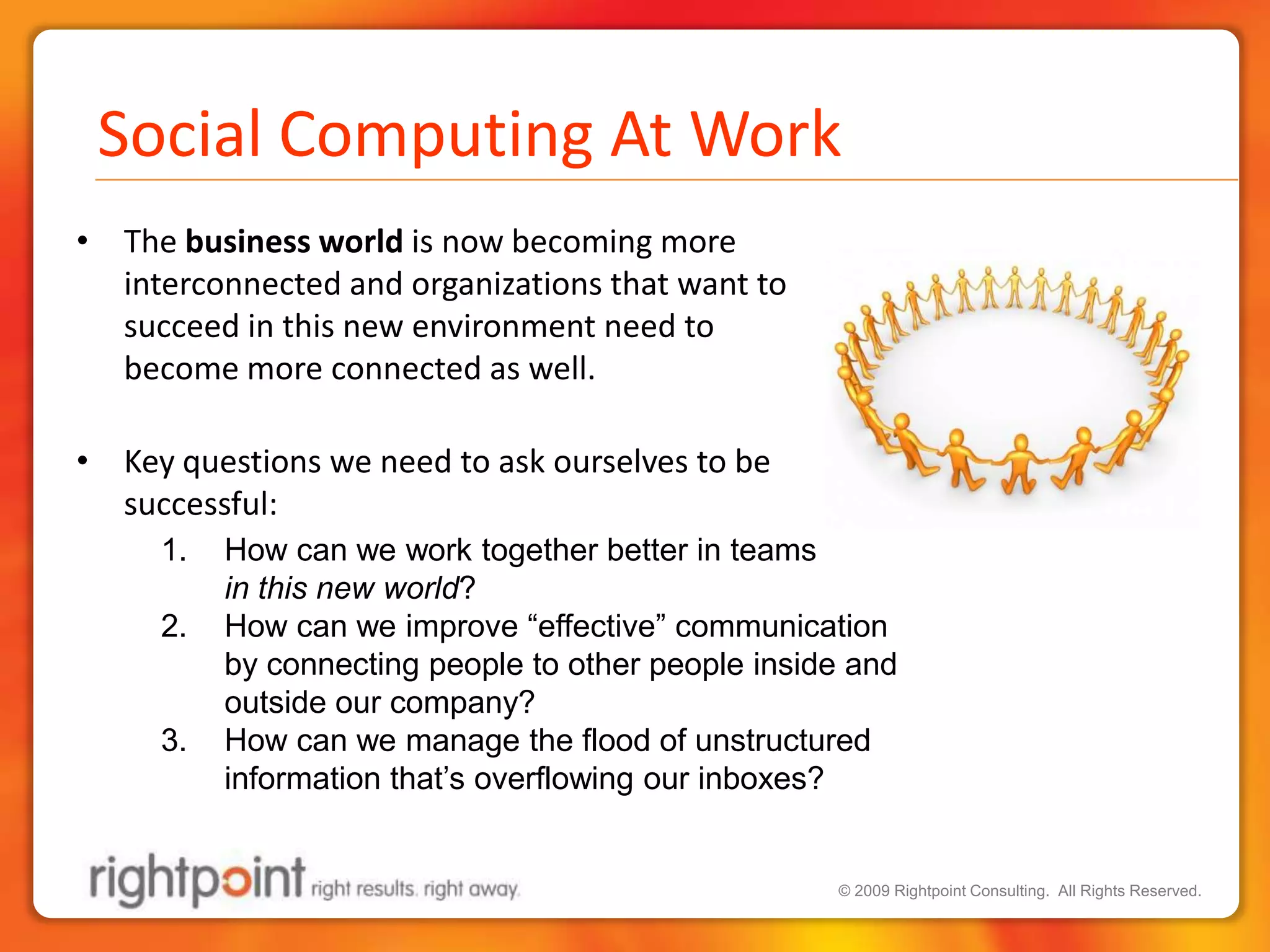
The business world is now becoming more interconnected and organizations that want to succeed in this new environment need to become more connected as well. Key questions we need to ask ourselves to be successful:How can we work together better in teams in this new world? How can we improve “effective” communication by connecting people to other people inside and outside our company?How can we manage the flood of unstructured information that’s overflowing our inboxes?Social Computing At Work
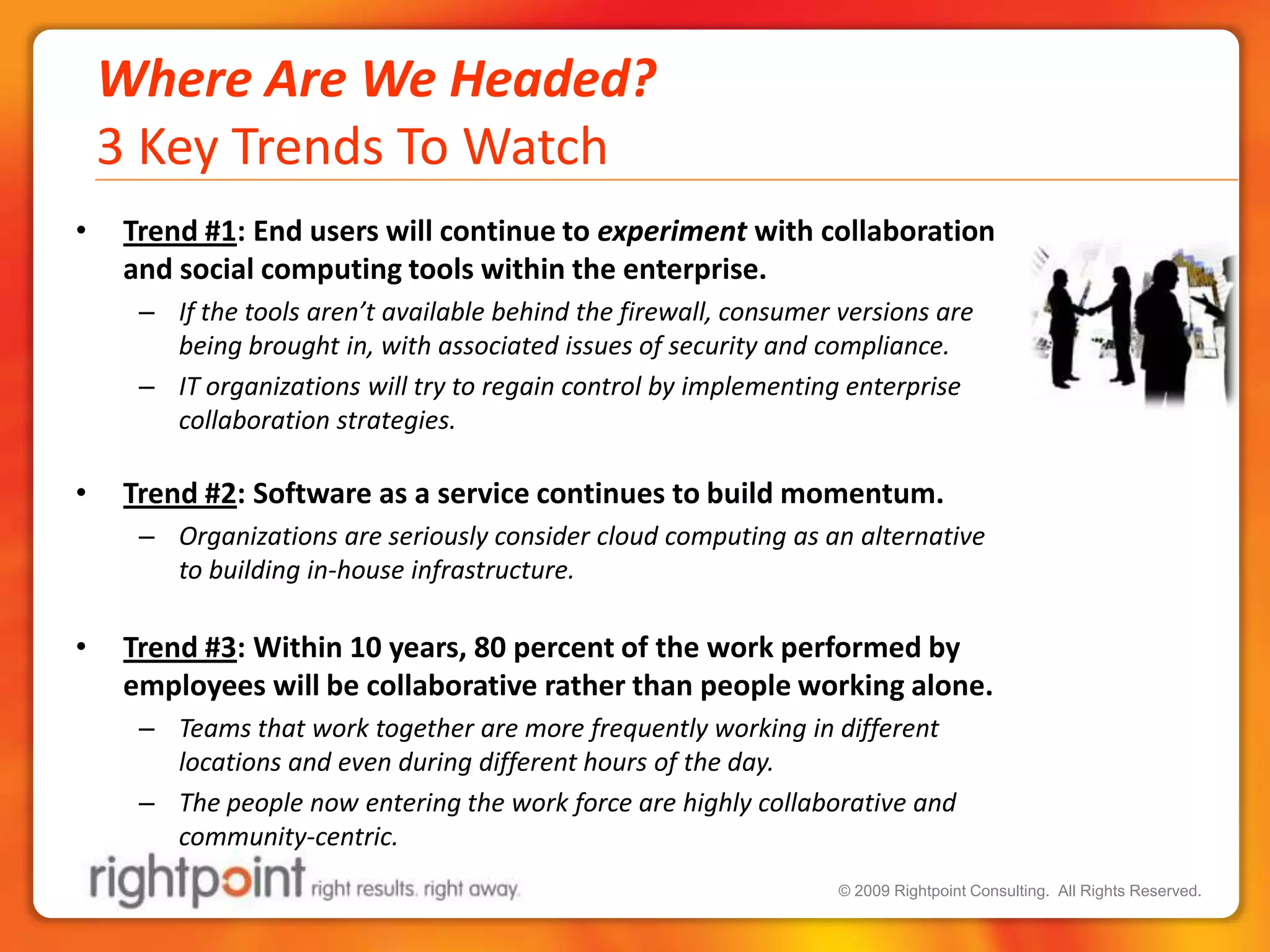
Where Are We Headed?3 Key Trends To WatchTrend #1: End users will continue to experiment with collaboration and social computing tools within the enterprise.If the tools aren’t available behind the firewall, consumer versions are being brought in, with associated issues of security and compliance. IT organizations will try to regain control by implementing enterprise collaboration strategies.  Trend #2: Software as a service continues to build momentum.Organizations are seriously consider cloud computing as an alternative to building in-house infrastructure.Trend #3: Within 10 years, 80 percent of the work performed by employees will be collaborative rather than people working alone.Teams that work together are more frequently working in different locations and even during different hours of the day.The people now entering the work force are highly collaborative and community-centric.
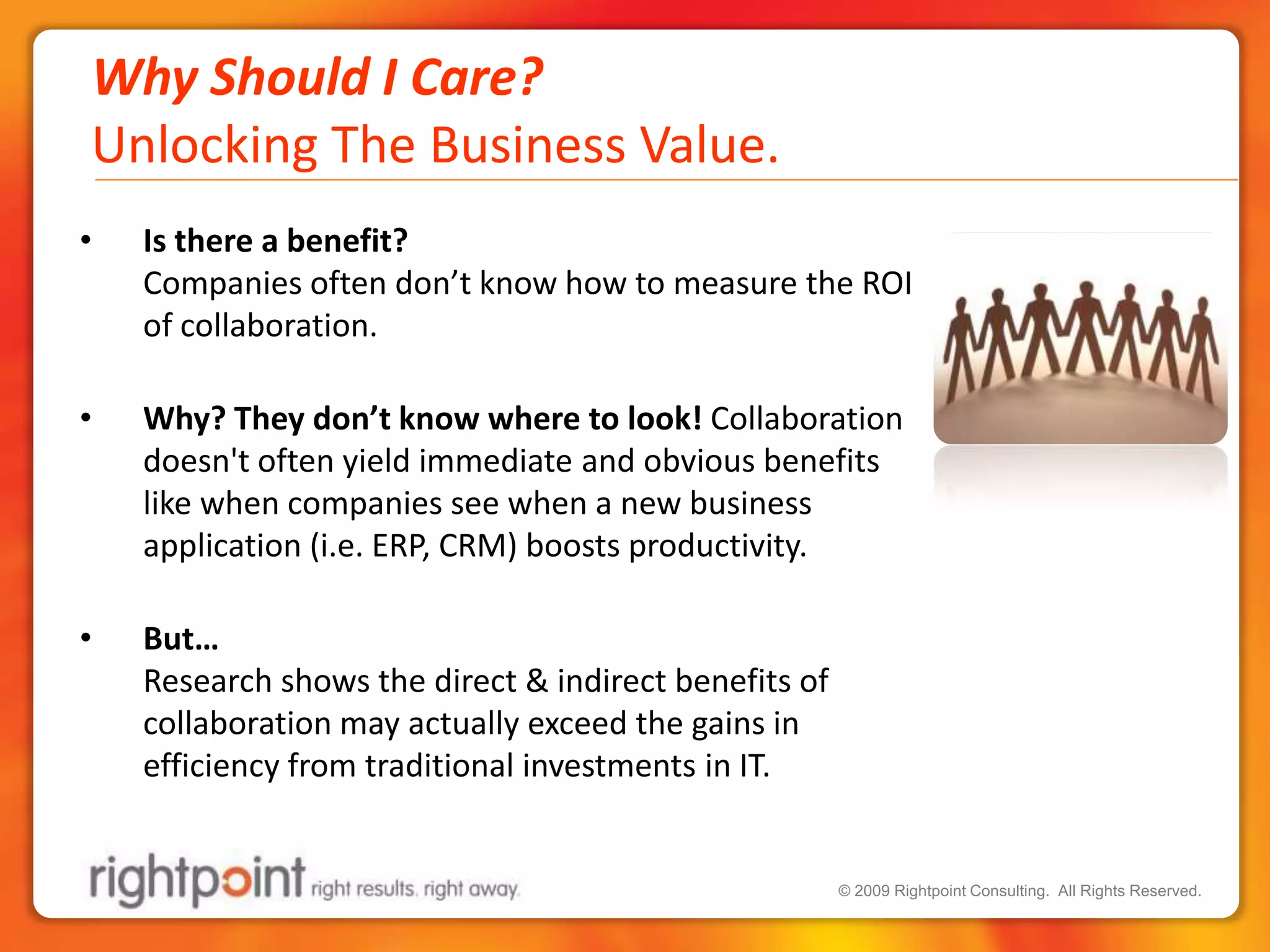
Why Should I Care?Unlocking The Business Value.Is there a benefit?  Companies often don’t know how to measure the ROI of collaboration. Why? They don’t know where to look! Collaboration doesn't often yield immediate and obvious benefits like when companies see when a new business application (i.e. ERP, CRM) boosts productivity.  But…Research shows the direct & indirect benefits of collaboration may actually exceed the gains in efficiency from traditional investments in IT.
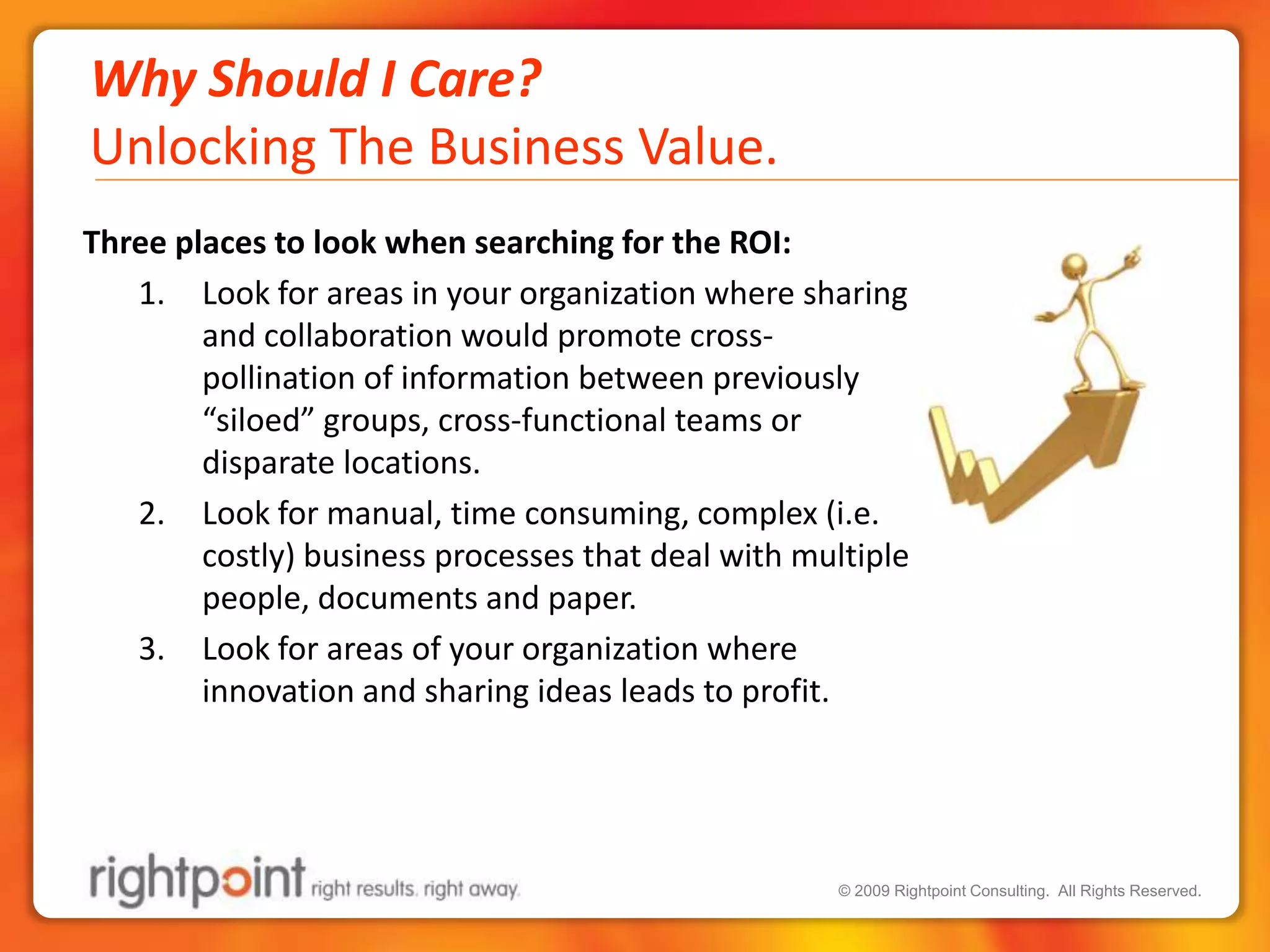
Why Should I Care?Unlocking The Business Value.Three places to look when searching for the ROI:Look for areas in your organization where sharing and collaboration would promote cross-pollination of information between previously “siloed” groups, cross-functional teams or disparate locations.Look for manual, time consuming, complex (i.e. costly) business processes that deal with multiple people, documents and paper. Look for areas of your organization where innovation and sharing ideas leads to profit.
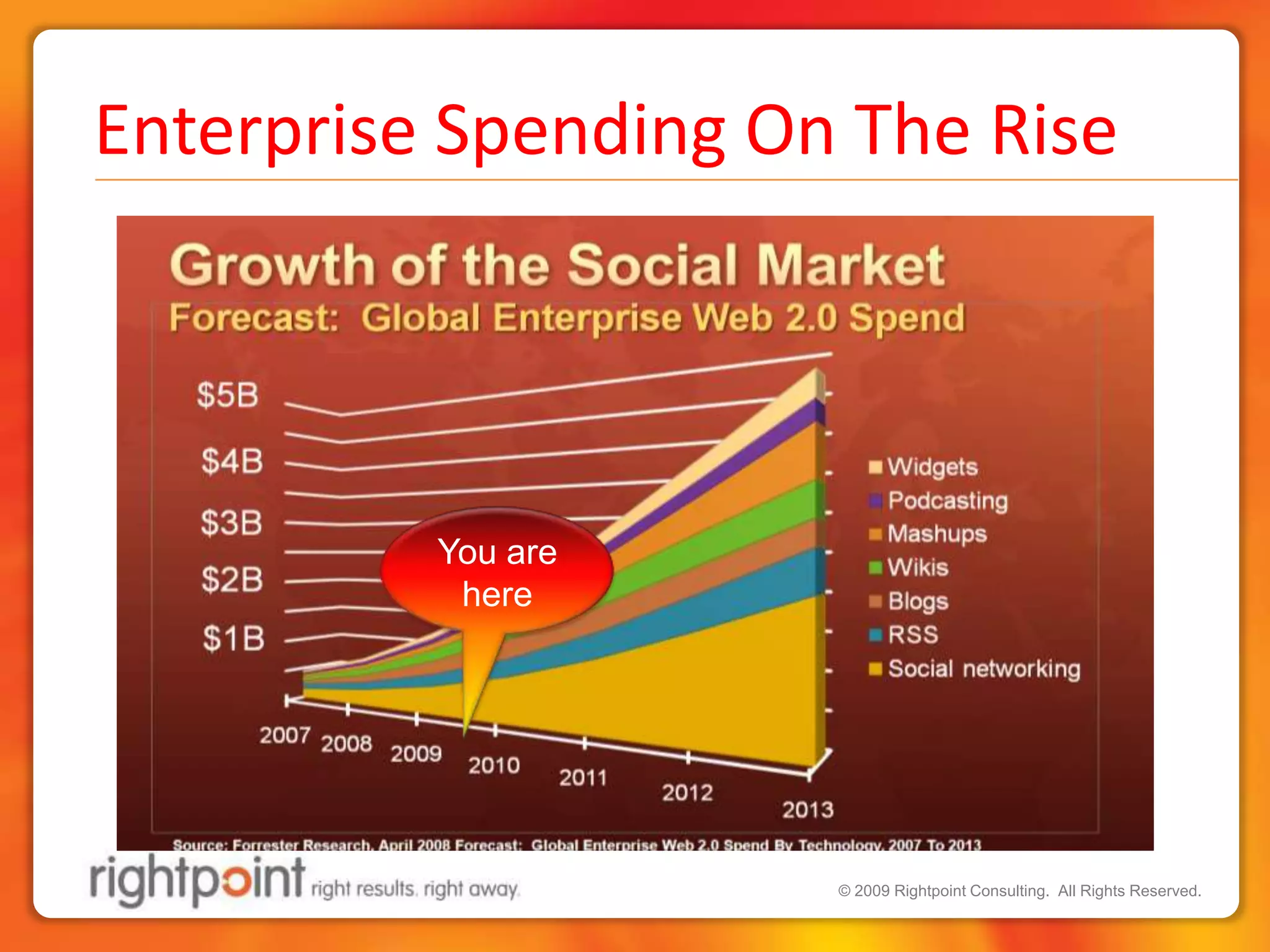
Enterprise Spending On The RiseYou are here
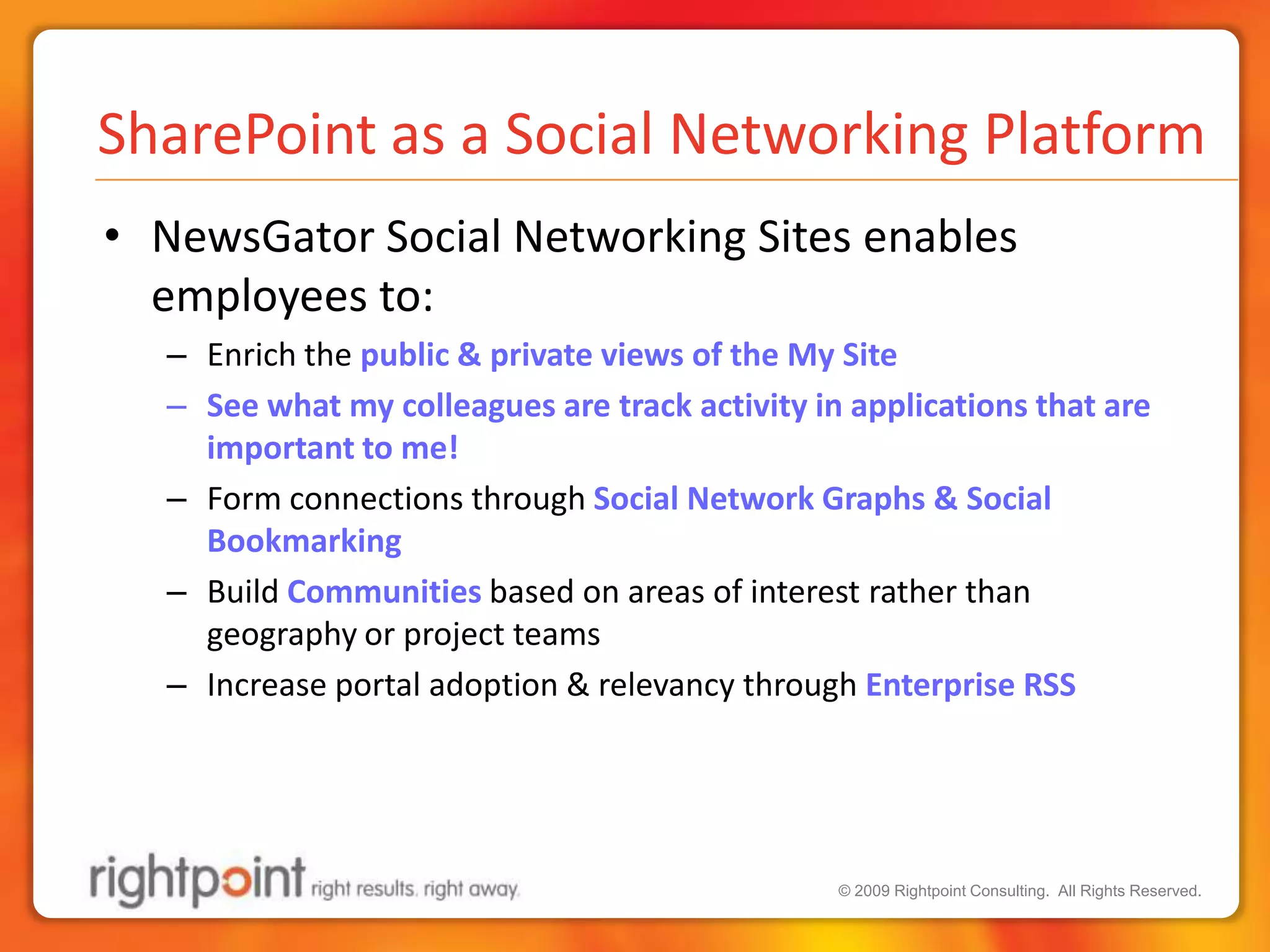
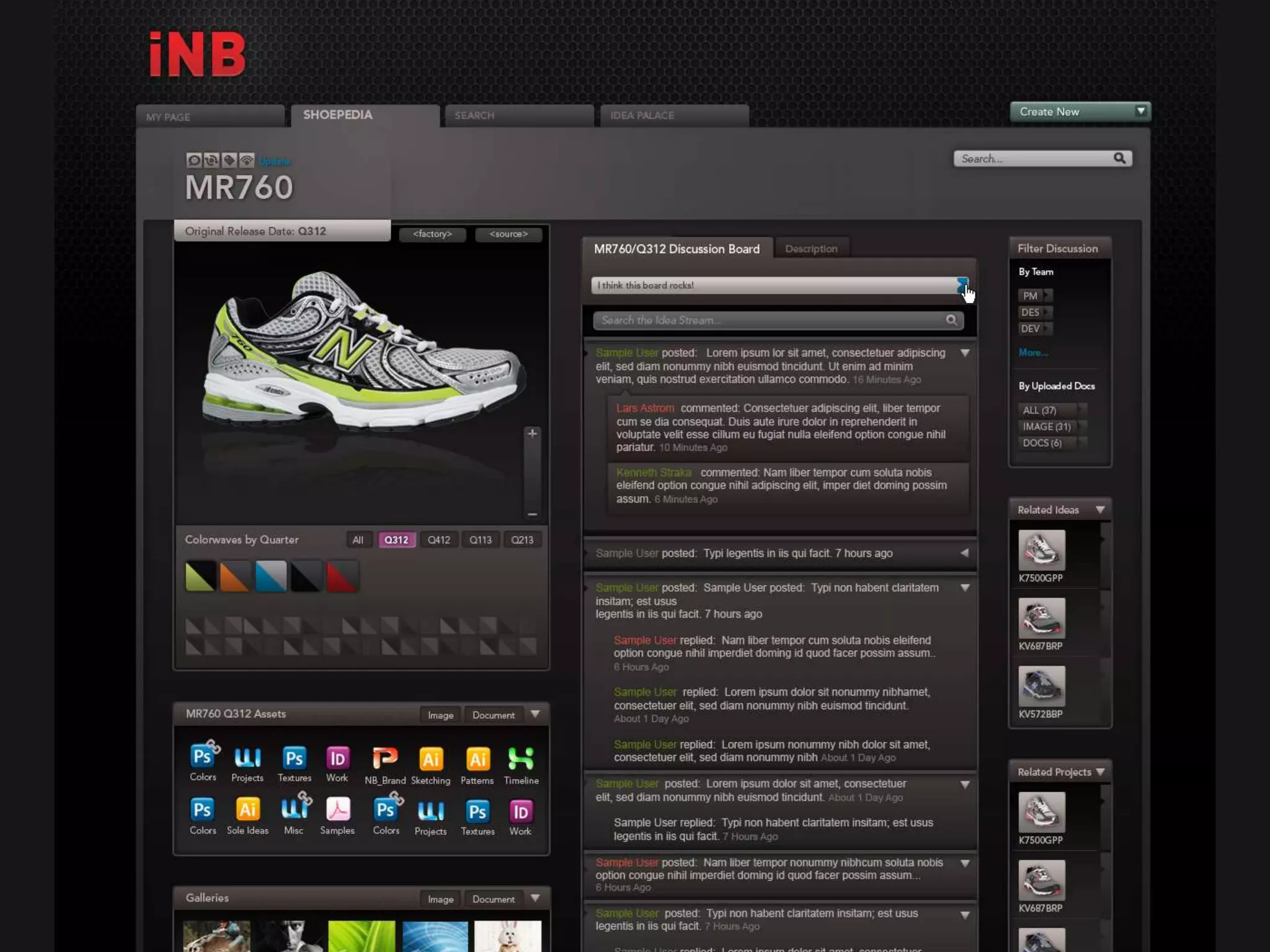
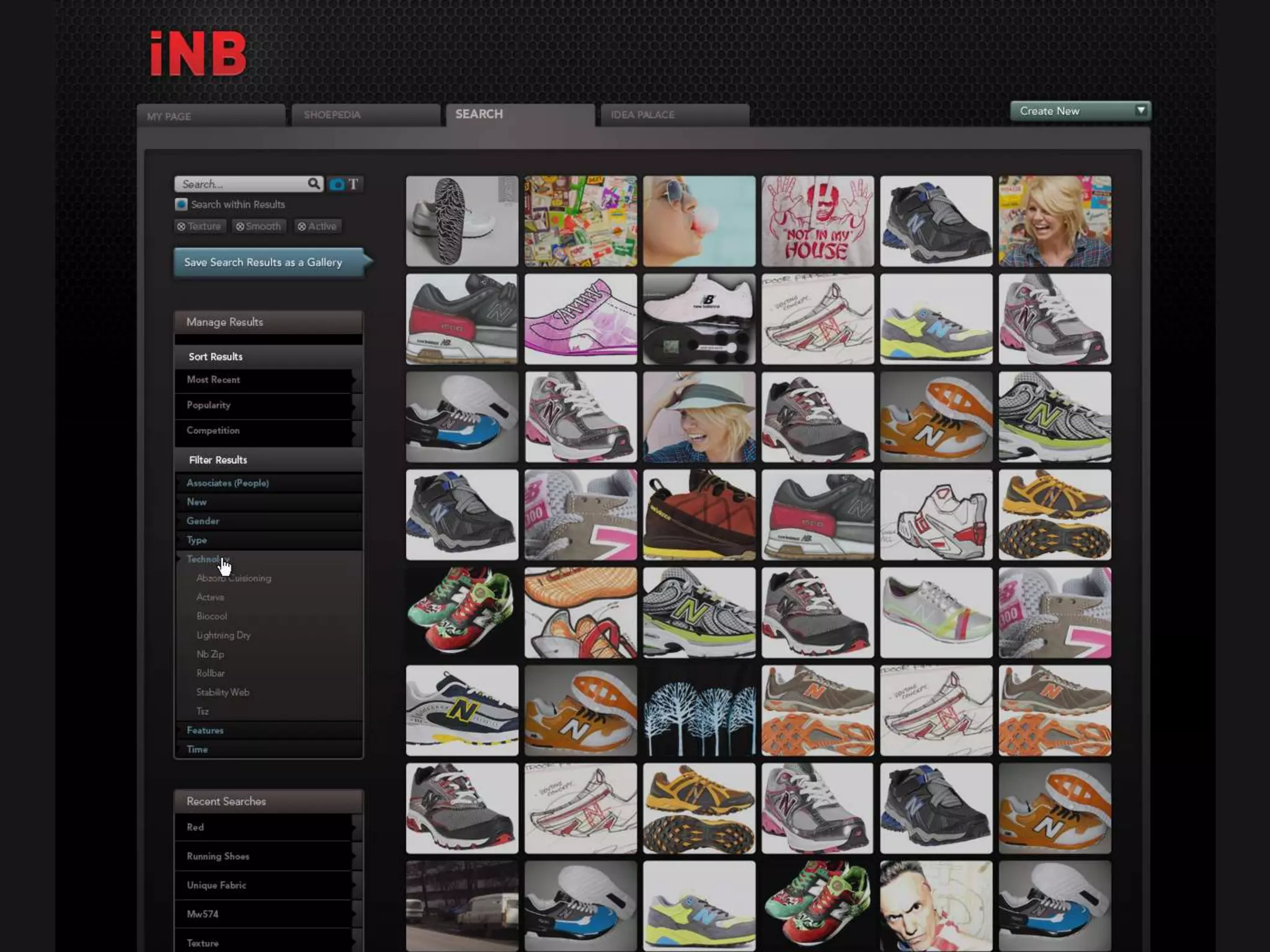
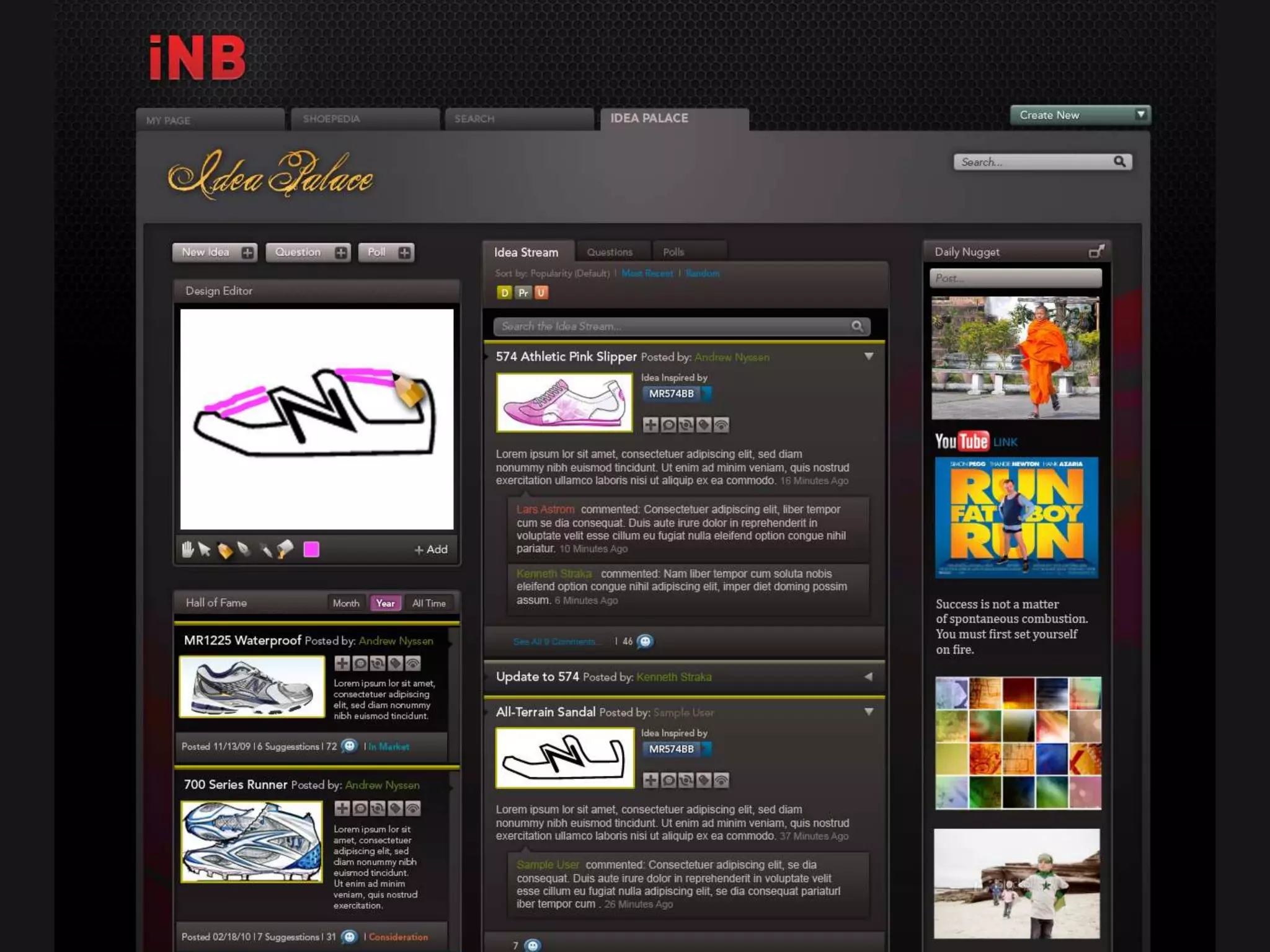
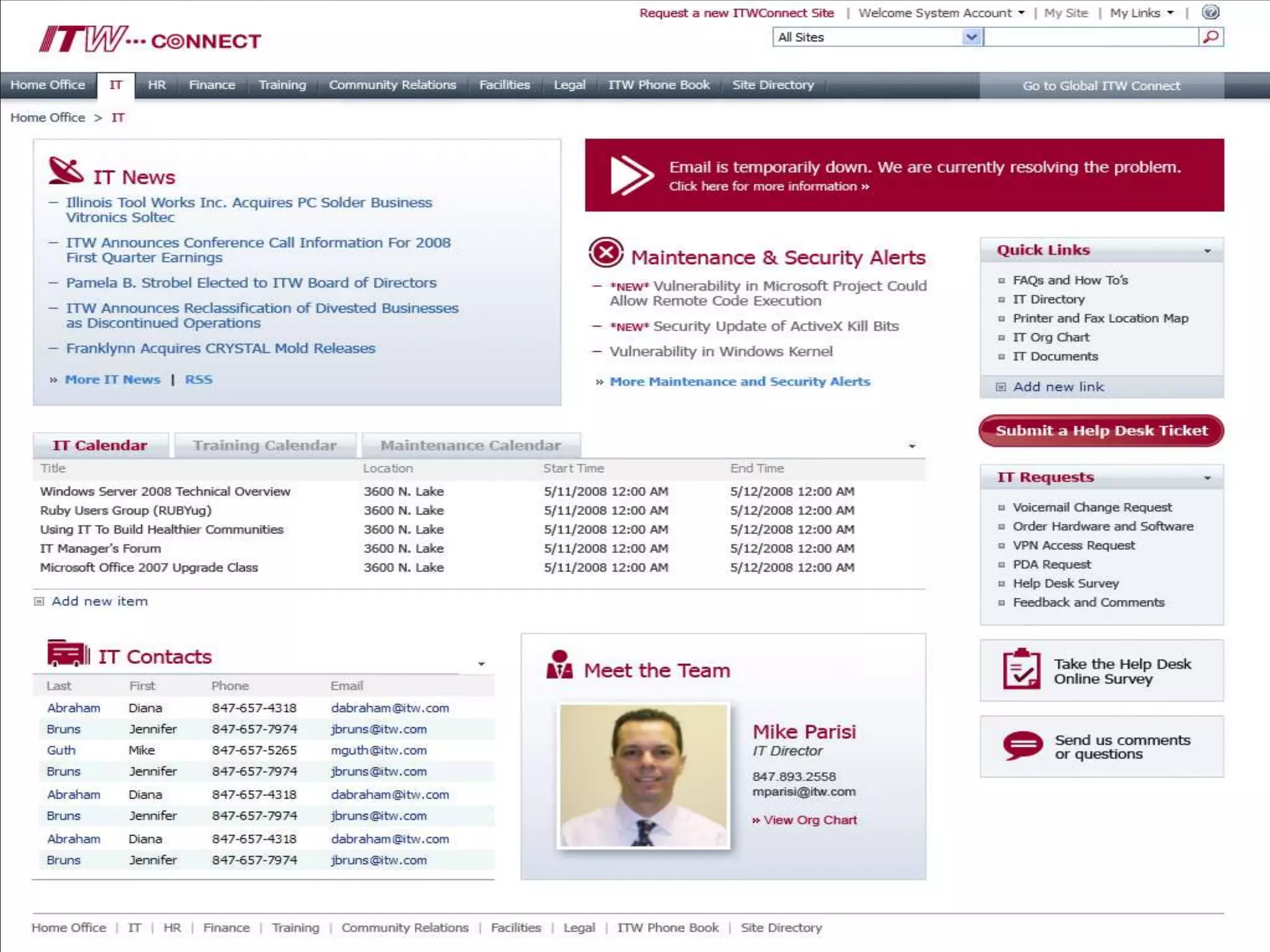
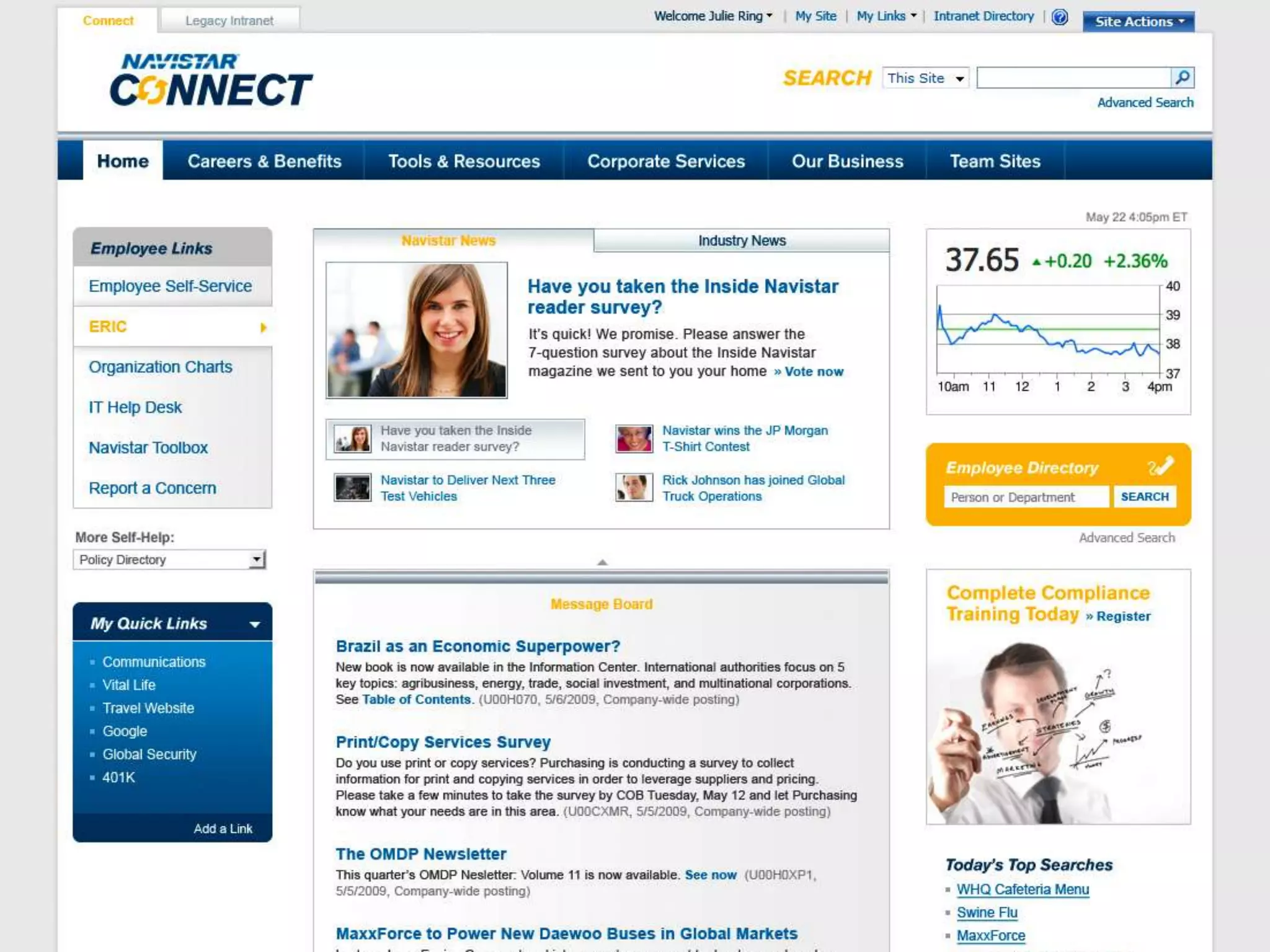
SharePoint as a Social Networking PlatformNewsGator Social Networking Sites enables employees to:Enrich the public & private views of the My SiteSee what my colleagues are track activity in applications that are important to me!Form connections through Social Network Graphs & Social BookmarkingBuild Communities based on areas of interest rather than geography or project teamsIncrease portal adoption & relevancy through Enterprise RSS
 Quick SurveyMar 2011Social Computing: Keys To Adoption
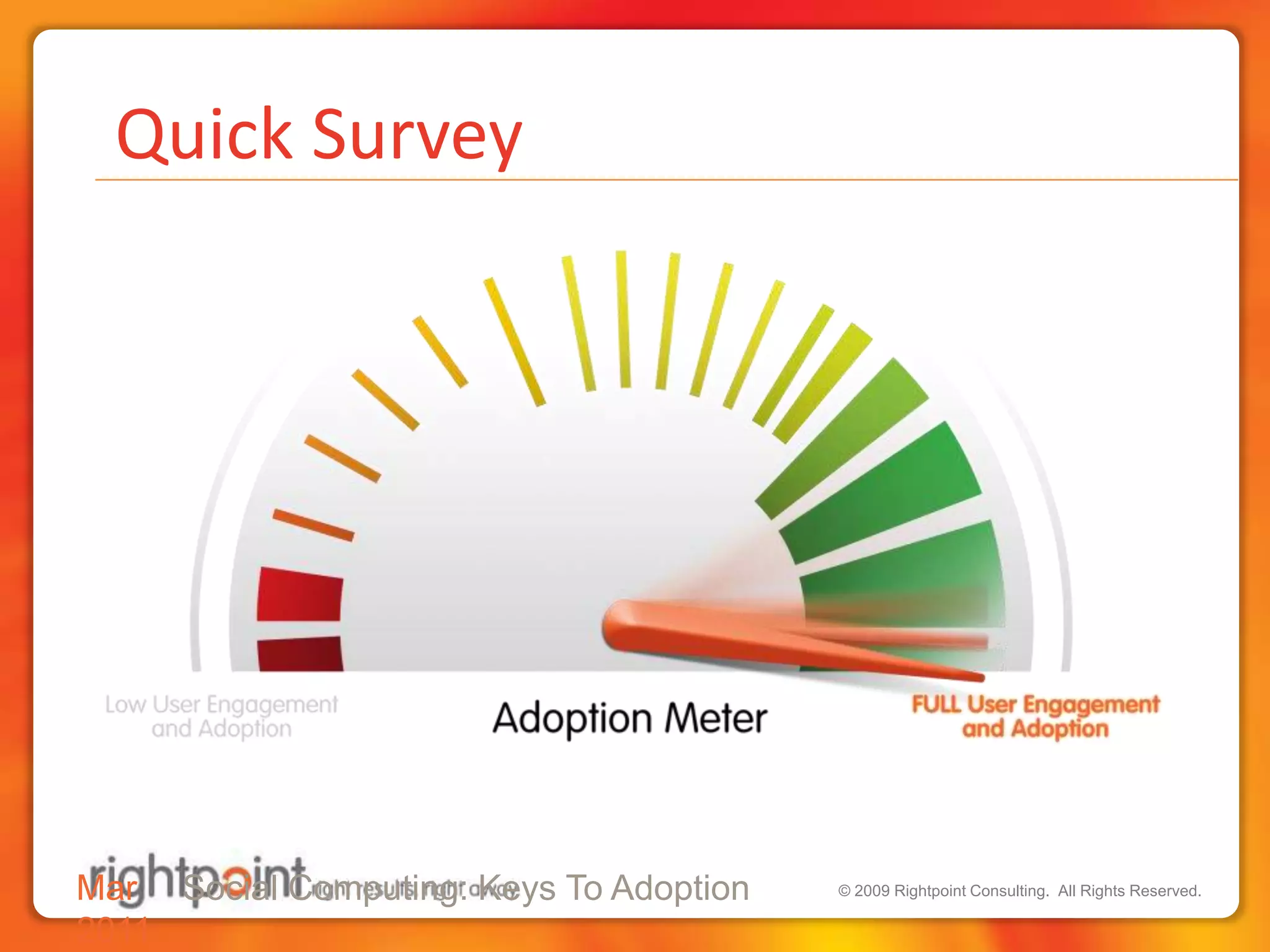
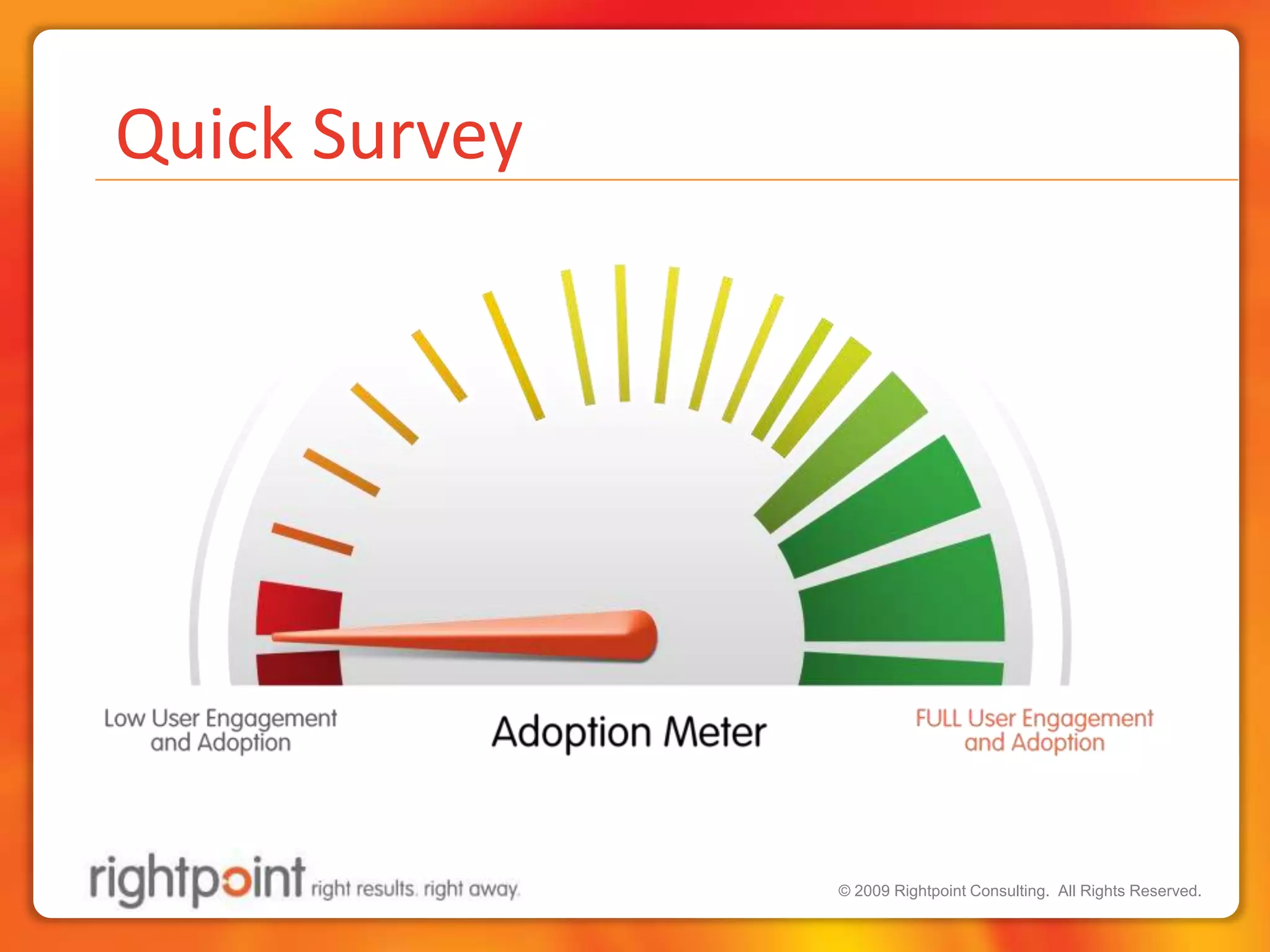
 Quick Survey
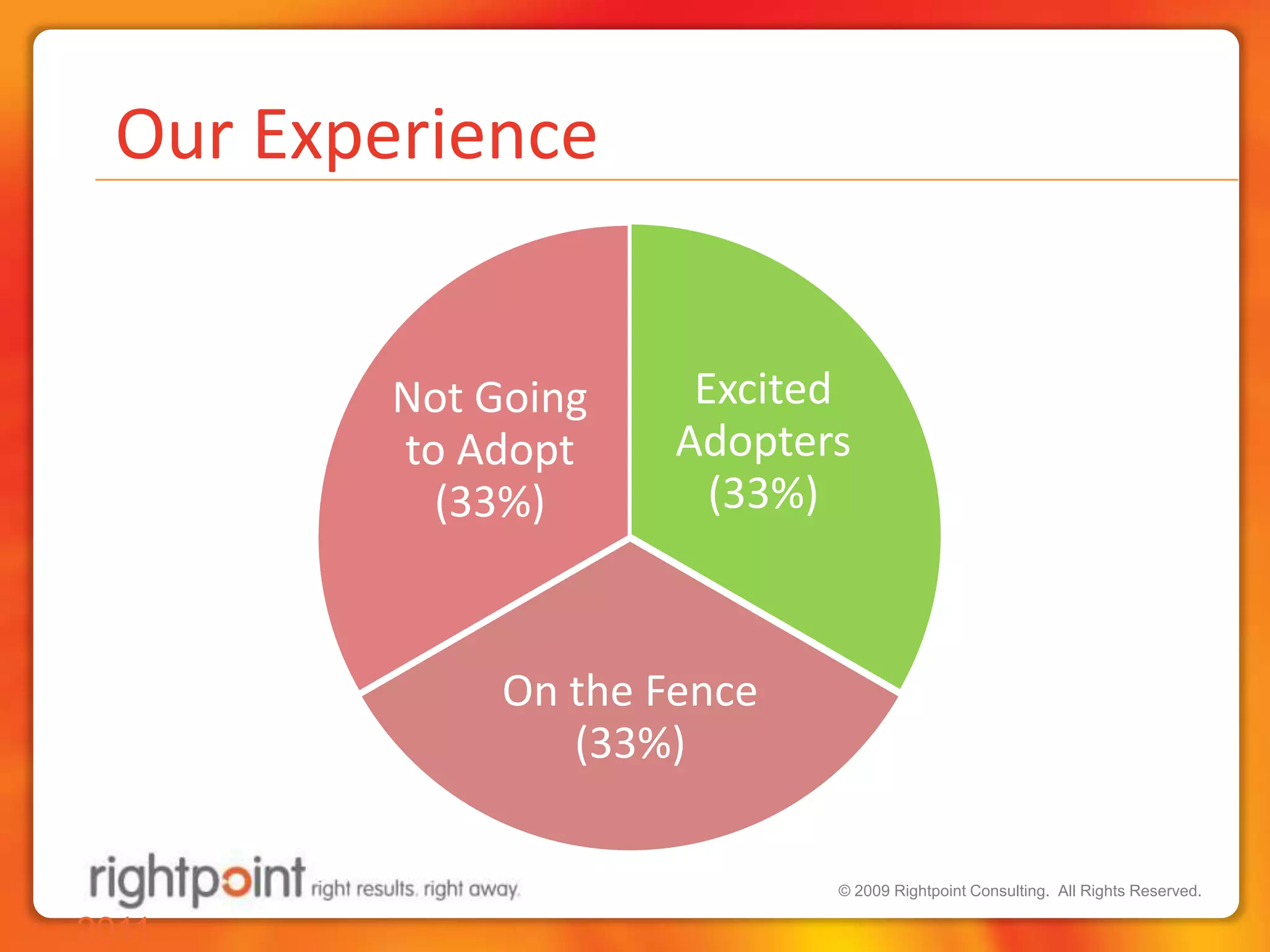
 Our Experience 2011
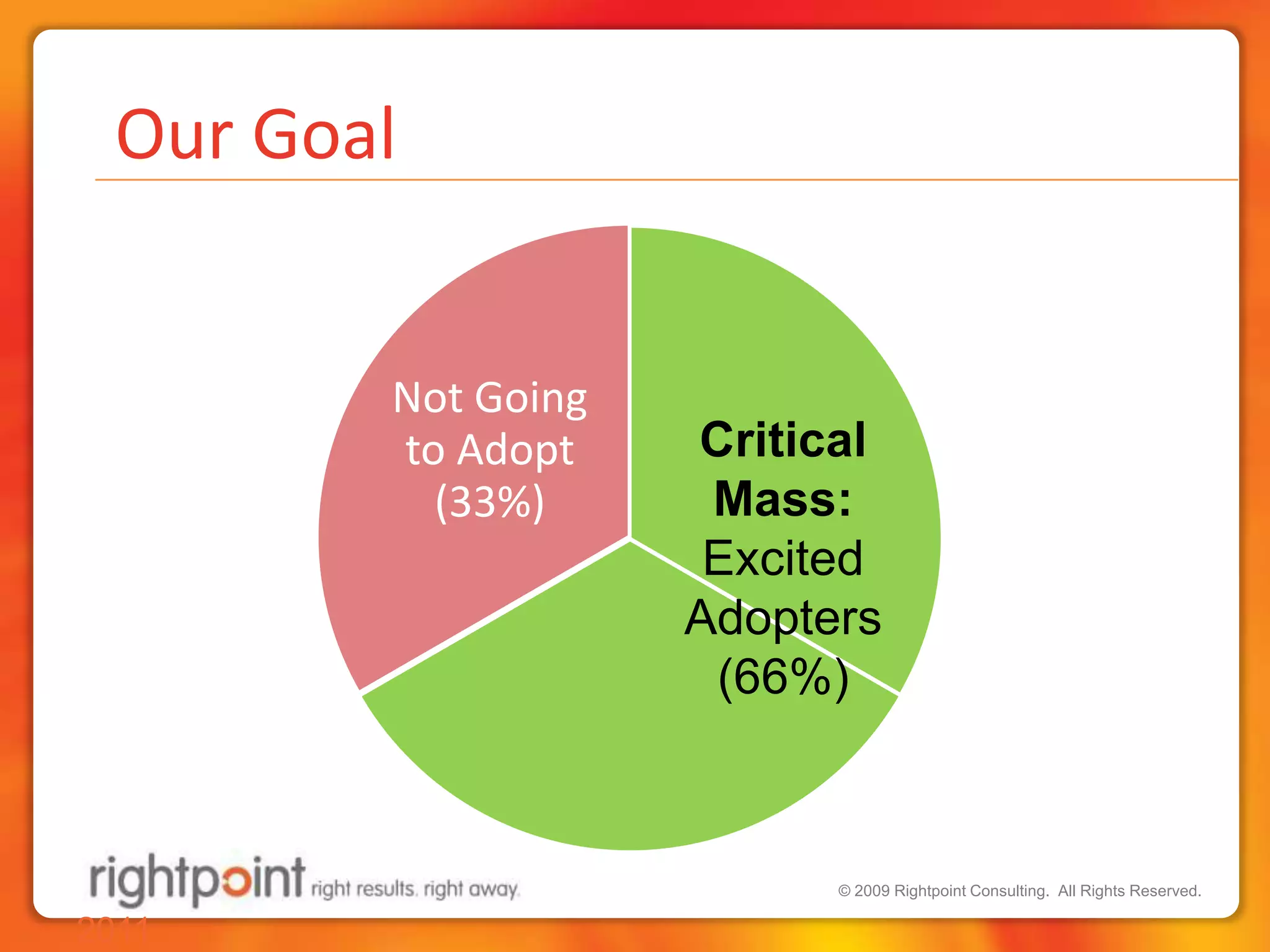
 Our GoalCritical Mass: ExcitedAdopters(66%) 2011
Why Do Some Enterprise Social Computing ProjectsMiss The Mark?
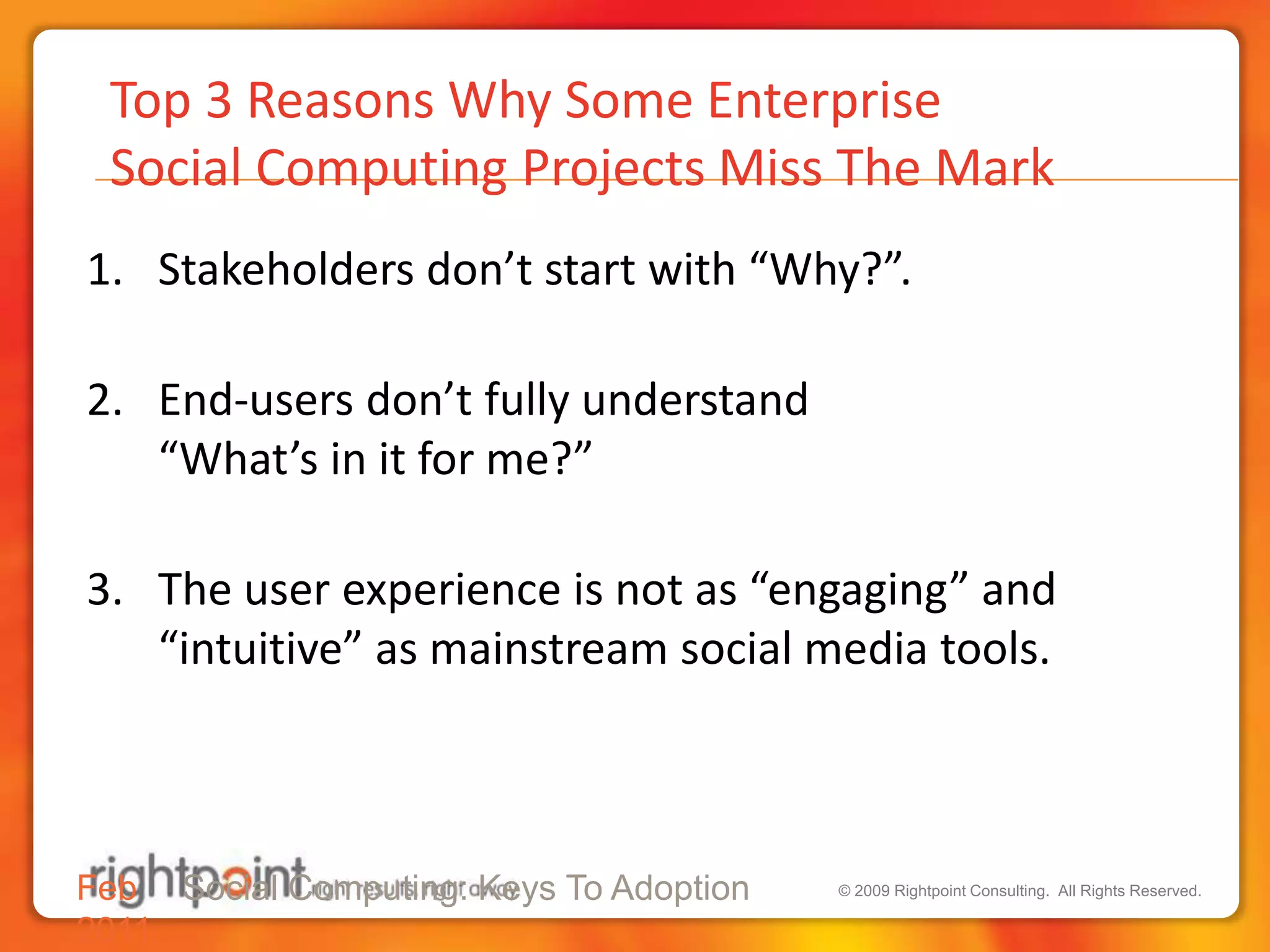
Top 3 Reasons Why Some Enterprise  Social Computing Projects Miss The MarkStakeholders don’t start with “Why?”.End-users don’t fully understand “What’s in it for me?”The user experience is not as “engaging” and “intuitive” as mainstream social media tools.Feb 2011Social Computing: Keys To Adoption
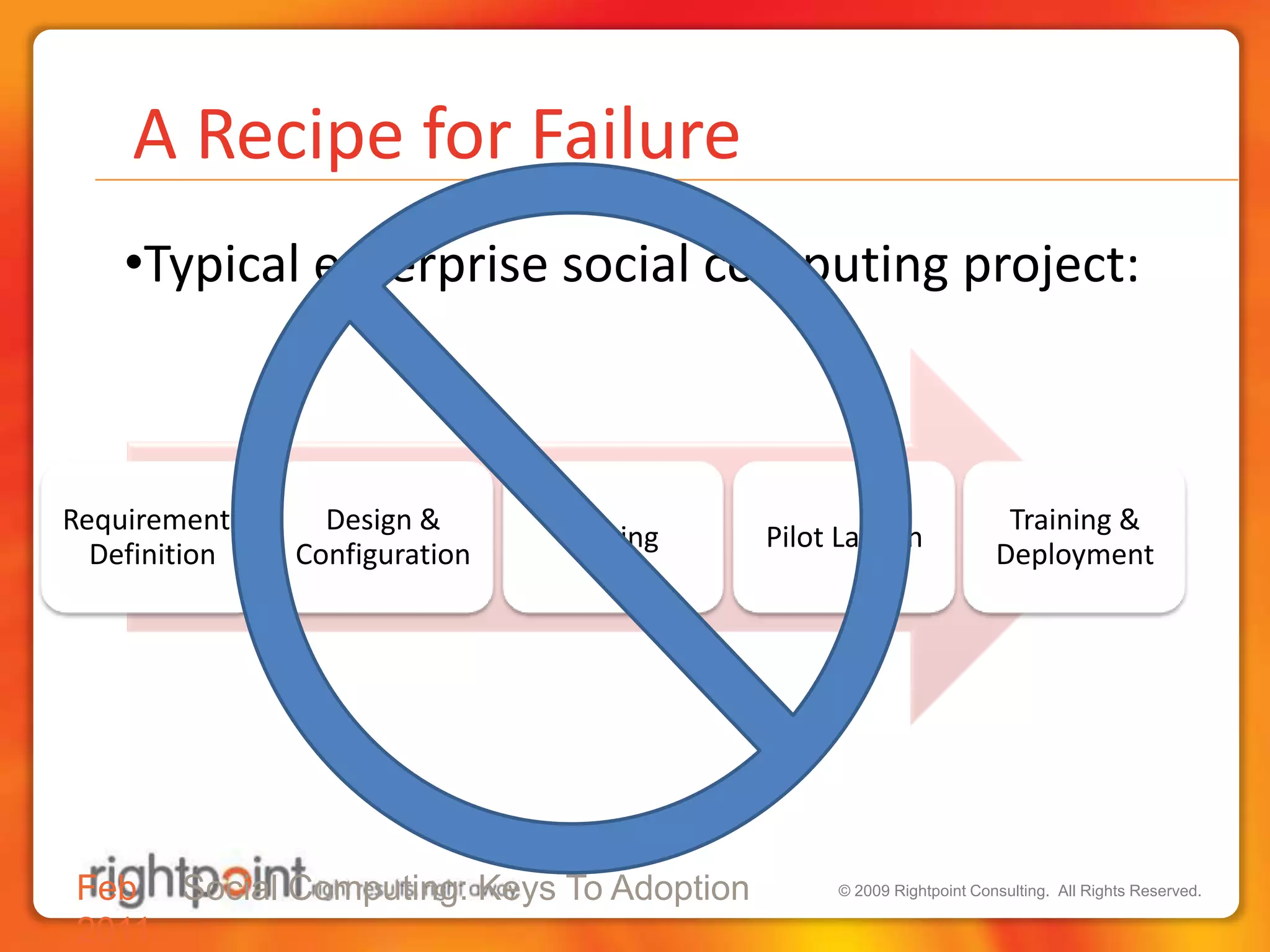
  A Recipe for FailureTypical enterprise social computing project: Feb 2011Social Computing: Keys To Adoption
A Framework For Success
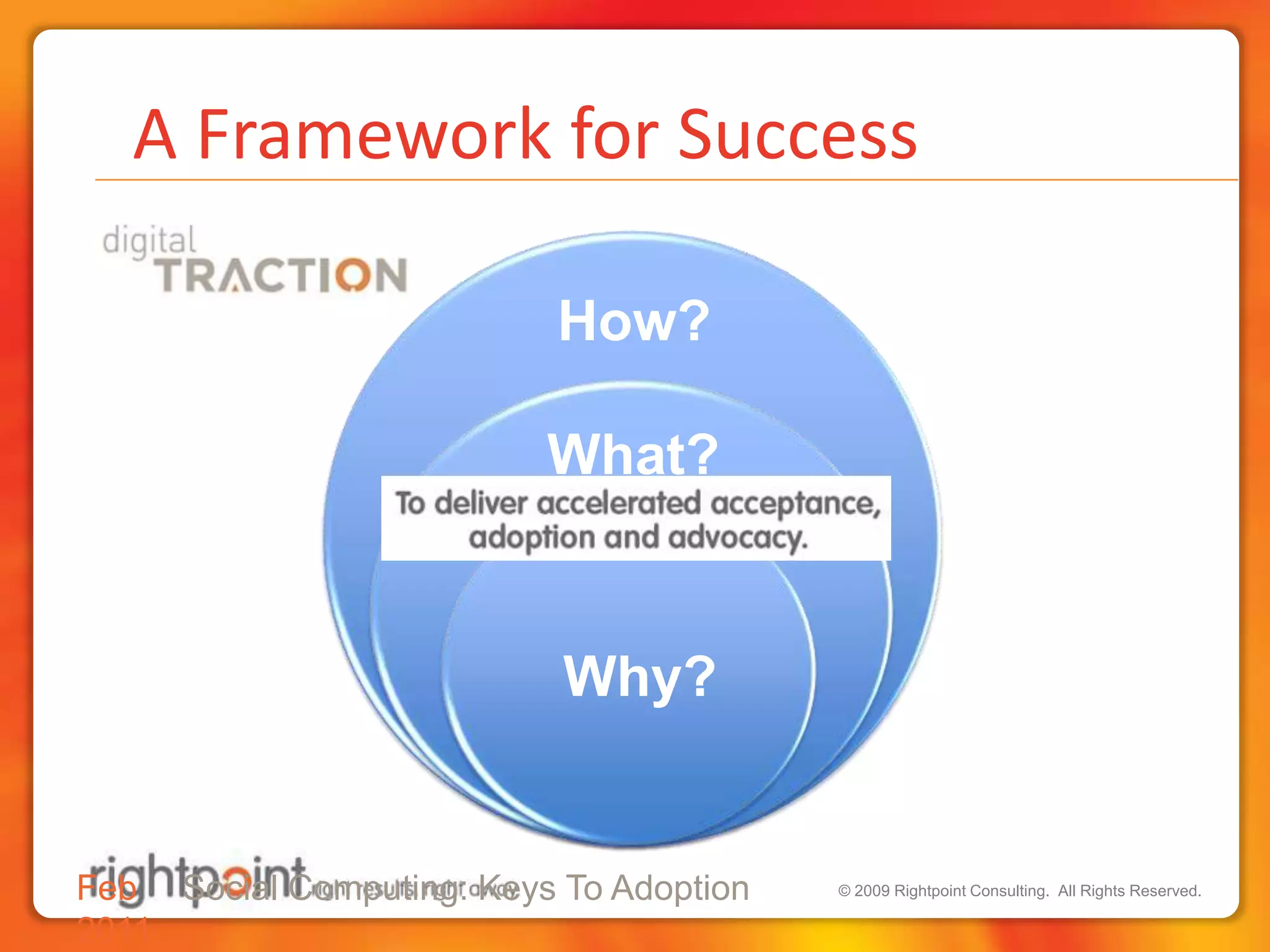
  A Framework for SuccessHow?What?Why?Feb 2011Social Computing: Keys To Adoption
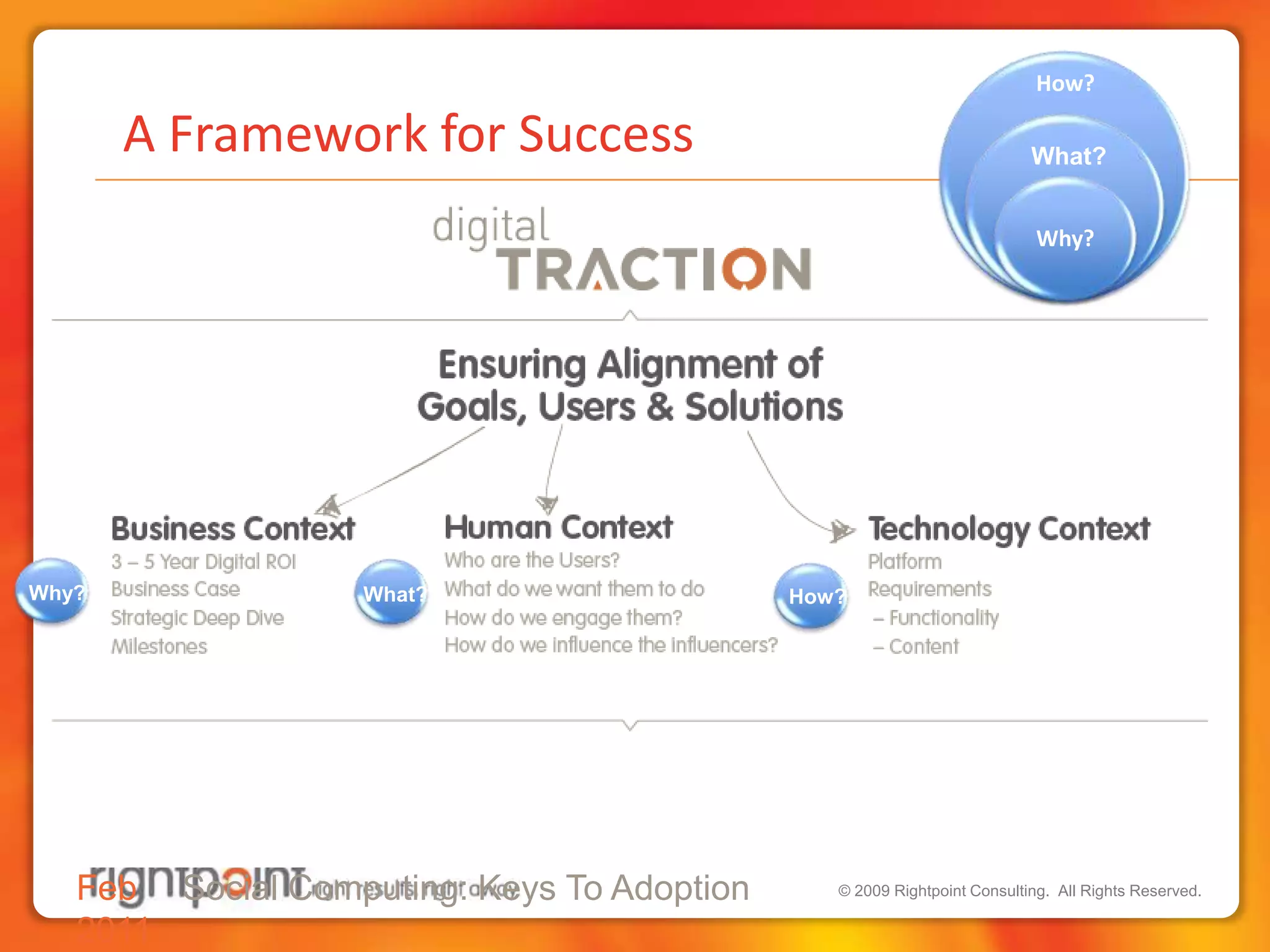
  A Framework for SuccessWhat?Why?What?How?Feb 2011Social Computing: Keys To Adoption
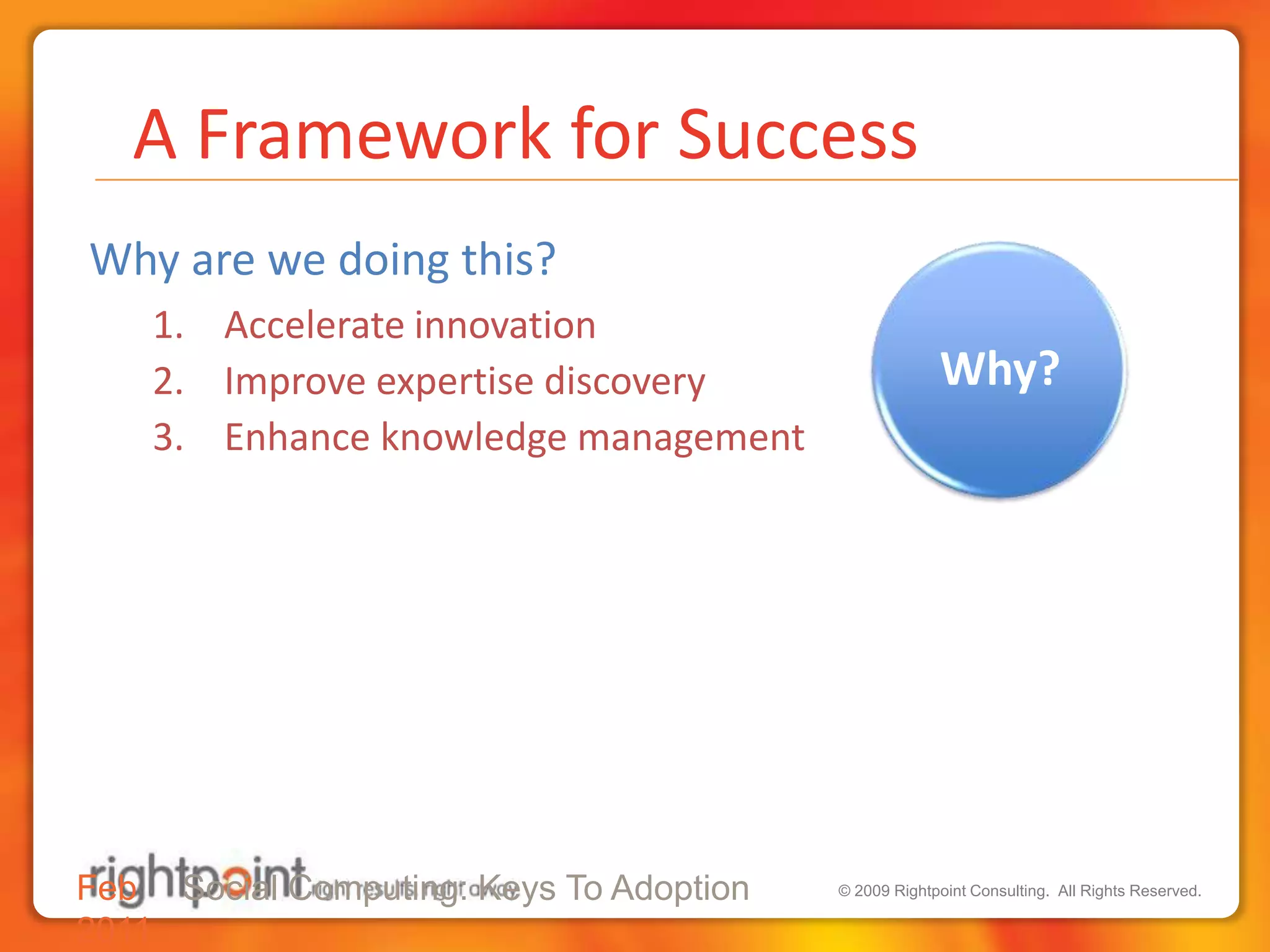
  A Framework for SuccessWhy are we doing this?Accelerate innovationImprove expertise discoveryEnhance knowledge managementFeb 2011Social Computing: Keys To Adoption
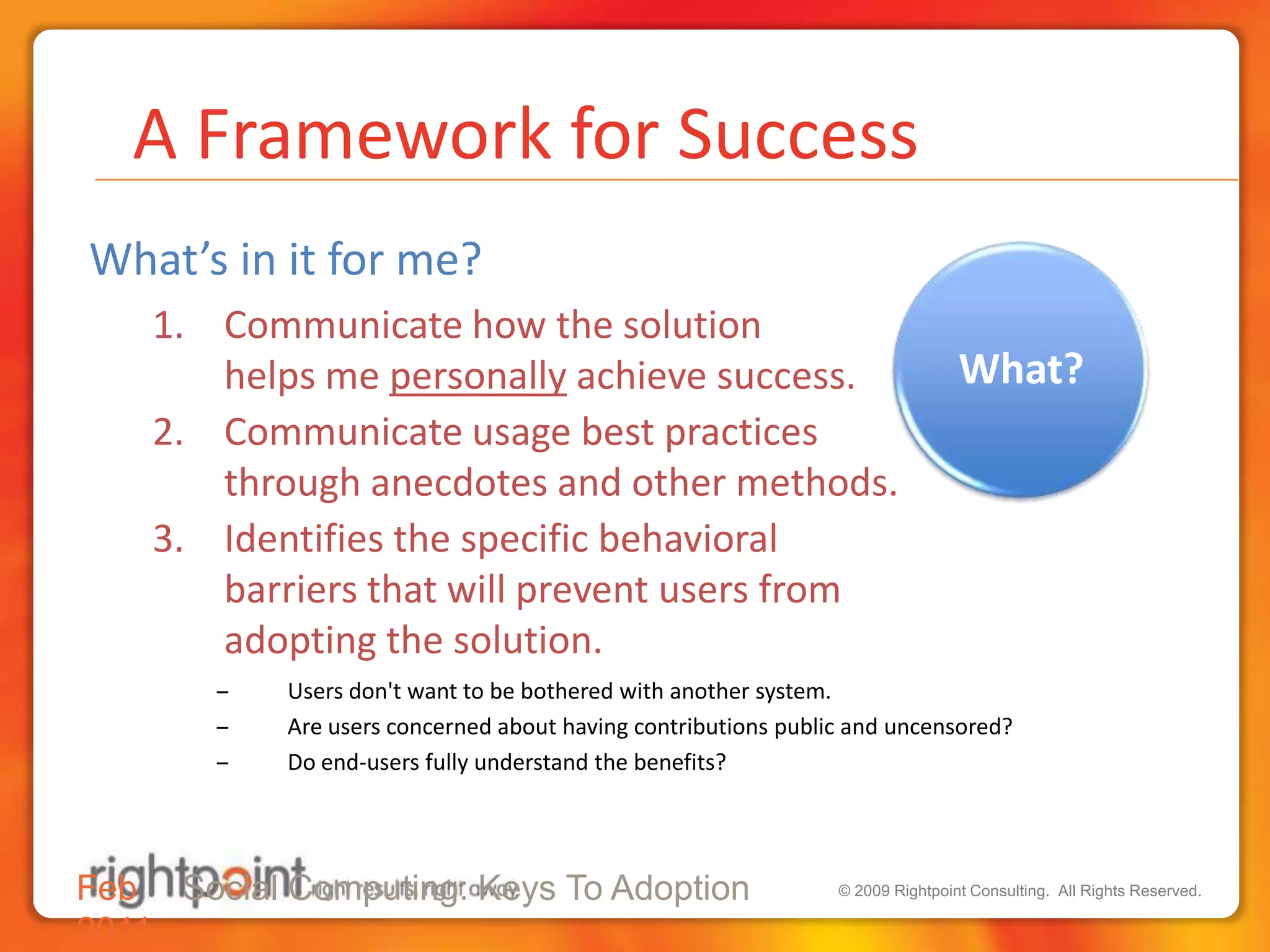
  A Framework for SuccessWhat’s in it for me? Communicate how the solution helps me personally achieve success. Communicate usage best practices through anecdotes and other methods.Identifies the specific behavioral barriers that will prevent users fromadopting the solution.Users don't want to be bothered with another system.Are users concerned about having contributions public and uncensored?Do end-users fully understand the benefits?Feb 2011Social Computing: Keys To Adoption
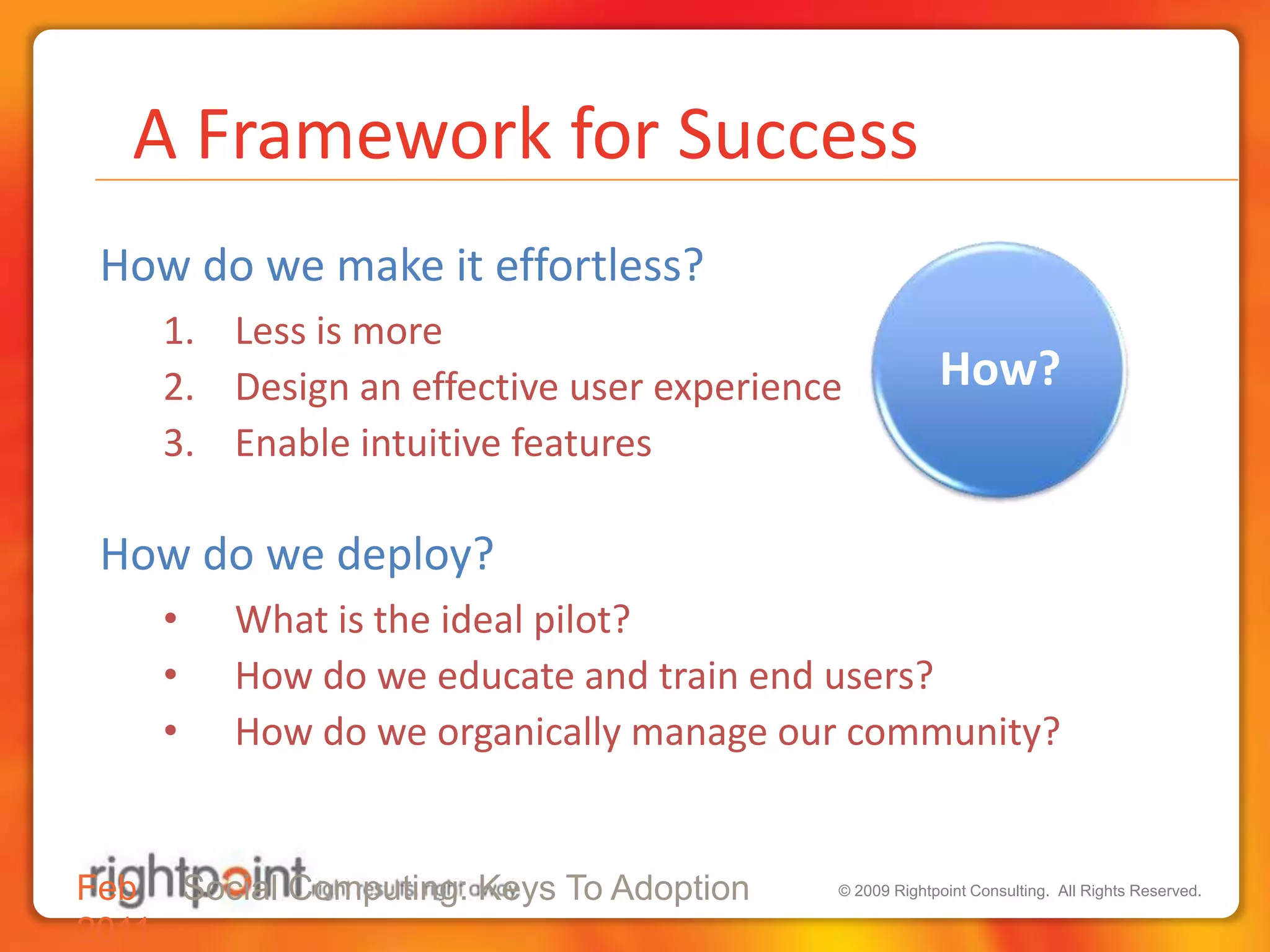
  A Framework for SuccessHow do we make it effortless?Less is moreDesign an effective user experienceEnable intuitive featuresHow do we deploy?What is the ideal pilot?How do we educate and train end users?How do we organically manage our community?Feb 2011Social Computing: Keys To Adoption
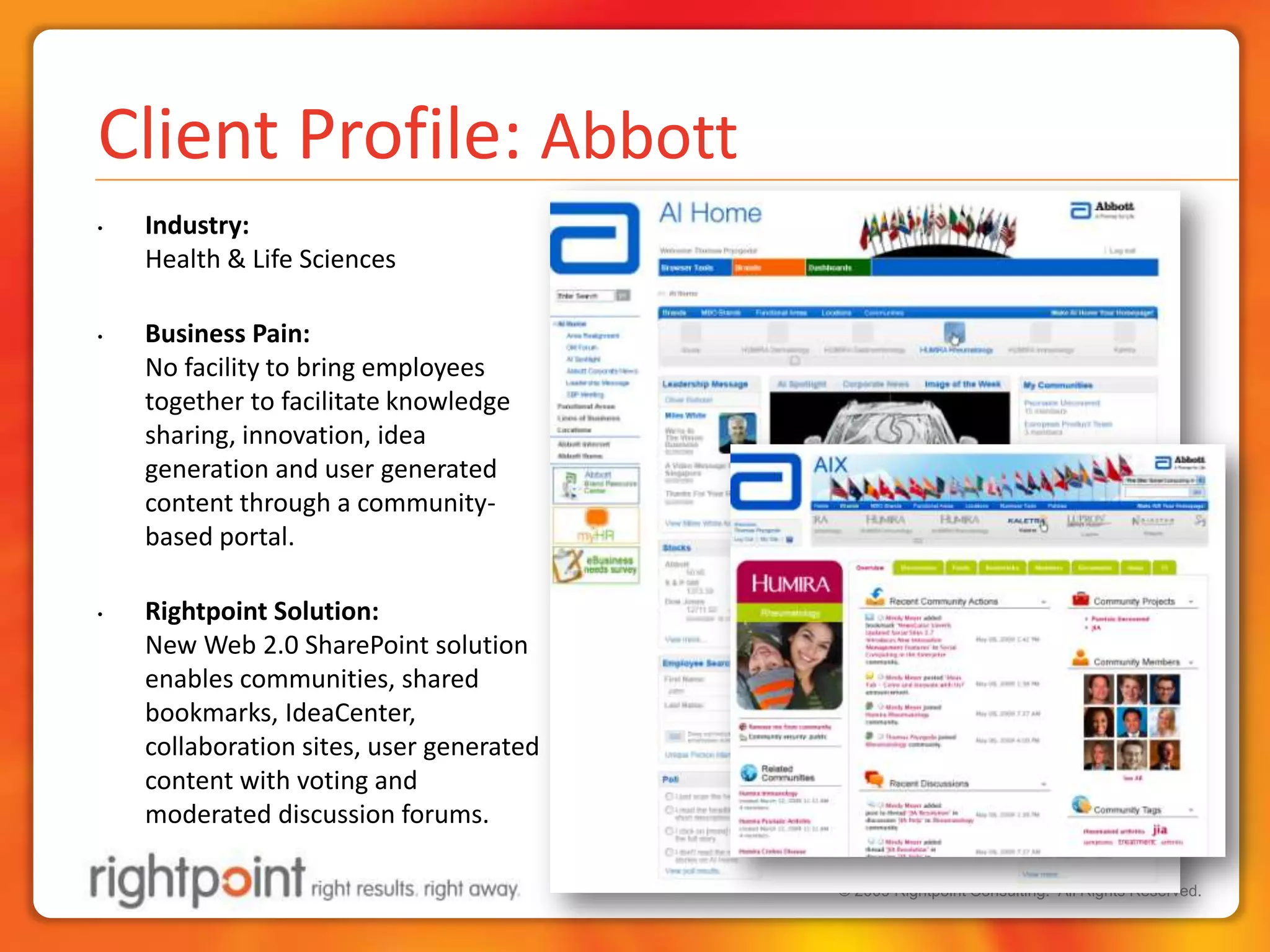
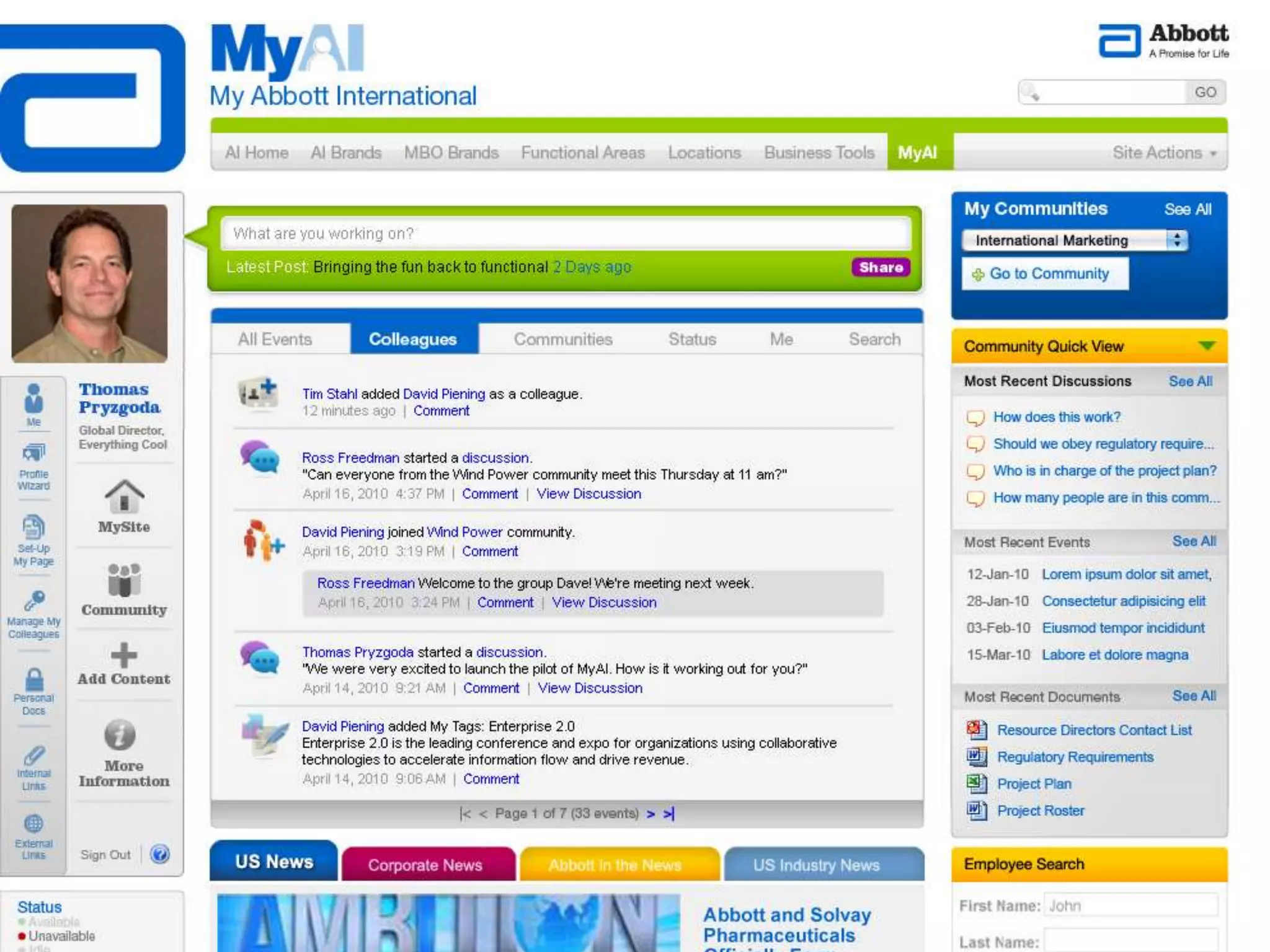
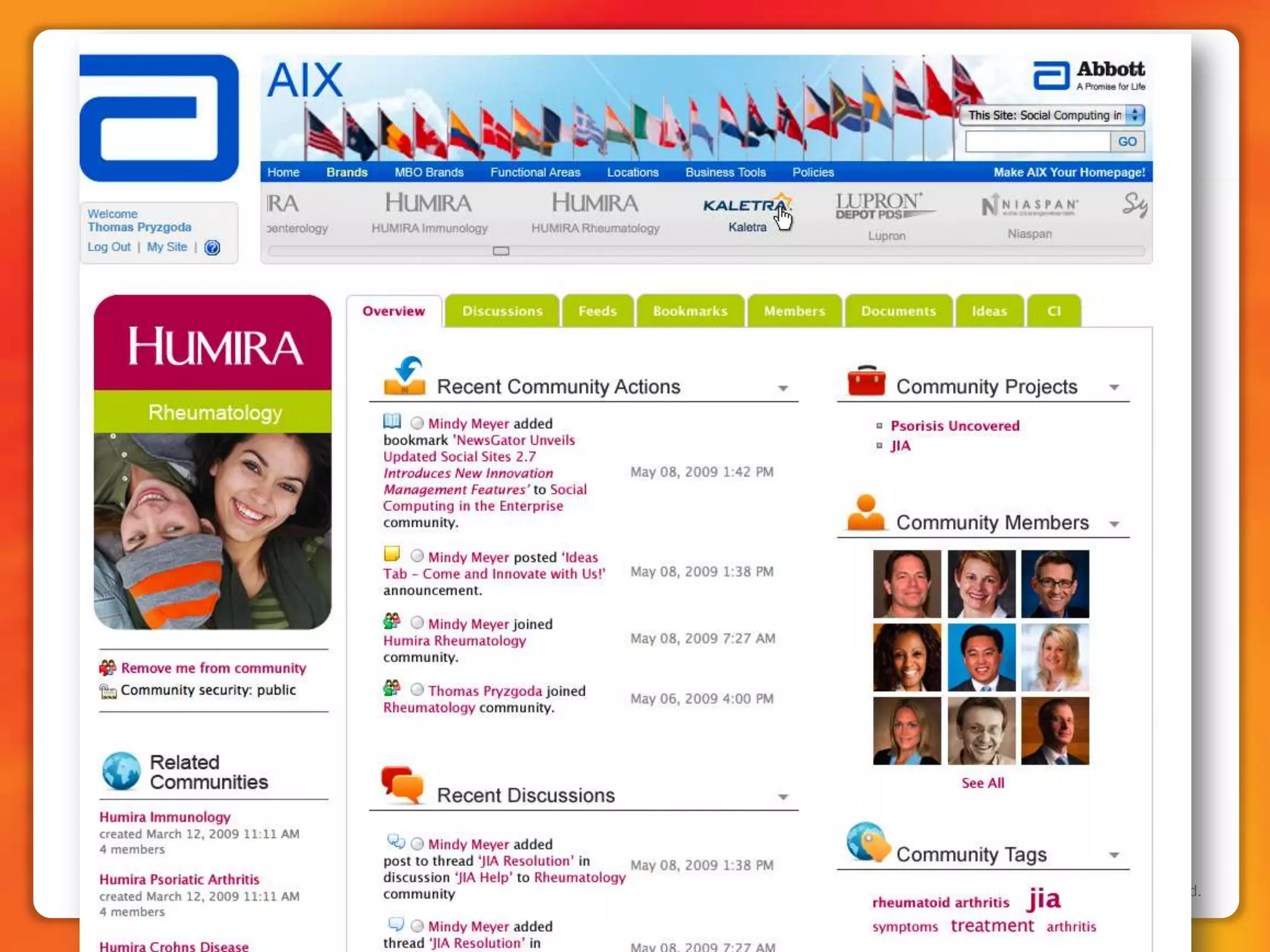
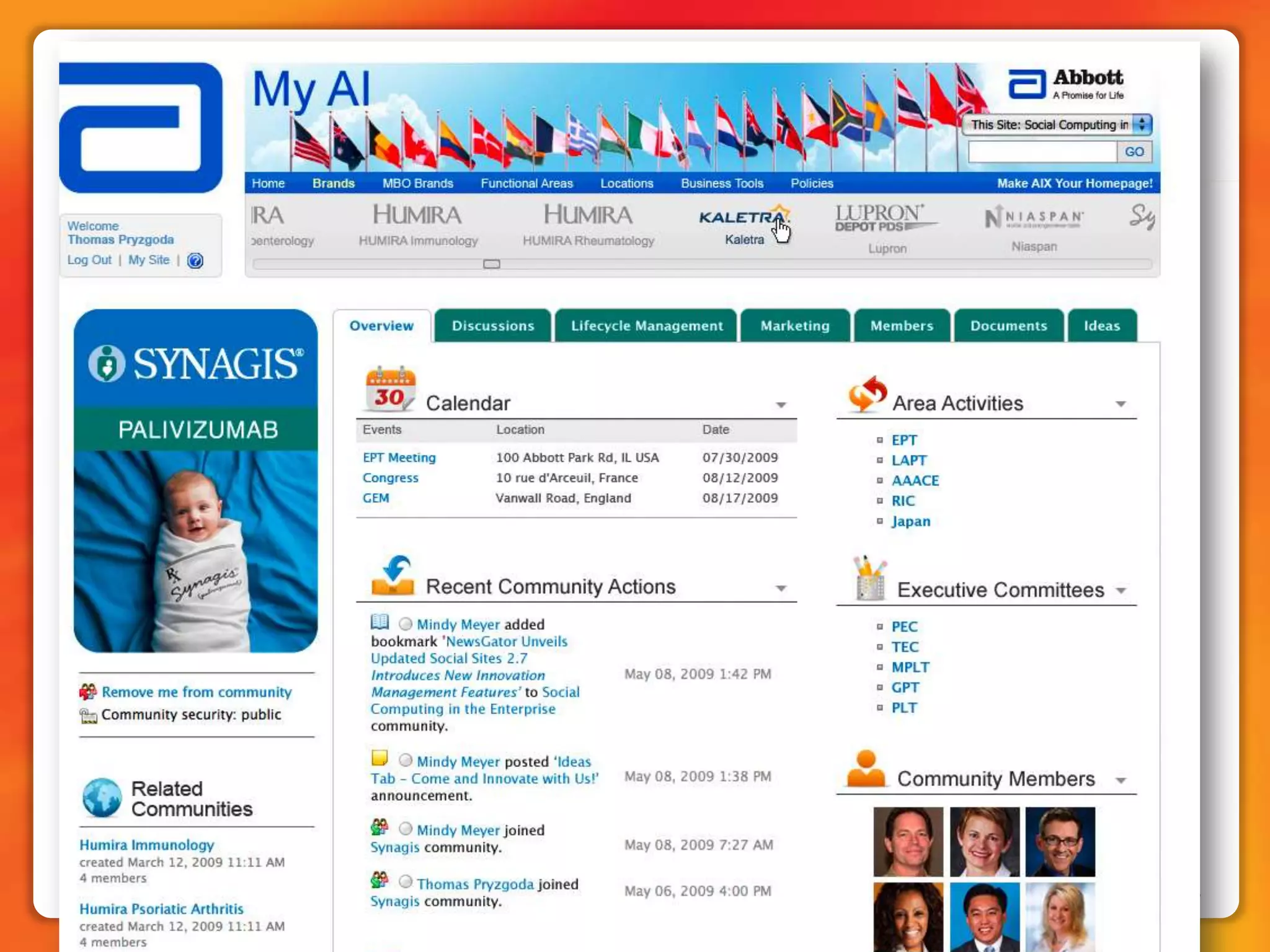
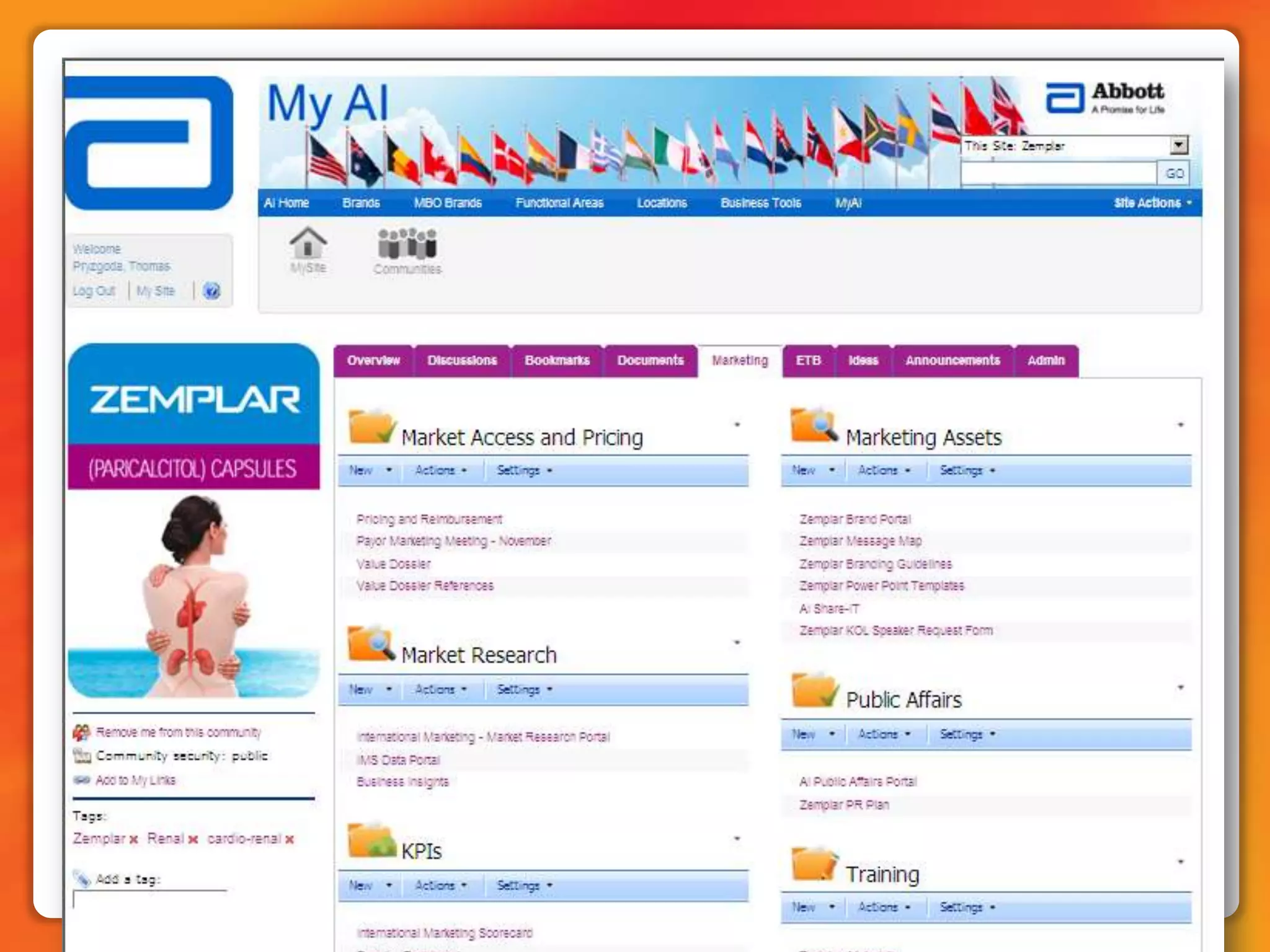
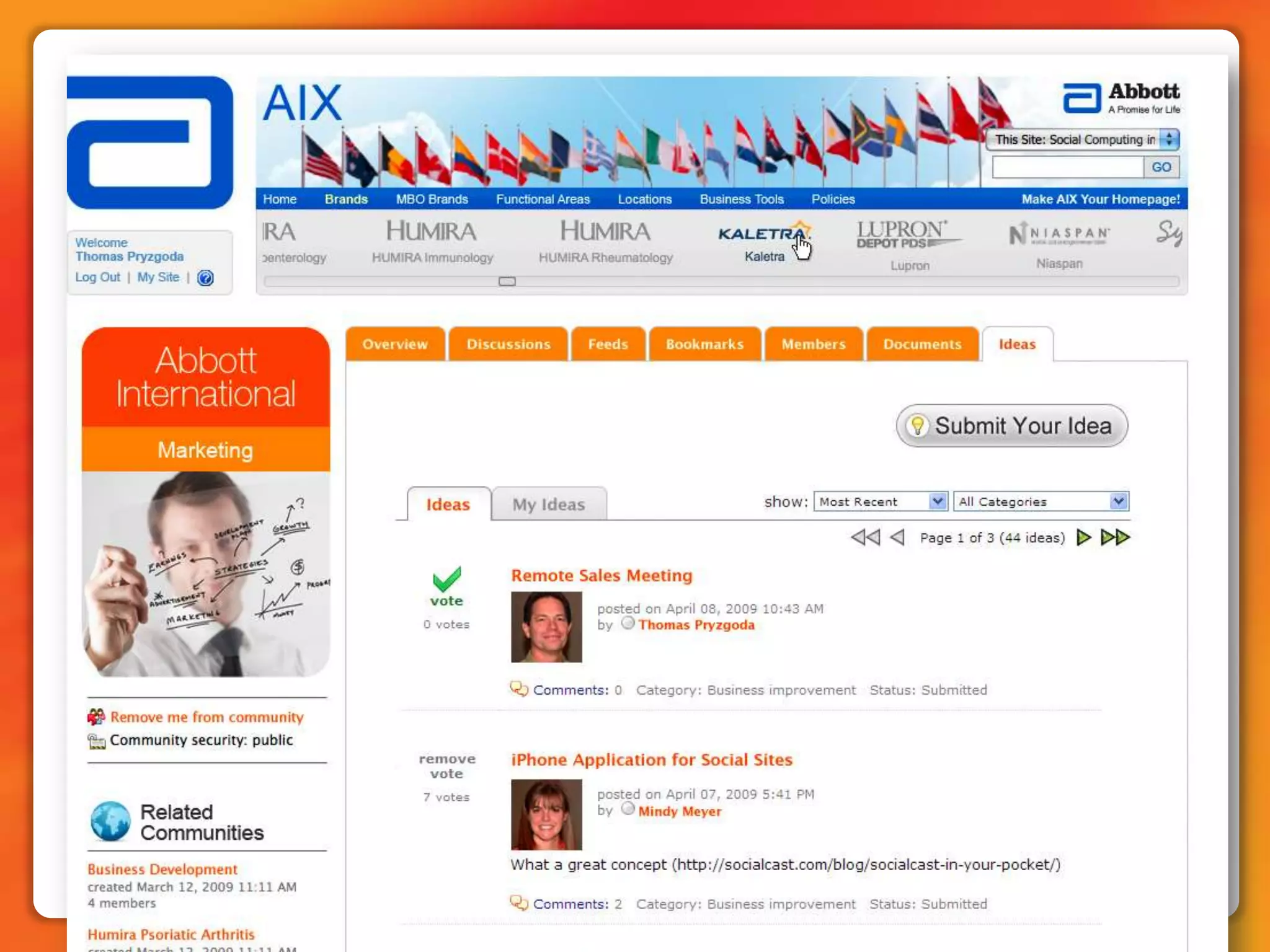
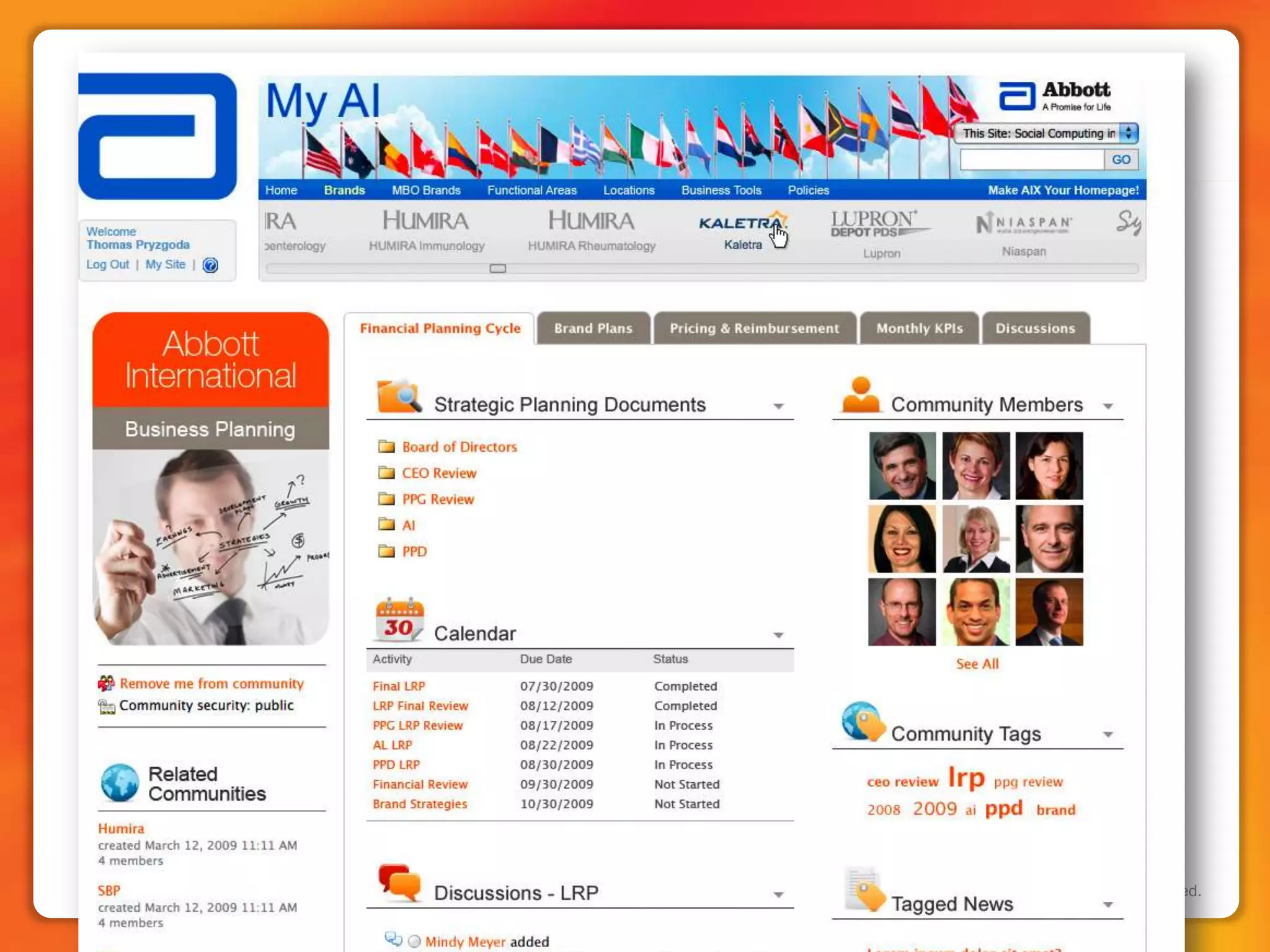
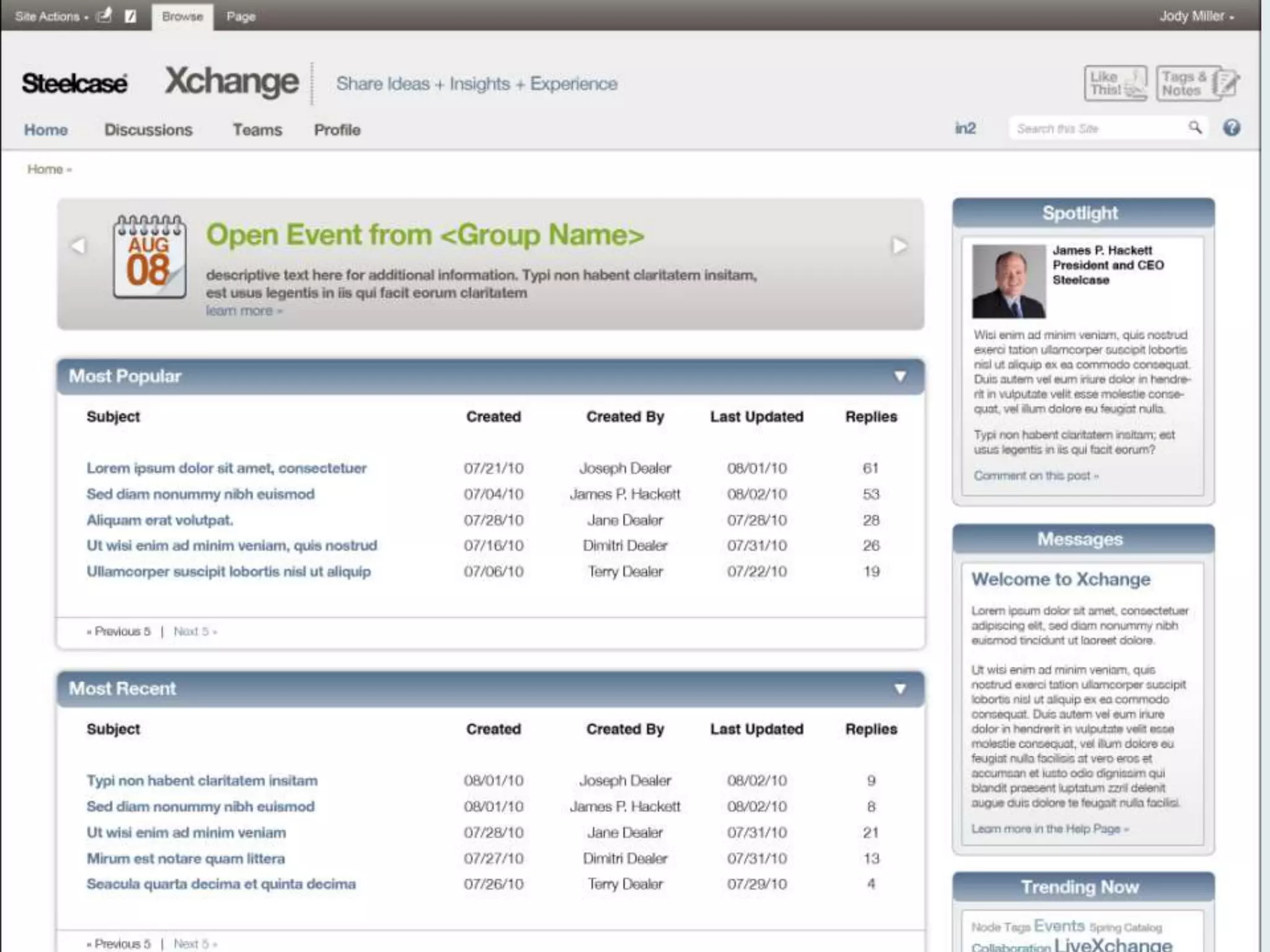
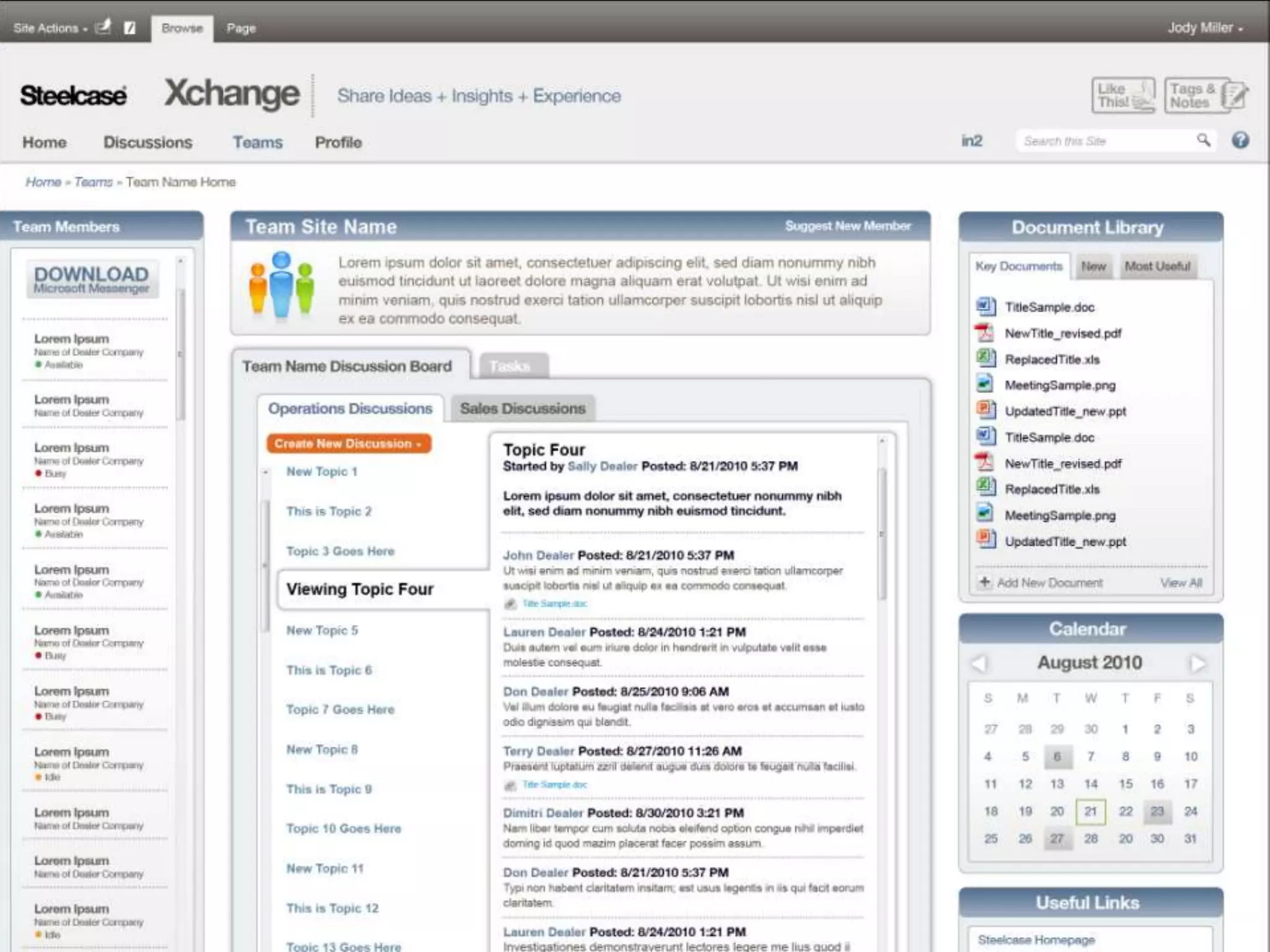
Client Profile: AbbottIndustry:Health & Life SciencesBusiness Pain: No facility to bring employees together to facilitate knowledge sharing, innovation, idea generation and user generated content through a community-based portal.Rightpoint Solution:New Web 2.0 SharePoint solution enables communities, shared bookmarks, IdeaCenter, collaboration sites, user generated content with voting and moderated discussion forums.
SharePoint/NewsgatorSocial Sites
 Sites
 Sites
Sites
Sites
Sites
Sites
Sites
Sites
Sites
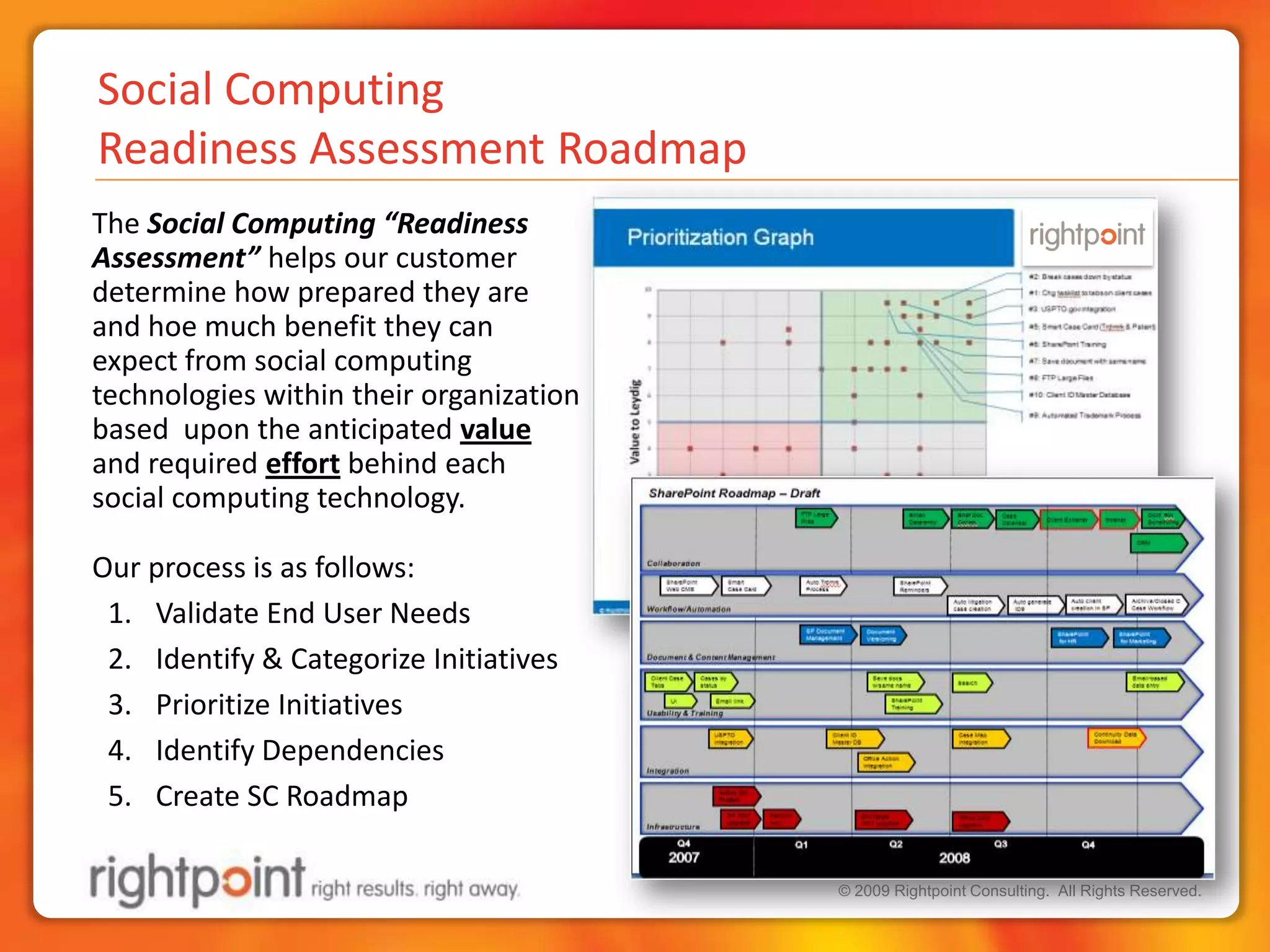
Social ComputingReadiness Assessment Roadmap	The Social Computing “Readiness Assessment” helps our customer determine how prepared they are and hoe much benefit they can expect from social computing technologies within their organization  based  upon the anticipated value and required effort behind each social computing technology.   	Our process is as follows:Validate End User NeedsIdentify & Categorize InitiativesPrioritize InitiativesIdentify DependenciesCreate SC Roadmap
5 S’s of Social Computing ShareSupportSocialStrategySales
                      THANK YOU!Jeff Willingerlinkedin.com/in/jeffwillingerfacebook.com/jeffwillingertwitter.com/jwillie

SharePoint Fest Denver

  • 1.
    Social Computing &Collaboration Outside and Inside the 4 WallsSharePoint Fest Denver5.20.11
  • 2.
    AgendaIntroductionPrimer: Social NetworkingDefinitions & TrendsPart 1: SharePoint/Social Networking Outside My 4 WallsPart 2: SharePoint/Social Networking Inside My 4 WallsSummary: Review
  • 3.
    Social Computing Mythvs Teenage Myth
  • 4.
    My BackgroundDirector ofSocial Computing at Rightpoint.Rightpoint is a Gold Certified and Managed Microsoft Partner with a specialization in MOSS 2007, Collaboration & Social Networking.Regular speaker and evangelist on the value of Social Networking, Social Media and Social ComputingTwitter, Facebook and LinkedIn Expert.Tweet this: “Listening to @jwillie rant and rave about SharePoint, Social Computing and Collaboration at #SharePointFest”.
  • 5.
  • 6.
    Definition of Enterprise2.0 “Enterprise 2.0 is the strategic integration of Web 2.0 collaboration technologies into an enterprise's intranet, extranet and business processes.”
  • 7.
    Social Networking Definitions“Asocial structure in which technology puts power in communities, not institutions.”Forrester“Social Networking refers to systems that support the gathering, representation, processing, use, and dissemination of information that is distributed across social collectivities such as teams, communities, organizations, and markets. Moreover, the information is not "anonymous" but is significant precisely because it is linked to people, who are in turn linked to other people.” Wikipedia“Enterprise social Networking solutions break down into individuals, groups, content, and the relationships among those three.”NewsGator
  • 8.
    Social Networking Trends Theend of the world as we know it…5 of the top 10 most popular global websites are web 2.0/social media servicesPeople are spending more time on social networking sites then on emailFacebook – 58% of users return to the site everyday; users spend an average of 30 minutes per day on the site, 500 million usersTwitter – 30+ million users in over 90 countriesDigital natives/millenials are entering the workforce in drovesInformation creation and flow moving to the massesWikipedia is the 8th most popular global website - far surpassing traditional encyclopedia sourcesAnd It’s Not Just for Consumers….
  • 9.
  • 10.
    Social Networking TrendsGartner’stop 10 disruptive technologies 2008-2012:Multicore and hybrid processors Virtualisation and fabric Networking Social networks and social software Cloud Networking and cloud/Web platforms Web mashups User Interface Ubiquitous Networking Contextual Networking Augmented reality Semantics
  • 11.
  • 12.
    What is it?Collaboration& Social Computing In Our Life.
  • 13.
    Social Networking withTwitterUsing a web page to demonstrate Twitter is like using a web interface to demonstrate email. For many people. a dedicated desktop client helps clarify the value the of Twitter because they can show the results of custom searches.I’ve found that Twhirl, Tweetdeck, and Seesmic Desktop are all useful for demos and ongoing use of Twitter.
  • 14.
  • 15.
  • 17.
    Facebook *Facebook is builtfor better communication within Facebook. It’s easy to stay in contact with your network without jumping to outside email apps* Directly email anyone, even if you aren’t connected to them* Thousands of customizable apps, allowing recommendations, 2nd degree of separation, CRM like features, business cardsPage 17
  • 18.
    Facebook *Facebook is builtfor better communication within Facebook. It’s easy to stay in contact with your network without jumping to outside email apps* Directly email anyone, even if you aren’t connected to them* Thousands of customizable apps, allowing recommendations, 2nd degree of separation, CRM like features, business cardsPage 18
  • 19.
    Facebook *Facebook is excellentin blog integration, photo sharing and tagging, video sharing, and groups. Facebook integrates well with Flickr & YouTube *Viral messaging features, which is great for spreading the word *500 million members and growing…fast. It’s 5x the size of LinkedINPage 19
  • 20.
    Linked INToolbarConnecting: How to connectHomepageStatus updateGroupsPage 20
  • 21.
    Linked INToolbarConnecting: How to connectHomepageStatus updateGroupsPage 21
  • 22.
  • 23.
  • 24.
    Take Away’sBe RemarkableBeFunBe HelpfulBe SupportiveBe ControversialBe ResourcefulDo NOT Sell
  • 25.
  • 26.
    E-mailVirtual WorkspacesBlogsCalendarInstant MessagingWikisEvolutionofCollaboration inside the firewallGroup SchedulingEnterprise PortalsRSS FeedsDiscussion ForumsPresenceSocial Networks1st Wave3rd Wave: Social Networking2nd WaveDirectories (Taxonomy)Web ConferencingTaggingGroupwareExpertise AutomationSocial BookmarkingPersonal WebsitesPeople ProfilesMashupsComposite Applications“Social Networking is not a fad. Nor is it something that will pass you or your company by. Gradually, Social Networking will impact almost every role, at every kind of company, in all parts of the world. Firms should approach Social Networking as an ongoing learning process, using some of the best practices of firms that have successfully taken the first steps.”1- Forrester Research
  • 27.
    Key Business DriversDrivecollaboration & social interactionDiscover content in new waysCapture & share tacit knowledgeCapture the “wisdom of the masses” via social feedbackBuild a sense of connection to the company
  • 28.
    Business Case forSocial Computing Employees want to know each otherTeam members want to put a face with a name. Social profiles not only allow team members to know each other’s face, they also allow them to learn about shared interests.Understanding and knowing your team members builds trust and can lead to synergies and productive team work.
  • 29.
    The business worldis now becoming more interconnected and organizations that want to succeed in this new environment need to become more connected as well. Key questions we need to ask ourselves to be successful:How can we work together better in teams in this new world? How can we improve “effective” communication by connecting people to other people inside and outside our company?How can we manage the flood of unstructured information that’s overflowing our inboxes?Social Computing At Work
  • 30.
    Where Are WeHeaded?3 Key Trends To WatchTrend #1: End users will continue to experiment with collaboration and social computing tools within the enterprise.If the tools aren’t available behind the firewall, consumer versions are being brought in, with associated issues of security and compliance. IT organizations will try to regain control by implementing enterprise collaboration strategies. Trend #2: Software as a service continues to build momentum.Organizations are seriously consider cloud computing as an alternative to building in-house infrastructure.Trend #3: Within 10 years, 80 percent of the work performed by employees will be collaborative rather than people working alone.Teams that work together are more frequently working in different locations and even during different hours of the day.The people now entering the work force are highly collaborative and community-centric.
  • 31.
    Why Should ICare?Unlocking The Business Value.Is there a benefit? Companies often don’t know how to measure the ROI of collaboration. Why? They don’t know where to look! Collaboration doesn't often yield immediate and obvious benefits like when companies see when a new business application (i.e. ERP, CRM) boosts productivity. But…Research shows the direct & indirect benefits of collaboration may actually exceed the gains in efficiency from traditional investments in IT.
  • 32.
    Why Should ICare?Unlocking The Business Value.Three places to look when searching for the ROI:Look for areas in your organization where sharing and collaboration would promote cross-pollination of information between previously “siloed” groups, cross-functional teams or disparate locations.Look for manual, time consuming, complex (i.e. costly) business processes that deal with multiple people, documents and paper. Look for areas of your organization where innovation and sharing ideas leads to profit.
  • 33.
    Enterprise Spending OnThe RiseYou are here
  • 34.
    SharePoint as aSocial Networking PlatformNewsGator Social Networking Sites enables employees to:Enrich the public & private views of the My SiteSee what my colleagues are track activity in applications that are important to me!Form connections through Social Network Graphs & Social BookmarkingBuild Communities based on areas of interest rather than geography or project teamsIncrease portal adoption & relevancy through Enterprise RSS
  • 35.
    Quick SurveyMar2011Social Computing: Keys To Adoption
  • 36.
  • 37.
  • 38.
    Our GoalCriticalMass: ExcitedAdopters(66%) 2011
  • 39.
    Why Do SomeEnterprise Social Computing ProjectsMiss The Mark?
  • 40.
    Top 3 ReasonsWhy Some Enterprise Social Computing Projects Miss The MarkStakeholders don’t start with “Why?”.End-users don’t fully understand “What’s in it for me?”The user experience is not as “engaging” and “intuitive” as mainstream social media tools.Feb 2011Social Computing: Keys To Adoption
  • 41.
    ARecipe for FailureTypical enterprise social computing project: Feb 2011Social Computing: Keys To Adoption
  • 42.
  • 43.
    AFramework for SuccessHow?What?Why?Feb 2011Social Computing: Keys To Adoption
  • 44.
    AFramework for SuccessWhat?Why?What?How?Feb 2011Social Computing: Keys To Adoption
  • 45.
    AFramework for SuccessWhy are we doing this?Accelerate innovationImprove expertise discoveryEnhance knowledge managementFeb 2011Social Computing: Keys To Adoption
  • 46.
    AFramework for SuccessWhat’s in it for me? Communicate how the solution helps me personally achieve success. Communicate usage best practices through anecdotes and other methods.Identifies the specific behavioral barriers that will prevent users fromadopting the solution.Users don't want to be bothered with another system.Are users concerned about having contributions public and uncensored?Do end-users fully understand the benefits?Feb 2011Social Computing: Keys To Adoption
  • 47.
    AFramework for SuccessHow do we make it effortless?Less is moreDesign an effective user experienceEnable intuitive featuresHow do we deploy?What is the ideal pilot?How do we educate and train end users?How do we organically manage our community?Feb 2011Social Computing: Keys To Adoption
  • 48.
    Client Profile: AbbottIndustry:Health& Life SciencesBusiness Pain: No facility to bring employees together to facilitate knowledge sharing, innovation, idea generation and user generated content through a community-based portal.Rightpoint Solution:New Web 2.0 SharePoint solution enables communities, shared bookmarks, IdeaCenter, collaboration sites, user generated content with voting and moderated discussion forums.
  • 57.
  • 58.
  • 59.
  • 60.
  • 61.
  • 62.
  • 64.
  • 65.
  • 66.
  • 67.
  • 68.
  • 69.
  • 70.
  • 71.
  • 72.
  • 73.
  • 75.
    Social ComputingReadiness AssessmentRoadmap The Social Computing “Readiness Assessment” helps our customer determine how prepared they are and hoe much benefit they can expect from social computing technologies within their organization based upon the anticipated value and required effort behind each social computing technology. Our process is as follows:Validate End User NeedsIdentify & Categorize InitiativesPrioritize InitiativesIdentify DependenciesCreate SC Roadmap
  • 76.
    5 S’s ofSocial Computing ShareSupportSocialStrategySales
  • 77.
    THANK YOU!Jeff Willingerlinkedin.com/in/jeffwillingerfacebook.com/jeffwillingertwitter.com/jwillie

Editor's Notes

  • #30 Why? The business world is becoming more interconnected and organizations that want to succeed in this new environment need to become more connected as well. Questions…
  • #35 Enables employees to Discover colleagues & subject matter expertsForm social networksBuild communities based on areas of interest, rather than geography or project teamsView the most relevant/popular portal content