Rome: Art and Architecture under Constantine
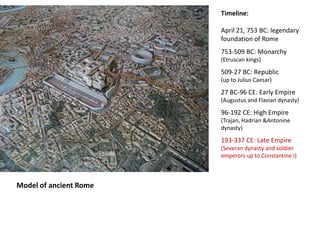
Timeline:April 21, 753 BC: legendary foundation of Rome753-509 BC: Monarchy (Etruscan kings)509-27 BC: Republic(up to Julius Caesar)27 BC-96 CE: Early Empire(Augustus and Flavian dynasty)96-192 CE: High Empire(Trajan, Hadrian & Antonine dynasty)193-337 CE: Late Empire(Severan dynasty and soldier emperors up to Constantine I)Model of ancient Rome
Tetrarchy under Diocletian, 284 to 305,And the rise of ConstantineStatue of the four Tetrarchs, 4th century.Originally in Constantinople, now in Venice.Material: Porphyry. Size: ca. 4’
Reconstruction showing how the statues would have originally been set up.Statue of the four Tetrarchs, 4th century.Originally in Constantinople, now in Venice.Material: Porphyry. Size: ca. 4’
Rome, Arch of Constantine, 312-315erected after Constantine defeated Maxentius at the Battle at the Milvian Bridge over the Tibur river in Rome
Frieze from the arch of Constantine: Constantine distributing largesse
Diagram of the Arch of Constantine. The colors indicate the dating of the decorative elements.
Rome, Arch of Constantine, detail
Forum Romanum, with Basilica of Maxentius / Constantine
Rome, Basilica Nova (New Basilica of Maxentius and Constantine), 306-312
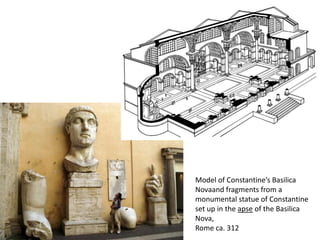
Model of Constantine’s Basilica Novaand fragments from a monumental statue of Constantine set up in the apse of the Basilica Nova, Rome ca. 312
Portrait of Trajan Decius, ca. 250 CEHead of a monumental statue of Constantine, ca. 315 CE
Statue of the four Tetrarchs, 4th century.Originally in Constantinople, now in Venice.Material: Porphyry. Size: ca. 4’Head of a monumental statue of Constantine, ca. 315 CE
Aula Palatina, Trier (Germany) early 4th cent.
Coins of Emperor Constantine, 4th cent.4th century coin showing the Chi Rho symbol (X P) and Greek letters Alpha and OmegaCa. 315Constantine shown with personification of Mithras / Sol Invictus (the invincible sun)Ca. 325Constantine shown with cross-and-orb staff
TimelineGreeceGeometric through Archaic periods	900-480 BCClassical period			480-400 BCLate Classical and Hellenistic periods	400-30 BCEtruscan				8th-2nd cent. BCRomeMonarchy and Republic		753-27 BCEarly and High Empire		27 BC-200 CELate Empire			200 CE-337 CE

2011 survey -_constantine

  • 1.
    Rome: Art andArchitecture under Constantine
  • 2.
    Timeline:April 21, 753BC: legendary foundation of Rome753-509 BC: Monarchy (Etruscan kings)509-27 BC: Republic(up to Julius Caesar)27 BC-96 CE: Early Empire(Augustus and Flavian dynasty)96-192 CE: High Empire(Trajan, Hadrian & Antonine dynasty)193-337 CE: Late Empire(Severan dynasty and soldier emperors up to Constantine I)Model of ancient Rome
  • 3.
    Tetrarchy under Diocletian,284 to 305,And the rise of ConstantineStatue of the four Tetrarchs, 4th century.Originally in Constantinople, now in Venice.Material: Porphyry. Size: ca. 4’
  • 4.
    Reconstruction showing howthe statues would have originally been set up.Statue of the four Tetrarchs, 4th century.Originally in Constantinople, now in Venice.Material: Porphyry. Size: ca. 4’
  • 5.
    Rome, Arch ofConstantine, 312-315erected after Constantine defeated Maxentius at the Battle at the Milvian Bridge over the Tibur river in Rome
  • 6.
    Frieze from thearch of Constantine: Constantine distributing largesse
  • 7.
    Diagram of theArch of Constantine. The colors indicate the dating of the decorative elements.
  • 8.
    Rome, Arch ofConstantine, detail
  • 9.
    Forum Romanum, withBasilica of Maxentius / Constantine
  • 10.
    Rome, Basilica Nova(New Basilica of Maxentius and Constantine), 306-312
  • 11.
    Model of Constantine’sBasilica Novaand fragments from a monumental statue of Constantine set up in the apse of the Basilica Nova, Rome ca. 312
  • 12.
    Portrait of TrajanDecius, ca. 250 CEHead of a monumental statue of Constantine, ca. 315 CE
  • 13.
    Statue of thefour Tetrarchs, 4th century.Originally in Constantinople, now in Venice.Material: Porphyry. Size: ca. 4’Head of a monumental statue of Constantine, ca. 315 CE
  • 14.
    Aula Palatina, Trier(Germany) early 4th cent.
  • 15.
    Coins of EmperorConstantine, 4th cent.4th century coin showing the Chi Rho symbol (X P) and Greek letters Alpha and OmegaCa. 315Constantine shown with personification of Mithras / Sol Invictus (the invincible sun)Ca. 325Constantine shown with cross-and-orb staff
  • 16.
    TimelineGreeceGeometric through Archaicperiods 900-480 BCClassical period 480-400 BCLate Classical and Hellenistic periods 400-30 BCEtruscan 8th-2nd cent. BCRomeMonarchy and Republic 753-27 BCEarly and High Empire 27 BC-200 CELate Empire 200 CE-337 CE

Editor's Notes

  • #4 Diocletian – only emperor that retired – set up the tetrach by dividing the empire – art shows the rulers as being identical; de-emphasis of individuality; reestablishment of authority in Rome at this time. Sculpture was often made using a stone called Porphyry – a very hard stone that was quarried in Egypt reserved for the emperor alone. Producing art in purple, a color of authority was only done by the emperor. These sculptures would have been set up around public spaces as a way of consolidating authority throughout the empire. After Diocletian’s death, the system of government fell apart, and civil wars broke out – out of the wars rose Constantine.
  • #6 Followed imperial models, but the sculpture is very different.
  • #7 Shows Constantine distributing largesse – cash to the Roman citizens
  • #10 One of the first monuments erected by Constantine – located in the Forum, the public meeting place for Roman. Basilica comes from a Greek word meaning king – literally meaning the house of the king. Used for imperial architecture. Emperors usually erected basilicas in their name as public monuments of their rule.
  • #11 Intricate ceiling and had a large sculpture of the emperor was placed – used as audience receptions for the emperor or where judicial rulings would take place in the name of the emperor. The sculpture of the emperor served to show imperial order over all the activities that took place within the building.
  • #13 Comparison with older Roman rulers – Constantine has large piercing eyes; no sense of age – he is eternally youthful
  • #14 Elements of portraiture are not represented in the tertrachs – the idea was to make them indistinguishable from each other.
  • #15 Aula – a type of audience hall, unlike a basilica, more reserved for building associated with imperial houses. In Trier is what remains of the palace of Constantine, he would’ve set up another similar monumental sculpture of himself. This will have a strong effect on architecture in the Christian period.
  • #16 Chi Rho – the symbols that appeared in the sky to Constantine before a battle – the first two Greek letters of Christ’s name. After winning the battle, Constantine was convinced of the validity of Christianity. No emperor before had been Christian. Other coinage that came up depicted either Mithras or Sol Invictus – popular among the Roman military during the 3rd century. This was a type of cult. This imagery reflects the popularity of the cult practices of the time. Shows a cross and orb staff – combination of Christianity and an orb to represent the universe. This is to symbolize the victory of Christianity with the world.