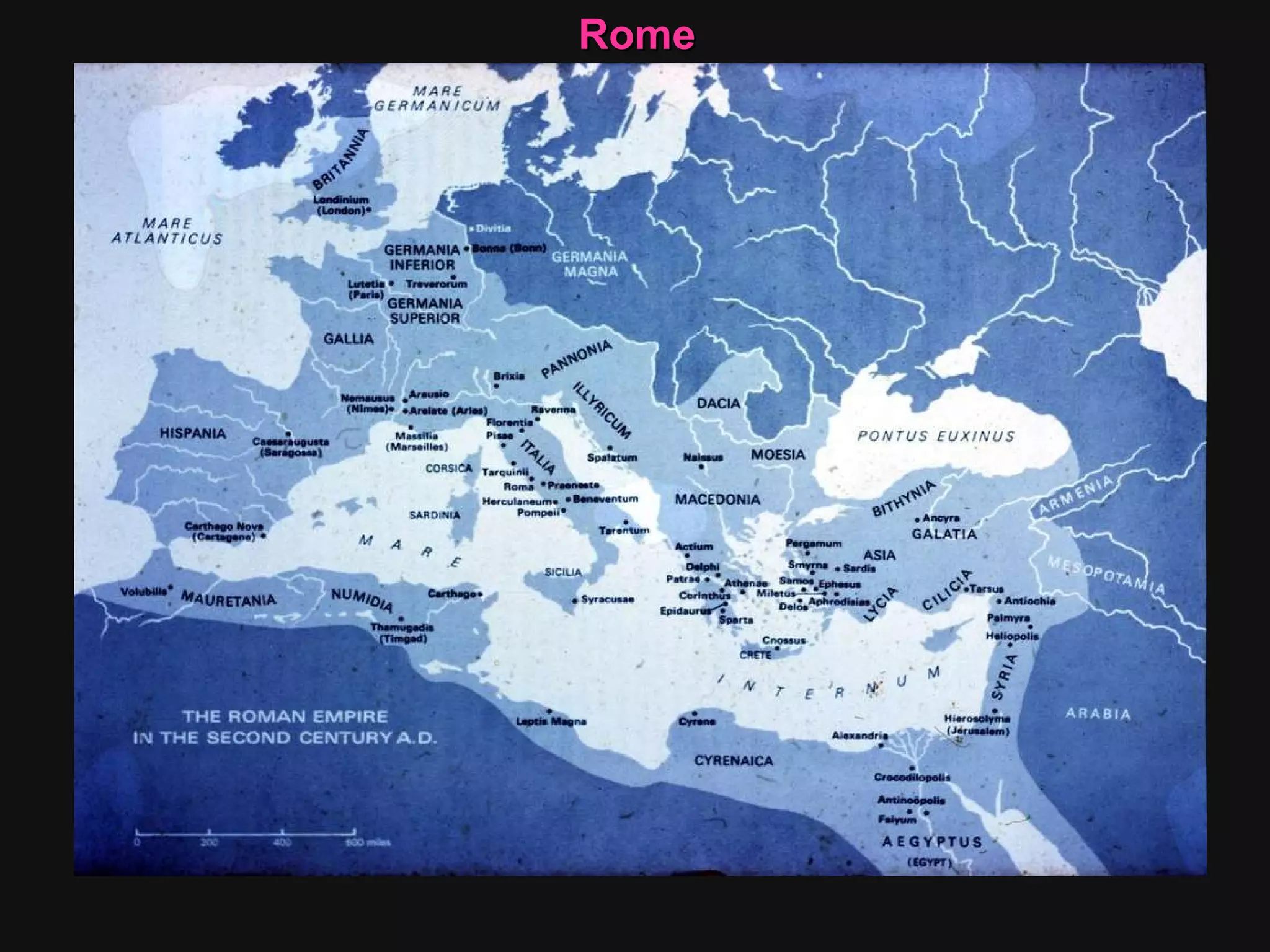
Rome
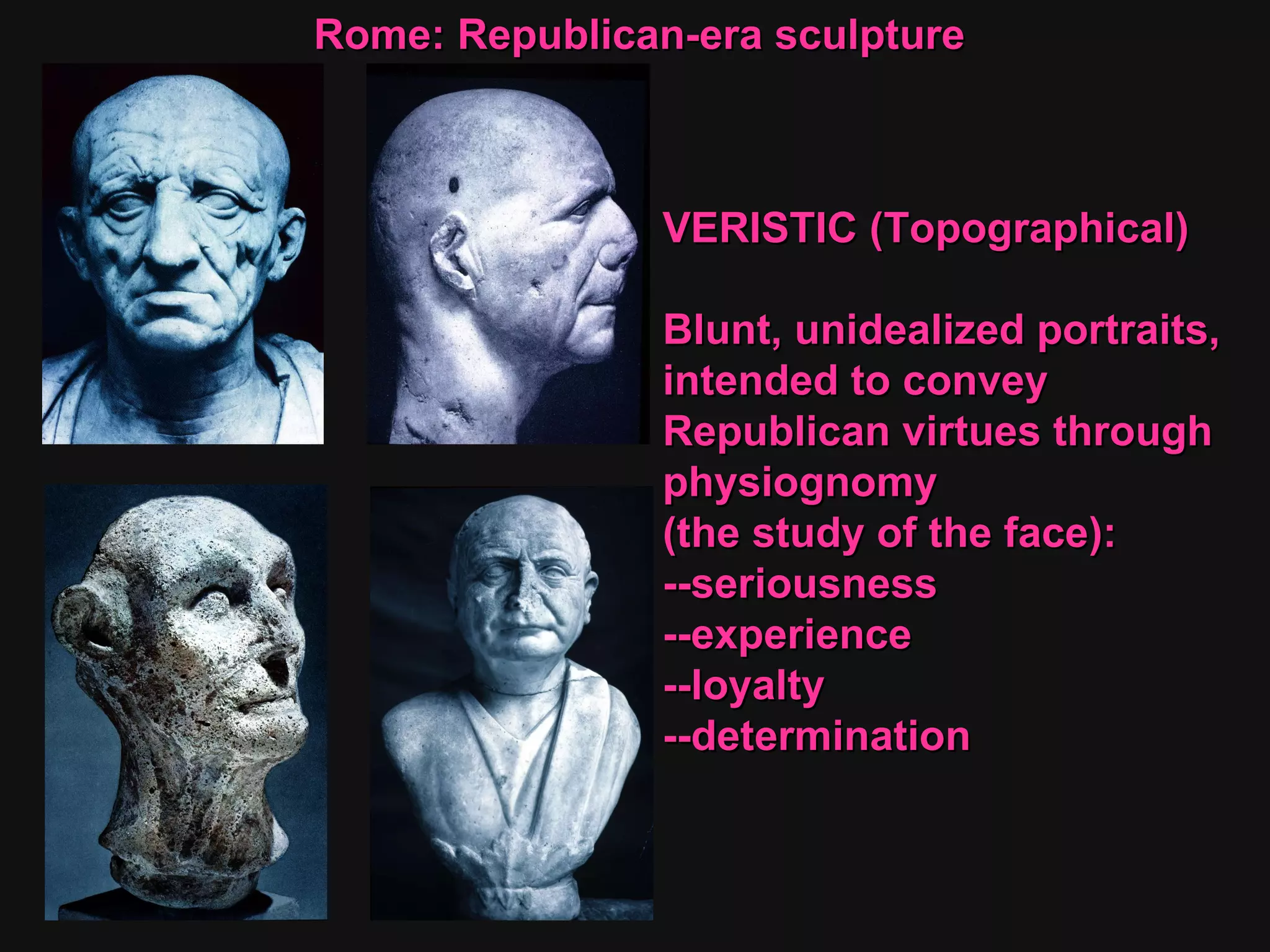
VERISTIC (Topographical) Blunt, unidealized portraits, intended to convey  Republican virtues through  physiognomy (the study of the face): --seriousness --experience --loyalty --determination Rome: Republican-era sculpture
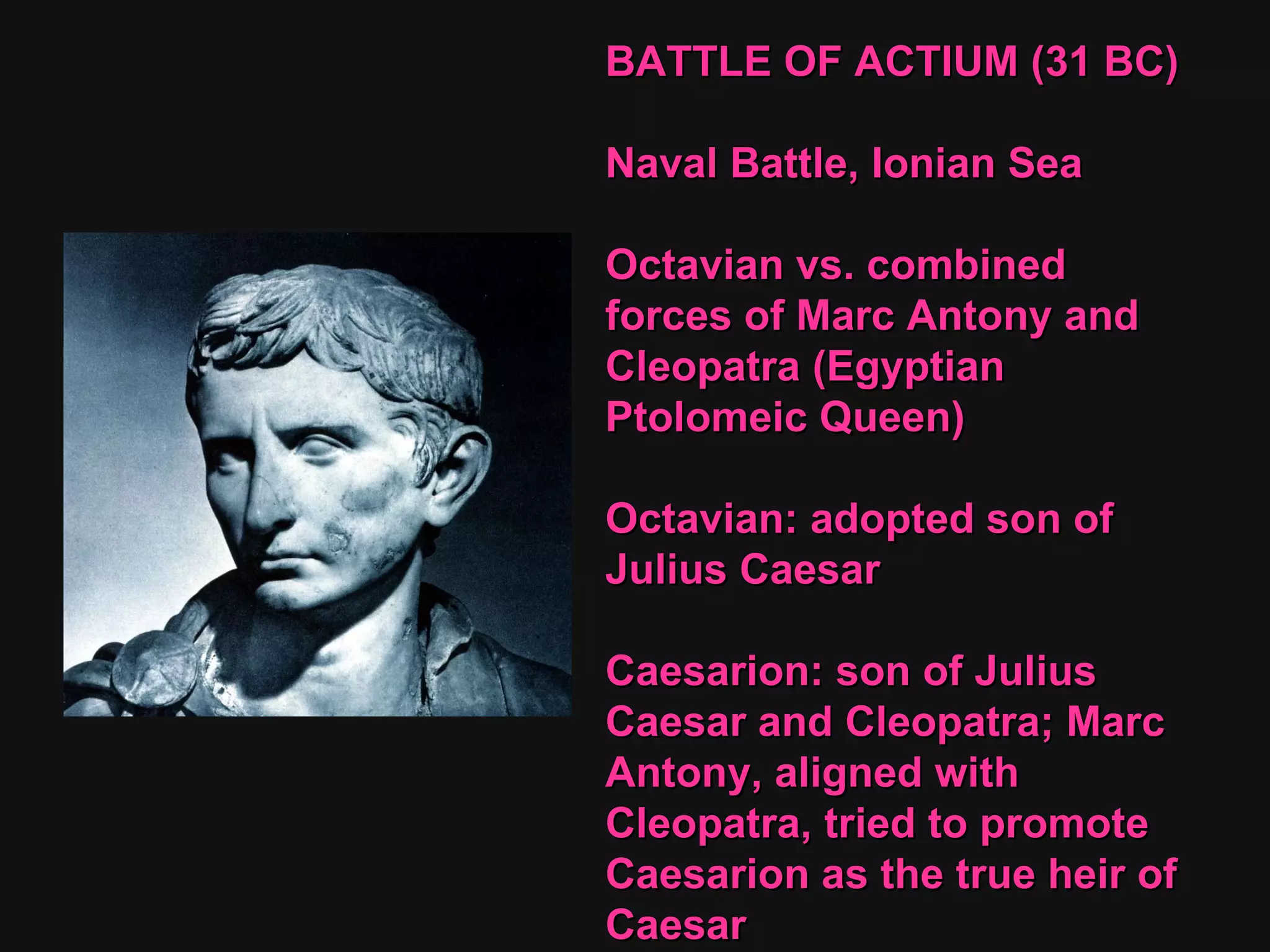
BATTLE OF ACTIUM (31 BC)  Naval Battle, Ionian Sea Octavian vs. combined forces of Marc Antony and Cleopatra (Egyptian Ptolomeic Queen) Octavian: adopted son of Julius Caesar Caesarion: son of Julius Caesar and Cleopatra; Marc Antony, aligned with Cleopatra, tried to promote Caesarion as the true heir of Caesar
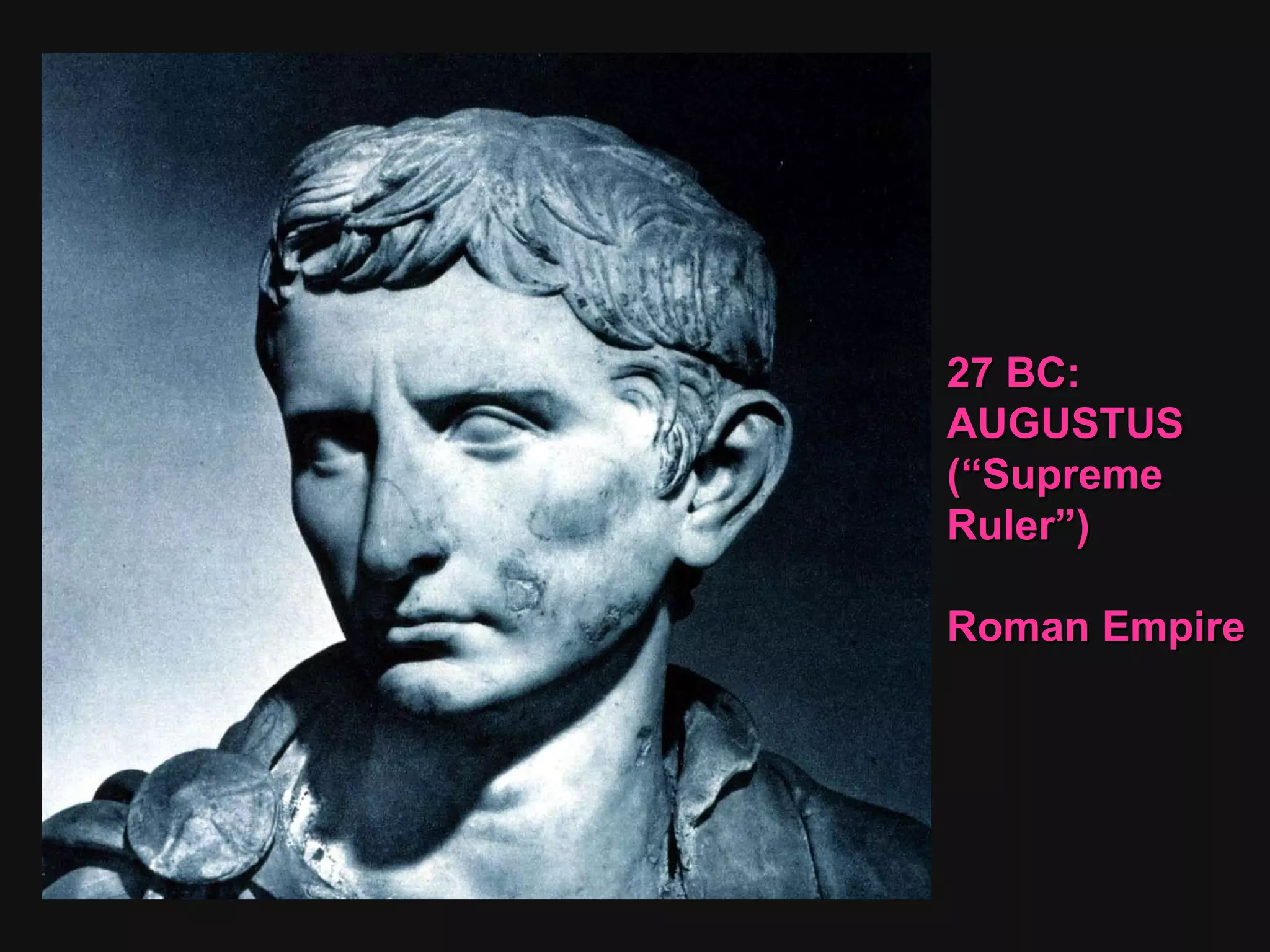
27 BC: AUGUSTUS  (“Supreme Ruler”)  Roman Empire
Octavian Augustus
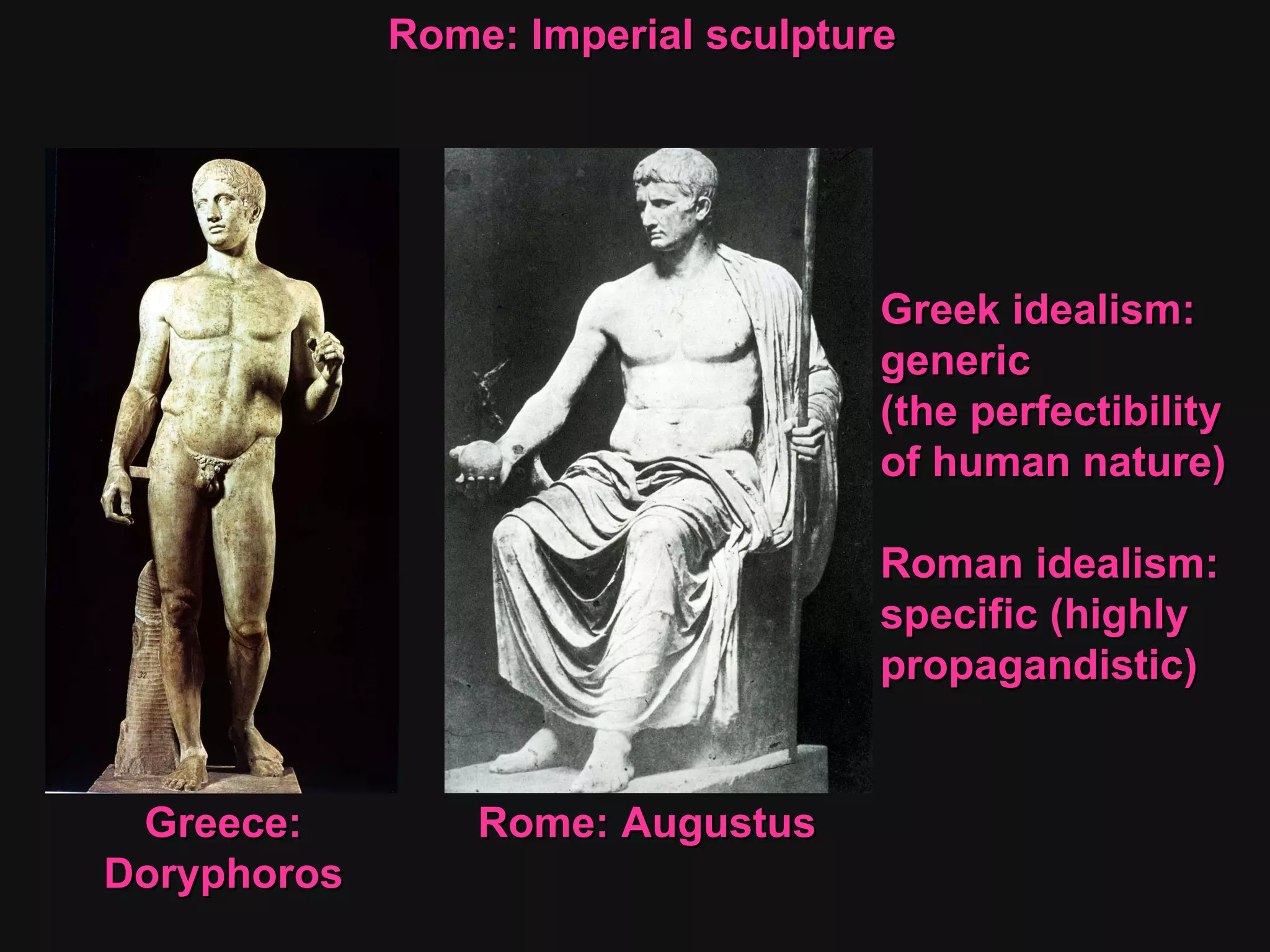
Greek idealism:  generic  (the perfectibility  of human nature) Roman idealism:  specific (highly  propagandistic) Rome: Imperial sculpture  Greece: Doryphoros Rome: Augustus
Rome: Imperial sculpture  Augustus of Prima Porta
Rome: Imperial sculpture—Augustus of Prima Porta   Ideal: generic idea Ideal: specific individual
Rome: Imperial sculpture—Augustus of Prima Porta   Cupid: Son of Venus;  father of Aeneas   Dolphin: Symbol of Venus;  born from the sea   Julio-Claudian line: Claimed to be  descended  from Aeneas
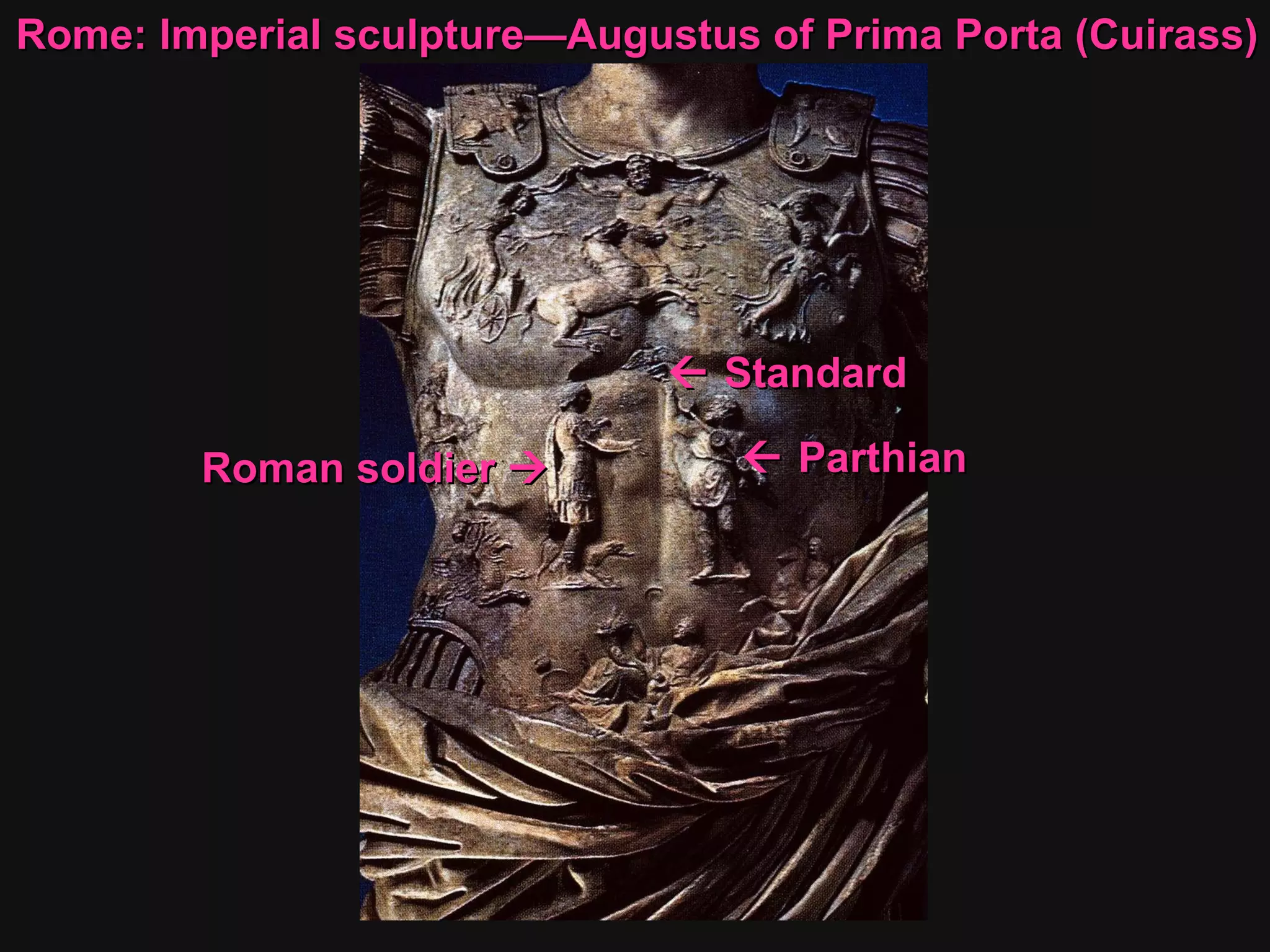
Rome: Imperial sculpture—Augustus of Prima Porta (Cuirass)      Parthian     Standard  Roman soldier  
Rome: Imperial sculpture—Augustus of Prima Porta (Cuirass)      Caelus: canopy of the sky     Moon: descending  Sun: ascending   Apollo: sun      Diana: moon  Mother Earth figure with   cornucopia (horn of  plenty): Wealth and  bounty of the new age  that is dawning
Rome: Imperial sculpture—Augustus of Prima Porta (Cuirass)   Return of standards signifies  the dawn of a new era under of  pride and patriotism under  Augustus, which will lead to  Roman prosperity.
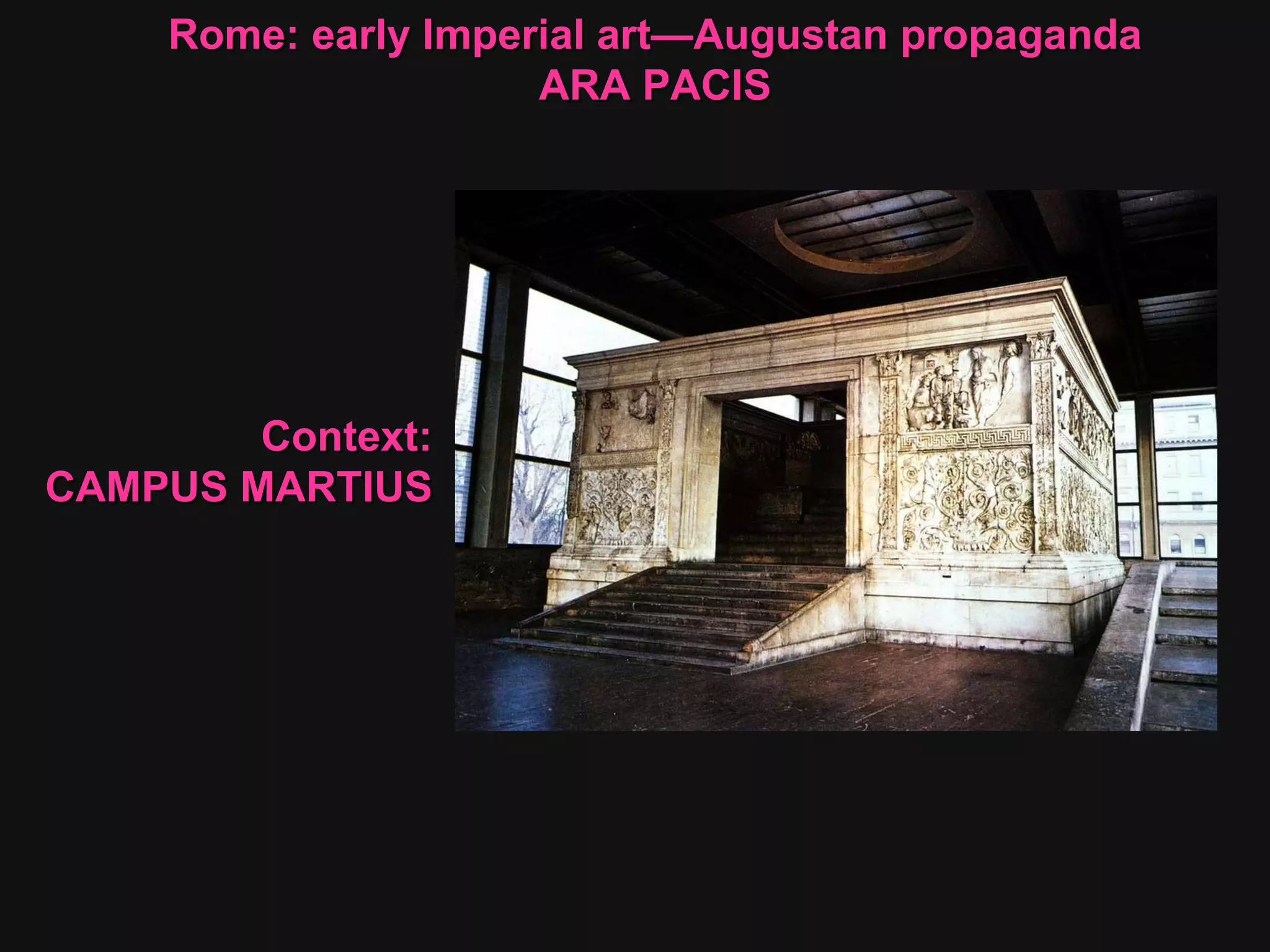
Ara Pacis Augustae Ara: altar Pacis: peace Augustae: Augustan “ The Altar of Augustan Peace” Rome: early Imperial art—Augustan propaganda ARA PACIS
Context: CAMPUS MARTIUS Rome: early Imperial art—Augustan propaganda ARA PACIS
Rome: early Imperial art—Augustan propaganda ARA PACIS    Aeneas Shrine      Sow
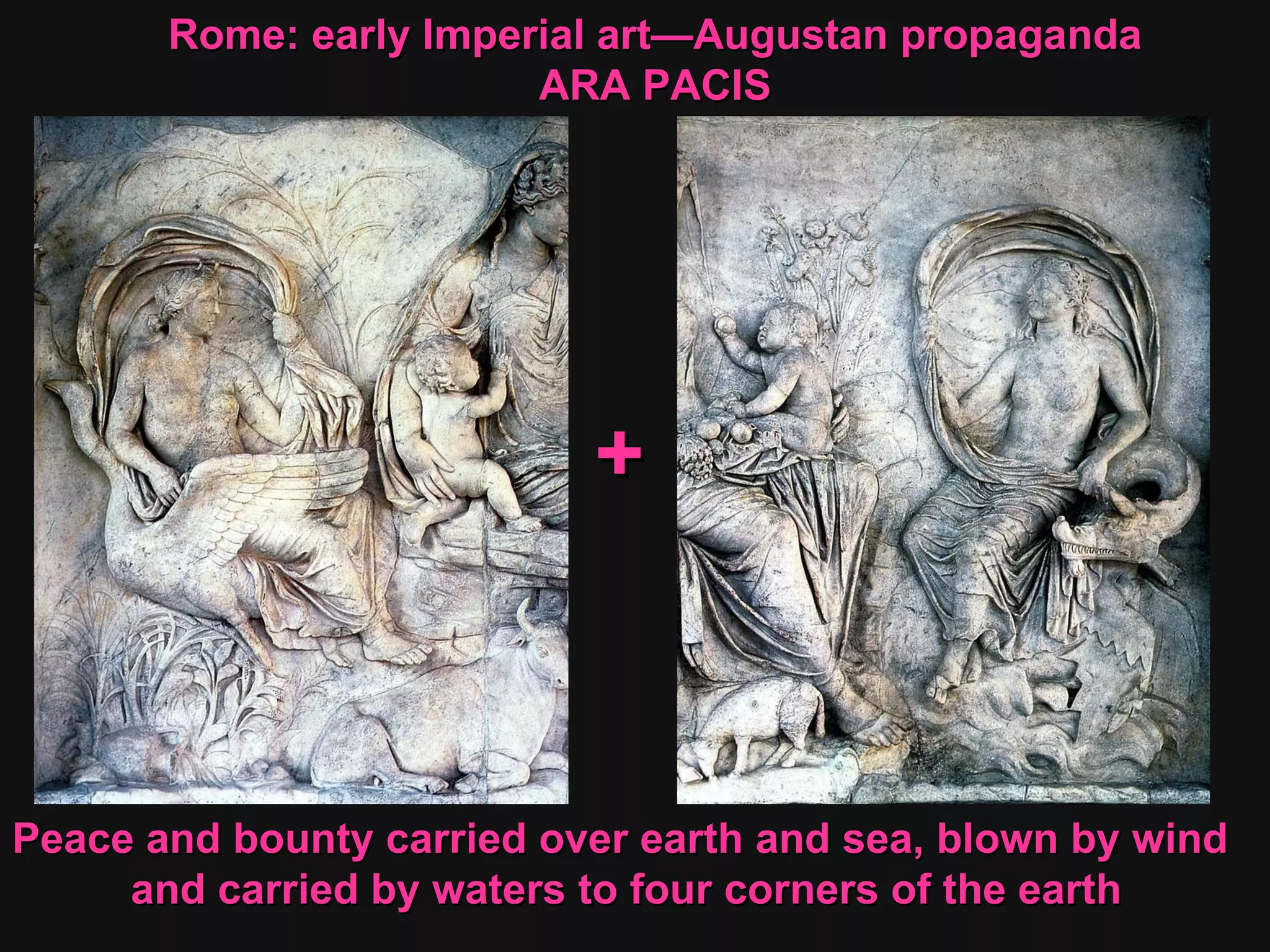
Peace and bounty carried over earth and sea, blown by wind  and carried by waters to four corners of the earth + Rome: early Imperial art—Augustan propaganda ARA PACIS
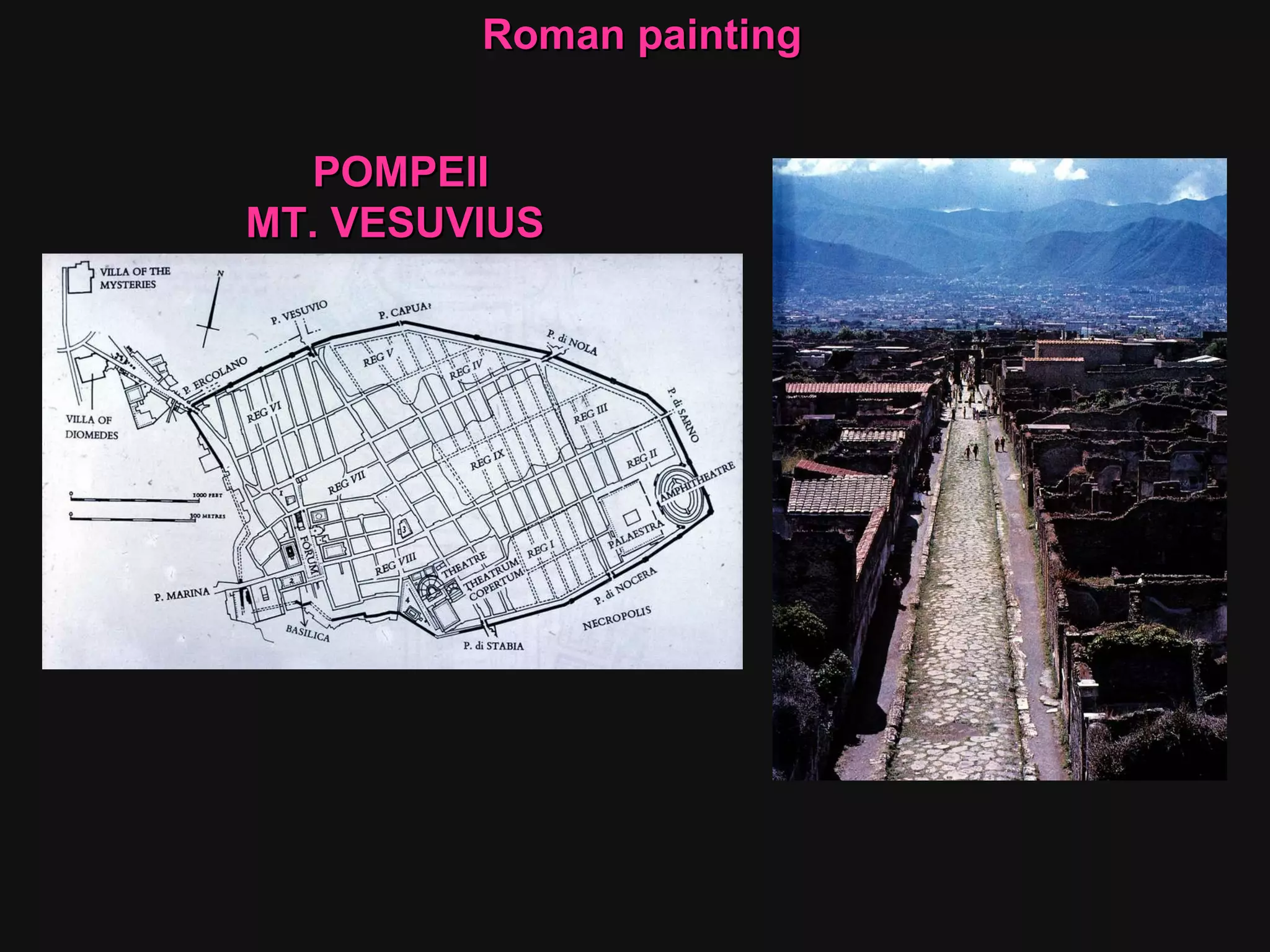
POMPEII MT. VESUVIUS Roman painting
NERO: --He commits suicide in  68 AD. --The Senate declares him  an enemy of the state  and Galba, a Roman  governor in Spain,  marches on Rome. --Nero commits suicide  and Galba becomes emperor --Galba is assassinated  and two other emperors  quickly come and go --The eastern armies  declare their general, Vespasian, as emperor.
Vespasian
Rome: Imperial portraiture—Vespasian (return to veristic style)
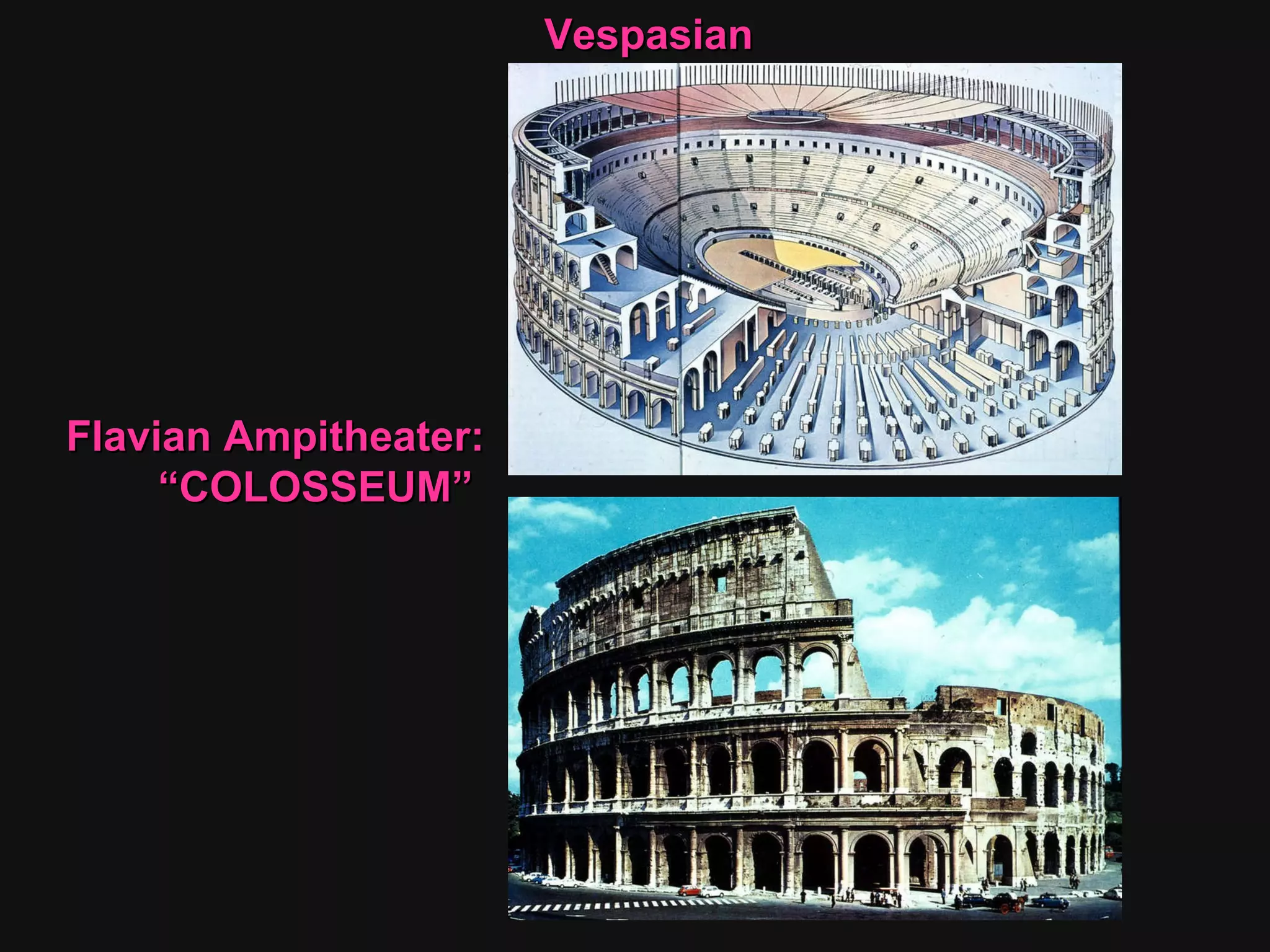
Vespasian  Flavian Ampitheater: “ COLOSSEUM”
   Doric (Tuscan)    Corinthian pilasters    Corinthian     Ionic Roman architecture: The COLOSSEUM
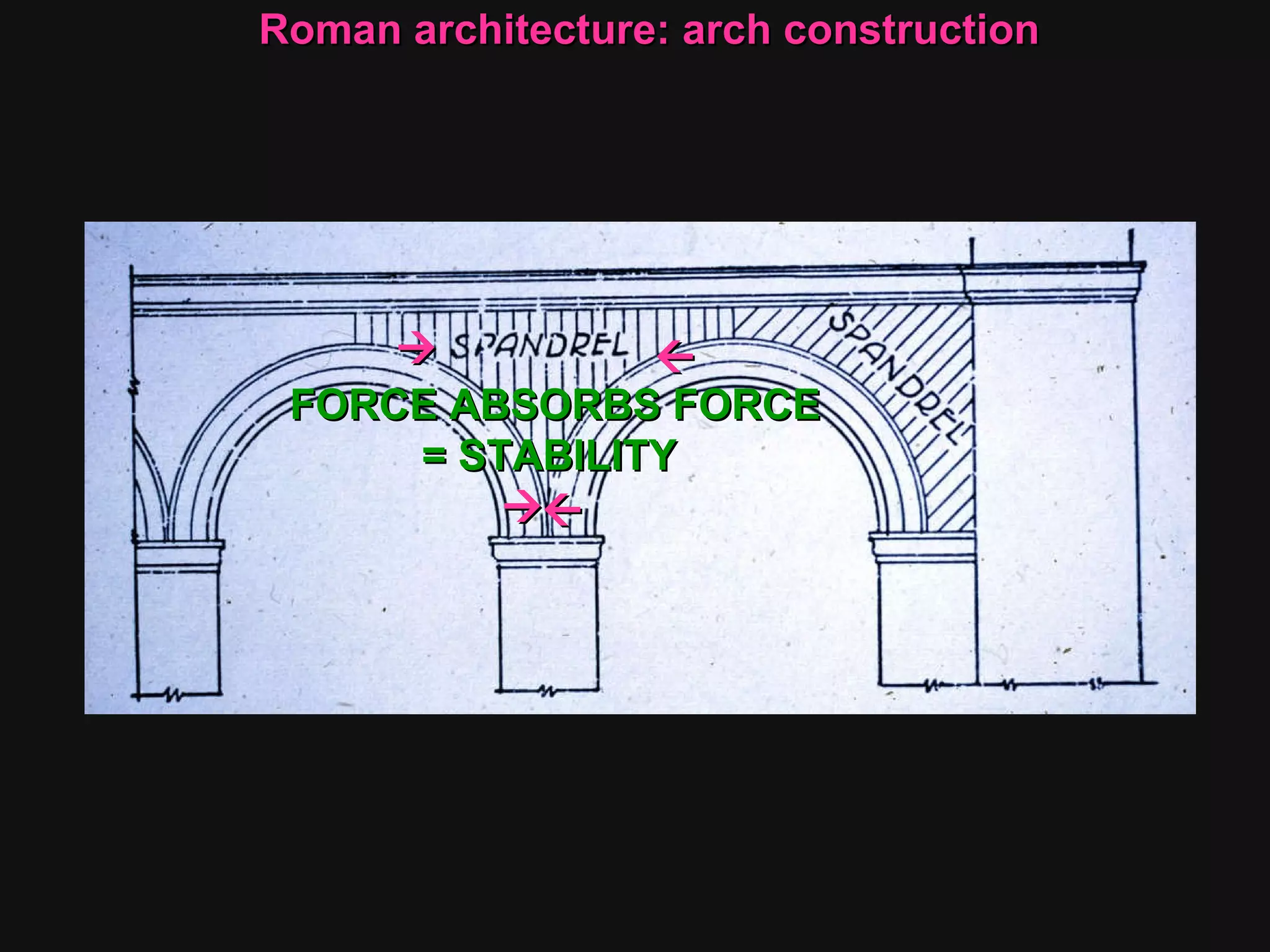
Roman architecture: arch construction VOUSSOIRS: wedge-shaped blocks  which comprise an  arch KEYSTONE: Central voussoirs
  FORCE ABSORBS FORCE = STABILITY   Roman architecture: arch construction
ARCADE: Series of arches Roman architecture: arch construction
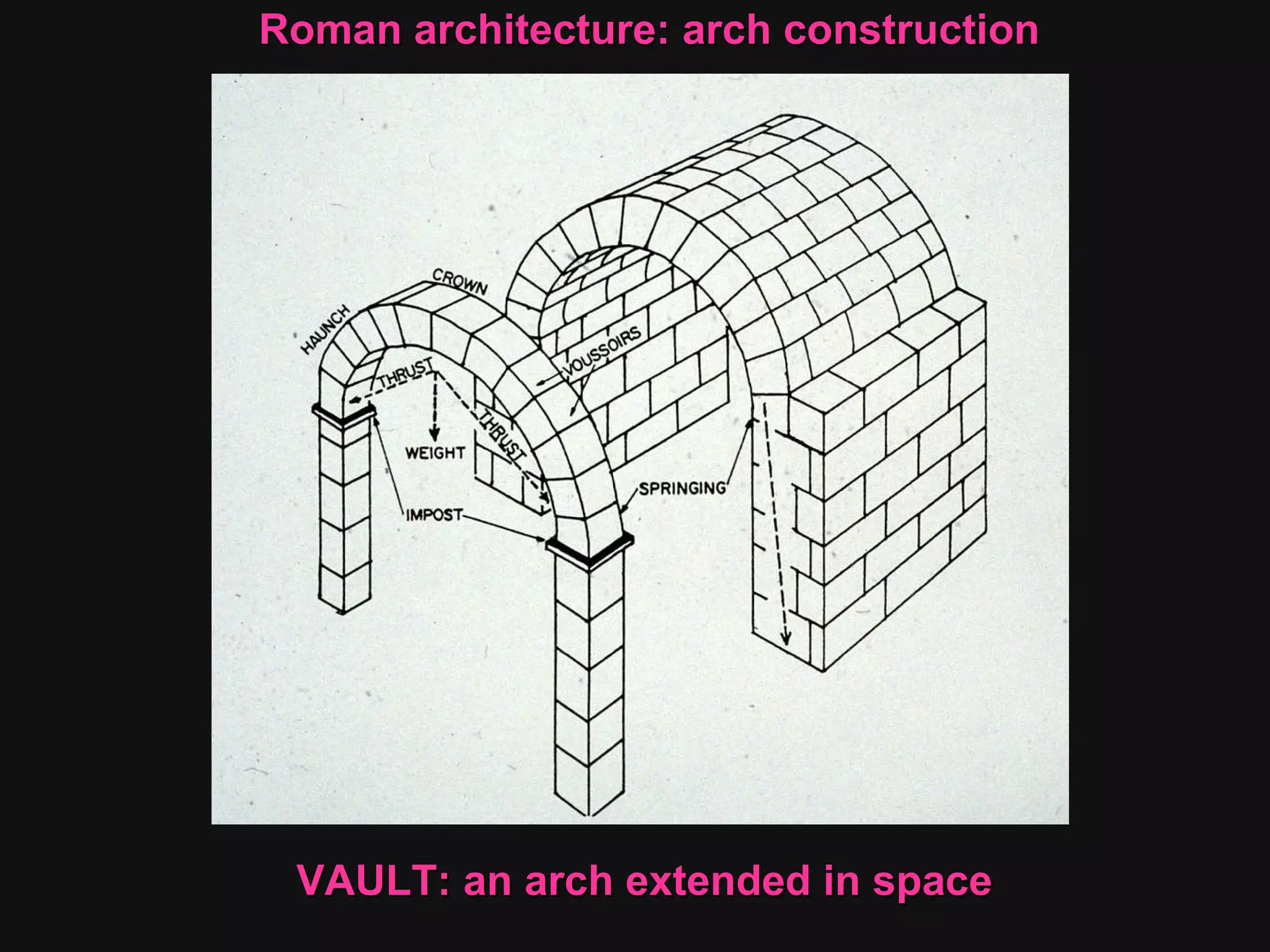
Roman architecture: arch construction VAULT: an arch extended in space
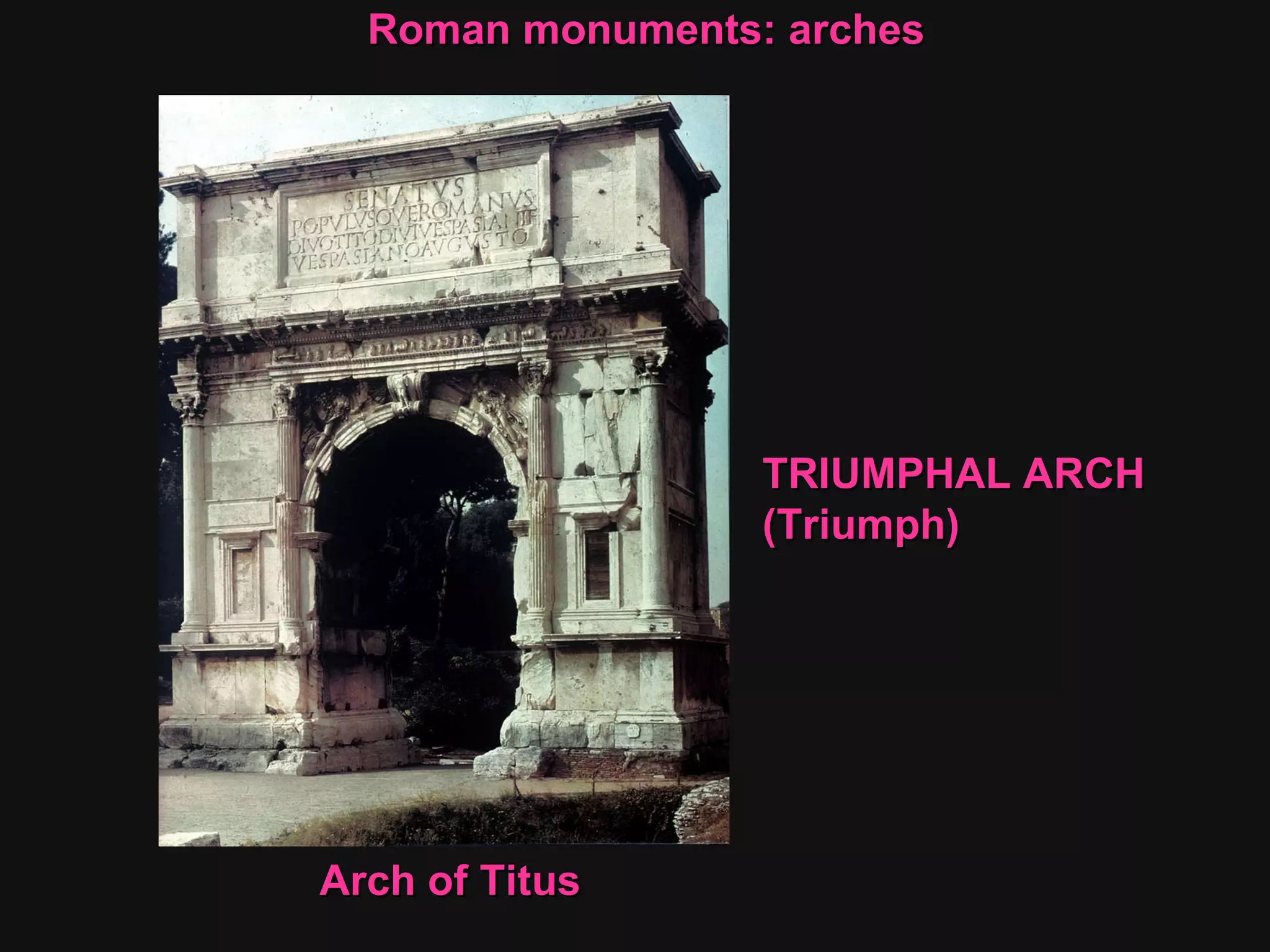
Roman monuments: arches  Arch of Titus TRIUMPHAL ARCH  (Triumph)
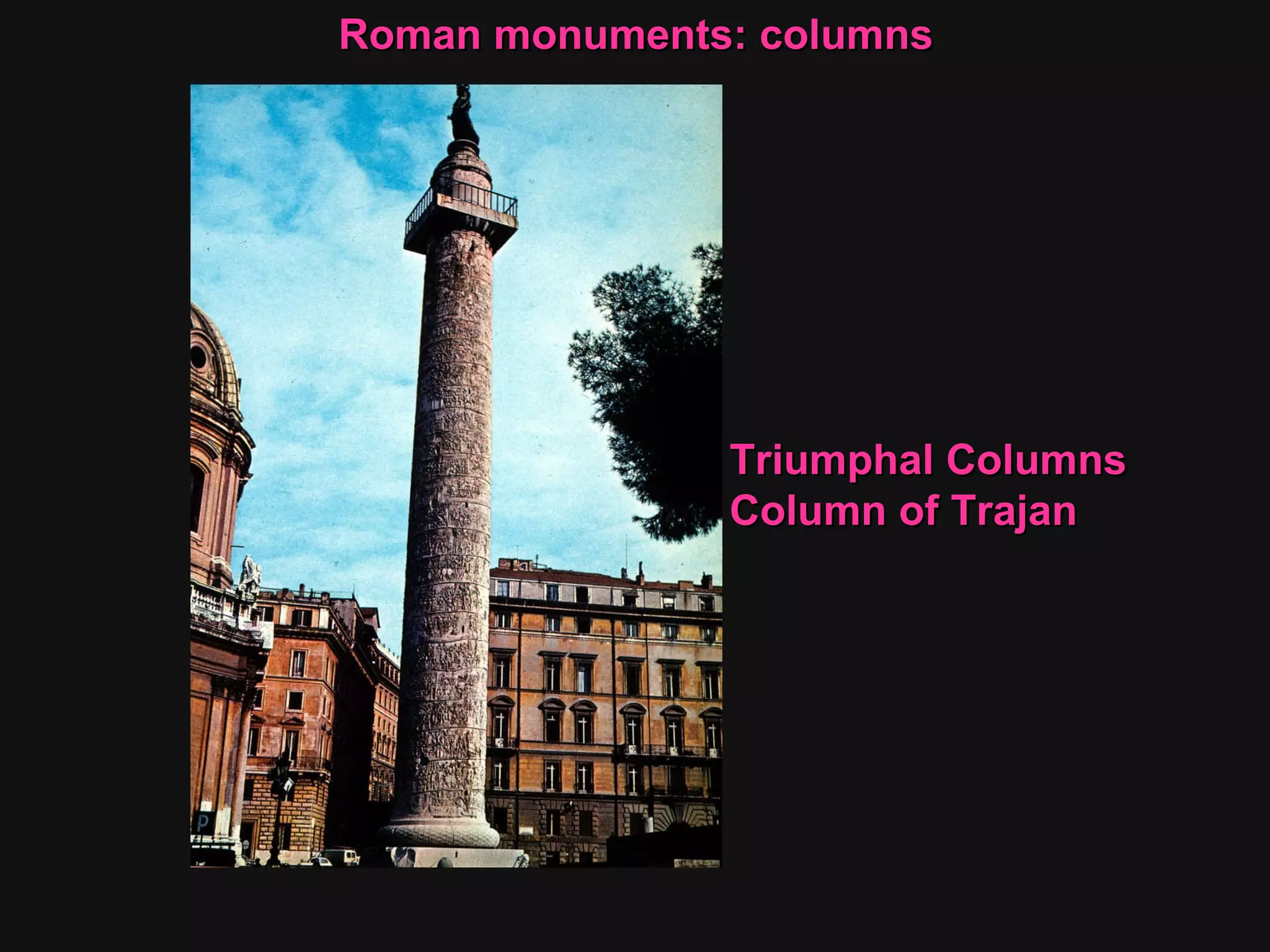
Triumphal Columns Column of Trajan Roman monuments: columns
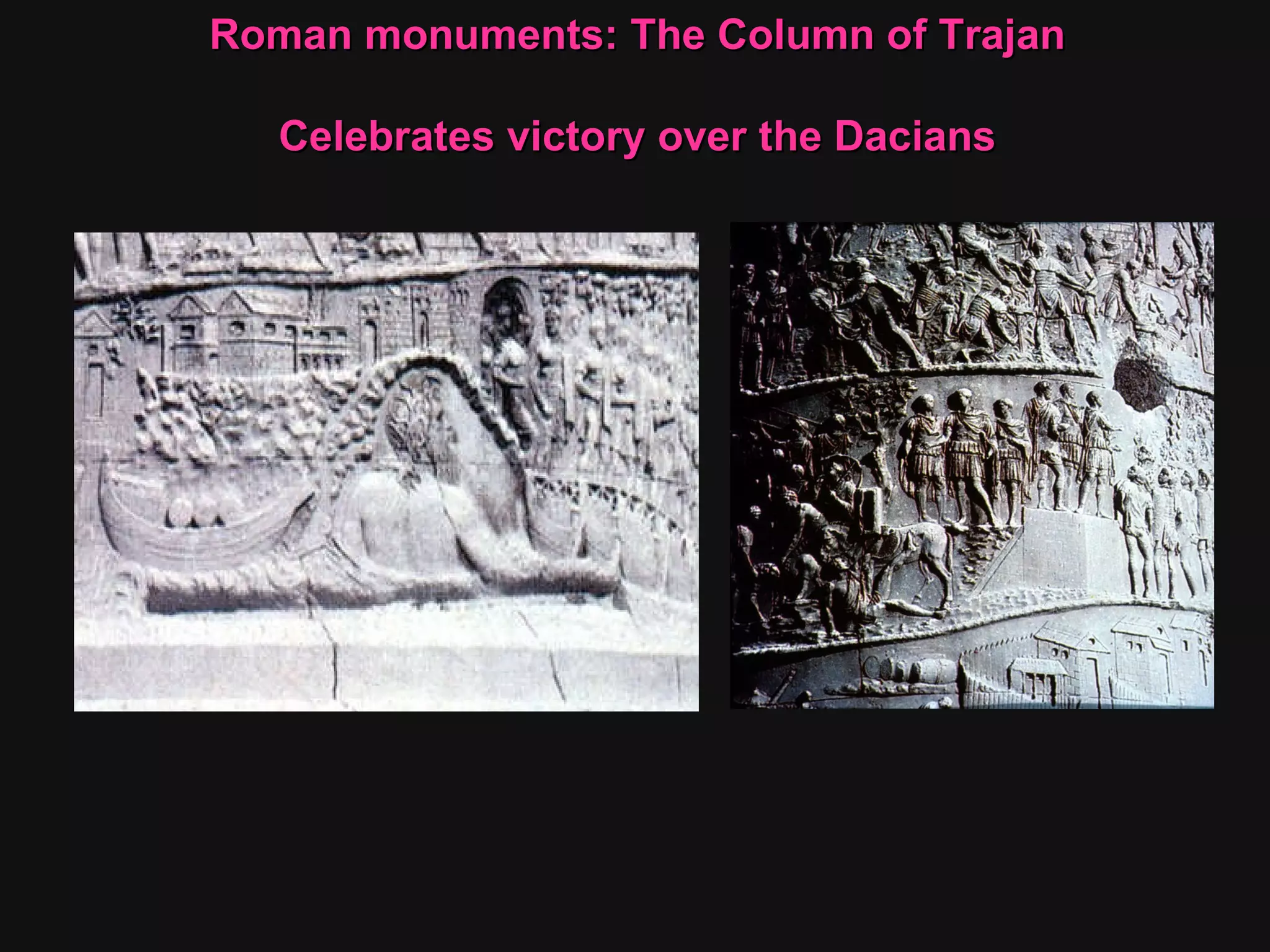
Roman monuments: The Column of Trajan  Celebrates victory over the Dacians
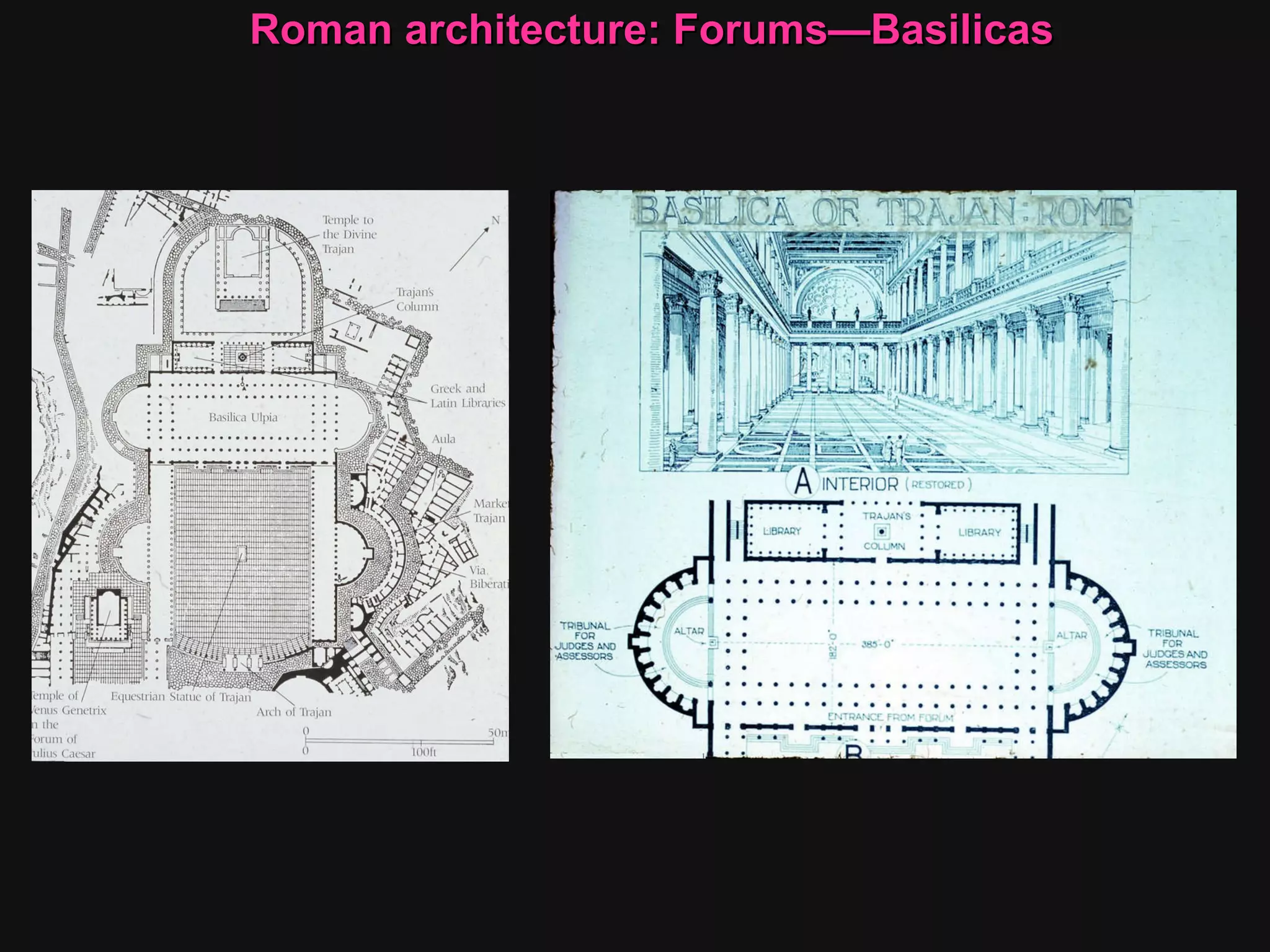
Roman architecture: Forums—Basilicas
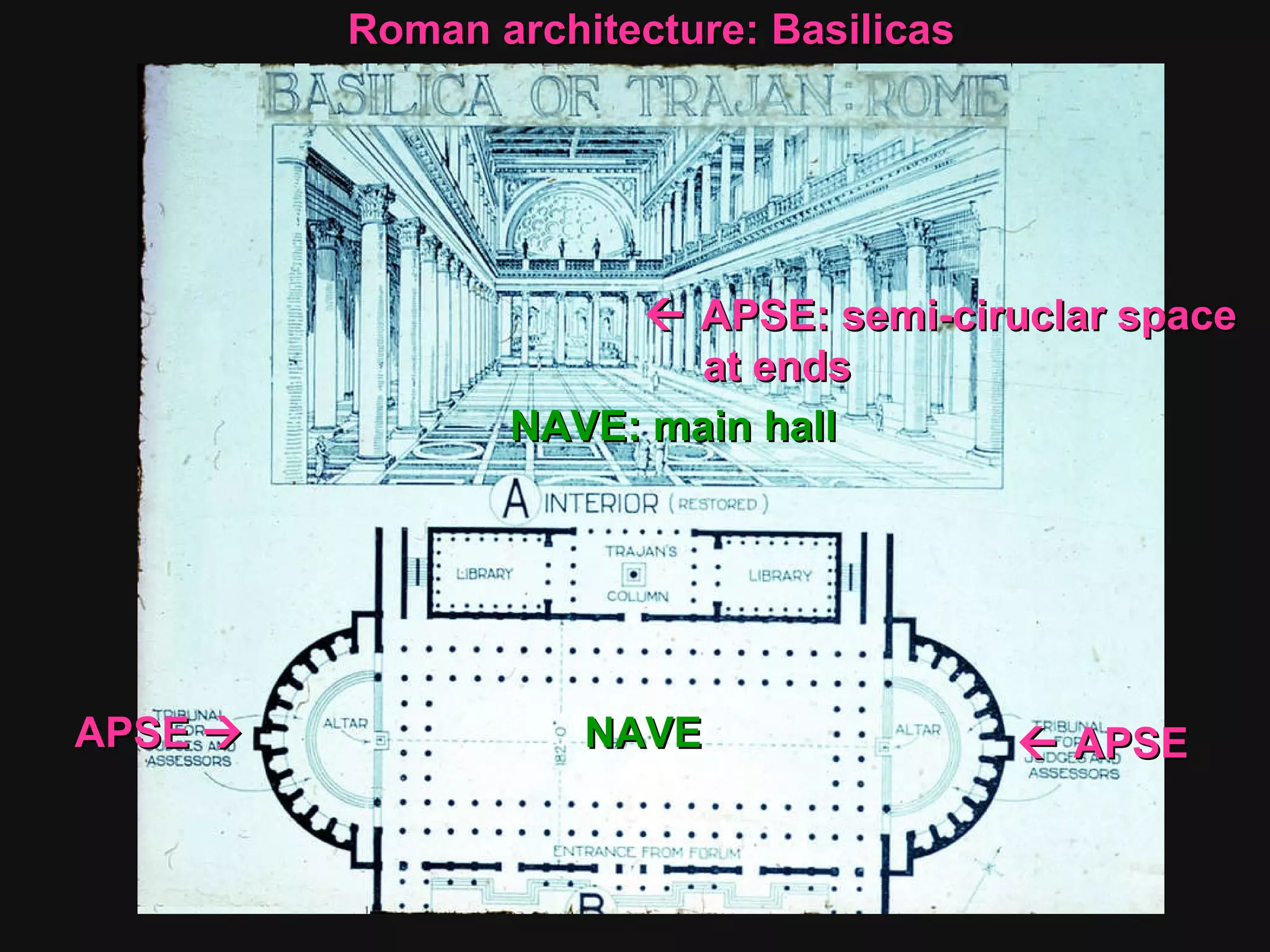
Roman architecture: Basilicas     APSE APSE   NAVE: main hall  NAVE    APSE: semi-ciruclar space  at ends
Roman Imperial portraiture: Hadrian    Bearded:   To appear more “ Greek”
Roman architecture: Villa Adriana (Hadrian’s Villa), Tivoli
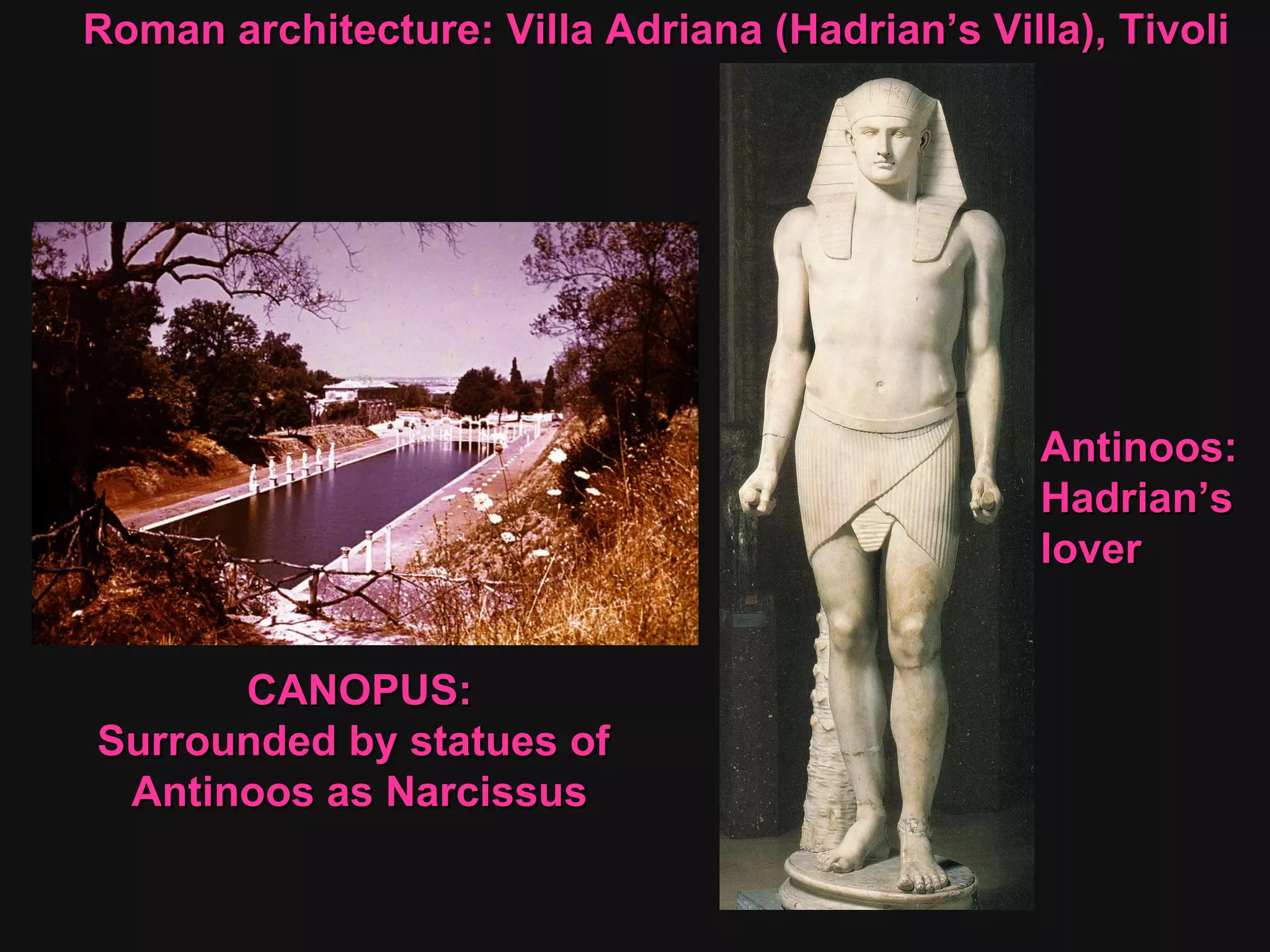
Roman architecture: Villa Adriana (Hadrian’s Villa), Tivoli  Antinoos: Hadrian’s lover CANOPUS: Surrounded by statues of  Antinoos as Narcissus
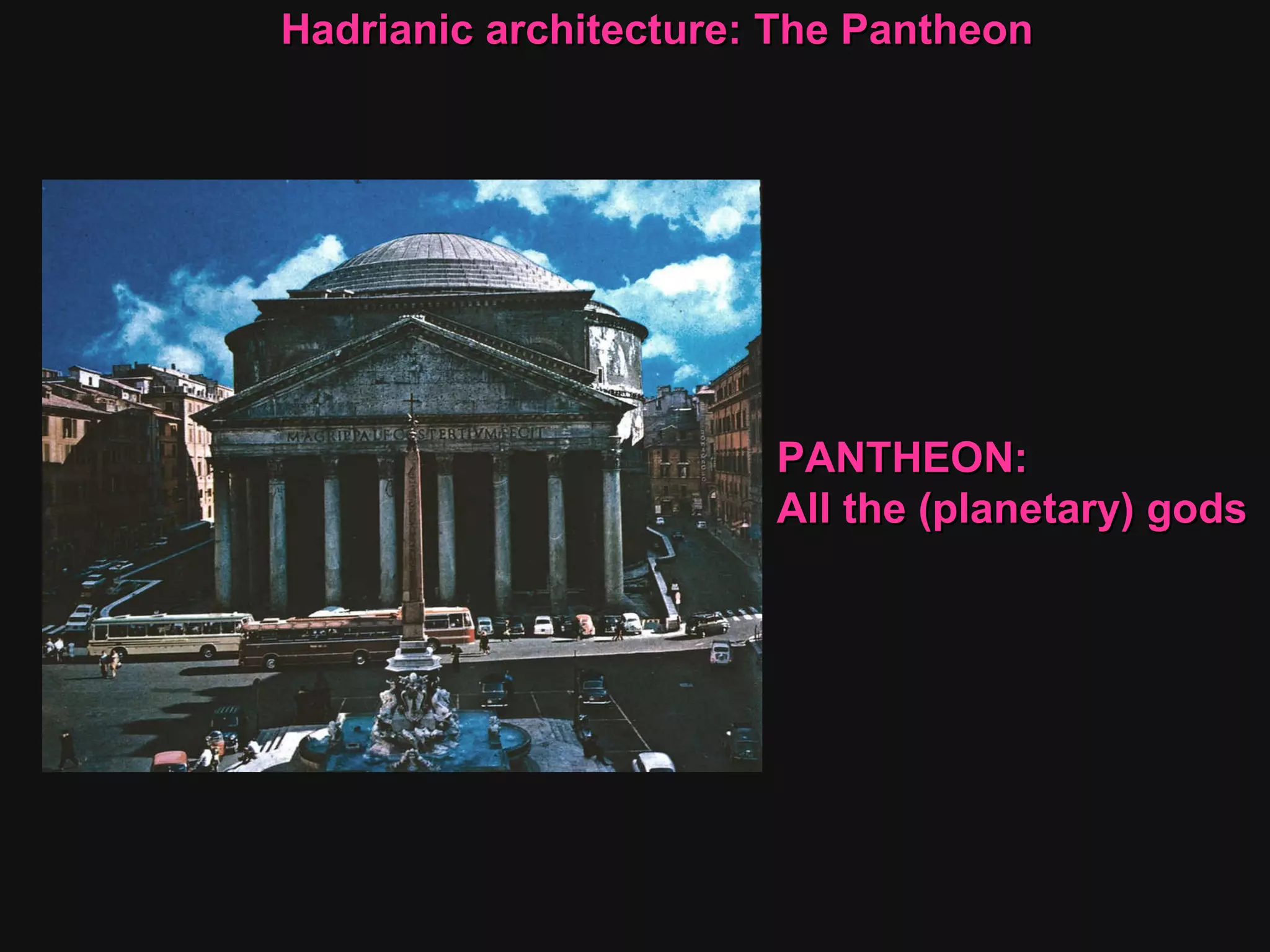
PANTHEON: All the (planetary) gods Hadrianic architecture: The Pantheon
Diocletian The TETRARCHY: Four rulers (Augusti and Caesari)
Constantine (the Great)  Battle of the Milvian Bridge,  312 AD
The Vision of Constantine CHI RHO  “ Chi” + “rho” + istos  “ Christos”
The Arch of Constantine  SPOLIA
The Arch of Constantine  Carved for the arch: a less classical style Spolia—recycled from earlier monuments: classical style

Review 5 rome

Editor's Notes

  • #4 OCTAVIAN, BATTLES ANTHONY AND CLEO, ACTIUM, THEN DECLARES END TO REPUBLIC, HIMSELF AS EMPORER, CHANGES NAME TO AUGUSTUS—WITH IT COMES DRASTIC CHANGE IN ART ALSO__NEW IMPERIAL ART, NO LONGER REPUBLIC, NOW AN EMPEROR DEIFIED, ETC, AND NEW IMAGE IN RULER PORTRAITURE, OLD VERISM GONE
  • #5 OCTAVIAN, BATTLES ANTHONY AND CLEO, ACTIUM, THEN DECLARES END TO REPUBLIC, HIMSELF AS EMPORER, CHANGES NAME TO AUGUSTUS—WITH IT COMES DRASTIC CHANGE IN ART ALSO__NEW IMPERIAL ART, NO LONGER REPUBLIC, NOW AN EMPEROR DEIFIED, ETC, AND NEW IMAGE IN RULER PORTRAITURE, OLD VERISM GONE
  • #7 EVEN BODY OF A GOD, BUT WELL HE IS A GOD, LIKE TAKING ALL THAT GREEK PERFECTION WHICH WAS GENERIC, BUT NOW INCORPORATING IT INTO THE IDEA OF A SPECIFIC PERSON, AND IDEALIZING HIM TO EXTREME LEVELS
  • #15 ALTAR CELEBRATING PEACE BROUGHT BY AUGUSTUS, AND SOMETHING THEY WOULD VERY CONCIOUSLY REMIND YOU OF BY CONTEXT, PLACEMENT—GNOMMEN FOR WORLD’S LARGEST SUNDIAL, OBELISK AS GONOMMEN, ON BDAY SUN EXACTLY HITS ALTAR ITSELF, AND IDEA OF FORCE, POWER UNDER AUG THRU CAMPUS MARTIUS—PEACE, BUT THROUGH FORCE, AND DEDICATION TO ROME—OTHERS WOULD MOVE CAPITAL TO EG, BUT AUG HAS CONQUERED THEM, KEPT CAPITAL IN ROME, SYM PATRIOTISM OF HIM VS. ANTHONY BY USE OF EG MONUMENT AS GNOMMEN
  • #18 WHAT WE KNOW POMPEII VESUVIUS 79AD
  • #19 BACK TO NERO, GOLDEN HOUSE—BAD GUY, AND WHEN HE DIES SO DOES JULIO CLAUDIAN, ROMANS HAVE HAD JUST ABOUT ENOUGH OF THESE ASSHOLES, A NEW LINE COMES IN, A NEW FAMILY, THE FLAVIANS, AND FIRST ONE IS A POPULAR GENERAL, MAN WHO WILL PROMOTE HIMSELF AS A MAN OF THE PEOPLE, SOMEONE WHO WILL CARE ABOUT THEM THE WAY GUYS LIKE NERO DID NOT, DEDICATED, GENERAL, FROM THE RANKS, VESPASIAN
  • #20 AS A SIGN OF NEW BOND BTW EMP AND PEOPLE DECIDE TO GIVE THEM SOMETHING—ON SITE OF NERO’S YARD, GOLDEN LAKE, ON TOP OF EMP PLEASURE PALACE SYMBOLIC OF PREV DECADENCE, BUILD SOMETHING OF CIVIC VALUE, FOR ALL THE PEOPLE TO USE AND SHARE AND ENJOY
  • #23 ORDERS BASED ON VISUAL WEIGHT, PILASTERS AT TOP. BUT DECORATIVE ONLY, NO SUPPORT FUNCTION, BECAUSE NOT NECESSARY, TRUE ENGINEERING MARVEL, BASIS OF STRUCTURE NOT THIS KIND OF POST AND LINTEL BUILDING OF GREEKS, BUT THE ARCH
  • #26 SO INCREDIBLY STRONG, SIMPLE, AND FLEXIBLE SYSTEM. YOU CAN BUILD TO INFINITY AS LONG AS YOU HAVE SOMETHING AT THE END, A BUTTRESS OR SOMETHING TO ABSORB ALL THE FORCE GENERATED—WHAT CAN THEY DO WITH THIS, BRIDGES, AQUADUCTS, BECAUSE CAN JUST USE THE EARTH ITSELF AS THE BUTTRESS, THE AMOUNT OF FORCE WILL NEVER BE MORE THAN THE EARTH
  • #27 ALSO EXTEND THE ARCH, MAKE VAULTS AND TUNNELS, AS CRISSCROSS THE COLOS
  • #29 this column dedicated to trajan, with all this talk about the bad emps start to wonder if they had any good ones, so let’s turn to the flip side now and talk about the one they themsleves believed was best of all, trajan
  • #31 ALSO MULTI PURPOSE BLDG BASLICA –HERE ULPIA
  • #32 XIANS WILL USE THIS FORM, EVEN TAKE TERMINOLOGY, THEY WILL PUT THEIR ALTAR IN APSE, BUT THIS IS DIRECTIONLESS, THEY WILL GIVE IT DIRECTION AND TURN IT INTO A PROCESSIONAL SPACE
  • #35 died in egypt, etc.
  • #37 DIOCLETIAN RETIRES, FIGHTING AMONST THEM, SON OF CONSTANTIUS, CONSTANTINE, FATHER A CAESARI, MAXENTIUS, SON OF MAXIMIAN, AN AUGUSTI—NEW VERSION OF ACTIUM TAKES PLACE, BATTLE OF MILVIAN BRIDGE—CHI RHO
  • #41 Shift in style underway, and may have something to do with a christian message—arch of const a good barometer of what happens to art in early xian period—they will borrow from romans, subjects, mediums, etc., but will intro a new style that goes with their message, more transcendent religion, emphasis on spiritual rather than worldly realm, and art emph becomes on other worldly, early aspect deemphasized—not to get that too confusing, let me show you what I mean in terms of turning back on classical ideal