
Optical NetworkingТ. Баясгалан J.TC07D042 Б.Болорцэцэг J.TC07D715
Optical networkingLight SourceLightguide cablesFiber-optic terminal equipmentOptical networking application issues
Optical networkingToday, every major industrialized center is linked to the rest of the world with fiber-optic cable, and the result is high-quality and low-cost bandwidth. Fiber serves at the building level in commercial and industrial centers, freeing them from the restrictions of copper cable and enabling broadband communications that connects entities with high-speed pipelines.
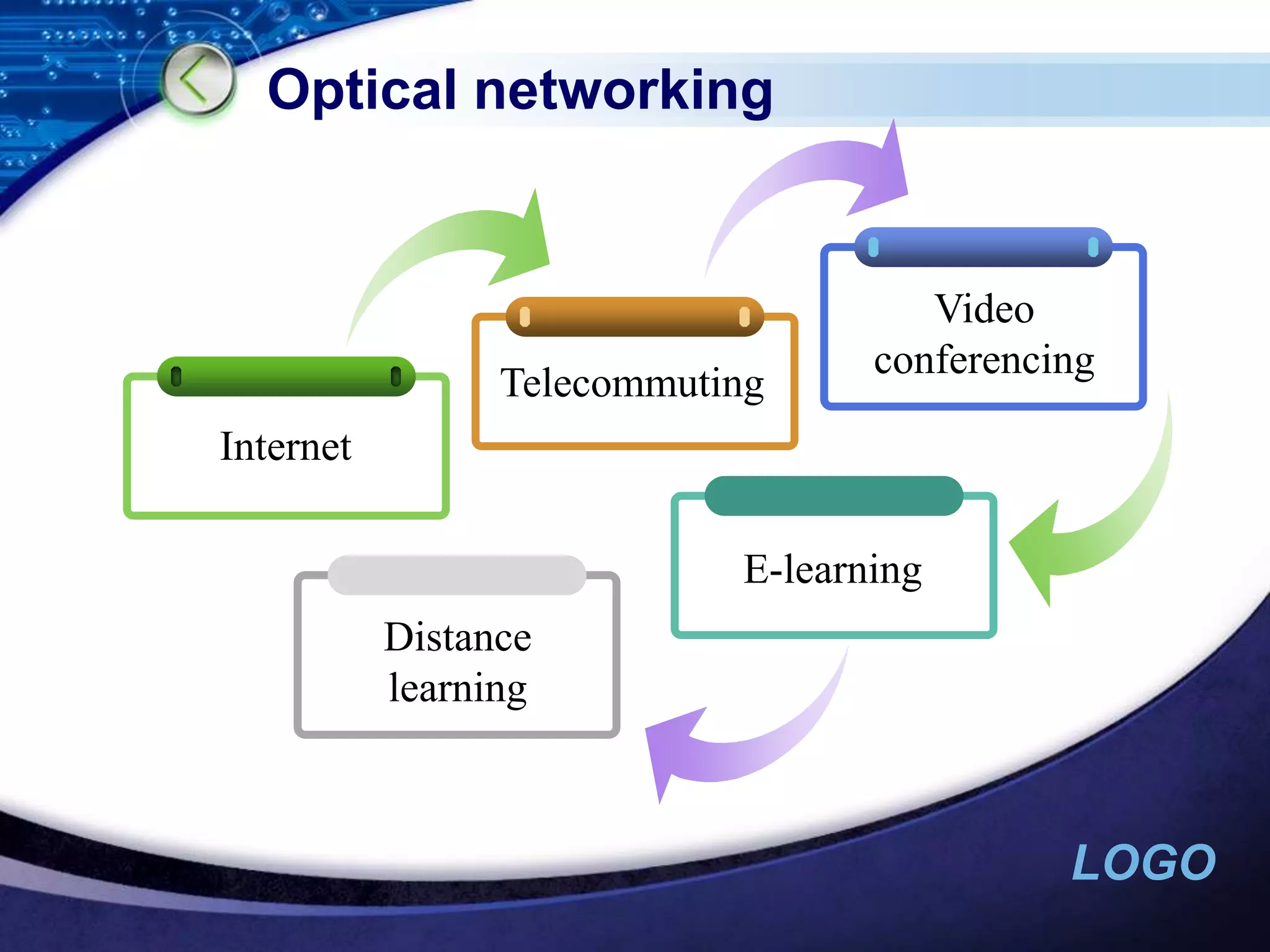
Optical networkingVideo conferencing Telecommuting InternetDistance  learningE-learning
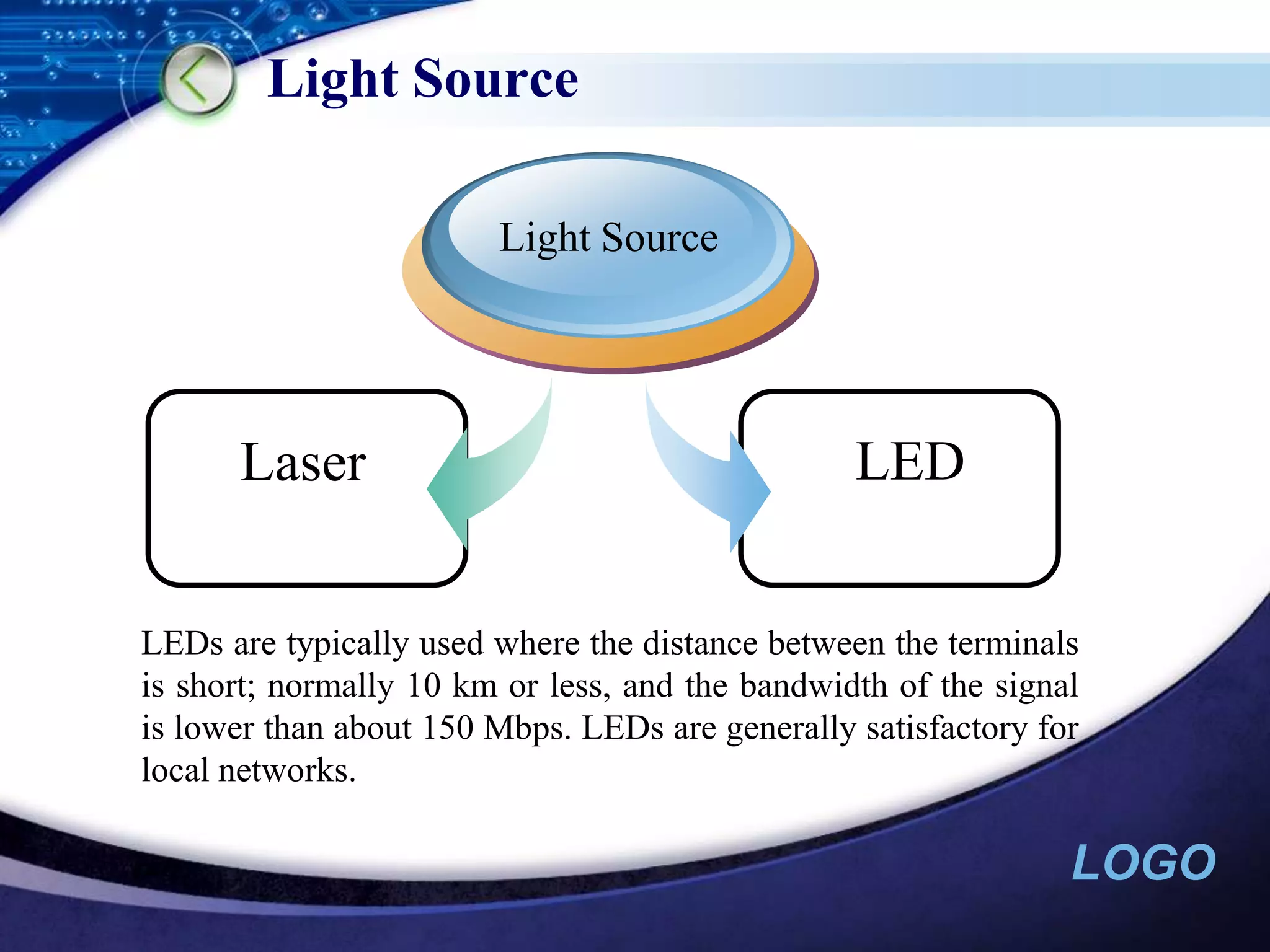
Light SourceLight SourceLEDLaser LEDs are typically used where the distance between the terminals is short; normally 10 km or less, and the bandwidth of the signal is lower than about 150 Mbps. LEDs are generally satisfactory for local networks.
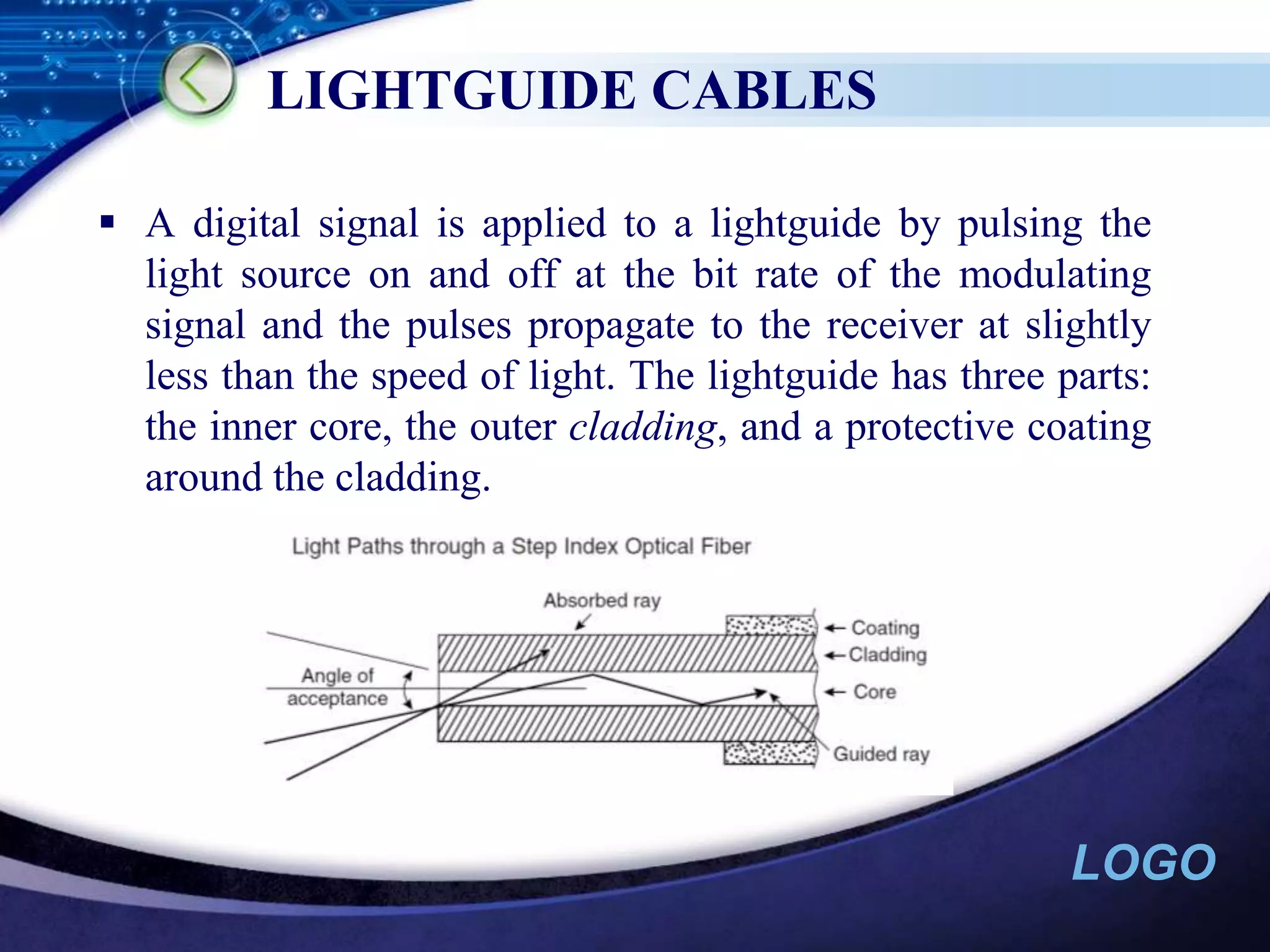
LIGHTGUIDE CABLESA digital signal is applied to a lightguide by pulsing the light source on and off at the bit rate of the modulating signal and the pulses propagate to the receiver at slightly less than the speed of light. The lightguide has three parts: the inner core, the outer cladding, and a protective coating around the cladding.
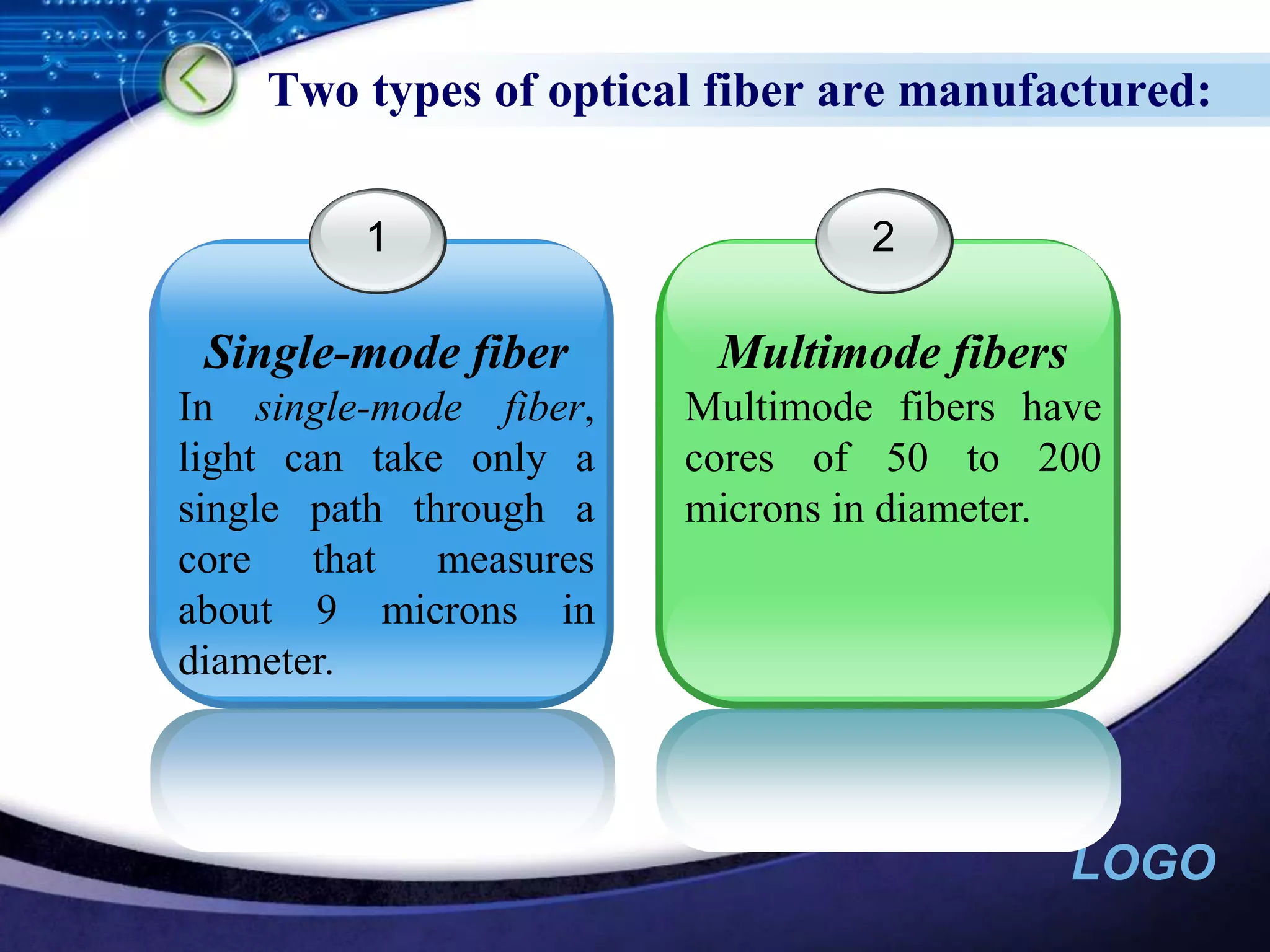
12Single-mode fiberIn single-mode fiber, light can take only a single path through a core that measures about 9 microns in diameter.Multimode fibersMultimode fibers have cores of 50 to 200 microns in diameter. Two types of optical fiber are manufactured:
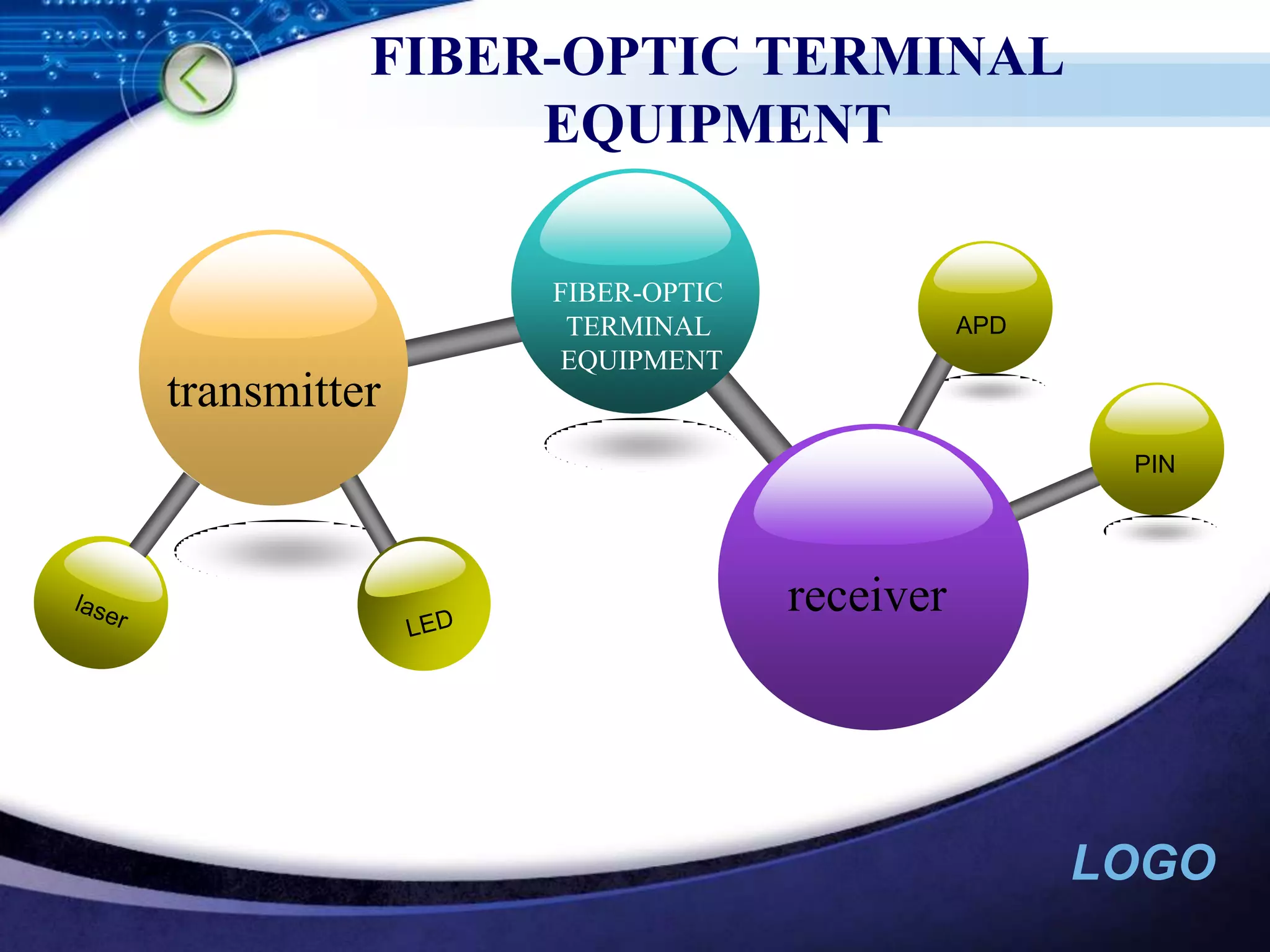
FIBER-OPTIC TERMINAL EQUIPMENTAPDtransmitterreceiverFIBER-OPTIC TERMINAL EQUIPMENTLEDlaserPIN
OPTICAL NETWORKING APPLICATION ISSUESLightwave communications systems have applications in both private and public communications systems. The primary LEC and IXC applications ride on SONET/SDH. For noncarrier applications SONET/SDH is also available, as are FDDI, fiber channel, and LAN protocols.
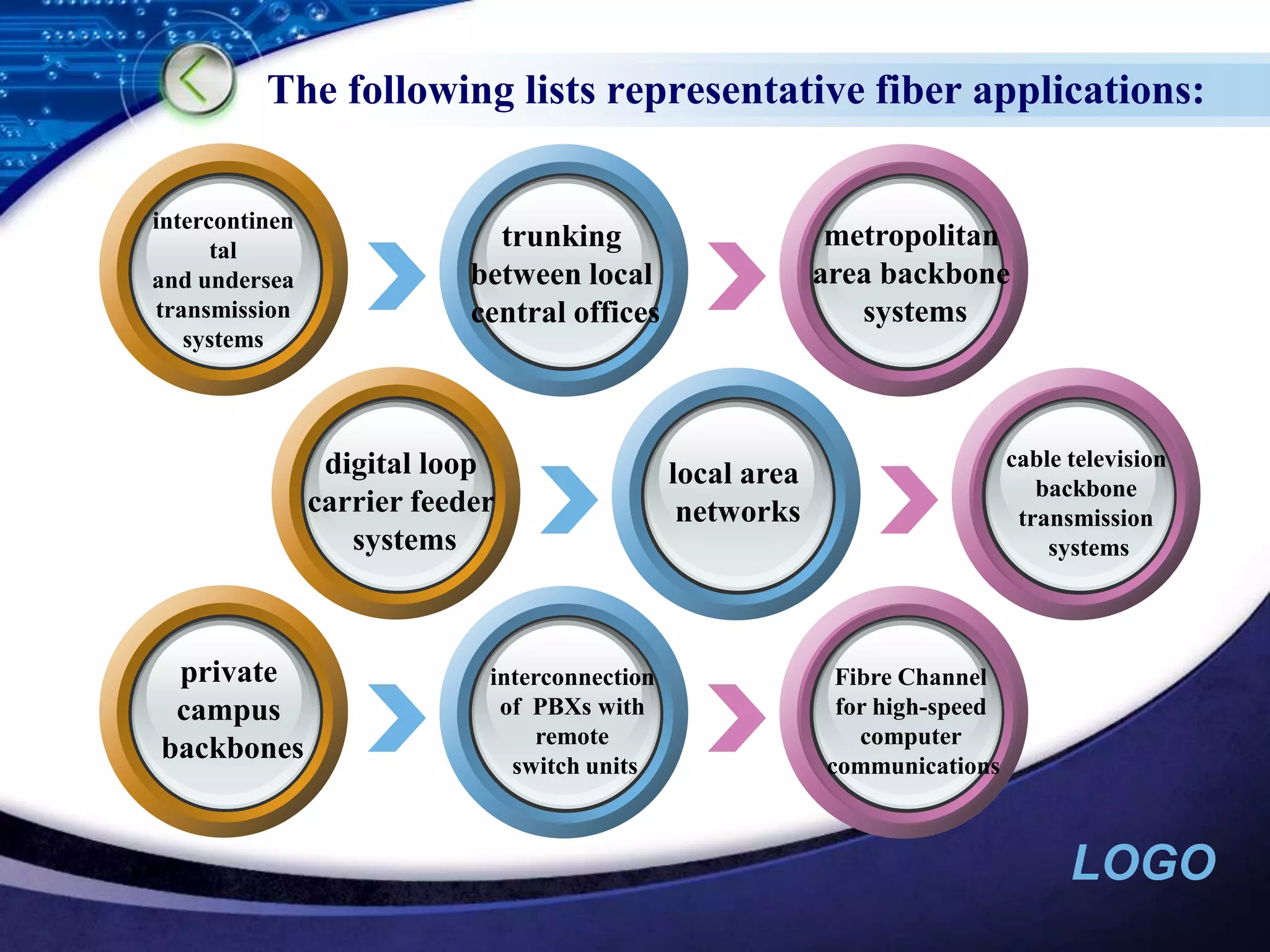
The following lists representative fiber applications:intercontinental and undersea transmission systemsprivate campus backbonesmetropolitan area backbone systemstrunkingbetween local central officesdigital loop carrier feeder systemscable television backbone transmission systemsinterconnection of  PBXs with remote switch unitsFibre Channel for high-speed computer communicationslocal area networks
Thank You !

2010fall ch17 bolortsetseg

  • 1.
    Optical NetworkingТ. БаясгаланJ.TC07D042 Б.Болорцэцэг J.TC07D715
  • 2.
    Optical networkingLight SourceLightguidecablesFiber-optic terminal equipmentOptical networking application issues
  • 3.
    Optical networkingToday, everymajor industrialized center is linked to the rest of the world with fiber-optic cable, and the result is high-quality and low-cost bandwidth. Fiber serves at the building level in commercial and industrial centers, freeing them from the restrictions of copper cable and enabling broadband communications that connects entities with high-speed pipelines.
  • 4.
    Optical networkingVideo conferencingTelecommuting InternetDistance learningE-learning
  • 5.
    Light SourceLight SourceLEDLaserLEDs are typically used where the distance between the terminals is short; normally 10 km or less, and the bandwidth of the signal is lower than about 150 Mbps. LEDs are generally satisfactory for local networks.
  • 6.
    LIGHTGUIDE CABLESA digitalsignal is applied to a lightguide by pulsing the light source on and off at the bit rate of the modulating signal and the pulses propagate to the receiver at slightly less than the speed of light. The lightguide has three parts: the inner core, the outer cladding, and a protective coating around the cladding.
  • 7.
    12Single-mode fiberIn single-modefiber, light can take only a single path through a core that measures about 9 microns in diameter.Multimode fibersMultimode fibers have cores of 50 to 200 microns in diameter. Two types of optical fiber are manufactured:
  • 8.
  • 9.
    OPTICAL NETWORKING APPLICATIONISSUESLightwave communications systems have applications in both private and public communications systems. The primary LEC and IXC applications ride on SONET/SDH. For noncarrier applications SONET/SDH is also available, as are FDDI, fiber channel, and LAN protocols.
  • 10.
    The following listsrepresentative fiber applications:intercontinental and undersea transmission systemsprivate campus backbonesmetropolitan area backbone systemstrunkingbetween local central officesdigital loop carrier feeder systemscable television backbone transmission systemsinterconnection of PBXs with remote switch unitsFibre Channel for high-speed computer communicationslocal area networks
  • 11.

Editor's Notes