Social Media (Web 2.0)


                              Presented to:
     2009 Ports-to-Plains Annual Conference
                               Lubbock, TX

                                        by:
                Ngy Ea, Technology Advisor
                        AIT Consulting LLC
                                Atlanta, GA
W hat W e’ll C over (Agenda)


   Overview of Social Media (Web 2.0)
   Current state: Ports-to-Plains website
   Roadmap: Ports-to-Plains website
   Q&A
So W hat’s Social M edia?


“SOCIAL MEDIA describes a new
set of internet tools that enable
shared community experiences,
both online and in person.”
So W hat’s Social M edia? (C lassical Theory)


 Pascal’s Wager
 Pareto’s Principle (Freeium)
I nteresting Social M edia Statistics


 Social networks and blogs are the 4th most
  popular online activities; surpassing personal
  email
 It took radio 38 years to reach 50 million
  listeners. Terrestrial TV took 13 years to
  reach 50 million users
 The Internet took 4 years to reach 50 million
  people
 In less then 9 months Facebook added 100
  million users
 Over 70% of Americans are on the Internet

* Source: Econsultancy: 20+ More Mind-Blowing
   Social Media Statistics
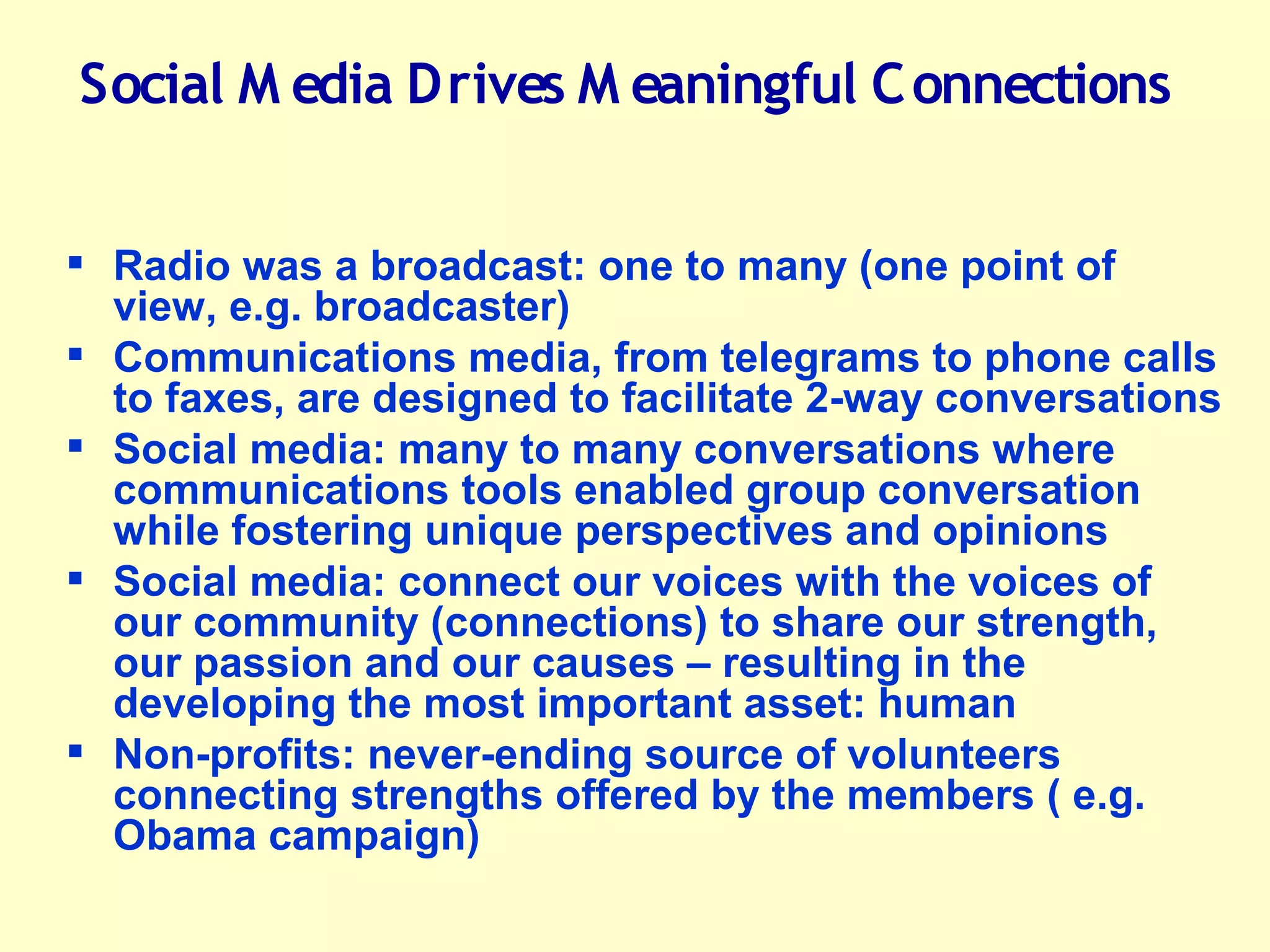
Social M edia Drives M eaningful C onnections


 Radio was a broadcast: one to many (one point of
  view, e.g. broadcaster)
 Communications media, from telegrams to phone calls
  to faxes, are designed to facilitate 2-way conversations
 Social media: many to many conversations where
  communications tools enabled group conversation
  while fostering unique perspectives and opinions
 Social media: connect our voices with the voices of
  our community (connections) to share our strength,
  our passion and our causes – resulting in the
  developing the most important asset: human
 Non-profits: never-ending source of volunteers
  connecting strengths offered by the members ( e.g.
  Obama campaign)
Social M edia Drives M eaningful C onnections


 What’s the biggest challenge for a company? (Finding
  a constant source of talented, motivated, people;
  Finding or Coaching A-players. Thus these are also a
  company’s biggest expense.
 With Social Media a company is able to connect and
  re-connect its stakeholders (customers, employees,
  shareholders, vendors and partners) to match their
  strength with their passions with their common
  causes; allowing volunteers to have their voice
  individually and collectively
 Reduced costs: training, customer service and
  marketing

* Source: The Economics of Doing What You Love
   (Justin Wolfers)
Primary Tools of Social M edia
W ho Uses Social M edia?
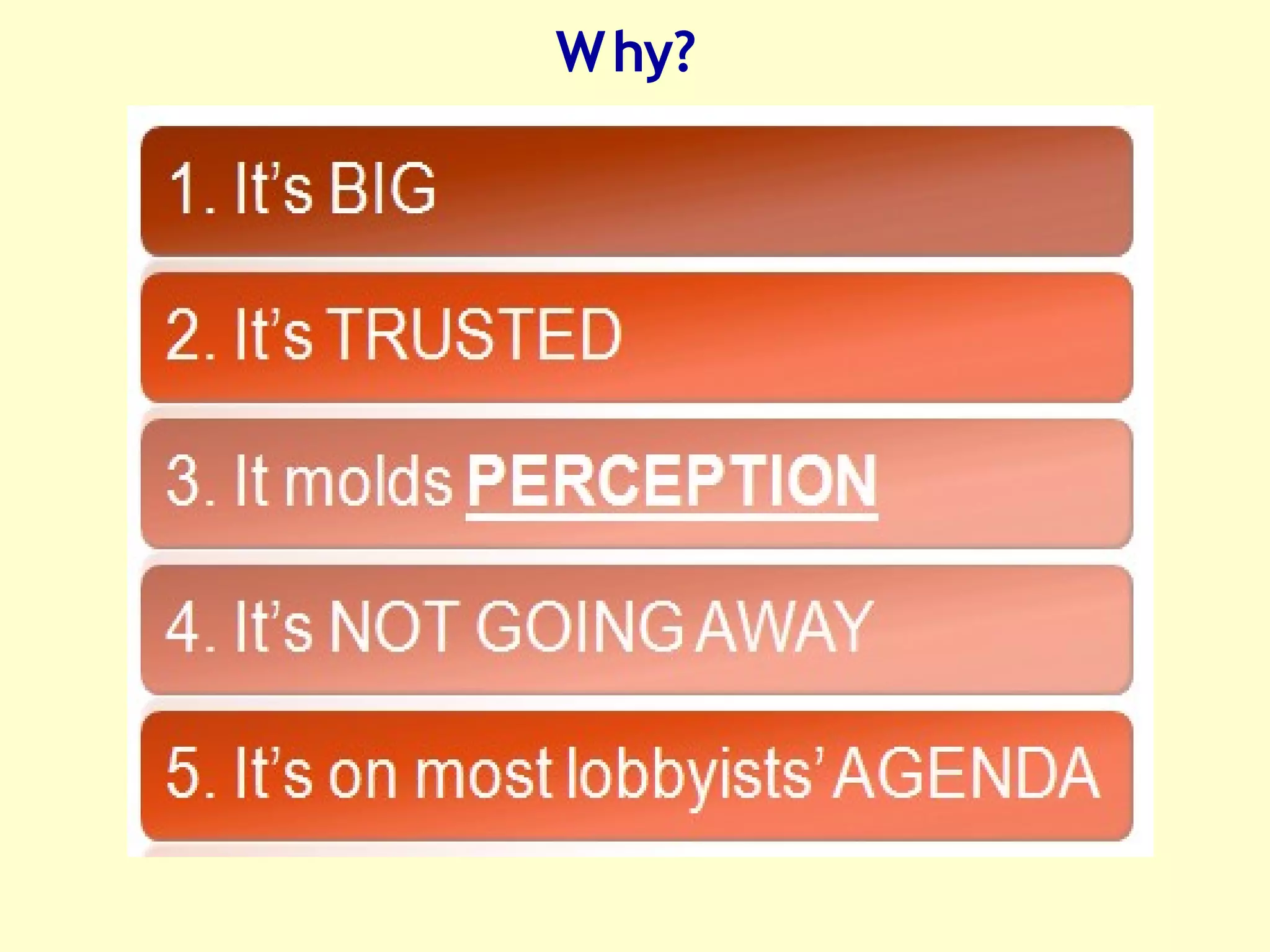
W hy?
It’s not going away
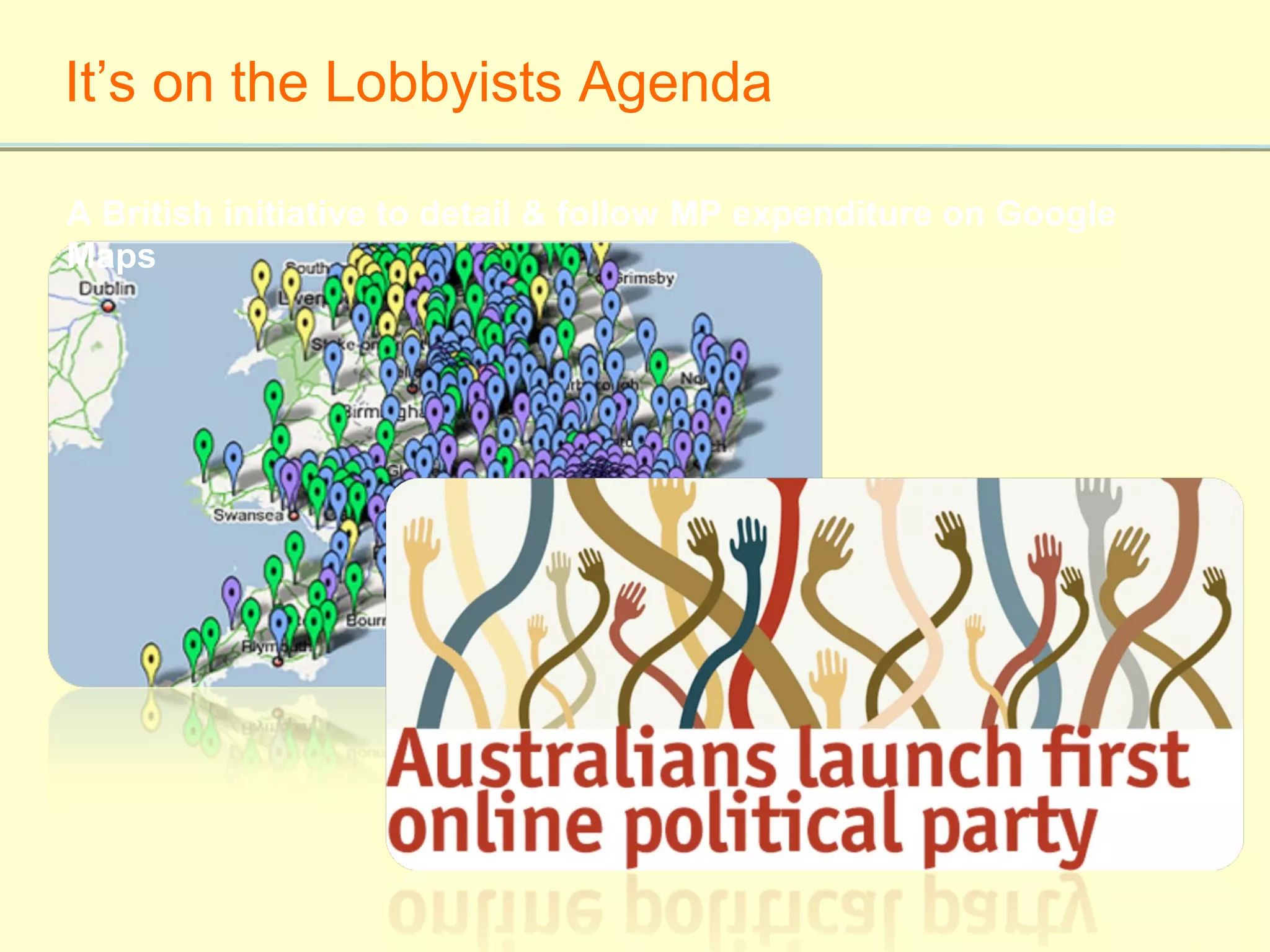
It’s on the Lobbyists Agenda

A British initiative to detail & follow MP expenditure on Google
Maps
The New Democracy
The New Democracy
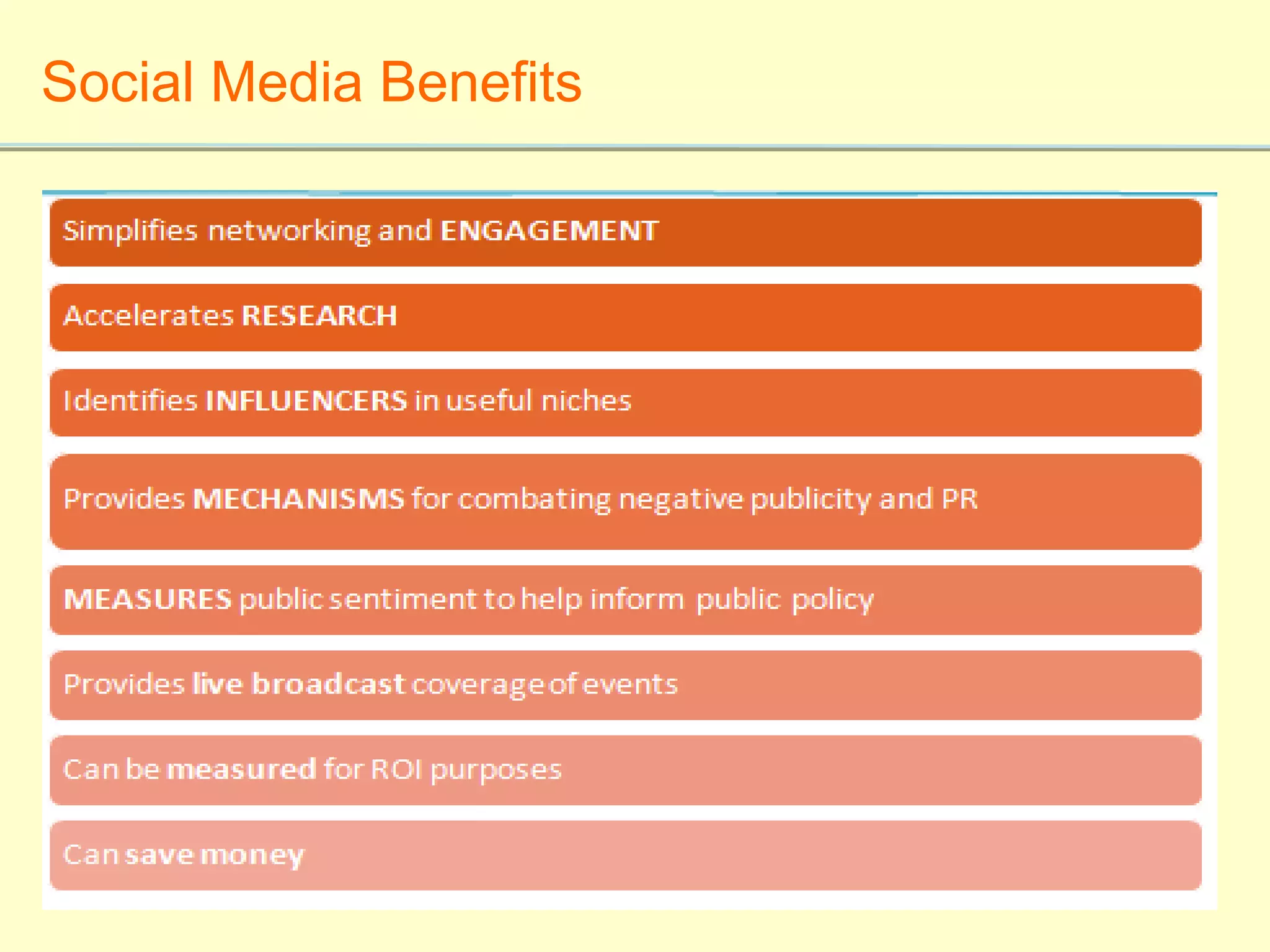
Social Media Benefits
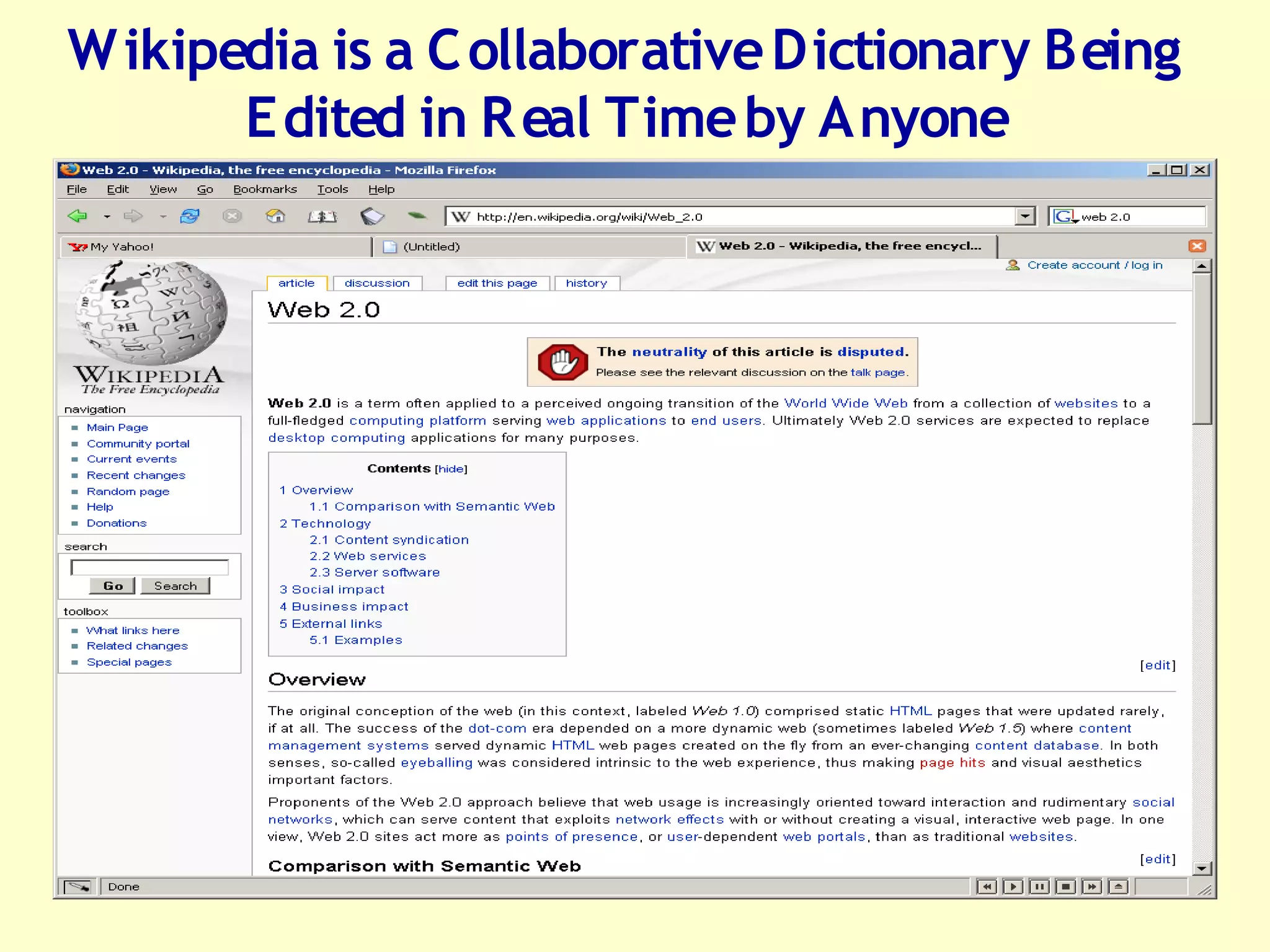
W ikipedia is a C ollaborative Dictionary Being
       Edited in R eal Time by Anyone
Blogging is the M ost R ecognized Example of
                Social M edia
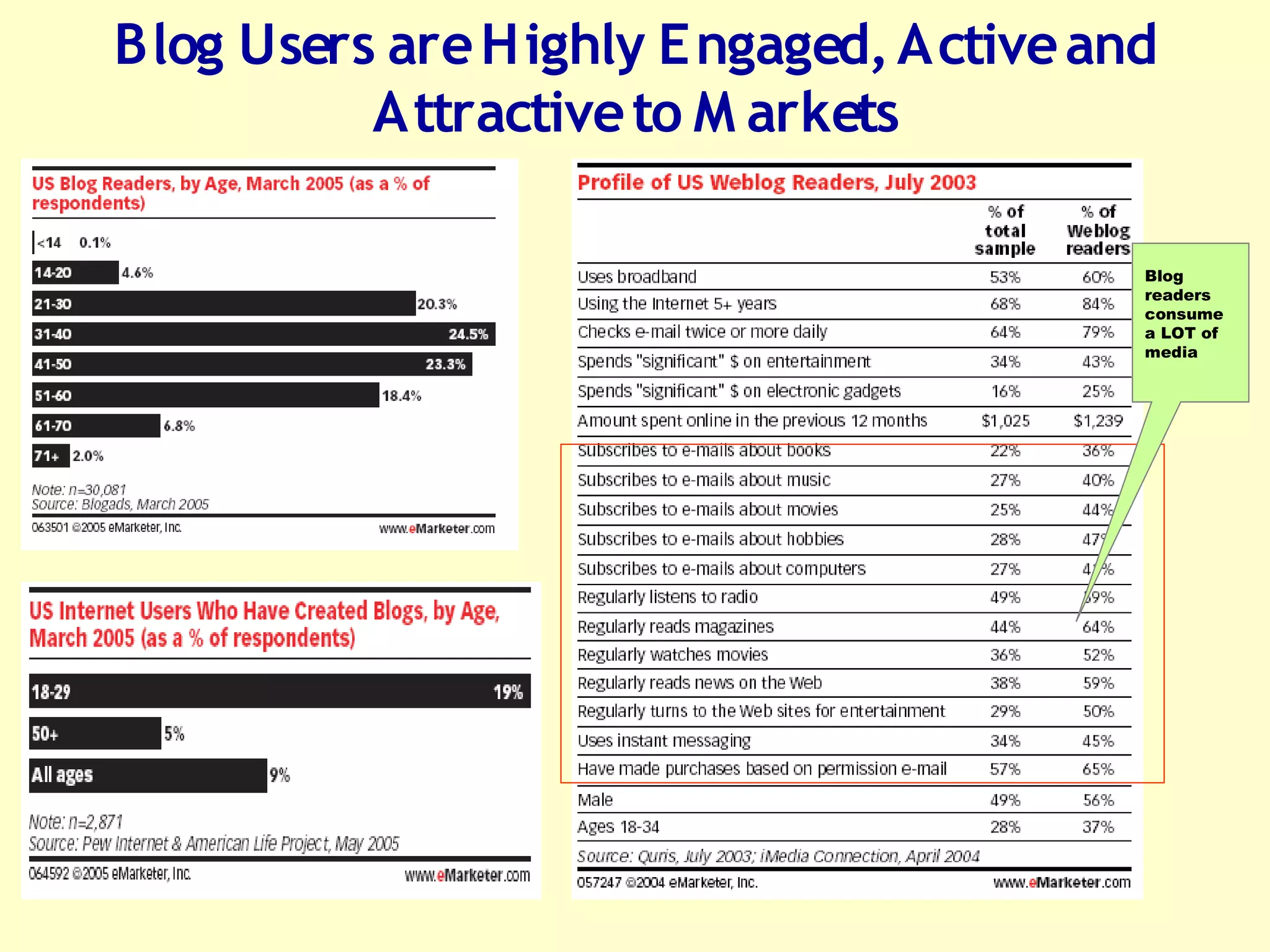
Blog Users are Highly E ngaged, Active and
          Attractive to M arkets

                                         Blog
                                         readers
                                         consume
                                         a LOT of
                                         media
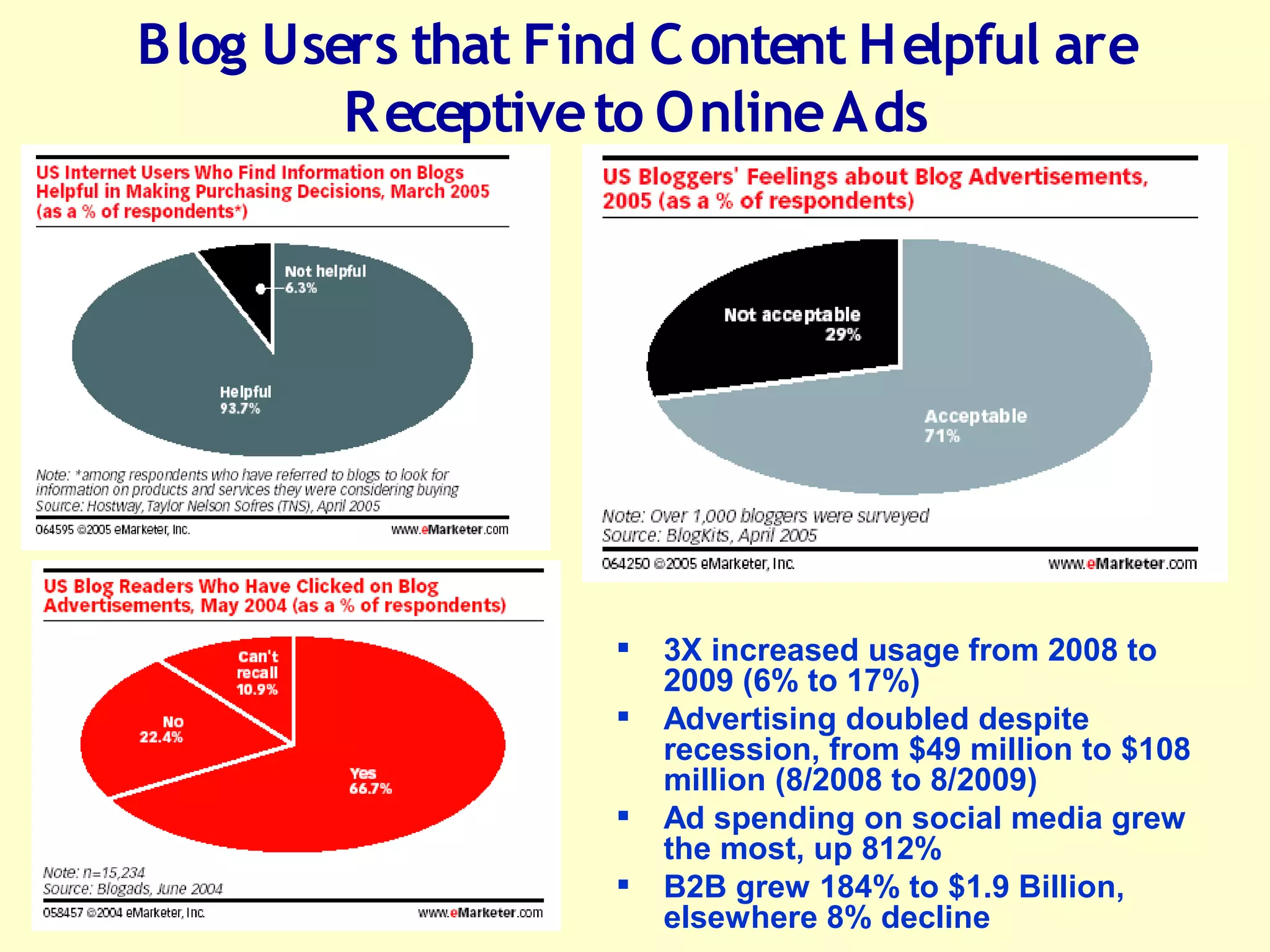
Blog Users that Find C ontent Helpful are
        R eceptive to Online Ads


                      3X increased usage from 2008 to
                       2009 (6% to 17%)
                      Advertising doubled despite
                       recession, from $49 million to $108
                       million (8/2008 to 8/2009)
                      Ad spending on social media grew
                       the most, up 812%
                      B2B grew 184% to $1.9 Billion,
                       elsewhere 8% decline
Social M edia W ill M ean C hanges for
•
                              M arketers
    More users are connecting to
    each other and content through
    networked, peer-driven
    activities & content
     –   Linkedin now has service referrals as part of
         their package
•   Content syndication will lead to
    more machine generated
    connections
     –   “Non-compliant” content won’t fit into the flow
         as readily
•   Social Media is truly two-way
     –   Marketers need to be very willing to “listen”
         and receive more than broadcast
•   User-generated content may be
    more valuable to users than
    marketers
•   Adoption and ROI will drive
    investments in online
    advertising
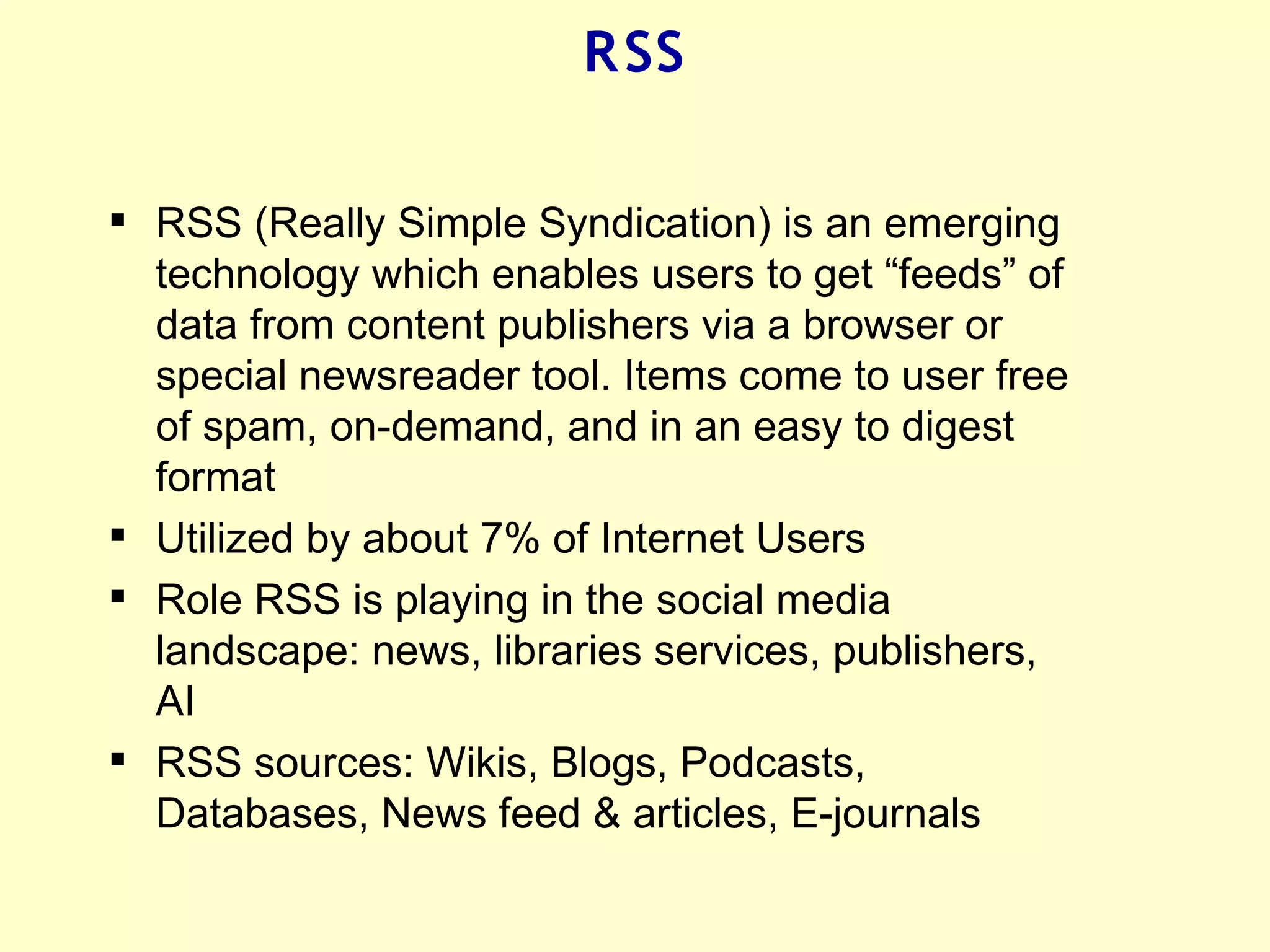
R SS

 RSS (Really Simple Syndication) is an emerging
  technology which enables users to get “feeds” of
  data from content publishers via a browser or
  special newsreader tool. Items come to user free
  of spam, on-demand, and in an easy to digest
  format
 Utilized by about 7% of Internet Users
 Role RSS is playing in the social media
  landscape: news, libraries services, publishers,
  AI
 RSS sources: Wikis, Blogs, Podcasts,
  Databases, News feed & articles, E-journals
R SS Adoption is C urrently Small, But it
 C ould be an Attractive Tool for Niche
               M arketers
R SS: A New W ay of R eceiving C ontent
Daily C rime Data on Top of G oogle M aps
             (Sent V ia R SS)
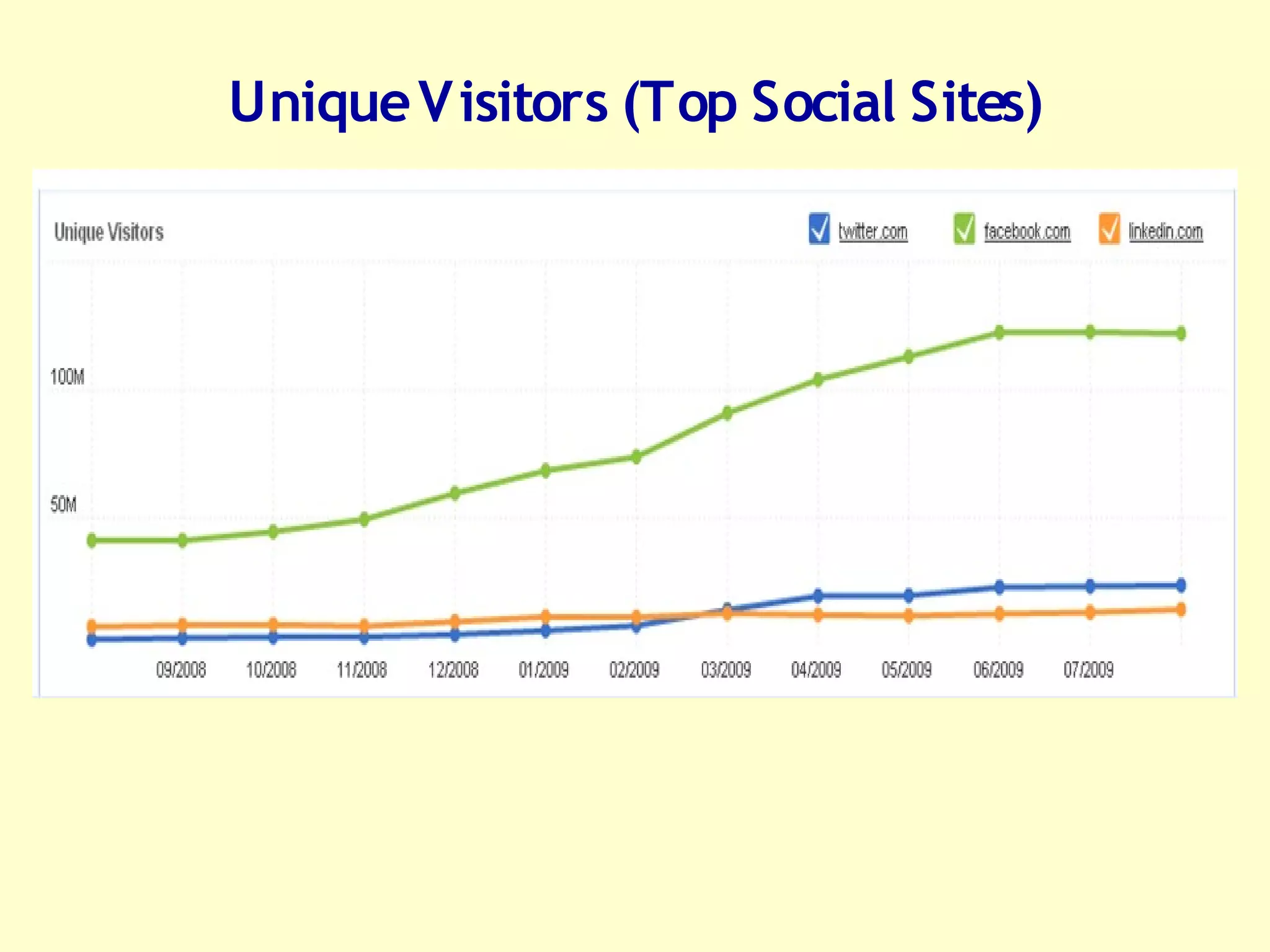
Unique V isitors (Top Social Sites)


Flukinger PL L C
Law & Government Relations
Washington, D.C.
Types of Tweets


Flukinger PL L C
Law & Government Relations
Washington, D.C.
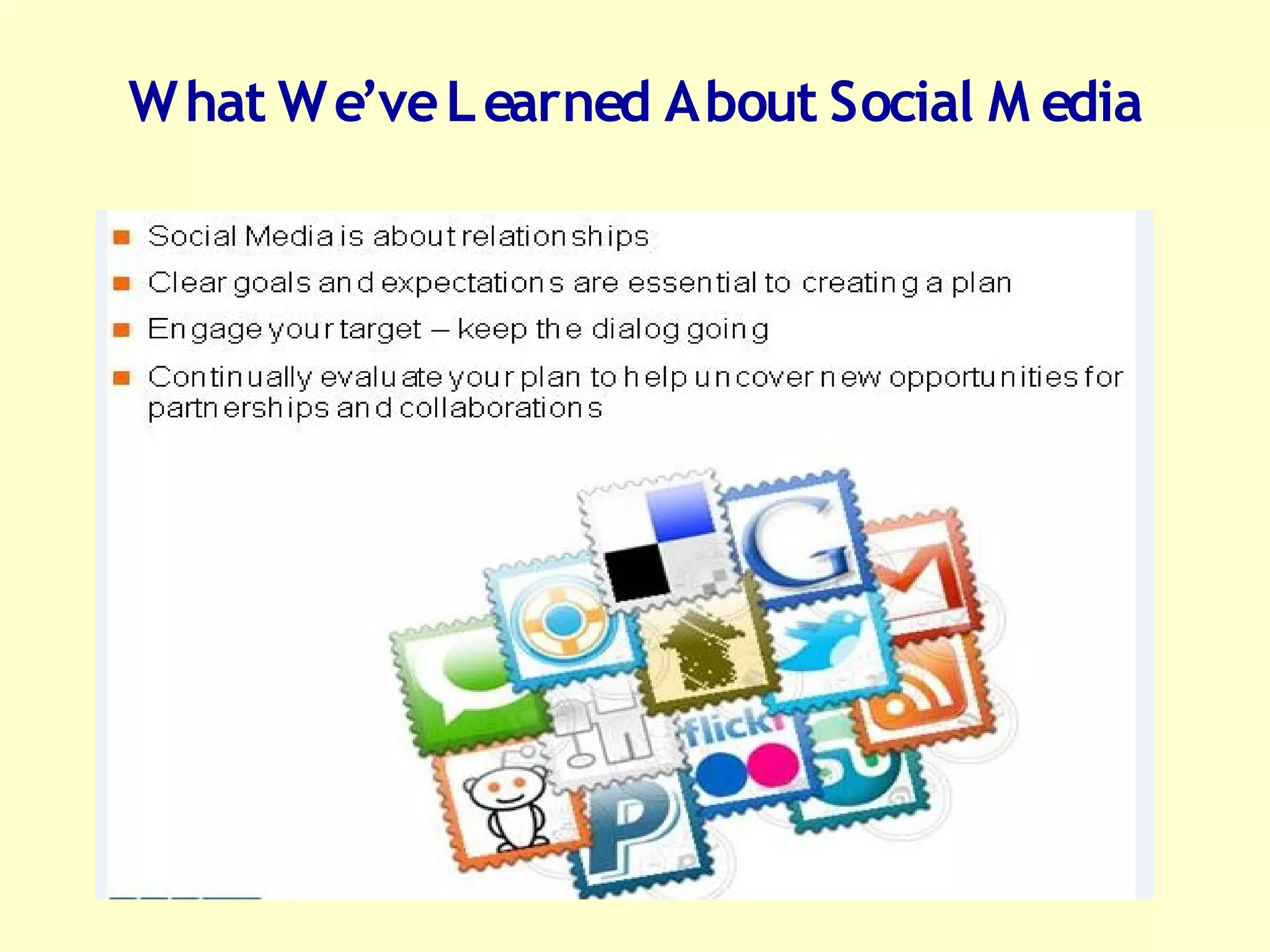
W hat W e’ve L earned About Social M edia


Flukinger PL L C
Law & Government Relations
Washington, D.C.
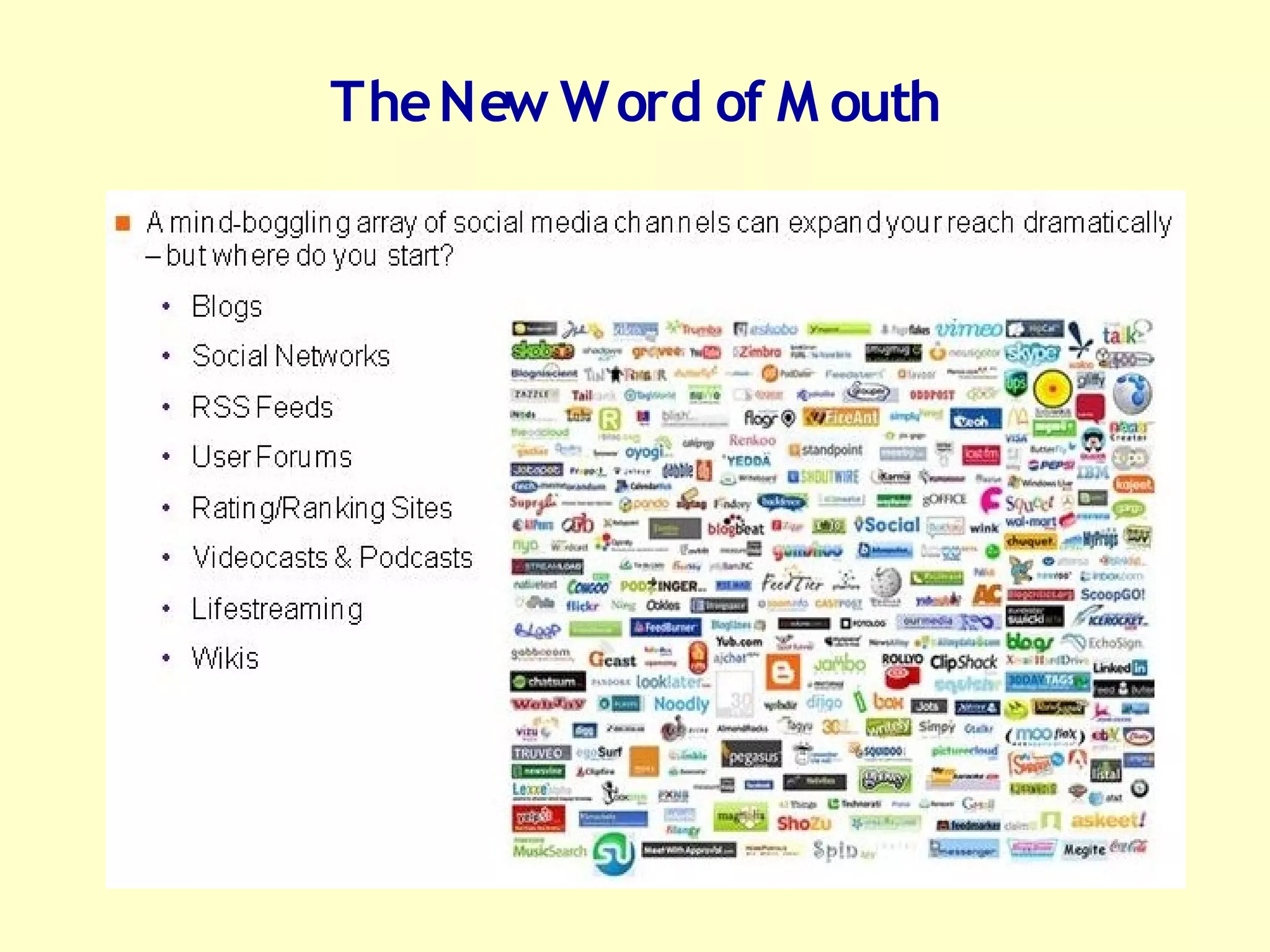
The New W ord of M outh


Flukinger PL L C
Law & Government Relations
Washington, D.C.
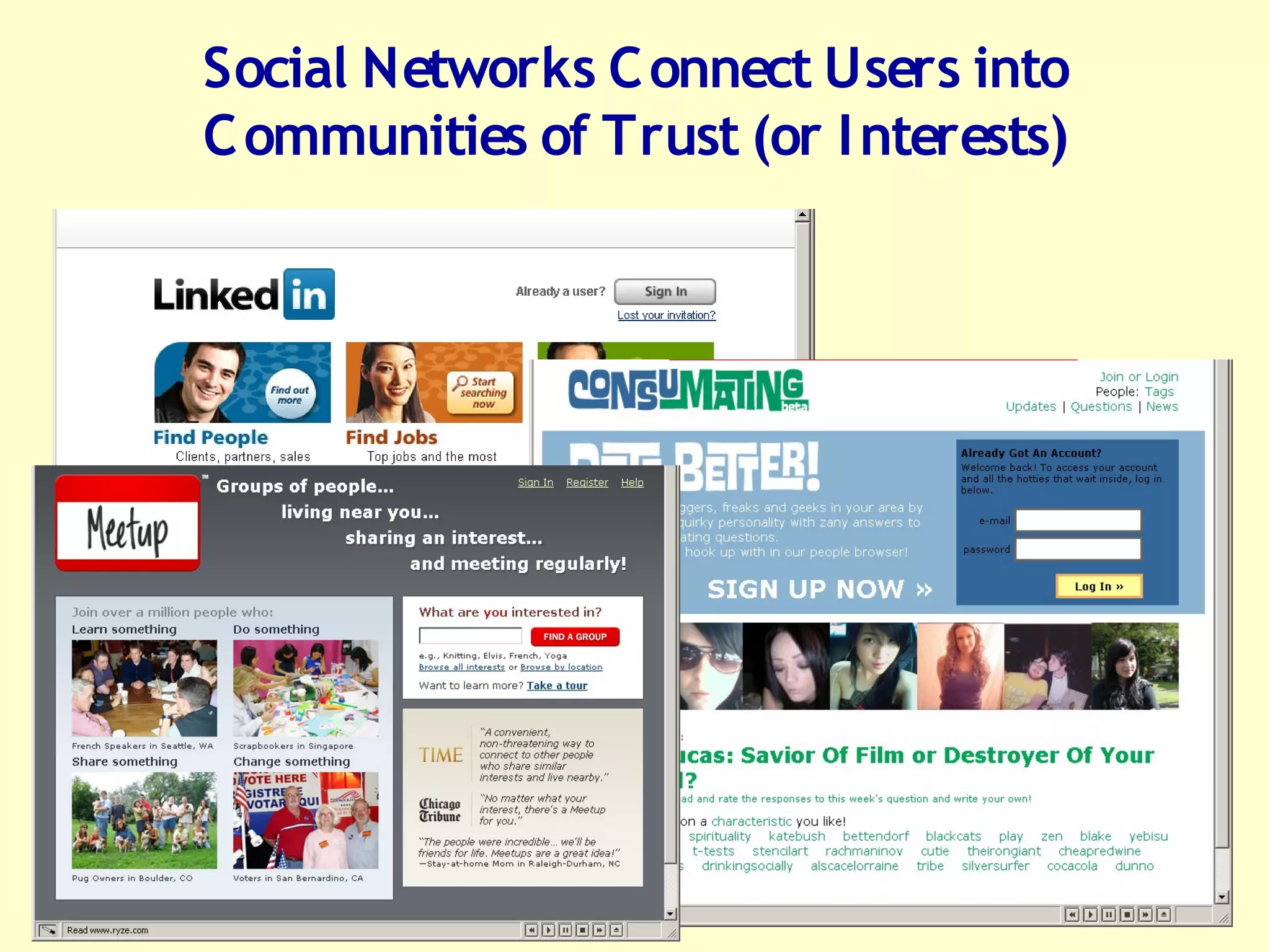
Social Networks C onnect Users into
                    C ommunities of Trust (or I nterests)


Flukinger PL L C
Law & Government Relations
Washington, D.C.
C urrent State: Ports-to-Plains W ebsite


Flukinger PL L C
Law & Government Relations
Washington, D.C.
C urrent State: PTP Social M edia

   Twitter: http://twitter.com/PortsToPlains
   Facebook: http://www.facebook.com/pages/Ports-to-
    Plains/75156949855?ref=ts
   LinkedIn: http://www.linkedin.com/groups?
    gid=1955513&trk=anetsrch_name&goback=
    %2Egdr_1242398459637_1
   YouTube:
    http://www.youtube.com/user/PortstoPlainsGroup
   Wiki: http://en.wikipedia.org/wiki/Ports-to-
    Plains_Alliance
   PTP News & Events
   Micro-site Communities, e.g. Alberta
    (http://www.portstoplains.com/Alberta.aspx)
Flukinger PL L C
Law & Government Relations
Washington, D.C.
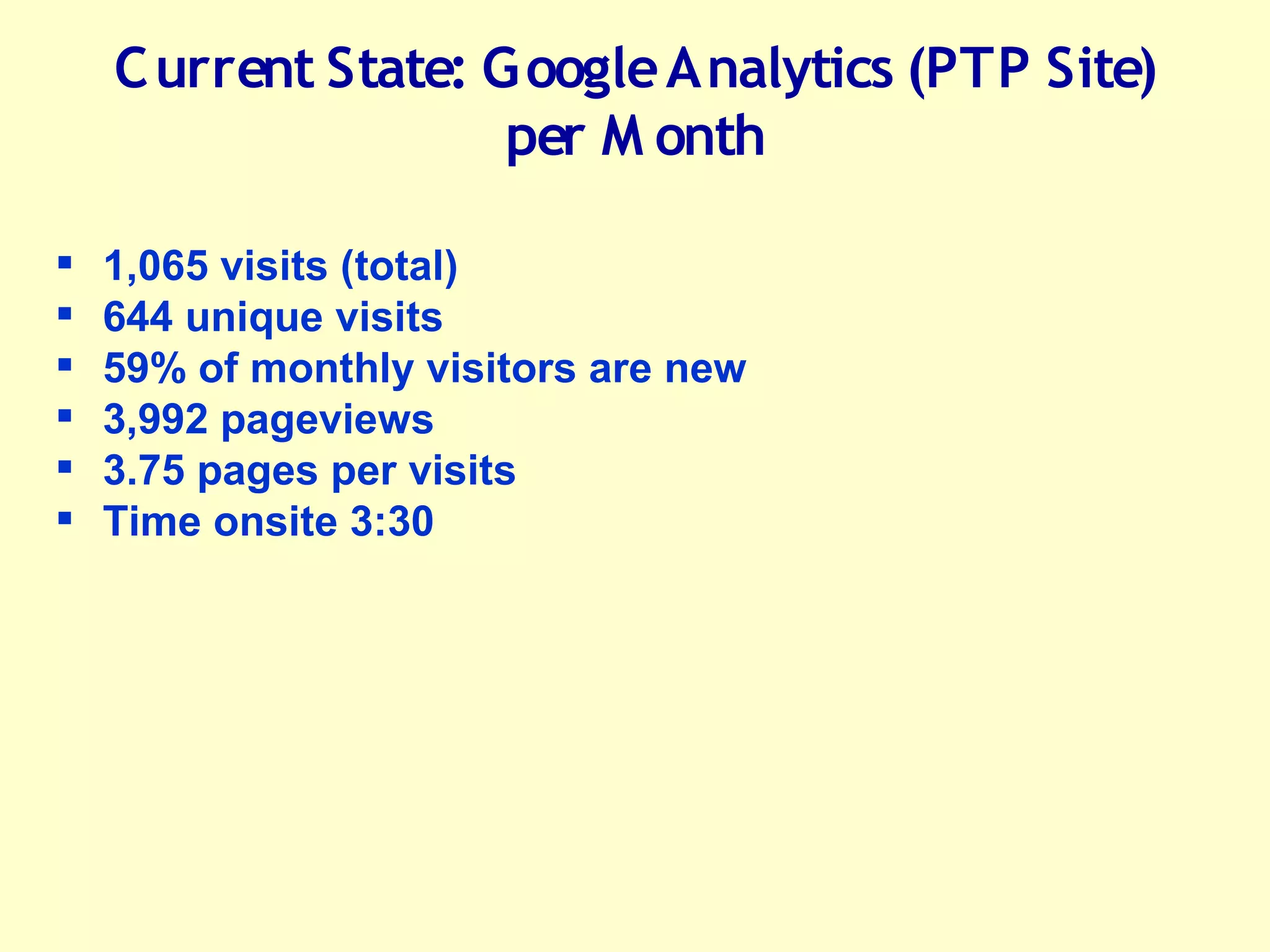
C urrent State: G oogle Analytics (PTP Site)
                           per M onth

        1,065 visits (total)
        644 unique visits
        59% of monthly visitors are new
        3,992 pageviews
        3.75 pages per visits
        Time onsite 3:30


Flukinger PL L C
Law & Government Relations
Washington, D.C.
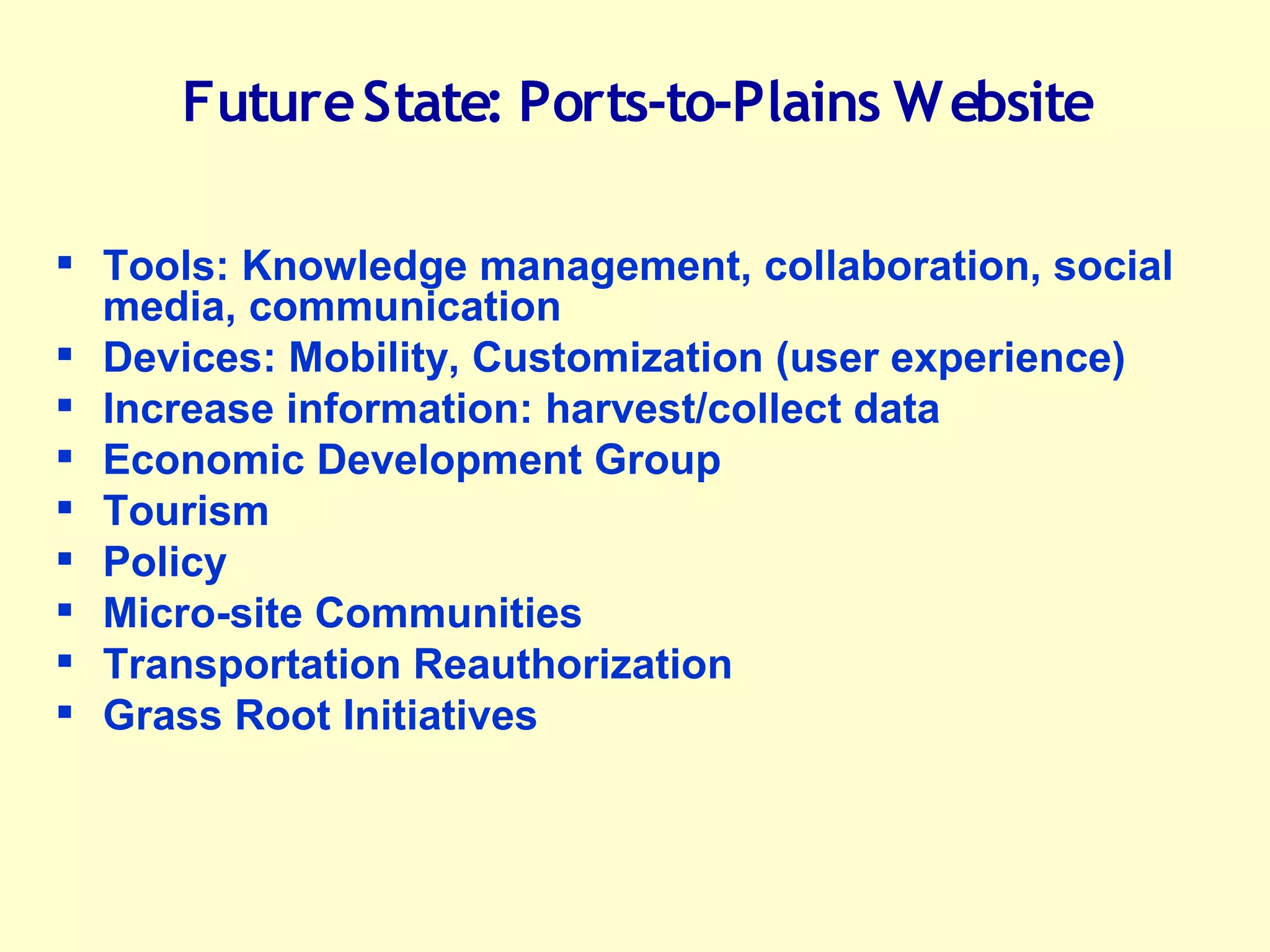
Future State: Ports-to-Plains W ebsite

     Tools: Knowledge management, collaboration, social
      media, communication
     Devices: Mobility, Customization (user experience)
     Increase information: harvest/collect data
     Economic Development Group
     Tourism
     Policy
     Micro-site Communities
     Transportation Reauthorization
     Grass Root Initiatives


Flukinger PL L C
Law & Government Relations
Washington, D.C.
Q&A
          Ngy Ea
ngy.ea@aitconsultingllc.com
       678.232.3614

2009 social media

  • 1.
    Social Media (Web2.0) Presented to: 2009 Ports-to-Plains Annual Conference Lubbock, TX by: Ngy Ea, Technology Advisor AIT Consulting LLC Atlanta, GA
  • 2.
    W hat We’ll C over (Agenda)  Overview of Social Media (Web 2.0)  Current state: Ports-to-Plains website  Roadmap: Ports-to-Plains website  Q&A
  • 3.
    So W hat’sSocial M edia? “SOCIAL MEDIA describes a new set of internet tools that enable shared community experiences, both online and in person.”
  • 4.
    So W hat’sSocial M edia? (C lassical Theory)  Pascal’s Wager  Pareto’s Principle (Freeium)
  • 5.
    I nteresting SocialM edia Statistics  Social networks and blogs are the 4th most popular online activities; surpassing personal email  It took radio 38 years to reach 50 million listeners. Terrestrial TV took 13 years to reach 50 million users  The Internet took 4 years to reach 50 million people  In less then 9 months Facebook added 100 million users  Over 70% of Americans are on the Internet * Source: Econsultancy: 20+ More Mind-Blowing Social Media Statistics
  • 6.
    Social M ediaDrives M eaningful C onnections  Radio was a broadcast: one to many (one point of view, e.g. broadcaster)  Communications media, from telegrams to phone calls to faxes, are designed to facilitate 2-way conversations  Social media: many to many conversations where communications tools enabled group conversation while fostering unique perspectives and opinions  Social media: connect our voices with the voices of our community (connections) to share our strength, our passion and our causes – resulting in the developing the most important asset: human  Non-profits: never-ending source of volunteers connecting strengths offered by the members ( e.g. Obama campaign)
  • 7.
    Social M ediaDrives M eaningful C onnections  What’s the biggest challenge for a company? (Finding a constant source of talented, motivated, people; Finding or Coaching A-players. Thus these are also a company’s biggest expense.  With Social Media a company is able to connect and re-connect its stakeholders (customers, employees, shareholders, vendors and partners) to match their strength with their passions with their common causes; allowing volunteers to have their voice individually and collectively  Reduced costs: training, customer service and marketing * Source: The Economics of Doing What You Love (Justin Wolfers)
  • 8.
    Primary Tools ofSocial M edia
  • 9.
    W ho UsesSocial M edia?
  • 10.
  • 11.
  • 12.
    It’s on theLobbyists Agenda A British initiative to detail & follow MP expenditure on Google Maps
  • 13.
  • 14.
  • 15.
  • 16.
    W ikipedia isa C ollaborative Dictionary Being Edited in R eal Time by Anyone
  • 17.
    Blogging is theM ost R ecognized Example of Social M edia
  • 18.
    Blog Users areHighly E ngaged, Active and Attractive to M arkets Blog readers consume a LOT of media
  • 19.
    Blog Users thatFind C ontent Helpful are R eceptive to Online Ads  3X increased usage from 2008 to 2009 (6% to 17%)  Advertising doubled despite recession, from $49 million to $108 million (8/2008 to 8/2009)  Ad spending on social media grew the most, up 812%  B2B grew 184% to $1.9 Billion, elsewhere 8% decline
  • 20.
    Social M ediaW ill M ean C hanges for • M arketers More users are connecting to each other and content through networked, peer-driven activities & content – Linkedin now has service referrals as part of their package • Content syndication will lead to more machine generated connections – “Non-compliant” content won’t fit into the flow as readily • Social Media is truly two-way – Marketers need to be very willing to “listen” and receive more than broadcast • User-generated content may be more valuable to users than marketers • Adoption and ROI will drive investments in online advertising
  • 21.
    R SS  RSS(Really Simple Syndication) is an emerging technology which enables users to get “feeds” of data from content publishers via a browser or special newsreader tool. Items come to user free of spam, on-demand, and in an easy to digest format  Utilized by about 7% of Internet Users  Role RSS is playing in the social media landscape: news, libraries services, publishers, AI  RSS sources: Wikis, Blogs, Podcasts, Databases, News feed & articles, E-journals
  • 22.
    R SS Adoptionis C urrently Small, But it C ould be an Attractive Tool for Niche M arketers
  • 23.
    R SS: ANew W ay of R eceiving C ontent
  • 24.
    Daily C rimeData on Top of G oogle M aps (Sent V ia R SS)
  • 25.
    Unique V isitors(Top Social Sites) Flukinger PL L C Law & Government Relations Washington, D.C.
  • 26.
    Types of Tweets FlukingerPL L C Law & Government Relations Washington, D.C.
  • 27.
    W hat We’ve L earned About Social M edia Flukinger PL L C Law & Government Relations Washington, D.C.
  • 28.
    The New Word of M outh Flukinger PL L C Law & Government Relations Washington, D.C.
  • 29.
    Social Networks Connect Users into C ommunities of Trust (or I nterests) Flukinger PL L C Law & Government Relations Washington, D.C.
  • 30.
    C urrent State:Ports-to-Plains W ebsite Flukinger PL L C Law & Government Relations Washington, D.C.
  • 31.
    C urrent State:PTP Social M edia  Twitter: http://twitter.com/PortsToPlains  Facebook: http://www.facebook.com/pages/Ports-to- Plains/75156949855?ref=ts  LinkedIn: http://www.linkedin.com/groups? gid=1955513&trk=anetsrch_name&goback= %2Egdr_1242398459637_1  YouTube: http://www.youtube.com/user/PortstoPlainsGroup  Wiki: http://en.wikipedia.org/wiki/Ports-to- Plains_Alliance  PTP News & Events  Micro-site Communities, e.g. Alberta (http://www.portstoplains.com/Alberta.aspx) Flukinger PL L C Law & Government Relations Washington, D.C.
  • 32.
    C urrent State:G oogle Analytics (PTP Site) per M onth  1,065 visits (total)  644 unique visits  59% of monthly visitors are new  3,992 pageviews  3.75 pages per visits  Time onsite 3:30 Flukinger PL L C Law & Government Relations Washington, D.C.
  • 33.
    Future State: Ports-to-PlainsW ebsite  Tools: Knowledge management, collaboration, social media, communication  Devices: Mobility, Customization (user experience)  Increase information: harvest/collect data  Economic Development Group  Tourism  Policy  Micro-site Communities  Transportation Reauthorization  Grass Root Initiatives Flukinger PL L C Law & Government Relations Washington, D.C.
  • 34.
    Q&A Ngy Ea ngy.ea@aitconsultingllc.com 678.232.3614