


RedefiningtheBoundaries of Learning
Cristobal Cobo
@cristobalcobo
#cyberlearning
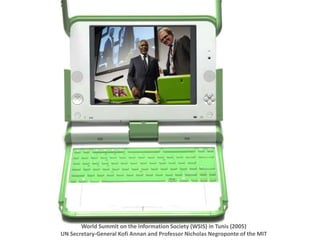
World Summit on the Information Society (WSIS) in Tunis (2005)
UN Secretary-General Kofi Annan and Professor Nicholas Negroponte of the MIT
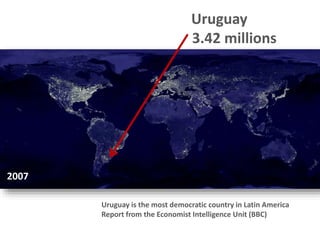
Uruguay is the most democratic country in Latin America
Report from the Economist Intelligence Unit (BBC)
Uruguay
3.42 millions
2007
• Social Inclusion
• Equality of Opportunities
• Teaching and Learning
Origins
Plan Ceibal is not a an ICT
Program or Laptops
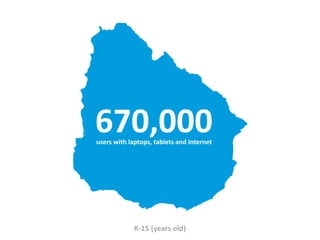
670,000users with laptops, tablets and Internet
K-15 (years old)
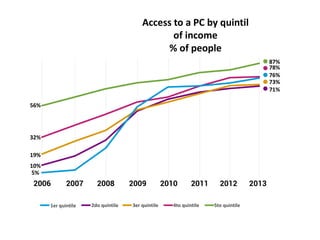
Access to a PC by quintil
of income
% of people
1er quintile 2do quintile 3er quintile 4to quintile 5to quintile
87%
78%
76%
73%
71%
56%
32%
10%
19%
5%
PlanCeibalin theCountry
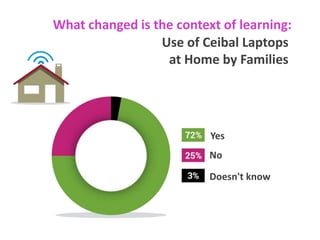
Use of Ceibal Laptops
at Home by Families
Yes
No
Doesn't know
What changed is the context of learning:
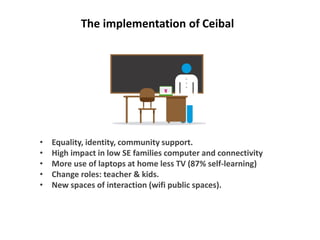
• Equality, identity, community support.
• High impact in low SE families computer and connectivity
• More use of laptops at home less TV (87% self-learning)
• Change roles: teacher & kids.
• New spaces of interaction (wifi public spaces).
The implementation of Ceibal
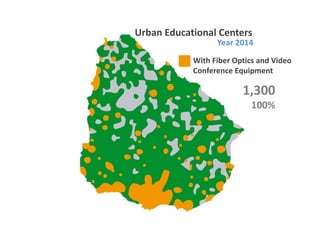
Year 2014
1,300
100%
Urban Educational Centers
With Fiber Optics and Video
Conference Equipment
Technology and Pedagogy
and LearningGoals
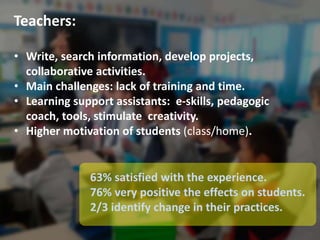
• Write, search information, develop projects,
collaborative activities.
• Main challenges: lack of training and time.
• Learning support assistants: e-skills, pedagogic
coach, tools, stimulate creativity.
• Higher motivation of students (class/home).
Teachers:
63% satisfied with the experience.
76% very positive the effects on students.
2/3 identify change in their practices.
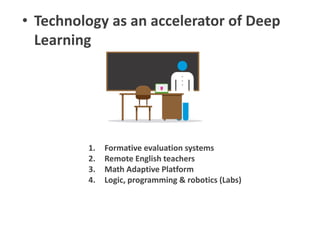
• Technology as an accelerator of Deep
Learning
1. Formative evaluation systems
2. Remote English teachers
3. Math Adaptive Platform
4. Logic, programming & robotics (Labs)
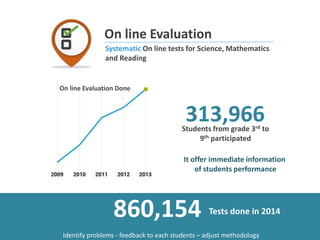
Systematic On line tests for Science, Mathematics
and Reading
On line Evaluation
On line Evaluation Done
Students from grade 3rd to
9th participated
313,966
860,154 Tests done in 2014
It offer immediate information
of students performance
Identify problems - feedback to each students – adjust methodology
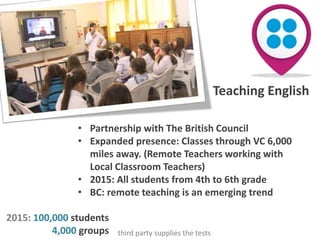
• Partnership with The British Council
• Expanded presence: Classes through VC 6,000
miles away. (Remote Teachers working with
Local Classroom Teachers)
• 2015: All students from 4th to 6th grade
• BC: remote teaching is an emerging trend
Teaching English
2015: 100,000 students
4,000 groups third party supplies the tests
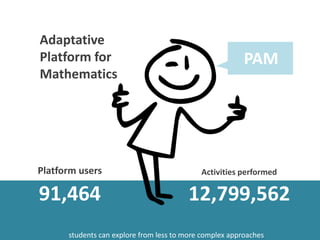
Adaptative
Platform for
Mathematics
Platform users Activities performed
12,799,56291,464
PAM
students can explore from less to more complex approaches
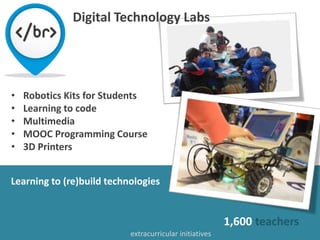
1,600 teachers
Learning to (re)build technologies
• Robotics Kits for Students
• Learning to code
• Multimedia
• MOOC Programming Course
• 3D Printers
extracurricular initiatives
Digital Technology Labs
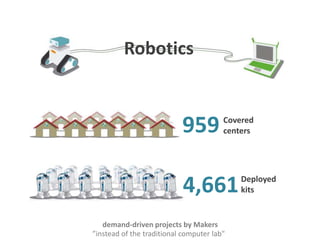
Robotics
959 Covered
centers
4,661Deployed
kits
demand-driven projects by Makers
”instead of the traditional computer lab"
Technology as an accelerator of pedagogy
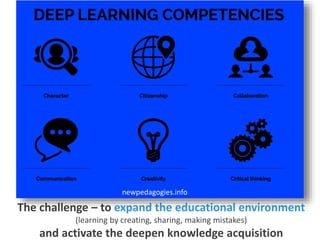
The challenge – to expand the educational environment
(learning by creating, sharing, making mistakes)
and activate the deepen knowledge acquisition
newpedagogies.info
New Pedagogies for Deep Learning
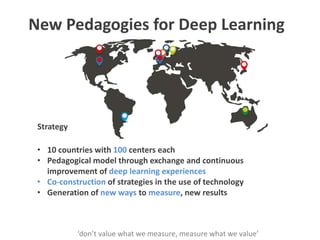
• 10 countries with 100 centers each
• Pedagogical model through exchange and continuous
improvement of deep learning experiences
• Co-construction of strategies in the use of technology
• Generation of new ways to measure, new results
Strategy
‘don’t value what we measure, measure what we value’
Questions of Challenge
• How to consolidate the blended learning?
(F2F, virtual, self/collective, formal, informal, i.e Citizen science)
• How to build new assessments and measure deep
learning? (new knowledge currencies)
• How to foster the personalization and adaptive
assessment? (learning analytics)
• How to stimulate student's creativity and self-
learning?(drop out)
• How to transition from a technology-centre approach
into alternative ways of understanding teaching practice?
(capacity building)
ceibal (edtech lab) – comparative studies -learning analytics (big data)
Ceibal
@cristobalcobo
Transforming Privileges into Rights.
Adding a layer of tools on top of traditional curriculum
is not enough to address the learning we need*
*(W.Richardson)The mind is not a vessel to be filled, but a fire to be kindled." — Plutarch
Challenges
• Resistance: Change teacher’s mind set (capacity building).
Transit from a technology-centre approach into alternative ways
of understanding teaching practice.
• More personalized learning experiences:
Integrate different learning environments (Formal/informal).
Embrace more flexible ways of integrating disciplines (PBL). Build
new assessments (holistic indicators).
there´s no one single accountability but a combination of outcomes

Redefining the Boundaries of Learning at Cyberlearning 2015

  • 1.
    RedefiningtheBoundaries of Learning CristobalCobo @cristobalcobo #cyberlearning
  • 2.
    World Summit onthe Information Society (WSIS) in Tunis (2005) UN Secretary-General Kofi Annan and Professor Nicholas Negroponte of the MIT
  • 3.
    Uruguay is themost democratic country in Latin America Report from the Economist Intelligence Unit (BBC) Uruguay 3.42 millions 2007
  • 4.
    • Social Inclusion •Equality of Opportunities • Teaching and Learning Origins Plan Ceibal is not a an ICT Program or Laptops
  • 5.
    670,000users with laptops,tablets and Internet K-15 (years old)
  • 6.
    Access to aPC by quintil of income % of people 1er quintile 2do quintile 3er quintile 4to quintile 5to quintile 87% 78% 76% 73% 71% 56% 32% 10% 19% 5%
  • 7.
  • 8.
    Use of CeibalLaptops at Home by Families Yes No Doesn't know What changed is the context of learning:
  • 9.
    • Equality, identity,community support. • High impact in low SE families computer and connectivity • More use of laptops at home less TV (87% self-learning) • Change roles: teacher & kids. • New spaces of interaction (wifi public spaces). The implementation of Ceibal
  • 10.
    Year 2014 1,300 100% Urban EducationalCenters With Fiber Optics and Video Conference Equipment
  • 11.
  • 12.
    • Write, searchinformation, develop projects, collaborative activities. • Main challenges: lack of training and time. • Learning support assistants: e-skills, pedagogic coach, tools, stimulate creativity. • Higher motivation of students (class/home). Teachers: 63% satisfied with the experience. 76% very positive the effects on students. 2/3 identify change in their practices.
  • 13.
    • Technology asan accelerator of Deep Learning 1. Formative evaluation systems 2. Remote English teachers 3. Math Adaptive Platform 4. Logic, programming & robotics (Labs)
  • 14.
    Systematic On linetests for Science, Mathematics and Reading On line Evaluation On line Evaluation Done Students from grade 3rd to 9th participated 313,966 860,154 Tests done in 2014 It offer immediate information of students performance Identify problems - feedback to each students – adjust methodology
  • 15.
    • Partnership withThe British Council • Expanded presence: Classes through VC 6,000 miles away. (Remote Teachers working with Local Classroom Teachers) • 2015: All students from 4th to 6th grade • BC: remote teaching is an emerging trend Teaching English 2015: 100,000 students 4,000 groups third party supplies the tests
  • 17.
    Adaptative Platform for Mathematics Platform usersActivities performed 12,799,56291,464 PAM students can explore from less to more complex approaches
  • 18.
    1,600 teachers Learning to(re)build technologies • Robotics Kits for Students • Learning to code • Multimedia • MOOC Programming Course • 3D Printers extracurricular initiatives Digital Technology Labs
  • 19.
    Robotics 959 Covered centers 4,661Deployed kits demand-driven projectsby Makers ”instead of the traditional computer lab"
  • 20.
    Technology as anaccelerator of pedagogy
  • 21.
    The challenge –to expand the educational environment (learning by creating, sharing, making mistakes) and activate the deepen knowledge acquisition newpedagogies.info
  • 22.
    New Pedagogies forDeep Learning • 10 countries with 100 centers each • Pedagogical model through exchange and continuous improvement of deep learning experiences • Co-construction of strategies in the use of technology • Generation of new ways to measure, new results Strategy ‘don’t value what we measure, measure what we value’
  • 23.
    Questions of Challenge •How to consolidate the blended learning? (F2F, virtual, self/collective, formal, informal, i.e Citizen science) • How to build new assessments and measure deep learning? (new knowledge currencies) • How to foster the personalization and adaptive assessment? (learning analytics) • How to stimulate student's creativity and self- learning?(drop out) • How to transition from a technology-centre approach into alternative ways of understanding teaching practice? (capacity building) ceibal (edtech lab) – comparative studies -learning analytics (big data)
  • 24.
    Ceibal @cristobalcobo Transforming Privileges intoRights. Adding a layer of tools on top of traditional curriculum is not enough to address the learning we need* *(W.Richardson)The mind is not a vessel to be filled, but a fire to be kindled." — Plutarch
  • 27.
    Challenges • Resistance: Changeteacher’s mind set (capacity building). Transit from a technology-centre approach into alternative ways of understanding teaching practice. • More personalized learning experiences: Integrate different learning environments (Formal/informal). Embrace more flexible ways of integrating disciplines (PBL). Build new assessments (holistic indicators). there´s no one single accountability but a combination of outcomes

Editor's Notes

  • #6 This is not a laptop program (is much more ambitious than that). Laptop is a device that by itself won’t make any difference.
  • #8 First stage: Acces. Deployment of Network and provision of computers for every child. Free wifi network. Computer, school connectivity, public place connectivity. (Urban and rural areas) Second: Adding support. Training of teachers (F2F and virtal)> laptop>softwares>skills; Educational contents; video conference in English. Kahn Academy contents (1,500 videos translated). Online assessment. English teaching. Dissemination of innovative practices. LabTed (robotic, coding). Third: Quality implementation. Focus on math and literacy (English and math). Increase the number of student’s graduation rates.
  • #13 Primaria – their training is not payid. Secondary they work in several places at the same time.
  • #16 Expanded presence
  • #18 Implementation of education platforms (adaptive in Mathematics) where students can transit from less to more complex approaches. from grade 2 to grade 9
  • #23 Globalmindness
  • #28 Adding a layer of tools on top of traditional curriculum does nothing to address the learning we need. The computers were provided and then they got the training. The use of computer is not mandatory New technologies will bring new digital gaps There not coclusive results regarding changes in students performances