Steps in a simulation study
By
Md. Fazle Rabbi
16CSE057
4.2
A simulation is the imitation of the operation of real-
world process or system over time.
 Generation of artificial history and observation of that
observation history
A model construct a conceptual framework that
describes a system
The behavior of a system that evolves over time is
studied by developing a simulation model.
The model takes a set of expressed assumptions:
Mathematical, logical
Symbolic relationship between the entities
Definition
4.3
Steps in Simulation Study
4.4
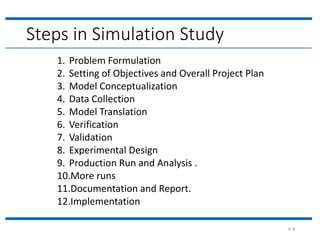
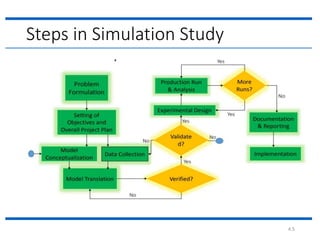
1. Problem Formulation
2. Setting of Objectives and Overall Project Plan
3. Model Conceptualization
4. Data Collection
5. Model Translation
6. Verification
7. Validation
8. Experimental Design
9. Production Run and Analysis .
10.More runs
11.Documentation and Report.
12.Implementation
Steps in Simulation Study
4.5
Steps in Simulation Study
4.6
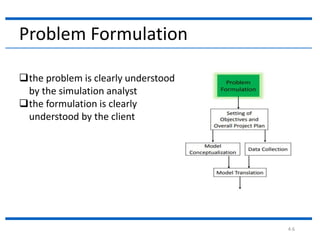
the problem is clearly understood
by the simulation analyst
the formulation is clearly
understood by the client
Problem Formulation
4.7
Setting of Objectives and Overall Project Plan
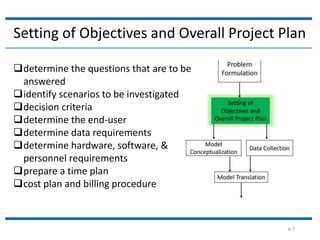
determine the questions that are to be
answered
identify scenarios to be investigated
decision criteria
determine the end-user
determine data requirements
determine hardware, software, &
personnel requirements
prepare a time plan
cost plan and billing procedure
4.8
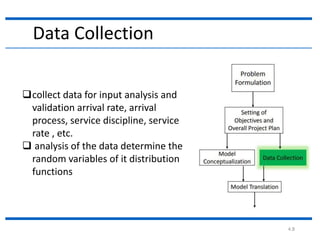
Data Collection
collect data for input analysis and
validation arrival rate, arrival
process, service discipline, service
rate , etc.
 analysis of the data determine the
random variables of it distribution
functions
4.9
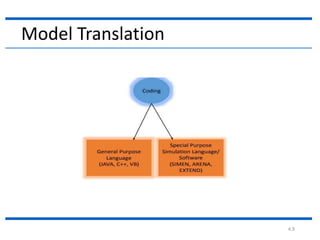
Model Translation
4.10
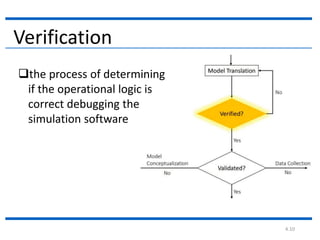
the process of determining
if the operational logic is
correct debugging the
simulation software
Verification
4.11
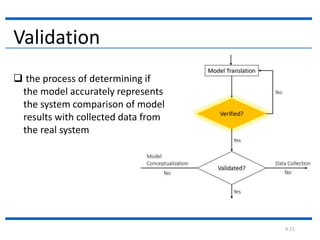
Validation
 the process of determining if
the model accurately represents
the system comparison of model
results with collected data from
the real system
4.12
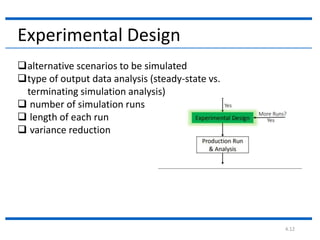
Experimental Design
alternative scenarios to be simulated
type of output data analysis (steady-state vs.
terminating simulation analysis)
 number of simulation runs
 length of each run
 variance reduction
4.13
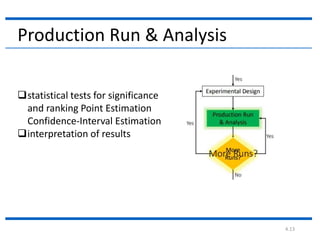
Production Run & Analysis
statistical tests for significance
and ranking Point Estimation
Confidence-Interval Estimation
interpretation of results
4.14
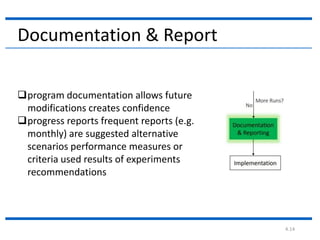
Documentation & Report
program documentation allows future
modifications creates confidence
progress reports frequent reports (e.g.
monthly) are suggested alternative
scenarios performance measures or
criteria used results of experiments
recommendations
4.15
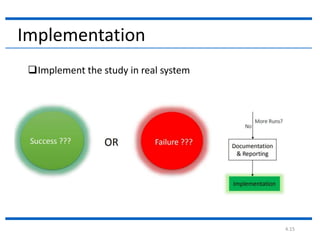
Implementation
Implement the study in real system
4.16
Thank you

2. steps in a simulation study

  • 1.
    Steps in asimulation study By Md. Fazle Rabbi 16CSE057
  • 2.
    4.2 A simulation isthe imitation of the operation of real- world process or system over time.  Generation of artificial history and observation of that observation history A model construct a conceptual framework that describes a system The behavior of a system that evolves over time is studied by developing a simulation model. The model takes a set of expressed assumptions: Mathematical, logical Symbolic relationship between the entities Definition
  • 3.
  • 4.
    4.4 1. Problem Formulation 2.Setting of Objectives and Overall Project Plan 3. Model Conceptualization 4. Data Collection 5. Model Translation 6. Verification 7. Validation 8. Experimental Design 9. Production Run and Analysis . 10.More runs 11.Documentation and Report. 12.Implementation Steps in Simulation Study
  • 5.
  • 6.
    4.6 the problem isclearly understood by the simulation analyst the formulation is clearly understood by the client Problem Formulation
  • 7.
    4.7 Setting of Objectivesand Overall Project Plan determine the questions that are to be answered identify scenarios to be investigated decision criteria determine the end-user determine data requirements determine hardware, software, & personnel requirements prepare a time plan cost plan and billing procedure
  • 8.
    4.8 Data Collection collect datafor input analysis and validation arrival rate, arrival process, service discipline, service rate , etc.  analysis of the data determine the random variables of it distribution functions
  • 9.
  • 10.
    4.10 the process ofdetermining if the operational logic is correct debugging the simulation software Verification
  • 11.
    4.11 Validation  the processof determining if the model accurately represents the system comparison of model results with collected data from the real system
  • 12.
    4.12 Experimental Design alternative scenariosto be simulated type of output data analysis (steady-state vs. terminating simulation analysis)  number of simulation runs  length of each run  variance reduction
  • 13.
    4.13 Production Run &Analysis statistical tests for significance and ranking Point Estimation Confidence-Interval Estimation interpretation of results
  • 14.
    4.14 Documentation & Report programdocumentation allows future modifications creates confidence progress reports frequent reports (e.g. monthly) are suggested alternative scenarios performance measures or criteria used results of experiments recommendations
  • 15.
  • 16.