The Varieties of Project
Termination
 By extinction
 stopped due to success or failure/overrun by the external
environment, also “project murder”
 By addition
 institutionalization (transfer of project assets and functions)
 By integration
 project assets and functions are distributed among existing
elements of the parent organization
 By starvation
 “slow starvation by budget decrement”; phase out
When to Terminate a Project: Fundamental
Causes of Project Failure
 Project organization not required
 Insufficient support from senior management
 Naming the wrong person as project manager
 Poor planning; crisis management becomes a way of
life
The Termination Process
 Decision
 The primary argument for project continuance or
termination is whether or not the organization is willing
to invest the estimated time and cost required to
complete the project, given the project’s current status
and current expected outcome.
 Implementation: project closeout process
Duties of Termination Manager
 Ensure completion of the work, including tasks performed by
subcontractors.
 Notify the client off project completion and ensure that delivery
(and installation) is accomplished. Acceptance of the project
must be acknowledged by the client.
 Ensure that documentation is complete, including a terminal
evaluation of the project deliverables and preparation of the
project’s Final Report.
 Clear for final billings and oversee preparation of the final
invoices sent to the client.
 Redistribute personnel, materials, equipment, and any other
resources to the appropriate places.
Duties of Termination Manager, 2
 Clear project with legal counsel or consultant. File for
patents if appropriate. Record and archive all
“nondisclosure” documents.
 Determine what records (manuals, reports, and other
paperwork) to keep. Ensure that such documents are
stored in the proper places and that responsibility for
document retention is turned over to the parent
organization’s archivist.
 Ascertain any product support requirements (e.g. spares,
service), decide how such support will be delivered, and
assign responsibility.
 Oversee the closing of the project’s books.
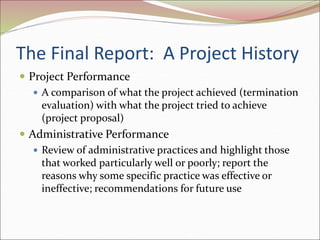
The Final Report: A Project History
 Project Performance
 A comparison of what the project achieved (termination
evaluation) with what the project tried to achieve
(project proposal)
 Administrative Performance
 Review of administrative practices and highlight those
that worked particularly well or poorly; report the
reasons why some specific practice was effective or
ineffective; recommendations for future use
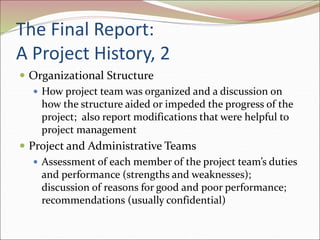
The Final Report:
A Project History, 2
 Organizational Structure
 How project team was organized and a discussion on
how the structure aided or impeded the progress of the
project; also report modifications that were helpful to
project management
 Project and Administrative Teams
 Assessment of each member of the project team’s duties
and performance (strengths and weaknesses);
discussion of reasons for good and poor performance;
recommendations (usually confidential)
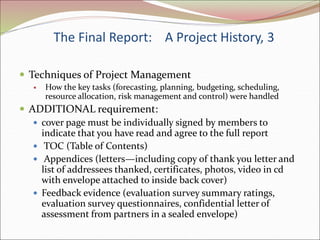
The Final Report: A Project History, 3
 Techniques of Project Management
 How the key tasks (forecasting, planning, budgeting, scheduling,
resource allocation, risk management and control) were handled
 ADDITIONAL requirement:
 cover page must be individually signed by members to
indicate that you have read and agree to the full report
 TOC (Table of Contents)
 Appendices (letters—including copy of thank you letter and
list of addressees thanked, certificates, photos, video in cd
with envelope attached to inside back cover)
 Feedback evidence (evaluation survey summary ratings,
evaluation survey questionnaires, confidential letter of
assessment from partners in a sealed envelope)
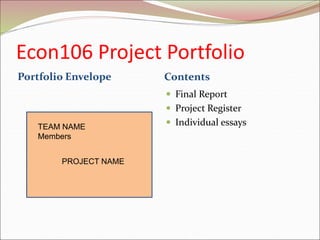
Econ106 Project Portfolio
Portfolio Envelope Contents
 Final Report
 Project Register
 Individual essays
TEAM NAME
Members
PROJECT NAME

2 b. project termination

  • 3.
    The Varieties ofProject Termination  By extinction  stopped due to success or failure/overrun by the external environment, also “project murder”  By addition  institutionalization (transfer of project assets and functions)  By integration  project assets and functions are distributed among existing elements of the parent organization  By starvation  “slow starvation by budget decrement”; phase out
  • 4.
    When to Terminatea Project: Fundamental Causes of Project Failure  Project organization not required  Insufficient support from senior management  Naming the wrong person as project manager  Poor planning; crisis management becomes a way of life
  • 5.
    The Termination Process Decision  The primary argument for project continuance or termination is whether or not the organization is willing to invest the estimated time and cost required to complete the project, given the project’s current status and current expected outcome.  Implementation: project closeout process
  • 6.
    Duties of TerminationManager  Ensure completion of the work, including tasks performed by subcontractors.  Notify the client off project completion and ensure that delivery (and installation) is accomplished. Acceptance of the project must be acknowledged by the client.  Ensure that documentation is complete, including a terminal evaluation of the project deliverables and preparation of the project’s Final Report.  Clear for final billings and oversee preparation of the final invoices sent to the client.  Redistribute personnel, materials, equipment, and any other resources to the appropriate places.
  • 7.
    Duties of TerminationManager, 2  Clear project with legal counsel or consultant. File for patents if appropriate. Record and archive all “nondisclosure” documents.  Determine what records (manuals, reports, and other paperwork) to keep. Ensure that such documents are stored in the proper places and that responsibility for document retention is turned over to the parent organization’s archivist.  Ascertain any product support requirements (e.g. spares, service), decide how such support will be delivered, and assign responsibility.  Oversee the closing of the project’s books.
  • 8.
    The Final Report:A Project History  Project Performance  A comparison of what the project achieved (termination evaluation) with what the project tried to achieve (project proposal)  Administrative Performance  Review of administrative practices and highlight those that worked particularly well or poorly; report the reasons why some specific practice was effective or ineffective; recommendations for future use
  • 9.
    The Final Report: AProject History, 2  Organizational Structure  How project team was organized and a discussion on how the structure aided or impeded the progress of the project; also report modifications that were helpful to project management  Project and Administrative Teams  Assessment of each member of the project team’s duties and performance (strengths and weaknesses); discussion of reasons for good and poor performance; recommendations (usually confidential)
  • 10.
    The Final Report:A Project History, 3  Techniques of Project Management  How the key tasks (forecasting, planning, budgeting, scheduling, resource allocation, risk management and control) were handled  ADDITIONAL requirement:  cover page must be individually signed by members to indicate that you have read and agree to the full report  TOC (Table of Contents)  Appendices (letters—including copy of thank you letter and list of addressees thanked, certificates, photos, video in cd with envelope attached to inside back cover)  Feedback evidence (evaluation survey summary ratings, evaluation survey questionnaires, confidential letter of assessment from partners in a sealed envelope)
  • 11.
    Econ106 Project Portfolio PortfolioEnvelope Contents  Final Report  Project Register  Individual essays TEAM NAME Members PROJECT NAME